

Do you need a US transit visa for a two-hour connection at JFK? Even if your next flight goes straight to another country, you need the right documents to travel through the United States. Which ones you need depends on the passport you’ll use and what you plan to do during the stop.
Use the table below to find out which documents you may need before booking a flight through the US.
Quick Answer — Do You Need a US Transit Visa?
You need the right documents for a US connection, even if you’re only changing planes. If you’re passing through the US and can’t use an approved ESTA, an existing visa that covers transit or a visa exemption, apply for a C-1 transit visa.
| Your situation | What to use |
|---|---|
| You qualify for the Visa Waiver Program | An approved ESTA linked to the passport you’ll use. |
| You already hold a valid B-1, B-2 or B-1/B-2 visitor visa | You may be able to use it for transit if you still have an entry available. |
| You’re a Canadian or Bermudian citizen travelling on a qualifying passport | A separate visa exemption generally covers ordinary transit. |
| You have no usable visa, ESTA option or exemption and are only passing through | A C-1 transit visa is generally the appropriate category. |
| You’re stopping in the US for a planned visit | Use the Visa Waiver Program if eligible or check which visitor visa covers your plans. |
US Customs and Border Protection (CBP) makes the final decision on admission. If you’re unsure which category fits your trip, review the US Department of State’s transit visa guidance.
1. Know When You Need a US Transit Visa
C-1 is for immediate and continuous transit. Your itinerary should show that you’re travelling to another country and continuing onward as promptly as reasonably possible. A Bogotá → New York JFK → Madrid itinerary can fit this purpose when New York is simply where you change planes.
An overnight connection can still fit if you’re waiting for the next reasonably available flight. If you add two nights in New York to see friends or explore the city, check the requirements for a visit. Our US Visa Requirements guide explains the visitor visa categories.
If CBP admits you in C-1 status, the legal maximum is 29 days. Plan to leave on your onward itinerary and within the period CBP authorises. To confirm how long you were admitted for, check your I-94 admission record.
Read Both Directions Before You Book
If you fly from Paris to Mexico City via JFK and return on a nonstop flight to Paris, you’ll need US entry documents for the outbound journey only. Before you book, read the full list of flights in both directions. If both journeys include a US stop, check that your documents cover both travel dates and that any visa has enough entries left.
If your booking includes several travellers, review the route against each person’s passport and documents. Two people on the same reservation can qualify for different options. For example, one traveller might be eligible for ESTA while the other needs to apply for a visa. Work out the document requirements for everyone before committing to a fare, particularly if one person needs time for a consular appointment.
2. Confirm Whether ESTA Covers Your Connection

You can use an approved ESTA to connect by air if you meet the Visa Waiver Program requirements. Certain travel history or dual nationality can affect eligibility, even if your passport is from a participating country.
If you already have an approved ESTA, travel with the passport linked to it. An existing authorisation can cover more than one connection as long as it remains valid and you still qualify. If you renew your passport between trips, apply for a new ESTA for the new passport.
For a new application, indicate that you’re transiting when asked. If the form asks for a US address for your connection, CBP says to enter “In Transit.” Since 16 October 2026, an approved ESTA costs US$40.62. If the application is denied, you pay the US$10.62 processing fee. Check your status or apply through the official ESTA website.
If you’ve submitted an ESTA application and are waiting for a decision, use Check Existing Application on the official site before you head to the airport. Have your passport details and application number ready. If you can’t find the number, you can look up the application using additional details from your passport.
For help with the form and approval timing, see our ESTA Application guide.
3. Review Your Visitor Visa or Passport Exemption
A valid B-1, B-2 or B-1/B-2 visa may cover your connection. Check the expiry date and the Entries field. A used single-entry visa has no entries left for a new connection, even if the printed expiry date is still in the future.
If your valid visa is in an expired passport, you can generally travel with both passports if they’re from the same country and of the same type. Keep the visa in the original passport and make sure it’s undamaged.
Canadian and Bermudian citizens generally qualify for a separate visa exemption for ordinary transit. If you’re a permanent resident of Canada and hold a passport from another country, check eligibility based on the passport you’ll use.
4. Apply for C-1 If You Need It
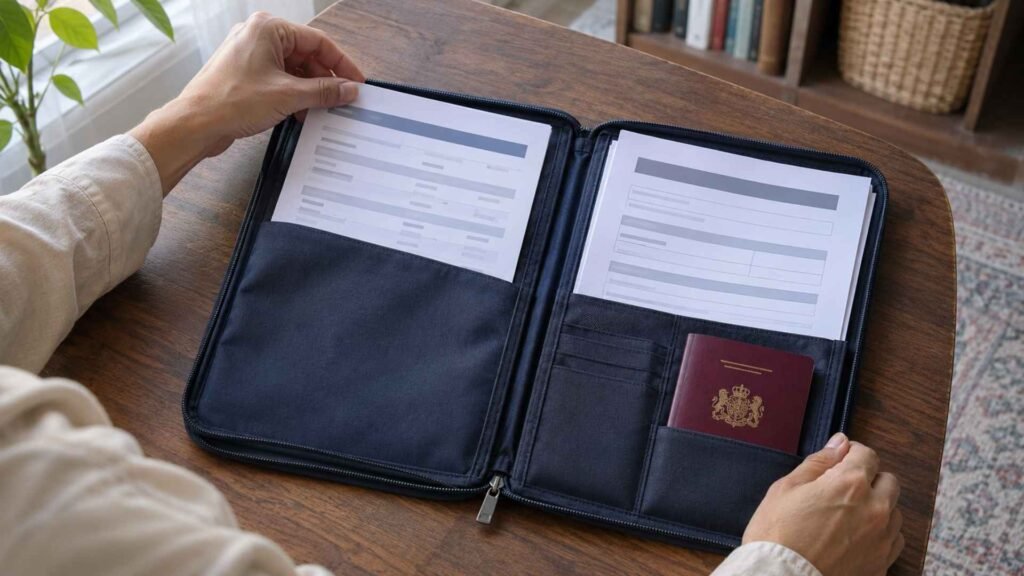
Start by checking which rules apply to your passport, then work through the application steps below.
Before You Pay
Check whether any US visa issuance or entry restrictions apply to your nationality or travel document. Some restrictions cover all visa categories. Others apply only to specified categories. Confirm whether C-1 is affected before you pay the application fee.
Application, Fee and Interview
- Choose where to apply. Start with the US embassy or consulate in your country of nationality or residence. If routine visa services are unavailable for your nationality, check the State Department’s designated processing posts.
- Complete Form DS-160. Use your passport details, select the visa category that matches your transit plans and print your confirmation page.
- Follow the consulate’s payment and booking instructions. The standard C-1 application fee is US$185 per applicant and is non-refundable. A separate issuance fee may apply depending on your nationality. Review the consulate’s payment instructions and the official visa fee schedule.
- Prepare for an in-person interview. C-1 applicants should plan to attend. Bring your passport, DS-160 confirmation, any required payment receipt and a printed photo if the upload failed. Keep your proposed flight itinerary with any documents you need to enter your destination and evidence of how you’ll pay for your time in transit. For an overnight connection, have the arrival and departure times ready so you can explain the gap between flights.
- Check wait times and allow for processing. Look under Crew and Transit in the State Department’s Global Visa Wait Times table for an appointment estimate. Allow additional time for any administrative processing and for your passport to be returned. If the first appointment is close to your planned departure, compare later travel dates before you commit to an itinerary or pay for a fare change.
💡 Clara’s Tip:
If you’re applying for C-1, wait until you have your passport and visa back before buying a non-refundable ticket.
5. Understand Why You Clear US Immigration Even on a Layover
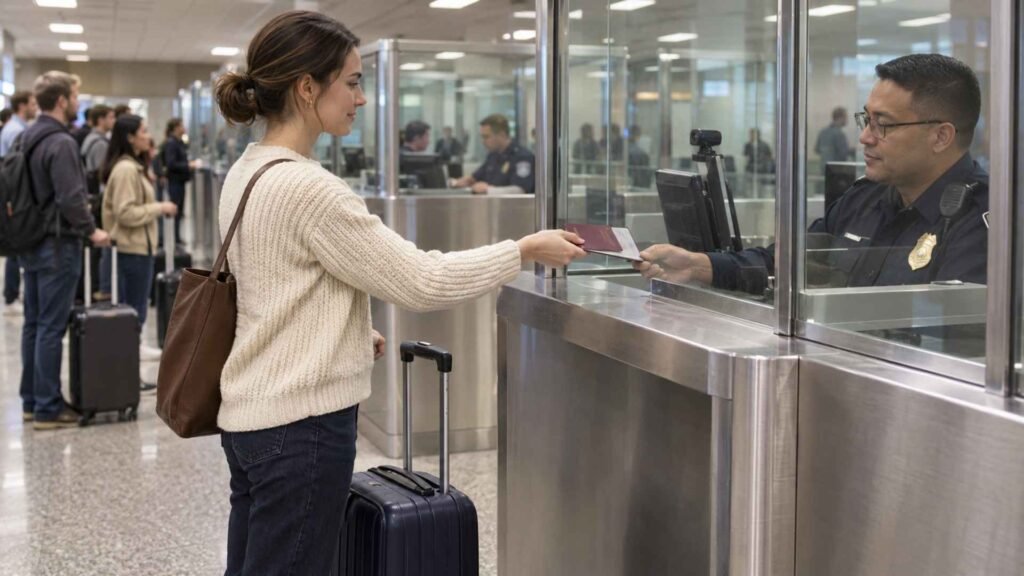
On a typical international connection through the United States, you go through CBP inspection at your first US airport, even if your next flight leaves the country. Planning to stay inside the terminal doesn’t let you bypass US entry checks. If your flight uses US preclearance, CBP inspects you at the departure airport before you board. You still need the documents that cover your trip.
If you clear CBP on arrival at JFK, expect to collect and recheck any checked bags and go through security before your next flight. Follow your airline’s instructions for your route. Our JFK Airport Transit & Connections guide covers baggage recheck, terminal changes and the next security checkpoint.
US Transit Visa FAQs
Do I need a US transit visa if I never leave the airport?
You still need documents that cover US transit. Whether you need C-1 depends on your passport, eligibility and whether you can use an approved ESTA, an existing visa or a separate exemption.
Do I need a transit visa if both flights are on one ticket?
Booking both flights on one ticket doesn’t change which US entry documents you need. Use the same eligibility checks you would for a connection on separate tickets.
Can I use a US transit visa for an overnight layover?
Yes, an overnight layover can fit C-1 when the flight schedule requires the wait and you continue onward as soon as reasonably possible. If you add a stop to visit friends or sightsee, check the requirements for a US visit.
What if my ESTA is denied before a US layover?
If you have no valid visa or separate exemption, check whether you can obtain the appropriate visa in time. For a trip that only passes through the US, that will generally be C-1. If there’s too little time to apply, look for a route that avoids a US connection.
What is the C-1 transit visa application fee in 2026?
The standard C-1 application fee is US$185 per person. It’s non-refundable. Depending on your nationality, a separate issuance fee may apply if your visa is approved.
Final Thoughts
Match your travel documents to the passport you’ll carry and the purpose of your US stop. Before you leave for the airport, put your passport, onward itinerary and any documents required for your final destination somewhere you can reach them easily at check-in.
If your itinerary also includes a US visit, use our US Entry Requirements checklist to prepare for that part of the trip.