
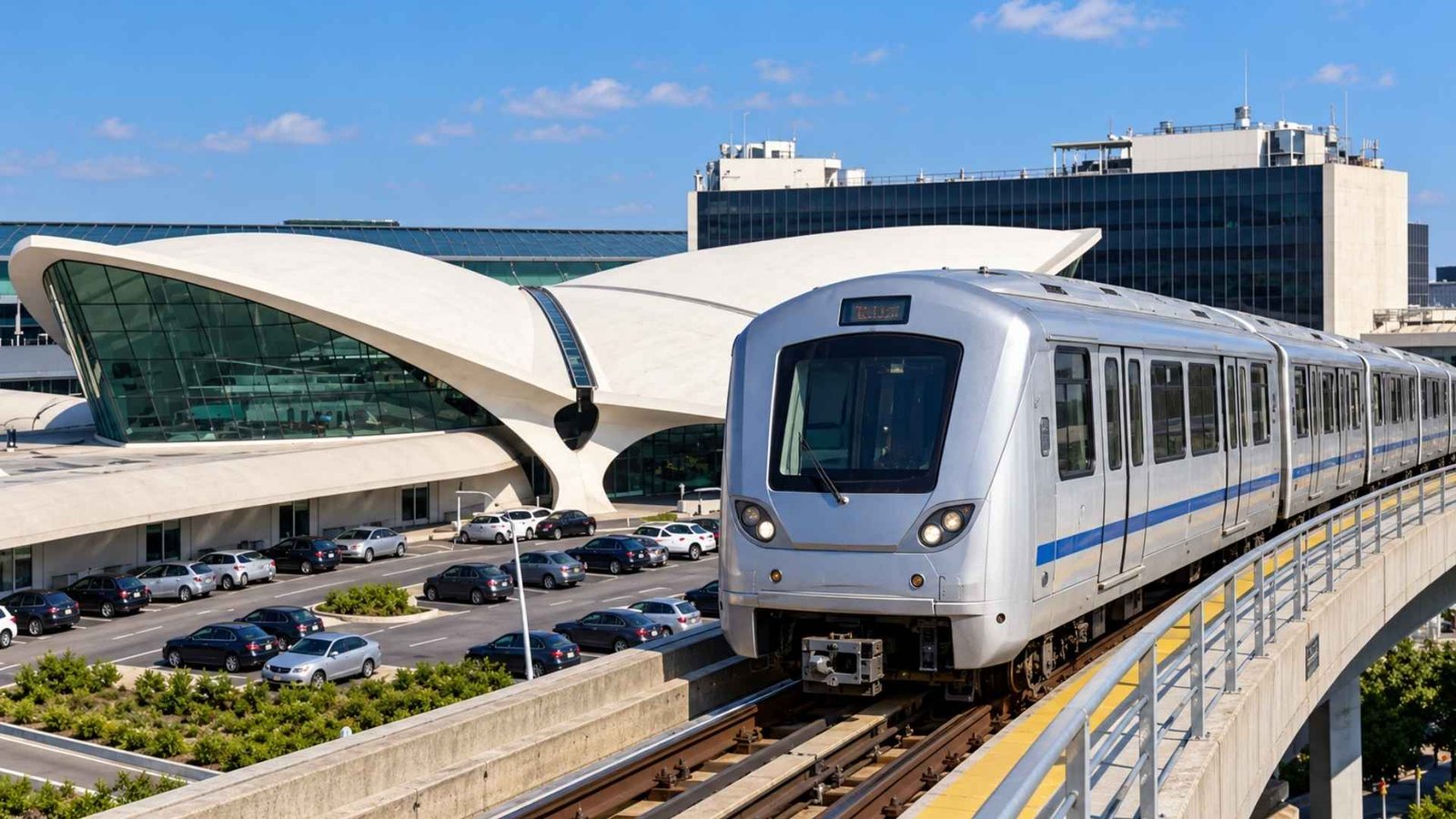
A JFK terminal transfer is easier when you know which terminal you need and which AirTrain to board. The train connects the passenger terminals, but walking to the station, moving with luggage and reaching departures also take time.
This guide explains how to get from one terminal to another, choose the right direction and plan the journey without confusing train travel time with a complete flight connection.
Quick Answer: How Do You Change Terminals at JFK?
Take the free AirTrain between JFK’s passenger terminals. Follow AirTrain signs from the public terminal area, check the upcoming stops and get off at your destination.
AirTrain operates outside the secure departure areas. If you are taking another flight, you must pass through security at your departure terminal.
Our suggested planning allowance is 30–45 minutes for the physical move between terminal public areas under normal conditions. This is an editorial estimate, not an official minimum connection time. Immigration, baggage collection, check-in, security and the final gate walk require additional time.
1. Confirm Your Departure Terminal
Start your JFK terminal transfer by finding your flight number in the airline app or on the airport departure screens. Use the operating airline’s details, particularly when travelling on a codeshare booking.
At the time of checking, JFK’s official passenger terminal directory lists Terminals 1, 4, 5, 7 and 8. The numbering is not consecutive, so do not expect a passenger stop for every number. With airport redevelopment underway, your current flight information should guide your journey.
Before moving, identify:
- Your departure terminal.
- Whether you need an airline desk or bag drop.
- Your airline’s check-in and boarding deadlines.
If you are already in the correct terminal, find the route to your gate before heading towards AirTrain. A different concourse does not automatically mean a different terminal.
For the wider airport layout and facilities, see our JFK Airport Guide.
2. Follow Signs to the AirTrain Station
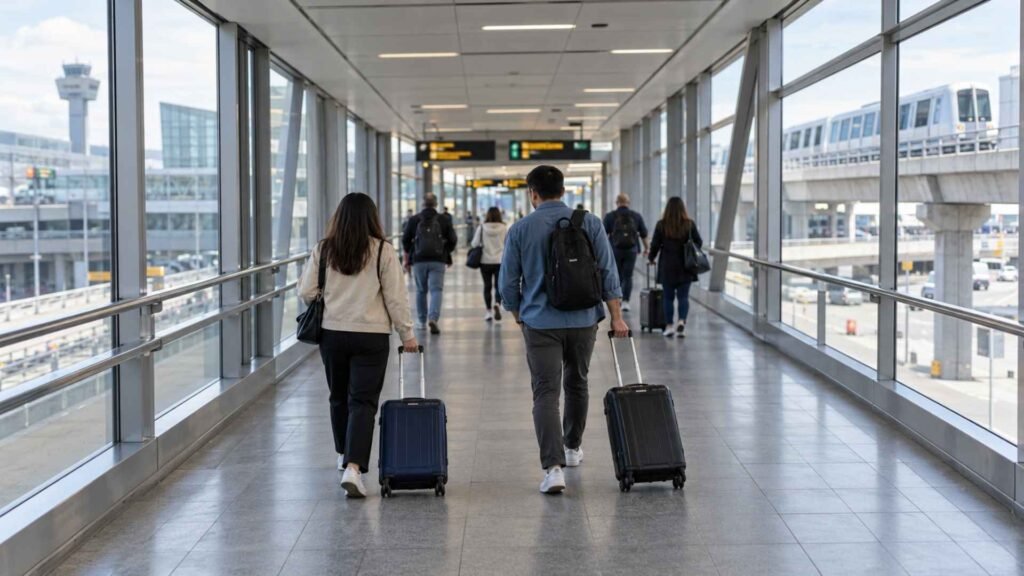
From the public terminal area, follow signs marked AirTrain. Other passengers may be heading towards taxis, parking or ride-app collection points, so follow the signs rather than the crowd.
Station access can involve a connecting walkway and a change of level. Use the JFK interactive airport map to find the route from your location, including lifts and the entrance to your destination terminal.
Keep your destination terminal number accessible on your phone. A short note such as “Terminal 8 — departures — bag drop” saves you from repeatedly opening a long booking confirmation.
If you encounter a diversion or cannot locate station access, ask at an airport information point before continuing with your luggage.
3. Choose the Right AirTrain Direction
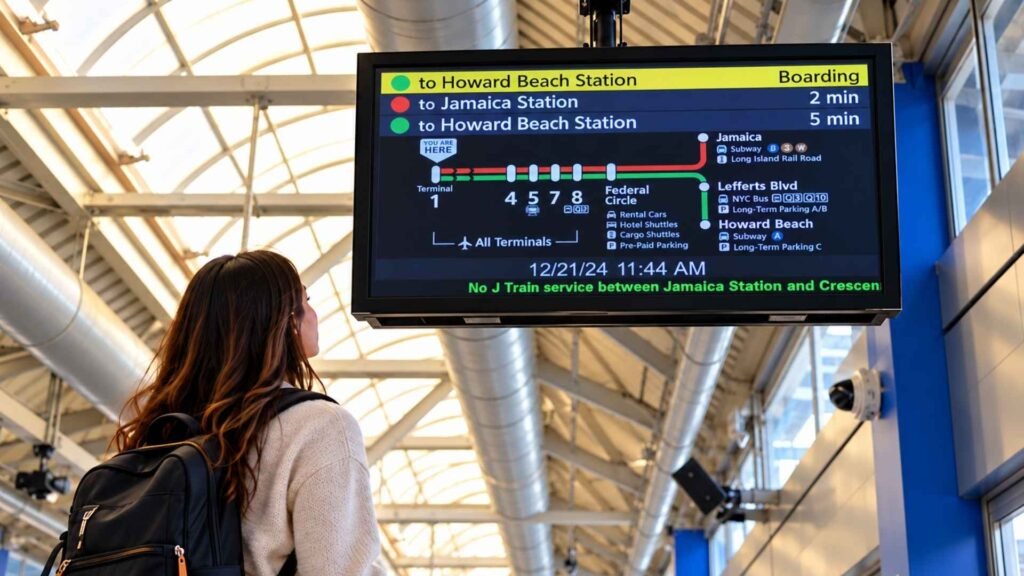
The most useful information on the platform is the sequence of upcoming stops. A train displaying Jamaica or Howard Beach can serve terminals before leaving the terminal area, but it may not offer the shortest route for your journey.
Understand the Terminal Loop
Under the normal route pattern, Jamaica and Howard Beach services pass through the terminals in this order before continuing towards Federal Circle:
Terminal 1 → Terminal 4 → Terminal 5 → Terminal 7 → Terminal 8
The service circulating only between terminals travels in the opposite direction:
Terminal 8 → Terminal 7 → Terminal 5 → Terminal 4 → Terminal 1 → Terminal 8
Use the destination and next-stop displays to identify your train. These sequences describe normal operation; maintenance can change the service pattern.
Common JFK Terminal Transfer Routes
Use these examples to understand the normal stop sequence, then follow the live platform information.
| Journey | Normal terminal route | What to look for |
|---|---|---|
| Terminal 4 → Terminal 5 | T4 → T5 | Terminal 5 as the next stop |
| Terminal 5 → Terminal 4 | T5 → T4 | Terminal 4 as the next stop |
| Terminal 8 → Terminal 7 | T8 → T7 | Terminal 7 as the next stop |
| Terminal 1 → Terminal 8 | T1 → T8 | Terminal 8 as the next stop |
| Terminal 8 → Terminal 1 | T8 → T7 → T5 → T4 → T1 | Terminal 7 next, with Terminal 1 later on the same terminal loop |
For Terminal 8 to Terminal 1, choose the service that stays on the terminal loop. At Terminal 8, a train showing Federal Circle as its next stop is heading away from the passenger terminals.
Before boarding, make sure your destination appears among the upcoming stops before the train leaves the terminal area. You do not need to travel to Jamaica or Howard Beach to change terminals.
If you miss your stop, leave at the next suitable station and establish the return route. Ask staff for help if the displayed service pattern is unclear.
4. Keep Your Luggage Manageable
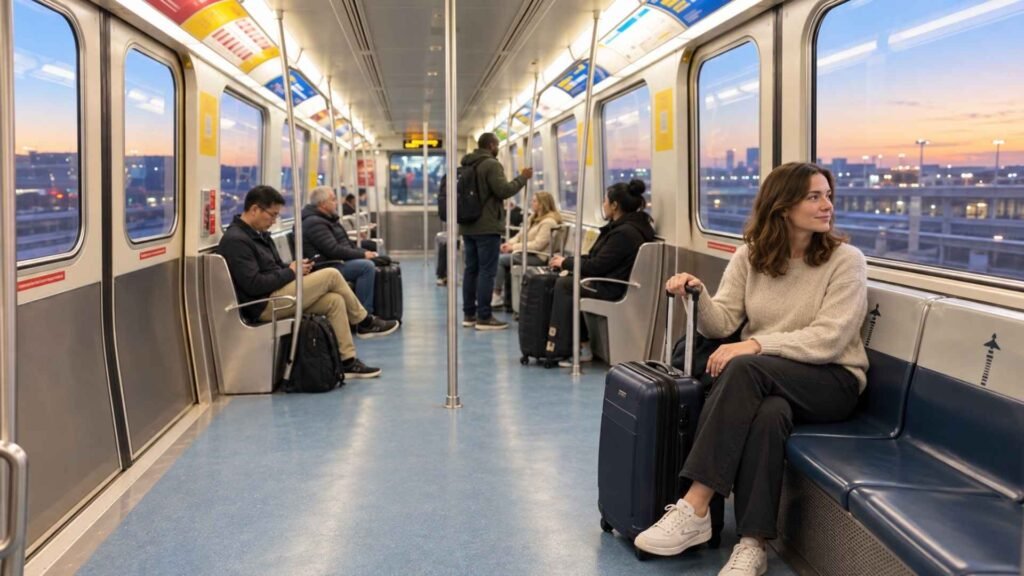
AirTrain permits luggage, baggage carts and pushchairs. Stations have lifts, and trains provide wheelchair spaces.
Organise your belongings before boarding so you can move without blocking the doors:
- Keep travel documents secure but accessible.
- Fasten loose straps and close open bags.
- Let passengers leave before stepping aboard.
- Keep suitcases beside you and clear of the aisle.
- Check the surrounding floor and seats before getting off.
Use a lift when travelling with several suitcases or a loaded pushchair. Waiting for the next train is preferable to separating your group or rushing with luggage.
Resolve Checked-Baggage Questions Before Leaving
Confirm with your airline whether you must collect your checked bags and where to hand them over next. A terminal change alone does not determine the baggage procedure.
If you need to carry your bags to another airline’s check-in desk, include that stop in your plan. For separate-ticket arrangements, see our JFK Airport Self-Transfer Guide.
Arrange Assistance for the Whole Transfer
If you need wheelchair or guided assistance, contact your airline in advance and explain that your journey involves different terminals. Ask how assistance will continue between the buildings and whether a handover is required.
Accessible train facilities do not replace an arranged assistance service for the complete journey.
5. Find Departures and Prepare for Security
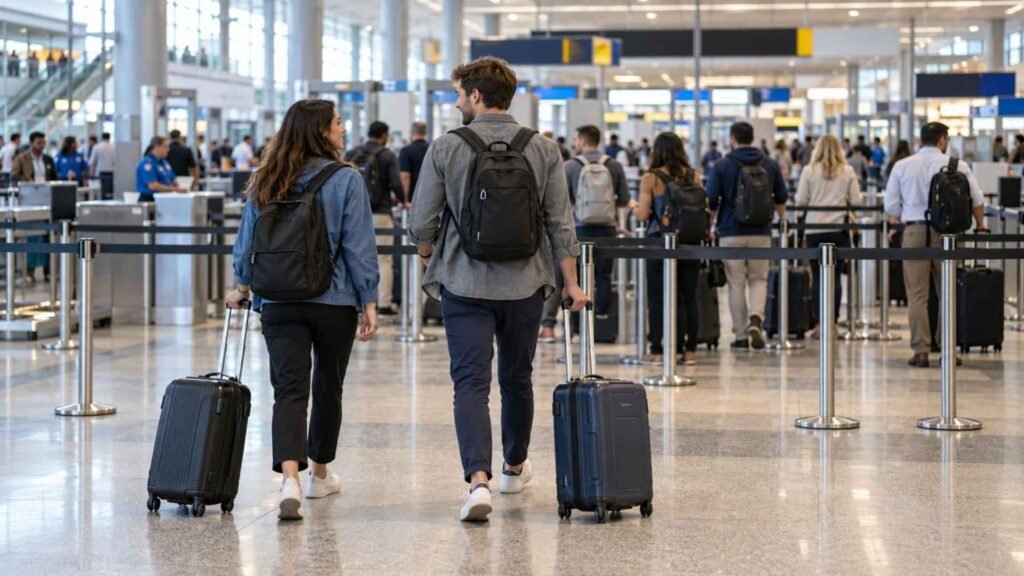
After leaving AirTrain, follow signs into your destination terminal and towards departures.
Go to your airline’s desk first if you need check-in assistance, document checks or bag drop. Otherwise, with a valid boarding pass and no outstanding airline procedures, proceed towards the appropriate security checkpoint.
AirTrain brings you to the public side of the terminal, so previous screening at another terminal does not provide direct access to the departure gates. Keep your identification and boarding pass ready for TSA screening.
Once through security, locate your gate before stopping for food or shopping. Reaching the terminal building and reaching the boarding gate are separate parts of the journey.
For immigration, baggage recheck and the broader connection process, see our JFK Airport Transit & Connections Guide.
6. Plan Your JFK Terminal Transfer Time
Build your timing around the complete movement between buildings. The number of train stops is only one part of the calculation.
JFK’s official AirTrain information describes normal inter-terminal rides as taking under 10 minutes, with trains generally arriving every 5–15 minutes. Those figures exclude the walks at either end.
Separate the Train Ride from the Whole Journey
Our suggested 30–45-minute allowance covers walking from a terminal’s public area to AirTrain, waiting, riding and finding the next terminal’s public departure area.
This is a planning estimate rather than a measured journey time. Allow longer when travelling with several bags, children, mobility assistance or replacement transport.
Keep the remaining airport procedures separate:
- Immigration and baggage collection, where required.
- Airline check-in and bag drop.
- Security screening.
- Walking to the gate before boarding closes.
Work Backwards from Boarding
Use your airline’s bag-drop and boarding deadlines rather than treating the scheduled departure time as your arrival deadline.
For example, reaching the correct terminal 40 minutes before departure does not leave 40 minutes for security. Boarding may already be underway, and the gate may still be some distance away.
If your schedule becomes tight, contact the airline promptly. A short AirTrain ride cannot compensate for a missed check-in or boarding deadline.
7. Check Overnight Service and Disruptions
AirTrain normally operates 24 hours a day, but overnight maintenance can alter routes or replace part of the journey with buses. Round-the-clock operation does not guarantee an unchanged train service at every station throughout the night.
Review JFK’s AirTrain service notices before travelling. At the airport, current displays and staff instructions take priority over saved screenshots.
When Replacement Buses Are Running
Follow signs for the advertised replacement service and confirm its destination before loading your luggage. Some buses serve selected stations or terminals rather than every stop.
Allow additional time to reach the stop, wait, load bags and travel on airport roads. Normal AirTrain journey estimates should not be applied to a bus replacement.
Walking and Road Alternatives
Use AirTrain as your default terminal-transfer option. Buildings that look close on a map do not necessarily have a convenient pedestrian route between them. Ask staff about an available walking route rather than improvising a shortcut along airport roads.
A taxi or ride-app journey adds collection arrangements and exposure to road traffic. If you cannot use the advertised airport transport, ask staff about the appropriate alternative before booking a car.
JFK Terminal Transfer FAQs
Is AirTrain Free Between JFK Terminals?
Yes. Journeys entirely between passenger terminals are free, and you do not need to buy a ticket for that transfer. Separate fares apply when connecting to public transport through Jamaica or Howard Beach.
Can I Change Terminals Without Going Through Security Again?
Using AirTrain takes you outside the secure departure area. You must pass through security at the destination terminal before reaching its gates.
How Do I Get from Terminal 4 to Terminal 5?
Follow AirTrain signs and board a service showing Terminal 5 as the next stop. For the reverse journey, choose the direction showing Terminal 4 next.
Is 30 Minutes Enough to Change Terminals at JFK?
It can cover the physical move in favourable conditions, but leaves limited room for delays. It should not be treated as enough time for a complete flight connection involving baggage procedures, security and boarding.
What Should I Do If I Arrive at the Wrong Terminal?
Find the correct terminal using your flight number, then head towards AirTrain. Contact your airline if a check-in or boarding deadline is approaching.
Can I Transfer Between Terminals Late at Night?
Yes, AirTrain normally operates around the clock. Check overnight service notices because maintenance may change your route or require a replacement bus.
Final Thoughts
For a smoother JFK terminal transfer, identify your destination, choose the correct stop sequence and leave room for walking and waiting. Once inside the next terminal, head to your airline desk or security checkpoint before making other stops.