
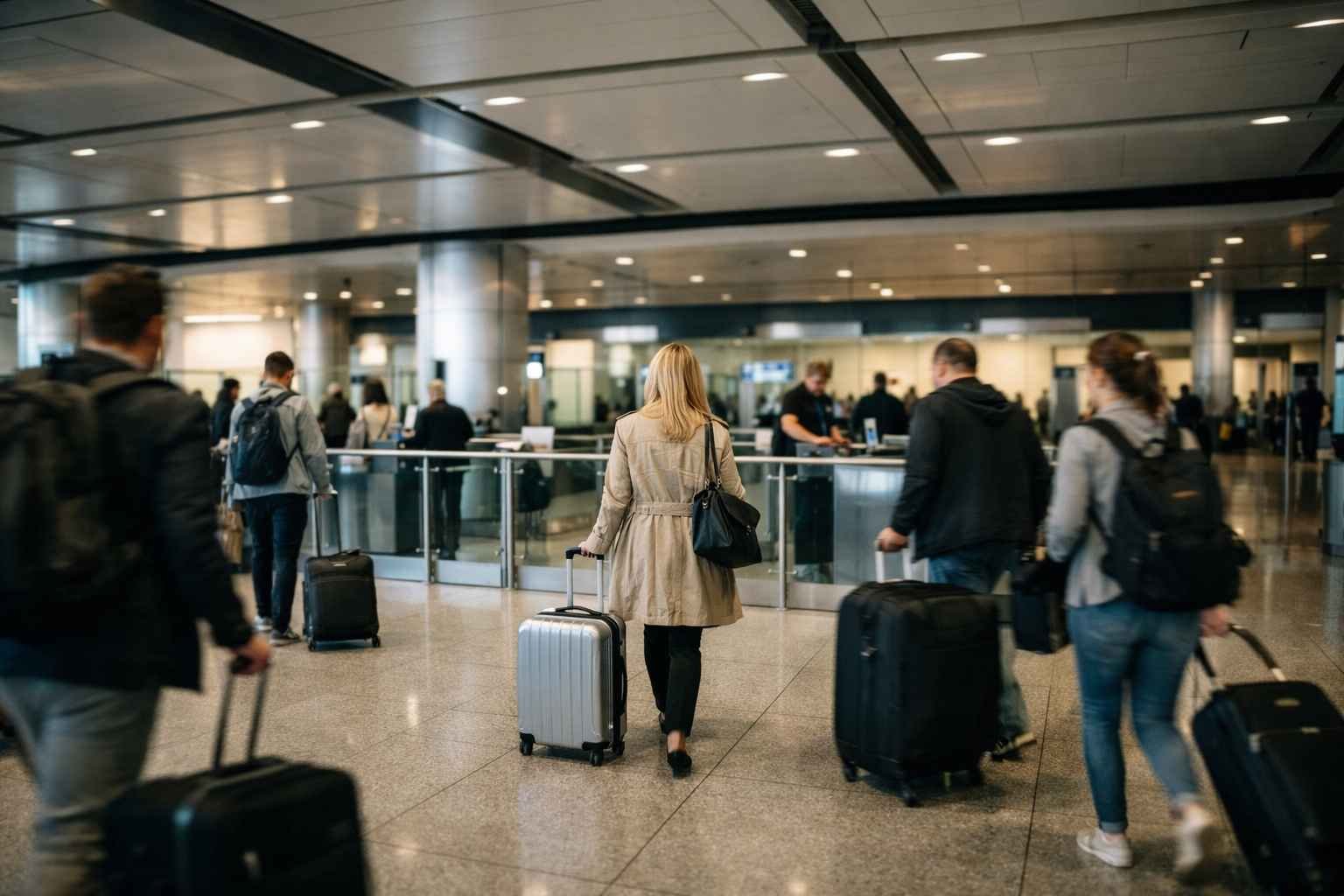
You’ve landed in the UK, passed passport control, and collected your luggage.
Everything feels done — but there’s one final step where many travelers make unexpected mistakes.
That step is UK customs.
UK customs rules in 2026 aren’t complicated, yet small assumptions can quickly lead to fines or confiscation.
Food, electronics, gifts, or even cash can become a problem if you cross the limits.
This guide explains exactly what you can bring into the UK — and how to pass customs smoothly without risk.
⚡ Quick Answer: UK Customs Rules (2026)
✔ Stay within UK customs allowance limits (alcohol, tobacco, £390 goods)
✔ Declare cash of £10,000 or more
✔ Do not bring meat or dairy products into the UK
✔ Choose the correct channel (Green = nothing to declare, Red = declare)
✔ Duty-free purchases are included in your allowance
💡 Golden rule of UK customs rules:
If you’re not sure — declare it. Declaring protects you; not declaring creates risk.
🛂 Understanding the UK Customs System
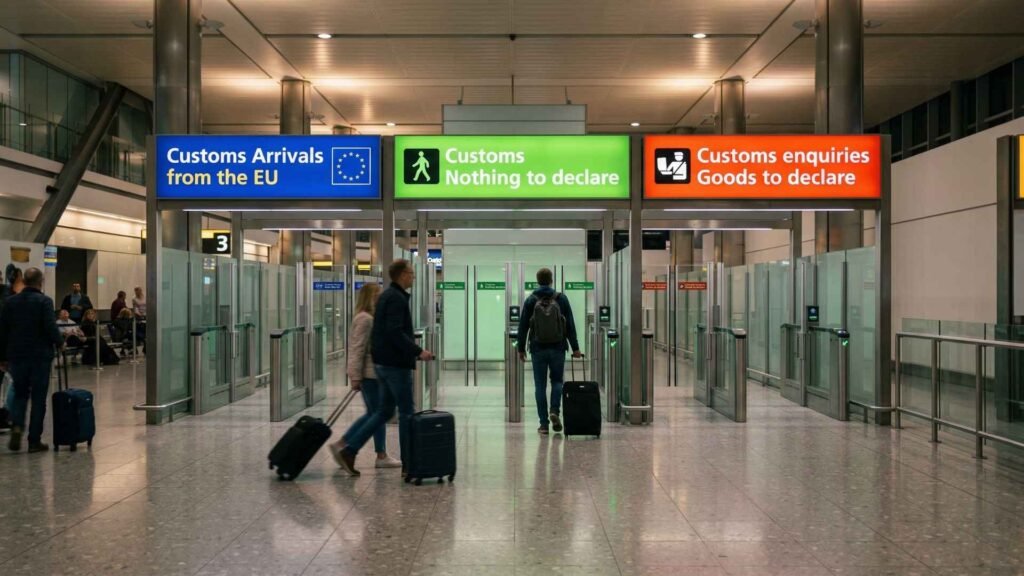
After collecting your luggage, you must choose a customs channel before exiting the airport.
This is a key step under UK customs rules, and choosing correctly matters.
🟢 Green Channel (Nothing to Declare)
Use this if:
✔ You are within all UK customs allowance limits
✔ You are not carrying restricted or prohibited items
✔ All goods are for personal use
If everything you carry is clearly within the rules — choose green.
🔴 Red Channel (Goods to Declare)
Use this if:
✔ You exceed duty-free limits
✔ You are carrying restricted or controlled items
✔ You have cash of £10,000 or more
✔ You are unsure about anything
💡 Key takeaway:
Choosing red means you are following UK customs rules correctly — not doing something wrong.
🚨 The “Red Channel” Myth (Why Declaring Protects You)
One of the biggest misunderstandings about UK customs rules is the fear of the red channel.
Many travelers think:
“If I go through red, I’ll get in trouble.”
That’s not true.
✔ The red channel is not a penalty
✔ It’s simply where you declare items
💡 In reality:
✔ Declaring items = safe and correct
✔ Not declaring = real risk
In most cases, officers will simply check your items and guide you.
If something is not allowed, it will be handled — without penalties when declared properly.
❗ Going through the green channel with restricted or undeclared goods is far more serious than using the red channel.
💡 Remember:
If you’re unsure, choose red — it protects you under UK customs rules.
🔵 Blue Channel
Previously used for EU arrivals, the blue channel has very limited use after Brexit.
Follow airport signs — most travelers will use:
✔ Green channel (nothing to declare)
✔ Red channel (goods to declare)
For nearly all travelers today, the choice is simply green or red.
📊 UK Customs Rules Overview (Quick Table)
| Category | Limit |
|---|---|
| Cash | £10,000 |
| Alcohol | 4L spirits / 9L wine |
| Tobacco | 200 cigarettes |
| Goods | £390 |
💡 Exceeding limits means you must declare under UK customs rules.
🍷 UK Duty-Free Allowances (2026)
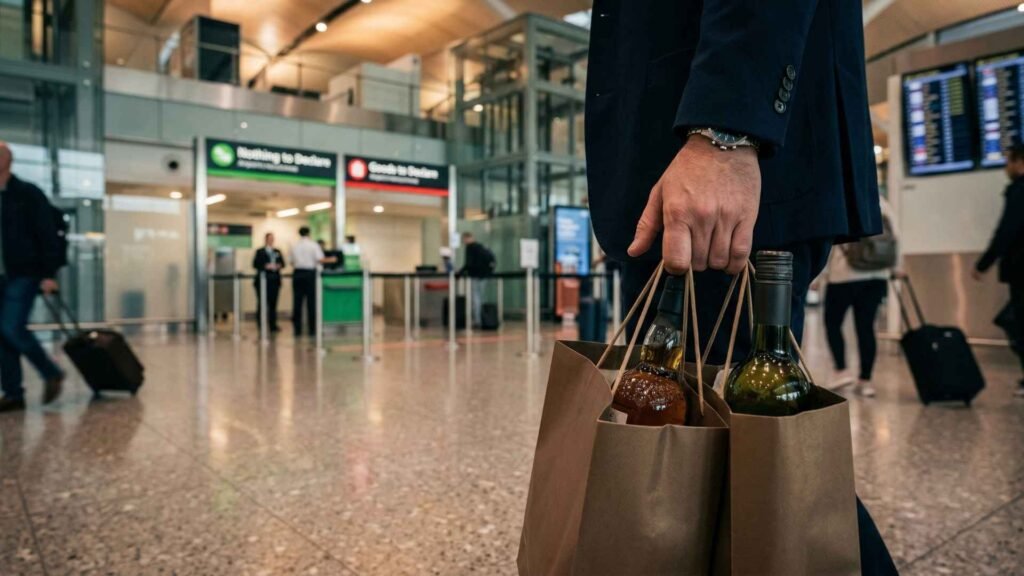
Under UK customs rules, you can bring certain goods into the UK without paying tax — as long as you stay within the allowance limits.
🍺 Alcohol
✔ 4 liters of spirits OR
✔ 9 liters of wine OR
✔ 18 liters of beer
You can combine different types, but you must stay within the total allowance.
💡 Important:
Alcohol above 22% (such as certain fortified wines or strong spirits) may fall under the spirits limit.
Always check the alcohol content to avoid exceeding UK customs allowance limits.
🚬 Tobacco
✔ 200 cigarettes
✔ or equivalent (e.g. cigars or tobacco)
🎁 Other Goods
✔ Up to £390 total value
Includes gifts, electronics, and souvenirs for personal use.
💡 Important:
✔ Duty-free purchases are included in these limits
✔ Allowances apply per person
✔ If you exceed the limit → you must declare and may pay tax
🛍️ Duty Free Misconception (Very Important)
Many travelers assume:
👉 “I bought it at duty free, so it doesn’t count.”
❗ This is incorrect.
Under UK customs rules:
✔ Duty-free items are included in your total allowance
Buying alcohol, tobacco, or luxury goods at the airport does NOT make them unlimited.
💡 What this means in practice:
✔ Your duty-free purchases + items in your luggage are counted together
✔ The limits apply per person
✔ Exceeding the allowance → you must declare and may pay tax
Example:
If you already have alcohol in your luggage and buy more at duty free,
you can easily exceed the UK customs allowance without realizing it.
💡 Important:
Duty-free allowances depend on what you bring and how you travel.
👉 For the most up-to-date limits, see the official UK duty-free guidance.
🎁 Gifts & “Personal Use” Explained
Under UK customs rules, the £390 allowance only applies if items are:
✔ For personal use
✔ or genuine gifts
❗ If items are intended for resale:
👉 Different (commercial) rules apply
👉 The £390 limit no longer protects you
💡 Important distinction:
✔ Personal use → normal travel quantities
✔ Commercial use → multiple identical or high-value items
Even small quantities can be considered commercial depending on context.
Example:
Bringing one watch as a gift → usually fine
Bringing multiple boxed items of the same type → may be treated as commercial
💡 Key takeaway:
If it looks like you might sell it, it may be treated as commercial.
🍖 Food Rules: What You Cannot Bring
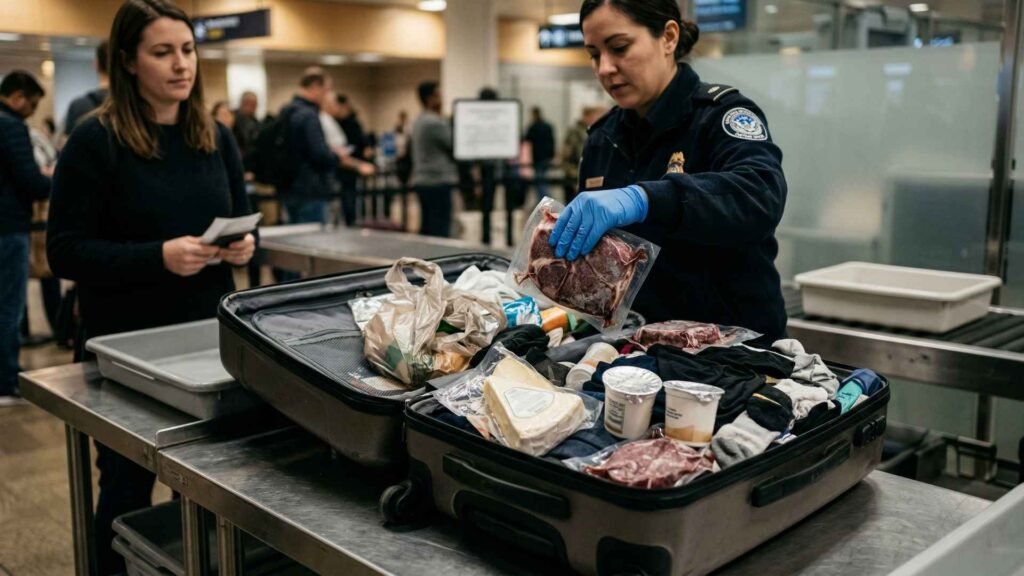
Food is one of the strictest parts of UK customs rules, and one of the most common reasons for confiscation at the border.
❌ Not Allowed
🚫 Meat and meat products
🚫 Milk and dairy products
These are among the highest-risk categories.
⚠️ Common Mistakes
✔ Homemade food
✔ Vacuum-packed meat
✔ Traditional or local products
Many travelers assume these are allowed — but they are often not.
💡 Important:
✔ Restrictions depend on where you are travelling from
✔ Rules can change and may apply even within Europe
✔ Packaging does NOT make restricted food allowed
Always check official UK guidance before bringing any food into the UK
❗ If you are unsure, do not bring it — or declare it under UK customs rules.
💸 Cash Rule: £10,000 Limit
Under UK customs rules, if you carry £10,000 or more (or equivalent in other currencies):
You must declare it before passing through customs.
💡 What counts as cash?
✔ Banknotes and coins
✔ Multiple currencies combined
✔ Cash equivalents (e.g. certain financial instruments)
❗ Important
✔ The limit applies per person
✔ Not declaring can lead to seizure of money
✔ You may also face fines or investigation
Even if the money is legal, you must declare it.
💡 Pro tip:
If your total money is close to £10,000 — declare it to stay safe.
💊 Bringing Medication into the UK
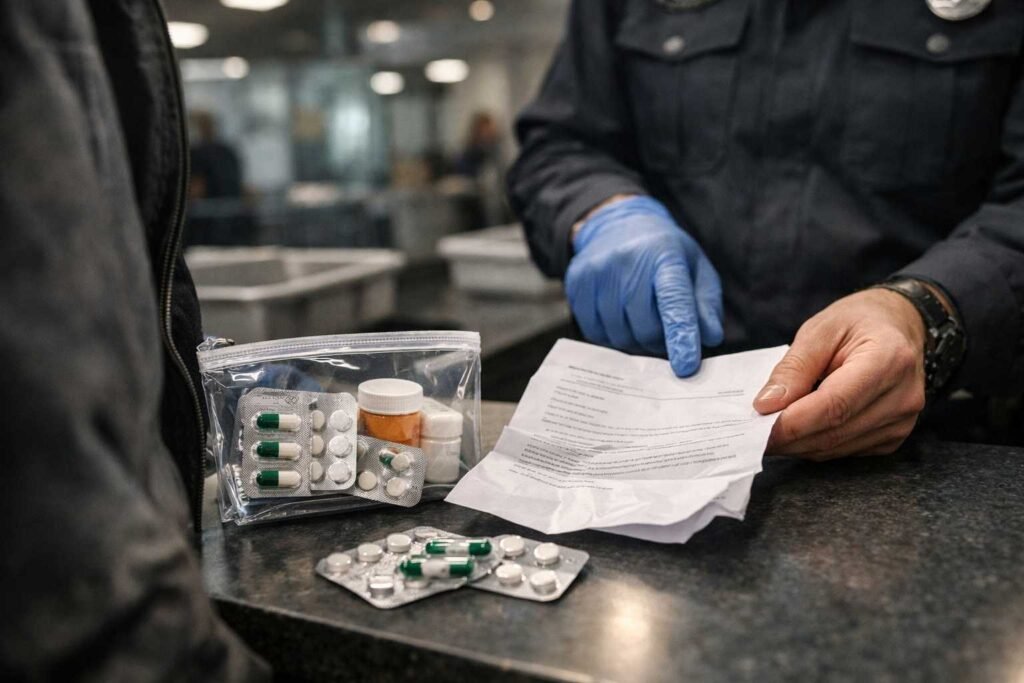
This is one of the most overlooked parts of UK customs rules.
If you are carrying medication:
✔ Standard personal-use medicine → usually fine
⚠️ Controlled Drugs
Some medications are more strictly regulated, including:
✔ Strong painkillers
✔ ADHD medication
✔ Certain sedatives
These may require additional documentation
Some controlled medicines may require additional documentation, and in certain cases, you should check UK rules before travel.
📄 What you should carry
✔ A doctor’s prescription
✔ An English explanation letter
✔ Medication in original packaging
❗ Important
✔ Bring only a reasonable quantity for personal use
✔ Do not carry large amounts without justification
✔ Rules can vary depending on the medication type
💡 Without proper documentation, you may face delays, questioning, or confiscation.
💡 Remember:
If your medication is strong, restricted, or unclear — carry proof and be ready to declare it.
💻 Electronics & VAT Risk
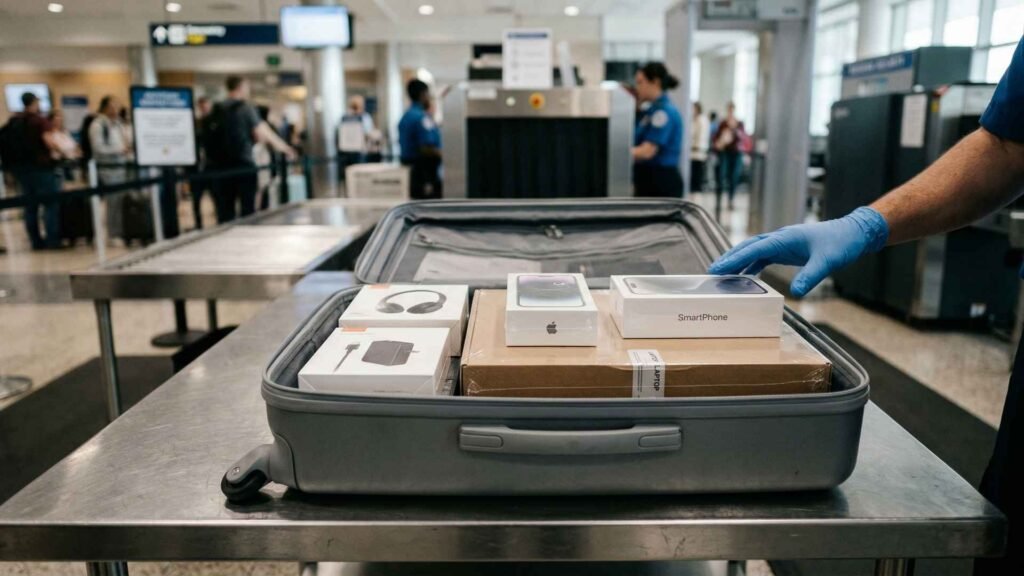
A common issue under UK customs rules is bringing new electronics into the UK.
⚠️ Risk Scenario
✔ New iPhone / MacBook
✔ Unopened box
✔ Value above £390
Customs may treat this as a newly imported item with unpaid VAT.
✔ Safe Situation
✔ Used personal devices
✔ No original packaging
✔ Clearly not for resale
💡 Important
✔ The £390 allowance still applies to electronics
✔ Receipts may be requested to prove ownership or value
✔ Multiple new items may be seen as commercial use
❗ If an item looks new and undeclared:
You may be asked to pay VAT
The item could be questioned or delayed
Beyond electronics, some items are not banned — but strictly controlled under UK customs rules.
💡 Important:
According to official UK customs rules, high-value items such as new electronics may need to be declared if they exceed your allowance.
👉 You can check the latest official guidance on the UK government website.
🚫 Restricted & Controlled Items
Under UK customs rules, some items are not completely banned — but they are strictly controlled.
⚠️ Common Examples
✔ Medicines (especially controlled drugs)
✔ Plants and seeds
✔ Sharp objects or tools
✔ Cultural goods and antiques
📄 What this means
These items may require:
✔ Permits or licenses
✔ Supporting documents
✔ Declaration at customs
❗ If you carry these items without proper documentation:
👉 They may be confiscated
👉 You may face delays or questioning
💡 Important:
If an item seems sensitive, valuable, or regulated — check in advance and declare it.
🐾 Traveling with Pets (Strict Rules)
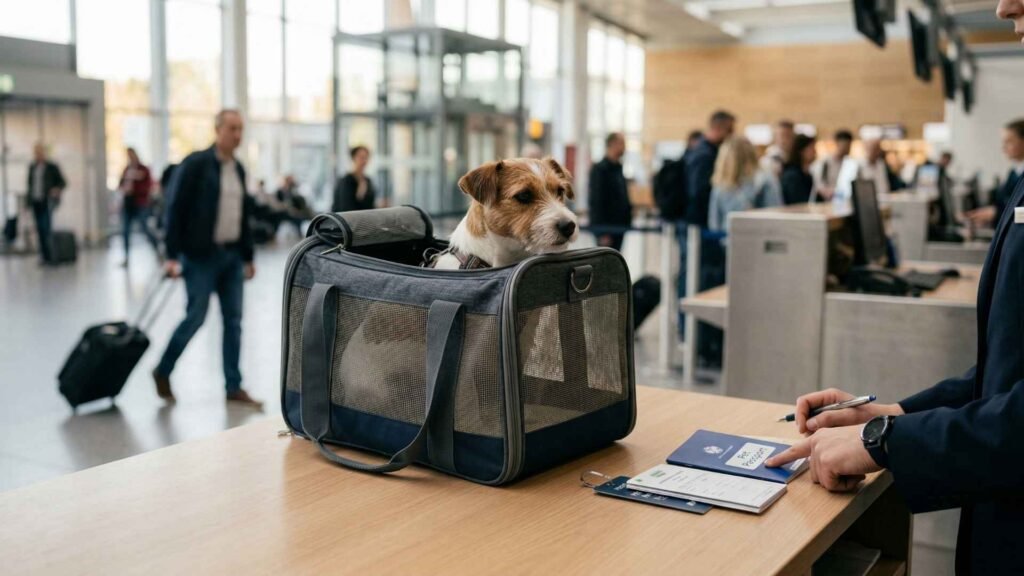
Bringing pets into the UK is strictly regulated under UK customs rules, and even small mistakes can lead to serious consequences.
🐶 Requirements
You must have:
✔ Microchip (ISO-compliant)
✔ Valid rabies vaccination
✔ Tapeworm treatment (for dogs, before entry — usually 24 to 120 hours prior)
💡 Important:
The treatment must be administered by a licensed vet within the required time window before travel
It must be officially recorded with the exact date and time in the pet passport or animal health certificate
The recorded time is strictly checked at the border — missing or incorrect timing can result in entry refusal
❗ Failure to meet these requirements can result in:
Your pet being denied entry or placed in quarantine for up to 4 months at your expense
✈️ Additional Rules
✔ Pets must enter the UK through approved routes and carriers
✔ Airlines and transport providers may have their own requirements
✔ All documents must match the pet’s microchip details exactly
💡 Tip:
Prepare all documents in advance and double-check every requirement before departure — small mistakes can lead to serious delays.
💡 Clara’s Note:
If you are traveling from Ireland, Northern Ireland, Malta, or Norway, tapeworm treatment for dogs is usually not required.
For most other countries, this treatment is mandatory under UK customs rules.
🚨 Common Mistakes at UK Customs
Many travelers break UK customs rules without realizing it.
Here are the most common mistakes:
✔ Bringing food without checking restrictions
- Often leads to confiscation at the border
✔ Not declaring expensive items
- May result in tax charges or penalties
✔ Misunderstanding duty-free limits
- Duty-free purchases are still included in your allowance
✔ Carrying undeclared cash over £10,000
- Can lead to seizure of money
✔ Choosing the wrong channel (Green instead of Red)
- Increases the risk of fines or delays
💡 Simple rule under UK customs rules:
Most problems don’t come from what you carry — but from what you don’t declare.
🔍 How Strict Are UK Customs?
UK customs does not check every passenger.
But under UK customs rules, enforcement is targeted and effective.
🛂 How checks work
✔ Random checks
✔ Risk-based profiling
✔ X-ray scanning of luggage
💡 What this means for you:
You may pass without any checks
Or you may be selected for inspection — even if you did nothing wrong
❗ Selection is not personal — it’s part of the system.
If you are carrying restricted or undeclared items, they are likely to be detected.
💡 Simple rule under UK customs rules:
Even if checks seem rare, always follow the rules — because inspections are unpredictable.
⚖️ Declare or Not Declare?
If you are unsure about an item under UK customs rules:
Always declare it.
💡 What happens if you declare?
✔ If everything is fine → you pass without issues
✔ If something is not allowed → officers will guide you or handle it safely
❗ What happens if you don’t declare?
👉 You risk fines, confiscation, or delays
💡 Simple rule:
Declaring is always safer than guessing.
🚆 Travel Method Matters (Important Detail)
Under UK customs rules, your allowance can change depending on how you enter the UK.
✈️ By air, train, or commercial ferry
✔ £390 allowance for other goods
🚤 By private plane or private boat
✔ £270 allowance for other goods
💡 Important:
👉 Most travelers fall under the £390 limit
👉 Lower limits apply only to private transport
❗ Always check your travel type — it directly affects your allowance.
➡️ What Happens After Customs?

Once you pass customs under UK customs rules, your entry process is complete.
✔ You exit into the arrivals hall
✔ Meet your driver, taxi, or public transport
✔ Continue your journey into the city
💡 Important:
👉 There are no further checks after customs
👉 This is the final step of your UK airport arrival process
💡 Simple takeaway:
If you pass customs smoothly, you’re officially in the UK — ready to start your trip.
🧠 Smart Traveler Tips
Following UK customs rules is not complicated — but small details make a big difference.
✔ Keep receipts for expensive items
👉 Helps prove value and avoids disputes
✔ Avoid carrying risky food items
👉 One of the most common reasons for confiscation
✔ Don’t carry new electronics in sealed boxes
👉 May be treated as undeclared imports
✔ Prepare your documents in advance
👉 Speeds up checks if you are selected
✔ Know your limits before arrival
👉 Prevents accidental rule violations
💡 Simple rule:
Most problems at customs come from assumptions — not from the rules themselves.
🔗 Continue Your Journey
Want to understand the full UK arrival process step by step?
Start here:
👉 UK Passport Control Guide (2026)
→ What happens before customs and how to pass faster
→ Who can use eGates and how to avoid delays
→ Entry requirements, approval rules, and what you need before travel
💡 Tip:
Reading these together will give you a complete picture of UK entry — from landing to leaving the airport.
❓ UK Customs Rules: Quick Answers (2026)
Are UK customs rules strict?
Yes — especially for food, cash, and high-value items.
Even small mistakes can lead to delays or confiscation.
Can I bring food into the UK?
Some food is allowed, but meat and dairy are usually prohibited.
If unsure, it’s safer to declare or avoid bringing it.
Do duty-free items count?
Yes — duty-free purchases are included in your allowance.
Buying at the airport does not make items exempt.
What happens if I choose the wrong channel?
You may face fines, confiscation, or delays — especially if you use the green channel incorrectly.
Do I need to declare electronics?
Yes, if they exceed your allowance or appear newly purchased.
Is cash checked at UK customs?
Yes — amounts over £10,000 must be declared.
Not declaring can lead to seizure.
🧾 Final Thoughts
Most travelers think passport control is the hardest part.
But in reality:
UK customs rules are where small mistakes turn into real problems.
✔ Stay within limits
✔ Declare when unsure
✔ Don’t assume
That’s how you exit stress-free.