
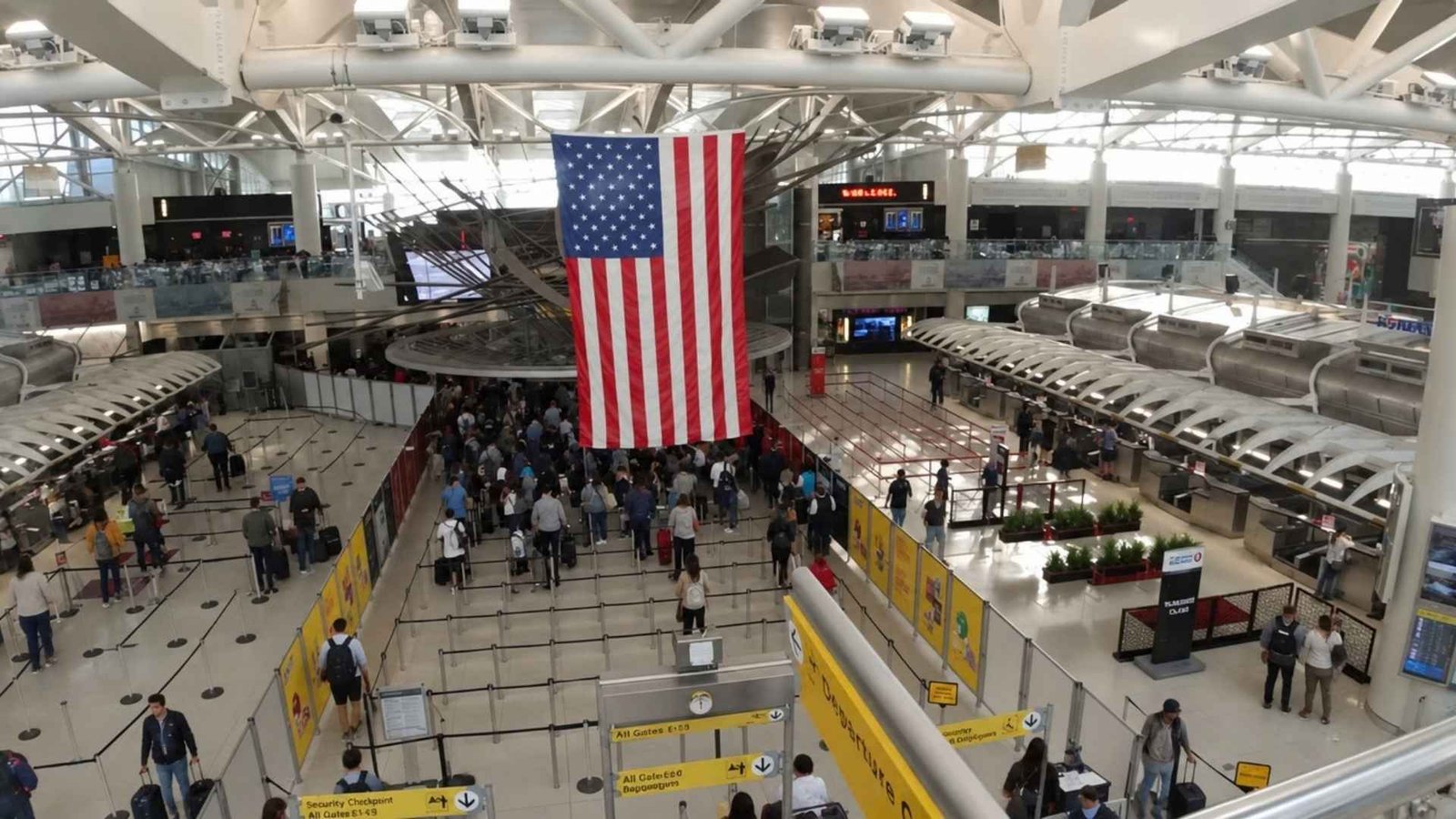
New York’s John F. Kennedy International Airport can feel complicated before you arrive: separate terminals, US entry formalities and a journey into Manhattan all need a little planning. This JFK Airport Guide explains how those pieces fit together, whether you are visiting New York or changing planes.
Start with three details: your operating airline, your terminal and whether JFK is your final stop or a connection. Those answers matter more than the airline logo on your booking confirmation.
JFK Airport Guide: Quick Answer
Check your terminal with the operating airline before travelling. AirTrain is free between airport terminals, but changing terminals normally means passing through TSA security again.
For a standard international arrival with an onward flight, expect US immigration, baggage collection, customs, bag recheck and security. Precleared arrivals follow a different process.
Even if you are only changing planes, you may need an approved ESTA or an appropriate US visa; check your eligibility before booking.
For Manhattan, your main options are AirTrain plus the subway, AirTrain plus the Long Island Rail Road, or an official taxi.
1. Understand JFK Airport Terminals Before You Travel
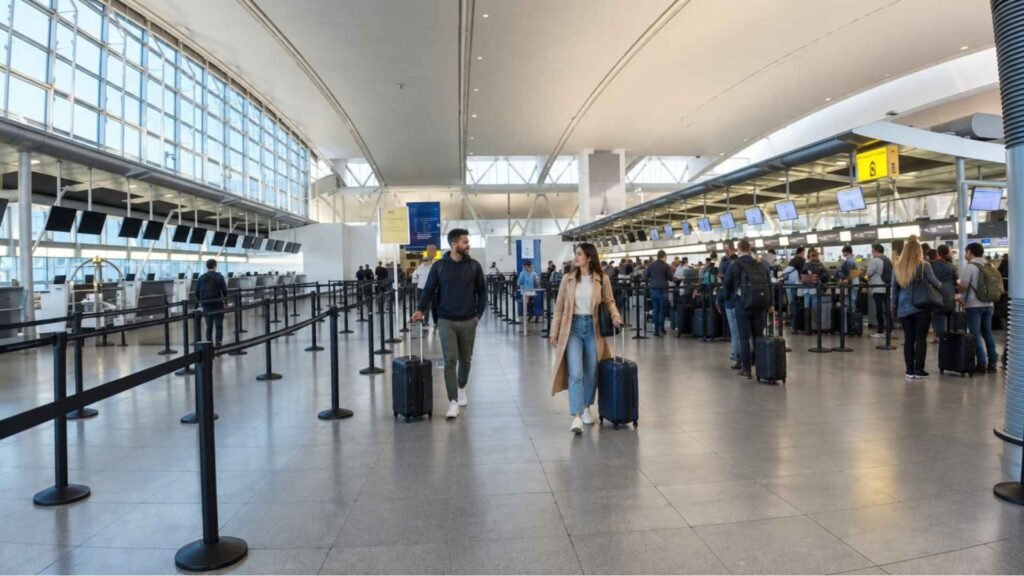
JFK Airport is in Queens, New York City. It is a separate airport from LaGuardia (LGA) and Newark Liberty (EWR). If your itinerary shows different airport codes, you have an airport change, not a terminal transfer.
The official JFK terminal directory checked for this guide lists the following passenger terminals. Airline examples are a starting point, not a substitute for your flight’s current terminal assignment.
| Terminal | Selected airlines |
|---|---|
| 1 | Air France, Turkish Airlines, Korean Air |
| 4 | Delta, Virgin Atlantic, Emirates |
| 5 | JetBlue, Cape Air |
| 7 | Aer Lingus, ANA, Air Canada |
| 8 | American Airlines, British Airways, Qatar Airways |
Check the airline actually operating your flight, particularly on codeshare bookings. A ticket sold by one airline may use another airline’s aircraft and terminal.
What About the New Terminals?
As of September 2026, the Port Authority’s New Terminal One project page lists its first phase as expected to open in 2027.
For Terminal 6, the published project schedule targets initial openings in 2026, but a target year does not confirm that passenger services have begun. At the time of checking, JFK’s official terminal directory still lists Terminals 1, 4, 5, 7 and 8. Use your airline’s flight-specific instructions for your travel date, particularly during the transition to new facilities.
Before departure, check your airline’s terminal information and current airport alerts. Road access, pickup arrangements and AirTrain services can change during construction.
Clara’s Tip: Save your flight number and terminal together. “British Airways flight from Terminal 8” is a more useful note for your journey than simply “JFK”.
2. Check US Entry Permission Before Booking a Connection
US entry requirements also apply when you connect internationally at JFK Airport. Eligible travellers can transit under the Visa Waiver Program with approved ESTA authorisation. ESTA is not a visa, and eligibility depends on more than where you live.
If you are not eligible for ESTA and have no other applicable exemption, you need an appropriate US visa. A C-1 transit visa is intended for immediate and continuous transit through the United States; an existing valid visitor visa may also be usable for transit, depending on your circumstances.
Check the US Department of State’s transit guidance before committing to an itinerary. If you intend to sightsee during your stop, ensure your permission covers that purpose rather than assuming a transit visa does.
Keep the document check separate from the connection-time check: having enough hours at JFK does not resolve missing entry permission.
3. Know What Happens When You Arrive at JFK Airport
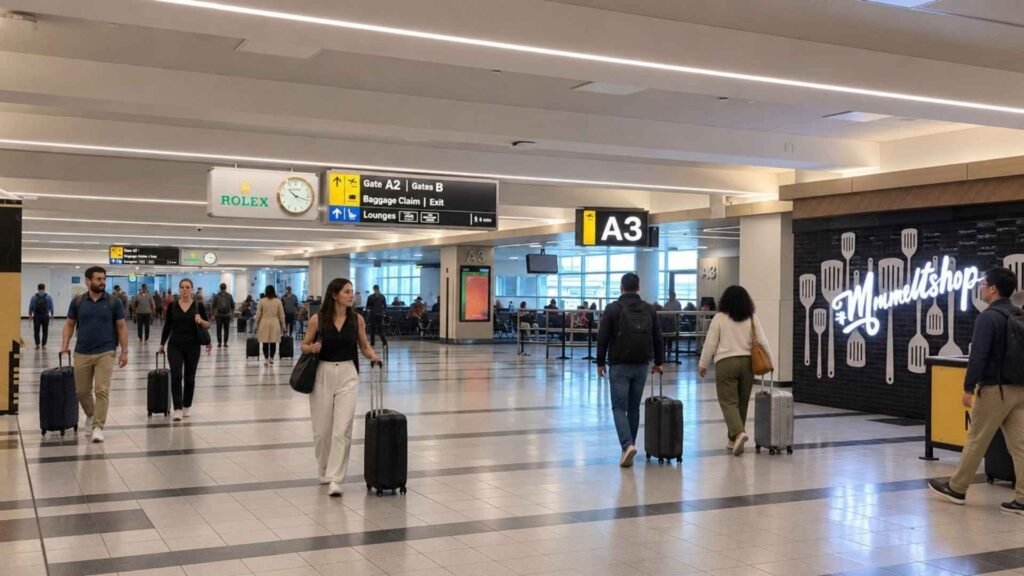
For a standard international arrival that has not completed US preclearance, follow the route to immigration, collect checked luggage and complete customs procedures before entering the public arrivals area.
Keep your passport, accommodation details and onward travel information accessible. Follow the queue instructions for your circumstances rather than assuming every passenger from your flight will use the same lane.
Connecting passengers should follow the transfer sequence in Section 4 before heading to their next gate.
Preclearance Arrivals Are Different
On flights that complete US preclearance before departure, US entry checks take place at the origin airport. Passengers normally bypass those arrival checks in the United States and can continue towards their connection or exit.
Confirm that your specific flight is precleared. A terminal change, separate-ticket booking or baggage arrangement may still create extra steps after landing.
If New York Is Your Final Destination
Once you reach the public arrivals hall, choose your transport and have your full accommodation address ready. Leave a flexible buffer before any booked activity: your landing time is not the time you will be outside with your bags.
Once you have settled into your accommodation, explore our guide to free things to do in New York City for parks, waterfront walks and iconic sights to include in your stay.
4. Plan Connections Around the Full Process
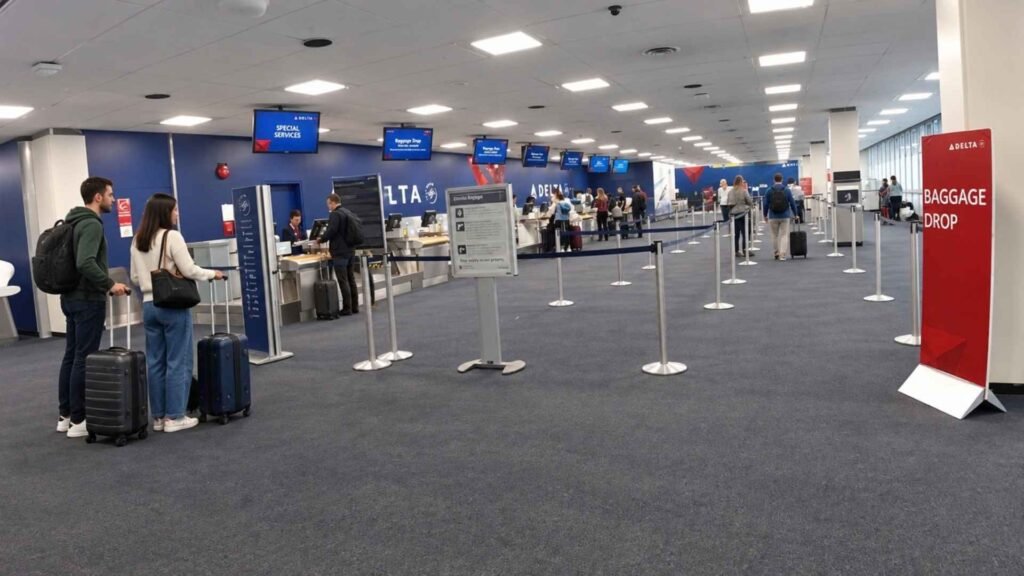
For connections at JFK Airport, the most useful distinction is between an airline-protected connection and a self-transfer on separate tickets.
For a protected itinerary, ask the airline whether the connection meets its requirements and how it will assist if an inbound delay disrupts the onward flight. For separate tickets, check the onward airline’s missed-flight policy; free rebooking is not guaranteed.
International Arrival to a US Domestic Flight
The official JFK connections guide sets out the standard arrival and transfer process:
- Complete US immigration.
- Collect checked baggage and clear customs.
- Recheck baggage as directed by the airline.
- Reach your departure terminal.
- Pass through TSA security and continue to the gate.
Preclearance and specifically confirmed airline programmes can alter this sequence. Follow instructions for your flight rather than assuming an exception available at another US airport also applies at JFK.
Domestic Arrival to Another Flight
If you arrive domestically and your next flight is reachable within the same secure terminal area, the connection can be simpler. Check the gate first, and ask your airline whether any document check is needed for an international departure.
Two flights in the same terminal can still involve a substantial walk. Locate the next gate before stopping for a meal.
How Much Connection Time Should You Allow?
There is no single comfortable connection time for every JFK itinerary. As an editorial planning recommendation rather than an official minimum, allow around 3–4 hours for a standard international arrival connecting on a protected ticket, and consider 5–6 hours or an overnight stop for a separate-ticket connection involving checked bags or a terminal change.
These are cautious starting points, not guarantees. Immigration delays, flight disruption and baggage queues can use up that margin. Add more flexibility when travelling on the last flight of the day or when replacing a missed ticket would be expensive.
Work backwards from the onward airline’s bag-drop and boarding deadlines, not just its departure time. Cabin baggage only removes one task; it does not remove entry or security requirements.
5. Use AirTrain for Terminal Transfers
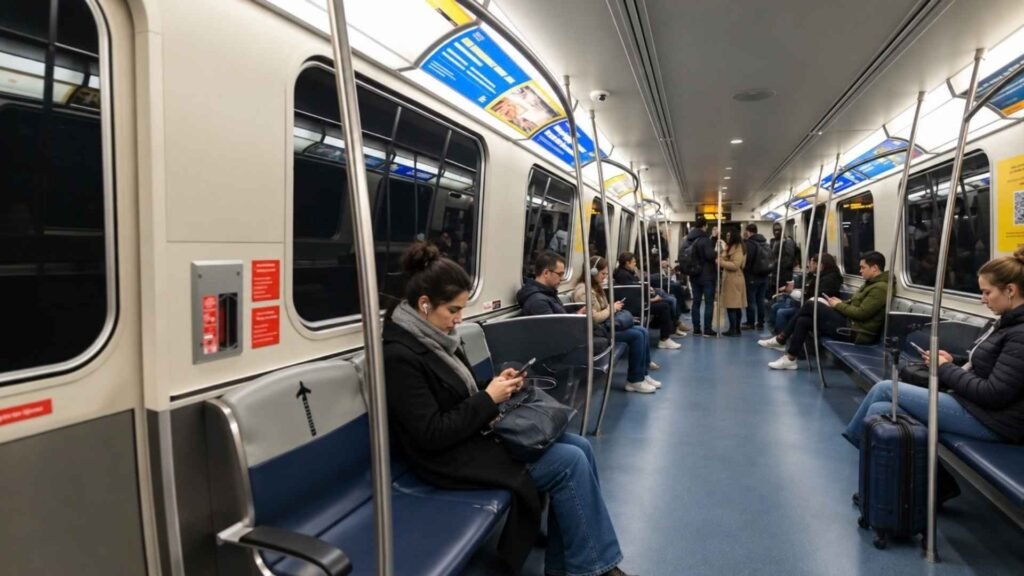
AirTrain is JFK’s main link between terminals and also connects with the rail and subway networks outside the airport. Terminal-to-terminal rides are free; a fare applies at the Jamaica and Howard Beach access points.
AirTrain is landside, outside the secure gate area. For a terminal change, budget for the walk to the station, waiting, the ride, the walk into departures and security screening. A short train ride is only one part of the transfer.
Follow station displays for the service operating that day. During construction or maintenance, a familiar route may involve modified service or additional instructions.
If you need mobility assistance, arrange it with your airline in advance and confirm which stages of the terminal transfer it covers.
6. Choose Your Route from JFK Airport to Manhattan
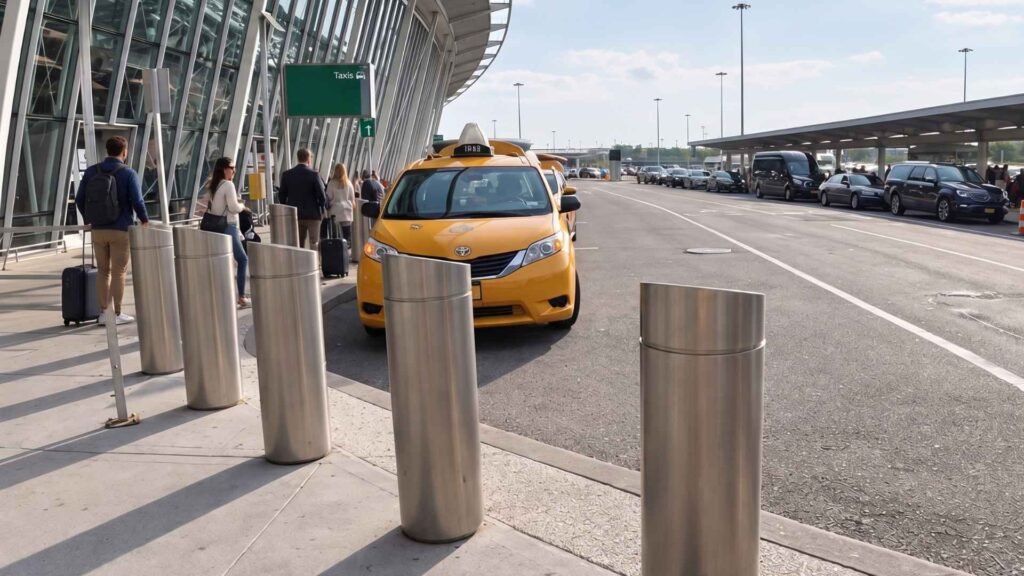
Choose transport around your hotel’s exact location, luggage and arrival time. The fastest route to a major station is not always the easiest route to your front door.
| Option | Indicative fare |
|---|---|
| AirTrain + subway | $8.75 + $3 = $11.75 total |
| AirTrain + LIRR | Off-peak: $8.75 + $5.25 = $14 total; peak: $8.75 + $7.25 = $16 total |
| Official yellow taxi | $70 flat fare, plus extras |
Rail and subway prices are per adult, including AirTrain, using the fares listed by the MTA when checked in September 2026. Discounts and ticket conditions can change the total. The taxi flat fare is per vehicle; applicable surcharges, tolls and any tip are additional.
AirTrain Plus Subway or LIRR
At Jamaica, transfer to the subway or a Manhattan-bound Long Island Rail Road train. LIRR services reach Penn Station or Grand Central; choose the destination closest to your accommodation. The subway offers a lower fare but usually a longer journey.
Use the MTA’s JFK-to-Manhattan guide to check the route and current fares. Allow separately for walking, waiting and the final journey from the station.
Taxis and App-Based Cars
Use the official taxi queue and dispatcher. The NYC Taxi and Limousine Commission’s fare schedule lists the regulated JFK–Manhattan rate and applicable extras. The $70 flat fare is not an all-inclusive quote, and it does not apply to every destination in New York City.
For app-based cars, read the pickup instructions before requesting your ride. Construction can move pickups away from the location you remember. Compare the full quoted price with public transport, especially when several people are travelling together.
Which Option Should You Choose?
- Near Penn Station or Grand Central, with manageable luggage: AirTrain plus LIRR is a practical starting point.
- Lowest cost among these options: choose AirTrain plus the subway, allowing for the final walk or transfer.
- Heavy luggage or a group: compare a taxi’s total cost with the combined public-transport fares.
7. Match JFK Airport Lounges and Hotels to Your Terminal
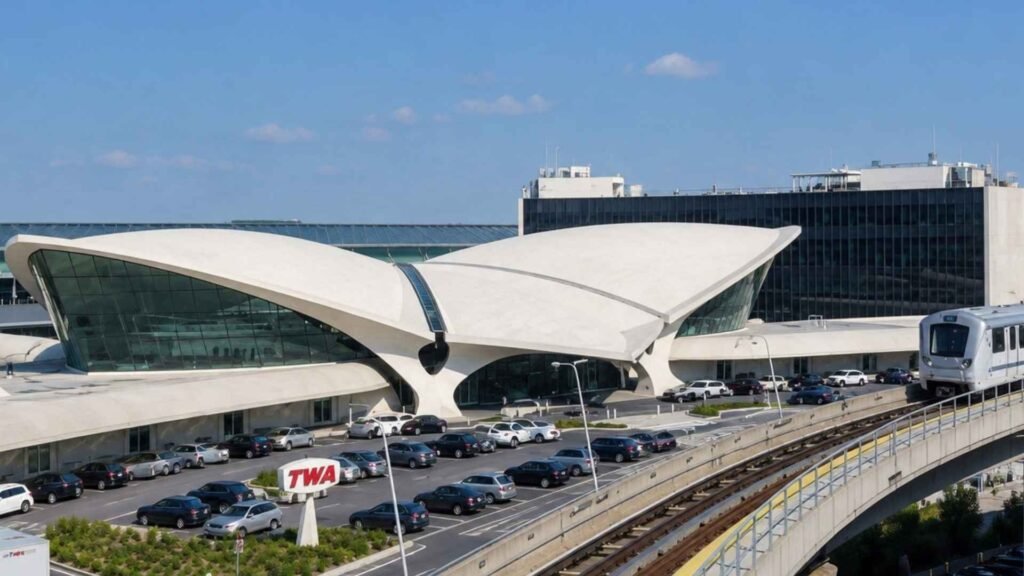
For a longer wait at JFK Airport, choose a lounge or hotel based on your departure terminal and the time you can realistically spend there.
Lounges: Check Eligibility First
Terminal 4 has several lounge options, including Delta Sky Club, the Delta One Lounge, the Centurion Lounge and the Virgin Atlantic Clubhouse. These are different products with different entry rules; a premium ticket or membership does not grant access to all of them.
Before paying or planning around a lounge, check:
- Whether you qualify with your flight, ticket or membership.
- Its terminal and location relative to security.
- Opening hours, guest rules and any time limit.
- Whether showers or other essential facilities are available.
For a short connection, prioritise a lounge in your departure terminal. Travelling elsewhere just for a lounge can consume the time you hoped to spend relaxing.
Hotels: On-Airport and Nearby Are Different
The TWA Hotel is next to Terminal 5 and is reached from that terminal by a walking connection. From other terminals, use AirTrain to Terminal 5 and follow the hotel signs. It is landside, so international arriving passengers must complete the applicable entry procedures first.
The hotel also offers day-use bookings, subject to availability and booking conditions. Check your actual usable room time after arrival formalities and before returning for your flight.
For off-airport hotels, confirm shuttle hours, frequency and pickup instructions directly. JFK’s designated hotel-shuttle connection is at Federal Circle, reached by AirTrain. Include that extra journey when comparing a cheaper room with an on-airport stay.
8. Prepare for Departure and Time in the Terminal
As a general starting point, aim to reach the correct terminal around three hours before an international departure and two hours before a domestic departure. Follow your airline’s instructions if it asks for more time, and add a separate allowance for getting to JFK during construction.
Check-in, baggage acceptance and boarding have different deadlines. Online check-in does not mean you can arrive at the gate just before departure.
Returning from Manhattan to JFK Airport
If travelling by LIRR, choose a service that stops at Jamaica, then follow signs to AirTrain and your departure terminal. Add your journey time from Manhattan on top of the recommended airport arrival window.
Prepare Your Cabin Bag
For TSA screening, pack ordinary cabin liquids in containers no larger than 100 ml (3.4 oz), within one quart-sized clear bag per passenger. Different provisions apply to medically necessary liquids and certain other items. Follow the officer’s instructions at your checkpoint.
Keep your travel documents, charger and anything you need during a delay in your cabin bag. Save your boarding pass and hotel address offline instead of relying entirely on a live connection.
Food, charging points and facilities vary by terminal and gate area. For a late arrival or early departure, check your preferred restaurant’s or lounge’s opening hours. Buy essentials before settling into a quieter part of the terminal.
Common Mistakes to Avoid at JFK Airport
- Confusing JFK with LaGuardia or Newark.
- Treating the AirTrain ride as the entire terminal-transfer time.
- Assuming a through-tagged bag never needs to be collected.
- Buying lounge access before checking the terminal and eligibility.
- Comparing a taxi’s flat fare before extras with a train’s total price.
Frequently Asked Questions About JFK Airport
How Long Does It Take to Get from JFK Airport to Manhattan?
The LIRR section between Jamaica and Penn Station or Grand Central takes roughly 20 minutes, depending on the service. Your complete journey takes longer: add AirTrain, walking, waiting and travel from the Manhattan station to your accommodation. Allow additional time for immigration and baggage collection before starting your journey into Manhattan. The subway generally takes longer than LIRR, while taxi journey times depend on traffic and your destination. Check a live route planner once you are ready to leave the terminal.
Can you walk between JFK terminals?
Use AirTrain for transfers between separate terminal buildings. Walking between gates within one terminal is a different matter.
Is a two-hour international connection at JFK enough?
It may be sold by an airline for a particular protected itinerary, but it is not a comfortable universal allowance. Check whether your journey involves immigration, baggage collection, a terminal change and security. Avoid choosing that margin for a separate-ticket international arrival.
Do I need ESTA if I only change planes at JFK?
Yes, if you are travelling under the Visa Waiver Program. Travellers using an appropriate US visa or another applicable exemption follow different requirements. See Section 2 for the entry-permission checks relevant to your circumstances.
Can I visit Manhattan during a JFK layover?
Only consider it when your entry permission allows the visit and the timetable leaves a substantial margin. Subtract arrival formalities, both transport journeys and the required return time from your layover. For a short stop, staying near the airport is the more practical choice.
Final Thoughts
A smoother journey through JFK Airport starts with the correct terminal and a realistic plan for what happens between flights or after landing. Confirm your entry documents, leave room for baggage and security, and choose Manhattan transport around your accommodation. Those decisions make the airport much easier to manage.