
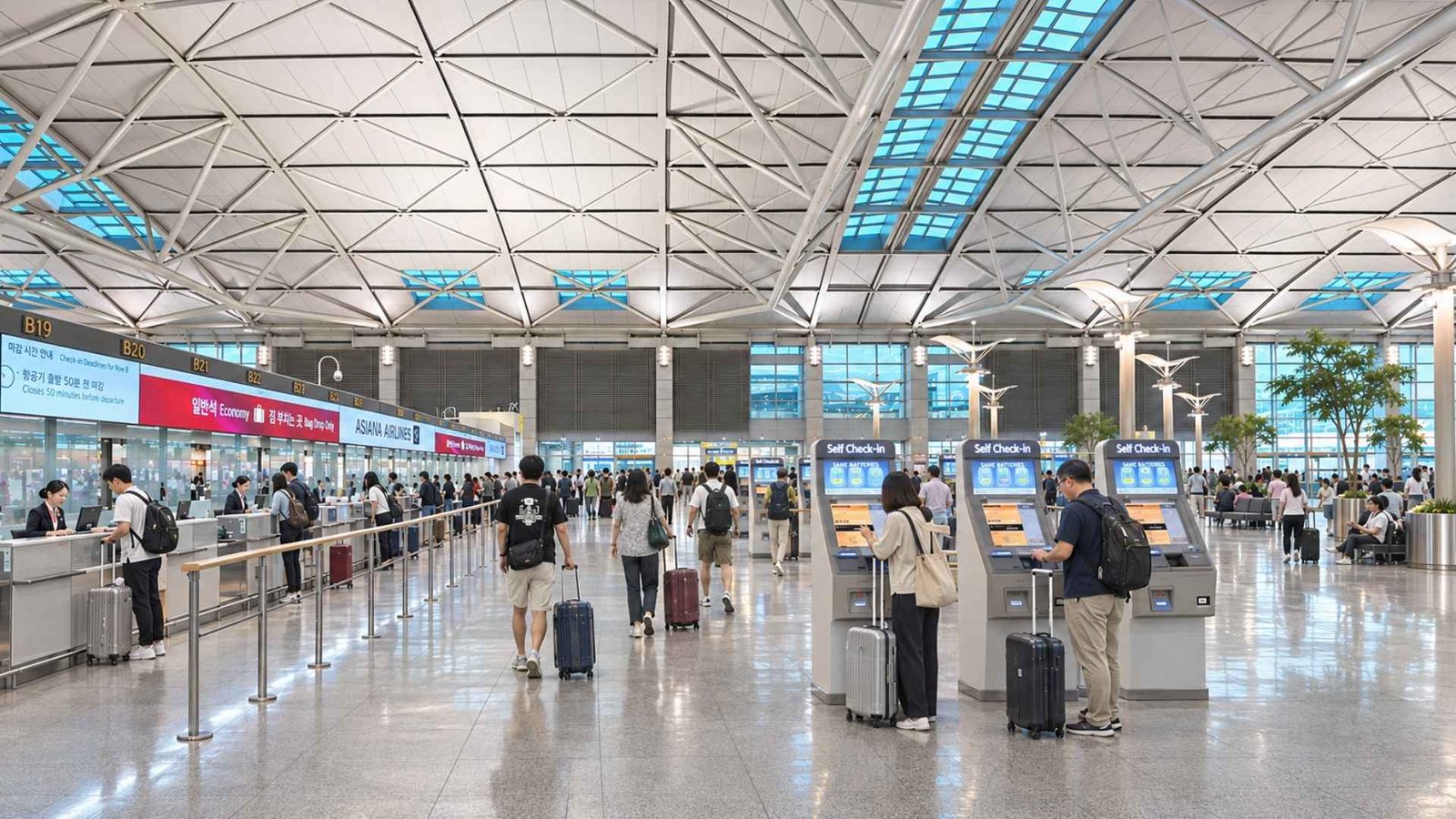
Your first decision after landing at Seoul Incheon Airport is which signs to follow. If Seoul is your destination, follow Arrivals to immigration and baggage claim. If you’re catching another flight, check where your bags are tagged and whether you can follow Transfer to your next gate without entering South Korea.
This guide helps you find your way around ICN’s two terminals and separate concourse, choose the easiest route into Seoul for your stay and find somewhere to rest if you have time between flights.
Quick Answer: Seoul Incheon Airport at a Glance
Going to Seoul? The AREX Express reaches Seoul Station in about 43 minutes from Terminal 1 and 51 minutes from Terminal 2, once the train leaves. For Hongdae, the All-Stop Train serves Hongik University Station directly. An airport limousine bus may be simpler if it stops close to your hotel.
Catching another flight? If your airline confirms you can connect within the secure area, follow the green Transfer signs.
| What to check | What to know |
|---|---|
| Airport code | ICN is Incheon International Airport. GMP is Gimpo, a separate airport. |
| Terminal 1 examples | Jeju Air, Eastar Jet and Air Premia. |
| Terminal 2 examples | Korean Air, Asiana Airlines, Jin Air and Delta Air Lines. |
| Long layover | Check your gate area before choosing a lounge, nap zone, shower, transit hotel or airport tour. |
1. Check Your Terminal Before You Leave
Seoul Incheon Airport is in Incheon, west of Seoul. Use the operating airline (the carrier that flies the plane) to look up your terminal in the Incheon Airport flight and airline directory.
Asiana Airlines moved its Incheon operations to Terminal 2 on 14 January 2026. If you’re flying with Asiana, use T2 when planning your airport journey. See Asiana’s terminal relocation notice.
The Concourse is a separate boarding area served by an internal shuttle train. If your gate is there, check in at the terminal listed for your flight and follow the gate signs after security. If you arrive at the Concourse and are entering South Korea, follow the airport’s arrivals route to the terminal.
💡 Clara’s Tip:
Save a screenshot of your operating flight number, terminal and hotel address before you fly. On a codeshare, where one airline sells a seat on another airline’s flight, the booking may show two flight numbers. The operating flight number is the one I’d use to check the airport’s live boards and give to a driver meeting me at arrivals.
2. Arriving at Seoul Incheon Airport
Before you fly. The entry documents you need depend on your passport and travel purpose. Start with the Korea Visa Portal. If you need to submit an arrival declaration, the free official Korea e-Arrival Card can be submitted online from three days before arrival, based on Korean time. The official K-ETA exemption notice confirms that the temporary exemption for eligible nationalities runs through 31 December 2026. For travel after that date, check the rule in force for your passport before you fly.
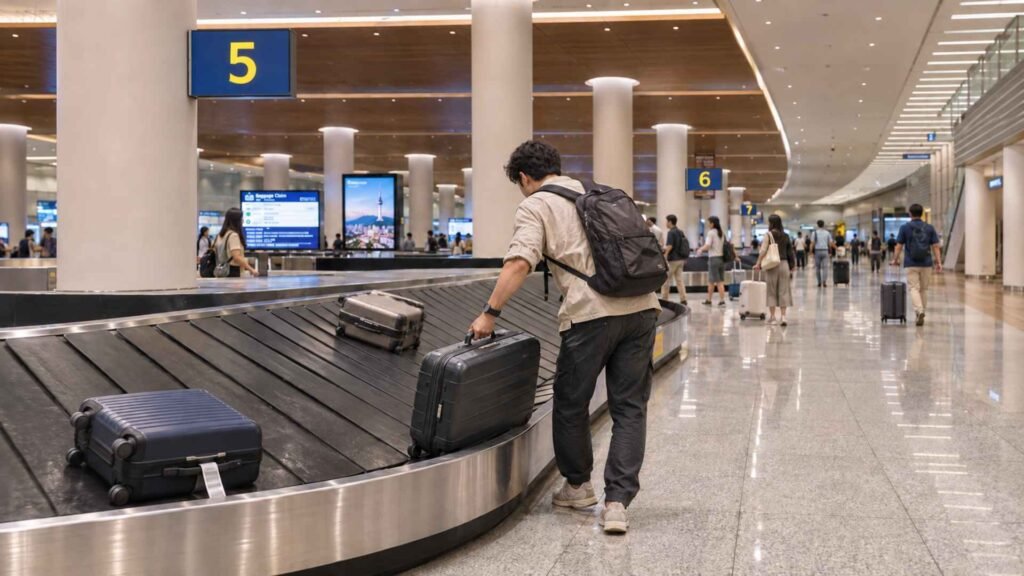
If your journey ends at ICN, follow Arrivals to immigration, collect checked luggage and pass through customs into the public arrivals hall. Keep your passport and the address of your first accommodation handy. If your bag is missing or damaged, contact the airline’s baggage desk before leaving the reclaim area.
If you’ll use the subway or local buses in Seoul, you can buy and top up a T-money card at a convenience store. For a local SIM or cash, look for mobile service counters or ATMs in the public area before you head into town.
3. Work Out Whether Your Connection Is Airside
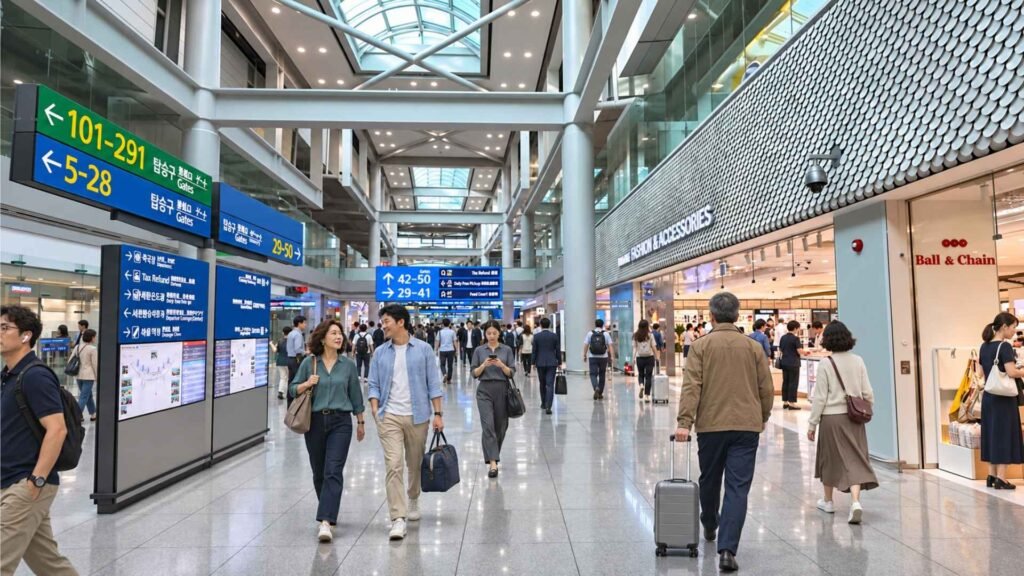
For a confirmed international connection airside (inside the secure area), follow the green Transfer signs. Allow time for transfer security and any shuttle ride. Between T1 and T2, the internal shuttle route runs via the Concourse. Use the official transfer guide for your arrival and departure areas.
If you’re travelling on separate tickets, confirm these details with your airlines before departure:
- Checked baggage. Can your bag be checked through to your final destination?
- Boarding pass. Can you obtain your next boarding pass airside?
- Check-in deadline. If you need to collect and recheck your bags, when does the next airline’s bag drop close?
If you need to collect your bags or use a public check-in counter, you must be eligible to enter South Korea.
Once landside (in the public area), you can change terminals by free shuttle bus or paid Airport Railroad. The free shuttle departs every 10–20 minutes from T1 to T2 and every 7–20 minutes from T2 to T1. The Airport Railroad ride between the terminals takes about 6 minutes. Allow extra time to reach your stop or station, wait for your ride and complete bag drop and departure screening. See the public inter-terminal transport guide.
A flight from Gimpo (GMP) requires a journey between airports. For a domestic connection from ICN, ask whether your itinerary uses a designated transit-only flight.
4. Choose Your Transport from Incheon Airport to Seoul
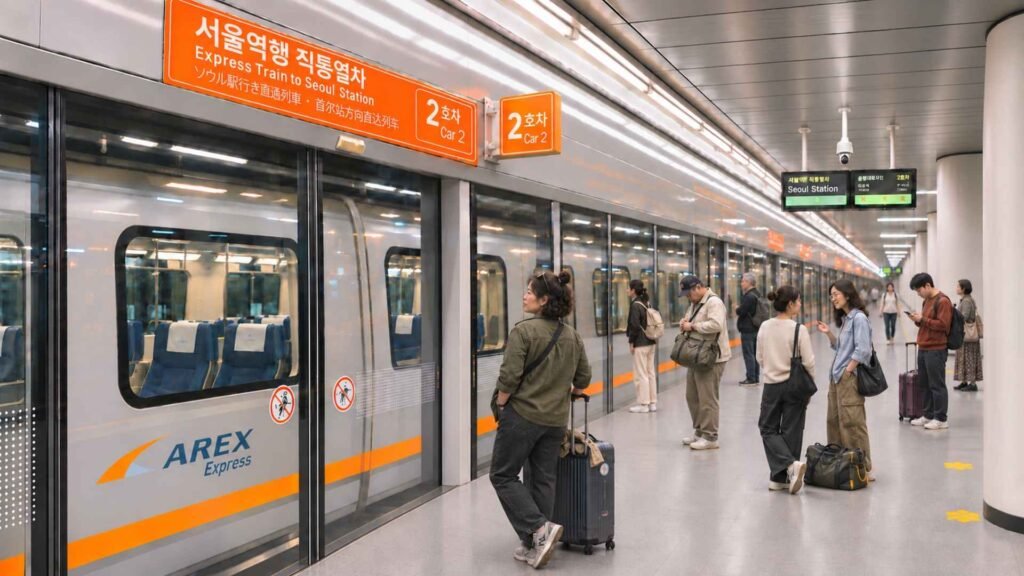
Start with the closest useful stop to your hotel. A faster ride to Seoul Station can still leave you with a subway change, stairs or a taxi at the other end.
| Option | Best for | Journey time | Adult one-way fare |
|---|---|---|---|
| AREX Express | A reserved seat and a direct ride to Seoul Station | About 43 min from T1 or 51 min from T2 | ₩13,000 |
| AREX All-Stop Train | Hongdae or a lower-cost ride to Seoul Station | To Seoul Station, about 59 min from T1 or 66 min from T2 | To Seoul Station with a transport card, ₩4,750 from T1 or ₩5,350 from T2 |
| Airport limousine bus | A direct ride to a stop near your hotel | Varies by route and traffic | Varies by route |
| Official taxi or pre-booked transfer | Door-to-door travel with luggage or a late arrival | Varies by destination and traffic | Metered taxi or quoted transfer price |
Fares checked in November 2026.
Train times are for the ride itself. The Express uses a separate ticket, while the All-Stop Train accepts T-money and serves Hongik University Station in Hongdae.
If you land close to midnight, estimate when you’ll reach the platform after immigration and baggage reclaim, then compare that with the last train for your terminal and travel date. Find current departures and ticket options on the official AREX website.
If the last train is too early, a night bus that serves your destination or a taxi from the official rank may be simpler. Compare available routes and boarding locations in Incheon Airport’s ground transport directory.
5. Find a Lounge, Shower or Place to Sleep
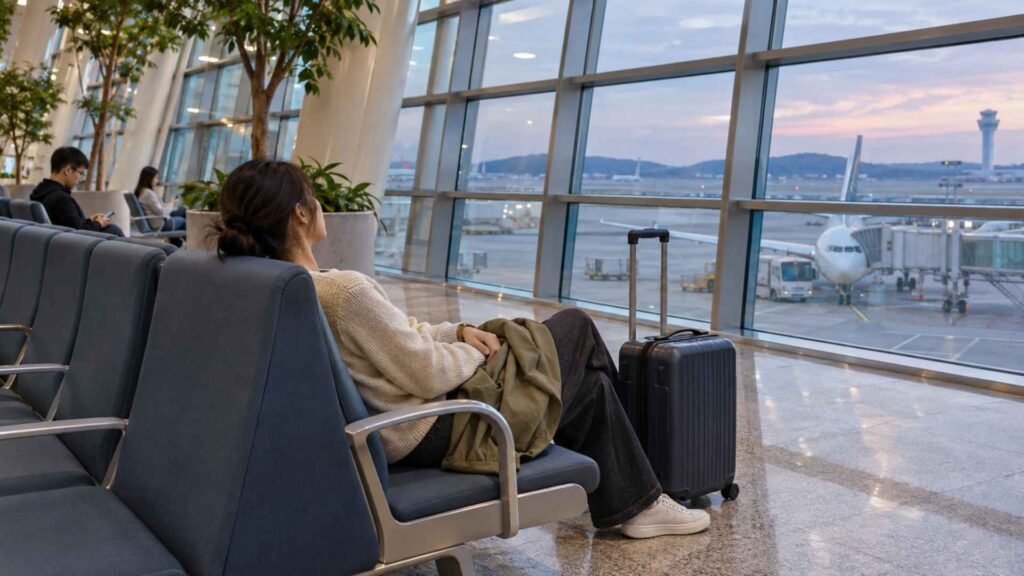
Look up facilities by terminal and security area. A lounge in another terminal may be impractical to reach, even if your card or airline gives you access. Your departure gate is a good starting point when comparing lounges, opening hours and access rules. For a short rest, the airport lists nap zones and showers in its terminal facilities directory.
For an overnight wait airside, look at the transit hotel in the terminal you can access. If you’re already landside, the Darakhyu capsule hotels are in the public area. A hotel near the airport can also work if you can enter South Korea and have time to get back for check-in. Check where the hotel is before booking and confirm any early-morning shuttle. Darakhyu’s booking FAQ explains the difference between the capsule hotels and the airside transit hotels.
6. Decide Whether to Leave During a Layover
With a short layover, I’d stay near the departure gate once the transfer is sorted. For a longer wait, an airport transit tour can be an option if the schedule and eligibility rules fit your flights. Check the official Incheon Airport transit tour requirements before counting on a place.
If you’re eligible to enter South Korea and want to visit Seoul independently, budget for both journeys and the time you’ll spend at immigration and security. If that leaves only enough time for a quick meal near a station, I’d stay at ICN.
7. Plan Your Departure from the Gate Backwards
Before leaving for the airport, confirm:
- Your departure terminal, using the operating flight number.
- Check-in and bag-drop deadlines, especially if you’re travelling with checked luggage.
- Your boarding time, allowing for the walk or shuttle ride to your gate.
- Any assistance you need, arranged with your airline before travel.
If you’re coming from Seoul, include the journey to ICN and the walk from the station or bus stop to check-in in your departure plan. The airport’s departure procedures explain the stages from check-in to boarding.
If you’re taking an early flight after staying near ICN, verify the first hotel shuttle or arrange transport for the time you need. If you’re taking AREX from Seoul, make sure your ticket is for the correct terminal. Terminal 1 and Terminal 2 are separate stops.
Seoul Incheon Airport FAQs
Which terminal does Asiana Airlines use at Incheon Airport?
Asiana Airlines uses Terminal 2 at Incheon. On a codeshare, use the operating flight number to confirm your terminal.
Can I transfer between Terminal 1 and Terminal 2 without entering South Korea?
Yes, if your itinerary qualifies for an airside transfer. Follow the airport’s designated route via the Concourse.
Is there free Wi-Fi at Incheon Airport?
Yes. Select AIRPORTWIFI in your device’s Wi-Fi settings to check your next flight or save directions to your hotel.
Where do I catch the AREX at Incheon Airport?
At either terminal, follow the Airport Railroad signs to B1 of the Transportation Center. From there, choose the Express Train for a direct ride to Seoul Station or the All-Stop Train if you’re heading to Hongdae.
Can I sleep at Incheon Airport during a layover?
Yes. ICN has nap zones and transit hotels in the secure area, plus Darakhyu capsule hotels in the public area.
Final Thoughts
After a long flight, the easiest route from Seoul Incheon Airport is often the one with the simplest last leg. I’d choose a bus that stops near my hotel over a faster train if it meant skipping a subway change with luggage.
If you’re connecting, find your next gate and note when boarding starts before making plans for the layover. Once you know how much time you actually have, it’s easier to choose between a meal, a shower or a quiet spot to sit.