
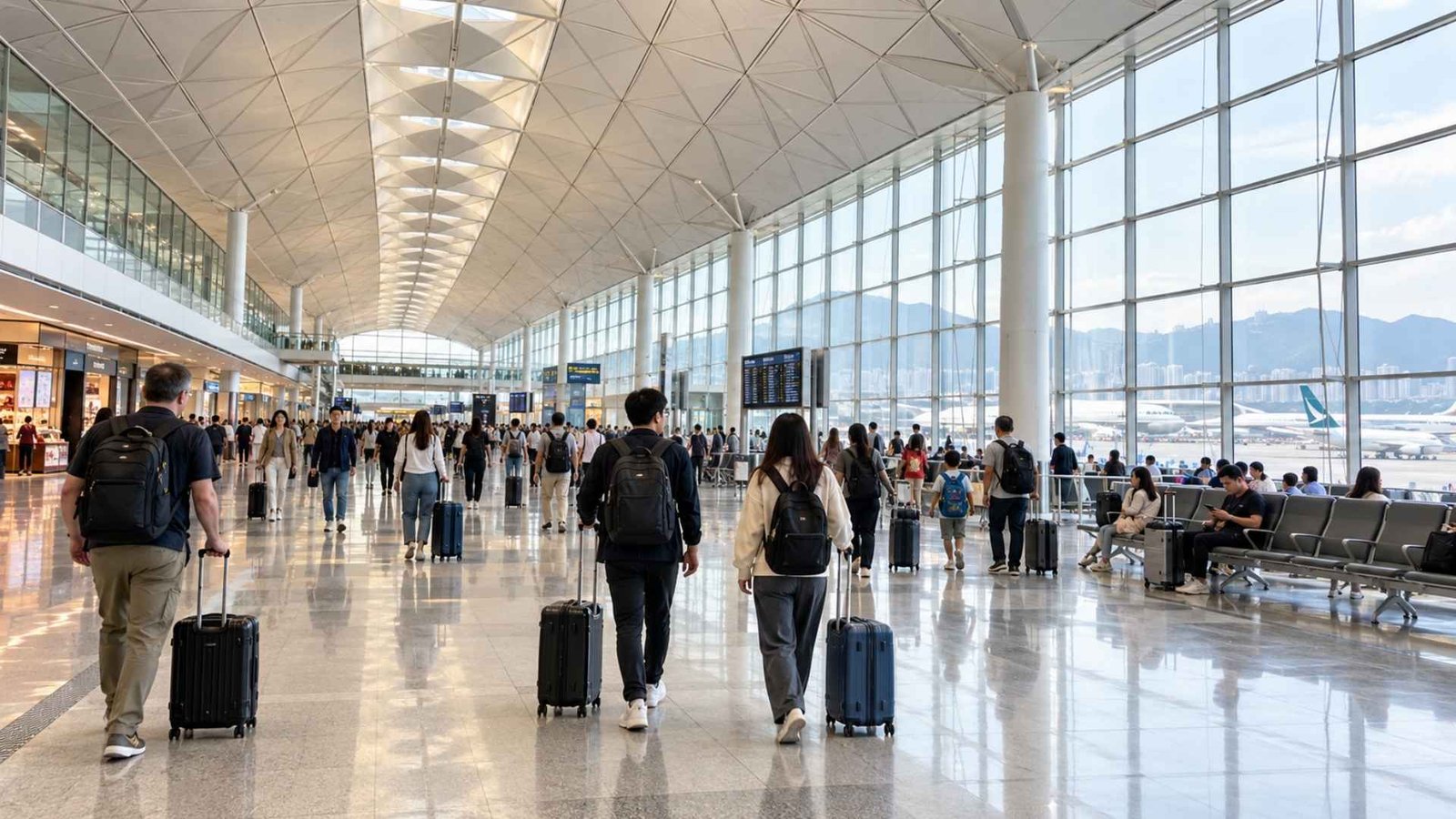
A Hong Kong Airport transit is easier to plan when you know where your bags are going, how to get your next boarding pass and how much time you have before boarding. A short connection needs a different approach from a long layover, especially if your onward gate is in another concourse.
This guide covers the journey from your first check-in desk to your connecting flight at HKG. You will find practical advice on connection times, transit eligibility, security, gate transfers and longer layovers, with separate-ticket arrangements highlighted where they change the process.
Quick Answer: Hong Kong Airport Transit at a Glance
For a standard airside connection, follow the transfer signs, obtain your onward boarding pass if needed, clear transfer security and continue to your departure gate. You normally remain in the airport’s restricted area rather than passing through Hong Kong arrival immigration.
For a more comfortable through-ticket connection, aim for around two to three hours where possible. This is a planning preference, not an official minimum: your airline must confirm the connection requirement for your exact flights.
| What to check | What you need to know |
|---|---|
| Ticket arrangement | Confirm whether your flights form one through-ticket or separate bookings. |
| Checked baggage | Check the destination printed on your baggage receipt. |
| Onward boarding pass | Establish whether it will be issued before departure or at a transfer desk. |
| Connection time | Check that the itinerary meets your airline’s requirements. |
| Transit eligibility | Check the rules for your nationality and travel document, even if staying airside. |
| Boarding deadline | Plan around boarding and gate closure, not just departure time. |
For the wider airport layout and facilities, see our Hong Kong International Airport Guide.
1. Check Your Tickets and Baggage Arrangements
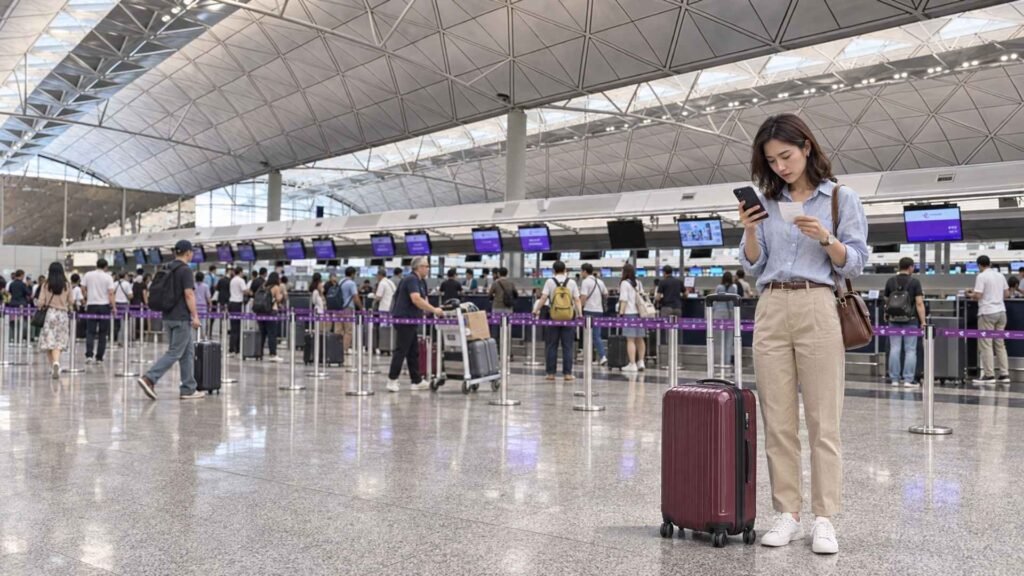
The most useful preparation for Hong Kong Airport transit happens before your first flight. Confirm how your connection is booked, then check the baggage arrangements when you hand over your suitcase.
Travelling on a Through-Ticket
Ask the check-in agent whether you and your bags have been checked through to the final destination. Look at the airport code on your baggage receipt and keep it until the journey is complete.
Cathay Pacific states that passengers with connecting itineraries on a single ticket, or connections between flights operated by the Cathay Pacific Group, will be through-checked to their final destination.
Its policy also allows through-checking on certain separate-ticket connections involving partner airlines when the journey starts with Cathay Pacific. The same arrangement may not be available when another airline operates the first flight. Check Cathay Pacific’s connecting-flight policy if it applies to your journey.
The key is the confirmed arrangement for your booking, not simply whether both flights appear in the same app.
Travelling on Separate Tickets
Before travelling, ask whether your bags can be transferred and whether your onward check-in can be completed airside. If you need to collect baggage or use a landside check-in counter, you must also meet Hong Kong’s entry requirements and allow time for the full arrival and departure process.
A through-checked bag does not, by itself, establish protection against missing a separately booked flight. Confirm who will assist if the first service is delayed.
2. How Much Time Do You Need for a Hong Kong Airport Transit?
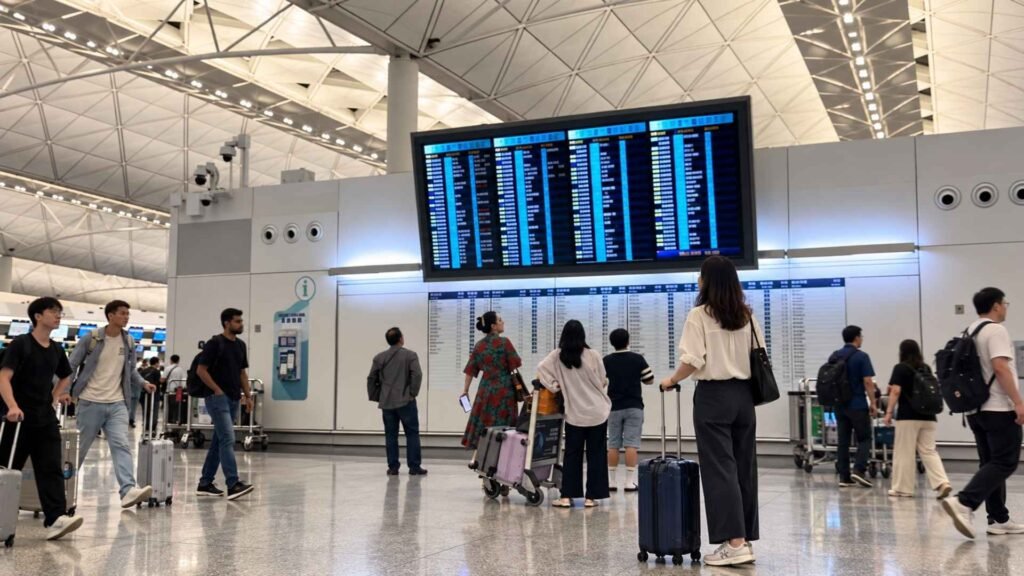
HKIA does not publish one minimum connection time that applies to every airline and destination. Your operating airline should confirm whether your particular connection is valid.
A valid connection can still feel rushed. Disembarkation, security, document checks and the route to your next gate all use part of the scheduled layover.
Choosing a Comfortable Connection
For a through-ticket journey with checked-through baggage, use these practical planning preferences:
| Scheduled connection | How to approach it |
|---|---|
| Under 90 minutes | Book only after the airline confirms it is valid for your itinerary, and prioritise the transfer on arrival. |
| Around two hours | A reasonable target for a straightforward transfer, with some room for the airport process. |
| Around three hours | A more relaxed choice for families, travellers needing assistance or anyone wanting a meal between flights. |
| Longer layover | Consider rest or other activities after accounting for the transfer route and boarding deadline. |
Connections requiring baggage collection and fresh check-in need a separate assessment. If missing the onward flight would seriously disrupt your trip, consider the availability of later flights as well as the length of the connection.
Work Back from Gate Closure
Cathay Pacific’s boarding gates close 15 minutes before scheduled departure, effective from 1 June 2026. Its Hong Kong departures also began boarding five minutes earlier from that date.
Other airlines set their own deadlines. Follow the boarding time on your pass and the operating carrier’s instructions.
For example, a 90-minute connection does not provide 90 minutes to explore the airport. Time spent leaving the aircraft comes out of that window, and the onward gate closes before departure.
💡 Clara’s Tip:
Set an alarm for when you need to leave the restaurant, lounge or resting area. Build in the journey to your gate, then check the departure screens again before setting off.
What If Your Incoming Flight Is Delayed?
Tell the cabin crew if your connection is becoming tight. After arrival, check your onward flight’s status and ask transfer staff whether to continue directly to the gate or arrange an alternative flight.
If rebooking is necessary, confirm:
- Your replacement flight and boarding pass.
- Where your checked baggage will go.
- Whether any meal or accommodation assistance is available under the circumstances.
For separate bookings, contact the onward airline promptly to discuss your options before buying a replacement ticket.
💡 Clara’s Tip:
Set an alarm for when you need to leave the restaurant, lounge or resting area. Build in the journey to your gate, then check the departure screens again before setting off.
3. Do You Need a Visa to Transit Through Hong Kong?
Visa requirements for Hong Kong Airport transit depend on your nationality and travel document. Remaining airside does not exempt every traveller from needing a visa.
Hong Kong’s Immigration Department identifies exceptions that require a visa even when the passenger stays within the airport transit area. Check your nationality entry and its footnotes in the official visa and entry-permit requirements.
Airside Transit and Entry Are Different
An airside connection means remaining within the restricted airport area while continuing to another flight.
Collecting baggage, using a landside hotel or leaving for a city visit involves entering Hong Kong. Check the entry requirements separately if any of those activities form part of your plan.
Complete these checks before your first flight, especially if your itinerary could require landside check-in.
Keep Onward Documents Accessible
Your airline may also need to verify that you can travel to your final destination. Keep your passport, onward booking and any required visas or travel authorisations together.
Save essential booking details offline so you can retrieve them without relying on an internet connection.
4. Follow the Transfer Signs and Get Your Boarding Pass
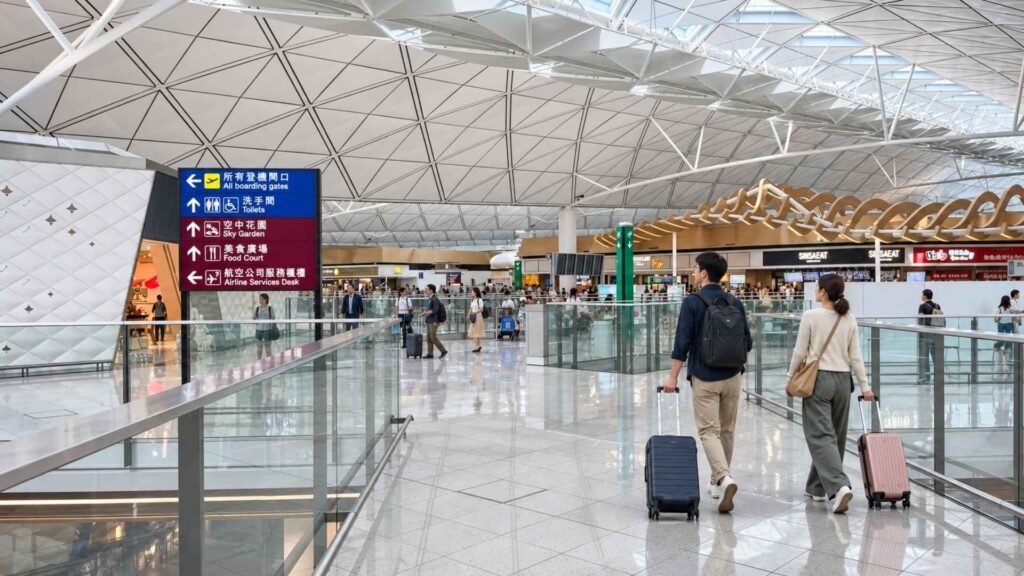
On arrival, follow the transfer signs. For an airside connection, stay on the transfer route rather than heading towards arrival immigration and baggage reclaim.
If You Already Have Your Boarding Pass
Continue towards transfer security, then follow the signs to your departure gate. Check your flight on the departure screens because the gate may have changed since your boarding pass was issued.
If You Need Your Boarding Pass
Go to your airline’s designated transfer desk before continuing. HKIA’s official transfer instructions include access to transfer-desk information.
An itinerary confirmation is not a boarding pass. If your airline app asks you to complete a document check, resolve it before stopping for food or shopping.
For a short connection, show staff your onward flight number and boarding time immediately if you need directions. This helps them identify the appropriate next step.
5. Prepare for Transfer Security
Hong Kong Airport transit includes security screening before you continue to your onward flight, even if you were screened at your original departure airport.
Keep your passport and boarding pass accessible, and follow the instructions at your screening lane.
Liquids: The 100 ml Limit Still Applies
Standard cabin liquids, aerosols and gels must be in containers of 100 ml or less, packed into one transparent resealable bag with a capacity of one litre or less per passenger. Exceptions may apply to medicines, baby milk or food, and special dietary requirements, subject to verification.
HKIA’s upgraded smart screening channels allow liquids and electronic devices to remain inside hand baggage during screening. This changes how the bag is screened; it does not remove the 100 ml container limit.
Check the airport security requirements before packing.
Duty-Free Liquids Need Extra Attention
Duty-free liquids in tamper-evident bags undergo additional screening during transit. Security staff may open the bag for inspection and reseal cleared items in a new bag.
Keep purchases sealed and retain the receipt. Check the rules for your complete itinerary before buying larger liquid items, particularly if another transfer follows Hong Kong.
Power Banks Belong in Cabin Baggage
For flights departing HKG, passengers may carry a maximum of two power banks, in cabin baggage only. Recharging the power banks during the flight is prohibited.
Airline rules may impose further restrictions. Cathay Pacific also prohibits using power banks during flight and storing them in overhead compartments; they must remain in cabin baggage under the seat in front. Check your airline’s capacity limits and storage requirements before travelling.
Allow for Additional Checks
Security staff may request further inspection of your belongings. Passengers departing for the United States should also allow for additional requirements relating to electronic devices.
On a tight connection, complete screening before making optional stops.
6. Find Your Gate: APM and Sky Bridge
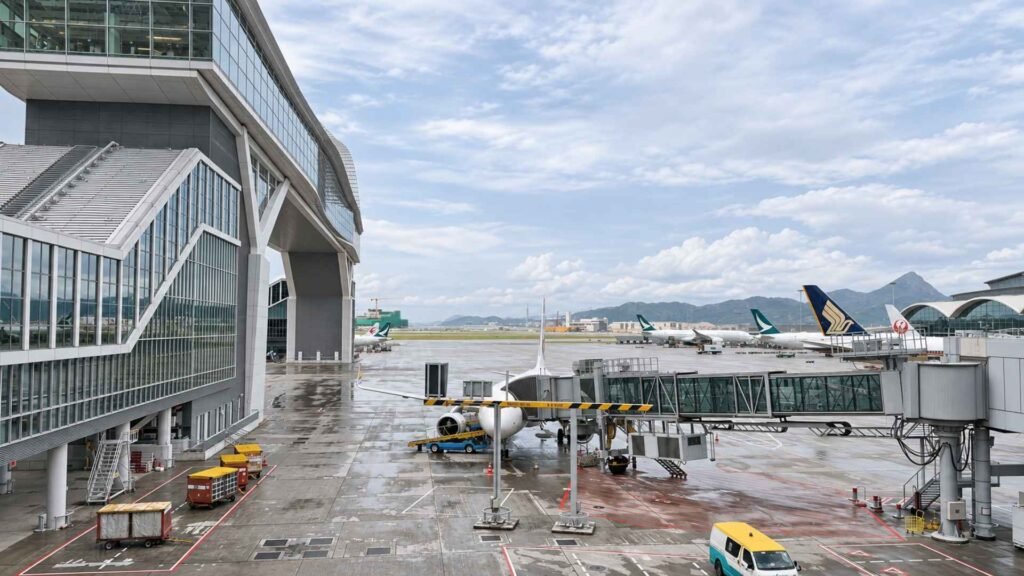
Your departure gate matters more than the terminal name alone. A Hong Kong Airport transit can involve walking between gate areas or using the airport’s Automated People Mover.
Check the departure screen before choosing somewhere to eat or rest.
T1 Midfield Concourse: Follow the APM Route
The Automated People Mover, or APM, serves Terminal 2, Terminal 1, T1 Midfield Concourse and SkyPier Terminal on its respective routes. Follow the signs for your specific flight’s gate area.
SkyPier handles eligible connections between flights and cross-boundary ferry or transfer-coach services serving destinations in the Chinese Mainland and Macao. It is not the usual route for a flight-to-flight connection.
The APM does not run around the clock. For a late-night transfer, check the official APM information and follow the airport’s alternative routing instructions outside operating hours.
T1 Satellite Concourse: Walk via Sky Bridge
Sky Bridge connects Terminal 1 with T1 Satellite Concourse, replacing the shuttle buses previously used between the buildings.
Allow around eight minutes for the walking connection between Terminal 1 and T1 Satellite Concourse via Sky Bridge. Your full gate-to-gate journey will take longer, depending on your arrival and departure gates, walking pace and any stops along the way.
Keep Checking Your Gate
You do not need to memorise the airport’s gate ranges. Instead:
- Find your flight on the departure screen.
- Confirm its current gate.
- Follow the signs towards that gate area.
- Recheck after any extended stop.
If you need wheelchair assistance, arrange it through your airline or travel agent before travelling.
7. How to Spend Your Hong Kong Airport Layover
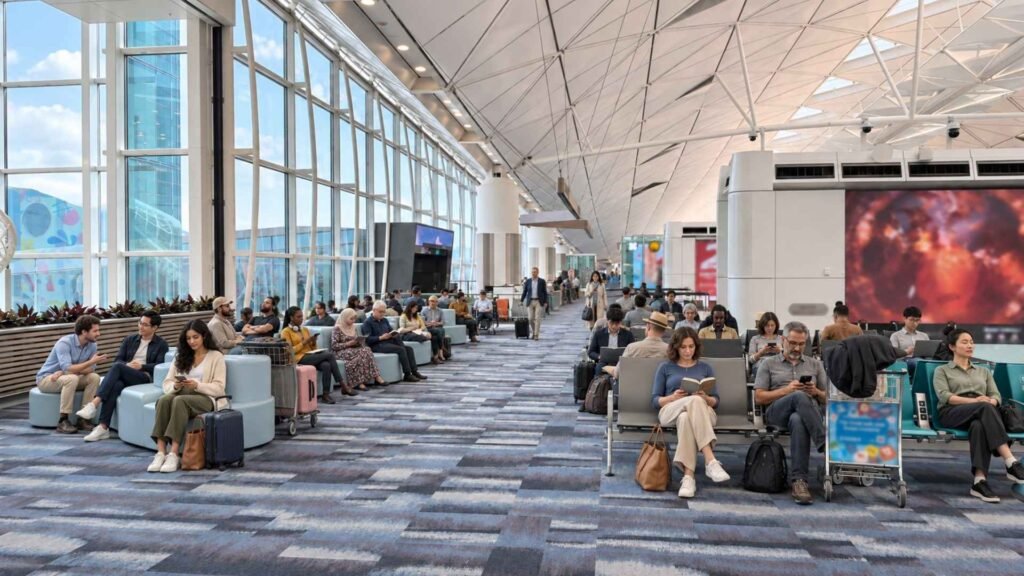
The best layover plan depends on the time left after essential transfer tasks. Resolve your documents, check your gate and calculate when you need to start walking before choosing an activity.
Short Layover: Keep the Plan Simple
For a tight connection, concentrate on the transfer process and reaching the gate area.
If your gate has not been announced, stay somewhere you can monitor the departure screens easily. Choose a quick food stop only once you know how much time is available.
Can You Take a Shower During a Layover?
HKIA lists complimentary showers near Gates 12 and 43 on Arrivals Level 5, open 24 hours. Shampoo, bath gel and hair dryers are provided, while towels and other consumables are available from vending machines.
Because the showers are on the arrivals level, check access before completing your transfer route. Returning from departures may not be possible from your position.
Use the official shower locations to plan the stop, and allow for any wait.
Where Can You Rest Between Flights?
Resting lounges are available on Departures Level 6. Airline lounges and pay-in lounges provide other options, depending on eligibility and availability.
Before choosing one, check its location, opening hours and access conditions. A lounge visit is most useful when it leaves enough time to reach your gate comfortably.
What About an Overnight Connection?
For an overnight Hong Kong Airport transit, confirm with your airline that your itinerary allows you to remain airside and that you can obtain the documents needed for your onward flight.
Check whether any accommodation you plan to book is airside or landside. An “airport hotel” may still require entry into Hong Kong.
Keep essential medication, a warm layer and charging equipment in your cabin bag. If you plan to sleep, set more than one alarm and leave enough time for the route to your gate.
Can You Leave the Airport to Visit Hong Kong?
You can consider a city visit if you meet Hong Kong’s entry requirements and have sufficient time for both the arrival and departure processes.
As a conservative planning preference, consider an outing with roughly eight hours or more between flights, suitable arrival times and a generous return margin. This is not an official minimum.
Calculate your available time after allowing for:
- Disembarkation and arrival immigration.
- Transport into the city and back.
- Any required check-in or document checks.
- Departure formalities and the journey to your gate.
Keep the outing optional. If the incoming flight arrives late, staying at the airport may be the better use of the remaining time.
For the entry process, see our Hong Kong Airport Arrival Guide.
Frequently Asked Questions About Hong Kong Airport Transit
Is One Hour Enough for a Connection at Hong Kong Airport?
Only consider it if the airline confirms that it meets the connection requirement for your exact itinerary. It leaves little flexibility for delays, so choose a longer connection when you want more breathing room.
Do I Need to Collect My Checked Baggage?
If your bags are confirmed as checked through to your final destination, you normally do not collect them at HKG. Check the baggage receipt and the instructions given at your first check-in desk.
Do I Need a Visa If I Stay Airside?
Some nationalities and travel documents require a visa even for airside transit. Check the Immigration Department’s requirements before your first flight.
What If I Arrive Without My Next Boarding Pass?
Go to your airline’s designated transfer desk. Confirm in advance that the airline can complete your onward check-in airside, especially when travelling on separate tickets.
Are There Free Showers at Hong Kong Airport?
Yes, HKIA lists complimentary showers on Arrivals Level 5. Check access before continuing to departures, and bring a towel or obtain one from a vending machine.
Can I Leave the Airport During a Long Layover?
Yes, provided you qualify for entry and leave enough time to return for your onward flight. Base the decision on your actual arrival time and boarding deadline, rather than the scheduled layover alone.
Final Thoughts: Make Your Connection the Priority
A smooth Hong Kong Airport transit starts with clear ticket and baggage arrangements, the right travel documents and enough time between flights. Once you arrive, follow the transfer route and confirm your gate before deciding how to spend the rest of the layover.
With those essentials handled, a meal, shower or rest can make the journey more comfortable. Keep any city visit flexible and plan every stop around reaching your boarding gate on time.