
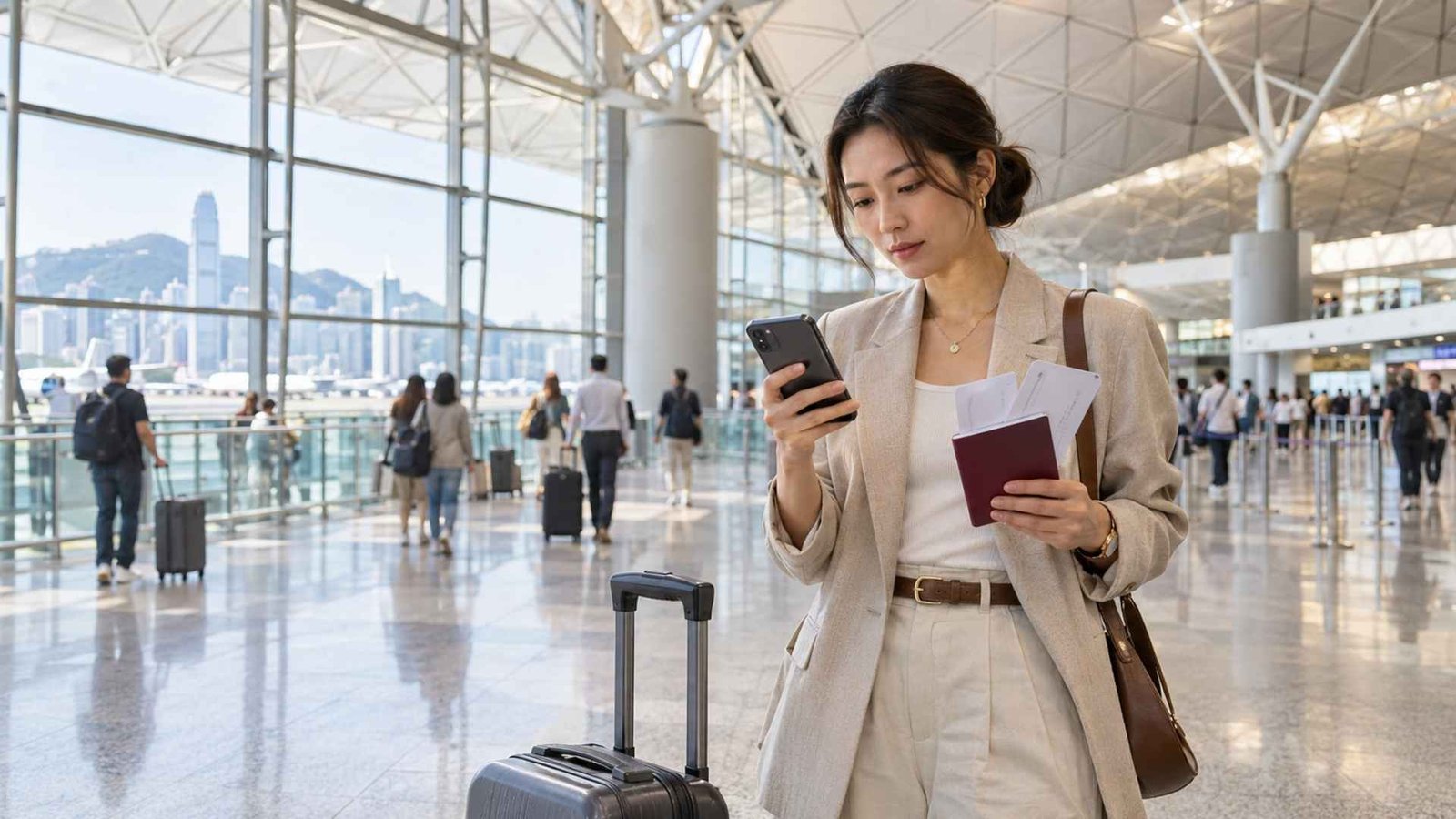
A Hong Kong Airport Self-Transfer on separate tickets needs more planning than a standard connection. Depending on your baggage and airline, you may need to enter Hong Kong, collect your suitcase, check in again and pass through departure security before your next flight.
The key is to confirm where your baggage will go, how you will get your onward boarding pass and whether you need to enter Hong Kong. Here, airside means staying in the airport’s restricted transfer area instead of entering Hong Kong through arrival immigration and customs.
Hong Kong Airport Self-Transfer: The Quick Answer
| Your arrangement | What to plan for |
|---|---|
| Separate tickets, cabin baggage only, onward boarding pass ready | Confirm that your next airline will accept you through the airside transfer route. |
| Checked baggage tagged only to HKG | Plan to enter Hong Kong, collect your bag and check in again. |
| No onward boarding pass | Ask whether your airline has a transfer desk or whether HKIA Connects can serve your itinerary. |
| Landside check-in required | Check your Hong Kong entry requirements and allow time for immigration, baggage, customs and check-in. |
Separate tickets generally mean that a missed connection is not automatically protected. If your first flight is delayed, you may need to arrange and pay for a replacement onward flight.
1. Confirm Whether Your Itinerary Is a Self-Transfer
A connection on a through-ticket is usually coordinated by the airline or its partners. With a self-transfer, you have separate tickets and are responsible for making the connection yourself. Seeing both flights on the airport screens does not link them or guarantee that one airline will help if the other flight is delayed.
For example, a flight from Bangkok to Hong Kong on one ticket followed by a separate Hong Kong to London ticket is a self-transfer, even if both flights are on the same day. Ask both airlines whether they can link the bookings for baggage or check-in, and what happens if your first flight arrives late. Get a clear answer before you book.
Do not assume that two flights with the same airline, or bookings made through the same travel website, automatically give you a protected connection. Check whether the itinerary is issued as one through-ticket and read the conditions for each flight.
For a comparison, see our Singapore Changi Airport Self-Transfer Guide.
2. Check Where Your Checked Bag Will Go
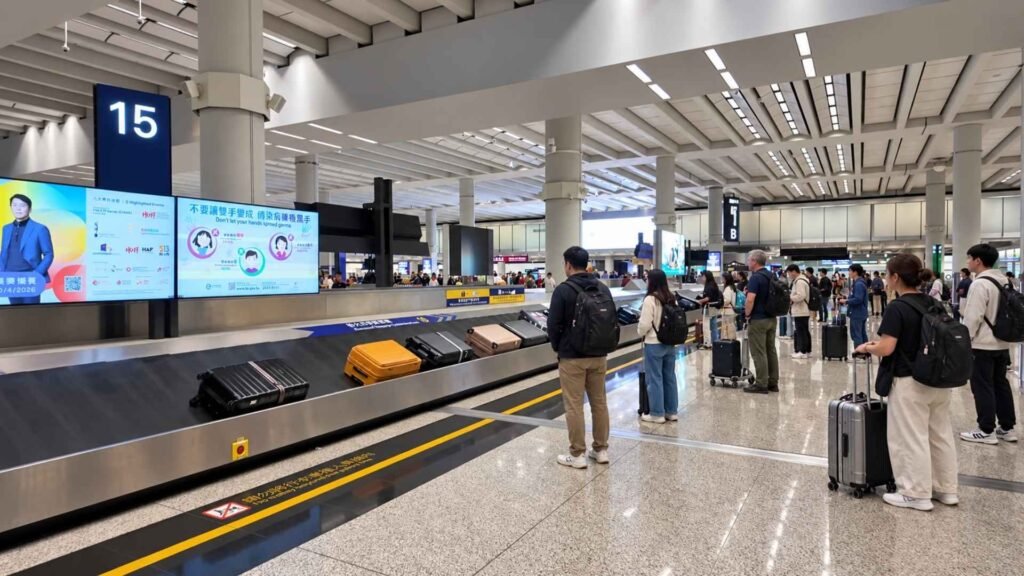
Ask the first airline where your bag will be tagged. If the baggage tag ends at HKG, plan to collect it in Hong Kong and take it to the next airline’s check-in counter. If the bag is accepted through to your final destination, confirm that with the airline and check the destination printed on the tag.
A bag tagged to HKG usually means you will need to pass through arrival immigration, baggage reclaim and customs before checking in again. If you have cabin baggage only, you can skip baggage reclaim, but you still need a usable onward boarding pass and the next airline’s confirmation that it can accept you airside.
Keep a photo of your baggage tag. It makes it easier to confirm the bag’s destination if you need to speak with either airline.
Our Hong Kong Airport Arrival Guide covers the arrival, baggage-reclaim and customs process.
3. Confirm Your Airside Options, Including HKIA Connects
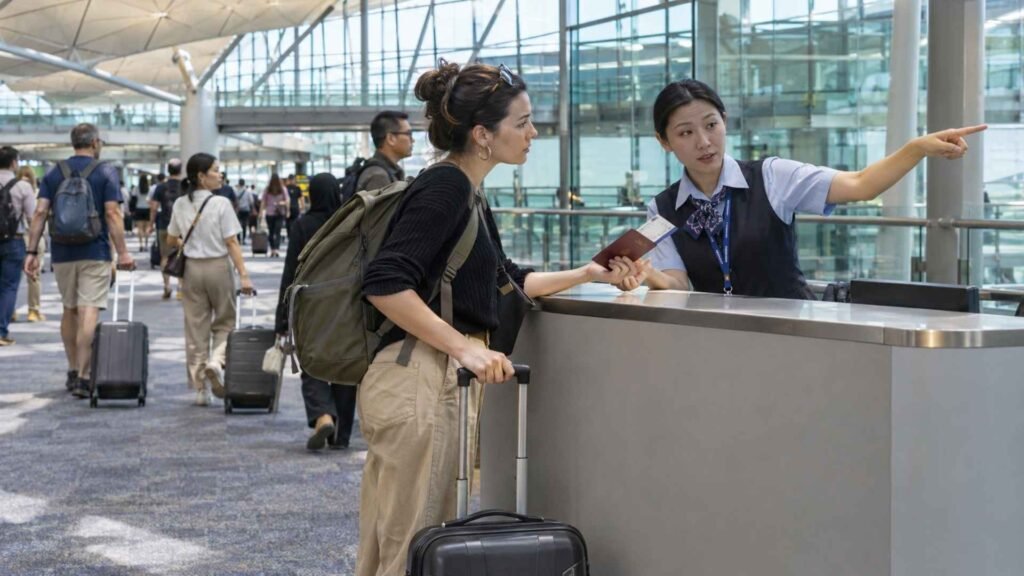
Hong Kong International Airport’s transfer procedures explain that passengers with an onward boarding pass can follow transfer signs towards their departure gate. Passengers without one can check whether their airline has a transfer desk. These are the airport’s general transfer procedures; they do not guarantee that every airline will handle a separate-ticket connection airside.
HKIA Connects is a specific service for passengers connecting to airlines that do not offer check-in within the restricted area. Eligible passengers may be able to complete onward flight and baggage check-in without leaving that area. Check the participating airline, booking requirements and current service conditions on the HKIA Connects page before relying on the service.
Ask the onward airline:
- Can I get a usable boarding pass before I land?
- If not, can a transfer desk issue one for my flight?
- Can I check in or transfer baggage airside on this itinerary?
- Do I need to enter Hong Kong and check in at a public-area counter?
If your airline cannot confirm an airside option, plan for the landside process and check that you are permitted to enter Hong Kong.
For the standard airport connection process, see our Hong Kong Airport Transit Guide.
4. Check Whether You Can Enter Hong Kong
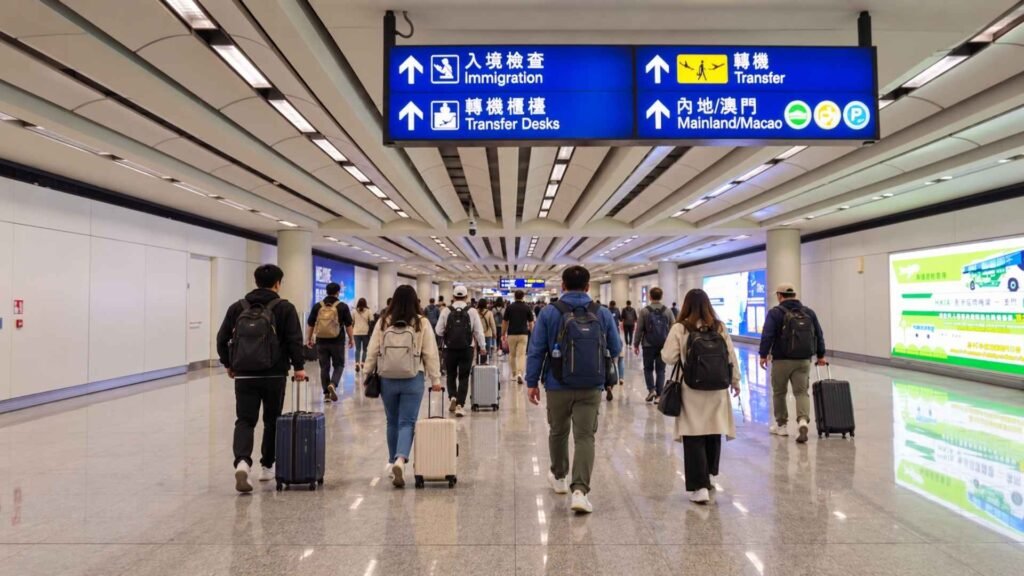
If you need to collect checked baggage or check in landside, you must be permitted to enter Hong Kong. Visa and entry-permit requirements depend on your nationality and travel document. Check the Hong Kong Immigration Department’s current visit visa and entry permit requirements before travelling.
If you are not eligible to enter Hong Kong, a plan that requires baggage reclaim or landside check-in may not work. Before booking, ask your airline whether it can handle your connection airside and confirm the entry requirements that apply to your passport.
5. How Much Time to Allow for a Hong Kong Airport Self-Transfer
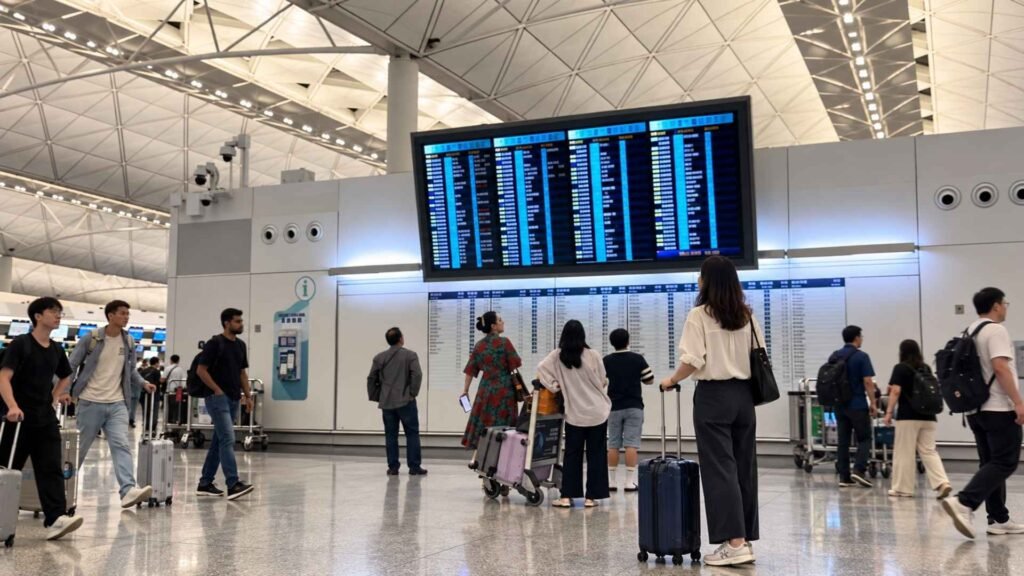
There is no single connection time that works for every Hong Kong Airport Self-Transfer. The time you need depends on whether you can stay airside, whether you have checked baggage and when the onward airline stops accepting passengers.
The table shows Clara’s conservative planning starting points. The time is measured from your first flight’s scheduled arrival to your onward flight’s scheduled departure. These are editorial recommendations, not official HKIA minimum connection times or guarantees.
| Self-transfer scenario | Scheduled arrival to scheduled departure |
|---|---|
| Cabin baggage, onward boarding pass ready, airline confirms airside transfer | At least 4 hours |
| Checked bag to collect, or landside check-in required | At least 6 hours |
To work out the time available for check-in, check when your onward airline closes its counter or bag drop. For example, if your first flight is scheduled to arrive at 10:00 a.m. and the onward flight departs at 4:00 p.m., there are six hours between the flights. If check-in closes at 3:00 p.m., you have five hours from the scheduled arrival to complete any arrival procedures and reach the counter.
If your inbound flight arrives at Terminal 1 and your onward flight is with HK Express, you’ll need to reach Terminal 2, Aisle U for counter check-in or bag drop. As of November 5, 2026, HK Express check-in and bag drop at HKIA close one hour before scheduled departure. Include the terminal transfer in your time plan and check the airline’s current check-in information for your flight.
💡 Clara’s Tip: If missing the onward flight would be expensive or difficult to rebook, choose a longer connection or consider an overnight stop. Extra time can help if your first flight is delayed or baggage takes longer than expected.
6. Know What to Do if Your First Flight Is Delayed
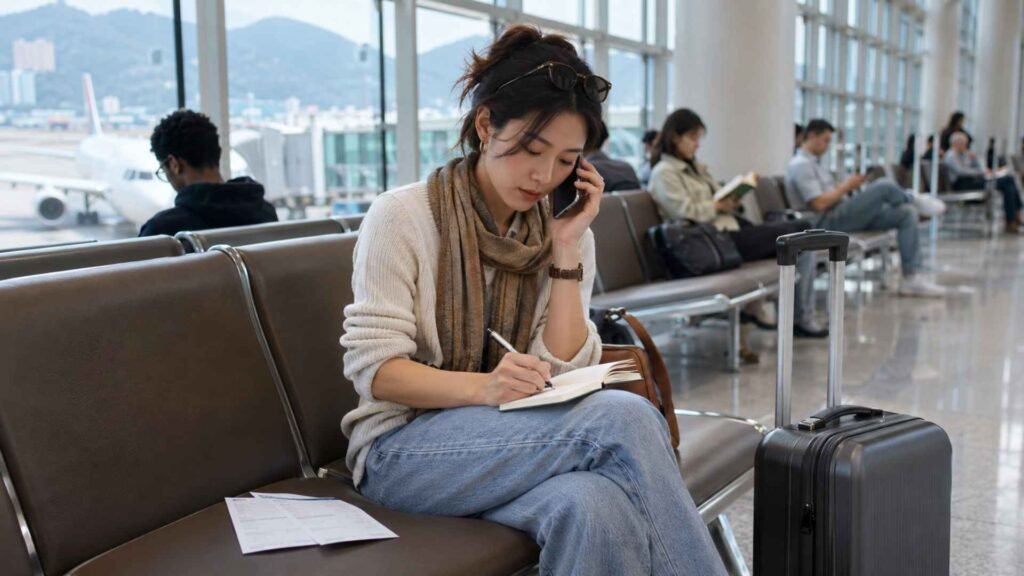
If your first flight is delayed and the connection may be at risk, act as soon as you know. Contact the onward airline through its app, phone line or airport service desk and ask what rebooking options are available.
Save proof of the delay, including airline notifications, boarding passes and receipts. You can also ask the first airline whether it can help, but separate tickets may mean it is not responsible for the onward flight. Before paying for a replacement ticket or hotel, check the fare conditions and your travel-insurance policy.
Your ticket terms, insurance and the airlines’ decisions determine what help or reimbursement may be available. Do not assume the onward airline will hold the flight or waive its conditions.
Hong Kong Airport Self-Transfer Checklist
Before travelling, confirm:
- Whether your flights are on separate tickets
- Where your checked bag is tagged
- Whether you can get a usable onward boarding pass before landing
- Whether an airside transfer desk or HKIA Connects applies
- Whether you can enter Hong Kong if landside check-in is needed
- Your onward airline’s terminal, check-in counter and deadlines
- What your tickets and insurance say about a missed connection
Frequently Asked Questions
How long should I allow for a Hong Kong Airport Self-Transfer?
As a cautious starting point, allow at least four hours between scheduled flights for a confirmed airside connection with cabin baggage only, or six hours if you need to collect checked baggage or check in landside. These are editorial recommendations, not official minimums or guarantees.
Do I need a visa for a self-transfer in Hong Kong?
You may need permission to enter Hong Kong if your plan requires leaving the restricted area. Requirements depend on your nationality and travel document, so check the Immigration Department’s current rules.
Can I stay airside when flying on separate tickets?
Sometimes. It depends on whether you have a usable onward boarding pass and whether the next airline can accept you through the transfer route. Confirm this with the airline before travel.
Can I use HKIA Connects for any separate-ticket itinerary?
No. HKIA Connects has eligibility and booking conditions. Check whether it covers your onward airline and itinerary before relying on it.
What happens if I miss my onward flight?
With separate tickets, you may need to buy a replacement flight or pay a change fee. Check your fare conditions and travel-insurance policy for the options available to you.
Final Thoughts
Before booking, confirm how your baggage and onward boarding pass will be handled, and whether your passport allows you to follow the landside route if needed. Then judge your connection time against the onward airline’s check-in deadline, including any baggage and terminal steps.