
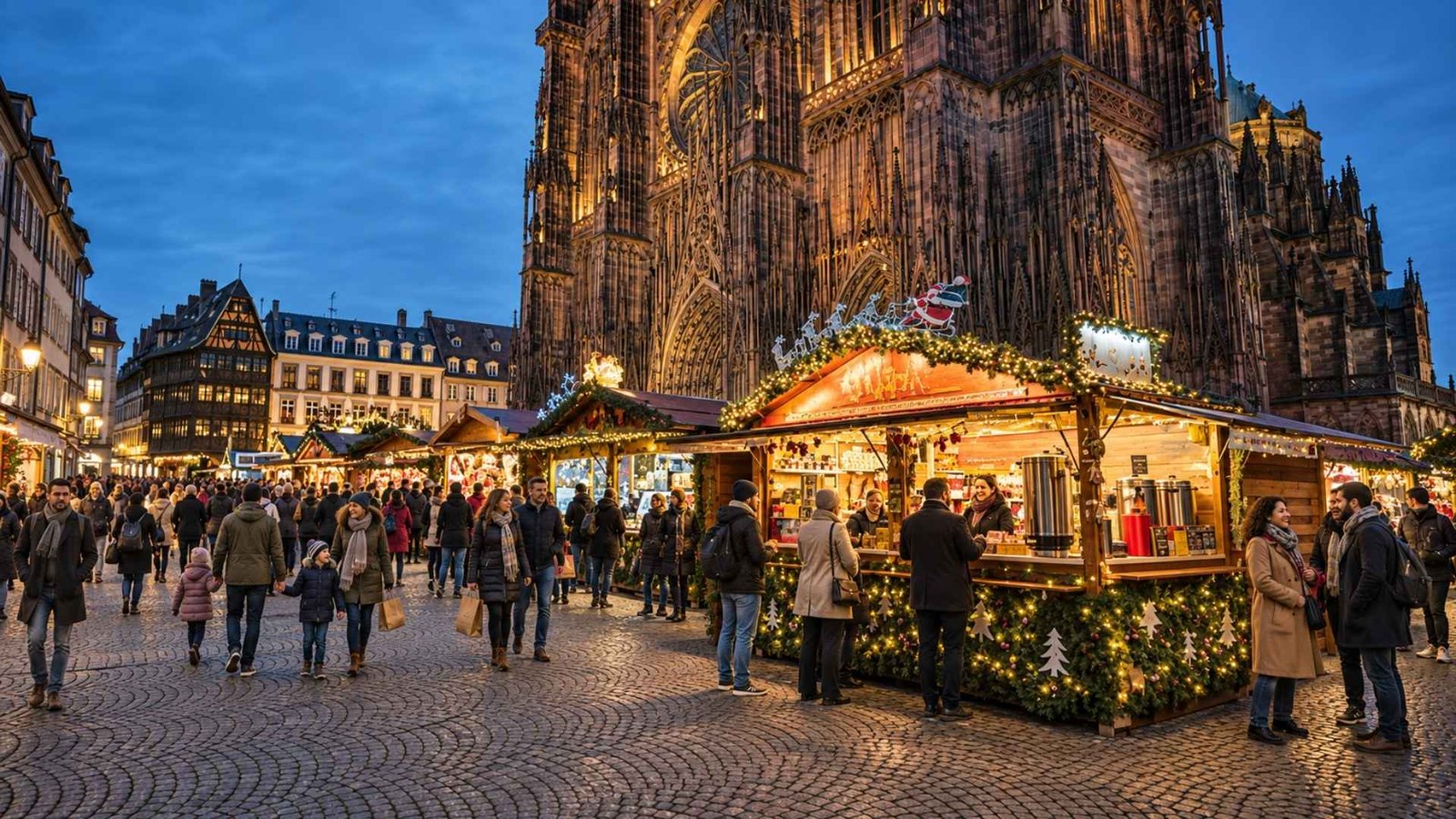
Strasbourg Christmas Markets run from 27 November to 24 December 2026, bringing wooden chalets, Alsatian food and illuminated streets to the historic centre. Stalls close at 6 pm on Christmas Eve and do not reopen on Christmas Day, so choose your dates carefully if the markets are the main reason for your trip.
The best visit combines a few contrasting stops: historic Place Broglie, the cathedral squares, regional food beside Palais Rohan and the great Christmas tree on Place Kléber. One full day covers the main highlights; a two-night stay lets you arrive the evening before and explore without fitting everything between train journeys.
Strasbourg Christmas Markets at a Glance
Quick answer: Plan one full day, explore Petite France in daylight and finish around Place Broglie and Place Kléber after dark. Choose an early-week visit if your dates are flexible, and use the smaller markets for food shopping or independent gifts.
| Planning detail | What to know |
|---|---|
| 2026 dates | 27 November–24 December |
| Opening day | 27 November, 2 pm–9 pm |
| Regular opening hours | 11 am–9 pm, according to the organiser’s current 2026 FAQ |
| Christmas Eve | 24 December, 11 am–6 pm |
| Christmas Day onwards | Market stalls closed |
| Main areas | Place Broglie, the cathedral, Place Kléber and Petite France |
| Suggested visit | One full day; a second day for sightseeing or an excursion |
| Getting around | Walk between the central market areas |
Check the official market dates and opening hours shortly before travelling. Some official tourism pages still show an 11:30 am daily opening; the timetable above follows the organiser’s explicitly dated 2026 FAQ.
Which Strasbourg Christmas Markets Should You Visit?
The organiser groups the event into eight market areas, several spread across more than one square. Their settings and specialities matter more than completing every stall.
For a shorter visit, prioritise Place Broglie, the cathedral markets, Quai des Délices and Place Kléber. Add Petite France for canals and half-timbered scenery, Square Louise Weiss for local produce or Marché OFF for alternative gifts.
Use the main season timetable above for the traditional markets. Workshops, performances and Marché OFF activities can have separate schedules.
1. Place Broglie: The Historic Christkindelsmärik
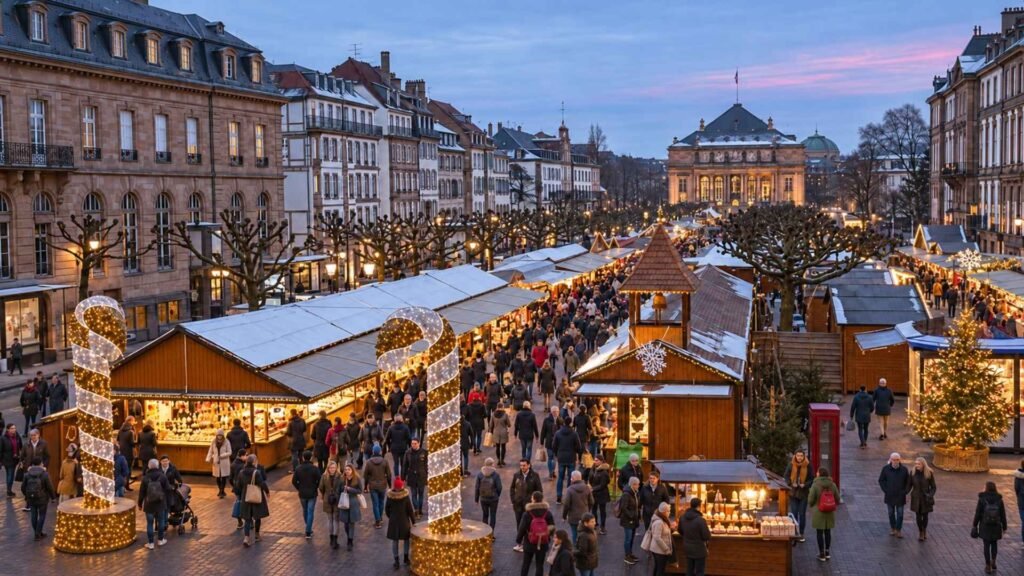
Best for: Christmas-market tradition and a classic first stop.
Location: Place Broglie.
Official website: Christkindelsmärik
The Christkindelsmärik gives Strasbourg’s Christmas celebrations their historic heart. The tradition dates to 1570, although the market has occupied different locations over the centuries; it has not always stood on Place Broglie.
Its entrance arch makes a recognisable introduction to the market. Beyond it, browse the chalets before choosing your first decoration or snack, particularly if you want to compare the selection with the smaller markets later.
Broglie also fits naturally into an evening route. From here, continue along Rue de la Mésange towards Place Kléber, connecting the historic market with the city’s great Christmas tree.
2. Place de la Cathédrale and Place du Château: The Most Dramatic Setting
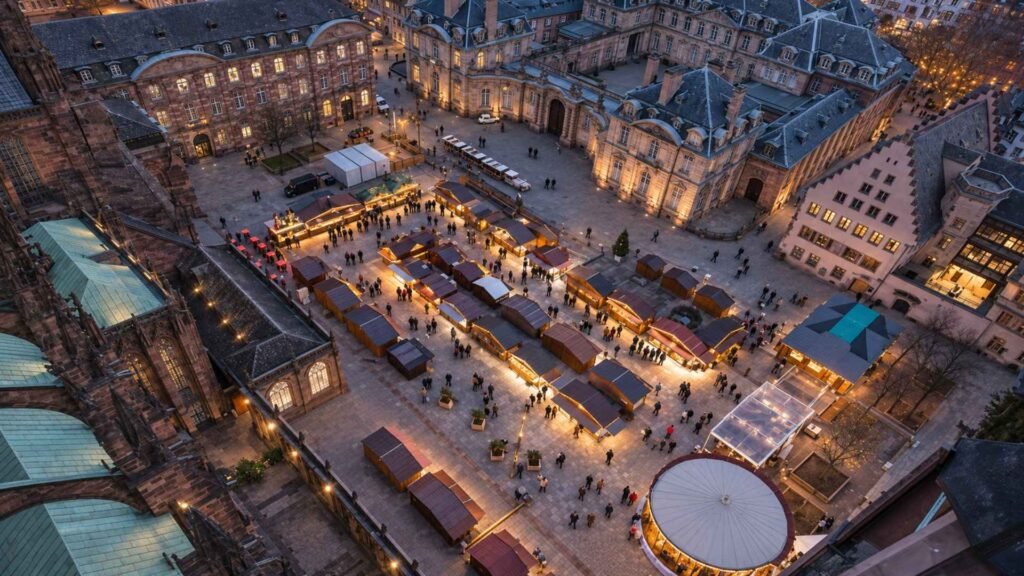
Best for: Architecture and the classic Strasbourg Christmas scene.
Location: Place de la Cathédrale and Place du Château.
Official website: Around the Cathedral Christmas Market
These markets place the chalets beside the cathedral’s monumental stonework. Explore both squares: the different angles reveal more of the building and the surrounding market area.
Daylight is best for appreciating the architecture, while an evening return brings the illuminated stalls and decorated streets into focus. If you only have time for one visit, aim for late afternoon so you can experience the transition.
Combine this stop with Quai des Délices beside Palais Rohan. It makes a practical pairing of sightseeing and food without crossing the city between them.
3. Place Kléber: The Great Christmas Tree and Village du Partage
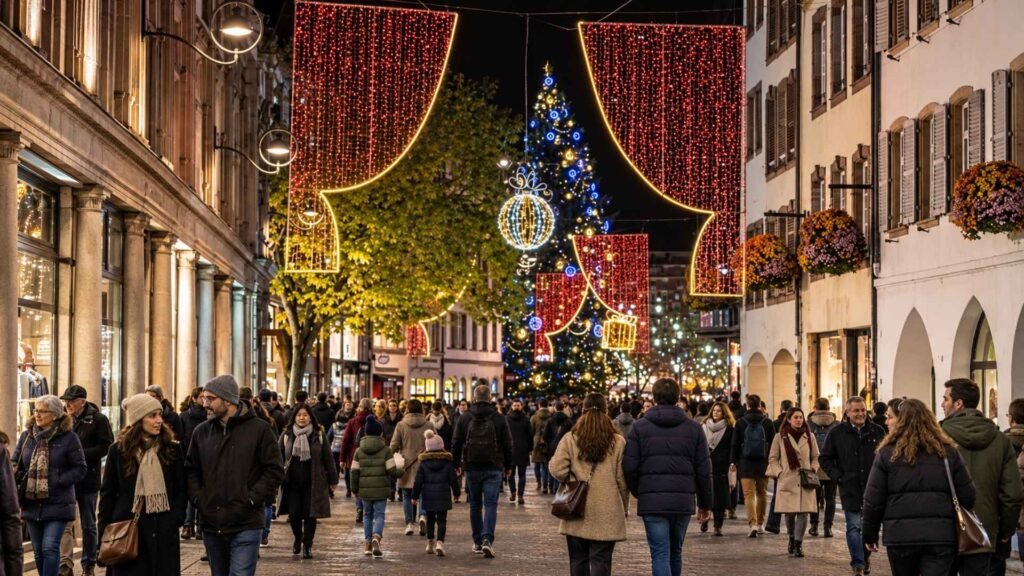
Best for: The signature Christmas-tree moment and charitable shopping.
Location: Place Kléber.
Official website: Grand Sapin and Place Kléber Market
The Grand Sapin makes Place Kléber the natural focal point of an evening visit. At its foot, the Village du Partage brings charitable associations into the celebrations, adding a community purpose to the square’s famous setting.
Browse these stalls as well as looking at the tree. This is an opportunity to choose a purchase that supports an association and discover another side of Strasbourg’s Christmas celebrations.
For a fuller view, stand back far enough to include the tree and surrounding buildings. It is also a useful place to finish your market circuit before dinner.
4. Carré d’Or: A Smaller Market with Decorated Shopping Streets
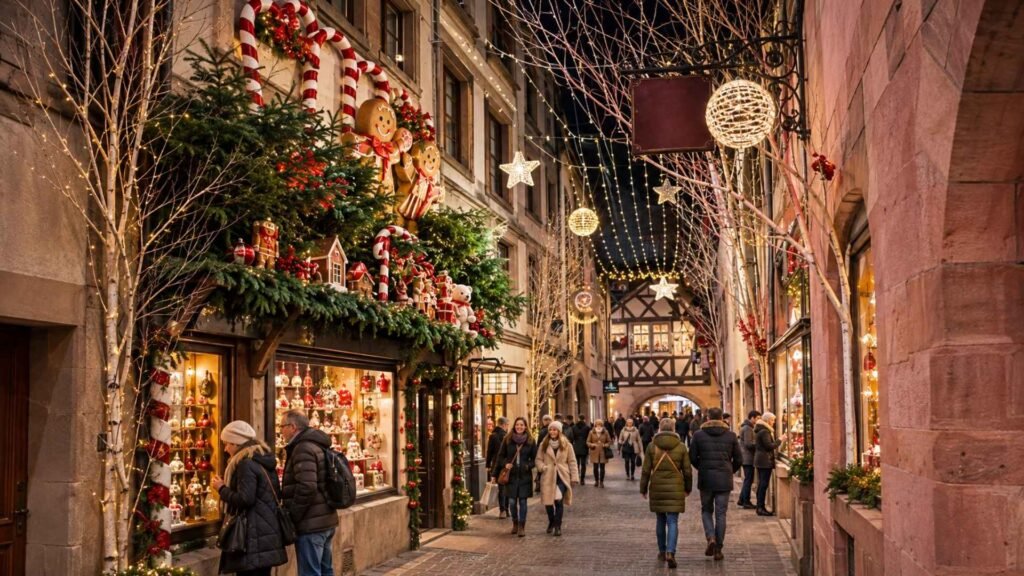
Best for: Market browsing combined with specialist food shops.
Location: Place du Temple Neuf.
Official website: Carré d’Or Christmas Market
The Carré d’Or market is particularly rewarding when you include the surrounding streets. Pastry shops, chocolatiers, bakers and cheesemongers extend the experience beyond the chalets.
Nearby Rue des Orfèvres is one of the key streets for Christmas decorations and connects the neighbourhood with the cathedral. Include it in your walk between the two market areas.
This is a good place to compare edible gifts from market sellers and permanent shops. Packaged biscuits and chocolates are convenient options when you want something manageable to carry home.
5. Quai des Délices: The Food-Focused Stop
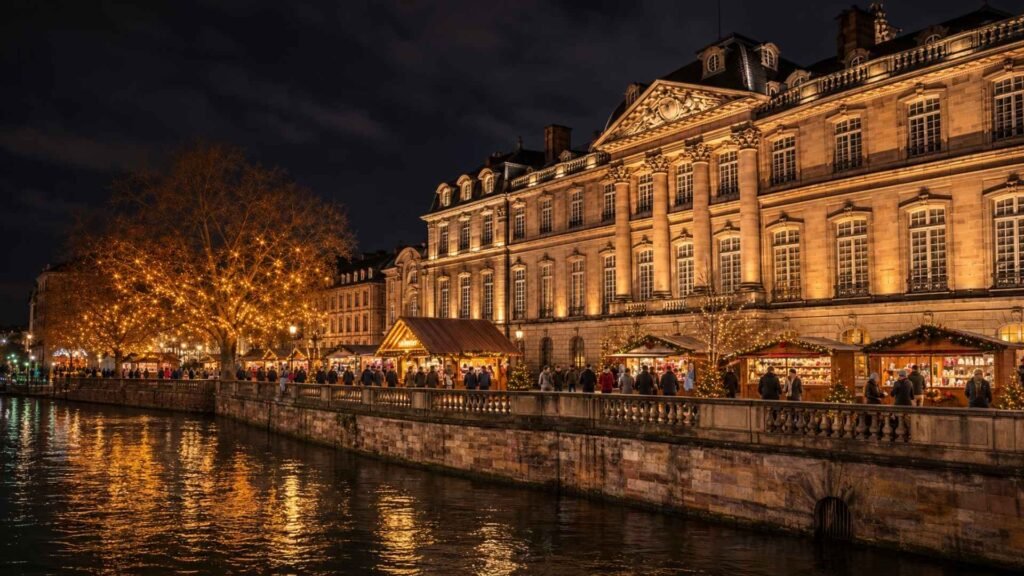
Best for: Alsatian baking and regional drinks.
Location: Terrasse Rohan and Place du Marché-aux-Poissons.
Official website: Quai des Délices
Quai des Délices deserves a place in your route when food is a priority. Regional winemakers and the Bas-Rhin bakers are part of its identity, with Christmas biscuits and other baked specialities among the attractions.
Make this a dedicated tasting stop after exploring the cathedral. Try a small selection of biscuits with a warm drink, leaving space for a more substantial meal later.
The riverside setting adds to the appeal. After browsing, continue along the waterfront for a different perspective on the historic centre and its seasonal lights.
6. Petite France: Canal Views and Half-Timbered Houses
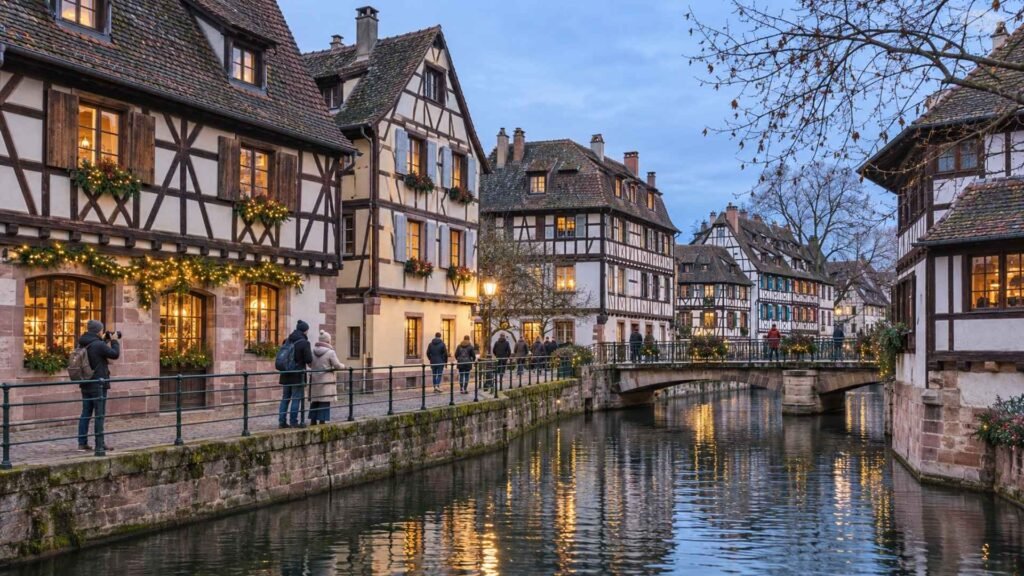
Best for: Combining markets with Strasbourg’s canal neighbourhood.
Location: Place Benjamin Zix and Place Saint-Thomas.
Official website: Petite France Christmas Market
Petite France brings canals, bridges and half-timbered houses into the market experience. The official market area includes both Place Benjamin Zix and Place Saint-Thomas, so think of it as a neighbourhood walk with several stops.
Begin here in daylight if the buildings and waterways are a priority. You can appreciate the setting before spending the evening around the more central squares.
This also works well for visitors approaching from the station. Combine it with Square Louise Weiss and Marché OFF before continuing east towards the cathedral.
7. Square Louise Weiss: Local Alsatian Producers
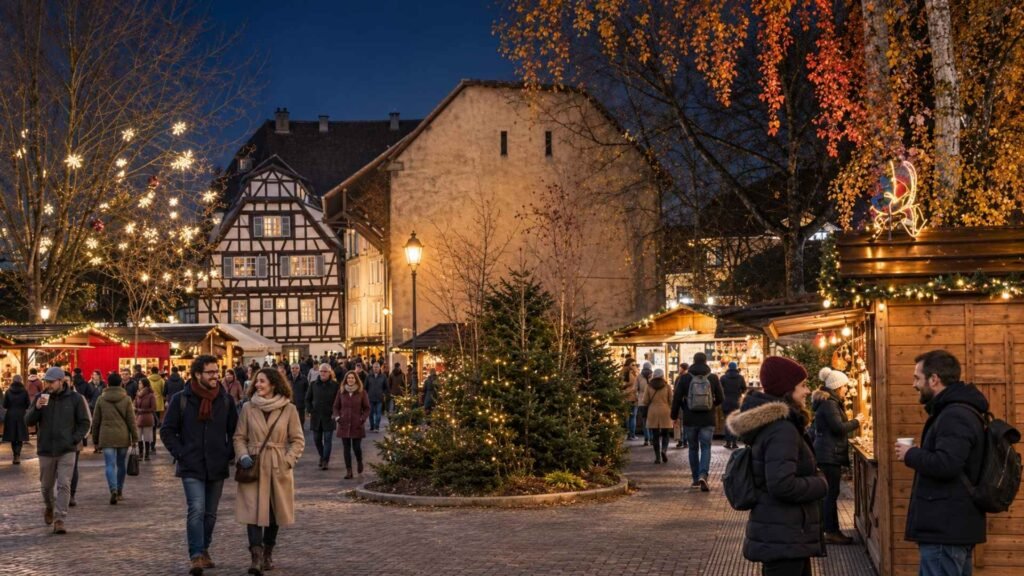
Best for: Regional food gifts and locally made products.
Location: Square Louise Weiss, near Petite France.
Official website: Alsatian Producers’ Christmas Market
The Irréductibles Petits Producteurs d’Alsace market focuses on locally made Alsatian products. Its selection includes jams, chocolate, Christmas biscuits, condiments, hot apple juice and regional wines.
Choose this stop when the origin of your purchases matters to you. Conversations with producers can help you select something distinctive, from a locally made preserve to a regional condiment.
Hot apple juice provides an alcohol-free alternative to mulled wine. Pair a drink with a small food purchase before continuing through Petite France.
8. Marché OFF: An Alternative Approach to Christmas Shopping
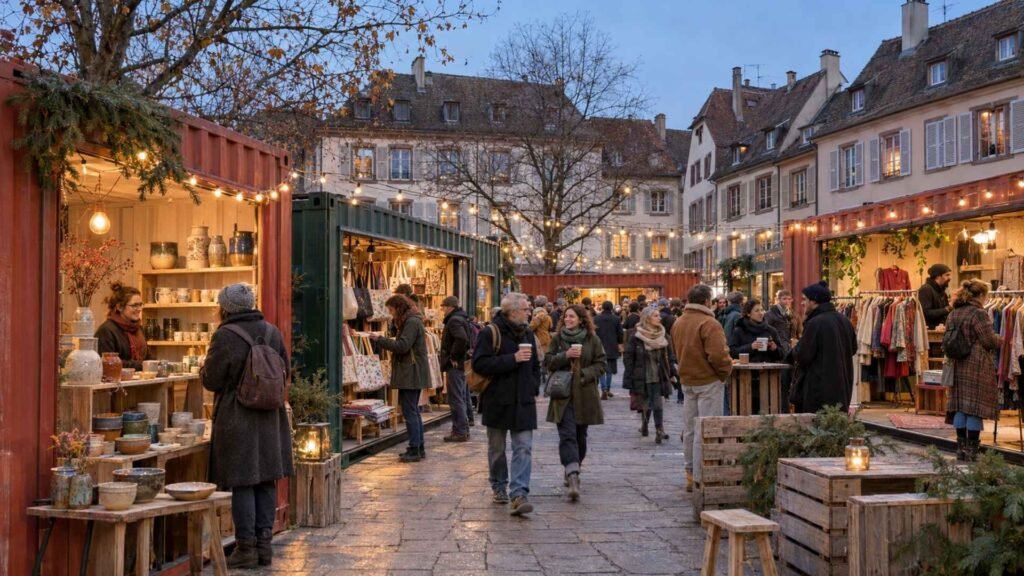
Best for: Second-hand finds, upcycled items and socially minded businesses.
Location: Place Grimmeissen.
Official website: Marché OFF Strasbourg
Marché OFF offers a different setting and shopping focus. Containers and other unconventional structures form part of the market, while its mix includes second-hand goods, upcycled clothing, local crafts and responsibly produced food.
It is a worthwhile addition if you prefer useful objects, books or independent creations to conventional Christmas decorations. The contrast also adds variety to a day spent exploring traditional chalets.
Consult its own programme if you want to attend a workshop or event. These activities may require a specific arrival time, while casual browsing is easier to fit into your wider route.
A Walking Route Through Strasbourg Christmas Markets
This suggested route begins on the western side of the centre and finishes beneath the Christmas tree. It combines markets, food and decorated streets, with stops chosen for both daytime sightseeing and evening atmosphere.
Allow around five to seven hours with browsing, food and breaks. This is a planning estimate, not a measured walking time.
| Stage | Route | What to prioritise |
|---|---|---|
| 1 | Strasbourg station → Place Grimmeissen | Marché OFF once it opens |
| 2 | Square Louise Weiss → Place Benjamin Zix | Local produce and Petite France |
| 3 | Place Saint-Thomas → Place Gutenberg | Walk towards the cathedral |
| 4 | Cathedral squares → Terrasse Rohan | Architecture and a food stop |
| 5 | Rue des Orfèvres → Place du Temple Neuf | Decorated streets and Carré d’Or |
| 6 | Place Broglie → Rue de la Mésange | Christkindelsmärik and evening lights |
| 7 | Place Kléber | The Grand Sapin and Village du Partage |
The route includes a short return from the riverside towards the cathedral neighbourhood. This lets you combine your food stop with afternoon sightseeing before heading towards Broglie and Kléber for the evening.
If you arrive before the stalls open, explore Petite France first and adjust the market order around opening times. Follow any temporary pedestrian directions on the day.
💡 Clara’s Tip:
Use an afternoon hotel break to drop off purchases before the evening walk. If you are visiting for the day, save bulky or fragile purchases for your final shopping stop and carry a small reusable bag.
What to Eat at Strasbourg Christmas Markets
The food experience should include both sweet Christmas specialities and something savoury. Use the markets for tasting, then consider a traditional Alsatian restaurant, or winstub, for a seated meal.
Market Snacks and Seasonal Treats
| Food or drink | What to expect |
|---|---|
| Bredele or bredle | Small Christmas biscuits in varieties such as butter, cinnamon, almond and aniseed |
| Mannele | Little person-shaped brioches associated with Saint Nicholas celebrations |
| Pain d’épices | Spiced gingerbread in different shapes and textures |
| Bretzel | A savoury pretzel, useful when you want a break from sweet baking |
| Vin chaud | Spiced mulled wine, including red and white versions |
| Hot apple juice | A warming alcohol-free option to look for at the local producers’ market |
Availability varies by seller. Quai des Délices is a useful starting point for regional baking, while Square Louise Weiss offers another opportunity to explore locally produced food.
Biscuits and confectionery may be priced by piece, packet or weight, so establish the portion and price before ordering.
Savoury Alsatian Food for a Proper Meal
Tarte flambée, also called flammekueche, is a thin baked base traditionally topped with cream, onions and bacon. It is a good option for sharing, with variations depending on the restaurant or seller.
Choucroute garnie combines sauerkraut with meats such as sausages and pork. It suits a longer seated lunch or dinner better than a quick tasting stop between markets.
A winstub is a traditional Alsatian dining setting to consider when you want regional food indoors. Reserve ahead for your preferred evening, especially if you want to eat close to the central markets.
Not every speciality will be available at every market. If you have dietary requirements, ask about ingredients directly; traditional savoury dishes may contain pork or dairy.
Payments and Returnable Cups
Carry a payment card and a small amount of cash, and establish the seller’s payment conditions before ordering.
The organiser currently lists a €1 refundable deposit for returnable drinks cups. Keep your cup until you are ready to return it, and follow the participating stands’ instructions. Charity collection points provide an alternative if you prefer to donate the deposit.
The deposit is separate from the drink price. Food and drink prices vary between sellers, with individual menus providing the relevant prices for your visit.
What to Buy: Food Gifts and Independent Finds
For gifts that connect directly with the region, begin with bredele, locally made jams, chocolate or condiments. Square Louise Weiss and Quai des Délices are useful starting points; the shops around Carré d’Or offer additional choices.
For non-food purchases, compare decorations and crafts at the traditional markets with the second-hand and upcycled selection at Marché OFF.
Ask where an item was made, confirm food storage requirements and request protective wrapping for anything fragile. A few carefully chosen purchases are easier to carry and more useful than buying something at every stop.
How to Spend One Day in Strasbourg at Christmas
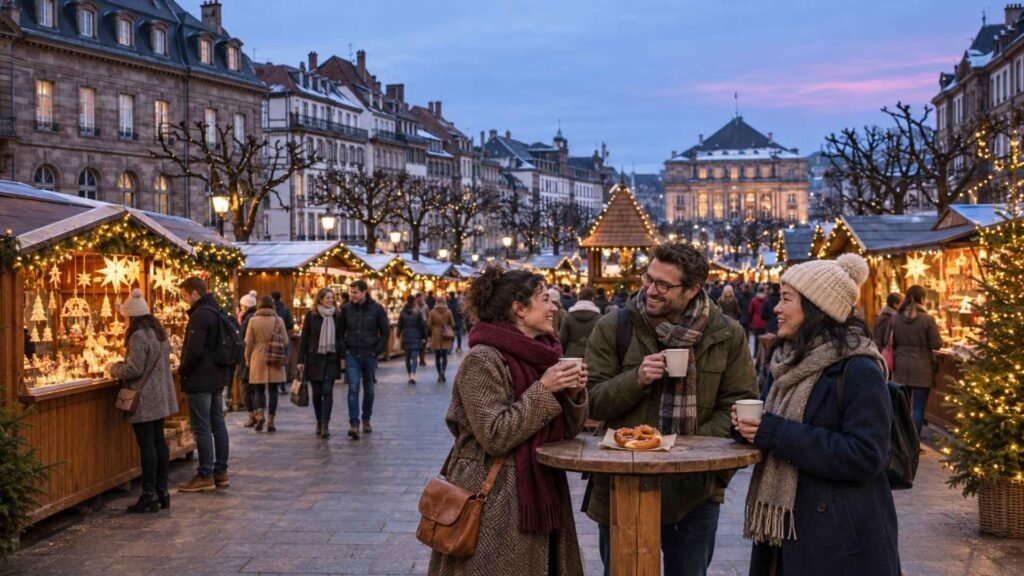
Use the route table for navigation and the timetable below to pace your day. These are suggested visiting times, not official event times, and individual stops can be shortened or extended.
This programme assumes a normal market day. On 27 November, begin with sightseeing before the 2 pm opening; on Christmas Eve, finish your market visits before the 6 pm closure.
10:00–11:00: Breakfast and Petite France in Daylight
Begin with breakfast and a walk beside the canals. This first hour is for the neighbourhood’s buildings, bridges and waterways before you start browsing the markets.
If arriving by train, allow additional time to drop off luggage or walk from the station.
11:00–13:00: Browse the Western Markets
Explore Square Louise Weiss and the Petite France market stops, adding Marché OFF according to its opening schedule.
Choose two or three stops according to your interests. Local food shoppers may want longer at Square Louise Weiss, while those looking for independent gifts can prioritise Marché OFF.
13:00–14:00: Lunch and an Indoor Break
Plan a seated lunch around Petite France or on your way towards the cathedral. This gives you time to warm up before the afternoon circuit.
If you prefer a lighter lunch, leave room for baking and drinks at Quai des Délices later.
14:00–16:30: Cathedral, Quai des Délices and Carré d’Or
Explore the cathedral squares, head down to Terrasse Rohan for a tasting stop, then continue through Rue des Orfèvres towards Place du Temple Neuf.
This is the most varied part of the day, combining architecture, food and decorated shopping streets. Overnight visitors can shorten it slightly if they want a hotel break.
16:30–18:30: Broglie, Evening Lights and Place Kléber
Visit Place Broglie, follow Rue de la Mésange and finish beneath the Grand Sapin on Place Kléber.
Afterwards, continue to dinner or begin your journey home. For a train departure, include the walk back to the station and a comfortable margin for crowded streets.
A Second Day: More Strasbourg or a Colmar Excursion?
Use a second day to choose between a slower city visit and another Alsatian destination.
Stay in Strasbourg if your first day involved a late arrival, poor weather or limited time indoors. Visit the cathedral or a museum during its opening hours, enjoy a longer lunch and return to your favourite market after dark.
Choose Colmar if you want to experience another Alsatian town and its Christmas setting. Its market calendar and return trains need to fit your travel date; Strasbourg’s schedule does not apply automatically elsewhere. Treat Colmar as the main outing of the day.
Kaysersberg or Riquewihr may appeal if you prefer a smaller-town setting, but they require separate planning for market days and onward transport. Do not assume the same rail access or daily opening pattern as a city visit.
For a two-day trip, one excursion is enough. Trying to combine several destinations can leave more time for transfers than for enjoying the markets.
Where to Stay for Strasbourg Christmas Markets
Choose accommodation around the journey you will make at the end of the evening. A convenient walking route may be worth more than a slightly cheaper room with a complicated return trip.
| Area | Best suited to | Main consideration |
|---|---|---|
| Grande Île, near Kléber or the cathedral | Staying close to the central markets | Street noise and arrival access |
| Petite France | Scenic surroundings and the western markets | Steps and luggage access |
| Around Strasbourg station | Short stays and straightforward rail arrivals | The exact walk to the centre |
| Outside the centre near public transport | A wider choice of accommodation | Evening services and seasonal diversions |
For a first visit, the historic centre and station area are practical starting points. Compare the total price, cancellation terms and arrival arrangements.
If driving, ask the hotel how to reach its parking or drop-off point during the event. A central address does not guarantee direct vehicle access.
Getting to the Markets and Around the City
Arriving by Train
Strasbourg station is a convenient arrival point. The nearest central market areas are around a ten-minute walk away, with additional time needed for your particular destination and crowded conditions.
The approach via Rue du Maire Kuss brings you towards the western side of the festivities. Drop off luggage before beginning your market circuit whenever possible.
Arriving at Strasbourg Airport
The airport rail connection reaches Strasbourg station in approximately eight minutes. A covered pedestrian connection links the airport with the railway platform.
That is the train journey time, not the total time from landing to the markets. Allow for baggage collection, walking and waiting, and use the official airport train information to plan your connection.
Driving and Park-and-Ride
For a day visit by car, consider an outer park-and-ride site. CTS offers parking combined with public transport travel for the vehicle’s occupants, within its stated passenger limit.
Trams and Seasonal Changes
Christmas-market arrangements can affect which tram stops are served and how buses cross the centre. The nearest stop shown on an ordinary map may not be the most useful during the event.
Consult the official Christmas transport guidance before travelling. Once you reach the historic centre, follow your walking route between the markets.
Managing Crowds and Winter Weather
An early-week visit generally offers more comfortable browsing than a weekend. Arrive near opening for shopping, then save selected squares for their evening atmosphere.
Wear comfortable shoes with grip, warm layers and a weather-resistant outer layer. Plan for rain as well as cold; snow is not something to build the trip around.
Keep bridge crossings and narrow streets clear when taking photographs. If travelling with others, agree on a specific meeting point before entering a crowded square.
A shorter route with a proper indoor break is often more enjoyable than continuing through every market when you are cold or tired.
Visiting with Children or Limited Mobility
With children, choose a shorter circuit with a planned indoor break. Pushchairs can be difficult to manoeuvre at busy times, particularly in narrow streets.
For wheelchair users and visitors with limited mobility, consult the organiser’s accessibility information before selecting a route, including accessible facilities and available mobility support. Crowds, paving and access arrangements can affect how manageable a walk feels, even where distances are short.
Visiting on Christmas Eve and Christmas Day
Treat Christmas Eve as a shortened visit. Complete your priority purchases early, confirm dinner arrangements and plan your onward transport before heading out.
Christmas Day requires a sightseeing plan rather than a market itinerary. The stalls are closed, and restaurants, shops and attractions may have special opening arrangements. Confirm each booking individually.
The lighting programme is separate from chalet trading. If you are considering a visit after Christmas, consult the current official lighting information before booking around the decorations.
Strasbourg Christmas Markets FAQ
When are Strasbourg Christmas Markets in 2026?
The season runs from 27 November to 24 December 2026. Opening day begins at 2 pm, while Christmas Eve closes at 6 pm. The organiser’s current FAQ lists regular daily hours as 11 am–9 pm.
Are the markets open on Christmas Day?
No. The stalls close on Christmas Eve and do not reopen on 25 December. Any remaining lights or decorations are part of a separate seasonal programme.
Is one day enough to visit the markets?
One full day is enough for the main highlights if you keep your stops selective. A second day gives you more time for sightseeing, relaxed meals or a separate excursion.
Which market should I visit first?
Start with Petite France if approaching from the station and you want daylight views. Choose Place Broglie for the historic Christkindelsmärik or the cathedral squares if architecture is your priority.
Can you walk between the markets?
Yes. The central market areas form a walkable network around the historic centre. Allow for browsing and crowded streets when planning your time between stops.
What should I eat in Strasbourg at Christmas?
Try bredele or mannele for seasonal baking, a bretzel for a savoury snack and tarte flambée or choucroute for a more substantial meal. Availability varies between stalls and restaurants.
Is Strasbourg worth visiting after Christmas?
It can be worthwhile for architecture, sightseeing and any remaining decorations, but the market stalls will be closed. Confirm attraction openings and the lighting programme before deciding.
Final Thoughts: Make Time for Strasbourg After Dark
The best way to enjoy Strasbourg Christmas Markets is to combine a few distinctive stops: Broglie for history, the cathedral for its setting, Quai des Délices for Alsatian flavours and Place Kléber for the evening atmosphere. Leave enough flexibility for a warm meal and the streets that catch your attention between them.
If you are comparing festive city breaks, our Prague Christmas Markets guide and Christmas in Budapest guide offer two more ways to combine seasonal food, markets and sightseeing.