

JFK Airport transit can involve a simple walk to your next gate or a longer transfer with immigration, baggage collection and another security check. The difference depends on where you arrive from, how your flights are ticketed and whether you change terminals.
The most important detail is your arrival process: landing from abroad can mean completing US entry formalities even when your next flight leaves the country. A same-terminal connection does not automatically let you skip these steps.
This guide explains how the main connection types work, how much time to consider and what to do about terminal changes, baggage recheck and missed flights, so you can plan your transfer with fewer surprises.
Quick Answer: How Does JFK Airport Transit Work?
After most international arrivals, expect US immigration, baggage collection, customs, bag recheck and TSA security before your next flight—even when continuing abroad. Flights with US preclearance follow a different process. For a protected connection after an international arrival without preclearance, we recommend allowing around 3–4 hours, with extra time for terminal changes.
| Your arrival at JFK | What to expect |
|---|---|
| Domestic, same terminal | Usually stay airside if checked bags transfer and you have your boarding pass. |
| Domestic, different terminal | Transfer landside and clear security at the departure terminal. |
| International, without US preclearance | Complete US entry procedures, then continue through security. |
| International, with US preclearance | Usually follow a domestic-style connection; a terminal change still adds security. |
| Separate tickets | Check baggage arrangements, check-in deadlines and missed-flight protection separately. |
Airside means the secure area beyond security; landside means the public areas outside it.
Clara’s Tip: Before booking, write down your arrival terminal, departure terminal and whether you must collect bags. These three details tell you more about the transfer than the layover duration alone.
1. Identify Your Connection Type and Entry Requirements
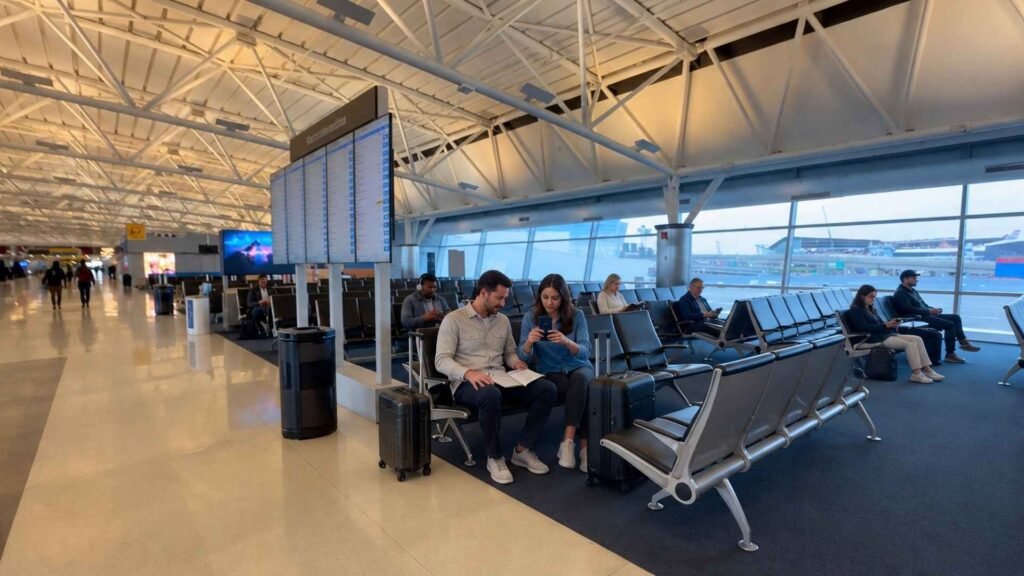
Start with the flight arriving at JFK. Its origin and arrival process determine what happens next; the international or domestic label on your onward flight is only part of the picture.
If You Arrive on a Domestic Flight
A domestic arrival normally brings you into the secure departures area. If your onward gate is accessible within the same terminal, your bags are checked through and your boarding pass is ready, you can generally continue without visiting baggage reclaim or repeating security.
An international departure may still require an airline document check. If the app tells you to see an agent, resolve that before boarding rather than assuming a reservation confirmation is enough.
Check the departure gate before following an exit sign. Leaving the secure area unnecessarily adds a checkpoint visit to an otherwise straightforward connection.
If You Arrive on an International Flight
JFK does not offer a general international transit route that lets arriving passengers bypass US admission simply because their next flight leaves the country. Unless your flight has already completed US preclearance, plan around entering the United States.
For example, arriving from London and continuing to Mexico still involves US entry requirements. Remaining inside the airport does not remove them.
For passport control and arrival preparation in more detail, see our JFK Airport Arrival Guide.
If Your Flight Has US Preclearance
On a precleared flight, US immigration and customs formalities take place before departure from the foreign airport. On arrival at JFK, you can normally proceed like a domestic passenger.
Example: Dublin → JFK → Los Angeles. If you complete US preclearance in Dublin, your bags are checked through and your arrival and onward gates are in the same secure area of the same terminal, you can normally head towards your next gate. A terminal change still requires a landside transfer and another security check.
Before travelling, ask your operating airline whether your specific flight completes US preclearance before departure. Having a departure airport in a country with preclearance facilities is not enough on its own.
Check Your US Entry Permission
For international passengers, entry documents are a pre-departure requirement—even if JFK is only a connection point.
- Visa Waiver Program travellers: eligible passengers need an approved ESTA, including when transiting to another country.
- Travellers outside that programme: an appropriate visa is generally required unless another exemption applies.
- Existing visitor visa holders: a valid visitor visa may be usable for transit; a separate C transit visa is not automatically necessary for everyone.
US citizens, lawful permanent residents and travellers covered by other exemptions have different document requirements.
Check the US Department of State’s transit visa guidance for the route that fits your circumstances. ESTA is not available to every passport holder, and permission to board does not guarantee admission.
Check Whether Your Connection Is Protected
A through-ticket connection usually gives you airline assistance with onward travel if an inbound disruption causes a missed connection, subject to the airline’s conditions.
Separate tickets require a different assessment: the onward airline may apply its normal missed-flight rules. One checkout on a booking website does not necessarily mean your flights form a protected through-ticket.
Before paying, confirm:
- Whether the itinerary is a through-ticket or a self-transfer.
- Whether checked baggage can be tagged to the final destination.
- Who handles rebooking after an inbound delay.
- Whether both flights use JFK rather than different New York airports.
2. Choose a Realistic JFK Airport Transit Time
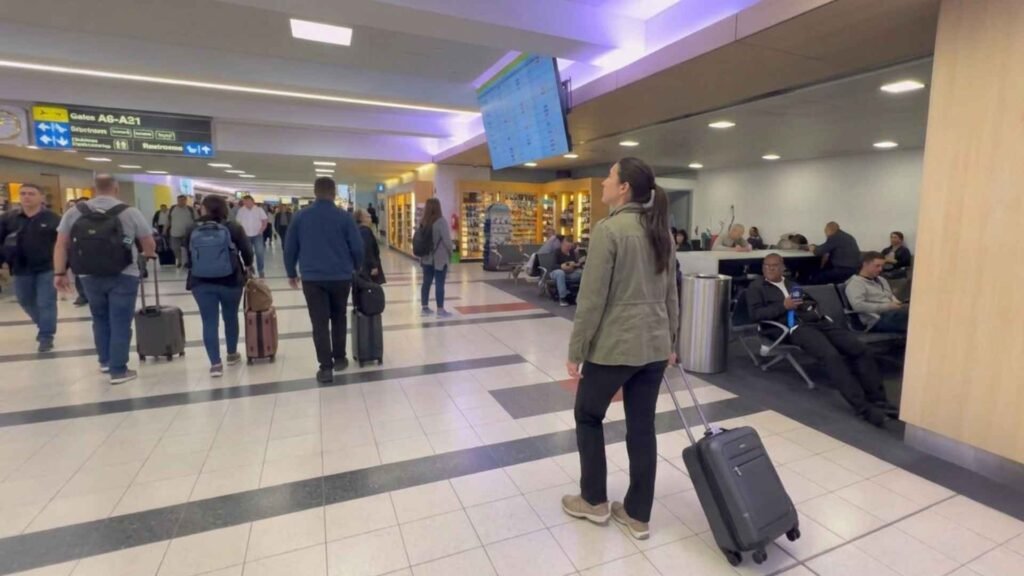
There is no single connection time that suits every JFK journey. A same-terminal domestic transfer and an international arrival with a terminal change involve very different tasks.
Use these ranges as cautious editorial starting points, not official minimum connection times or guarantees:
- Domestic or precleared arrival, same terminal: around 1½–2 hours on a protected itinerary.
- Domestic or precleared arrival, terminal change: around 2½–3 hours, with additional margin if baggage collection or check-in is needed.
- International arrival without preclearance: around 3–4 hours on a protected itinerary; favour the longer end or more when changing terminals.
- Separate tickets requiring a landside transfer: consider 5–6 hours or an overnight gap, depending on deadlines and the cost of missing the onward flight.
Choose more time if you need assistance, travel with young children, have an important onward commitment or cannot easily replace the second flight. Even a generous connection can be affected by disruption.
Understand the Airline’s Minimum Connection Time
An airline may sell a shorter valid connection than the planning ranges above. That means the itinerary meets its applicable connection rules; it does not promise a relaxed transfer.
If you already hold a short through-ticket itinerary, ask the airline whether it remains valid for the actual terminal combination, especially after a schedule change. Check the changes available through your existing booking before buying a replacement flight.
Count Back from Boarding and Bag-Drop Deadlines
A three-hour layover does not give you three hours to reach the gate. You need time to leave the aircraft, complete the required procedures and arrive before boarding closes.
If you must check in again or deliver baggage at a departure counter, you also need to meet the airline’s check-in and bag-drop deadlines. These can fall well before the gate closes, so reaching the terminal before departure is not enough.
Use the operating carrier’s published deadlines when assessing your itinerary.
Also consider the available alternatives. A connection with several later onward flights may be more forgiving than the last departure of the evening, even when both offer similar transfer time.
3. Follow the International Connection Process in the Right Order
For a standard international arrival without preclearance, work through the following stages. The precise route and available counters depend on your terminal and airline.
Clear Immigration
Follow the international arrivals route and keep your passport and onward journey details accessible.
If the next flight is close, tell a member of staff and show the departure time. Staff can advise you, but priority processing is not something to rely on when planning a connection.
Collect Checked Baggage and Clear Customs
Plan to reclaim checked bags at JFK even if their tags show your final destination. Through-checking a bag and physically collecting it for US customs are different matters. Follow any specific exception confirmed by your airline and border officials for your flight.
Keep baggage receipts until the journey ends. If a suitcase does not arrive, speak to the baggage service team before leaving the reclaim area and explain that you have an onward flight.
Travelling with cabin baggage removes the carousel wait, but you still follow the required immigration, customs and onward screening route.
Confirm Where to Recheck Your Bags
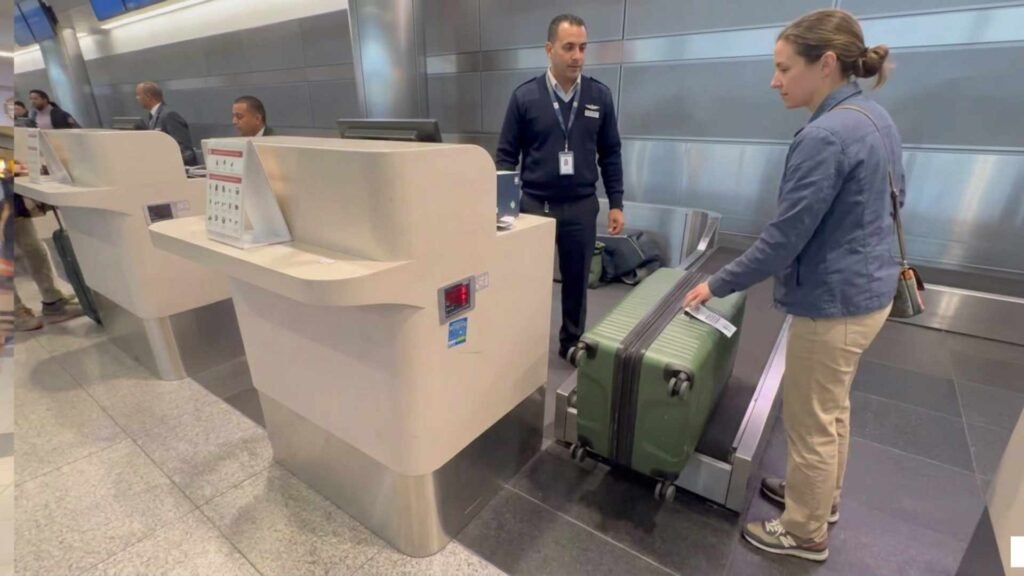
After customs, follow the airline’s instructions for connecting baggage. An available transfer recheck point may accept a bag already tagged onward; a new check-in or a different airline arrangement may require the departure terminal’s counter instead.
Before handing over your suitcase, confirm:
- The destination and flight shown on the baggage tag.
- Whether that recheck point accepts bags for your onward airline.
- Whether a rebooking requires the bag’s routing to be updated.
Use a designated, operating recheck point and ask staff if the correct drop-off location is unclear.
Continue to Your Departure Gate
Once baggage arrangements are settled, reach your departure terminal, complete any outstanding airline checks and pass through TSA security.
Example: London → JFK → Miami. On a standard non-precleared arrival, you clear immigration, collect checked baggage, pass customs and recheck your bag before security and the onward gate. If the Miami flight uses another terminal, the terminal transfer fits between baggage arrangements and departure security.
For the airport’s overview of connecting routes, consult the official JFK connections guide.
4. Handle Terminal Changes Without Losing Time
The operating airline determines which terminal you need. A codeshare flight can carry the name of the airline that sold it while departing from the terminal used by a different carrier.
Check your onward terminal and gate after landing, particularly if you have been rebooked. Use live flight information rather than relying solely on a saved boarding-pass screenshot.
Use AirTrain for Landside Terminal Transfers
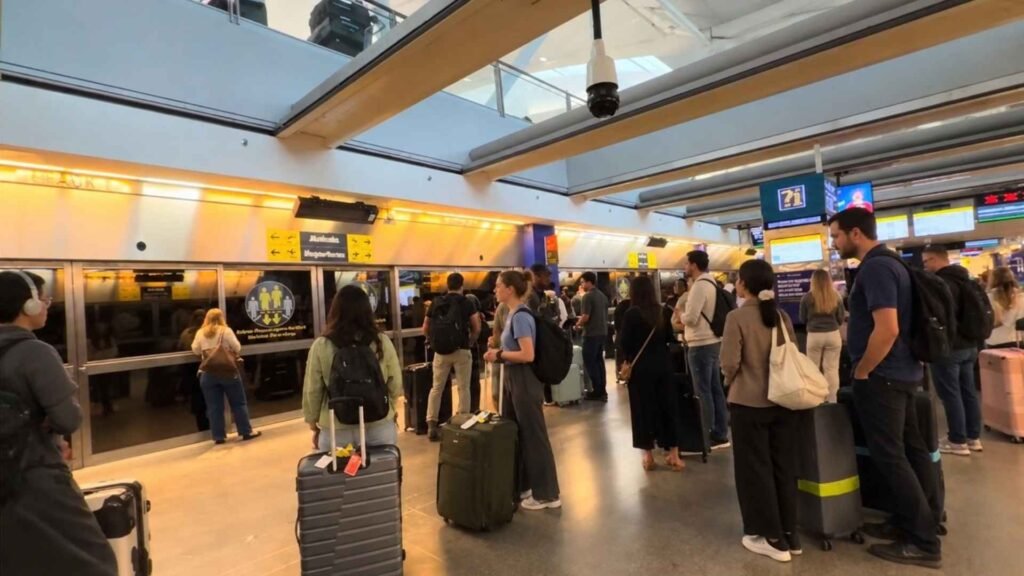
AirTrain links JFK’s passenger terminals, and trips between terminals are free. It runs outside the secure departures areas, so using it for a terminal change means passing through security at the destination terminal.
For a straightforward transfer:
- Follow signs from your arrival terminal to AirTrain.
- Check the station displays for the service to your departure terminal.
- Follow departures signs at the destination and complete any required airline procedures before security.
You do not need to travel out to Jamaica or Howard Beach for an ordinary terminal-to-terminal connection.
Allow for the walks to and from the stations as well as the train wait and ride. Before travelling, check current AirTrain service notices; temporary interruptions can require replacement transport and additional transfer time.
Moving Within Terminal 4
Delta’s free internal Terminal 4 shuttle can reduce walking between concourses without another security check. It serves T4 rather than other terminals, and waiting for it may take longer than walking.
If walking distance is a concern, arrange assistance with the airline before travel.
Check for an Airport Change
JFK, LaGuardia and Newark are separate airports. An itinerary described as a New York connection may involve travelling between them, collecting baggage and checking in again.
If your airport codes change from JFK to LGA or EWR, assess the ground journey separately and work backwards from the onward airline’s check-in deadline. Include time for baggage collection, road traffic or public transport changes, and security at the next airport.
The terminal-transfer timing ranges in this guide do not apply to airport changes. For JFK’s wider layout and facilities, see our JFK Airport Guide.
5. Prepare for Your Next Security Check
Once you know whether your route requires another checkpoint visit, prepare your cabin baggage before joining the queue. Keep your passport and boarding pass accessible and follow the instructions for the lane you use.
Screening equipment and procedures can differ, so the instructions at your previous airport may not apply at JFK.
Check Duty-Free Liquids Before Bag Recheck
Duty-free purchases can complicate a connection because an item accepted on your first flight must still meet the requirements for the next security checkpoint.
TSA’s international transfer exception for duty-free liquids above 100 ml requires:
- A transparent, secure, tamper-evident bag supplied by the retailer, with no signs of tampering.
- The original receipt.
- A purchase made within the previous 48 hours.
Items must still pass screening. Where permitted, placing larger liquids in checked baggage before recheck can avoid this carry-on issue. Make that decision while you still have access to your suitcase.
Resolve Outstanding Airline Checks
A booking confirmation is not a substitute for a boarding pass. If you have not received your onward boarding pass, check the airline’s instructions before heading to security.
If you are already airside after a domestic or precleared arrival, ask whether an outstanding document check can be completed at a transfer desk or gate. This may save an unnecessary trip to landside check-in.
6. Know What to Do If Your Connection Is at Risk

As soon as an inbound delay makes the transfer doubtful, check the airline app for updates. Keep your booking reference ready and review any replacement itinerary before making your way to another terminal.
When Both Flights Are on a Through-Ticket
Contact the airline handling the disrupted journey through its app, service desk or support channel. Rebooking options depend on available seats and the circumstances; a replacement itinerary may involve a later date.
Before accepting an alternative, check:
- The departure date and destination airport.
- Any new connection or terminal change.
- Where your checked baggage will go.
- Whether you need to collect bags overnight.
Meal or hotel assistance depends on the airline’s policy, the cause of disruption and applicable rules. Ask what is covered before paying for arrangements you expect the airline to reimburse.
When the Flights Are on Separate Tickets
Contact the onward airline before its departure if possible. Ask about changes and the effect of missing that flight on any remaining sectors in the booking.
If you purchased a connection guarantee or relevant insurance, check its instructions before booking a replacement and keep receipts and delay evidence. Reimbursement should not be assumed.
If the Next Flight Is Tomorrow
Confirm your baggage arrangements, check-in opening time and access to the departure area before deciding where to wait or stay. For a hotel, work backwards from the next morning’s airport requirements and transfer time.
FAQs About JFK Airport Transit
Is a Two-Hour Layover Enough at JFK?
It may work for a protected same-terminal connection after a domestic or precleared arrival. It is a much tighter choice after a standard international arrival or when changing terminals. Ask the airline to confirm the connection and consider a longer option if missing it would seriously disrupt your trip.
Do I Need ESTA or a Visa for a Layover at JFK?
If travelling under the Visa Waiver Program, you need an approved ESTA even for transit. Other travellers generally need an appropriate visa unless exempt. Your nationality and immigration status determine the requirements; staying inside the airport does not create an exemption.
Can I Transit Through JFK Without Entering the US?
There is no general sterile international transit arrangement. You normally need to meet US entry requirements, even when continuing abroad. Precleared passengers complete the US admission process before flying to JFK.
Does a Final-Destination Baggage Tag Mean I Can Skip Reclaim?
After a standard international arrival, a final-destination tag does not normally let you skip baggage reclaim at JFK. Collect and recheck your bag unless your airline and border officials confirm an exception for your flight.
Do I Need Security Again If Both Flights Use the Same Terminal?
Usually yes after a non-precleared international arrival. Usually no after a domestic or precleared arrival if you remain airside and can reach the next gate directly. The arrival process matters more than the terminal number.
Can I Leave JFK During a Long Layover?
Only if your admission status permits the visit and you have enough time to return. A transit-only visa should not be treated as permission for sightseeing. Account for both directions of travel, baggage arrangements, security and boarding deadlines before leaving.
Final Thoughts
A smoother JFK Airport transit starts with the right connection type and a realistic time buffer. Confirm your entry documents, operating terminals and baggage route before travelling. Once at JFK, complete the required transfer steps and locate your departure gate before planning food, shopping or a lounge stop.