
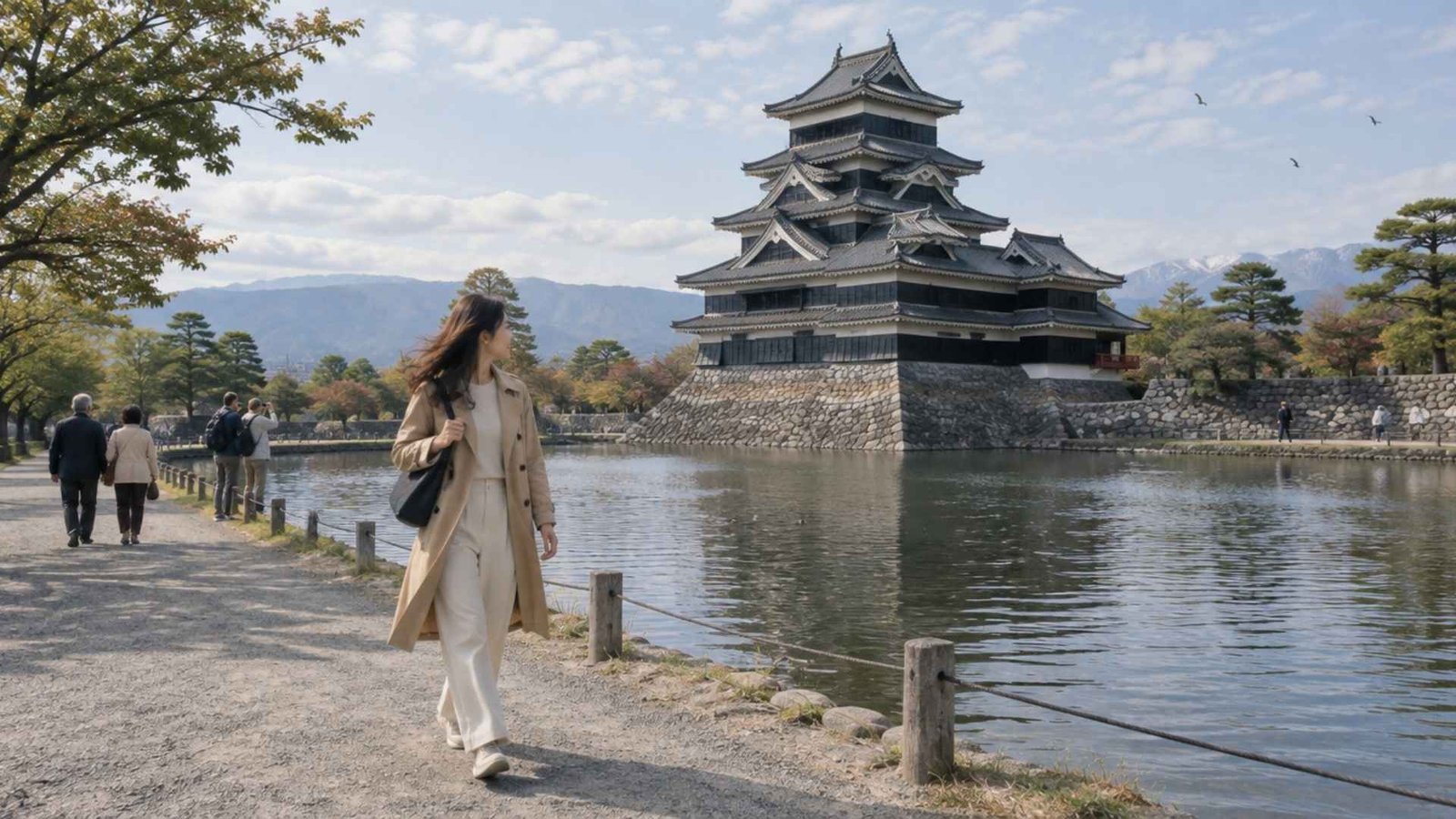
Three weeks in Japan gives you enough time to experience the country’s classic highlights without turning every day into a race. This Japan itinerary for 21 days combines Tokyo, Kyoto and Osaka with the Japanese Alps, Kanazawa, Hiroshima and Miyajima.
The route moves mainly from east to west, limits unnecessary backtracking and uses Shirakawa-go as a stop between Takayama and Kanazawa. You will see much more than the standard Golden Route while still spending several nights in most destinations.
Japan Itinerary for 21 Days at a Glance
For most first-time visitors, the best Japan itinerary for 21 days is:
Tokyo → Matsumoto → Takayama → Shirakawa-go → Kanazawa → Kyoto → Hiroshima and Miyajima → Osaka
If possible, fly into Tokyo and out of Kansai International Airport near Osaka. This creates a mostly one-way route and avoids returning across the country at the end of your trip.
| Day | Overnight Base | Main Plan |
|---|---|---|
| Day 1 | Tokyo | Arrival and an easy first evening |
| Day 2 | Tokyo | Meiji Shrine, Harajuku and Shibuya |
| Day 3 | Tokyo | Asakusa, Ueno and eastern Tokyo |
| Day 4 | Tokyo | Tsukiji, Ginza and central Tokyo |
| Day 5 | Tokyo | Kamakura or a flexible Tokyo day |
| Day 6 | Matsumoto | Travel to Matsumoto and explore the castle district |
| Day 7 | Takayama | Travel to Takayama and explore the old town |
| Day 8 | Takayama | Morning markets, Takayama Jinya and Hida culture |
| Day 9 | Kanazawa | Visit Shirakawa-go while travelling to Kanazawa |
| Day 10 | Kanazawa | Kenrokuen, Kanazawa Castle and historic districts |
| Day 11 | Kyoto | Travel to Kyoto and explore downtown |
| Day 12 | Kyoto | Kiyomizu-dera, Higashiyama and Gion |
| Day 13 | Kyoto | Arashiyama and northwest Kyoto |
| Day 14 | Kyoto | Fushimi Inari and Nara |
| Day 15 | Hiroshima | Travel to Hiroshima and visit Peace Memorial Park |
| Day 16 | Hiroshima | Miyajima day trip |
| Day 17 | Osaka | Visit Himeji while travelling to Osaka |
| Day 18 | Osaka | Osaka Castle, Kuromon Market and Dotonbori |
| Day 19 | Osaka | Explore Osaka or visit Universal Studios Japan |
| Day 20 | Osaka | Flexible day trip or final full day in Osaka |
| Day 21 | — | Departure from Osaka |
This Japan itinerary for 21 days assumes 20 nights in Japan, divided as follows:
| Destination | Nights |
|---|---|
| Tokyo | 5 |
| Matsumoto | 1 |
| Takayama | 2 |
| Kanazawa | 2 |
| Kyoto | 4 |
| Hiroshima | 2 |
| Osaka | 4 |
Your arrival and departure times will determine how much you can realistically do on Days 1 and 21.
Is 21 Days Enough for Japan?
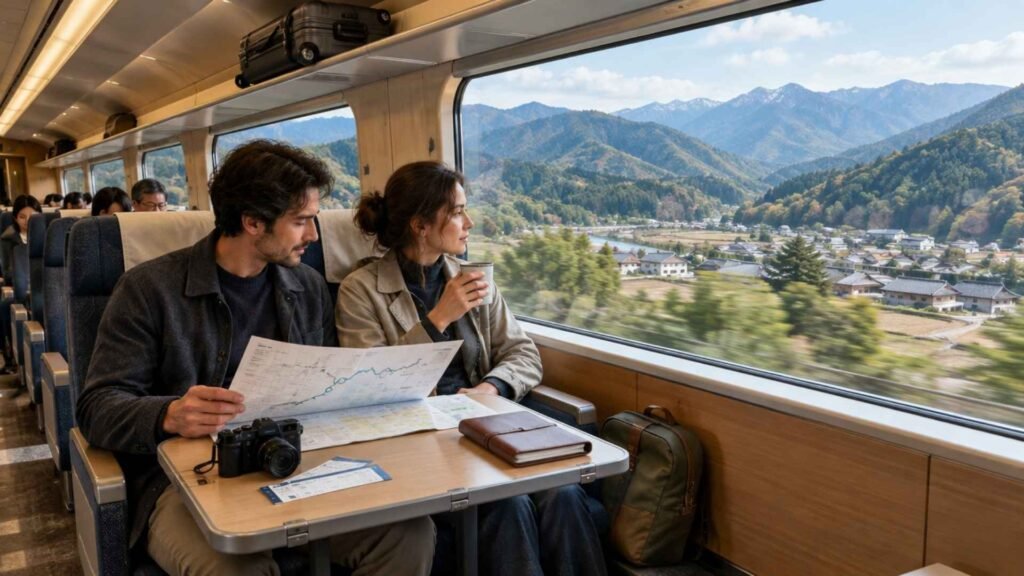
Yes. Twenty-one days is an excellent length for a first trip to Japan.
You have enough time to experience large cities, historic districts, mountain towns, temples, gardens and regional food without changing hotels every night. You can also include Hiroshima and Miyajima without sacrificing your time in Tokyo or Kyoto.
However, three weeks is not enough to see the entire country. Adding Hokkaido, Kyushu, Shikoku or Okinawa would require flights or additional long-distance journeys and make this route unnecessarily complicated.
The main advantage of having 21 days is not the ability to collect more destinations. It is the opportunity to go beyond Tokyo, Kyoto and Osaka while maintaining a realistic pace.
If you do not want to spend three full weeks in Japan, our Japan itinerary for 14 days offers a more compact route through the country’s classic first-time destinations.
Why This 3-Week Japan Itinerary Works
The itinerary is arranged geographically.
You begin in Tokyo before crossing the Japanese Alps through Matsumoto and Takayama. Shirakawa-go becomes a sightseeing stop on the way to Kanazawa rather than another overnight destination.
From Kanazawa, the journey continues to Kyoto, Hiroshima and Osaka. Ending in Osaka allows you to depart from Kansai International Airport without returning to Tokyo.
This structure has several advantages:
- It goes beyond the standard Golden Route.
- Most destinations receive at least two nights.
- Shirakawa-go does not create another hotel change.
- Long travel days are followed by lighter schedules.
- Osaka provides several flexible days near the end.
- The route can be completed without renting a car.
Matsumoto is the only one-night base. Every other hotel change has a clear purpose and provides enough time to experience the destination properly.
Before Your 21-Day Japan Trip
You do not need to reserve every meal or plan every hour before arriving. However, a few early decisions will make this itinerary considerably easier.
Before booking, check the passport, visa and arrival rules that apply to your nationality and travel documents. Our Japan Entry Requirements 2026 guide explains the current requirements without adding them to the day-by-day itinerary.
Choose Open-Jaw Flights When Possible
Flying into Tokyo and out of Osaka is the most efficient option for this route.
Compare arrivals at both Haneda and Narita airports, then look for a return flight from Kansai International Airport. An open-jaw ticket may cost more than a return flight from Tokyo, so compare the additional airfare with the cost and time required to travel back to Tokyo.
If your flight home must leave from Tokyo, use Day 20 to return. Spend the final night near a convenient railway station or airport connection rather than crossing the country on the morning of an international flight.
Book the Least Flexible Parts First
Prioritise the reservations that would materially affect the route if they became unavailable:
- International flights
- Accommodation in Kyoto, Takayama and Kanazawa
- Takayama–Shirakawa-go–Kanazawa buses
- Popular timed attractions
- Universal Studios Japan, if it is a priority
- Special restaurants or ryokan meal plans
Ordinary neighbourhood walks, gardens, markets and casual meals can remain flexible.
Opening days and operating hours may change, so confirm essential reservations and attraction details shortly before your visit.
Travel Light Through the Japanese Alps
The mountain section is easier with a small bag.
Consider sending your main suitcase from Tokyo to Kanazawa or Kyoto and carrying only what you need for Matsumoto and Takayama. This reduces the difficulty of boarding regional buses and storing luggage while visiting Shirakawa-go.
Delivery times vary by route, hotel and collection time. Keep your passport, medication, electronics, valuables and several changes of clothing with you.
Our luggage forwarding in Japan guide explains how the system works and what you should keep in your personal bag.
Prepare for Different Weather Conditions
Tokyo, Kyoto, Hiroshima and Osaka may feel considerably warmer than Matsumoto and Takayama. This is particularly noticeable in spring and autumn.
Pack comfortable walking shoes, layers and a compact waterproof jacket. Check the seasonal conditions for every region rather than relying only on Tokyo’s forecast.
Our guide to the best time to visit Japan compares the weather, crowds and seasonal advantages month by month.
Clara’s Tip:
Forward your large suitcase before leaving Tokyo and use a cabin-size bag for the next three nights. This one decision makes the Matsumoto–Takayama–Shirakawa-go section much easier.
Day 1: Arrive in Tokyo and Keep the Evening Easy
Your arrival day should be the easiest day of the trip.
After landing, you still need to complete the applicable arrival procedures, collect your luggage and travel from the airport to your hotel. Jet lag and an unfamiliar transport system can make even a straightforward journey tiring.
Check in and stay close to your accommodation. Take a short neighbourhood walk, find your nearest railway or subway station and have a casual dinner.
There is no essential attraction that needs to be squeezed into your first evening.
Shinjuku is particularly convenient because the Limited Express Azusa to Matsumoto departs from there. Ueno, Tokyo Station and Shimbashi are also practical bases, depending on which parts of the city you want to explore.
Day 2: Meiji Shrine, Harajuku and Shibuya
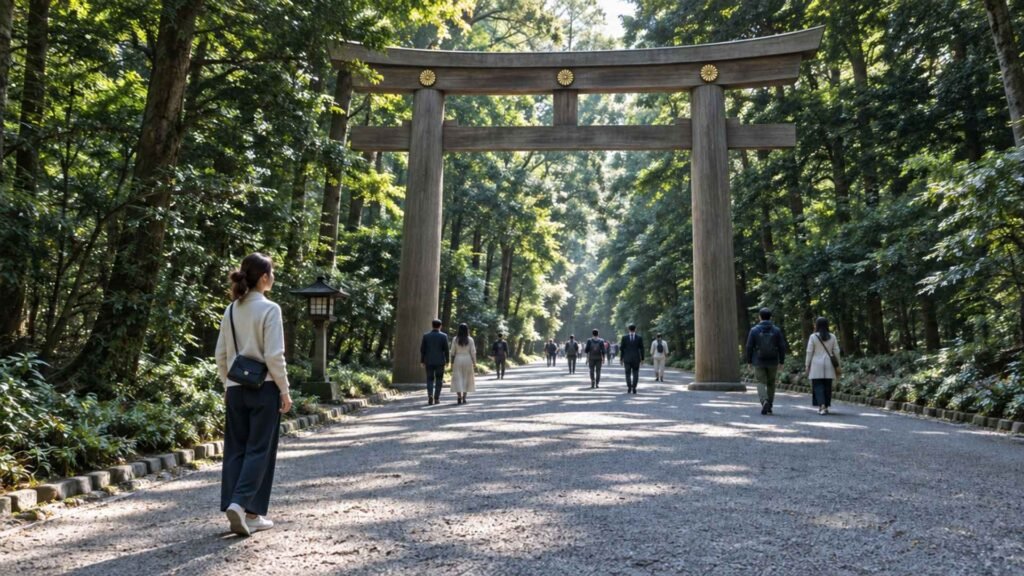
Your first full day introduces Tokyo’s peaceful, fashionable and highly modern sides.
Visit Meiji Shrine in the morning. The forested approach creates a calm introduction to the city and provides a useful opportunity to become familiar with basic shrine etiquette. An early visit also helps you avoid the busiest part of the day.
From the shrine, the route leads naturally into Harajuku. Takeshita Street is the area’s best-known pedestrian street, but it represents only one side of the neighbourhood.
If crowds and novelty shops are not your priority, explore the smaller streets around Cat Street before continuing towards Omotesando. The area combines fashion, cafés, design shops and modern architecture.
The afternoon and early evening are best reserved for Shibuya. See the famous crossing, explore the streets around the station and visit a department-store food hall or observation deck if those experiences interest you.
Reserve popular observation decks in advance when possible. If the day already feels long, have dinner in Shibuya instead of adding Shinjuku at night.
Day 3: Asakusa, Ueno and Eastern Tokyo
An early arrival works particularly well in Asakusa, before the main approach to Senso-ji becomes crowded.
Enter through Kaminarimon and walk along Nakamise towards the temple. After seeing the main complex, spend some time in the surrounding streets rather than leaving immediately.
Ueno is a convenient next stop for lunch and one main afternoon activity.
Museum lovers can choose one of the major collections around Ueno Park. If museums are not a priority, explore Ameyoko and the busy streets around Ueno Station instead.
Later, choose between Akihabara and the Tokyo Skytree area.
Akihabara is the better choice for anime, manga, gaming and electronics. Tokyo Skytree and the Sumida River area work better for travellers interested in city views or a slower afternoon.
Although both can fit into one day, choosing only one creates a more comfortable experience.
Day 4: Tsukiji, Ginza and Central Tokyo
Food is the focus of this morning, with breakfast or an early lunch at Tsukiji Outer Market.
The wholesale market moved to Toyosu, but Tsukiji remains a popular area for seafood, snacks, kitchenware and small restaurants. The lanes can become congested, so follow local guidance and avoid blocking entrances while eating or taking photographs.
Ginza is within easy reach afterwards. Explore its department stores, stationery shops, cafés and architecture without feeling that you need to dedicate the entire day to shopping.
From Ginza, continue towards Marunouchi and Tokyo Station. If the Imperial Palace East Gardens are open and suit your schedule, they can be added during the afternoon.
Yurakucho, Ginza and the streets surrounding Tokyo Station all work well for the evening. Keep the pace relatively relaxed because Tokyo days often involve more walking than the map suggests.
Day 5: Visit Kamakura or Keep the Day Flexible
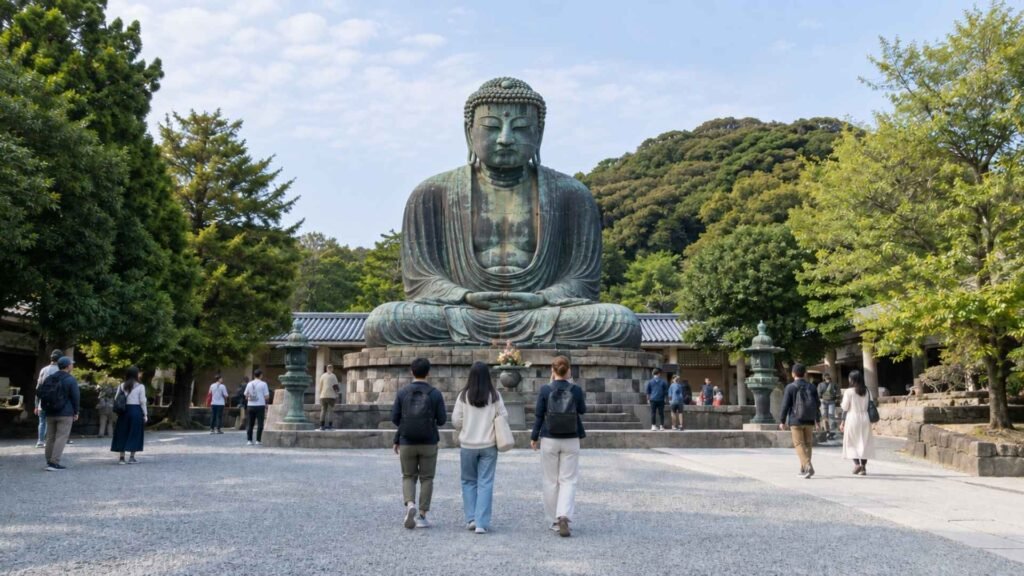
Kamakura provides a change of atmosphere without requiring another hotel.
A balanced day trip can include the Great Buddha at Kotoku-in, Hase-dera, Komachi-dori and Tsurugaoka Hachimangu. Choose the order according to your arrival station and focus on the temples that interest you most.
Enoshima can also be added, but doing so creates a longer and faster day. Include it only if the coast is more important to you than additional time in Kamakura.
Alternatively, keep Day 5 in Tokyo.
By this stage, you will know which type of neighbourhood you enjoy most. Possible options include Yanaka, Daikanyama, Kichijoji, Odaiba or a pre-booked attraction that did not fit into the previous days.
This flexible day also provides protection against poor weather earlier in your stay.
Day 6: Travel from Tokyo to Matsumoto
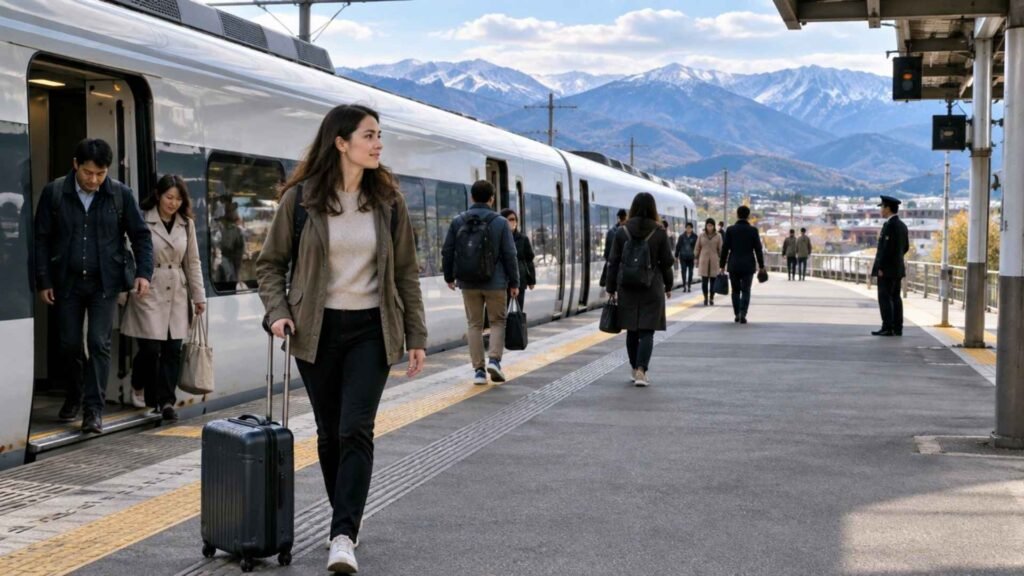
Today marks the beginning of the Japanese Alps section.
Take the Limited Express Azusa from Shinjuku to Matsumoto. Leave in the morning so you have enough time to explore after checking in or storing your luggage. Reserve your seat and verify the current timetable before travelling.
Matsumoto Castle should be the main priority. Allow time for the grounds, moat and exterior views as well as the interior.
The castle’s wooden staircases can be steep, so wear suitable footwear and expect the interior route to take longer during busy periods.
Nawate Street and Nakamachi provide a natural continuation to the afternoon. Traditional storehouses, small shops and cafés create a quieter atmosphere than Tokyo.
Spend the evening trying local soba or another Nagano speciality. One night is sufficient for the central city, but travellers wanting to visit Kamikochi or hike in the region should add at least one more night.
Day 7: Travel to Takayama and Explore the Old Town
The journey continues deeper into the mountain region as you travel from Matsumoto to Takayama by highway bus or by rail via Nagoya.
The bus follows a more direct geographical route, but mountain roads can be affected by weather, seasonal conditions or temporary disruption. Confirm the operating conditions shortly before your journey.
After arriving in Takayama, leave your bag at the hotel and explore Sanmachi Suji.
The preserved merchant streets contain traditional buildings, sake breweries, cafés and small shops. Takayama is compact enough to explore without a rigid afternoon schedule.
Restaurants may close earlier than in Tokyo or Osaka, and popular places can have limited seating. If you are staying in a ryokan with dinner, confirm the required check-in and meal time.
A quiet evening suits this part of the route. The slower pace is one of the main reasons for including Takayama in a three-week Japan itinerary.
Day 8: Experience Takayama and Hida Culture
Takayama’s morning markets provide an easy start before a visit to Takayama Jinya.
The historic government complex gives the old town more context and offers something different from another shopping street.
The afternoon can be spent at Hida Folk Village if you are interested in regional architecture and traditional rural life. The open-air museum also provides a useful introduction to the building styles you will see at Shirakawa-go.
Travellers who prefer a slower day can remain in central Takayama and explore its craft shops, smaller museums and cafés.
Hida beef appears in several forms, from skewers and sushi-style servings to full restaurant meals. Choose the experience that suits your budget rather than assuming the most expensive option is essential.
Before returning to your hotel, confirm tomorrow’s two bus reservations:
- Takayama to Shirakawa-go
- Shirakawa-go to Kanazawa
These are separate stages of the same travel day.
Day 9: Visit Shirakawa-go on the Way to Kanazawa
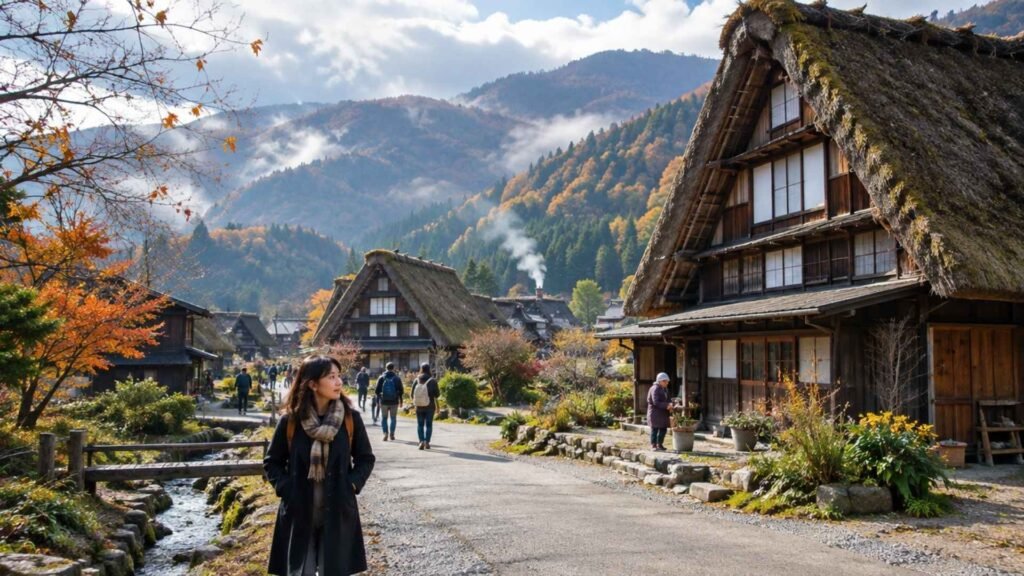
A morning bus brings you from Takayama to Shirakawa-go.
The official Nohi Bus route lists a journey time of approximately 50 minutes. Some departures require reservations, and popular services can fill during weekends, holidays and peak seasonal periods.
Store your small bag in a locker or designated luggage facility, subject to availability, before exploring Ogimachi.
Walk among the gassho-zukuri farmhouses and visit the viewpoint if the weather and walking conditions are suitable. Allow enough time to see the village without rushing directly from the bus stop to the most photographed locations.
Shirakawa-go is a lived-in community. Remain on permitted routes, respect private property and follow local instructions, especially during winter.
Continue to Kanazawa by bus in the afternoon.
Using Shirakawa-go as an intermediate stop is one of the main strengths of this three-week route. You experience the village without creating another hotel check-in or returning to Takayama.
Day 10: Explore Kanazawa
Kenrokuen is the best place to begin your full day in Kanazawa, ideally around opening time.
The garden changes considerably with the seasons. Arriving early allows you to appreciate its landscape design before the main visitor groups arrive.
Kanazawa Castle Park sits nearby and creates a natural second stop.
Afterwards, choose between the Nagamachi samurai district and Higashi Chaya. Both can fit into the day, but give your preferred area enough time instead of reducing each to a quick photograph.
Omicho Market is a convenient lunch option for travellers interested in seafood. It can become busy, and prices vary between vendors, so look around before choosing.
Kanazawa is also known for crafts including gold leaf, ceramics and lacquerware. A workshop or carefully selected museum can make the day more distinctive than simply moving between famous streets.
Spend a second night in Kanazawa before continuing to Kyoto.
Day 11: Travel from Kanazawa to Kyoto
The mountain and Hokuriku stage ends today as you travel from Kanazawa towards Kyoto.
Older guides may still describe a direct limited-express journey. The opening of the extended Hokuriku Shinkansen changed the usual transfer pattern, so check the current route and timetable for your date.
After arriving in Kyoto, check in for four nights.
Kyoto Station is convenient for Nara and onward travel. Downtown Kyoto provides better access to restaurants and evening neighbourhoods. Choose according to which convenience matters more to you.
Use the remaining afternoon for Nishiki Market and the surrounding shopping streets. Continue towards the Kamo River or Pontocho in the early evening.
This should remain a light introduction to Kyoto rather than a full temple day after the journey from Kanazawa.
Day 12: Kiyomizu-dera, Higashiyama and Gion
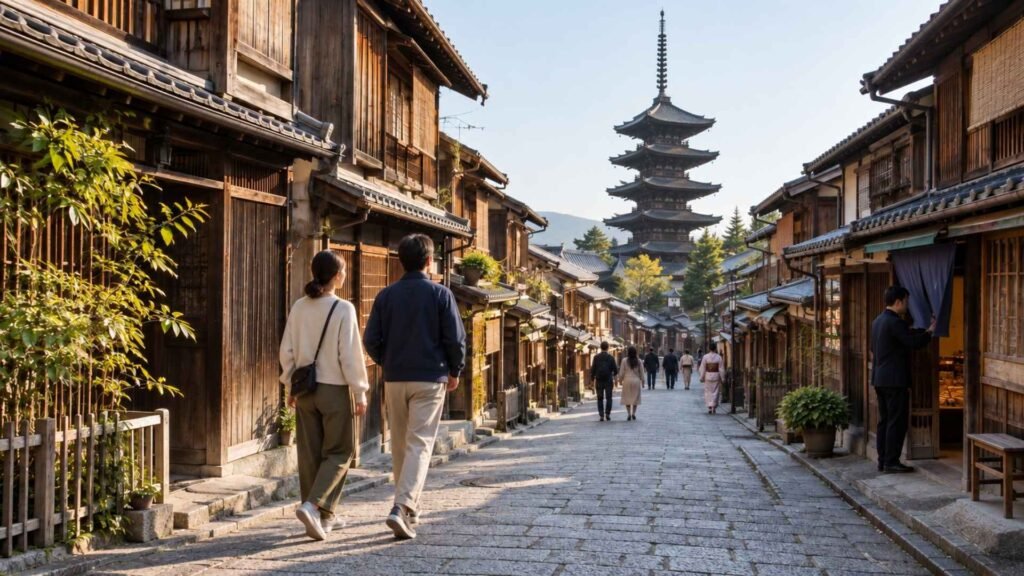
An early visit to Kiyomizu-dera allows you to explore the temple before the surrounding streets become heavily congested.
Afterwards, walk through Sannenzaka and Ninenzaka before continuing gradually through southern Higashiyama. Possible stops include Kodai-ji, Maruyama Park and Yasaka Shrine.
Choosing a few temples and giving each one enough time creates a more rewarding experience than entering every site you pass. Kyoto becomes repetitive when the day is treated as a checklist of famous names.
Explore Gion later in the day.
Some lanes and properties are private, and local restrictions on photography or access must be respected. Avoid obstructing doorways or following geiko and maiko for photographs.
Have dinner around Gion, Pontocho or downtown Kyoto before returning to your hotel.
Day 13: Arashiyama and Northwest Kyoto
Arashiyama is most enjoyable early, before the main tour groups arrive.
Walk through the bamboo grove, but remember that it is relatively compact and represents only one part of the district.
Continue to Tenryu-ji or choose another nearby temple. Togetsukyo Bridge, the riverside and Okochi Sanso provide additional options.
The monkey park involves an uphill walk and should be included only if it genuinely interests you.
In the afternoon, continue to Kinkaku-ji if the Golden Pavilion is a first-trip priority. Arashiyama and Kinkaku-ji are not beside one another, so allow time for the transfer.
Return to central Kyoto instead of adding several more distant temples. An unstructured evening will help balance two busy sightseeing days.
Day 14: Fushimi Inari and Nara
The day begins early at Fushimi Inari.
Walk beyond the entrance and the first dense rows of torii gates, where the route usually becomes less congested. You do not need to complete the entire mountain circuit unless the hike itself is important to you.
Continue by train to Nara.
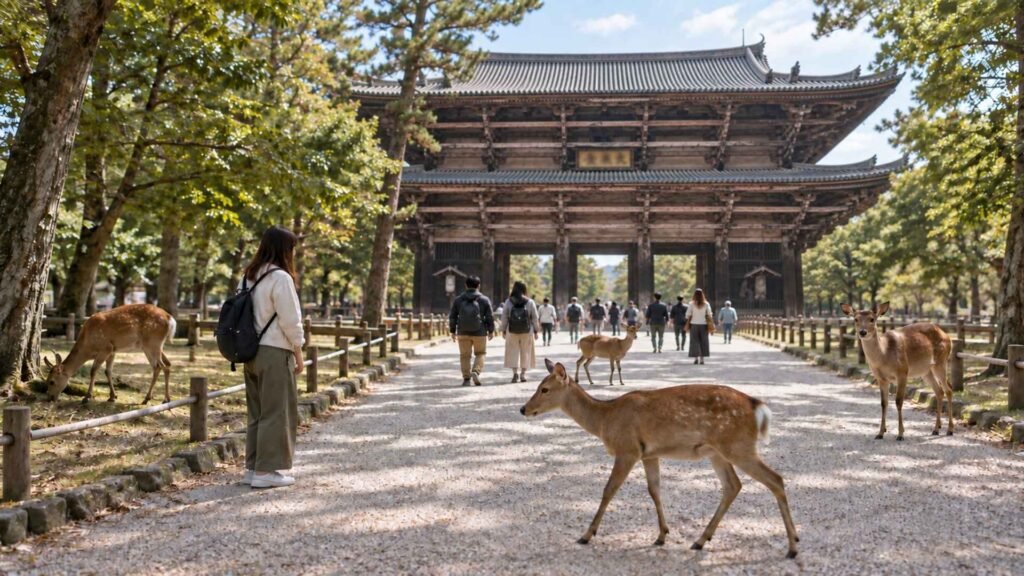
Focus on Todai-ji, Nara Park and Kasuga Taisha, adjusting the route to your energy and interests. The deer are wild animals rather than props for photographs, so use only approved food and follow the posted instructions.
Return to Kyoto for a fourth night.
Combining Fushimi Inari and Nara creates a full day. If you want a slower Nara visit, skip Fushimi Inari and dedicate the entire day to Nara instead.
Day 15: Travel to Hiroshima
Today’s journey takes you west from Kyoto to Hiroshima by shinkansen. Depending on the train and ticket, you may need to change at Shin-Osaka.
Reserve seats during busy periods and leave Kyoto early enough to have a meaningful afternoon in Hiroshima.
After checking in, visit Peace Memorial Park, the Atomic Bomb Dome and the Hiroshima Peace Memorial Museum.
This is not a sightseeing stop to rush between other attractions. Allow enough time for the museum and leave some emotional space afterwards.
Confirm the museum’s opening hours and admission arrangements shortly before travelling.
Spend the evening quietly in the city centre or try Hiroshima-style okonomiyaki. Staying for two nights means you do not need to continue immediately to Miyajima or Osaka.
Day 16: Take a Day Trip to Miyajima
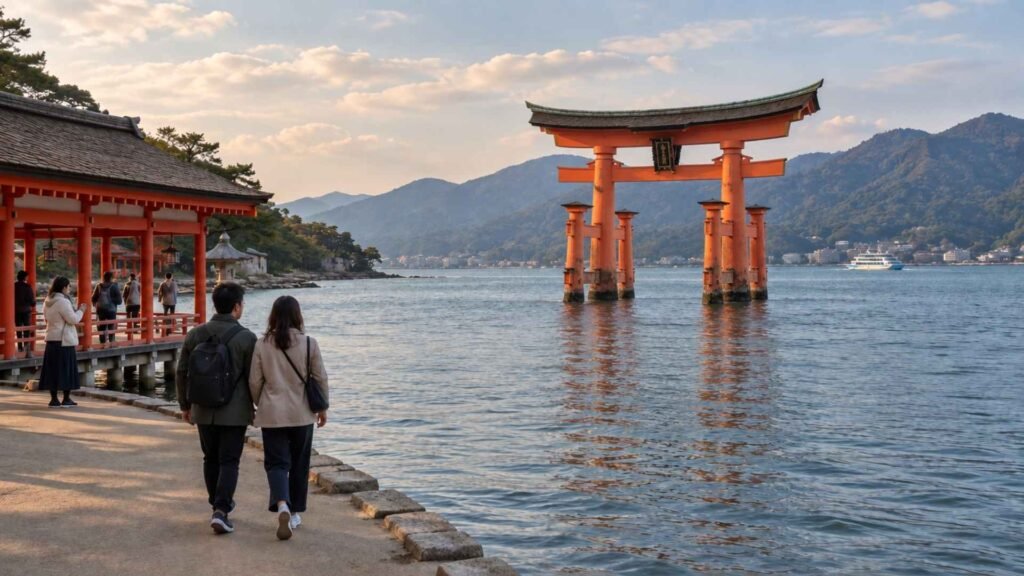
Miyajima offers a very different atmosphere from central Hiroshima and deserves most of the day.
Travel to Miyajimaguchi and take the ferry to the island. A small visitor tax is normally collected through the ferry operator and may appear separately from the main fare or transport-pass coverage.
Visit Itsukushima Shrine and explore the waterfront before continuing beyond the busiest approach.
Daisho-in offers a quieter temple experience. Mount Misen is suitable for travellers wanting a longer scenic activity, although the full experience requires additional time and appropriate footwear.
The appearance of the famous torii gate and waterfront changes with the tide. Check the tide information if seeing high or low tide is important, but allow the rest of the day to remain flexible.
Return to Hiroshima for the night.
Staying overnight on Miyajima can be memorable, but it creates another hotel change and is not necessary for this route. Treat it as a deliberate upgrade rather than an essential part of the itinerary.
Day 17: Visit Himeji on the Way to Osaka
Himeji fits naturally between Hiroshima and Osaka, allowing you to visit the castle without adding another overnight base.
Leave Hiroshima in the morning and store your luggage at Himeji Station using a locker or staffed facility, subject to availability.
Himeji Castle is visible from the station and should be the main focus of the stop. Allow enough time to walk to the castle, purchase admission and complete the interior route.
The castle contains steep staircases, so travellers with mobility concerns should check accessibility information in advance.
Add Koko-en garden if the weather is suitable and you have enough time. Otherwise, return to the station and continue to Osaka.
Check in for four nights.
Namba is convenient for food, nightlife and Dotonbori. Umeda provides strong railway connections. Shin-Osaka is practical for shinkansen journeys but offers less evening atmosphere for most first-time visitors.
Day 18: Osaka Castle, Kuromon Market and Dotonbori
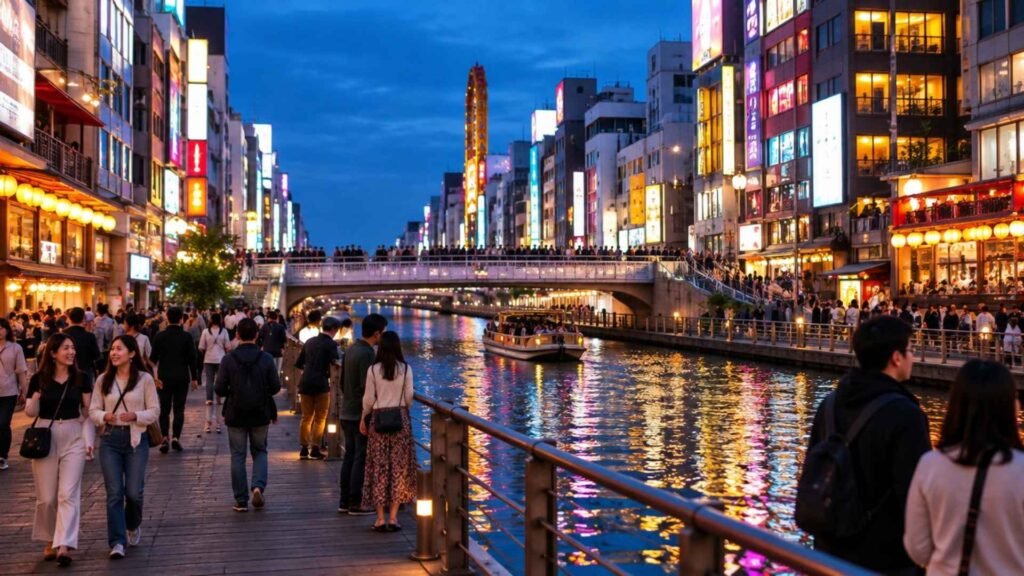
Osaka Castle Park provides a spacious start to your first full day in the city.
Decide whether you want to enter the reconstructed castle museum or mainly see the grounds and exterior. Travellers who have already entered Matsumoto and Himeji castles may prefer to spend more time elsewhere in Osaka.
Kuromon Market works well for lunch. The market is popular with visitors and prices vary, so compare the options before joining the busiest queue.
Use the afternoon to explore Namba, Shinsaibashi or Amerikamura according to your interests.
Dotonbori is most atmospheric in the evening, when the signs along the canal are illuminated.
Try takoyaki, okonomiyaki or kushikatsu, but there is no need to queue for every famous restaurant. Some of the most enjoyable meals are found in the smaller streets away from the busiest section.
Day 19: Explore Osaka or Visit Universal Studios Japan
This day can be shaped around contemporary Osaka or dedicated entirely to Universal Studios Japan.
If the theme park is a major priority, buy dated admission in advance and check whether a Universal Express Pass would be worthwhile for your preferred attractions.
Express Passes are sold separately from general admission, cover specific attractions and time slots, and may sell out on popular dates. Check the current ticket and area-entry arrangements on the official Universal Studios Japan website before purchasing.
If you are not visiting the park, explore two or three Osaka neighbourhoods.
Shinsekai and Tennoji combine well. Umeda can be paired with Nakazakicho, while Sumiyoshi Taisha offers a quieter alternative farther south.
Give Osaka time for its own neighbourhoods, street life and food culture rather than using the day only for attractions missed in Tokyo or Kyoto.
Day 20: Keep the Final Full Day Flexible
After almost three weeks of travel, you may prefer a slow morning, final shopping and another evening in your favourite Osaka neighbourhood.
Keeping Day 20 free until later in the trip allows you to respond to your energy, the weather and anything you could not visit earlier.
If you still want a day trip, choose one option:
- Kobe: Best for a relaxed waterfront and food-focused day.
- Uji: Best for tea culture and Byodo-in.
- Nara: Best if you skipped Nara from Kyoto or want more time there.
- Koyasan: Best for temple heritage, although an overnight stay is more rewarding than a long day trip.
Choose only one of these destinations so the day remains comfortable.
The flexibility also provides protection against poor weather, travel fatigue or transport disruption earlier in the itinerary.
Clara’s Tip:
Protect your final full day from unnecessary advance bookings. A free day near the end is one of the most valuable parts of a three-week itinerary.
Day 21: Depart from Osaka
Your final schedule depends on the time and airport of departure.
For Kansai International Airport, check which train or airport bus works best from your accommodation. Confirm the first departure, total journey time and luggage arrangements, then add the airport arrival time recommended by your airline.
If you have a later flight, keep the morning close to your hotel. A relaxed breakfast or limited final shopping is safer than travelling to another city before departure.
If your international flight leaves from Tokyo, modify the end of the itinerary. Return to Tokyo on Day 20 and spend the final night near a convenient airport connection.
A long Osaka–Tokyo journey immediately before an international flight creates unnecessary risk, so completing it the previous day is the safer option.
How to Travel Between the Main Stops
| Route | Recommended Transport | Important Note |
|---|---|---|
| Tokyo → Matsumoto | Limited Express Azusa from Shinjuku | Reserve a seat and check the timetable |
| Matsumoto → Takayama | Highway bus or rail via Nagoya | Bus is more direct but can be weather-sensitive |
| Takayama → Shirakawa-go | Highway bus | Some services require reservations |
| Shirakawa-go → Kanazawa | Highway bus | Reserve this separately from the first bus |
| Kanazawa → Kyoto | Hokuriku Shinkansen and connecting train | Do not rely on older direct-train information |
| Kyoto → Hiroshima | Shinkansen | The best service depends on your ticket or pass |
| Hiroshima → Himeji → Osaka | Sanyo Shinkansen | Himeji works well as an intermediate stop |
| Osaka → Kansai Airport | Airport train or bus | Choose according to your hotel location |
Japan’s public transport network is extensive, but not every journey uses the same operator or ticket system. The official JNTO transport overview provides a useful introduction to trains, buses and local travel.
An IC card is helpful for compatible urban trains, subways and buses. However, it does not replace reserved limited-express or shinkansen tickets and should not be treated as a universal pass for the mountain section.
Do You Need a 21-Day Japan Rail Pass?
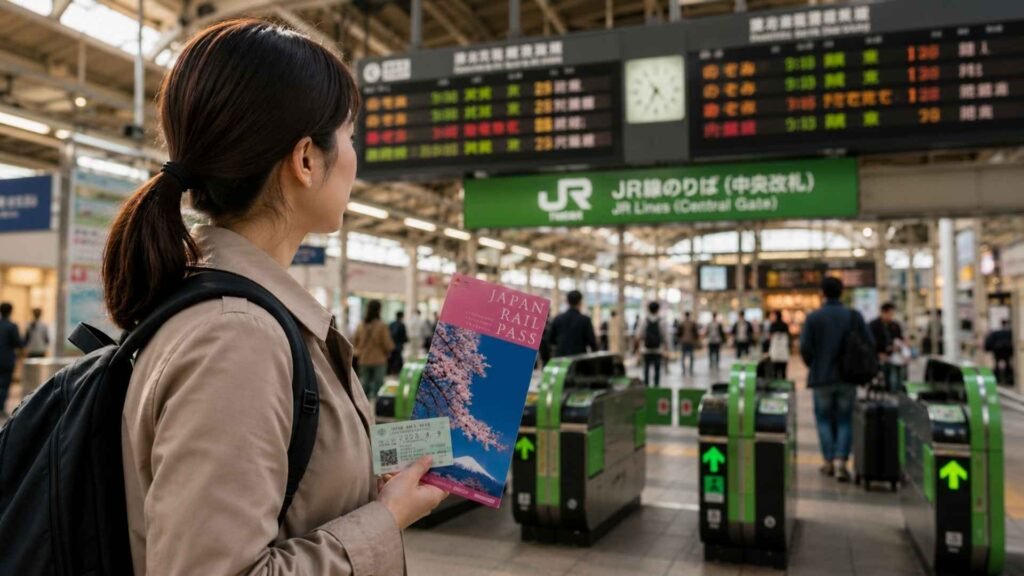
Not automatically.
The existence of a 21-day nationwide Japan Rail Pass does not mean it offers the best value for this route.
Several parts of the itinerary reduce its potential value:
- The Takayama–Shirakawa-go–Kanazawa section uses buses.
- Many city subways and private railway lines are not covered.
- The most expensive rail journeys are spread across the trip.
- An open-jaw flight removes the return journey to Tokyo.
- Some shinkansen services have additional restrictions for pass holders.
Calculate the individual cost of your planned long-distance journeys before buying any pass. Then compare the result with nationwide and regional pass options.
The official Japan Rail Pass website provides current prices, validity periods and coverage conditions.
For many travellers following this exact route, individual rail tickets combined with separate mountain-bus reservations will be simpler or better value.
A pass can become more competitive if you add a return journey to Tokyo or other expensive rail trips. Even then, convenience and service restrictions should be considered alongside the total price.
How Much Does a 3-Week Japan Trip Cost?
The cost of a Japan itinerary for 21 days varies significantly according to season, accommodation, international flights, room occupancy and travel style.
Build your budget around five main categories:
| Category | What to Include |
|---|---|
| Accommodation | 20 nights and any ryokan meal plans |
| Intercity transport | Trains, seat reservations and mountain buses |
| Local transport | Subways, buses, local trains and airport travel |
| Food | Meals, drinks, snacks and cafés |
| Attractions | Museums, gardens, observation decks and theme parks |
Accommodation will normally be the largest expense. Rates can rise substantially during cherry blossom season, autumn foliage, national holidays and popular weekends in smaller destinations.
Business hotels, casual restaurants and early reservations can keep costs manageable. Ryokan stays, fine dining, theme parks and premium hotels increase the total quickly.
When comparing accommodation, consider the time and local transport cost created by a less convenient location. Over 21 days, the energy lost through poor locations can outweigh a small nightly saving.
A more accurate budget should be calculated after choosing the travel month and accommodation level rather than relying on one universal three-week figure.
Best Time to Follow This Route
This Japan itinerary for 21 days can be followed throughout the year, but the Japanese Alps make the seasonal differences more important.
Spring – Mild Weather but High Demand
Late March and April can bring comfortable sightseeing weather and cherry blossoms.
Blooming dates vary by destination and year. Tokyo, Takayama, Kanazawa and Kyoto will not necessarily reach peak blossom at the same time.
Reserve accommodation early and pack layers for the cooler mountain destinations.
Summer – Festivals with Heat and Humidity
Summer brings festivals, green landscapes and long sightseeing days.
Tokyo, Kyoto, Hiroshima and Osaka can be extremely hot and humid. Begin outdoor activities early, stay hydrated and reduce long walks during the hottest hours.
Matsumoto and Takayama may feel cooler, but they should not be treated as guaranteed escapes from summer heat.
Heavy rain and typhoons may also affect transport.
Autumn – Mountain Scenery and Comfortable Walking
Autumn is particularly attractive for Matsumoto, Takayama, Kanazawa and Kyoto.
Foliage progresses at different times according to elevation and weather, so the entire route will not necessarily reach peak colour together.
Popular weekends can create high accommodation demand and crowded buses around Shirakawa-go.
Winter – Atmospheric but Weather-Sensitive
Snow can make Takayama and Shirakawa-go especially beautiful, but it also increases the operational risk of the mountain section.
Wear appropriate footwear, monitor road conditions and avoid tight bus connections.
Travellers uncomfortable with winter transport should replace the Alps section with a lower-elevation alternative rather than ignoring the forecast.
Where to Stay Along the Route
Choose accommodation according to transport and evening convenience rather than proximity to a single attraction.
| Destination | Practical Areas |
|---|---|
| Tokyo | Shinjuku, Ueno or Tokyo Station area |
| Matsumoto | Between Matsumoto Station and the castle |
| Takayama | Near the station, bus centre or old town |
| Kanazawa | Kanazawa Station or Korinbo |
| Kyoto | Kyoto Station or downtown Kyoto |
| Hiroshima | Hiroshima Station or the central Peace Park area |
| Osaka | Namba or Umeda |
A station-area hotel makes early departures and luggage handling easier. A more central neighbourhood may provide better restaurants and atmosphere in the evening.
You do not need to choose the same type of location in every city. Transport convenience matters most for one- and two-night stays, while neighbourhood atmosphere becomes more valuable during longer stays.
How to Adapt This Japan Itinerary for 21 Days
The core route is suitable for a broad first visit, but it can be adjusted without rebuilding the entire journey.
If You Want Fewer Hotel Changes
Remove Matsumoto or simplify the Alps section around fewer bases.
If you want fewer hotel changes, removing one destination completely works better than turning Matsumoto, Takayama and Kanazawa into rushed day trips.
If Mount Fuji Is a Priority
Use Day 5 for a carefully planned Fuji-area excursion or replace Matsumoto with an overnight stay around Hakone or the Fuji Five Lakes.
Mount Fuji should replace another part of the route rather than becoming an additional short stop between the existing destinations.
If You Prefer Nature and Hiking
Add one or two nights for Kamikochi when it is seasonally accessible.
Take the required nights from Osaka and the flexible Tokyo day rather than shortening every destination slightly.
If You Want a Ryokan Experience
Takayama is a natural place to include a ryokan stay.
Check whether breakfast and dinner are included, what time you must arrive and whether the bathing arrangements suit you. A ryokan follows a different rhythm from a standard city hotel.
If You Are Travelling with Children
Reduce at least one transfer, reserve seats and keep Day 20 flexible.
The simplest adjustment is to omit Matsumoto or choose fewer mountain bases. A slower route is usually more valuable than maintaining every destination.
Common Mistakes to Avoid
Trying to Cover the Whole Country
Three weeks sounds long, but adding Hokkaido, Okinawa or Kyushu would weaken this route. Concentrating on central and western Honshu creates a more realistic journey.
Booking the Mountain Buses Too Late
Some Takayama–Shirakawa-go–Kanazawa services require reservations. Confirm both parts of the journey rather than booking only the first bus.
Carrying a Large Suitcase Everywhere
Large luggage becomes inconvenient on regional buses and during the Shirakawa-go stop. Forward the main suitcase and keep essential items in a smaller bag.
Buying a Rail Pass Before Calculating
Trip length and pass length do not need to match. Compare the cost of covered journeys and remember that the mountain buses are separate.
Overplanning Every Day
Fatigue accumulates over three weeks. Keep arrival evenings light and protect the final Osaka day from unnecessary reservations.
Ignoring Mountain Weather
The conditions in Matsumoto, Takayama and Shirakawa-go can differ from Tokyo and Kyoto. Recheck weather and transport notices shortly before travelling.
Returning to Tokyo on Departure Morning
If your flight leaves from Tokyo, return the previous day. A cross-country transfer immediately before an international flight creates unnecessary risk.
Frequently Asked Questions About a 3-Week Japan Itinerary
Is three weeks in Japan too long?
No. Three weeks provides enough time to move beyond Tokyo, Kyoto and Osaka while maintaining a comfortable pace. It may feel too long only if the route does not match your interests or budget.
What is the best Japan itinerary for 21 days?
A strong first-time route is Tokyo → Matsumoto → Takayama → Shirakawa-go → Kanazawa → Kyoto → Hiroshima and Miyajima → Osaka. It combines major cities with mountain towns and historic destinations.
How many overnight bases should I use?
Six or seven bases are reasonable if most stays last several nights. This itinerary uses seven bases, with only Matsumoto limited to one night.
Should I fly into Tokyo and out of Osaka?
Yes, when the fare is reasonable. An open-jaw ticket reduces backtracking and removes the need to return to Tokyo at the end.
Is a 21-day Japan Rail Pass worth buying?
Not necessarily. This route includes buses and does not require a return journey to Tokyo. Compare current pass prices with the cost of individual tickets before buying.
Can I add Mount Fuji?
Yes, but it should replace another part of the route. Use the flexible Tokyo day or replace Matsumoto with Hakone or the Fuji Five Lakes.
Can I visit Shirakawa-go without staying overnight?
Yes. Visiting while travelling from Takayama to Kanazawa is one of the most efficient ways to include Shirakawa-go.
Do I need to rent a car?
No. Trains and buses can cover the entire itinerary. A car is unnecessary unless you plan to explore more remote mountain areas.
Is this itinerary suitable for winter?
Yes, but the Japanese Alps section becomes more weather-sensitive. Monitor transport conditions, allow additional connection time and wear appropriate footwear.
Can I reverse the route?
Yes. You can start in Osaka and finish in Tokyo. Check the bus schedules in the reverse direction rather than assuming the same departure times apply.
Final Thoughts
The best Japan itinerary for 21 days should feel broader than a two-week route, not simply busier. Adding Matsumoto, Takayama, Shirakawa-go and Kanazawa creates a genuine three-week journey while Tokyo, Kyoto, Hiroshima and Osaka retain enough time to be enjoyed properly.
Book the mountain buses early, travel light through Shirakawa-go and keep the final Osaka day flexible. These decisions will help the route remain comfortable from your arrival in Tokyo to your departure from Osaka.