
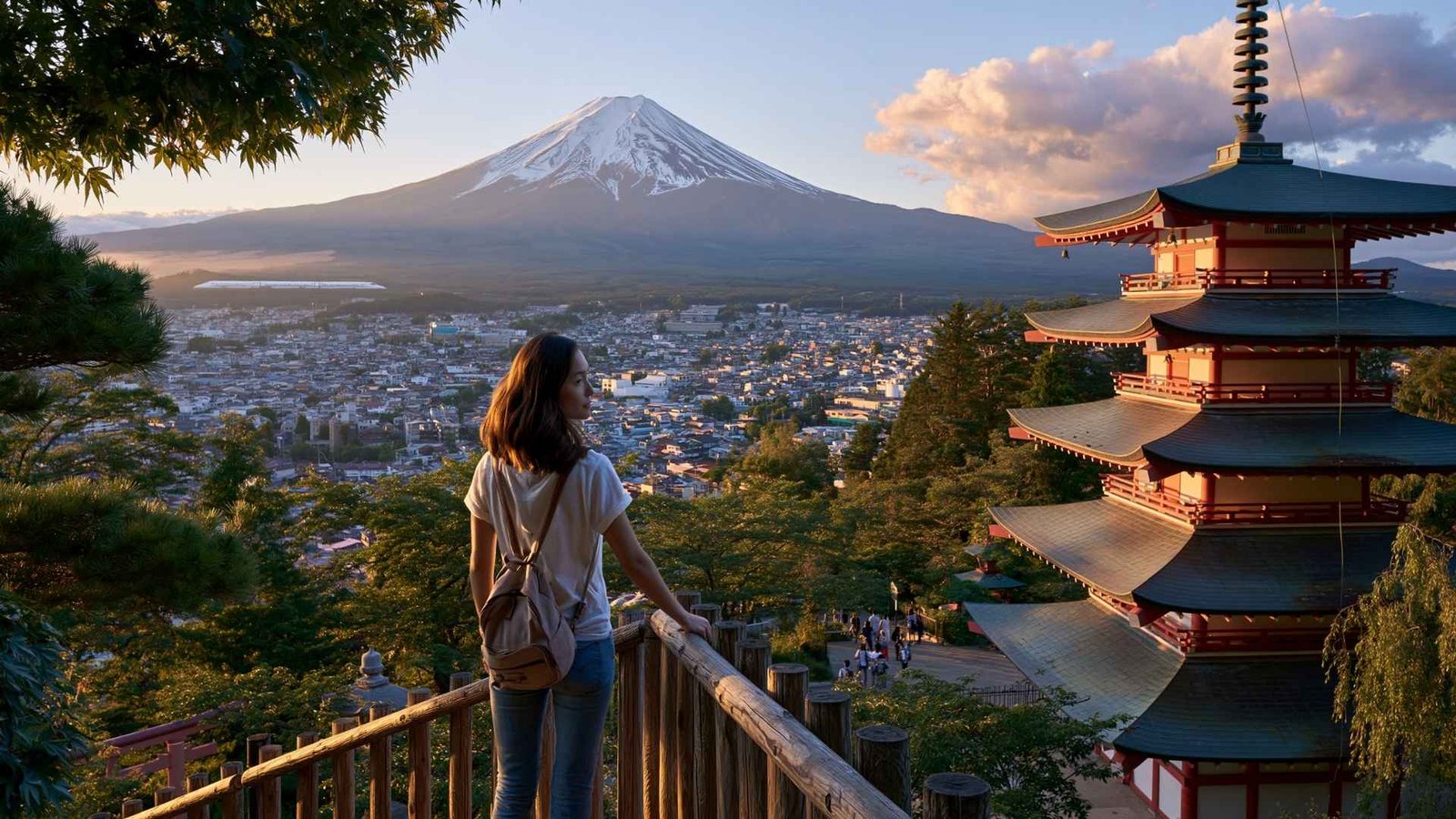
Planning two weeks in Japan is much easier when you have a clear route. This Japan itinerary for 14 days is designed for first-time visitors and covers Tokyo, Hakone or the Mount Fuji area, Kyoto, Nara, Osaka, and Hiroshima in a logical order.
The itinerary balances sightseeing, travel time, and overnight stays, giving you enough time to experience Japan’s biggest highlights without constantly changing hotels or rushing between destinations. Whether you’re visiting during cherry blossom season, autumn foliage, or another time of year, this guide will help you make the most of two weeks in Japan.
Quick Answer: What Is the Best Japan Itinerary for 14 Days?
For most first-time visitors, the best Japan itinerary for 14 days follows Japan’s famous Golden Route while adding enough flexibility to experience each destination without feeling rushed.
Recommended Route
Tokyo (4 nights)
↓
Hakone or Mount Fuji (1 night)
↓
Kyoto (3 nights)
↓
Osaka (2 nights)
↓
Hiroshima (2 nights)
↓
Return to Tokyo for departure
This route combines modern cities, traditional neighborhoods, historic temples, mountain scenery, excellent food, and two of Japan’s most iconic Shinkansen journeys.
| Day | Destination | Highlights |
|---|---|---|
| 1 | Tokyo | Arrival, Shibuya |
| 2 | Tokyo | Asakusa, Ueno, Akihabara |
| 3 | Tokyo | Meiji Shrine, Harajuku, Shinjuku |
| 4 | Tokyo | Flexible sightseeing or optional day trip |
| 5 | Hakone or Kawaguchiko | Mount Fuji views, onsen, ryokan stay |
| 6 | Kyoto | Fushimi Inari, Higashiyama, Gion |
| 7 | Kyoto | Arashiyama, Bamboo Grove, Monkey Park |
| 8 | Kyoto | Kinkaku-ji, Nijo Castle, Nishiki Market |
| 9 | Nara → Osaka | Todai-ji, Nara Park, Dotonbori |
| 10 | Osaka | Osaka Castle, Umeda, local food |
| 11 | Hiroshima | Peace Memorial Park, Atomic Bomb Dome |
| 12 | Miyajima | Itsukushima Shrine, Mount Misen (optional) |
| 13 | Tokyo | Return by Shinkansen |
| 14 | Departure | Narita or Haneda Airport |
If you’re still deciding how many days to spend in Japan, our complete Japan Itinerary guide compares 7, 10, 14, and 21-day routes to help you choose the best option before planning each day in detail.
Why 14 Days Is the Ideal Length for Japan
Many travelers initially plan a one-week trip because of limited vacation time, while others assume they need three weeks or more to experience Japan properly.
In reality, two weeks sits comfortably in the middle.
A Japan itinerary for 14 days gives you enough time to explore Japan’s major cultural and urban highlights without constantly rushing from one city to another.
Instead of trying to squeeze Kyoto into a day trip or spending every morning checking out of another hotel, you have time to settle into each destination and enjoy it at a more relaxed pace.
Compared with shorter trips:
- Four full days allow you to explore Tokyo beyond its most famous attractions.
- Three nights in Kyoto make it possible to visit temples early in the morning before large tour groups arrive.
- Osaka becomes more than just a quick evening stop.
- Hiroshima and Miyajima can both be included without sacrificing time elsewhere.
- Long-distance train journeys are spread naturally throughout the trip.
At the same time, two weeks is still manageable for most international travelers. Accommodation costs remain reasonable, annual vacation allowances are usually sufficient, and the itinerary avoids the fatigue that can come with constantly moving between hotels.
Rather than trying to see every famous destination in Japan, this itinerary focuses on the country’s biggest highlights while leaving enough time to slow down and enjoy each stop. Its westbound route also minimizes backtracking and makes the most of Japan’s efficient Shinkansen network, helping keep travel days straightforward and comfortable.
For many travelers, two weeks in Japan offers the best balance between seeing the country’s highlights and maintaining a comfortable travel pace. If you’re planning your first visit, the official Japan travel guide also provides useful information on destinations, transportation, and seasonal travel.
Days 1–2: Begin Your Journey in Tokyo
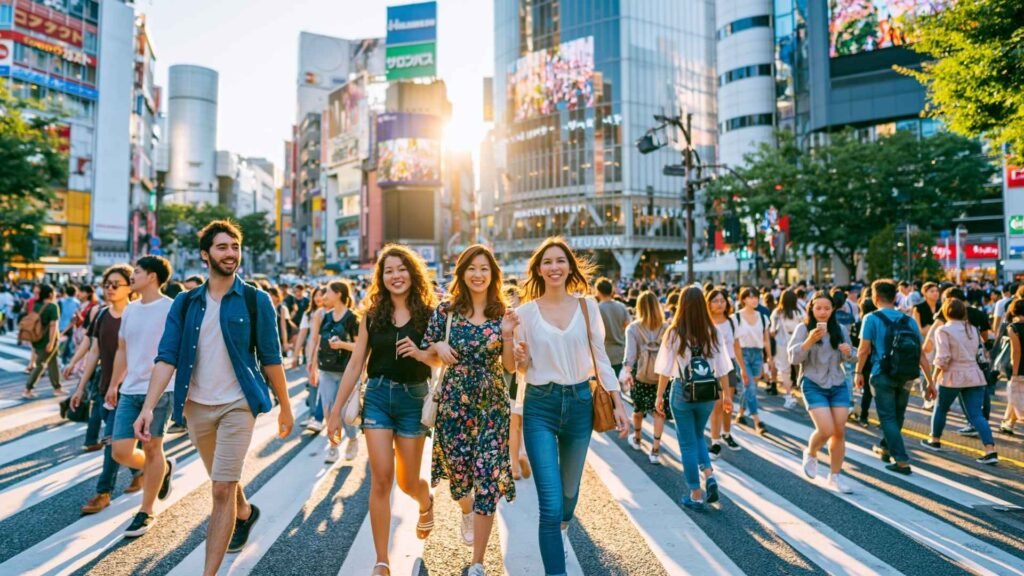
Tokyo is the perfect place to begin a first visit to Japan.
As the country’s largest city and the arrival point for most international flights, it offers a gentle introduction to Japanese transportation, culture, food, and daily life. Spending your first few days here also gives your body time to recover from jet lag before longer train journeys begin.
Rather than trying to see every neighborhood, focus on experiencing a variety of Tokyo’s different personalities—from centuries-old temples to futuristic entertainment districts.
Day 1: Arrival and Your First Evening in Tokyo
After arriving at either Narita or Haneda Airport, allow enough time for immigration, baggage claim, and transportation into the city before making ambitious sightseeing plans.
Most international arrivals reach central Tokyo during the afternoon or early evening, making the first day ideal for settling into your hotel and exploring nearby neighborhoods at a relaxed pace.
If your accommodation is around Shinjuku, Ginza, or Tokyo Station, you’ll have excellent transport connections for the rest of your stay.
For your first evening, consider visiting Shibuya.
Watching hundreds of people cross the famous Shibuya Scramble Crossing is one of those classic Tokyo experiences that never loses its appeal.
Spend some time wandering the surrounding streets, browse department stores and smaller boutiques, or simply enjoy dinner while watching the city come alive after sunset.
If energy allows, continue toward Shibuya Sky for panoramic evening views across Tokyo, though advance reservations are highly recommended during busy travel seasons.
Keep the first day relatively light.
A good night’s sleep will help you adjust to the time difference and prepare for a full day of sightseeing tomorrow.
Day 2: Experience Tokyo’s Traditional and Modern Sides
Your second day introduces the contrast that makes Tokyo so fascinating.
Start early in Asakusa, one of the city’s oldest neighborhoods.
Senso-ji Temple, Tokyo’s oldest Buddhist temple, is particularly enjoyable in the morning before larger tour groups arrive. Walking through Nakamise Shopping Street provides an opportunity to sample traditional snacks and browse souvenir shops that have served visitors for generations.
After exploring Asakusa, continue to nearby Ueno.
Depending on your interests, you might visit Ueno Park, one of Japan’s best cherry blossom locations in spring, explore one of its excellent museums, or simply enjoy lunch in the surrounding streets.
In the afternoon, shift dramatically from old Tokyo to modern pop culture with a visit to Akihabara.
Known worldwide for electronics, gaming, anime, and manga, the district offers an entirely different atmosphere from Asakusa. Even travelers with little interest in gaming often enjoy experiencing the unique energy of the neighborhood.
As evening approaches, return to your hotel or explore one of Tokyo’s many restaurant districts.
Don’t worry about trying to fit everything into a single day.
One of the greatest strengths of this Japan itinerary for 14 days is that you’ll still have two more full days in Tokyo before continuing west toward Kyoto.
Days 3–4: Discover More of Tokyo
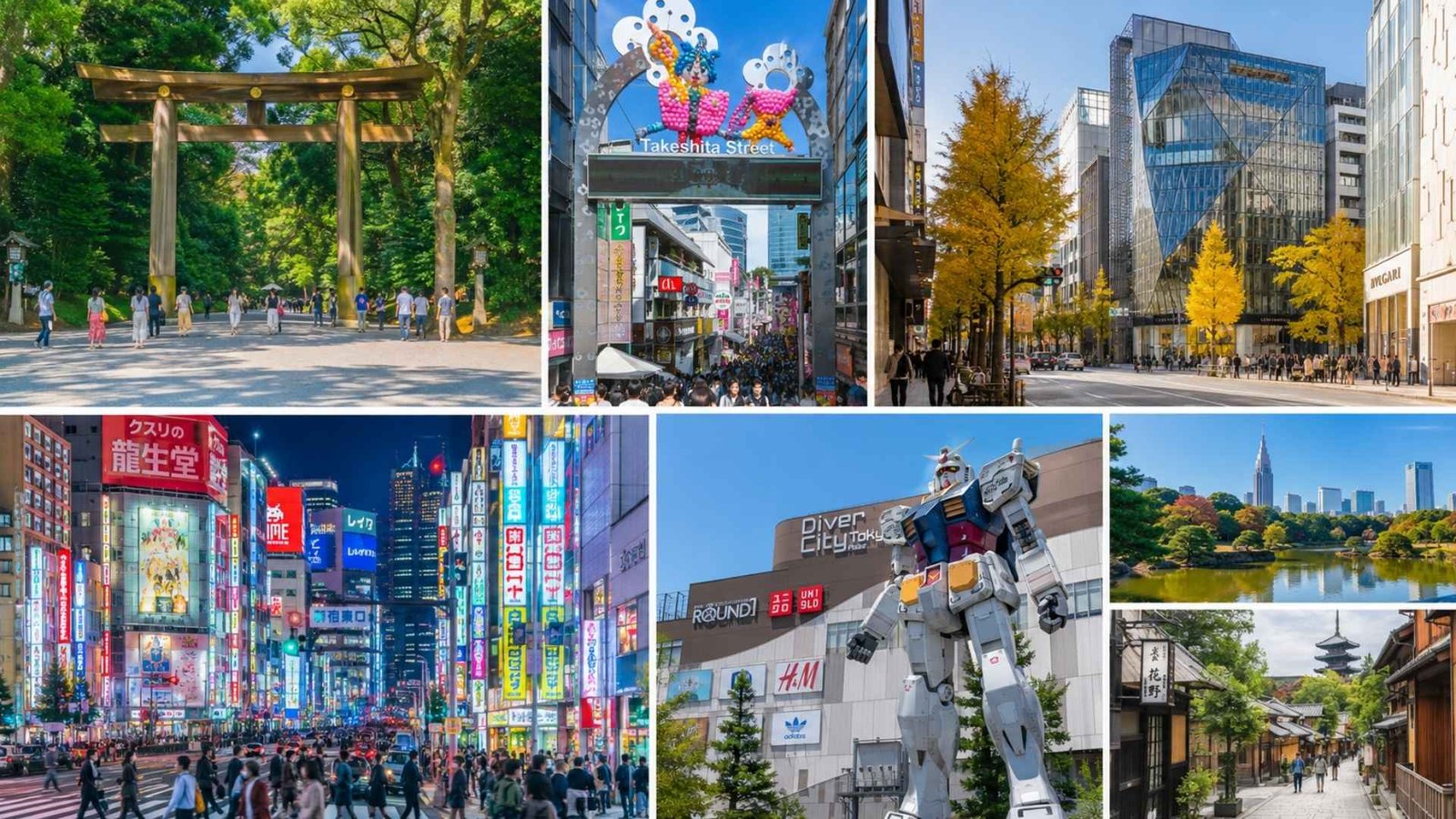
After seeing Tokyo’s historic districts and famous landmarks, spend your remaining two days exploring the city’s modern neighborhoods, peaceful gardens, and attractions that match your own interests.
One of the biggest mistakes first-time visitors make is trying to see every famous place in Tokyo. With more than 37 million people living in the metropolitan area, that’s simply impossible in a single visit.
Instead, use these two days to experience different sides of the city while keeping your schedule flexible.
Day 3: Meiji Shrine, Harajuku, Omotesando, and Shinjuku
Begin your morning at Meiji Jingu, one of Japan’s most important Shinto shrines.
Despite being surrounded by one of the world’s largest cities, the shrine sits within a peaceful forest of more than 100,000 trees. The wide gravel paths, towering torii gates, and quiet atmosphere make it feel surprisingly removed from Tokyo’s busy streets.
Arriving shortly after opening allows you to enjoy the grounds before tour groups begin arriving.
From Meiji Jingu, it’s only a short walk to Harajuku.
Although Takeshita Street is famous for youth fashion, colorful boutiques, and trendy desserts, there’s much more to the neighborhood than social media hotspots. Smaller side streets often contain independent cafés, vintage clothing stores, and local designer shops worth exploring at a slower pace.
Just south of Harajuku lies Omotesando, often described as Tokyo’s version of the Champs-Élysées.
Wide tree-lined avenues, striking modern architecture, luxury boutiques, and stylish cafés create an entirely different atmosphere from nearby Takeshita Street. Even if shopping isn’t your priority, the neighborhood is enjoyable simply for its architecture and relaxed pace.
Spend the afternoon in Shinjuku, one of Tokyo’s busiest commercial districts.
Here you’ll find department stores, rooftop observation decks, entertainment complexes, quiet backstreets filled with izakayas, and one of the busiest railway stations in the world.
Depending on your interests, consider:
- Visiting the Tokyo Metropolitan Government Building’s free observation deck
- Exploring Omoide Yokocho’s narrow food alleys
- Walking through Kabukicho
- Shopping around Shinjuku Station
- Relaxing in Shinjuku Gyoen National Garden
As darkness falls, Shinjuku transforms into one of Tokyo’s most exciting evening destinations.
The bright neon lights, lively restaurants, and constant energy provide a memorable contrast to the peaceful morning spent at Meiji Shrine.
Day 4: Customize Your Tokyo Experience
Your fourth day is intentionally flexible.
Rather than following a fixed sightseeing schedule, choose activities based on your interests, travel style, and energy level.
If you’re passionate about art and immersive experiences, teamLab Planets is one of Tokyo’s most popular attractions. Advance reservations are strongly recommended, especially during weekends and peak travel seasons.
Families traveling with children may prefer spending the entire day at Tokyo DisneySea, a park widely considered unique even among Disney destinations around the world.
Travelers interested in history and nature could instead take a day trip to Nikko, where UNESCO-listed temples sit among forested mountains just a couple of hours north of Tokyo.
If you prefer staying within the city, consider exploring neighborhoods that many visitors overlook:
Ginza
Luxury shopping, elegant department stores, fine dining, and sophisticated architecture.
Odaiba
A waterfront entertainment district featuring shopping malls, museums, seaside promenades, and impressive views across Tokyo Bay.
Yanaka
One of Tokyo’s few neighborhoods that survived World War II largely intact, offering traditional streets, local cafés, temples, and a quieter atmosphere than many central districts.
Kichijoji
Frequently ranked among Tokyo’s most desirable residential neighborhoods, Kichijoji combines independent boutiques, excellent restaurants, and the beautiful Inokashira Park.
Whichever option you choose, avoid packing too much into the day.
Tomorrow marks your first intercity journey, and an early departure will make the transition much smoother.
Day 5: Hakone or Mount Fuji?
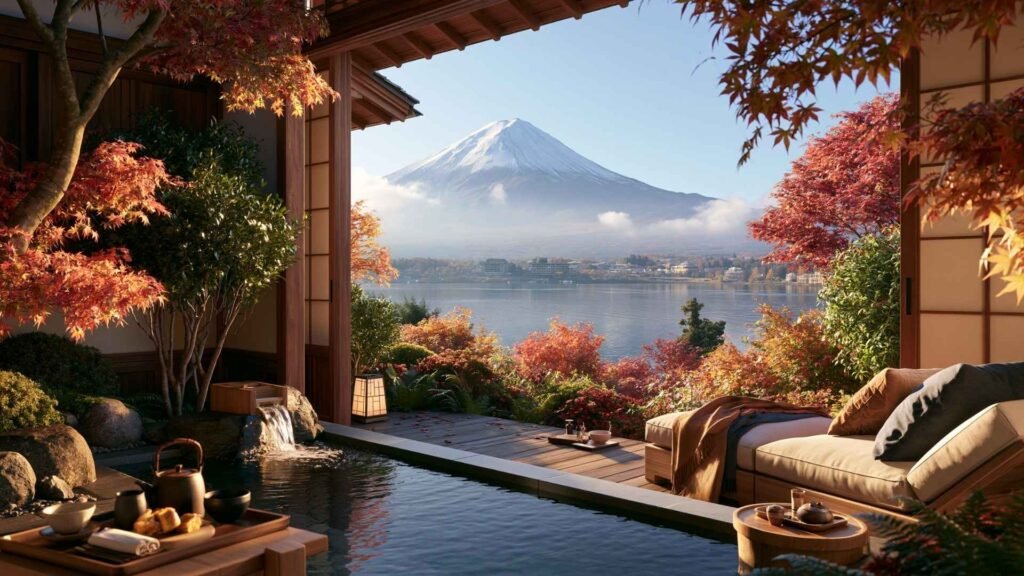
Leaving Tokyo after four nights gives you enough time to become comfortable navigating Japan before heading toward one of the country’s most iconic landscapes.
For most first-time visitors, there are two excellent choices:
- Hakone
- Kawaguchiko (Mount Fuji Area)
Both offer spectacular scenery, opportunities to experience Japanese hot springs, and unforgettable views of Mount Fuji when the weather cooperates.
The better choice depends on the type of experience you’re looking for.
| Hakone | Kawaguchiko |
|---|---|
| Hot springs (onsen) | Classic Mount Fuji photography |
| Lake Ashi cruises | Closer views of Fuji |
| Volcanic landscapes | Relaxed small-town atmosphere |
| Hakone Ropeway | Chureito Pagoda |
| Easier onward travel to Kyoto | Better for direct Fuji views |
Choose Hakone if…
Hakone is ideal for travelers who want a combination of nature, traditional ryokan accommodation, hot spring baths, and scenic transportation.
Many visitors enjoy completing the famous Hakone Round Course, which combines trains, cable cars, ropeways, sightseeing boats, and buses into one memorable loop.
If this is your first onsen experience, staying overnight in a traditional ryokan with dinner included can become one of the most memorable parts of your trip.
Choose Kawaguchiko if…
If seeing Mount Fuji up close is your highest priority, Kawaguchiko is usually the better option.
The area offers some of Japan’s most recognizable Fuji viewpoints, particularly around Lake Kawaguchi and Chureito Pagoda.
Keep in mind that Mount Fuji is not visible every day.
Cloud cover is common throughout the year, so spending the night rather than making a rushed day trip significantly improves your chances of seeing the mountain.
Travel Tips for Day 5
Try to leave Tokyo before the morning rush hour if possible.
Checking out of your hotel early allows you to arrive in Hakone or Kawaguchiko around lunchtime, giving you almost a full afternoon to enjoy the area.
Pack a small overnight bag if you’re staying in a traditional ryokan.
Many travelers use Japan’s reliable luggage forwarding services to send larger suitcases directly from Tokyo to Kyoto, making travel through mountain regions considerably easier.
💡 Clara’s Tip
If you’re staying overnight in Hakone, consider forwarding your larger suitcase directly to Kyoto. Traveling with only a small overnight bag makes station transfers, local buses, and traditional ryokan stays much easier.
A slower day surrounded by mountains, lakes, and hot springs also creates a welcome change of pace before continuing into Japan’s historic cultural capital.
Days 6–8: Explore Historic Kyoto
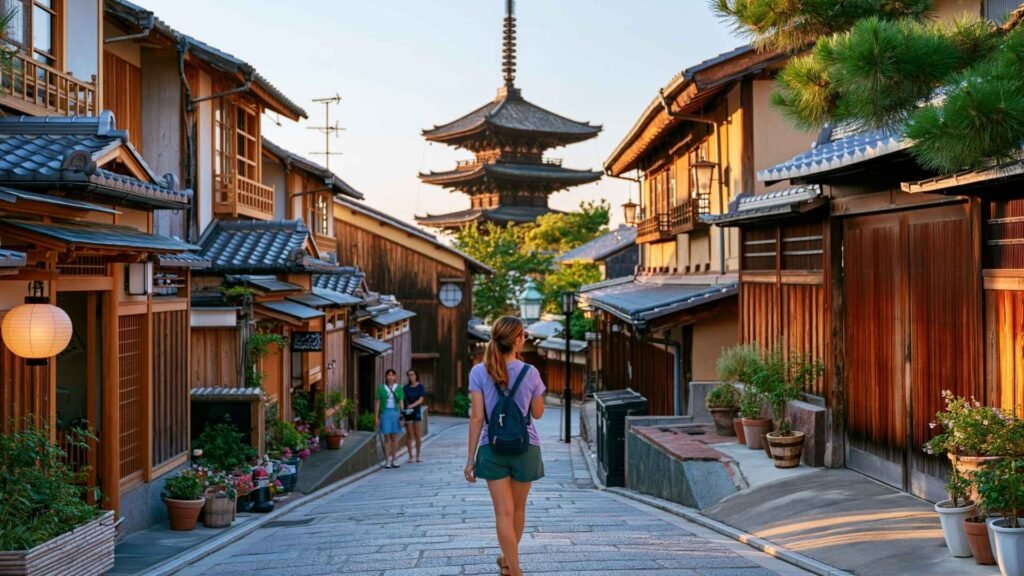
After experiencing Tokyo’s futuristic skyline and fast-paced energy, Kyoto offers an entirely different side of Japan.
As the country’s imperial capital for more than one thousand years, Kyoto is home to hundreds of temples, traditional wooden neighborhoods, beautiful gardens, historic tea houses, and some of Japan’s most important cultural landmarks.
Rather than rushing through dozens of attractions, spending three nights here allows you to experience the city at a much more enjoyable pace.
Early mornings are especially rewarding in Kyoto.
Many famous temples become crowded later in the day, but arriving shortly after opening often provides a much quieter and more memorable experience.
Day 6: Fushimi Inari, Higashiyama, and Gion
Take one of the earliest trains to Fushimi Inari Taisha.
Walking beneath thousands of bright red torii gates before large crowds arrive is one of the most unforgettable experiences anywhere in Japan.
💡 Clara’s Tip
Arriving before 8:00 AM makes a huge difference at Fushimi Inari. The famous torii gates are much quieter in the early morning, creating a far more enjoyable experience and better photo opportunities.
While many visitors stop after the first viewpoint, continuing farther up the mountain rewards you with quieter trails and fewer people.
After descending, head toward the Higashiyama District, where narrow stone streets preserve much of Kyoto’s traditional atmosphere.
Spend time exploring:
- Kiyomizu-dera Temple
- Sannen-zaka
- Ninen-zaka
- Traditional tea houses
- Local craft shops
The area is especially photogenic, with preserved wooden buildings, small shrines, and beautiful views over Kyoto.
As evening approaches, continue into Gion, Kyoto’s famous geisha district.
Rather than searching for geisha sightings, simply enjoy wandering the lantern-lit streets, crossing the Shirakawa Canal, and experiencing one of Japan’s most atmospheric historic neighborhoods.
Finish the day with a traditional Kyoto dinner before returning to your hotel.
Your exploration of Kyoto continues tomorrow with one of the city’s most scenic districts.
Day 7: Arashiyama and Western Kyoto
Start your day early once again.
Arashiyama is one of Kyoto’s most popular districts, and arriving before 8:00 AM makes a remarkable difference. The famous Bamboo Grove is far more peaceful in the early morning, allowing you to appreciate its unique atmosphere before large tour groups arrive.
Although the bamboo path itself is relatively short, the surrounding neighborhood offers enough attractions to fill an entire day.
After walking through the Bamboo Grove, continue to Tenryu-ji Temple, a UNESCO World Heritage Site renowned for its beautifully landscaped Zen garden. Even travelers who have visited several temples by this point often rank Tenryu-ji among their favorites thanks to its harmonious blend of architecture and nature.
From there, stroll toward the Katsura River.
The nearby Togetsukyo Bridge has served as one of Arashiyama’s defining landmarks for centuries and provides excellent views of the surrounding mountains. During spring and autumn, the scenery becomes especially spectacular as cherry blossoms or colorful maple leaves transform the landscape.
If you’re comfortable with a moderate uphill walk, continue to Iwatayama Monkey Park.
The climb takes around 20 to 30 minutes, but the reward is one of Kyoto’s finest panoramic viewpoints. Wild Japanese macaques roam freely within a designated area, while visitors can enjoy sweeping views across the entire city.
After lunch, slow the pace considerably.
Rather than rushing to another famous landmark, spend time exploring Arashiyama’s quieter streets, riverside cafés, traditional sweet shops, and small gardens.
This slower rhythm is part of Kyoto’s charm.
Many first-time visitors discover that some of their favorite moments aren’t spent inside major attractions, but simply wandering peaceful neighborhoods at their own pace.
Day 8: Golden Pavilion, Nijo Castle, and Nishiki Market
Your final full day in Kyoto combines three very different experiences.
Begin at Kinkaku-ji, better known internationally as the Golden Pavilion.
Covered in brilliant gold leaf and reflected in a tranquil pond, it remains one of Japan’s most photographed landmarks. Visiting shortly after opening offers softer lighting for photography and significantly smaller crowds.
Although visitors follow a one-way walking route, take your time appreciating the surrounding gardens as well as the pavilion itself.
Next, continue to Nijo Castle.
Unlike Kyoto’s many temples and shrines, Nijo Castle provides insight into Japan’s feudal history. Built as the Kyoto residence of the Tokugawa shoguns, it features elegant palace interiors, expansive gardens, and the famous “nightingale floors,” which chirp when walked upon as a historical security measure.
By early afternoon, head toward Nishiki Market.
Often referred to as Kyoto’s Kitchen, this lively covered market stretches for several blocks and offers one of the city’s best introductions to local food culture.
Popular specialties include:
- Fresh seafood
- Grilled skewers
- Matcha desserts
- Japanese pickles
- Tamagoyaki (Japanese omelet)
- Yuba (tofu skin)
- Traditional sweets
Rather than sitting down for one large meal, sample a variety of smaller dishes from different vendors.
It’s an enjoyable way to discover regional flavors while supporting local businesses.
If time allows later in the afternoon, return to your favorite Kyoto neighborhood for one final walk.
Many travelers enjoy revisiting Gion or Higashiyama in the evening, when the crowds thin and the historic streets become quieter.
Three nights may seem generous when planning your itinerary, but by this point most visitors realize Kyoto easily deserves every one of them.
Day 9: Visit Nara Before Continuing to Osaka
One of the advantages of this Japan itinerary for 14 days is that Nara fits naturally between Kyoto and Osaka without requiring additional travel days.
Located less than an hour from Kyoto by train, Japan’s first permanent capital is famous for its historic temples, peaceful parks, and the hundreds of free-roaming deer that have become one of the city’s defining symbols.
Leave Kyoto after breakfast and store your luggage at either Kyoto Station or Osaka Station if necessary, allowing you to explore Nara without carrying heavy bags.
Your first stop should be Todai-ji Temple.
Home to one of the world’s largest bronze Buddha statues, the temple ranks among Japan’s most significant religious sites. Even visitors who have already explored numerous temples are often impressed by the sheer scale of the Great Buddha Hall.
From Todai-ji, continue into Nara Park.
The friendly deer have lived here for centuries and are considered sacred messengers in Shinto tradition. Visitors can purchase specially made deer crackers, although it’s wise to remember that the deer are accustomed to tourists and can sometimes become surprisingly enthusiastic when food appears.
Take your time walking through the park toward Kasuga Taisha, another UNESCO World Heritage Site known for its thousands of stone and bronze lanterns.
The shaded forest paths connecting these historic sites create a peaceful atmosphere that contrasts beautifully with the larger cities visited earlier in the trip.
By late afternoon, continue south to Osaka, where you’ll spend the next two nights.
After checking into your hotel, head out for your first taste of Osaka’s legendary food scene.
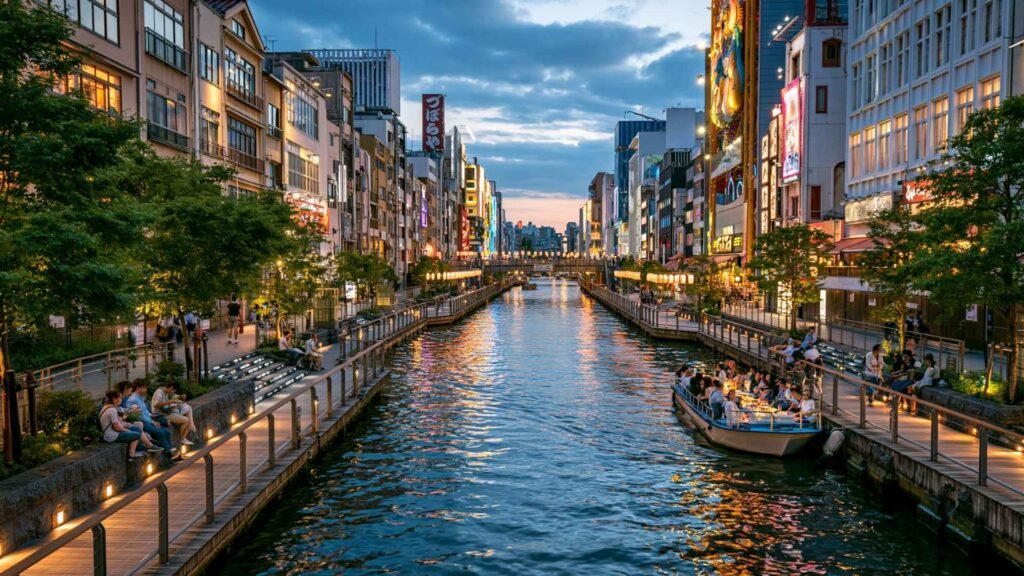
Even if you’re tired from the day’s sightseeing, a short evening walk around Dotonbori is well worth the effort.
Bright neon signs, energetic crowds, canal-side restaurants, and the famous Glico Running Man sign immediately reveal why Osaka has earned its reputation as Japan’s kitchen.
Days 10–11: Experience Osaka’s Food and Urban Energy
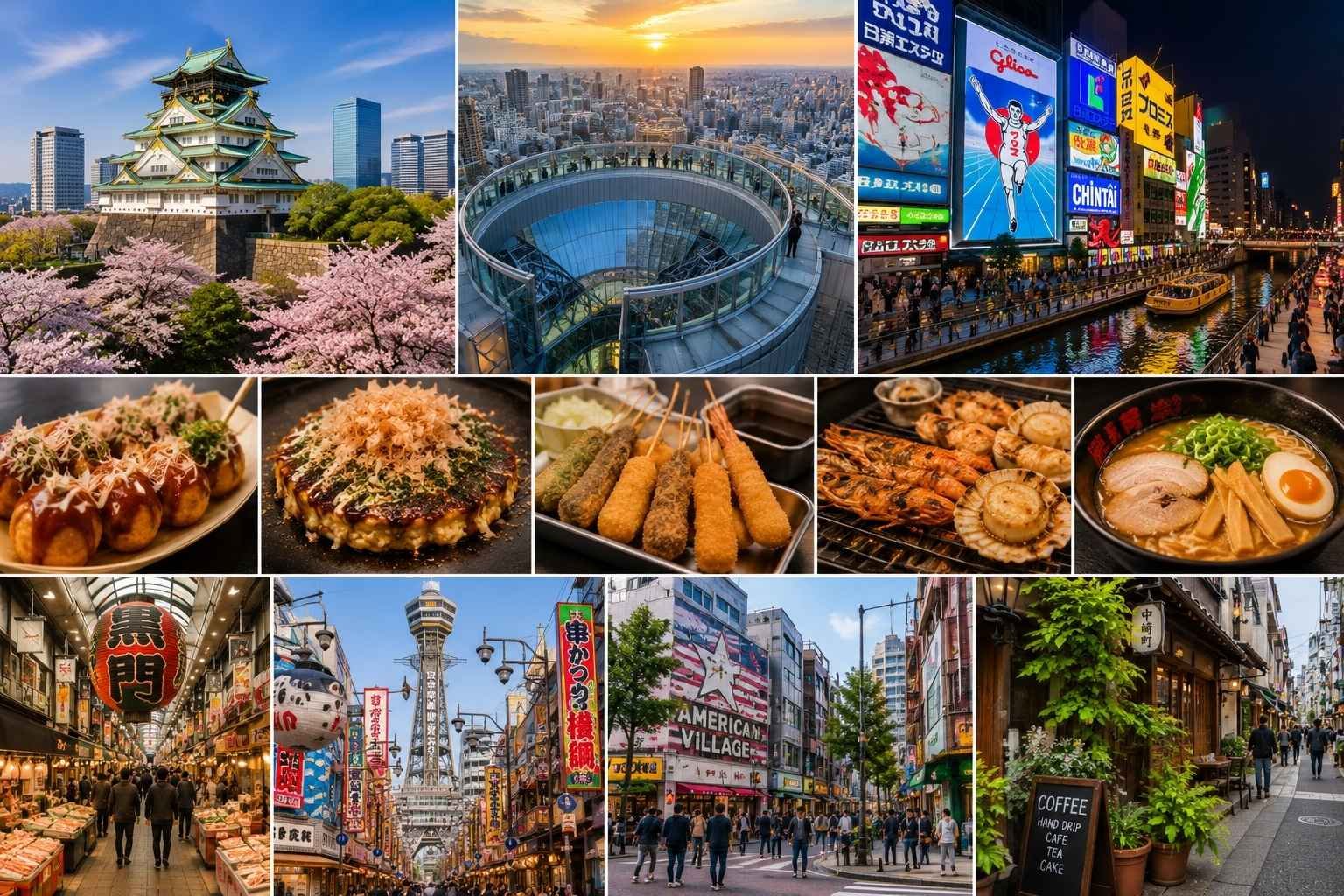
If Kyoto represents traditional Japan, Osaka showcases the country’s fun-loving, energetic side.
Known for its outstanding street food, friendly locals, vibrant nightlife, and modern shopping districts, Osaka offers a refreshing change of pace before the final stage of your journey.
Two nights provide enough time to experience the city’s highlights without feeling rushed.
Day 10: Osaka Castle, Umeda, and Dotonbori
Begin the morning at Osaka Castle.
Although the current structure is a reconstruction, the castle remains one of Japan’s most recognizable landmarks. The surrounding park is particularly beautiful during cherry blossom season, while the observation deck offers panoramic views across the city.
From the castle, continue to Umeda.
This modern commercial district is home to excellent shopping, department stores, underground food halls, and one of Osaka’s best observation points.
If time permits, visit the Umeda Sky Building, where the Floating Garden Observatory provides impressive 360-degree views over the Osaka skyline.
After lunch, slow the pace by browsing local shopping arcades or relaxing in one of the area’s cafés before making your way back toward central Osaka.
As evening arrives, return to Dotonbori.
The district comes alive after sunset, when illuminated billboards reflect across the canal and countless restaurants begin filling with locals and visitors alike.
This is the perfect opportunity to sample several of Osaka’s signature dishes, including:
- Takoyaki
- Okonomiyaki
- Kushikatsu
- Grilled seafood
- Ramen
Rather than choosing just one restaurant, consider sharing smaller portions across several places to experience a wider variety of local specialties.
Day 11: Choose Your Perfect Osaka Day
Your second day in Osaka is designed to be flexible.
Different travelers enjoy very different experiences here, so choose the option that best matches your interests.
Option 1: Universal Studios Japan
One of Asia’s most popular theme parks, Universal Studios Japan is particularly famous for Super Nintendo World and The Wizarding World of Harry Potter.
If you choose this option, plan to spend the entire day inside the park.
Advance ticket reservations are strongly recommended, especially during weekends, school holidays, and peak travel seasons.
Option 2: Explore Local Neighborhoods
Travelers who prefer a slower pace can spend the day discovering some of Osaka’s distinctive districts.
Popular choices include:
- Shinsekai
- Kuromon Market
- Amerikamura
- Namba
- Nakazakicho
Each neighborhood offers its own atmosphere, from retro streets and traditional eateries to vintage shops and contemporary cafés.
Option 3: Relax Before Your Final Destination
Not every day needs to be packed with sightseeing.
After more than ten days of travel, many visitors appreciate having a lighter schedule before continuing to Hiroshima.
Enjoy a leisurely breakfast, revisit your favorite neighborhood, do some shopping, or simply experience everyday life in Osaka.
The following morning, you’ll board another Shinkansen for one of the most meaningful destinations in Japan.
Days 11–12: Hiroshima and Miyajima
The final major destination in this Japan itinerary for 14 days offers a deeper understanding of Japan’s history while showcasing some of the country’s most beautiful coastal scenery.
Although Hiroshima is often associated with the events of World War II, today’s city is vibrant, welcoming, and full of life. Combined with nearby Miyajima Island, it creates one of the most rewarding two-day experiences in Japan.
Traveling here also allows you to experience another section of Japan’s world-famous Shinkansen network while completing the country’s classic Golden Route.
Day 11: Hiroshima Peace Memorial Park and City Center
Leave Osaka early in the morning and take the Shinkansen to Hiroshima.
Depending on your train, the journey typically takes between 1½ and 2 hours, allowing you to arrive with plenty of time for sightseeing.
After checking into your hotel or storing your luggage, begin your visit at Hiroshima Peace Memorial Park.
More than simply a tourist attraction, the park serves as a place of remembrance dedicated to the victims of the atomic bombing on August 6, 1945, while also promoting peace around the world.
Take time to walk through the park rather than rushing between monuments.
Highlights include:
- Peace Memorial Museum
- Atomic Bomb Dome (UNESCO World Heritage Site)
- Children’s Peace Monument
- Cenotaph for the A-bomb Victims
- Flame of Peace
The museum presents difficult historical events with thoughtful exhibits and personal stories. Many travelers describe it as one of the most moving experiences of their entire visit to Japan.
Afterwards, spend the afternoon exploring central Hiroshima.
Compared with Tokyo or Osaka, the city feels noticeably more relaxed. Wide boulevards, riverside promenades, and modern shopping streets make it enjoyable to explore on foot.
Before ending the day, be sure to try Hiroshima-style okonomiyaki.
Unlike the Osaka version, Hiroshima’s variation layers ingredients rather than mixing them together and usually includes noodles, creating a hearty regional specialty that many visitors prefer.
Day 12: Miyajima Before Returning to Tokyo
Wake up early and make your way to Miyajimaguchi, where regular ferries cross to Miyajima Island.
Officially known as Itsukushima, the island has long been regarded as one of Japan’s most scenic destinations.
The journey itself takes only about ten minutes, making Miyajima an easy half-day or full-day excursion from Hiroshima.
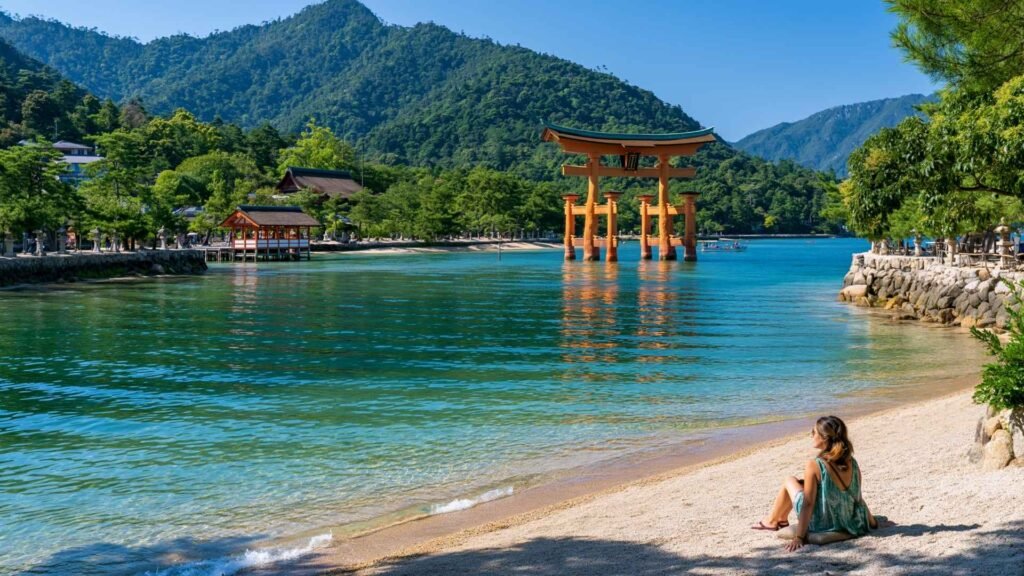
The island’s most famous landmark is Itsukushima Shrine and its iconic floating torii gate.
At high tide, the vermilion gate appears to float on the surface of the sea, creating one of the most recognizable views in Japan.
💡 Clara’s Tip
Check the local tide schedule before your visit. The famous floating torii gate looks completely different at high and low tide, and both are worth seeing if your schedule allows.
During low tide, visitors can walk across the exposed shoreline and stand directly beneath the enormous gate, offering a completely different perspective.
Beyond the shrine, Miyajima rewards travelers who take time to explore further.
Wander through the island’s charming streets, browse traditional craft shops, and sample local specialties such as:
- Grilled oysters
- Momiji manju
- Fresh seafood
- Local maple-flavored sweets
If the weather is clear and you enjoy hiking or panoramic views, consider taking the Miyajima Ropeway toward Mount Misen.
The summit offers spectacular views across the Seto Inland Sea, scattered islands, and the surrounding coastline.
By mid-afternoon, return to Hiroshima Station and board the Shinkansen back toward Tokyo.
Although the journey takes approximately four hours, traveling this evening allows you to spend your final night near your departure airport instead of risking delays on the morning of your international flight.
For most travelers, staying close to either Tokyo Station, Ueno, Narita Airport, or Haneda Airport makes departure day considerably less stressful.
Day 13: Return to Tokyo
Arriving in Tokyo during the evening gives you time to check into your hotel, enjoy one final dinner, or take a relaxed walk through your neighborhood before your trip comes to an end.
Staying overnight in Tokyo is a practical choice, as it avoids the risk of long-distance rail delays affecting your international departure the following morning.
For the most convenient airport access, consider staying near Tokyo Station, Ueno, Narita Airport, or Haneda Airport.
Day 14: Departure
After spending your final night in Tokyo, head to either Narita or Haneda Airport for your flight home.
If you’re departing from Narita, remember that reaching the airport usually takes longer than many first-time visitors expect. Travelers flying from Haneda benefit from a shorter journey, but it’s still best to arrive well before an international departure.
Keeping your final day free of major sightseeing makes for a much more relaxed end to your trip.
Transportation for This Japan Itinerary for 14 Days
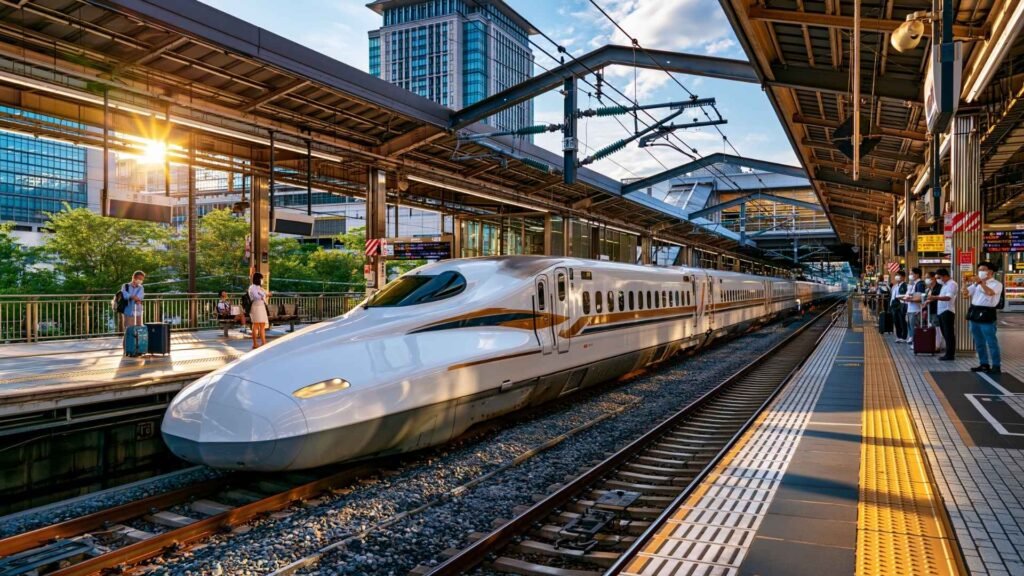
One of the biggest advantages of this route is how naturally it fits Japan’s excellent transportation network.
Almost every long-distance journey is completed by Shinkansen (bullet train), while local trains, subways, and buses make getting around each city straightforward.
Here’s how the major travel segments typically look:
| Route | Recommended Transport | Approximate Travel Time |
|---|---|---|
| Narita/Haneda → Tokyo | Airport train or limousine bus | 30–90 minutes |
| Tokyo → Hakone | Train | 1.5–2 hours |
| Tokyo → Kawaguchiko | Train or highway bus | 2–2.5 hours |
| Hakone → Kyoto | Shinkansen (via Odawara) | Around 2.5 hours |
| Kyoto → Nara | JR or Kintetsu train | 35–50 minutes |
| Nara → Osaka | JR or Kintetsu train | 40–50 minutes |
| Osaka → Hiroshima | Shinkansen | 1.5–2 hours |
| Hiroshima → Tokyo | Shinkansen | Around 4 hours |
One of the reasons this itinerary works so well is that travel days are spaced naturally throughout the trip.
Instead of spending consecutive days on trains, you’ll typically enjoy several days exploring each destination before moving on.
Should You Buy a Japan Rail Pass?
This is one of the most common questions first-time visitors ask.
The answer depends on your exact travel plans.
Following this itinerary, a nationwide Japan Rail Pass is not automatically the best value for every traveler.
Since the significant price increase introduced in recent years, many visitors discover that purchasing individual Shinkansen tickets is either comparable in cost or even less expensive than buying a nationwide pass.
However, travelers planning additional long-distance trips—such as Kanazawa, Takayama, Nagano, or Fukuoka—may still find the JR Pass worthwhile.
Before making your decision, calculate the cost of your planned train journeys rather than assuming the pass will save money. You can also compare the latest fares on the official Japan Rail Pass website before purchasing.
We’ll cover detailed route comparisons, current pricing, and break-even calculations in our dedicated Japan Rail Pass Guide.
Using an IC Card
Even if you decide not to purchase a JR Pass, an IC card remains one of the most convenient travel tools in Japan.
Cards such as Suica, PASMO, and ICOCA allow you to pay for trains, subways, buses, and many everyday purchases throughout Japan. If you’re unfamiliar with these prepaid transit cards, the official IC card guide explains how they work and where you can use them.
- Local trains
- Subway systems
- City buses
- Many convenience stores
- Some vending machines
- Selected restaurants and lockers
Instead of buying individual tickets every time you travel, simply tap your card when entering and leaving stations.
For most first-time visitors, combining an IC card with individual Shinkansen tickets provides the simplest and most flexible transportation strategy throughout this itinerary.
Accommodation Strategy
One of the easiest ways to reduce travel fatigue is by limiting the number of hotel changes.
Instead of staying somewhere different every night, this itinerary concentrates accommodation in a few carefully chosen bases.
A comfortable distribution looks like this:
| Destination | Recommended Nights |
|---|---|
| Tokyo | 4 |
| Hakone or Kawaguchiko | 1 |
| Kyoto | 3 |
| Osaka | 2 |
| Hiroshima | 2 |
| Tokyo (before departure) | 1 |
Although this involves six hotel stays over two weeks, each move has a clear purpose and avoids unnecessary backtracking.
If you prefer an even slower pace, you can also stay in Kyoto for five nights and visit Osaka as a day trip, reducing one hotel change while maintaining almost the same sightseeing opportunities.
Choosing accommodation close to major railway stations—such as Tokyo Station, Kyoto Station, Osaka Station, or Hiroshima Station—also makes transferring between cities significantly easier, especially if you’re traveling with luggage.
How Much Does This Japan Itinerary for 14 Days Cost?
Japan has a reputation for being expensive, but many first-time visitors are surprised to discover that it can fit a wide range of budgets.
Accommodation is usually the largest expense, followed by long-distance transportation. Food, on the other hand, often offers excellent value, with everything from convenience store meals to Michelin-starred restaurants available throughout the country.
The estimates below assume moderate daily spending and do not include international flights.
| Travel Style | Estimated Cost (14 Days) | Average Per Day |
|---|---|---|
| Budget | US$1,500–2,100 | US$110–150 |
| Mid-range | US$2,500–3,800 | US$180–270 |
| Luxury | US$5,000+ | US$360+ |
These estimates typically include:
- Accommodation
- Domestic transportation
- Food and drinks
- Attraction admission fees
- Local public transport
- Moderate shopping
Your total budget may increase if you stay in luxury ryokan, dine at high-end restaurants every evening, or visit multiple theme parks.
Conversely, travelers staying in business hotels, eating at casual restaurants, and booking accommodation well in advance can comfortably keep costs below the average estimates shown above.
Sample Mid-Range Budget
Here’s an example of what a comfortable mid-range trip might look like.
| Category | Estimated Cost |
|---|---|
| Hotels | US$1,450 |
| Shinkansen & regional trains | US$350 |
| Local transportation | US$120 |
| Food & drinks | US$700 |
| Attractions | US$250 |
| Miscellaneous shopping | US$300 |
| Estimated Total | US$3,170 |
Naturally, spending varies significantly depending on the season and exchange rate, but this provides a realistic starting point for most first-time visitors.
Best Time to Follow This Japan Itinerary
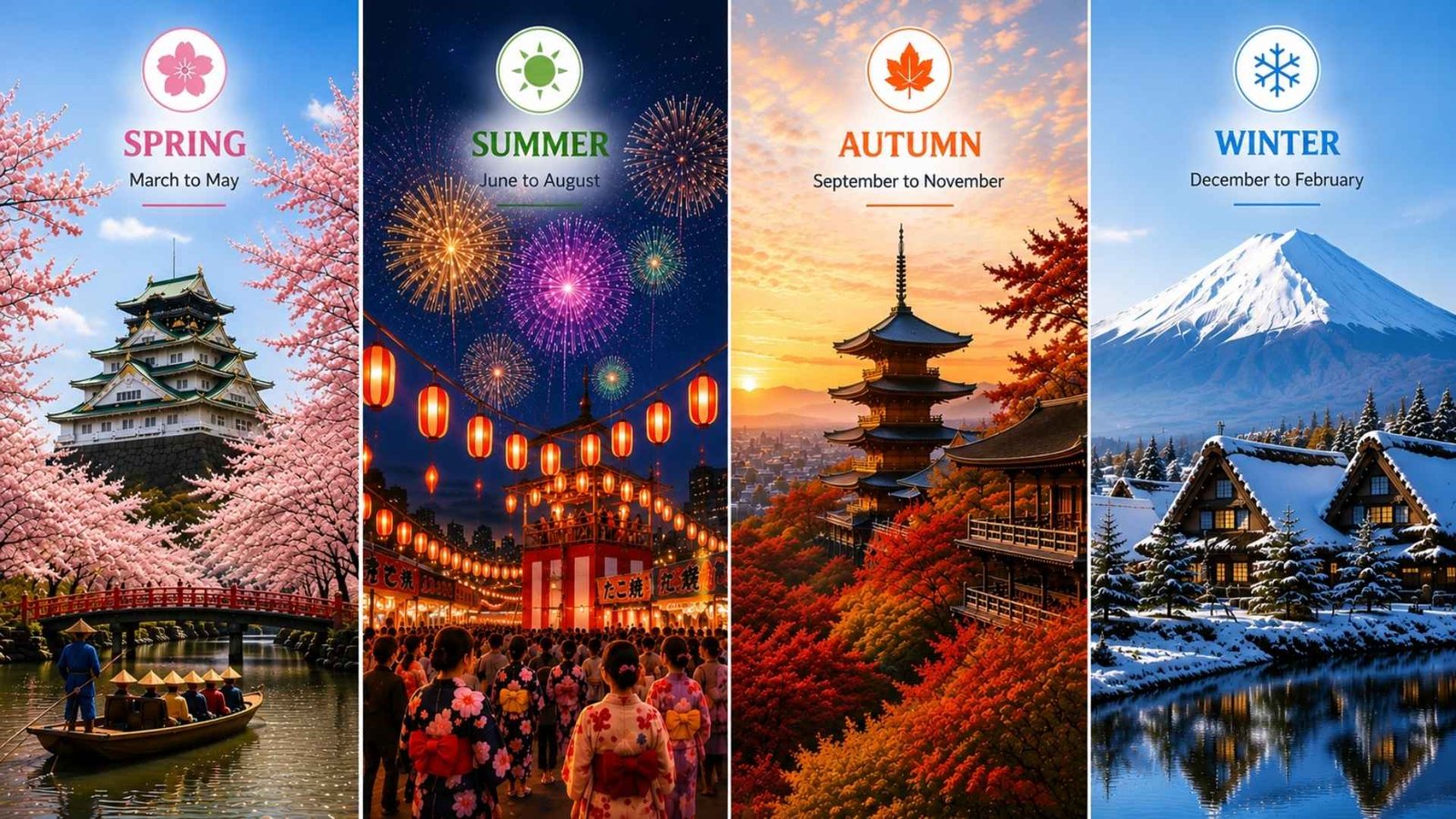
One of the strengths of this route is that it works well throughout the year.
Each season offers a slightly different experience, so the best time depends more on your interests than on the itinerary itself.
Spring (March to May)
Spring is the most popular season for international visitors.
Cherry blossoms transform parks, temples, and riversides across Tokyo, Kyoto, and Hiroshima into spectacular landscapes.
Expect:
- Comfortable temperatures
- Cherry blossoms (timing varies by region)
- Larger crowds
- Higher accommodation prices
If you’re planning a spring trip, reserve hotels several months in advance.
Summer (June to August)
Summer brings festivals, fireworks, and lush green scenery.
While June is generally wetter because of the rainy season, July and August are known for hot and humid weather, particularly in Tokyo and Kyoto.
The advantage is that mountain destinations and coastal areas become especially attractive during this time.
Early morning sightseeing is highly recommended to avoid the afternoon heat.
Autumn (September to November)
Many experienced travelers consider autumn the best overall season for this Japan itinerary for 14 days.
Pleasant temperatures combine with brilliant autumn foliage, particularly in Kyoto, Nara, and Hakone.
Crowds remain significant, but the weather is generally excellent for walking and outdoor sightseeing.
Winter (December to February)
Winter offers crisp air, smaller crowds, and excellent visibility of Mount Fuji.
Although daylight hours are shorter, many attractions feel quieter and more relaxed.
Seasonal illuminations also create a beautiful atmosphere in Tokyo and Osaka during December.
Unless you’re planning to visit northern Japan or alpine regions, snow rarely disrupts this itinerary.
Can You Follow This Itinerary Without a Japan Rail Pass?
Yes.
In fact, many travelers now complete this exact itinerary without purchasing a nationwide JR Pass.
Following the 2023 price increase, buying individual Shinkansen tickets has become a more economical option for many visitors traveling only between Tokyo, Kyoto, Osaka, and Hiroshima.
However, a JR Pass may still make sense if you plan to:
- Extend your trip beyond two weeks
- Visit additional regions such as Kyushu or Hokkaido
- Take several extra long-distance train journeys
Rather than assuming the JR Pass automatically saves money, compare the cost of your planned routes before making a decision.
Our dedicated Japan Rail Pass Guide explains exactly when the pass is—and isn’t—worth buying.
Common Mistakes to Avoid
Even a well-planned itinerary can become stressful if you underestimate travel times or try to fit too much into each day.
Here are some of the most common mistakes first-time visitors make.
Trying to Visit Too Many Cities
Many travelers attempt to include Kanazawa, Takayama, Nikko, Hakone, Hiroshima, Kobe, and even Hokkaido within two weeks.
The result is often more time on trains than actually enjoying Japan.
A smaller number of destinations almost always leads to a better experience.
Changing Hotels Too Frequently
Checking in and out every morning quickly becomes exhausting.
This itinerary intentionally uses longer stays in Tokyo, Kyoto, Osaka, and Hiroshima to reduce travel fatigue while still covering Japan’s major highlights.
Underestimating Transportation Time
Although Japan’s trains are incredibly efficient, reaching stations, finding platforms, storing luggage, and transferring between services all take time.
Avoid scheduling attractions immediately after long-distance train journeys.
Giving yourself a relaxed arrival day often leads to a much more enjoyable experience.
Booking Too Late During Peak Seasons
Hotels in Kyoto, especially during cherry blossom season and autumn foliage, can sell out months in advance.
Booking accommodation early usually provides both better availability and significantly lower prices.
Skipping Rest Time
Not every hour needs to be filled with sightseeing.
Some of the best travel memories come from sitting in a neighborhood café, exploring a quiet shopping street, or simply watching everyday life unfold around you.
Leaving room for spontaneous discoveries makes the itinerary feel much less rushed.
How to Customize This Japan Itinerary for 14 Days
Although this itinerary works exceptionally well for most first-time visitors, every traveler has different priorities.
Here are a few easy ways to adapt the route.
For Food Lovers
Spend additional time exploring:
- Osaka’s street food
- Nishiki Market in Kyoto
- Tsukiji Outer Market in Tokyo
- Local izakayas
- Regional ramen shops
For Anime and Gaming Fans
Consider adding:
- Akihabara
- Ikebukuro
- Nakano Broadway
- Universal Studios Japan’s Super Nintendo World
For Nature Lovers
Replace one Tokyo sightseeing day with:
- Nikko
- Kamakura
- Mount Takao
Or spend two nights around Hakone or Kawaguchiko instead of one.
For Families
Reduce the number of temples slightly and allow more time for:
- Tokyo DisneySea
- Universal Studios Japan
- Interactive museums
- Parks and aquariums
A slower pace generally creates a more enjoyable family vacation.
For Luxury Travelers
Upgrade the experience by staying in:
- Luxury ryokan with private onsen
- Five-star hotels in Tokyo and Kyoto
- Fine dining restaurants
- Private cultural experiences
- Scenic train journeys
The overall route remains exactly the same while the accommodation and experiences become more exclusive.
Frequently Asked Questions About a Japan Itinerary for 14 Days
Is 14 days enough for Japan?
Yes.
For most first-time visitors, two weeks provides enough time to experience Tokyo, Kyoto, Osaka, Hiroshima, and either Hakone or the Mount Fuji area without feeling rushed.
It’s one of the most balanced trip lengths for exploring Japan’s major highlights.
How much should I budget for 14 days in Japan?
A comfortable mid-range trip typically costs between US$2,500 and US$3,800, excluding international flights.
Budget travelers can spend less, while luxury vacations can easily exceed US$5,000.
Should I fly into Tokyo and out of Osaka?
Open-jaw flights can save time by eliminating the return to Tokyo.
However, round-trip flights to Tokyo are often cheaper and more widely available, making them a practical choice for many travelers.
Compare airfare before deciding.
Is Kyoto or Osaka better?
Neither city is better—they simply offer different experiences.
Kyoto is known for temples, gardens, traditional neighborhoods, and historic landmarks.
Osaka is famous for food, nightlife, shopping, and a more energetic urban atmosphere.
Visiting both creates a well-rounded introduction to Japan.
Is one night enough in Hakone?
For most travelers, yes.
An overnight stay allows enough time to experience a traditional ryokan, enjoy an onsen, and explore the area’s main attractions before continuing to Kyoto.
If relaxing in nature is one of your priorities, consider staying for two nights instead.
Can I travel with large suitcases?
Yes, but many visitors prefer using Japan’s excellent luggage forwarding services.
Sending your larger suitcase directly between major cities makes train travel considerably easier, especially during busy periods.
Is this itinerary suitable during cherry blossom season?
Absolutely.
Spring is one of the best times to follow this route.
Just remember that accommodation in Tokyo, Kyoto, and Osaka often sells out months in advance, so booking early is essential.
What is the best month for this itinerary?
April, May, October, and November generally offer the most comfortable weather.
These months combine pleasant temperatures with beautiful seasonal scenery, making them particularly popular among first-time visitors.
Final Thoughts
For most first-time visitors, spending two weeks in Japan provides the right balance between exploring the country’s biggest highlights and traveling at a comfortable pace. From Tokyo and Kyoto to Osaka, Hiroshima, and Mount Fuji, this itinerary brings together many of Japan’s most memorable experiences without feeling rushed.
Use this guide as a starting point, then adjust the pace to match your interests before continuing with the planning resources below.
Continue Planning Your Japan Trip
If you’re still planning your itinerary, these guides can help you organize the rest of your trip:
- Japan Itinerary — Compare 7, 10, 14, and 21-day routes.
- Japan Itinerary for 10 Days — A faster-paced two-city route.
- Japan Itinerary for 7 Days — Best for limited vacation time.
- Japan Rail Pass Guide — Check if a JR Pass is worth it.
- Japan Trip Cost Guide — Estimate your travel budget.
- Narita Airport Guide — Plan your Tokyo arrival or departure.