
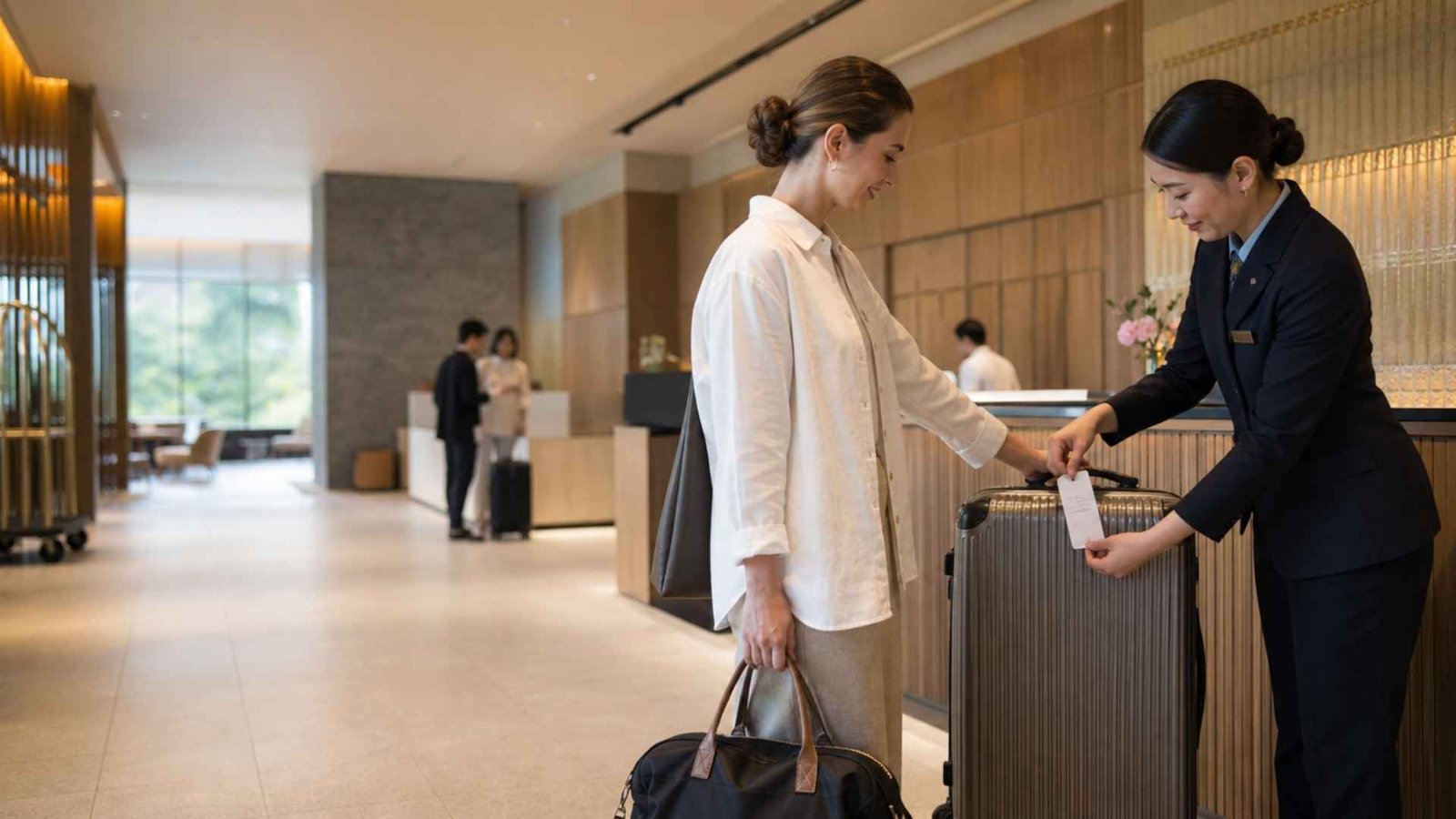
Luggage forwarding in Japan allows travellers to send suitcases between airports, hotels, convenience stores and delivery counters instead of carrying them through crowded stations and complex train transfers.
Known as Takkyubin or takuhaibin, the service is particularly useful for multi-city itineraries, Shinkansen journeys and overnight stops in smaller destinations.
This guide explains how the system works, current costs, delivery times, application points, prohibited items and what to do if your luggage is delayed.
Quick Answer: Is Luggage Forwarding in Japan Worth It?
For most multi-city trips, luggage forwarding in Japan is worth using at least once.
Most standard hotel-to-hotel deliveries for a Size 140–160 suitcase on popular routes cost approximately ¥2,000–¥3,000. Longer routes, airport services and same-day delivery can cost ¥4,000–¥6,000 or more.
Regular delivery normally takes one or two days. The safest strategy is to send your main suitcase ahead while keeping documents, medication, electronics and overnight essentials with you.
| Travel Situation | Best Plan | Safe Timing |
|---|---|---|
| Hotel to hotel | Send through the front desk | 2 days before check-in |
| Longer hotel route | Confirm the cut-off with staff | Allow 3 days |
| Airport to hotel | Use an arrivals delivery counter | Same day on limited routes or 1–2 days |
| Hotel to airport | Use Airport TA-Q-BIN | 2–3 days before departure |
| One-night detour | Send the suitcase to the following city | Confirm the receiving hotel first |
Same-day delivery is not a standard nationwide service. It is available only from selected counters to limited destinations.
What Is Takkyubin in Japan?
Takuhaibin is the general Japanese term for domestic door-to-door parcel delivery.
Takkyubin, commercially written as TA-Q-BIN, is Yamato Transport’s branded delivery service. Travellers often use the two terms interchangeably, although Takkyubin technically refers to Yamato.
Other companies operate similar services, but Yamato is one of the most familiar options for international visitors. Its black-cat logo is commonly seen at airports, hotels, convenience stores and service centres throughout Japan.
Takkyubin can be used to send:
- suitcases
- duffel bags
- packed boxes
- ski and snowboard equipment
- golf bags
- selected travel equipment
A standard suitcase does not normally need to be placed inside a cardboard box. It must close securely, remain within the size and weight limits and contain no prohibited items.
How Luggage Forwarding in Japan Works
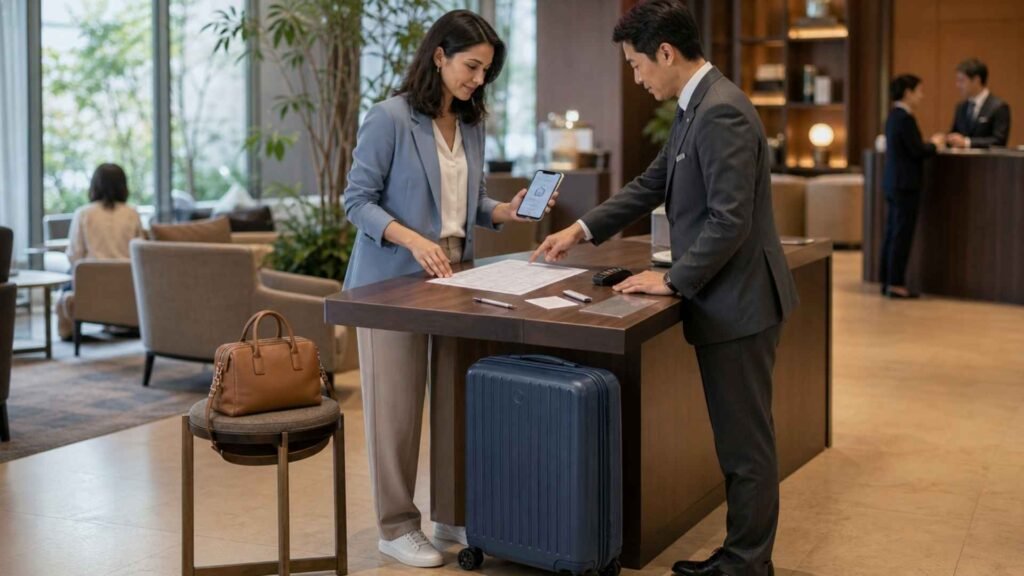
The process is relatively simple, particularly when arranged through a hotel. Most of the preparation involves confirming the destination, separating your essentials and completing a shipping label.
1. Confirm That the Destination Can Receive Luggage
Contact the receiving accommodation before sending anything.
Ask whether the front desk:
- accepts forwarded luggage
- can store it before check-in
- requires a reservation number
- charges a handling or storage fee
- limits how early bags may arrive
Large hotels and traditional ryokans often accept luggage. Small guesthouses, hostels, capsule hotels and holiday rentals may have different policies.
The accommodation should have a staffed reception capable of accepting the delivery when it arrives.
2. Choose the Delivery Date
Select the requested delivery date according to your route and the timing summary above. Longer journeys, remote destinations and airport deliveries require more preparation than standard journeys between major cities.
Hotel or delivery-counter staff can confirm the final dispatch deadline.
3. Separate Your Essential Items
Once the suitcase has been collected, you may not see it again for one or more nights.
Keep the following in your day bag:
- passport
- wallet and payment cards
- medication
- phone and charger
- travel documents
- hotel confirmations
- valuables
- essential toiletries
- one or two changes of clothes
Do not send anything you may urgently need before the scheduled delivery.
4. Complete the Shipping Form
Each suitcase requires a separate shipping label or waybill.
You will normally need:
- destination name
- address and postcode
- destination telephone number
- traveller’s full name
- sender information
- requested delivery date
- description of the contents
When sending luggage to a hotel, write your name exactly as it appears on the reservation. Add the check-in date and reservation number if requested by the property.
Airport deliveries also require details such as the flight date, flight number, airline and departure terminal.
Hotel and counter staff can normally help with the handwritten form.
5. Pay the Delivery Charge
Charges are usually paid when the luggage is sent.
This is known as prepaid delivery. Do not select cash on delivery when sending to accommodation unless the hotel has explicitly agreed to it. A hotel should not be expected to pay a guest’s delivery charge.
Accepted payment methods depend on the dispatch point. Hotels and convenience stores may provide fewer options than Yamato sales offices, so carrying enough cash is sensible.
6. Keep the Receipt and Tracking Number
The customer copy of the waybill contains the tracking number.
Photograph it before leaving the counter and keep the original until the suitcase arrives. The number will be essential if the delivery is delayed or sent to the wrong location.
Where to Arrange Luggage Forwarding in Japan
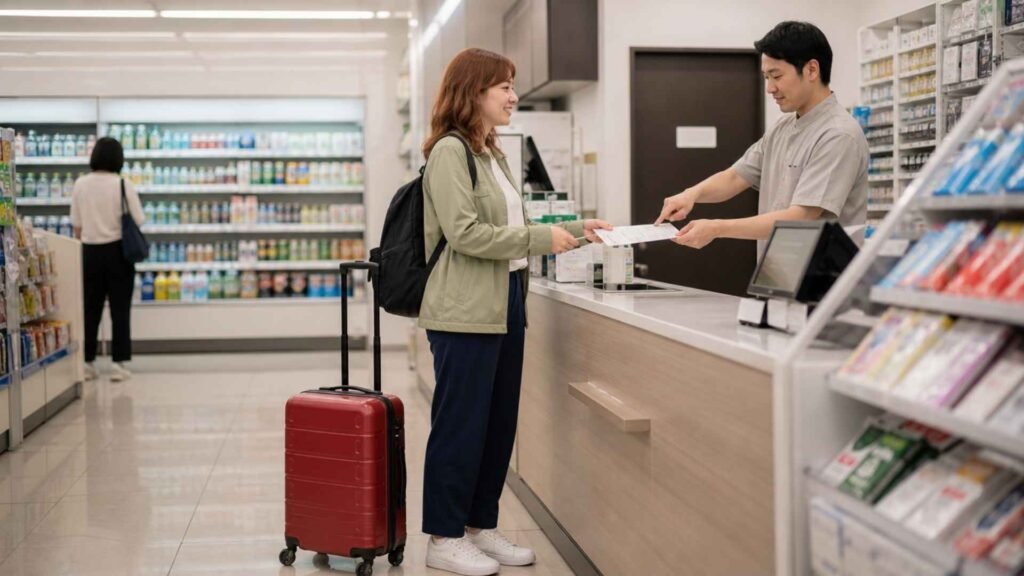
Travellers are not limited to one type of dispatch point. The easiest option is normally the hotel front desk, but airports, convenience stores and Yamato sales offices provide useful alternatives.
Hotel Front Desks
A hotel front desk is usually the simplest place to arrange luggage forwarding.
The staff may:
- confirm the destination address
- help complete the form
- measure the suitcase
- calculate the charge
- arrange collection
- provide the tracking receipt
Not every hotel has a delivery agreement with Yamato or another courier. Confirm the service before relying on it, particularly at smaller or budget accommodation.
Yamato Transport Sales Offices
Yamato sales offices accept standard TA-Q-BIN parcels and generally offer the widest range of service options.
They are useful when:
- your hotel cannot send luggage
- your suitcase is too large for a convenience store
- you need help choosing the correct service
- you want to collect the luggage from a Yamato office
- the destination does not have a staffed reception
Some office-location tools and detailed local information are available primarily in Japanese. Hotel staff or map applications can help you find a nearby branch.
Participating Convenience Stores
Selected branches of 7-Eleven, FamilyMart, NewDays, Daily Yamazaki and Poplar accept Yamato deliveries.
Look for an official TA-Q-BIN sign before bringing your suitcase inside.
Convenience stores are useful when accommodation cannot arrange shipping, but:
- not every branch participates
- service options vary
- payment methods differ
- staff may have limited English
- large luggage may be refused
- busy branches may have limited storage space
Yamato’s suitcase guidance limits luggage sent from convenience stores to Size 160. Larger suitcases should be taken to a Yamato sales office or staffed delivery counter.
Bring the destination address in Japanese if possible. This makes completing the form easier.
Airport Delivery Counters
Major airports, including Haneda, Narita and Kansai International Airport, have luggage delivery counters.
Depending on the operator and route, these counters may provide:
- airport-to-hotel delivery
- airport-to-residential-address delivery
- selected same-day services
- temporary luggage storage
- collection of luggage sent to the airport
Counter operators, opening hours, supported areas and cut-off times can vary by terminal.
Train Stations and Tourist Service Counters
Selected stations and tourist facilities have Hands-Free Travel or courier counters.
Some provide standard forwarding, while others offer only temporary storage or limited local delivery. A luggage storage counter is not automatically a forwarding counter, so confirm the service before leaving your suitcase.
Hotel-to-Hotel Luggage Forwarding in Japan
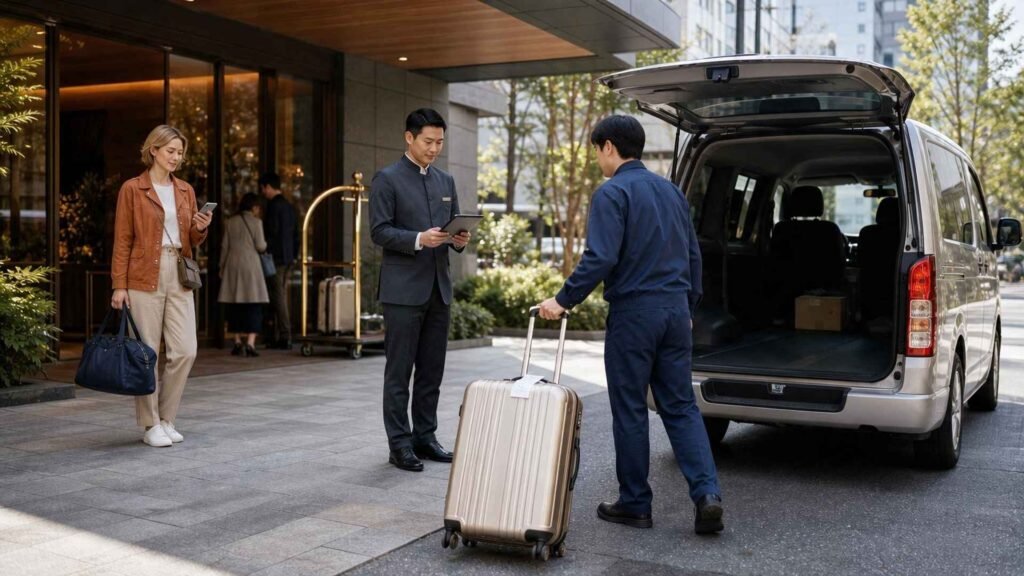
Hotel-to-hotel luggage forwarding in Japan is most useful on routes such as:
- Tokyo to Kyoto
- Kyoto to Osaka
- Osaka to Hiroshima
- Tokyo to Kanazawa
- Kyoto to Tokyo
Begin by confirming that both properties can participate. The sending hotel must be able to dispatch the suitcase, while the destination must have a staffed front desk willing to receive it.
Yamato recommends sending accommodation luggage at least two days before check-in. Some longer routes require three days. The aim is for the suitcase to reach the hotel one day before the guest arrives.
For example, if you check into Kyoto on Friday, arrange shipping by Wednesday. A longer route may require dispatch on Tuesday.
Sending Your Suitcase Two Stops Ahead
You do not have to send luggage only to your next hotel.
A popular strategy is to forward the main suitcase from Tokyo directly to Kyoto while travelling to Hakone for one night with a small bag. This avoids carrying a large suitcase on mountain trains, local buses and through a traditional ryokan.
The same strategy works for short visits to:
- Mount Fuji
- Takayama
- Koyasan
- Miyajima
- smaller onsen towns
Yamato normally allows a future delivery date within its permitted holding period. Confirm that the receiving hotel will accept the suitcase early and write the correct check-in date on the form.
This approach works particularly well with our Japan Itinerary for 14 Days, which includes several destinations where travelling with only an overnight bag is easier.
Clara’s Tip:
Before checking out, place everything needed for the next two nights in a small backpack or carry-on. Send the main suitcase directly to the next major city instead of forwarding it to every one-night stop. You will pay for fewer deliveries and move through local transport more comfortably.
Airport Luggage Forwarding in Japan
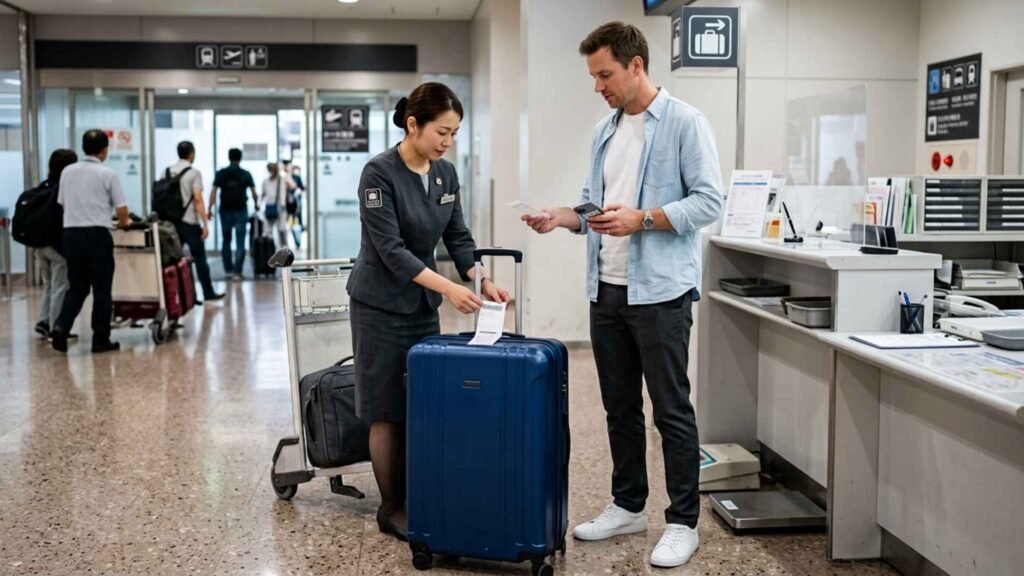
Airport luggage forwarding in Japan works differently depending on whether you are arriving in or departing from the country.
From the Airport to Your Hotel
After collecting your suitcase and completing customs, look for a baggage delivery or TA-Q-BIN counter in the public arrivals area.
Provide:
- hotel name and address
- hotel telephone number
- reservation name
- check-in date
- requested delivery date
Same-day delivery may be available from selected counters, but destinations are limited and the deadline may be early in the day. Travellers arriving after the cut-off should expect standard delivery.
Reorganise your suitcase before handing it over if it contains anything you will need during your first night.
From a Hotel to the Airport
Airport TA-Q-BIN allows you to send luggage ahead and collect it from a designated airport counter on your departure date.
The suitcase should reach the airport at least one day before the flight. This normally means dispatching it two days before departure, or three days beforehand on longer routes.
Carefully confirm:
- departure airport
- terminal
- airline
- flight number
- departure date
- passenger name
Do not write only “Tokyo Airport.” Haneda and Narita are different airports, and each contains multiple terminals.
On departure day, allow enough time to locate the collection counter before airline check-in. Bring your receipt and identification and verify the counter’s opening hours in advance.
How Much Does Luggage Forwarding in Japan Cost?
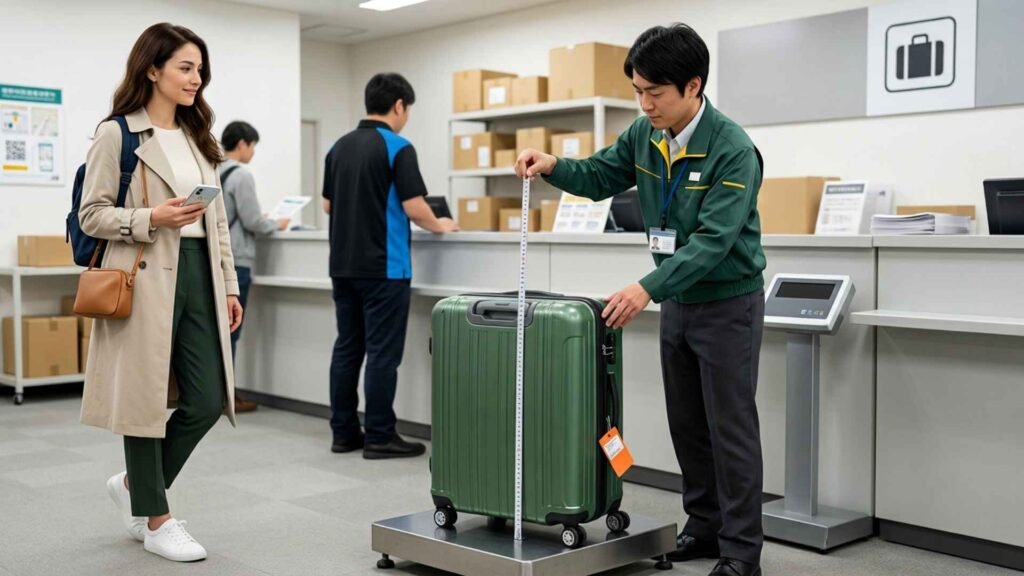
The price is based primarily on the route and the size of the suitcase. Airport counters, same-day services and some hotels may add separate charges, which is why a single nationwide average can be misleading.
The main pricing factors are:
- origin and destination
- combined dimensions
- weight
- delivery service
- airport or same-day surcharge
- dispatch-point handling fee
Yamato adds the suitcase’s length, width and height. If its weight falls into a higher category than its dimensions, the higher category determines the price.
TA-Q-BIN Size and Weight Limits
| Size Category | Maximum Total Dimensions | Maximum Weight |
|---|---|---|
| Size 120 | 120 cm | 15 kg |
| Size 140 | 140 cm | 20 kg |
| Size 160 | 160 cm | 25 kg |
| Size 180 | 180 cm | 30 kg |
| Size 200 | 200 cm | 30 kg |
Standard TA-Q-BIN accepts parcels up to 200 cm in combined dimensions and 30 kg. No single side should generally exceed 170 cm.
Many checked suitcases fall into Size 140 or Size 160. Measure the exterior dimensions, including wheels and handles.
Current Standard Price Examples
The following tax-inclusive cash prices are planning examples for standard TA-Q-BIN as of August 2026.
| Example Route | Size 140 | Size 160 |
|---|---|---|
| Kyoto to Osaka | ¥2,190 | ¥2,510 |
| Tokyo to Kyoto or Osaka | ¥2,310 | ¥2,630 |
| Tokyo to Hokkaido | ¥2,710 | ¥3,030 |
| Tokyo to Okinawa | ¥4,030 | ¥4,680 |
These are base rates rather than guaranteed totals. Hotels, airport counters and specialist same-day services may add handling or service charges.
Check Yamato’s official TA-Q-BIN rate table before adding the final amount to your travel budget.
For planning purposes:
- popular standard hotel routes: approximately ¥2,000–¥3,000
- longer domestic routes: approximately ¥3,000–¥5,000
- airport or same-day services: potentially ¥4,000–¥6,000 or more
If you are estimating your complete travel expenses, include luggage delivery under transportation or miscellaneous costs in your Japan Trip Cost plan.
Luggage Forwarding in Japan Delivery Times
Regular TA-Q-BIN usually takes one or two days, depending on the distance and destination.
The shortest estimate should not be treated as a guarantee. Delivery may take longer because of:
- severe weather
- typhoons
- heavy snow
- traffic disruption
- public holidays
- peak parcel periods
- remote-island transport
- incomplete addresses
- items that cannot travel by air
Some airport, station and tourist counters offer same-day delivery, but only on selected local routes. The available destination, dispatch deadline and arrival time vary by counter.
Avoid forwarding luggage if you must have the suitcase immediately after reaching your destination.
How to Pack a Suitcase for Takkyubin
Special packaging is not normally required for a standard suitcase.
Before sending it:
- Close every zip completely.
- Lock the suitcase if possible.
- Remove loose straps and old airline labels.
- Check that the handles and wheels are secure.
- Place your name and contact details inside.
- Photograph the exterior and contents.
- Keep the tracking receipt.
- Use a protective cover if scratches are a concern.
A suitcase is treated as its own outer packaging. Minor marks may occur during transport even when the contents arrive safely.
Protect fragile objects with proper internal padding. Expensive or irreplaceable items should remain with you.
Items You Cannot Send with Luggage Forwarding in Japan
Most ordinary clothing and travel items are straightforward, but certain contents are prohibited or unsuitable for courier transport. Removing them before dispatch also reduces the chance of an unexpected delay.
Do not place the following inside a forwarded suitcase:
- cash
- credit or bank cards
- passports
- irreplaceable documents
- securities or cheques
- weapons
- fireworks or explosives
- gas canisters
- fuel
- paint thinner
- other flammable or volatile substances
- items with a total value above ¥300,000
- parcels exceeding the permitted size
Perfume, hairspray, nail polish, rechargeable batteries and some electronic devices may be restricted on routes using air transport. The rules can depend on the product, packaging, declaration and route.
Check Yamato’s official dangerous and prohibited items guidance if your luggage contains batteries, aerosols, cosmetics, liquids or unusual equipment.
Even when an item is not expressly prohibited, keep the following with you:
- prescription medication
- essential medical equipment
- jewellery
- accommodation keys
- laptops and cameras
- power banks and spare batteries
- fragile souvenirs
- travel documents
Compensation cannot replace something personally irreplaceable, even when the shipment falls within the carrier’s liability limit.
Using Takkyubin with the Shinkansen
Luggage forwarding can remove several practical problems from an intercity train journey.
It helps travellers avoid:
- navigating large stations with heavy bags
- carrying suitcases on escalators
- searching for lift access
- lifting luggage onto overhead racks
- reserving oversized baggage space
- blocking narrow aisles
On selected Shinkansen routes, luggage with combined dimensions above 160 cm requires a seat with an oversized baggage area. Sending the suitcase ahead can remove this extra planning step.
Our How to Use the Shinkansen in Japan guide explains ticketing, reservations and oversized baggage rules in more detail.
Takkyubin is not necessary for every journey. Travellers with a carry-on suitcase, a direct route or only one hotel change may find it easier to keep their luggage.
Common Takkyubin Mistakes
Most problems result from incomplete destination information or assumptions about services rather than the delivery system itself.
Failing to Contact the Receiving Hotel
A successful dispatch does not guarantee that an unstaffed property can accept the suitcase. Confirm the policy before sending it.
Packing Medication or Documents
Anything essential should remain in your personal bag until you are reunited with the suitcase.
Assuming Same-Day Delivery Is Standard
Same-day delivery operates only between selected counters and destinations and usually has a strict cut-off time.
Using the Wrong Airport or Terminal
Check the airport, terminal, airline and departure date before the label is attached.
Discarding the Customer Copy
Keep the receipt and photograph the tracking number. This is the easiest way to investigate a delayed shipment.
Sending Cash on Delivery to a Hotel
Prepay the charge unless the destination has specifically approved another arrangement.
Forwarding Every Bag
Families and couples do not always need to send every suitcase. Forwarding one or two large bags while keeping a smaller shared bag can reduce costs.
Is Luggage Forwarding in Japan Safe?
Luggage forwarding in Japan is widely used, and each Yamato shipment receives a tracking number.
The service is generally reliable, but travellers should still:
- photograph the suitcase
- lock it when possible
- keep valuables separately
- retain the receipt
- allow a delivery buffer
- check the tracking status
Standard TA-Q-BIN shipments have a liability limit of up to ¥300,000 per parcel under the applicable conditions. This should not be treated as permission to send cash, passports, restricted items or irreplaceable valuables.
What to Do If Your Luggage Is Delayed or Missing
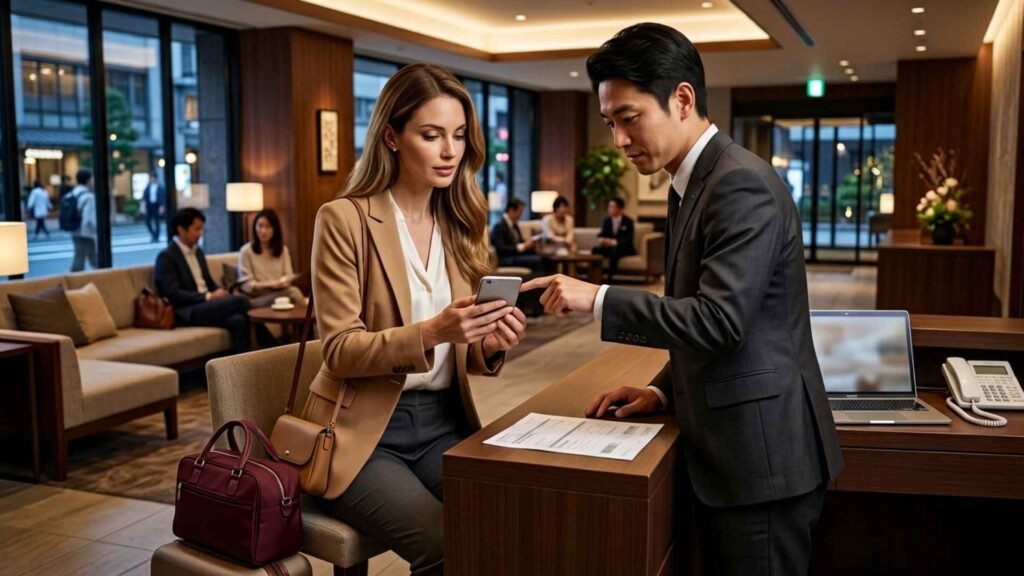
A delayed tracking update does not automatically mean the suitcase has been lost. Parcels dropped at hotels or convenience stores may not appear in the system until the driver has collected and registered them.
If the suitcase does not arrive as expected:
- Enter the 11- or 12-digit number from the waybill into Yamato’s tracking system.
- Ask the receiving hotel to check reception, its luggage room and any back-office storage area.
- Contact the sending hotel or counter to confirm that the suitcase was collected.
- Check the waybill for an incorrect hotel name, postcode, telephone number or delivery date.
- Contact Yamato’s English Customer Service with the tracking number ready.
Yamato’s English telephone support is available within Japan at 0120-67-9625 and from overseas at +81-3-6834-7503, generally between 08:00 and 21:00 daily.
If the tracking status shows Under Investigation, the address may be incomplete or Yamato may need further information about the recipient.
If the suitcase arrives damaged:
- photograph the damage immediately
- keep the suitcase and affected contents
- do not discard packaging or covers
- report the problem as soon as possible
- retain the waybill and proof of value
Yamato states that damage applications should be made within 14 days of receipt. Compensation is assessed under its terms and conditions and is not automatically equal to the maximum liability limit.
When Is Takkyubin Most Useful?
Luggage forwarding is particularly valuable for:
- families with children
- travellers carrying multiple suitcases
- older travellers
- visitors with mobility limitations
- ski and snowboard trips
- multi-city itineraries
- overnight stays in mountain areas
- crowded Shinkansen journeys
- routes with several transfers
- travellers departing from a different city
It may be unnecessary if you:
- travel only with a carry-on
- stay in one city
- need the bag on the same day
- use unstaffed accommodation
- have a simple direct journey
- carry equipment that cannot be accepted
If you are still deciding how luggage forwarding fits into your route, start with our Japan Itinerary for First-Time Visitors.
Luggage Forwarding in Japan Checklist
Before sending your suitcase, confirm that you have:
- contacted the receiving accommodation
- checked the delivery timing
- measured and weighed the suitcase
- removed documents and valuables
- packed overnight essentials separately
- written the reservation name correctly
- added the check-in or flight date
- prepaid the delivery charge
- photographed the suitcase
- saved the tracking number
A short check before dispatch can prevent most luggage-delivery problems.
Frequently Asked Questions
How much does Takkyubin cost in Japan?
Standard hotel-to-hotel delivery for a Size 140–160 suitcase on popular routes normally costs approximately ¥2,000–¥3,000. Longer routes, airport services and same-day delivery may cost ¥4,000–¥6,000 or more.
How long does Takkyubin take?
Regular delivery normally takes one or two days. Weather, distance, remote destinations and the dispatch cut-off can extend the journey.
Can I send luggage from one hotel to another?
Yes, provided the sending hotel can dispatch it and the destination has a staffed front desk willing to receive it. Confirm with both properties first.
Can I send luggage from a convenience store?
Participating convenience stores accept TA-Q-BIN parcels. Look for the official sign and remember that Yamato limits suitcases sent from convenience stores to Size 160.
Can Takkyubin deliver luggage on the same day?
Only on selected routes from specific airports, stations and service counters. Cut-off times and supported destinations vary.
Can I send luggage to an Airbnb?
Regular one-way delivery may be possible if someone can receive the suitcase, but most unstaffed rentals cannot accept it. A Yamato sales office or staffed hotel is usually a safer destination.
Can I send luggage to the airport?
Yes. Airport TA-Q-BIN allows you to collect the suitcase from a designated counter on your departure date. Check the dispatch deadline for your route and verify the correct airport and terminal.
Do I need a suitcase cover?
No. A cover is optional, but it may help reduce scratches and keep loose straps secure.
Is Takkyubin insured?
Standard Yamato TA-Q-BIN shipments have a liability limit of up to ¥300,000 per parcel, subject to the carrier’s applicable terms and conditions.
Final Thoughts
Luggage forwarding in Japan can make a multi-city trip considerably easier, especially when travelling by Shinkansen or including short regional stops.
Confirm that the destination can receive your suitcase, send it early, keep essential items with you and save the tracking receipt. With that preparation, Takkyubin allows you to move through Japan with far less luggage and stress.