
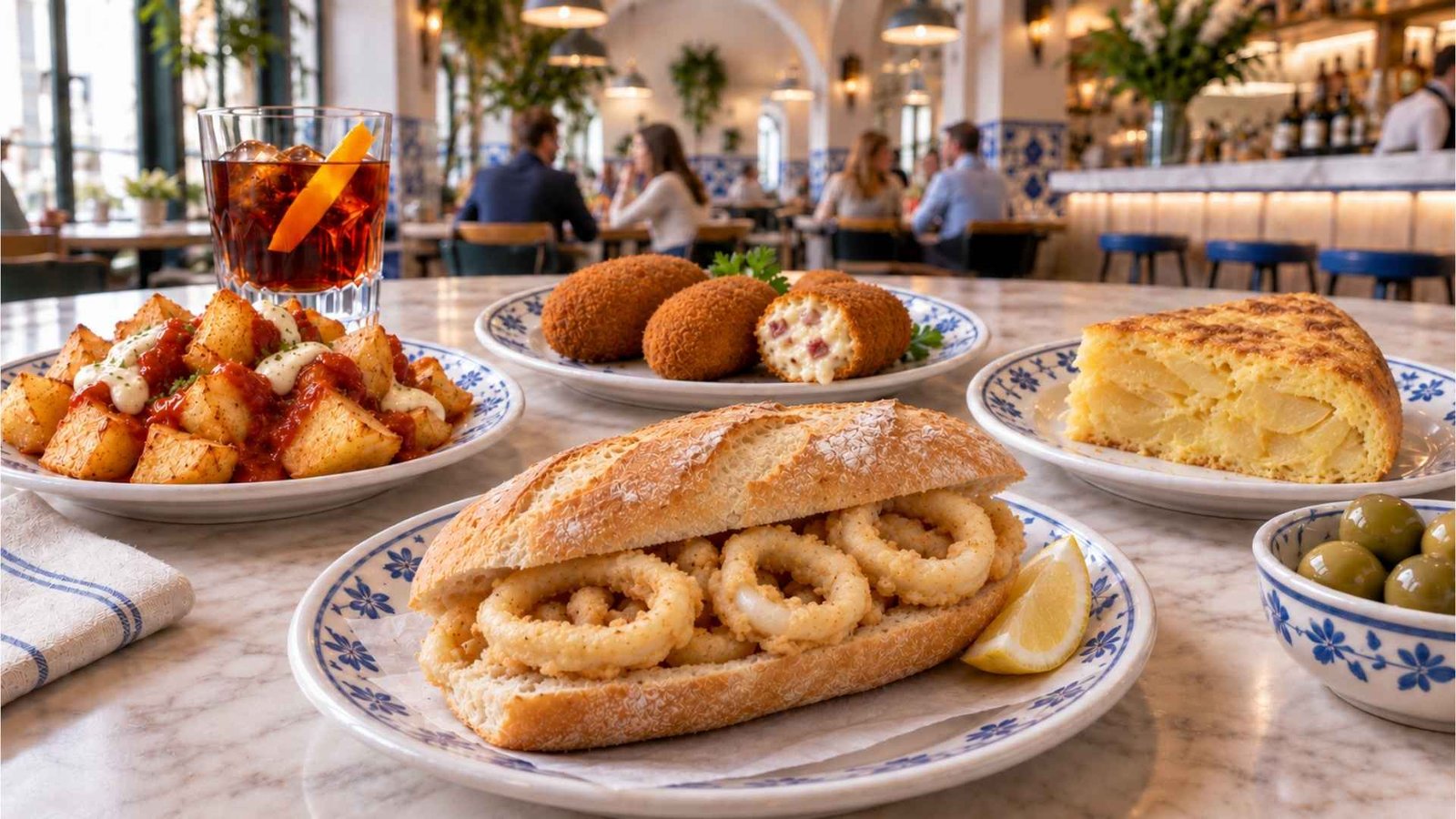
Madrid may sit far from the coast, but its food culture brings together hearty local cooking, seafood tapas, old tavern traditions and some of Spain’s best-loved snacks. If you are wondering what to eat in Madrid, begin with dishes that reveal how the city actually eats: a slow lunch of cocido, a calamari sandwich near Plaza Mayor, tapas at the bar and churros after dark.
This guide covers 12 traditional foods worth prioritising, including both distinctly Madrileño specialities and Spanish classics that have become part of everyday life in the capital.
Quick Answer: What to Eat in Madrid at a Glance
The essential foods to try in Madrid are cocido madrileño, bocadillo de calamares, callos a la madrileña, huevos rotos, oreja a la plancha, gallinejas y entresijos, soldaditos de Pavía, tortilla de patatas, patatas bravas, croquetas, churros con chocolate and rosquillas de San Isidro.
If time is limited, prioritise cocido for a traditional lunch, a calamari sandwich for a quick local classic and churros with thick hot chocolate for something sweet.
| Food | What It Is | Best Time to Try It |
|---|---|---|
| Cocido madrileño | Chickpea, vegetable and meat stew served in courses | Lunch, especially in cool weather |
| Bocadillo de calamares | Fried squid rings in crusty bread | Quick lunch or afternoon snack |
| Callos a la madrileña | Slow-cooked tripe with paprika and cured meats | Lunch or dinner |
| Huevos rotos | Fried potatoes topped with runny eggs | Shared lunch or dinner |
| Oreja a la plancha | Griddled pig’s ear, often seasoned with garlic and paprika | Tapas time |
| Gallinejas y entresijos | Crisp-fried lamb offal | Traditional street-food snack |
| Soldaditos de Pavía | Battered and fried salt cod strips | Tapas time |
| Tortilla de patatas | Thick Spanish potato omelette | Breakfast, snack or tapas |
| Patatas bravas | Fried potatoes with a spicy sauce | Tapas time |
| Croquetas | Crisp croquettes with a creamy filling | Tapas time |
| Churros con chocolate | Fried dough with thick drinking chocolate | Breakfast or late-night treat |
| Rosquillas de San Isidro | Traditional ring-shaped Madrid pastries | May festival season |
1. Cocido Madrileño — Madrid’s Essential Traditional Meal
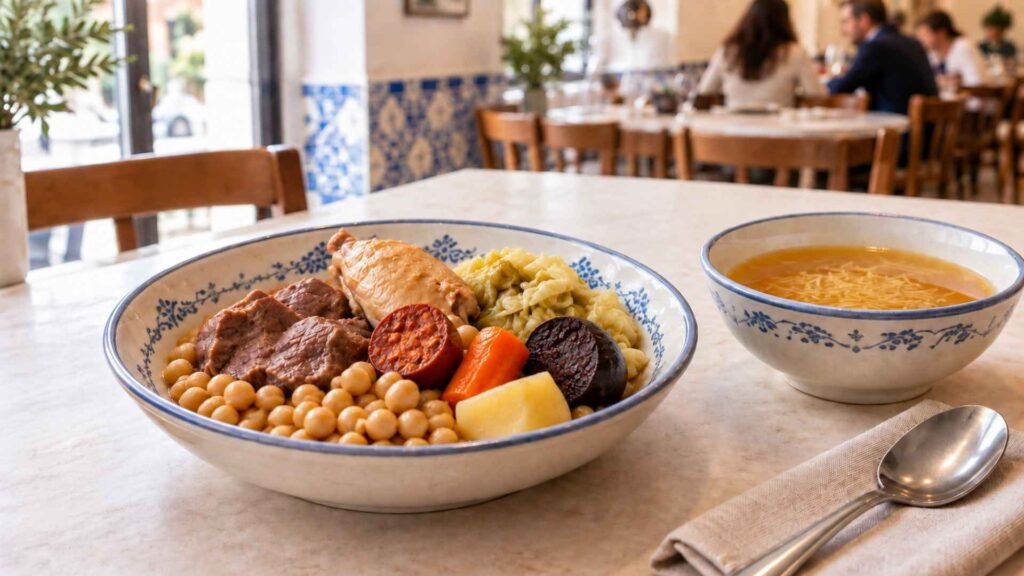
When deciding what to eat in Madrid for a substantial local meal, choose cocido madrileño. This comforting stew combines chickpeas, vegetables and several meats, which may include beef, chicken, pork, chorizo and morcilla.
Ingredients vary between kitchens, but the meal is traditionally divided into separate servings known as vuelcos.
The first serving is usually noodle soup made from the broth. Chickpeas and vegetables follow, then the meats arrive last. Some restaurants serve the meal in two courses rather than three.
Cocido is filling and unhurried. Order it for lunch and allow enough time to enjoy every stage. It is especially satisfying in autumn and winter, although specialist restaurants may serve it throughout the year.
Reservations are sensible at well-known cocido restaurants, particularly at weekends.
Best for: A traditional sit-down lunch
First-time tip: Arrive hungry and ask how many vuelcos the restaurant serves
2. Bocadillo de Calamares — The Classic Plaza Mayor Snack
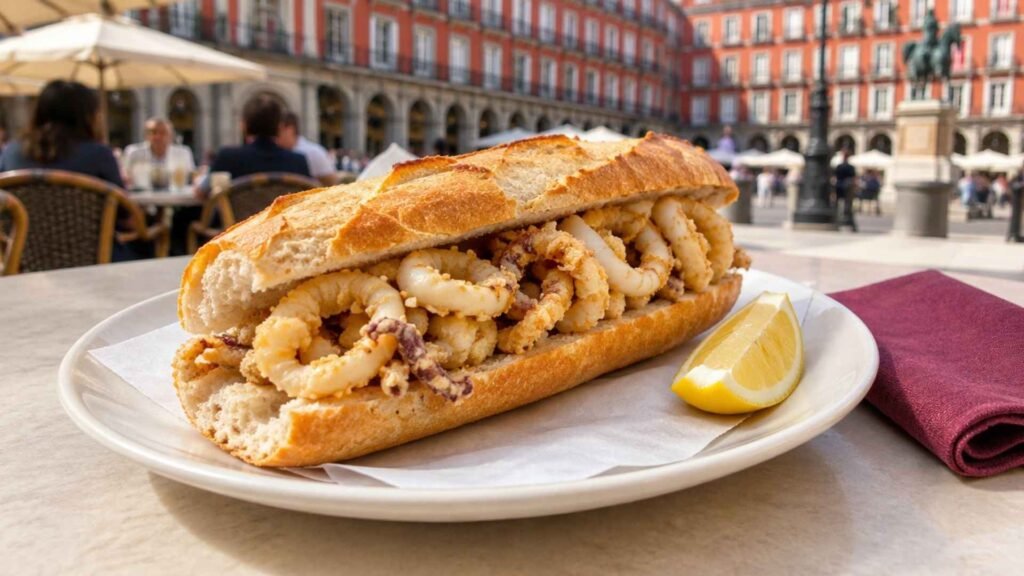
A bocadillo de calamares is one of the clearest answers to what to eat in Madrid: hot, lightly battered squid rings tucked inside a crusty bread roll.
It may seem unexpected in a landlocked capital, yet Madrid has long received fish and seafood from ports across Spain. Fried calamari eventually became closely associated with the bars surrounding Plaza Mayor.
The squid should be tender, the coating crisp and the bread sturdy enough to hold everything together. Some bars offer lemon or mayonnaise, but it is worth trying the almost-plain classic version first.
This is an easy and relatively inexpensive meal in the historic centre. Compare the busy specialist bars along the streets surrounding Plaza Mayor instead of automatically choosing the first restaurant facing the square.
Best for: A casual lunch near Plaza Mayor
First-time tip: Eat it immediately while the calamari is still crisp
3. Callos a la Madrileña — A Rich Tavern Classic
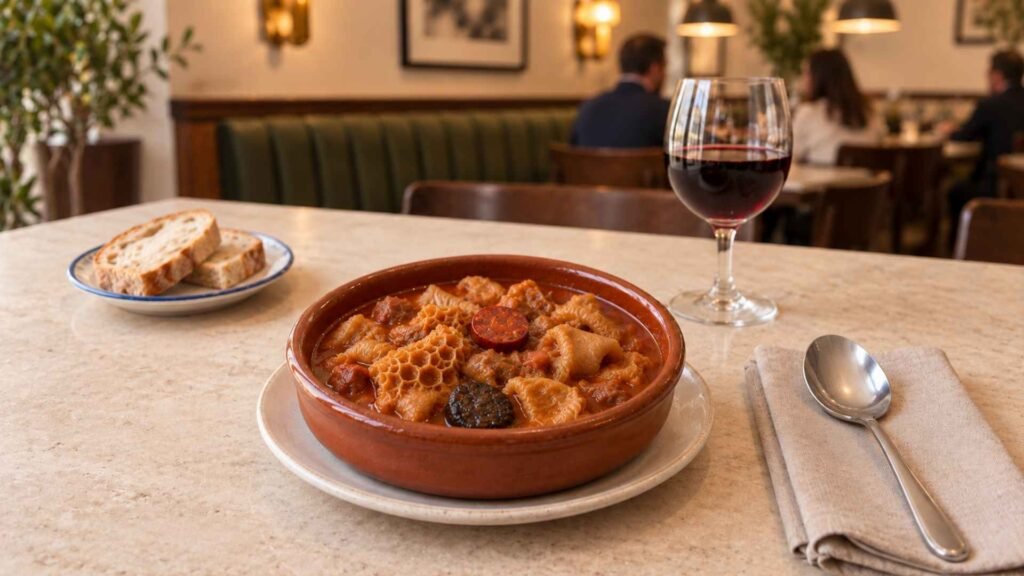
Include callos a la madrileña when choosing what to eat in Madrid beyond the familiar favourites.
This slow-cooked tripe dish is one of the capital’s most traditional tavern specialities. The tripe is simmered until tender in a rich sauce commonly prepared with paprika, tomato, garlic and cured meats such as chorizo or morcilla.
The soft texture and pronounced offal flavour make callos more challenging than a calamari sandwich or tortilla. However, it is worth trying if you enjoy nose-to-tail cooking.
Begin with a tapa or half portion before committing to a full plate.
Callos is especially suited to an old-fashioned taberna, where it is normally served with bread for enjoying the sauce. It is particularly popular during the colder months but can be available throughout the year.
Traditional recipes usually contain pork products.
Best for: Adventurous eaters and traditional tavern lunches
First-time tip: Begin with a tapa and use bread to enjoy the sauce
4. Huevos Rotos — Madrid’s Favourite Sharing Plate
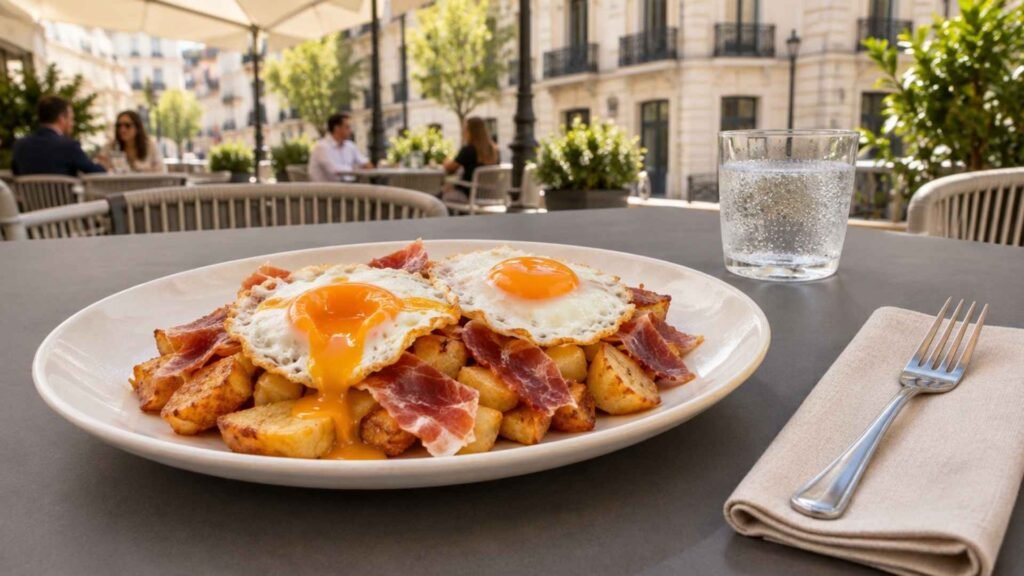
Meaning “broken eggs”, huevos rotos consists of fried potatoes topped with eggs whose yolks are broken at the table and mixed through the hot potatoes.
Many versions add jamón ibérico, chorizo, mushrooms or other toppings, but the essential pleasure comes from the combination of crisp-edged potatoes and runny egg yolk.
This is generous, comforting bar food designed for sharing. A plate can be surprisingly substantial, so pair it with one or two lighter tapas rather than treating it as a small side dish.
Look for freshly fried potatoes and eggs with soft yolks. Vegetarians can often order a plain version or one topped with mushrooms, but should confirm how the potatoes and additional ingredients are prepared.
Best for: Sharing with friends over drinks
First-time tip: Mix the yolks through the potatoes as soon as the plate arrives
5. Oreja a la Plancha — Crisp, Garlicky and Distinctly Madrileño
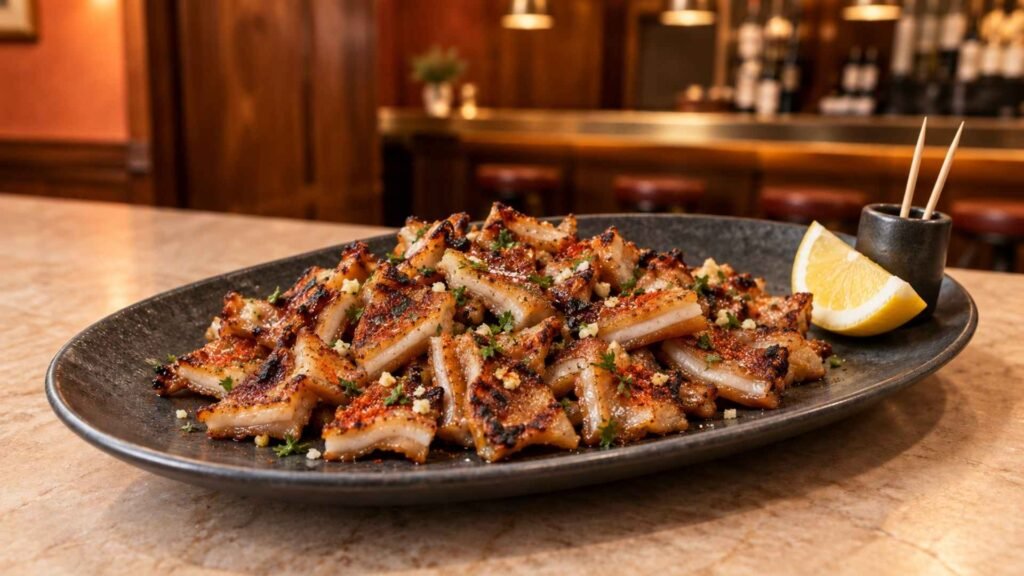
Oreja a la plancha, or griddled pig’s ear, is a familiar sight in Madrid’s traditional tapas bars.
The ear is cooked until tender, chopped into bite-sized pieces and finished on a hot griddle. Garlic, parsley, paprika and lemon are common seasonings, although each kitchen has its own approach.
A good plate combines crisp, caramelised edges with a pleasantly chewy centre. It is richer than many first-time visitors expect, making a shared tapa the ideal size.
Choose oreja if you already enjoy offal or want to move beyond Spain’s most familiar tapas. It contains pork and may be prepared on cooking surfaces shared with other dishes, so travellers with dietary or religious restrictions should ask before ordering.
Best for: A traditional neighbourhood tapas experience
First-time tip: Share one portion rather than ordering it as a main meal
6. Gallinejas y Entresijos — Old-School Madrid Street Food
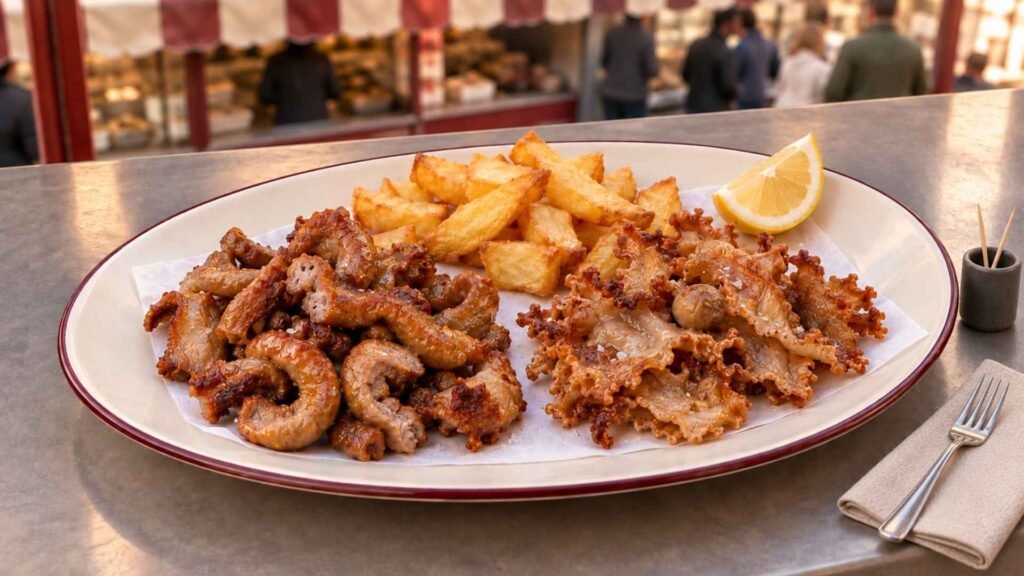
Few foods are more closely tied to working-class Madrid than gallinejas y entresijos.
Gallinejas are pieces of lamb intestine, while entresijos are folds of lamb mesentery. They are fried in their own fat until deeply browned, producing an intense savoury flavour and crisp exterior.
Once common at fairs and street stalls, this traditional food now survives at a small number of specialist freidurías. Its aroma and flavour are strong, so it may not be the natural starting point for someone uncertain about offal.
Order a small mixed portion if one is available, taste it before adding salt or lemon and eat it while it is still hot.
Gallinejas can take more effort to find than bravas or croquetas, but the dish remains a meaningful part of Madrid’s culinary history.
Best for: Curious eaters seeking a genuinely local speciality
First-time tip: Try a small mixed portion at a dedicated traditional shop
7. Soldaditos de Pavía — Crisp Battered Salt Cod
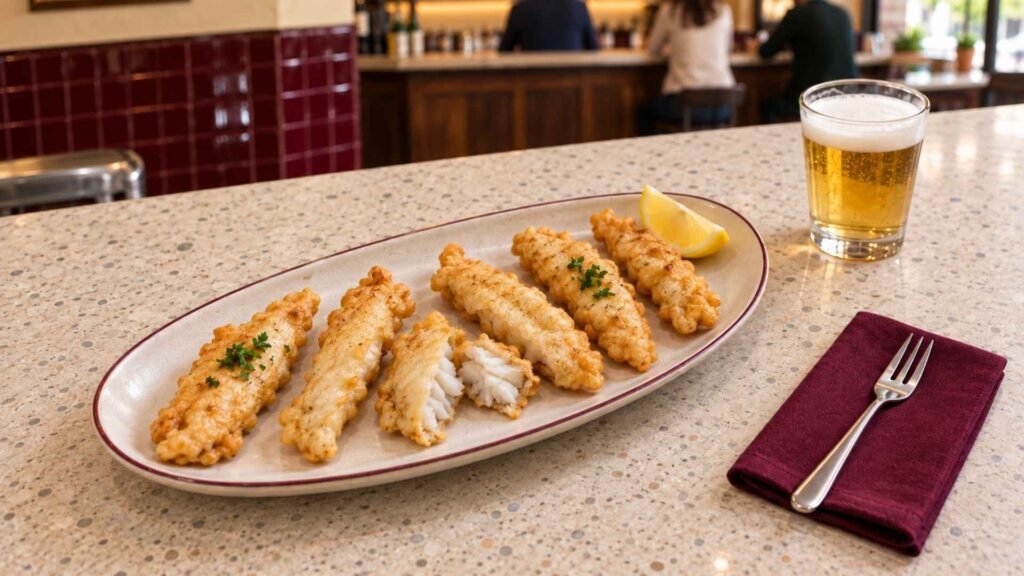
Soldaditos de Pavía are strips of desalted cod coated in batter and fried until golden.
Saffron or food colouring traditionally gives the batter a warm yellow tone, while roasted red pepper may be served alongside or used as a garnish. The name means “little soldiers of Pavia”, although explanations of its exact origin vary.
The dish has a long connection with Madrid’s taverns. The best pieces have moist, flaky cod inside a light shell rather than a thick and oily coating.
Because salt cod is cured before being soaked and cooked, a properly prepared version should taste pleasantly savoury rather than aggressively salty.
Look for soldaditos in traditional bars serving classic Madrileño cooking. They work particularly well as part of a shared tapas order with bravas, croquetas or a simple salad.
Best for: Seafood lovers and a traditional tapas crawl
First-time tip: Eat them hot and add lemon only after tasting the cod
8. Tortilla de Patatas — The Everyday Spanish Staple
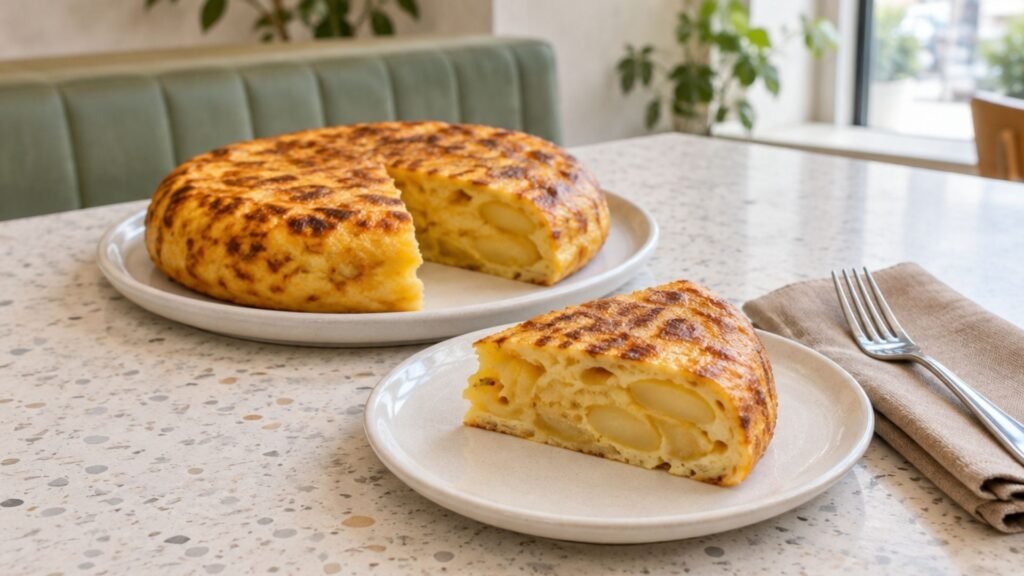
Tortilla de patatas is Spanish rather than exclusively Madrileño, but it is so deeply embedded in Madrid’s café and bar culture that it belongs on a first visit.
Potatoes and eggs form the base, while onion remains the eternal point of debate. You can simply ask for con cebolla or sin cebolla.
A slice may appear at breakfast, as a mid-morning snack, inside a sandwich or among evening tapas. Texture varies from a firm, fully set centre to the much softer tortilla poco cuajada.
If you prefer your egg completely cooked, ask about the texture before ordering.
Freshness matters. A bar displaying a whole tortilla and serving it quickly is generally more promising than one offering slices that have been sitting out for a long time.
Try it at least once without additional sauces so the flavour of the potato, egg and olive oil remains clear.
Best for: Breakfast, a quick snack or an easy vegetarian tapa
First-time tip: Ask whether the centre is runny if egg texture matters to you
9. Patatas Bravas — A Madrid Tapas Essential
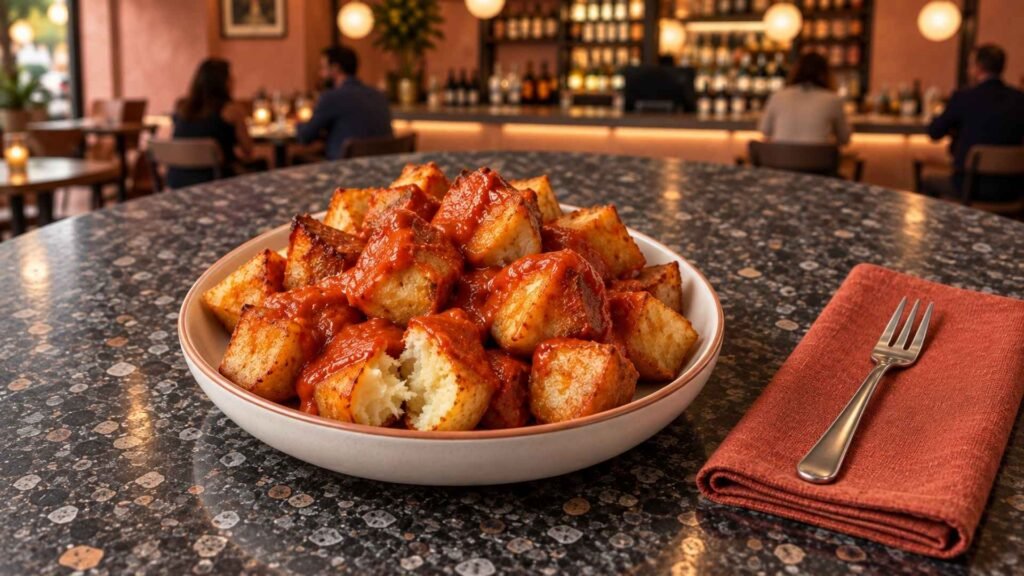
Patatas bravas are another Spanish-wide favourite with an especially strong place in Madrid’s tapas culture.
Cubes or irregular pieces of fried potato are topped with salsa brava, a warm, paprika-led sauce with varying levels of heat. In Madrid, the classic sauce is not simply spicy ketchup, and some traditional versions are prepared without tomato.
Good bravas depend on crisp potatoes, a fluffy interior and a sauce with enough acidity and spice to remain lively.
Some bars add aioli, while others serve only brava sauce. Neither presentation guarantees quality; the potatoes and balance of the sauce matter more.
Order a ración to share during an evening bar crawl. Bravas may look vegetarian, but some recipes contain meat stock and kitchens may use shared fryers. Confirm the ingredients when this is important.
Best for: A relaxed tapas crawl
First-time tip: Share a portion so you still have room to try another bar’s speciality
10. Croquetas — Creamy, Crisp and Made for Tapas
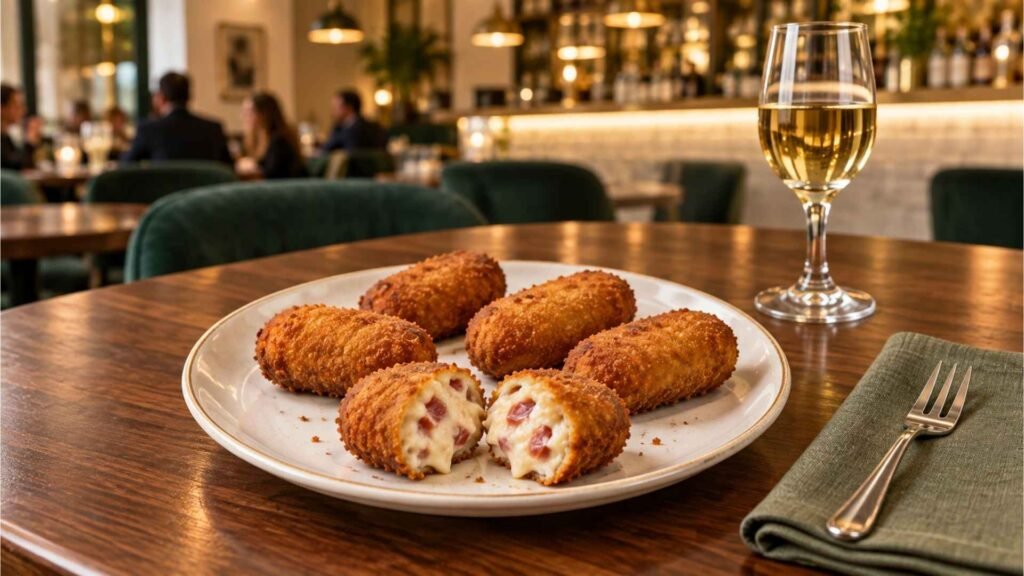
Spanish croquetas have a crisp breadcrumb coating surrounding a creamy béchamel filling.
Jamón is the standard classic, but Madrid’s bars may also offer chicken, salt cod, mushrooms, cheese, spinach or more creative seasonal versions.
Croquetas are found throughout Spain rather than belonging solely to Madrid, yet they are central to the capital’s traditional bar experience.
A good croqueta should be freshly fried, delicate inside and flavourful without feeling heavy or pasty. Homemade croquetas are often listed on menus as croquetas caseras.
Order flavours separately when possible instead of choosing a large mixed plate. This makes it easier to identify what you like and avoids filling up too quickly.
Vegetarians should confirm both the filling and the stock used in the béchamel. Diners with allergies should remember that croquetas normally contain gluten, milk and egg and are frequently cooked in shared fryers.
Best for: An approachable first tapas order
First-time tip: Start with jamón, then compare it with one seasonal filling
11. Churros con Chocolate — Madrid’s Essential Sweet Stop
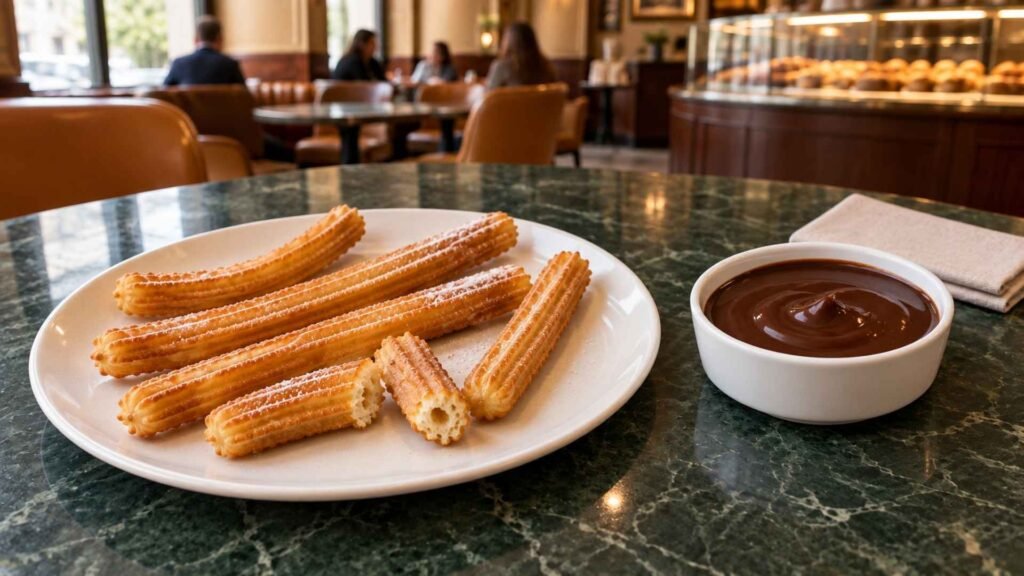
For a classic Madrid treat, order churros con chocolate.
Churros are lengths of fried dough with a lightly crisp exterior, served beside a cup of dense hot chocolate. The chocolate is intended for dipping and is much thicker than a typical drinking chocolate.
Locals enjoy churros at breakfast, during an afternoon break or after a late night. You may also see porras, which are thicker, softer and more substantial.
One shared order is often enough after a full meal, particularly when accompanied by rich chocolate.
The experience is best at a busy churrería where batches are fried frequently. Fresh churros should feel light rather than greasy.
Some famous central venues remain open late, but opening hours can change. Check directly before planning a special late-night visit.
Churros may be dairy-free depending on the recipe, while the chocolate usually is not. Always ask when allergies or dietary choices matter.
Best for: Breakfast, an afternoon break or a late-night dessert
First-time tip: Try both churros and the thicker porras if ordering for a group
12. Rosquillas de San Isidro — Madrid’s Festival Pastry

Rosquillas de San Isidro are ring-shaped pastries traditionally associated with Madrid’s May celebrations for San Isidro, the city’s patron saint.
Four styles are commonly found:
- Tontas are plain.
- Listas have a sweet glaze.
- De Santa Clara carry a white meringue coating.
- Francesas are finished with almonds.
Their texture is firmer and more cake-like than a doughnut, while the aniseed flavour can be noticeable.
The differences between the four varieties make a mixed selection more interesting than buying only one type. Start with a tonta to understand the base pastry, then compare it with a glazed lista.
Rosquillas are easiest to find around the San Isidro festivities, although traditional bakeries may sell them outside the main festival season.
If your visit falls in May, they are one of the most timely answers to what to eat in Madrid.
Best for: Spring visitors and traditional pastry lovers
First-time tip: Buy a mixed box and compare the four classic finishes
How to Eat Like a Local in Madrid
Knowing what to eat in Madrid is only half the experience; timing and portion sizes matter too.
Lunch commonly begins around 1:30 pm and can continue well into the afternoon, while dinner often starts after 8:30 pm. Kitchens in traditional restaurants may close between lunch and dinner services, even when the bar remains open.
Use these simple habits to make ordering easier:
- Order a tapa for a small taste, a media ración for a half portion or a ración to share.
- Choose one speciality at each bar instead of ordering an entire meal at the first stop.
- Stand at the bar for a quick, informal experience.
- Sit at a table when you want a slower meal.
- Look for a weekday menú del día when you want a set lunch with several courses.
- Ask for la cuenta, por favor when you are ready; the bill is not always brought automatically.
- Expect bread to be charged in some restaurants when it is placed on the table and eaten.
Madrid’s tapas culture is less about completing a fixed checklist than moving at a comfortable pace. A vermouth, one well-chosen tapa and a short walk to the next bar can be more enjoyable than ordering six plates at once.
💡 Isabella’s Pick:
Do not try to fit cocido, callos and huevos rotos into the same day. Plan one substantial traditional lunch, then keep the evening flexible with two or three smaller tapas and a shared sweet stop.
Where to Find Traditional Food in Madrid
Where you stay can influence what to eat in Madrid, because the city’s food culture extends well beyond Plaza Mayor.
Match the area to the type of experience you want rather than assuming one neighbourhood is best for every dish.
| Area | Foods and Experiences to Prioritise |
|---|---|
| Plaza Mayor and La Latina | Calamari sandwiches, traditional taverns and classic tapas |
| Huertas and Barrio de las Letras | Historic bars, croquetas, tortilla and evening tapas |
| Chamberí | Neighbourhood restaurants, cocido and polished modern taverns |
| Lavapiés | Traditional bars alongside diverse international food |
| Malasaña and Chueca | Casual tapas, modern interpretations and late dining |
| Retiro and Ibiza neighbourhood in Madrid | Established restaurants and relaxed local lunches |
Markets can be useful for tasting several foods in one place, but they vary considerably. Some function primarily as neighbourhood produce markets, while others are more focused on prepared food and visitors.
For broader context on the capital’s culinary traditions, the official Spain tourism guide to Madrid regional cuisine explains Madrid’s connection with cocido, callos, seafood tapas and churros.
What Should Vegetarians and Travellers With Dietary Restrictions Know?
When deciding what to eat in Madrid with dietary restrictions, never rely only on the dish name.
Brava sauce may contain meat stock, tortilla may share preparation surfaces with meat, and vegetable croquetas can use chicken stock in the béchamel.
Useful phrases include:
- ¿Lleva carne o caldo de carne? — Does it contain meat or meat stock?
- ¿Lleva cerdo? — Does it contain pork?
- ¿Tiene frutos secos? — Does it contain nuts?
- Soy alérgico/alérgica a… — I am allergic to…
- Sin gluten — Gluten-free
Traditional Madrid cooking uses pork frequently, including in cocido, callos, croquetas and garnishes.
Halal versions should only be considered suitable when a restaurant explicitly confirms its sourcing and preparation. Travellers with severe allergies or coeliac disease should also ask about shared fryers, grills and cross-contact.
Planning Your Madrid Food Stops From Barajas Airport
Planning what to eat in Madrid usually means travelling into the city centre rather than staying around the airport.
Before travelling, use the Madrid Barajas Airport Guide to understand the terminals and onward transport options.
If Madrid is your first stop in Spain, the Madrid Barajas Airport Arrival guide covers the sequence from landing to leaving the terminal.
Travellers with a connection should be realistic about timing. A meal in central Madrid is rarely practical during a short layover once immigration, transport and the return security process are considered.
The Madrid Barajas Airport Transit guide is the better starting point before deciding whether you have enough time to leave the airport.
Frequently Asked Questions About What to Eat in Madrid
What food is Madrid most famous for?
Madrid is best known for cocido madrileño, bocadillo de calamares and callos a la madrileña. Churros with thick hot chocolate are the city’s most recognisable sweet experience.
What should I eat first in Madrid?
Start with a calamari sandwich or tortilla if you want something quick. Choose cocido madrileño for a more complete introduction to traditional Madrid cooking.
Is Madrid good for tapas?
Yes. Madrid has traditional taverns, neighbourhood bars, food markets and modern tapas restaurants. La Latina, Huertas and Chamberí are useful areas to begin exploring.
Is paella a traditional Madrid food?
No. Paella comes from Valencia, although many Madrid restaurants serve it. Prioritise cocido, callos or a calamari sandwich if you want dishes more closely associated with the capital.
What time do people eat dinner in Madrid?
Dinner commonly begins after 8:30 pm, and many locals eat later. Some restaurant kitchens do not reopen for evening service until around that time.
What is a typical Madrid breakfast?
A simple breakfast may include coffee with toast, tortilla or churros. Churros or porras with thick hot chocolate are the most distinctive choices for visitors.
Can vegetarians eat traditional food in Madrid?
Yes, but ask about meat stock, ham and shared fryers. Tortilla de patatas and some mushroom, cheese or spinach croquetas may be suitable when their ingredients and preparation are confirmed.
Final Thoughts
Deciding what to eat in Madrid becomes easier when you combine one substantial local meal with several smaller bar stops.
Make cocido the centre of a relaxed lunch, try a calamari sandwich near Plaza Mayor and leave room for churros with chocolate. Then add one less familiar speciality—perhaps soldaditos de Pavía or oreja—to experience the capital beyond its most famous flavours.
Madrid rewards curiosity, but there is no need to order everything in one trip. A few well-chosen dishes, eaten at the right pace, will tell you far more about the city.