
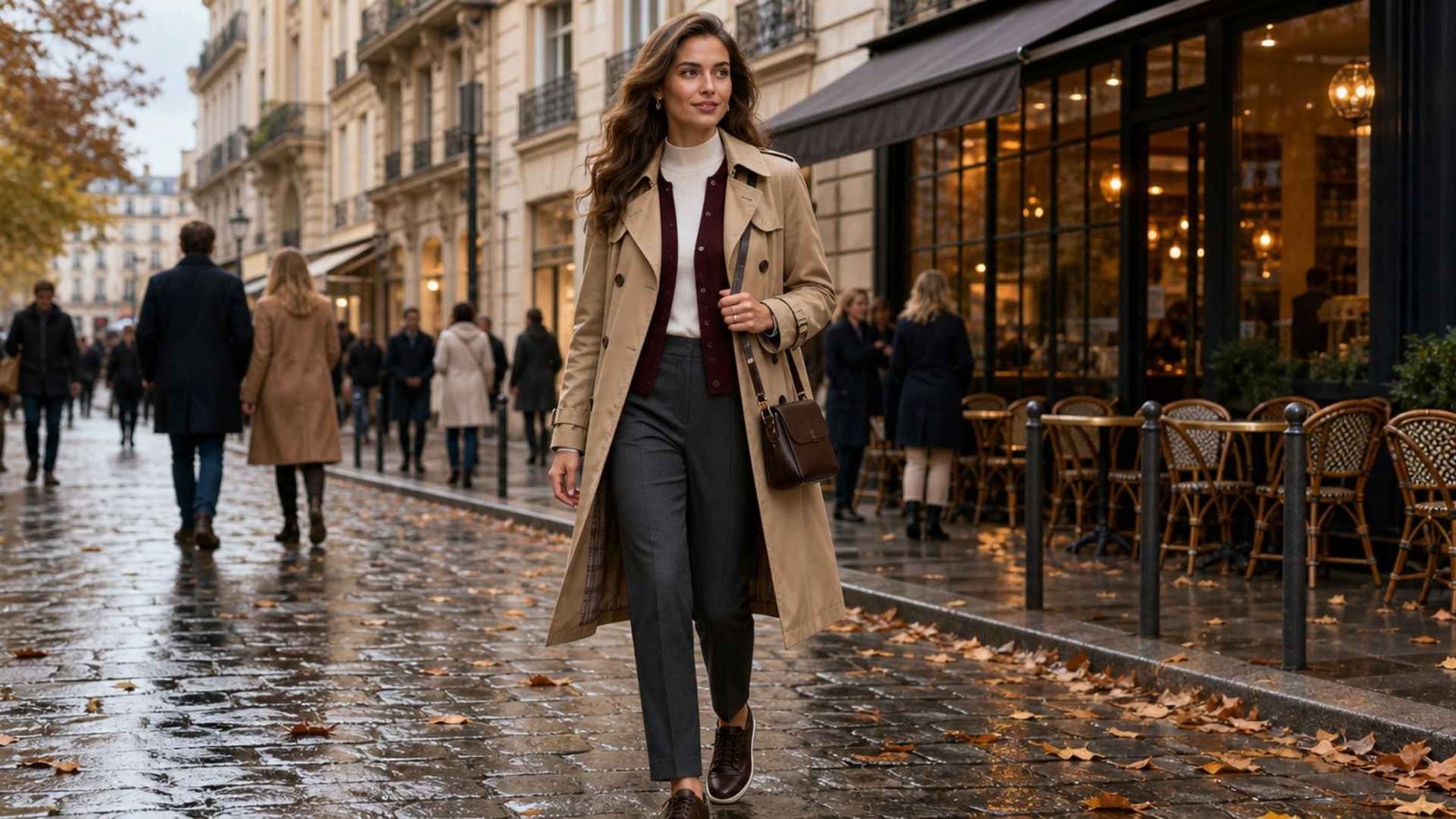
These Europe fall travel outfits for women are designed around changing temperatures, unpredictable weather and real sightseeing plans.
The best Europe fall travel outfits respond to those changes without sacrificing comfort or style. These ten adaptable looks cover sightseeing, train journeys, museum visits and relaxed dinners from September through November.
Quick Answer: 10 Europe Fall Travel Outfits at a Glance
The most reliable formula combines a comfortable base, one removable layer, weather-appropriate outerwear and supportive shoes.
In September, prioritize breathable pieces and lightweight layers. October usually calls for fine knits, practical jackets and closed shoes. By November, thermal base layers, warmer coats and water-resistant footwear become much more useful.
| Look | Best For | Planning Temperature | Outfit Formula |
|---|---|---|---|
| 1 | Warm September city day | 20–27°C / 68–81°F | Ribbed knit + pleated trousers + light blazer + sneakers |
| 2 | Changeable September weather | 15–23°C / 59–73°F | Striped top + jeans + cropped jacket + sneakers |
| 3 | Rainy September sightseeing | 13–20°C / 55–68°F | Merino sweater + cropped trousers + trench + ankle boots |
| 4 | October museum and café day | 12–18°C / 54–64°F | Shirt + knit vest + tailored trousers + loafers |
| 5 | Long October city walk | 10–17°C / 50–63°F | Mock neck + jeans + trench + leather sneakers |
| 6 | October train journey | 11–18°C / 52–64°F | Knit polo + relaxed trousers + wool overshirt + sneakers |
| 7 | October dinner | 9–16°C / 48–61°F | Midi dress + cropped wool jacket + ankle boots |
| 8 | Cold November sightseeing | 4–11°C / 39–52°F | Thermal top + merino sweater + wool coat + boots |
| 9 | Wet and windy November day | 5–12°C / 41–54°F | Fine knit + dark jeans + waterproof coat + Chelsea boots |
| 10 | November evening | 2–9°C / 36–48°F | Turtleneck + midi skirt + tights + wool coat |
These temperatures are planning guides, not fixed forecasts. Check the weather for every destination shortly before departure, especially on multi-country trips.
Dress for the Destination, Not Just the Month
The month provides a useful starting point, but location, elevation and local weather determine which layers you will actually need.
September can remain warm across Portugal, southern Spain, Greece and southern Italy, while northern cities and higher-altitude destinations may already require jackets and closed shoes. October often brings the widest mix of mild afternoons, cool mornings and rain, making removable layers especially valuable.
By November, Central and Northern Europe generally require warmer outerwear and weather-resistant footwear. Southern destinations may still feel mild during the day, but mornings and evenings can be considerably cooler.
Before finalizing your fall wardrobe, check a reliable local forecast for every stop. For significant weather advisories across the continent, Meteoalarm brings together warnings issued by European national meteorological services.
If you still need to choose the versatile pieces behind these combinations, use the Fall Travel Capsule Wardrobe for Europe as your packing foundation. The outfits below explain how to wear those pieces rather than repeating a complete packing list.
Europe Fall Travel Outfits for September – Light Layers for Warm Afternoons
September outfits should remain breathable during warm afternoons while including one layer for cool mornings or showers. These three looks cover dry, changeable and rainy September days.
1. The Warm Southern Europe City Look
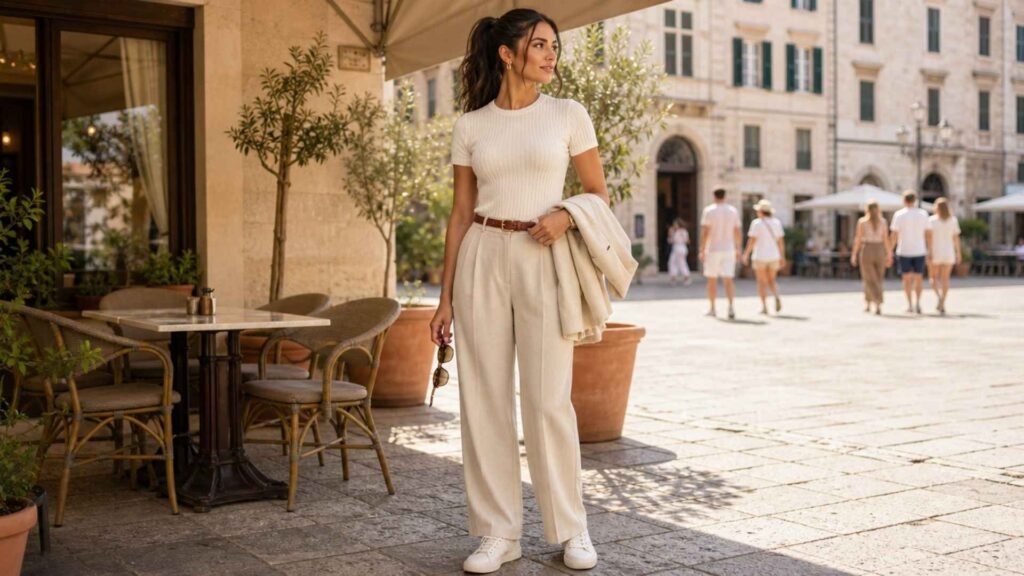
Best for: Rome, Lisbon, Madrid, Athens or Florence on a warm September day
Temperature guide: 20–27°C / 68–81°F
Outfit formula: Ribbed short-sleeve knit + pleated trousers + lightweight blazer + leather sneakers
Start with a fitted ribbed knit in cream, navy or soft taupe, then add fluid, high-waisted trousers that allow easy movement. A lightweight, unlined blazer can stay folded over your arm during the afternoon and provide coverage for dinner or a cooler evening.
Clean leather sneakers and a structured crossbody keep the outfit practical. Burgundy or deep red can add one seasonal accent to the neutral base.
Weather switch: If the forecast rises above 25°C / 77°F, replace the blazer with an oversized cotton shirt that can be worn open as a light layer.
2. The Cool Morning-to-Warm Afternoon Outfit
Best for: Mixed indoor and outdoor sightseeing
Temperature guide: 15–23°C / 59–73°F
Outfit formula: Striped long-sleeve top + dark straight-leg jeans + cropped jacket + slim leather sneakers
A striped long-sleeve top gives a simple outfit visual definition. Choose breathable cotton rather than a heavy knit so the base remains comfortable in the afternoon.
Dark straight-leg jeans are easy to repeat later in the trip. Add a cropped utility, barn-style or cotton jacket that ends around the hip; the shorter layer balances the jeans and is easy to carry once the day becomes warmer.
Finish with supportive low-profile sneakers and a small bag in chocolate brown, forest green or burgundy.
Weather switch: If showers are likely, avoid untreated suede and choose a water-resistant cotton or technical jacket instead.
3. The Rainy September City Walk
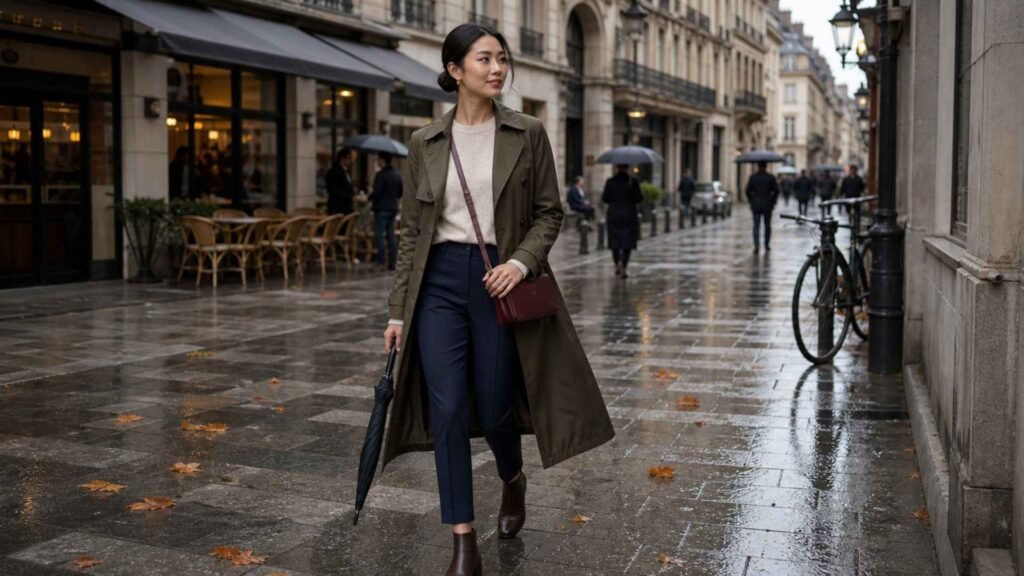
Best for: Light rain, wet streets and outdoor sightseeing
Temperature guide: 13–20°C / 55–68°F
Outfit formula: Fine merino sweater + ankle-length trousers + water-resistant trench + flat ankle boots
Rainy September weather does not require a heavy winter outfit. Begin with a lightweight merino sweater, then choose ankle-length trousers in a fabric that holds its shape and dries more easily than floor-skimming denim. A water-resistant trench with enough room through the shoulders adds protection without bulky layering.
Flat leather ankle boots with grippy rubber soles are more reliable than delicate suede shoes on wet streets. Keep the trouser hem slightly above the boot so it stays away from wet pavement.
Weather switch: For persistent rain rather than short showers, use a hooded waterproof coat and genuinely waterproof boots. A trench and umbrella may not be enough in wind-driven rain.
October Europe Fall Travel Outfit Ideas – Flexible Layers for Changeable Days
Layering becomes central to Europe fall travel outfits in October. A light base keeps the same look comfortable inside cafés, museums and trains.
4. The Museum and Café Outfit
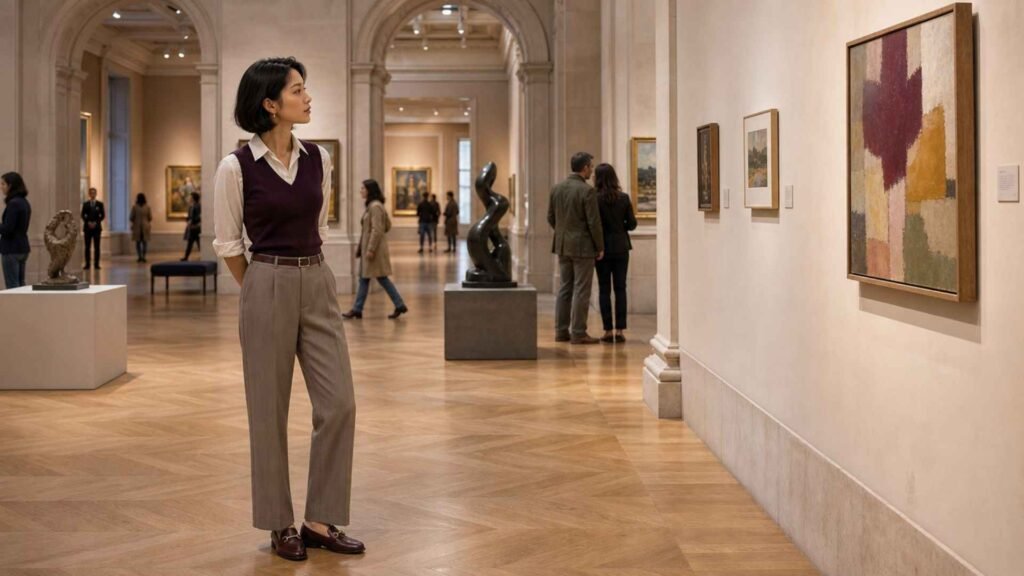
Best for: Cultural sightseeing and slower city days
Temperature guide: 12–18°C / 54–64°F
Outfit formula: Cotton shirt + fine-knit vest + tailored trousers + cushioned leather loafers
Layer a lightweight knit vest over a crisp cotton shirt, rolling the sleeves slightly if a museum or café feels warm. Relaxed tailored trousers add structure without the restriction of formal pants.
Choose a trouser length that works with soft leather loafers. The loafers should have a cushioned footbed, a flexible rubber sole and enough support for the amount of walking planned.
A camel, burgundy or deep olive knit can break up a neutral outfit. Add simple jewelry and a zipped crossbody large enough for your essentials and a compact umbrella.
Weather switch: Below about 12°C / 54°F, add a trench or lightweight wool coat. On a high-step-count day, replace the loafers with your primary walking shoes.
5. The All-Day Cobblestone Walking Look
Best for: Historic centers, viewpoints and full sightseeing itineraries
Temperature guide: 10–17°C / 50–63°F
Outfit formula: Fine mock-neck top + straight jeans + mid-length trench + cushioned leather sneakers
For a day built around walking, begin with broken-in leather or weather-resistant sneakers that provide enough cushioning for hard stone streets. Add dark straight-leg jeans and a fine mock-neck top; the higher neckline brings warmth without immediately requiring a scarf.
A mid-length trench provides coverage during brief showers. Make sure it allows a natural stride, and keep a light scarf in your bag rather than wearing a heavy sweater all day.
For more help with cushioning, traction and wet-weather footwear, read Best Shoes for Europe Travel.
Weather switch: If steady rain is forecast, switch to water-resistant walking shoes or flat ankle boots with reliable rubber outsoles.
6. The Comfortable October Train Journey Outfit
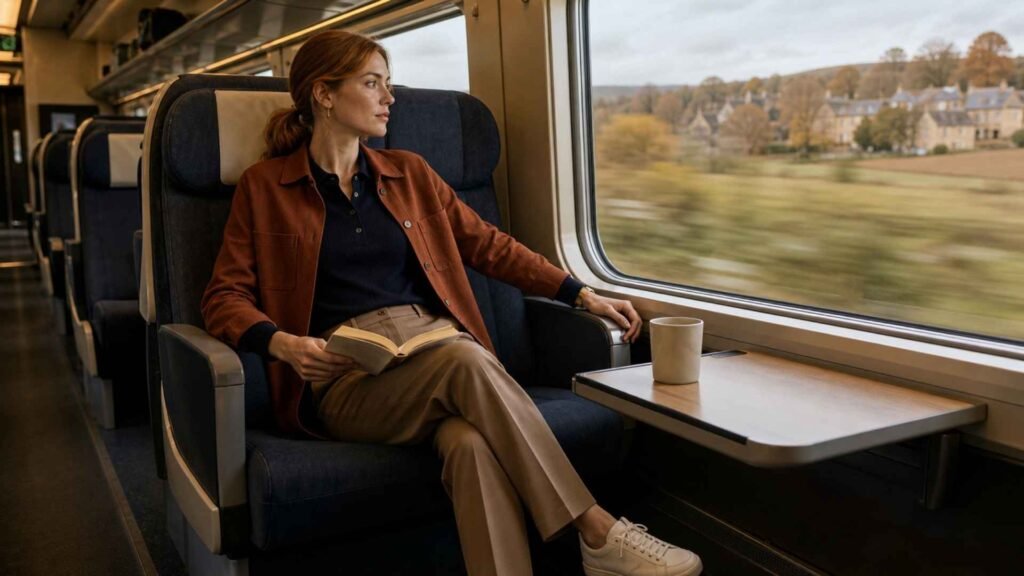
Best for: Intercity trains, station transfers and hotel check-in days
Temperature guide: 11–18°C / 52–64°F
Outfit formula: Soft knit polo + relaxed tailored trousers + lightweight wool overshirt + supportive sneakers
Train travel calls for an outfit that remains comfortable while seated but still looks presentable on arrival. A fine-knit polo or soft crew-neck sweater feels more refined than a sweatshirt without being restrictive. Pair it with relaxed trousers featuring a smooth front and a discreet elastic section at the back of the waistband.
The trousers should be loose enough for sitting but not so long that the hem drags across platforms. A lightweight wool overshirt adds warmth without stiff tailoring and can be removed easily inside the carriage.
Supportive sneakers simplify stairs and luggage transfers. Keep travel documents and your phone in a zipped crossbody rather than stored luggage.
Weather switch: Add a large soft scarf for a cold platform or air-conditioned carriage. It can also serve as a compact extra layer without filling your suitcase.
7. The Relaxed October Dinner Look
Best for: Bistro dinners, wine bars and casual evening plans
Temperature guide: 9–16°C / 48–61°F
Outfit formula: Long-sleeve midi dress + cropped wool jacket + low ankle boots
A long-sleeve midi dress creates a complete evening outfit with one piece. Choose soft jersey, fine ribbed knit or another wrinkle-resistant fabric, with a defined waist and enough room in the skirt for comfortable movement. A cropped wool jacket or tailored short coat keeps the proportions balanced.
Low block-heel ankle boots provide more stability than narrow heels on uneven pavement. For a longer walk from the hotel, polished flat boots work equally well.
A refined crossbody is more practical than an open evening bag when walking or using public transportation.
Weather switch: Add semi-opaque tights when the temperature drops below approximately 12°C / 54°F. For a colder evening, replace the cropped jacket with a longer wool coat.
Europe Fall Travel Outfits for November – Warmth Without Bulky Packing
November outfits need functional outerwear. The most adaptable Europe fall travel outfits use thin layers that remain comfortable outdoors and inside heated buildings.
8. The Cold November Sightseeing Look
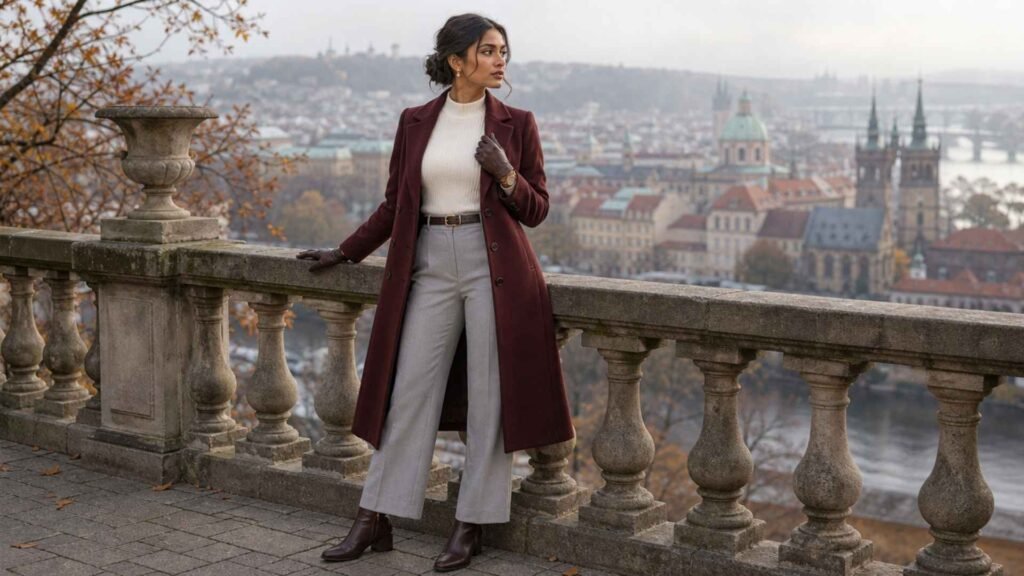
Best for: Central European cities and long outdoor itineraries
Temperature guide: 4–11°C / 39–52°F
Outfit formula: Thermal base + merino sweater + wool-blend trousers + long wool coat + weather-resistant boots
Begin with a thin thermal top and layer a fine merino sweater over it instead of relying on one extremely thick knit. Wool-blend trousers provide more warmth than lightweight travel pants; choose a cut with room for a thin thermal layer if colder conditions are expected.
A long wool or wool-blend coat provides useful coverage and works with both trousers and dresses. Check that it closes comfortably over the intended layers.
Finish with weather-resistant flat boots, grippy rubber soles and warm socks that do not make the footwear feel tight.
Weather switch: Near freezing, add thin thermal leggings, gloves and a scarf that covers the neck fully. If snow or sleet is possible, prioritize waterproof footwear over polished leather alone.
9. The Wet and Windy November Outfit
Best for: London, Dublin, Amsterdam and other damp destinations
Temperature guide: 5–12°C / 41–54°F
Outfit formula: Fine-knit sweater + dark jeans + streamlined waterproof coat + waterproof Chelsea boots
For persistent rain or strong wind, a decorative trench may not provide enough protection. Choose a waterproof mid-length coat with secure closures, a useful hood and room for a warm knit. Pair it with dark straight-leg jeans, keeping the hem off the ground so it does not absorb water.
Waterproof Chelsea boots with flexible rubber soles give the outfit a clean urban finish. Wear a compact zipped crossbody beneath the coat instead of carrying an open tote in rain.
Weather switch: Below about 7°C / 45°F, add a thin thermal layer beneath the sweater. In strong wind, rely on the coat hood rather than treating a compact umbrella as your only protection.
10. The November Dinner and Evening Walk Look

Best for: Dinners, concerts and late-November city walks
Temperature guide: 2–9°C / 36–48°F
Outfit formula: Fine turtleneck + midi skirt + opaque tights + long wool coat + ankle boots
A fitted turtleneck creates a warm, streamlined base for an evening outfit. Pair it with an A-line, pleated or softly draped midi skirt that stays clear of wet pavement. Opaque tights and flat or low-heeled ankle boots make the skirt practical in colder weather.
A long belted wool coat brings the pieces together and offers considerably more warmth than a short evening jacket.
Use black, charcoal or camel as the base, then add burgundy, plum or deep green through the skirt, scarf or bag.
Weather switch: For an outdoor market or a long evening walk, add thin thermal shorts beneath the skirt and a warm scarf. These concealed layers preserve the silhouette while making the outfit much more comfortable.
How to Adjust One Outfit Formula Across Europe
You do not need completely different outfits for every European region. Keep the same base formula and change the fabric weight, outerwear or footwear according to the conditions.
| Destination or Trip Type | Keep | Add or Replace |
|---|---|---|
| Southern Europe | Breathable top and lightweight trousers | Replace heavy outerwear with an unlined blazer, cotton jacket or light trench |
| Western and Central Europe | Fine knit, jeans or tailored trousers | Add a water-resistant trench and compact umbrella |
| Northern Europe | Long-sleeve base and comfortable trousers | Add a thermal layer, warmer coat and weather-resistant shoes |
| Mountain or high-altitude destinations | Simple layered city outfit | Replace everyday sneakers with waterproof footwear and add gloves or a warm scarf |
| Multi-country trips | One coordinated base wardrobe | Pack for the coldest stop and remove layers in milder destinations |
For a multi-country itinerary, wear the heaviest coat and footwear on travel days rather than using valuable suitcase space. A breathable base, fine knit and protective outer layer will usually adapt more effectively than several destination-specific outfits.
Small Details That Make Fall Outfits More Practical
A stylish travel look must still work during sightseeing. Keep long hems away from wet pavement, test your coat over the intended knit and use a secure main bag.
Break in walking shoes before departure. Even an elegant flat becomes impractical on cobblestones when it lacks cushioning, grip or heel support.
Finally, avoid building every look around a different pair of shoes. Repeating one comfortable sneaker and one weather-resistant boot across several Europe fall travel outfits creates a more cohesive wardrobe and leaves more suitcase space.
Lina’s Tip
Photograph each complete outfit before packing, including the coat, shoes and bag.
This reveals whether hems work with both footwear options, whether knits fit under outerwear and whether an accessory is missing. The photos also become a simple outfit plan for the trip.
Frequently Asked Questions About Europe Fall Travel Outfits
What should I wear in Europe during fall?
There is no single European fall dress code. For most city trips, combine jeans or tailored trousers with a breathable top, fine knit, practical outerwear and comfortable closed shoes. Adjust the fabric weight and weather protection to the destination, month and activities.
Can I wear sneakers in Europe in fall?
Yes. Supportive sneakers work well for sightseeing, trains, museums and casual restaurants. Leather or water-resistant styles are more practical than canvas in rain; choose rubber soles with reliable grip for wet stone and cobblestones.
Is a trench coat warm enough for Europe in fall?
A trench may be enough for September and much of October over a fine knit. It is often too light for November in Central or Northern Europe unless lined and layered. A wool coat or insulated weather-resistant jacket will usually be more comfortable.
Can I wear jeans in Europe during September, October and November?
Jeans are suitable throughout fall. Lightweight or mid-weight denim works well in September, while darker, slightly heavier denim becomes more practical in October and November. Avoid hems that drag on the ground, especially when rain is expected.
What should I wear in Southern Europe during fall?
Southern Europe often remains warmer, particularly in September and early October. Start with breathable tops and lightweight bottoms, then carry a light jacket. Later in the season, add fine knits and a water-resistant layer rather than automatically packing heavy winter clothing.
How should November travel outfits differ from October outfits?
November outfits generally need a warmer base, more protective outerwear and weather-resistant shoes. Combine a thermal top, fine knit and coat instead of one bulky sweater so you can remove a layer inside heated buildings.
Final Thoughts
The best Europe fall travel outfits are built around changing weather and real plans rather than a rigid seasonal uniform.
Use light removable layers in September, make adaptable outerwear central to October and add discreet insulation by November. With ten practical formulas, you can dress comfortably for sightseeing, rain, train journeys and evenings without packing a separate wardrobe for every day.