
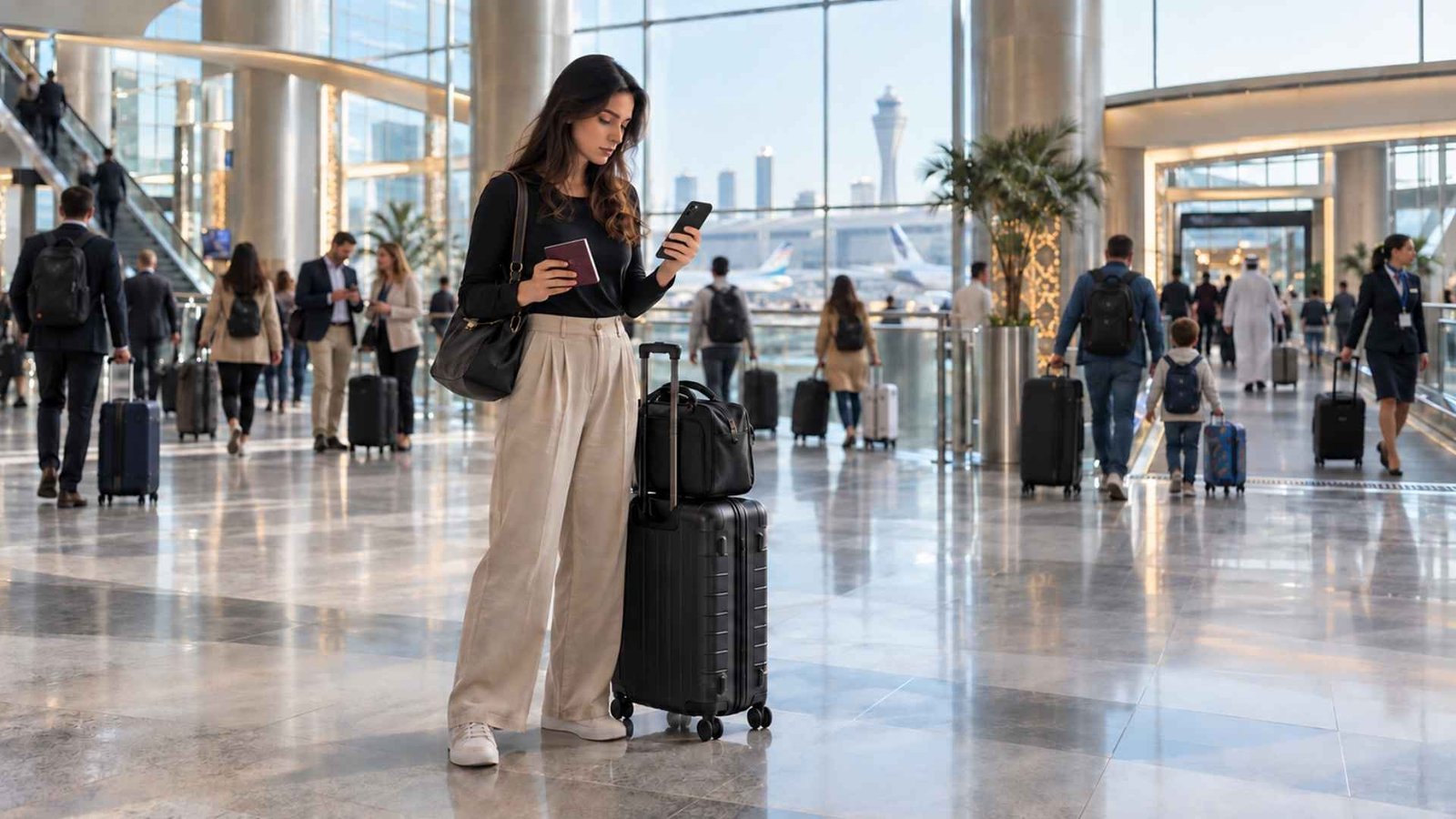
A Dubai Airport self-transfer can make a complicated or expensive journey more affordable, but it carries considerably more risk than a normal connecting flight. With separate tickets, you may have to enter the UAE, collect your baggage, change terminals, check in again and reach the next gate without assistance from your first airline.
Dubai International Airport is efficient but very large, and Terminal 2 is physically separate from the main Terminal 1 and Terminal 3 complex. This guide explains how self-transfers work at DXB in 2026, how much time to allow and when booking separate flights may not be worth the risk.
Quick Answer: Dubai Airport Self-Transfer at a Glance
A self-transfer means your flights are not protected as one continuous journey. If the first flight is delayed and you miss the second one, the onward airline may treat you as a no-show and require you to buy another ticket.
With checked baggage, the usual Dubai Airport self-transfer process is:
Arrival → Immigration → Baggage Reclaim → Customs → Terminal Transfer if Required → Check-in and Bag Drop → Departure Immigration and Security → Gate
| Self-Transfer Question | What to Know |
|---|---|
| Are separate tickets protected? | Usually not |
| Must you collect checked baggage? | Usually, unless through-checking is explicitly confirmed |
| May you need to enter the UAE? | Yes, especially when collecting baggage or transferring landside |
| Is carry-on only easier? | Yes, but it does not guarantee an airside transfer |
| Is three hours enough? | Not as a general self-transfer recommendation |
| Safer same-terminal connection | At least 4 hours with carry-on only |
| Connection involving Terminal 2 | At least 6 hours |
| DXB to DWC connection | Prefer 8+ hours or an overnight stay |
There is no universally safe connection time. Your real margin depends on arrival delays, immigration queues, baggage delivery, terminal transport and the check-in and boarding deadlines of your second airline.
1. What Is a Self-Transfer at Dubai Airport?
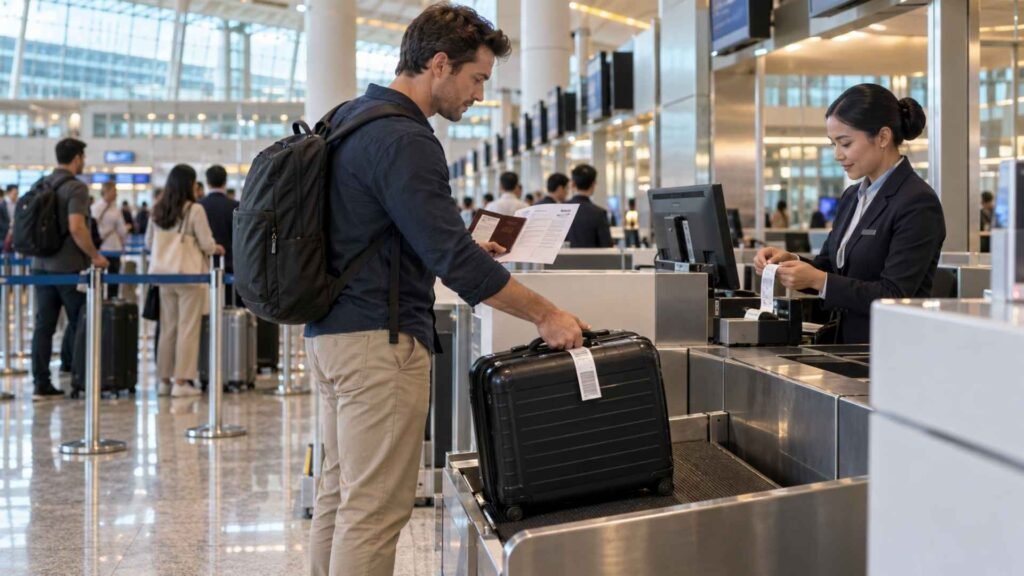
A self-transfer is a connection you arrange and manage yourself rather than one protected by a single through-ticket.
It commonly occurs when:
- You buy the two flights separately.
- The flights have different booking references.
- An online travel agency combines unrelated airlines.
- Your baggage is checked only as far as Dubai.
- The second airline does not recognise the first flight as part of the same journey.
Two flights appearing together in the same confirmation email does not necessarily mean they form a protected connection. Some booking platforms combine separate tickets and describe the result as a “self-transfer”, “virtual interline” or “travel hack” itinerary.
The most important questions to ask are:
- Are the flights issued as one protected itinerary?
- Will my checked baggage be tagged to the final destination?
- Can I obtain my second boarding pass before reaching Dubai?
- Who will rebook me if the first flight is delayed?
A booking platform may offer its own missed-connection guarantee, but this is not the same as airline protection. Check whether the guarantee covers replacement flights, hotels, meals and terminal transport—and whether you must contact the platform before making alternative arrangements.
Self-Transfer vs a Protected Connection
| Feature | Protected Connection | Self-Transfer |
|---|---|---|
| Booking | Usually one continuous itinerary | Usually separate tickets |
| Checked baggage | Normally transferred automatically | Often collected and rechecked |
| Missed flight | Airline normally provides assistance | Traveller may need a new ticket |
| UAE entry | Often unnecessary when remaining airside | May be required |
| Connection time | Accepted by the ticketing airline | Chosen at the traveller’s risk |
If your flights are protected and your baggage is checked through, our Dubai Airport Transit guide is more relevant. This article focuses on genuinely separate or independently managed connections.
Do You Have to Enter the UAE?
You may need to enter the UAE during a Dubai Airport self-transfer even if you only plan to remain in Dubai for a few hours.
Entering the UAE is normally necessary when you must:
- Collect checked baggage.
- Pass through customs.
- Visit a landside check-in counter.
- Change terminals outside the secure area.
- Transfer between DXB and DWC airports.
You may be able to remain airside if you have cabin baggage only, already hold your next boarding pass and can use an authorised airside connection route. However, carry-on-only travel does not automatically guarantee this. Your airline may still require an in-person passport or visa check at a landside counter.
Check the UAE entry rules applying to your nationality before booking, rather than assuming an airside transfer will be available after you land.
2. How to Complete a Dubai Airport Self-Transfer
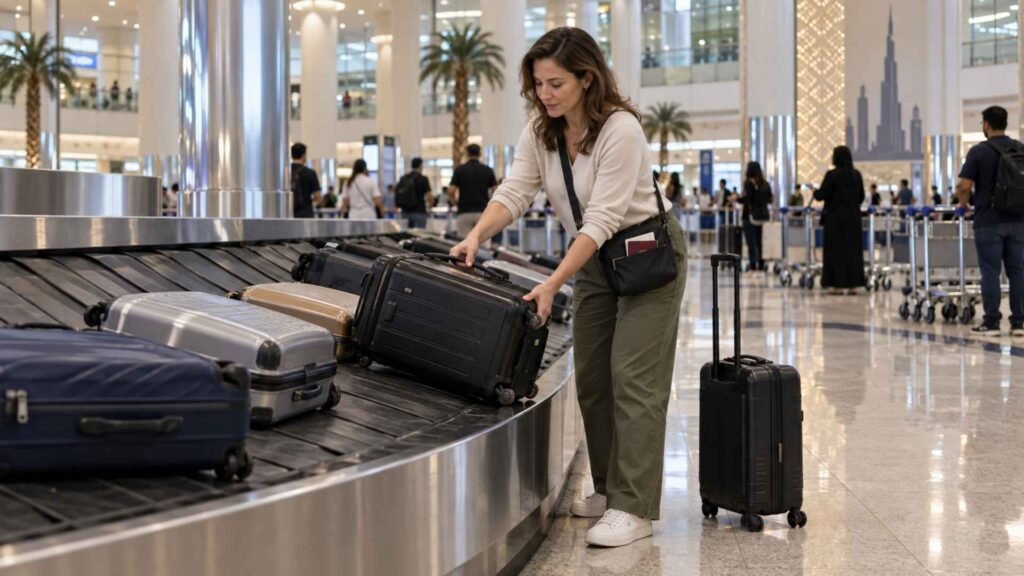
The standard process depends on whether your baggage is checked through and whether the onward airline can accept you airside.
Self-Transfer With Checked Baggage
If your suitcase is tagged only to DXB, follow these steps:
- Follow signs for Arrivals, Passport Control or Baggage Reclaim.
- Clear UAE immigration using a Smart Gate if eligible or a staffed counter.
- Check the baggage screens and collect your suitcase.
- Pass through customs.
- Travel to the correct departure terminal if necessary.
- Check in with the second airline and recheck your baggage.
- Complete departure passport control and security.
- Continue to the gate before boarding closes.
Immigration, baggage reclaim and customs are covered more fully in our Dubai Airport Arrival guide. For a self-transfer, the important point is that completing Arrivals is only the first half of the connection.
Reaching the second terminal does not mean you are safely checked in. You may still need to find the airline desk, complete document checks, drop your bag and travel a considerable distance to the gate.
What Happens to Checked Baggage?
Unless an airline explicitly confirms that your baggage is tagged to the final destination, plan to collect and recheck it in Dubai.
Look at the baggage tag issued at your first airport. If it shows DXB rather than the code for your final destination, your suitcase is scheduled to come out at Dubai.
Even when the check-in agent says the bag will be transferred, confirm the final airport code printed on the tag. Keep the baggage receipt until the entire journey is complete.
Through-checking can sometimes be arranged between partner airlines or separate flights operated by the same airline. However, an interline agreement does not mean every fare, route or separate booking is eligible.
Is Carry-On Only Easier?
Yes. Travelling with cabin baggage removes the time required for baggage delivery and bag drop.
The easiest self-transfer normally involves:
- Flights using the same terminal.
- A boarding pass obtained online.
- No required landside document check.
- An authorised airside connection route.
- Cabin baggage that meets both airlines’ limits.
Carry-on only does not protect your second ticket. If the first flight is delayed, you can still lose the onward journey.
Also compare the cabin-baggage rules of both airlines. A suitcase accepted in the cabin by the first carrier may be too large or heavy for the second, forcing you to check it unexpectedly.
3. Changing Terminals During a Dubai Self-Transfer
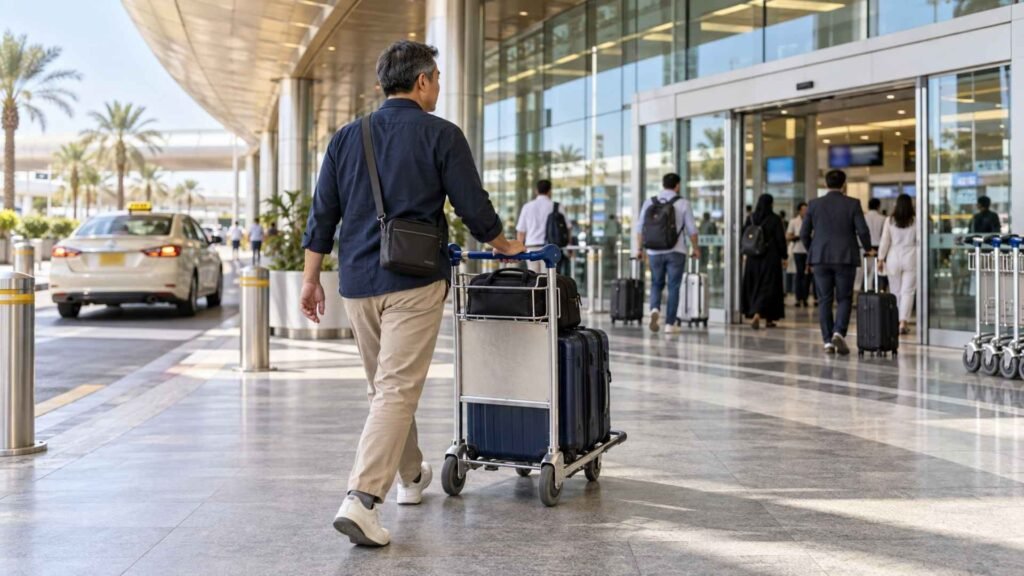
DXB has three passenger terminals, but they do not function as one continuous public building. Gate letters and concourses can matter as much as terminal numbers.
For a broader explanation of the airport layout, see our Dubai International Airport guide.
Terminal 1 and Terminal 3
Eligible passengers on protected connections may be directed through airside transfer routes between Terminal 1 and Terminal 3.
A passenger completing a landside self-transfer must clear immigration and customs, enter the public area and continue to the correct departure terminal. Allow time to locate the airline’s check-in area and repeat departure formalities.
Do not assume you can use every airside bus or connection channel simply because both flights depart from DXB. Access depends on the airlines, baggage arrangement and onward boarding documents.
Connections Involving Terminal 2
Terminal 2 is physically separate from the main Terminal 1 and Terminal 3 complex. This makes a separate-ticket connection involving Terminal 2 more complicated.
Airside buses may be available for eligible airline-managed connections. They should not be treated as a universal shuttle for unrelated tickets.
If you must collect baggage or check in landside, clear immigration and customs before travelling by road to the next terminal. The total transfer time includes:
- Leaving the arrivals area.
- Waiting for transport.
- Possible road traffic.
- Unloading baggage.
- Entering the next terminal.
- Finding the correct check-in zone.
flydubai mainly uses Terminal 2, but selected flights operate from Terminal 3. Always use the terminal shown on your current booking confirmation or boarding pass rather than relying on a general airline list.
DXB to DWC Is an Airport Change
Dubai International Airport uses the code DXB. Al Maktoum International Airport uses DWC. They are separate airports in different parts of Dubai.
A DXB–DWC itinerary normally requires you to:
- Enter the UAE.
- Collect checked baggage.
- Clear customs.
- Travel across Dubai by road.
- Check in again at the second airport.
- Complete departure formalities.
This is not a normal terminal change. Road traffic makes the journey unpredictable, so a connection of at least eight hours—or preferably an overnight stay—is more sensible.
Always check the three-letter airport codes. The word “Dubai” appearing on both tickets does not mean both flights use the same airport.
4. How Much Time Do You Need for a Dubai Airport Self-Transfer?
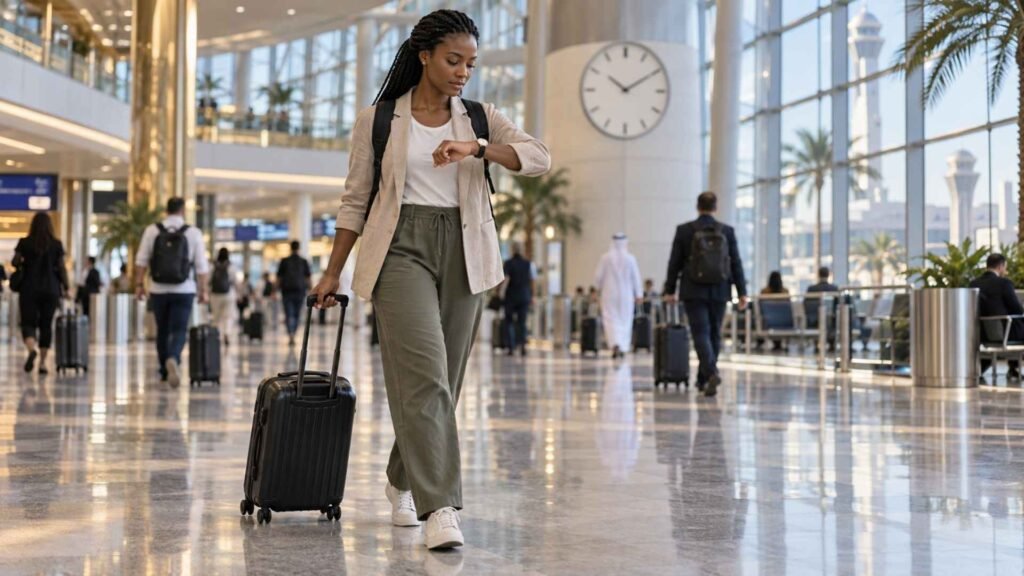
There is no official buffer that guarantees a successful separate-ticket connection. The following are conservative ClaraTravels planning ranges rather than airport minimum connection times.
| Self-Transfer Scenario | Safer Planning Window |
|---|---|
| Same terminal, carry-on only and boarding pass ready | At least 4 hours |
| Same terminal with checked baggage | Around 5 hours |
| Terminal 1 ↔ Terminal 3 with checked baggage | Around 5–6 hours |
| Any separate-ticket connection involving Terminal 2 | At least 6 hours |
| Peak periods, family travel or assistance needs | Around 6–8 hours |
| DXB ↔ DWC airport change | Prefer 8+ hours or overnight |
Add more time when:
- The first flight frequently arrives late.
- The second airline closes check-in early.
- The onward flight is the last service that day.
- A replacement ticket would be expensive.
- You are travelling with children or several bags.
- The arrival or departure terminal remains uncertain.
Is Three Hours Enough?
Three hours is too short to recommend for a normal Dubai Airport self-transfer.
It could work in a favourable carry-on-only situation where the first flight is on time, the boarding pass is ready and the passenger can remain airside. It provides little protection against delays or an unexpected document check.
With checked baggage, immigration, customs or a terminal change, three hours creates a substantial risk of missing the second flight.
Why the Published Layover Is Not Fully Usable
Scheduled arrival and departure times do not show how much time you actually have.
Your connection can be shortened by taxiing, a remote aircraft stand, walking, immigration, baggage delivery, customs, terminal transport, check-in, security and travel to the gate.
Boarding may also close 45–60 minutes before departure. A four-hour layover can therefore provide closer to three hours of practical transfer time before any arrival delay is counted.
💡 Clara’s Tip:
Work backwards from the second airline’s check-in, bag-drop and boarding deadlines. Departure time is the final limit, not the time you should aim to reach the terminal.
5. Emirates and flydubai Self-Transfer Rules
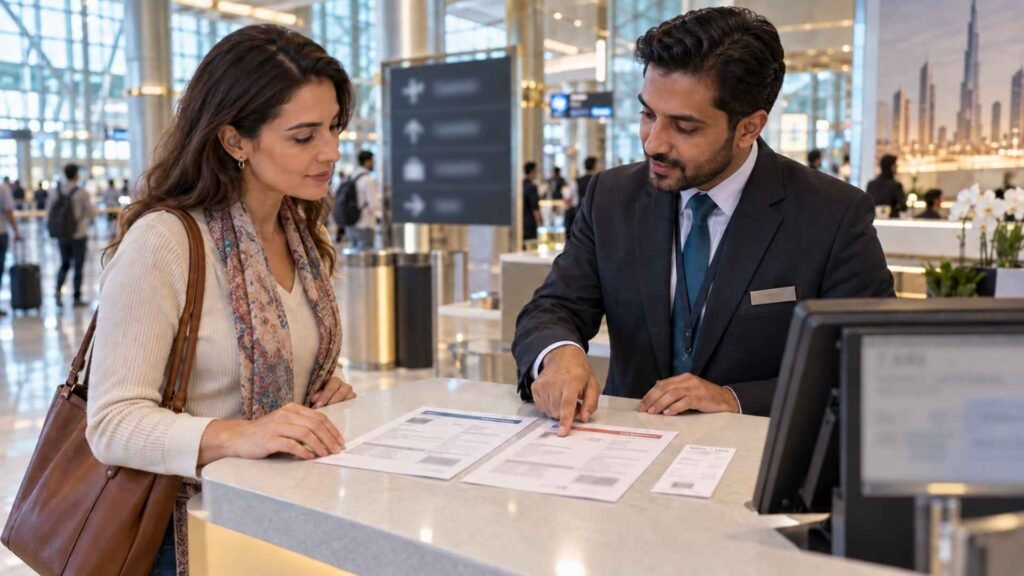
Emirates and flydubai work closely together, but not every combination involving the two airlines is a protected journey. The baggage arrangement depends on how the flights were booked, which airlines operate them and whether through-checking is confirmed at your first departure airport.
| Separate-Ticket Scenario | Possible Baggage Arrangement | What You Should Do |
|---|---|---|
| Emirates baggage transfer service | Paid transfer may be available | Request it at the Connections desk; a minimum three-hour connection is required |
| Two separate flydubai bookings | Free through-tagging may be available | Show the onward booking and travel documents at the first check-in desk |
| flydubai and an eligible interline partner | Through-tagging may be available for a fee within 24 hours | Check the current partner rules before departure |
| Unconfirmed airline combination | Baggage transfer should not be assumed | Plan to enter the UAE, collect your bag and check it in again |
Emirates Baggage Transfer Service
Emirates offers an eligible paid baggage transfer service for separately booked flights at DXB. Passengers follow Connections, proceed to the onward terminal and request the service at the Connections desk.
According to Emirates’ current published terms:
- The connection must be at least three hours.
- The service costs USD 90 per person.
- If more than one passenger is included under the same booking reference, Emirates charges an additional USD 20 for each other passenger.
Emirates then arranges for the baggage to be collected, retagged and transferred to the onward flight.
The three-hour requirement is the service’s technical minimum. It is not a general guarantee that every three-hour self-transfer is safe. The onward airline must still be able to check you in through the transfer process.
Prices, eligibility and procedures can change, so check the current Emirates terminal transfer guidance before travelling.
Separate flydubai Bookings
flydubai states that passengers connecting between two separately booked flydubai flights can show their onward ticket and travel documents at the first check-in desk. Their baggage may then be tagged through to the final destination without an additional transfer charge.
Separate-ticket connections between flydubai and certain interline partners may also qualify for through-tagging within 24 hours for a handling fee.
If through-tagging is not available or confirmed, you must clear immigration, collect your baggage, pass through customs and check in again. Partner lists and baggage arrangements can change, so verify the current flydubai interline baggage rules for your exact itinerary.
6. When Is a Dubai Self-Transfer Worth the Risk?
A Dubai Airport self-transfer is more reasonable when several risk-reducing conditions appear together:
- You have cabin baggage only.
- Both flights use the same terminal.
- You already have the second boarding pass.
- The airlines confirm that you can remain airside.
- You are eligible to enter the UAE if required.
- The connection is comfortably longer than the minimum you calculated.
- Alternative onward flights operate later that day.
- The second ticket is flexible or inexpensive to replace.
- The saving is substantial compared with a protected through-ticket.
A long daytime connection is generally safer than a tight overnight one. If disruption occurs, you are more likely to have access to airline staff, transport and alternative flights during the day.
Avoid or reconsider the itinerary when it involves checked baggage without confirmed through-checking, a short connection involving Terminal 2, a change between DXB and DWC or an expensive onward flight with no practical alternative.
If you miss the second flight, the onward airline may treat you as a no-show. You could have to pay for a replacement ticket, hotel, meals and local transport. Contact the second airline as soon as you know the connection is at risk, but do not assume that free rebooking will be available.
Can Travel Insurance Protect a Self-Transfer?
Travel insurance may cover a missed connection, but separate tickets are not automatically included in every policy. Check whether the policy covers independently booked flights, airline delays and the minimum connection time you selected.
Some insurers require written evidence of the first flight’s delay, while others exclude connections that do not meet their stated minimum buffer. A booking platform’s self-transfer guarantee may also have separate notification and rebooking rules.
Contact the insurer or booking platform before purchasing a replacement flight whenever the terms require prior approval. Keep your booking confirmations, boarding passes, delay notices and receipts in case you need to submit a claim.
Before booking, compare the saving with the worst realistic outcome. A protected ticket costing slightly more may provide better value than risking an expensive replacement flight and an unplanned overnight stay.
Frequently Asked Questions About Dubai Airport Self-Transfer
Can I self-transfer at Dubai Airport?
Yes. However, you may need to enter the UAE, collect baggage, change terminals, check in again and complete departure formalities.
Do I need a UAE visa for a self-transfer at DXB?
You may need permission to enter the UAE if you must collect baggage, visit a landside check-in counter or transfer outside the secure area.
Do I collect my baggage on separate tickets?
Usually, yes. Only rely on through-checking when the airline explicitly confirms it and the baggage tag shows your final destination.
Can I remain airside with cabin baggage only?
Possibly, if you already have the onward boarding pass, no landside document check is required and an authorised airside route is available.
What happens if I miss the second flight?
The second airline may treat you as a no-show. You may have to purchase another ticket unless a platform guarantee, insurance policy or flexible fare provides protection.
How long should I allow for a Dubai self-transfer?
Allow at least four hours for a simple same-terminal, carry-on-only connection. Around five to six hours is safer with checked baggage or a terminal change, while DXB–DWC should have at least eight hours or an overnight stay.
Final Thoughts
A Dubai Airport self-transfer can work when your baggage arrangement, UAE entry eligibility, terminal route and backup options are clear. The lowest-risk version is a long same-terminal connection with cabin baggage and an onward boarding pass.
Do not judge the itinerary only by the scheduled gap between flights. Calculate every arrival and departure stage, allow for disruption and compare the saving with the potential cost of missing an unprotected flight.