
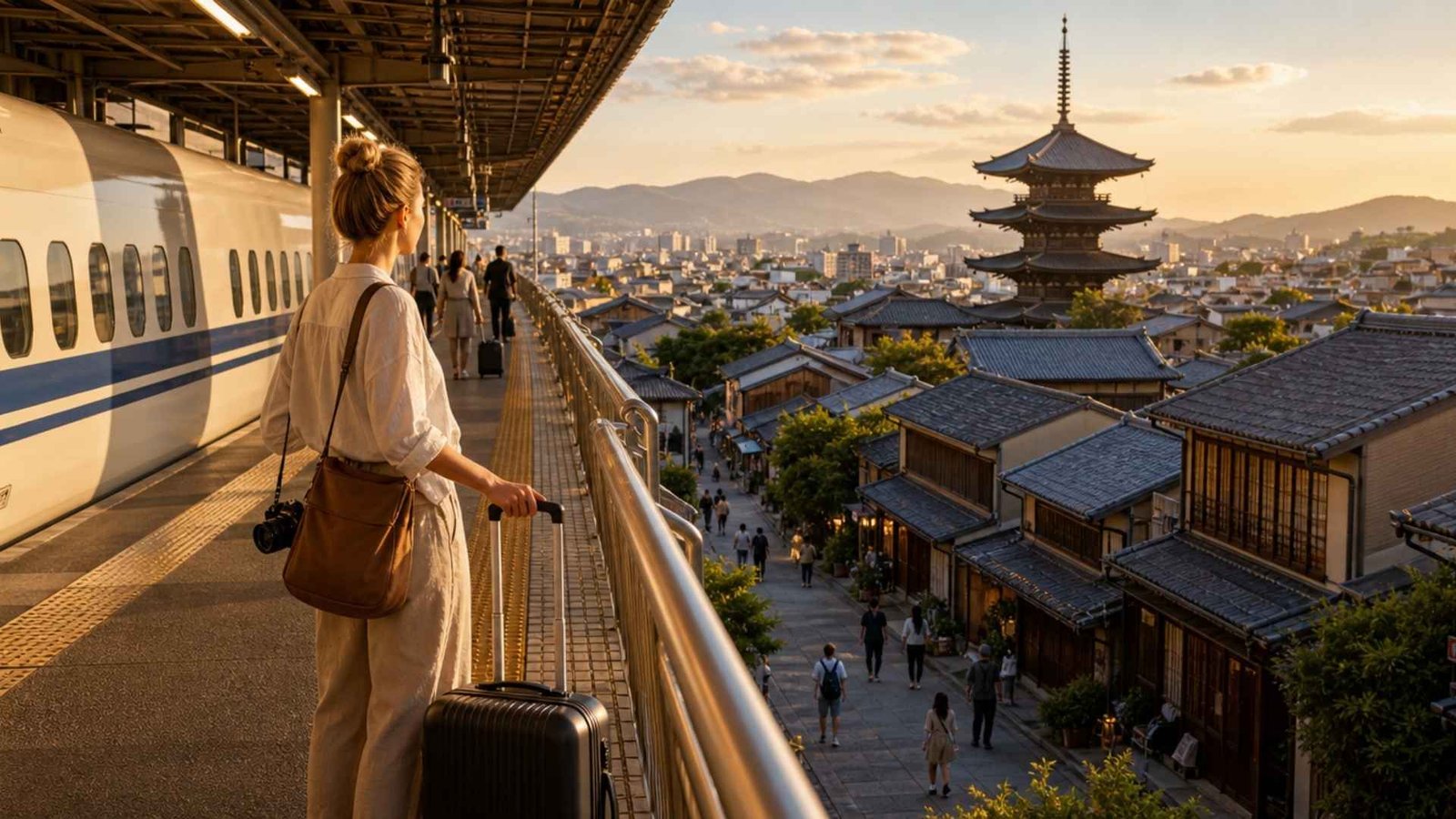
Ten days in Japan is enough to experience Tokyo, Kyoto and Osaka without turning your first trip into a race between train stations. The key is choosing a route that limits hotel changes while still giving you time for Japan’s modern cities, historic districts, temples and food culture.
This Japan itinerary for 10 days follows Tokyo → Kyoto → Osaka, with Nara as a day trip. It is designed for first-time visitors who want the classic highlights while keeping the pace realistic.
Japan Itinerary for 10 Days at a Glance
For most first-time visitors, the best Japan itinerary for 10 days is four nights in Tokyo, three nights in Kyoto and two nights in Osaka, with a day trip to Nara.
If possible, fly into Tokyo and out of Kansai International Airport near Osaka. This creates a simple east-to-west route and avoids returning to Tokyo at the end of your trip.
| Day | Overnight | Main Plan |
|---|---|---|
| Day 1 | Tokyo | Arrival and an easy first evening |
| Day 2 | Tokyo | Asakusa, Ueno and eastern Tokyo |
| Day 3 | Tokyo | Meiji Shrine, Harajuku, Shibuya and Shinjuku |
| Day 4 | Tokyo | Tsukiji, Ginza and a flexible afternoon |
| Day 5 | Kyoto | Shinkansen to Kyoto, Higashiyama and Gion |
| Day 6 | Kyoto | Fushimi Inari, Kiyomizu-dera and eastern Kyoto |
| Day 7 | Kyoto | Arashiyama and Kinkaku-ji |
| Day 8 | Osaka | Osaka Castle, Namba and Dotonbori |
| Day 9 | Osaka | Nara day trip |
| Day 10 | — | Final Osaka morning and departure |
This route assumes nine nights and ten calendar days in Japan. Your arrival and departure times will determine how much sightseeing is realistic on Days 1 and 10.
If you are still deciding how long to stay, our Japan Itinerary for First-Time Visitors compares different trip lengths and explains how the classic route can be expanded.
Is 10 Days Enough for Japan?
Yes. Ten days is enough for an excellent first trip to Japan, but not enough to see everything.
Tokyo, Kyoto and Osaka work particularly well together because each provides a different experience. Tokyo introduces contemporary Japan and enormous urban neighborhoods, Kyoto adds temples, shrines and traditional streets, while Osaka brings a more relaxed atmosphere and one of the country’s best-known food scenes.
Nara can then be visited as a day trip without adding another hotel change.
The biggest mistake is treating ten days as a compressed version of a three-week holiday. Every additional destination means another transfer, more luggage handling and less time experiencing the places you came to see.
For this Japan itinerary for 10 days, three hotel bases are enough.
Before Your 10-Day Japan Trip
A little preparation makes this route much easier once you arrive.
You do not need to reserve every meal or plan every hour, but flights, accommodation and high-demand timed attractions are worth arranging before departure.
Before traveling, check Japan’s current entry requirements and complete any arrival procedures that apply to your trip.
For transportation, you will mainly use local trains and subways in Tokyo and Osaka, a combination of rail, buses and walking in Kyoto, and the Shinkansen between Tokyo and Kyoto.
You do not need a rental car for this route.
Day 1: Arrive in Tokyo and Keep It Easy
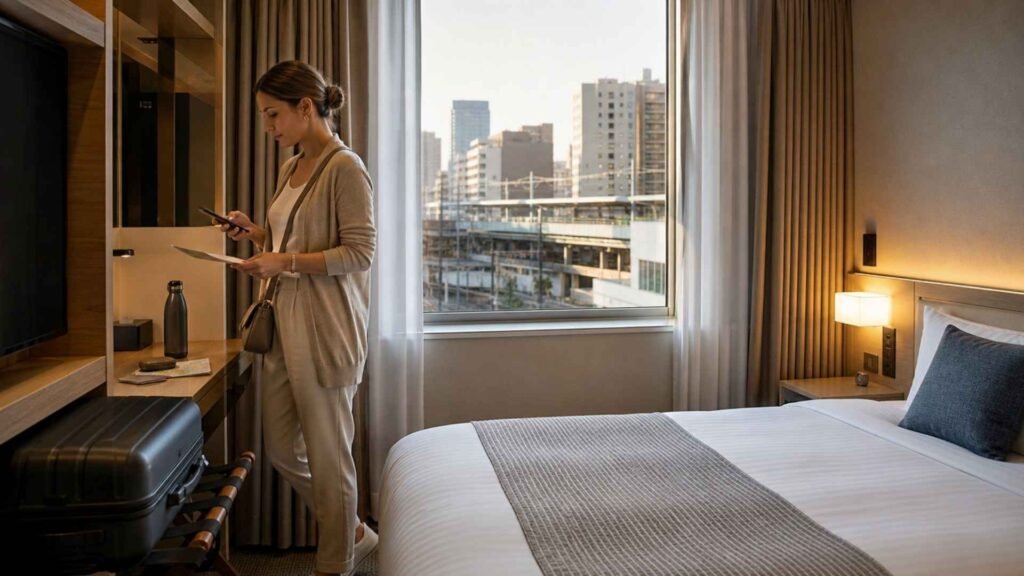
Your first day should be the easiest day of the trip.
After landing, you still need to complete arrival procedures, collect your luggage and travel from the airport to your hotel. Add jet lag and an unfamiliar transportation system, and an ambitious sightseeing schedule can quickly become exhausting.
Once you have checked in, stay close to your hotel.
Take a short walk through the neighborhood, find somewhere casual for your first dinner and learn where your nearest train or subway station is.
If you are staying in Shinjuku or Shibuya and still have energy, enjoy the neighborhood after dark. If not, get some rest.
There is no important attraction on this Japan itinerary for 10 days that needs to be squeezed into your arrival evening.
💡 Clara’s Tip
For a short trip, hotel location matters more than saving a small amount on the nightly rate. A hotel within easy walking distance of a useful station can save valuable time every morning and evening.
Day 2: Asakusa, Ueno and Eastern Tokyo
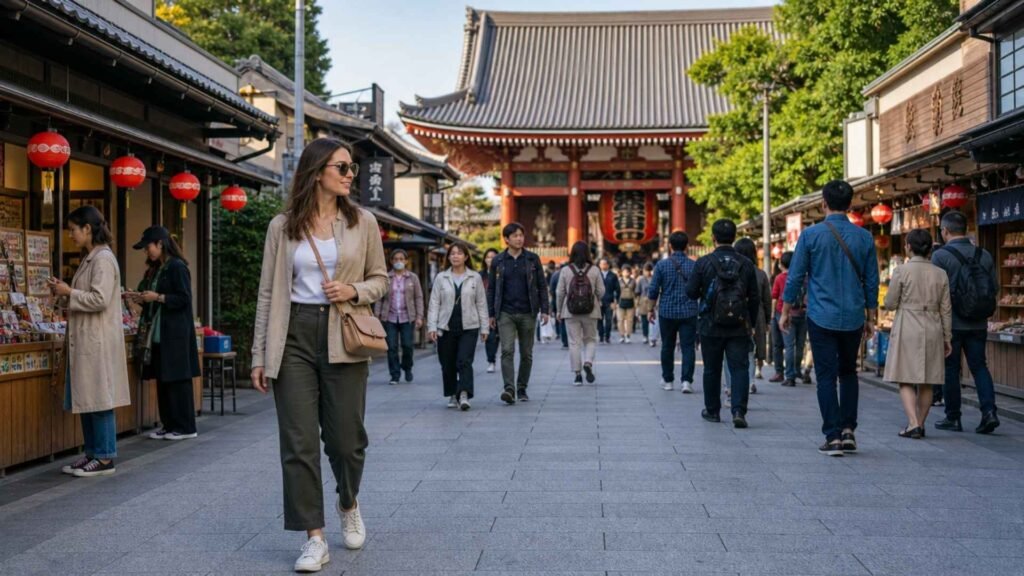
Your first full day begins with Tokyo’s more traditional side before moving into the city’s busier eastern neighborhoods.
Morning: Senso-ji and Asakusa
Start in Asakusa, ideally in the morning before the area reaches its busiest period.
Walk through Kaminarimon and continue along Nakamise toward Senso-ji, Tokyo’s oldest Buddhist temple.
Do not leave immediately after seeing the main temple complex. Explore some of the surrounding streets, where traditional shops and smaller restaurants create a very different atmosphere from the Tokyo you will experience tomorrow.
Late Morning and Lunch: Ueno
Continue to Ueno.
If museums interest you, choose one around Ueno Park rather than trying to visit several in a single day.
Otherwise, spend more time around Ameyoko, the lively shopping streets near Ueno Station, and have lunch in the area.
Afternoon: Akihabara or Tokyo Skytree
Choose one main afternoon destination.
Go to Akihabara if anime, manga, gaming, electronics or Japanese pop culture are priorities.
Choose the Tokyo Skytree area if you would rather have city views and a slower afternoon.
Both are possible in one day, but neither is compulsory. The itinerary works better when you choose according to your interests instead of collecting attractions.
Evening
Have dinner in eastern Tokyo or return toward your hotel.
Keeping tonight relatively easy will leave you with more energy for tomorrow’s longer route through western Tokyo.
Day 3: Meiji Shrine, Harajuku, Shibuya and Shinjuku
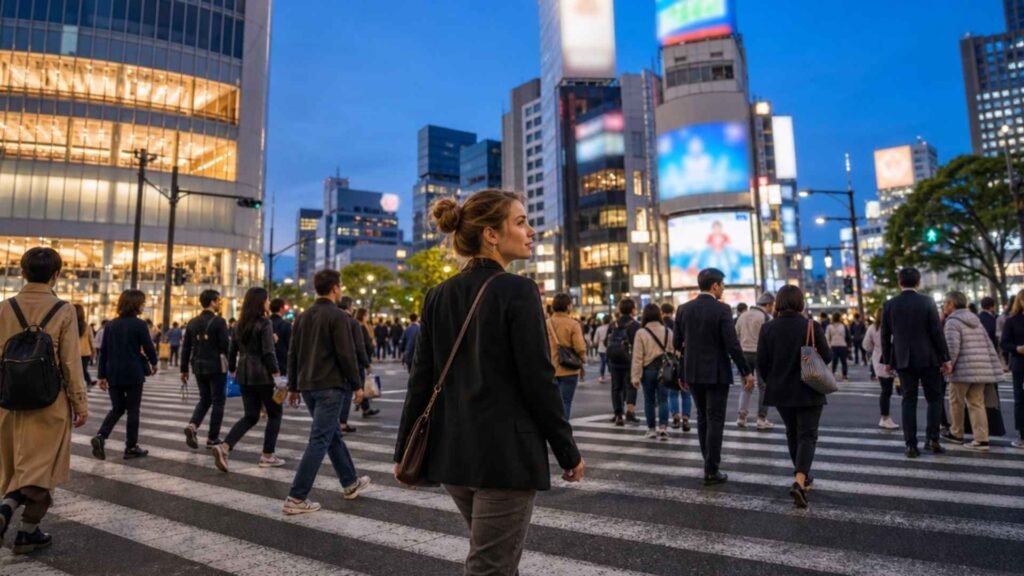
Day 3 shows you a completely different side of Tokyo.
The route moves naturally from the peaceful grounds of Meiji Shrine through Harajuku and Shibuya before finishing in Shinjuku after dark.
Morning: Meiji Shrine
Start at Meiji Shrine.
The forested approach is part of the experience, so allow time for the walk rather than treating the shrine as a quick stop on the way to Harajuku.
Arriving earlier also gives you a quieter start before the surrounding shopping districts become busier.
Late Morning: Harajuku and Omotesando
Continue into Harajuku.
Takeshita Street is the area’s best-known pedestrian street, but it is only one part of the neighborhood. If dense crowds and novelty shops are not your priority, continue toward the side streets and Omotesando.
Have lunch before heading to Shibuya.
Afternoon: Shibuya
Continue to Shibuya for the famous crossing, the Hachiko area, shopping and some time simply exploring the streets around the station.
If you want to visit a popular observation deck, reserve a timed entry in advance when possible rather than relying on last-minute availability.
Evening: Shinjuku
Finish the day in Shinjuku.
Explore the illuminated streets, have dinner and enjoy Tokyo after dark.
If the day has already been long, staying in Shibuya for dinner is perfectly reasonable. Shinjuku can be skipped rather than turning the evening into another race across the city.
Day 4: Tsukiji, Ginza and a Flexible Tokyo Afternoon
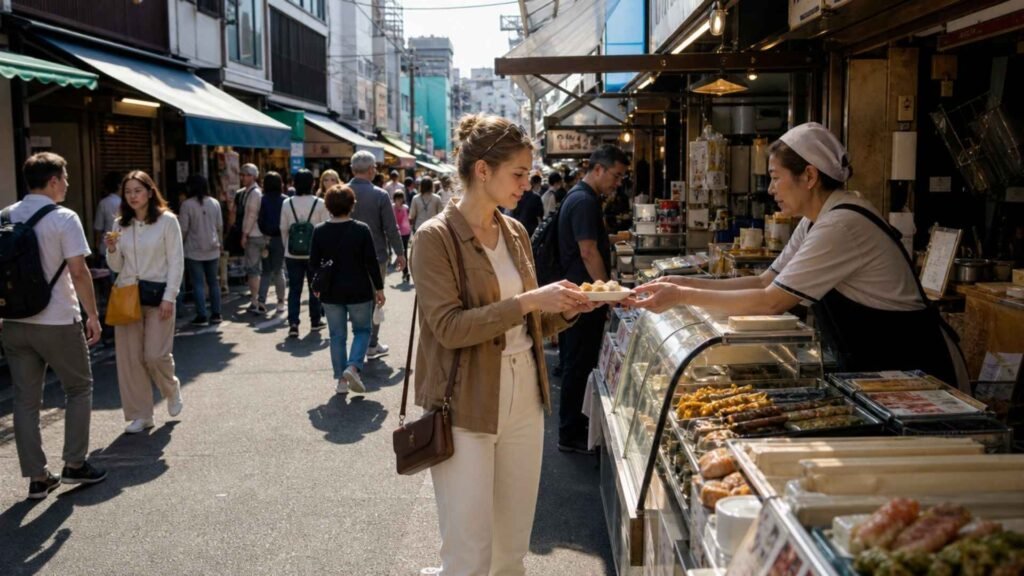
By Day 4, you will have a better sense of what you enjoy most about Tokyo.
That is why the final full Tokyo day in this Japan itinerary for 10 days deliberately leaves part of the afternoon flexible.
Morning: Tsukiji Outer Market
Begin around Tsukiji Outer Market.
The wholesale market moved to Toyosu, but Tsukiji remains a popular destination for seafood, snacks, kitchenware and casual food.
Come hungry and sample a few things that interest you rather than spending the entire morning queuing for one famous stall.
Late Morning: Ginza
Continue to nearby Ginza.
Explore the department stores, architecture, cafés and shops before having lunch.
Unless shopping is one of your main interests, you probably do not need the entire afternoon here.
Choose Your Afternoon
You now have three useful options.
Explore another neighborhood: Visit somewhere that did not fit into the previous days, such as Yanaka, Odaiba or Shimokitazawa.
Choose a museum or shopping: Use the afternoon for something connected to your personal interests rather than another predetermined tourist sight.
Slow down: Return toward your hotel, shop for anything you need and prepare for tomorrow’s journey to Kyoto.
What If Mount Fuji Is a Priority?
If seeing Mount Fuji is one of the main reasons for your trip, replace Day 4 with a dedicated Fuji or Hakone excursion.
Do not add the excursion on top of the existing schedule. Weather also affects mountain visibility, so check conditions and cancellation policies when planning.
Day 5: Take the Shinkansen from Tokyo to Kyoto
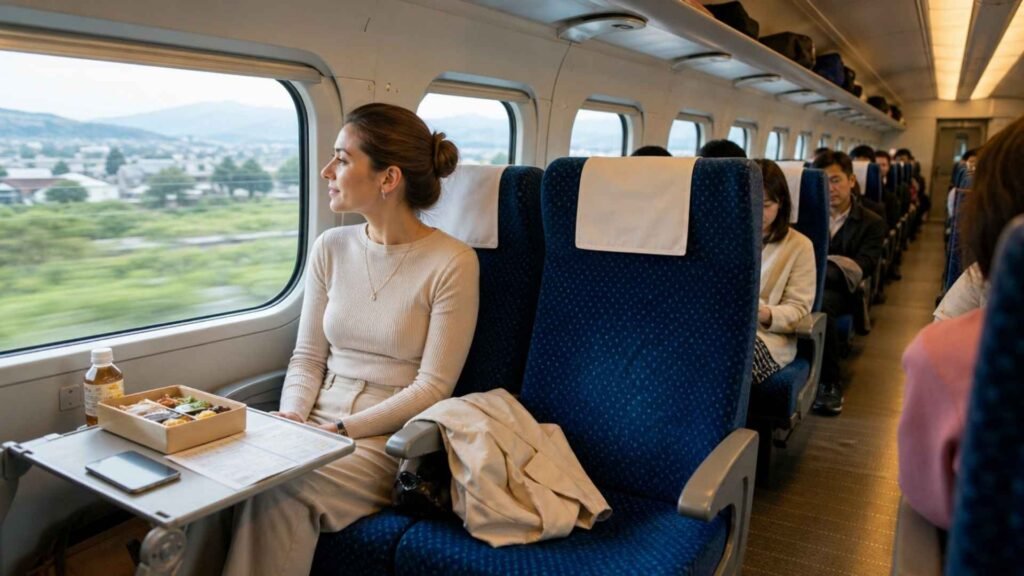
Today begins the second stage of your Japan itinerary for 10 days.
Take a morning Tokaido Shinkansen from Tokyo to Kyoto so that most of your afternoon remains available after arrival.
Morning: Tokyo to Kyoto
Check out and travel to your departure station with enough time to find the correct platform without rushing.
Buying breakfast or an ekiben before boarding can turn the journey itself into part of the experience.
A morning departure is preferable because it preserves most of your afternoon in Kyoto.
If you are traveling during a particularly busy holiday period or want a specific train and seat, reserving in advance provides more certainty.
Traveling With Oversized Luggage
Check the size of large suitcases before taking them onto the Tokaido Shinkansen.
JR Central currently requires passengers carrying baggage with combined dimensions of more than 160 cm and up to 250 cm to reserve a seat with an oversized baggage area. Oversized baggage brought aboard without the required reservation may incur a ¥1,000 fee. Check the latest requirements on the official JR Central oversized baggage page before traveling.
If you would rather avoid carrying a large suitcase through busy stations, luggage forwarding can be particularly useful between Tokyo and Kyoto.
Keep your passport, medication, valuables, electronics and anything you need before delivery in your personal bag.
Afternoon: Higashiyama
After arriving in Kyoto, leave your bags at the hotel and head toward Higashiyama.
Keep the first afternoon relaxed.
Walk through the traditional streets and become familiar with eastern Kyoto rather than attempting several major temples immediately after your journey.
Evening: Gion
Continue toward Gion in the late afternoon or early evening.
Explore the historic streets respectfully. Some lanes and properties are private, and photography or access restrictions should always be followed.
Have dinner nearby before returning to your hotel.
Day 6: Fushimi Inari, Kiyomizu-dera and Eastern Kyoto
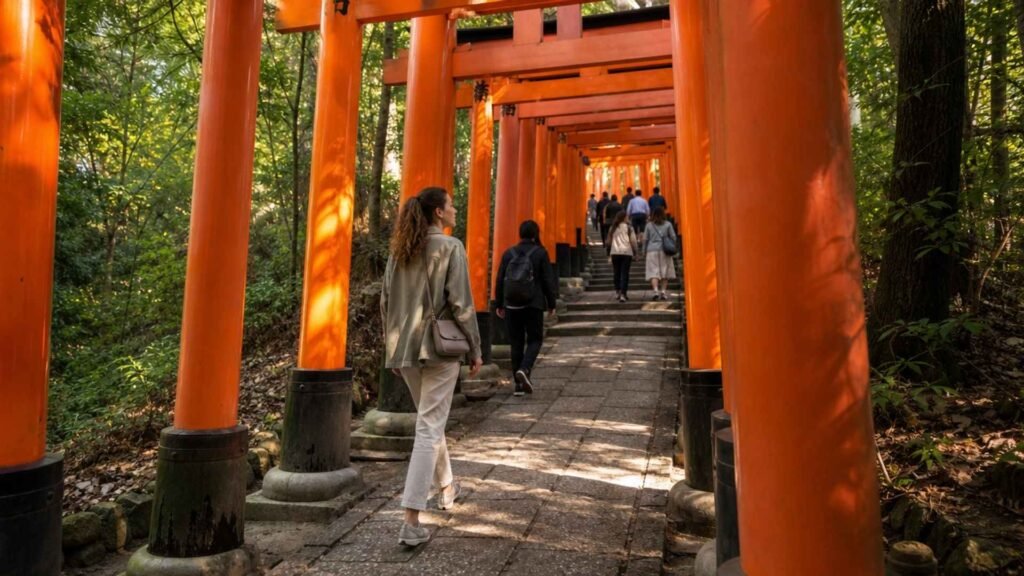
This is one of the busiest sightseeing days of the trip, so an early start makes a noticeable difference.
Early Morning: Fushimi Inari Taisha
Begin at Fushimi Inari Taisha, famous for the thousands of vermilion torii gates climbing Mount Inari.
You do not need to complete the entire mountain hike.
For many first-time visitors, walking beyond the busiest lower sections gives you the experience without consuming half the day.
Allow around two hours if you want to explore farther up the route.
Late Morning: Kiyomizu-dera
Continue toward Kiyomizu-dera.
After visiting the temple, walk through the historic streets around Sannenzaka and Ninenzaka.
Allow time to stop rather than treating the streets as a route between attractions.
Afternoon: Continue Through Higashiyama
Spend the afternoon moving gradually through eastern Kyoto.
Depending on your pace, you might include:
- Yasaka Shrine;
- Maruyama Park;
- smaller temples;
- traditional streets;
- shops;
- and cafés.
There is no need to visit every temple you pass.
Evening: Gion or Pontocho
Stay around Gion for dinner or continue toward Pontocho.
If you are tired, return to your hotel instead. Tomorrow begins early again.
💡 Clara’s Tip
Kyoto rewards geographic planning. Group nearby attractions together rather than crossing the city repeatedly just to complete a list of famous sights.
Day 7: Arashiyama and Kinkaku-ji
Your second full Kyoto day concentrates on western and northwestern Kyoto.
Early Morning: Arashiyama
Travel to Arashiyama early.
The bamboo grove is famous but relatively compact, so do not build the entire morning around it.
After walking through the grove, explore more of the district. Depending on your interests, this can include Tenryu-ji, Togetsukyo Bridge, riverside walks, gardens and quieter streets away from the main tourist route.
Allow roughly half a day for Arashiyama.
Afternoon: Kinkaku-ji
After lunch, continue to Kinkaku-ji, the Golden Pavilion.
The visit itself does not require an entire afternoon, but transportation around Kyoto takes time. Afterward, return toward central Kyoto rather than trying to add another distant cluster of temples.
Final Evening in Kyoto
Leave the evening unstructured.
Return to Gion, explore Pontocho, enjoy a longer dinner or simply rest.
Pack before bed so tomorrow’s transfer to Osaka is easy.
Day 8: Travel from Kyoto to Osaka
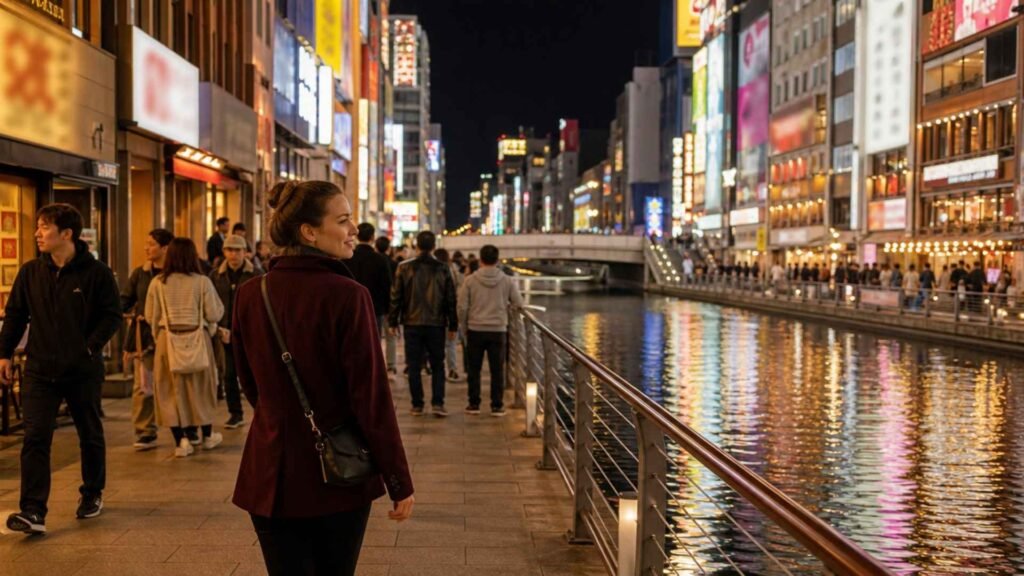
Kyoto and Osaka are close enough that changing hotels does not need to consume the day.
Have breakfast, check out and travel to Osaka in the morning.
Choose your train according to your hotel location rather than assuming one station is best for everyone.
Late Morning: Osaka Castle
After leaving your luggage at the hotel, head toward Osaka Castle.
Walk through the park and decide whether the museum interests you.
If you have already spent several days focused on history and temples in Kyoto, seeing the castle grounds may be enough.
Afternoon: Namba and Central Osaka
Continue toward central Osaka.
Spend the afternoon around Namba, Shinsaibashi or Amerikamura, depending on your interests.
There is no need to cover every neighborhood.
Evening: Dotonbori
Save Dotonbori for the evening.
The illuminated signs, canal and restaurant streets are at their most atmospheric after dark.
This is also a good opportunity to explore Osaka’s casual food culture. Look for dishes such as takoyaki, okonomiyaki and kushikatsu, but do not assume the restaurant with the longest social-media queue is necessarily your best option.
Day 9: Take a Day Trip to Nara
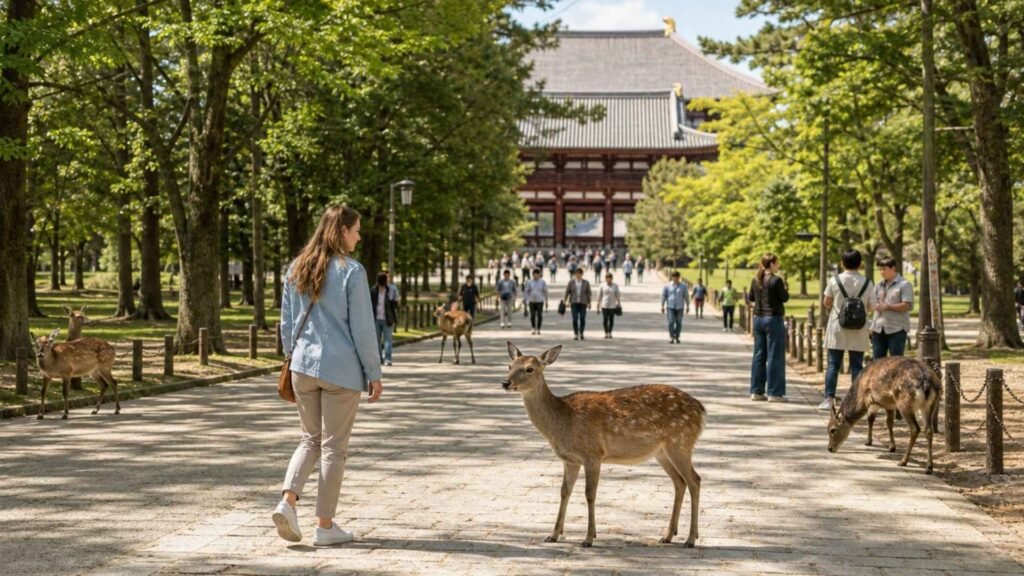
Nara is an excellent day trip for this route because it adds another side of Japanese history without requiring another hotel.
The city is easily reached from Osaka, and Kintetsu Nara Station is particularly convenient for the main park area. Check current access information and destination guidance in the official Japan National Tourism Organization Nara Park guide.
Morning: Nara Park
Travel to Nara in the morning and make your way toward Nara Park.
The park is famous for its free-roaming deer, but remember that they are animals rather than props for photographs.
Follow local guidance when feeding them and keep maps, paper and food secured.
Late Morning: Todai-ji
Continue to Todai-ji, home to the Great Buddha.
The temple is one of the main reasons Nara deserves a place on this Japan itinerary for 10 days, so give the complex enough time rather than rushing through on the way to another attraction.
Afternoon: Kasuga Taisha and Central Nara
After Todai-ji, continue through the park toward Kasuga Taisha or spend the afternoon exploring more of central Nara.
There is no need to fill every hour. Nara works particularly well as a slower day after several busy days in Tokyo and Kyoto.
Evening: Return to Osaka
Return to Osaka for your final evening.
Have dinner somewhere you missed yesterday and pack before going to bed.
Check your airport route tonight so there are no surprises tomorrow morning.
Day 10: Final Morning in Osaka and Departure
Your final day depends on your flight time.
If you have an early departure, go directly to the airport.
For an afternoon or evening flight, leave your luggage at the hotel after checkout and keep your final sightseeing close to central Osaka.
A relaxed breakfast, last-minute shopping or a short walk around Namba or Umeda is enough.
Avoid traveling far outside the city or booking an attraction with unpredictable queues before an international flight.
If You Are Flying From Kansai International Airport
Flying home from Kansai International Airport (KIX) makes this itinerary particularly efficient.
Osaka is directly connected with the airport by rail, but the best service depends on where you are staying.
Check your route the day before and follow your airline’s current recommendation for airport arrival time.
If Your Flight Departs From Tokyo
If you booked a round-trip flight from Tokyo, modify the final part of the itinerary.
For an early international departure on Day 10, returning to Tokyo on Day 9 and spending the final night there is generally more comfortable than creating a tight Osaka–Tokyo–airport connection on departure day.
In that case, shorten or remove the Nara day trip.
Where to Stay During This Japan Itinerary for 10 Days
With only nine nights, accommodation location has a noticeable effect on how efficiently you can explore each city.
Prioritize access to transportation and the neighborhoods you expect to visit most often.
Where to Stay in Tokyo
Shinjuku is useful for nightlife, restaurants and extensive transportation connections.
Shibuya works particularly well for travelers interested in shopping, restaurants and evening atmosphere.
Ueno is convenient for eastern Tokyo and can be practical for travelers looking for alternatives to the busiest western districts.
Tokyo Station and the surrounding area are strong choices if transportation convenience and an easy Shinkansen departure are priorities.
Where to Stay in Kyoto
Kyoto Station is particularly convenient for short stays, luggage and onward transportation.
Gion and Higashiyama offer more traditional atmosphere and good access to eastern Kyoto.
Downtown Kyoto provides a useful balance of restaurants, shopping and transportation.
Where to Stay in Osaka
For this itinerary, Namba is especially convenient for food, nightlife and Dotonbori.
Umeda is another strong choice if transportation connections are more important.
Getting Around During 10 Days in Japan
You can complete this entire Japan itinerary for 10 days using public transportation.
Tokyo and Osaka have extensive urban rail networks. Kyoto requires more walking and sometimes buses, while the Tokyo–Kyoto leg is best handled by Shinkansen.
Use an IC Card for Everyday Transportation
An IC card makes local transportation considerably easier.
Compatible cards can be used on many trains, subways and buses, and they are also accepted at many convenience stores, vending machines and other participating businesses.
Each fare-paying traveler needs their own card when passing through ticket gates.
An IC card is a payment method rather than an unlimited transportation pass.
Our Japan IC Card Guide explains Suica, PASMO, ICOCA, tourist cards, child cards and how to use them.
Take the Shinkansen Between Tokyo and Kyoto
The Tokaido Shinkansen is the only major long-distance train journey required by this route.
If you want to check current booking options and train information before traveling, use the official JR Central Shinkansen website.
Do You Need a Japan Rail Pass for This Route?
Probably not.
The Japan itinerary for 10 days outlined here contains only one major long-distance Shinkansen journey, followed by much shorter journeys around Kansai.
As of August 2026, an adult Ordinary Car nationwide Japan Rail Pass purchased through the official online service costs:
| Validity | Adult Ordinary Car |
|---|---|
| 7 days | ¥50,000 |
| 14 days | ¥80,000 |
| 21 days | ¥100,000 |
For overseas JR-designated agency purchases made on or after October 1, 2026, the corresponding adult Ordinary Car prices are ¥53,000, ¥84,000 and ¥105,000.
For this simple Tokyo → Kyoto → Osaka route, individual tickets will often make more sense than buying a nationwide pass.
Calculate the cost of your actual journeys before purchasing rather than assuming that a rail pass automatically saves money.
For a complete comparison of pass prices, eligibility and when the pass actually saves money, see our Japan Rail Pass Guide.
Always verify the latest prices and purchasing conditions on the official Japan Rail Pass website.
How Much Does a 10-Day Japan Trip Cost?
Your total cost depends mainly on accommodation, food, transportation and travel style.
Excluding international flights, these ranges provide a useful starting point:
| Travel Style | Approx. Daily Budget | Approx. 10-Day Budget |
|---|---|---|
| Budget | $80–120 | $800–1,200 |
| Mid-range | $150–250 | $1,500–2,500 |
| Luxury | $350+ | $3,500+ |
Budget travelers can reduce costs with hostels or simple business hotels, casual restaurants and fewer paid attractions.
A mid-range budget generally allows comfortable hotels, restaurant meals, Shinkansen travel and regular sightseeing.
Luxury costs rise quickly with premium hotels, fine dining, private experiences and upgraded transportation.
Season matters as well. Accommodation can become substantially more expensive during cherry blossom season, autumn foliage and major Japanese holidays.
For a detailed breakdown of accommodation, food, transportation, sightseeing and daily budgets, see our Japan Trip Cost Guide.
Best Time for a 10-Day Japan Itinerary
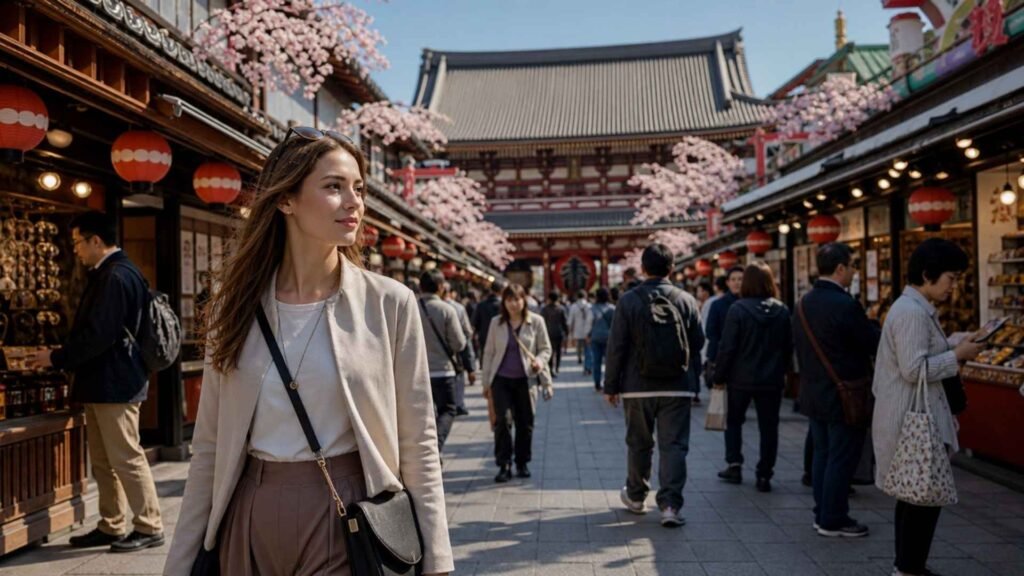
The route works year-round, but the experience changes significantly with the seasons.
Spring → cherry blossoms + mild weather
March through May generally brings comfortable sightseeing conditions.
For Tokyo, Kyoto and Osaka, the main cherry blossom window usually falls between the second half of March and early April, but flowering dates vary each year with weather conditions.
Expect higher accommodation demand and heavier crowds during peak blossom periods.
Summer → festivals + heat/humidity
June through August can be hot and humid, particularly in Kyoto and Osaka.
Start outdoor sightseeing earlier, stay hydrated and allow breaks during the hottest part of the day.
Autumn → comfortable weather + fall colors
October and November are excellent months for this route.
Temperatures are generally more comfortable for walking, while autumn foliage can make Kyoto particularly attractive.
Popular temples become much busier during peak foliage periods.
Winter → fewer crowds + quieter trip
December through February brings colder weather but can also mean fewer crowds outside major holiday periods.
Tokyo, Kyoto and Osaka remain easy to visit, although daylight hours are shorter.
What Should You Book in Advance?
You do not need to pre-book every part of this Japan itinerary for 10 days.
Prioritize reservations that would genuinely affect the trip if they became unavailable:
- international flights;
- Tokyo, Kyoto and Osaka accommodation;
- high-demand timed attractions;
- limited-entry experiences;
- special restaurants that require reservations;
- and transportation during Japan’s busiest holiday periods.
Leave ordinary meals, neighborhood walks and at least some afternoons flexible.
A little unplanned time gives you room for weather changes, fatigue and places you discover after arriving.
Common Mistakes to Avoid
A well-planned route can still become tiring if you underestimate how much time everyday travel takes.
Planning Too Much on Arrival Day
Airport procedures, transportation and jet lag make Day 1 unpredictable. Keep important reservations for later in the trip.
Changing Hotels Too Often
Every hotel change means packing, checkout, transportation, luggage storage and another check-in. Three hotel bases are enough for this route.
Treating Kyoto Like Tokyo
Kyoto’s major sights are more spread out. Group attractions by area instead of crossing the city repeatedly.
Carrying Too Much Luggage
Large suitcases make busy stations and hotel changes harder. Pack lighter or consider luggage forwarding for the Tokyo–Kyoto transfer.
Buying a Rail Pass Without Comparing Prices
A Shinkansen journey does not automatically make a nationwide Japan Rail Pass worthwhile. Calculate your actual journeys first.
Leaving No Flexible Time
Unexpected neighborhoods, restaurants and small discoveries are part of traveling in Japan. Not every hour needs an attraction attached to it.
How to Customize This Japan Itinerary for 10 Days
The Tokyo → Kyoto → Osaka structure works for most first-time visitors, but you can adjust the balance without rebuilding the entire trip.
If You Prefer Traditional Japan
Move one Tokyo day to Kyoto.
Three nights in Tokyo and four nights in Kyoto gives you more time for temples, gardens and traditional neighborhoods.
If You Are Traveling With Children
Reduce the number of attractions each day, prioritize hotels close to useful stations and schedule regular breaks.
Keeping the same three hotel bases also reduces the amount of packing and luggage handling.
If Hiroshima Is a Priority
Hiroshima can fit into ten days, but something else should be removed.
Do not simply add Hiroshima and Miyajima to the existing route. Either reduce your time in another city or choose a longer itinerary so the additional travel does not make the trip unnecessarily rushed.
Japan Itinerary for 10 Days FAQ
Is 10 days enough for a first trip to Japan?
Yes. Ten days gives first-time visitors enough time for Tokyo, Kyoto and Osaka plus one practical day trip such as Nara, provided you avoid adding too many distant destinations.
How should I divide 10 days between Tokyo, Kyoto and Osaka?
Four nights in Tokyo, three nights in Kyoto and two nights in Osaka creates a balanced first-time route, with departure on Day 10.
Is three full days in Tokyo enough?
Three full sightseeing days plus your arrival evening is enough for several major Tokyo neighborhoods. Tokyo could easily fill a much longer trip, but giving it more time would require reducing Kyoto or Osaka.
How many days do I need in Kyoto?
Three nights works well for a first visit. It provides two full sightseeing days plus part of your arrival day from Tokyo.
Is Osaka worth visiting on a 10-day Japan trip?
Yes. Osaka offers a different atmosphere from Tokyo and Kyoto, a strong food scene and convenient access to Nara. It is also useful if you fly home from Kansai International Airport.
Should I visit Nara from Kyoto or Osaka?
Nara is easily accessible from both cities. For this route, visiting from Osaka preserves your two full Kyoto sightseeing days and works naturally with the final part of the trip.
Can I include Mount Fuji in 10 days?
Yes. Replace the flexible fourth day in Tokyo with a Mount Fuji or Hakone excursion rather than adding another day to an already full schedule.
Should I include Hiroshima?
Only if Hiroshima is a major personal priority. Remove time from another destination or extend the trip rather than adding it on top of the existing route.
Do I need a Japan Rail Pass for 10 days in Japan?
Usually not. For this route, individual tickets will often cost less than a nationwide Japan Rail Pass.
Is it better to fly into Tokyo and out of Osaka?
For this route, yes, when flight prices and schedules are reasonable. It removes the need to return to Tokyo at the end of the trip.
Can I Follow This Japan Itinerary for 10 Days in Reverse?
Yes. Travelers arriving in Osaka and departing from Tokyo can follow Osaka → Kyoto → Tokyo without changing the basic structure.
Final Thoughts
A successful Japan itinerary for 10 days is about choosing the right places, not the largest number of places. Tokyo, Kyoto and Osaka, with a day trip to Nara, provide a varied first introduction while keeping long-distance travel and hotel changes manageable.
Use the route as a framework rather than a checklist, and leave enough flexibility to enjoy the Japan you discover along the way.