
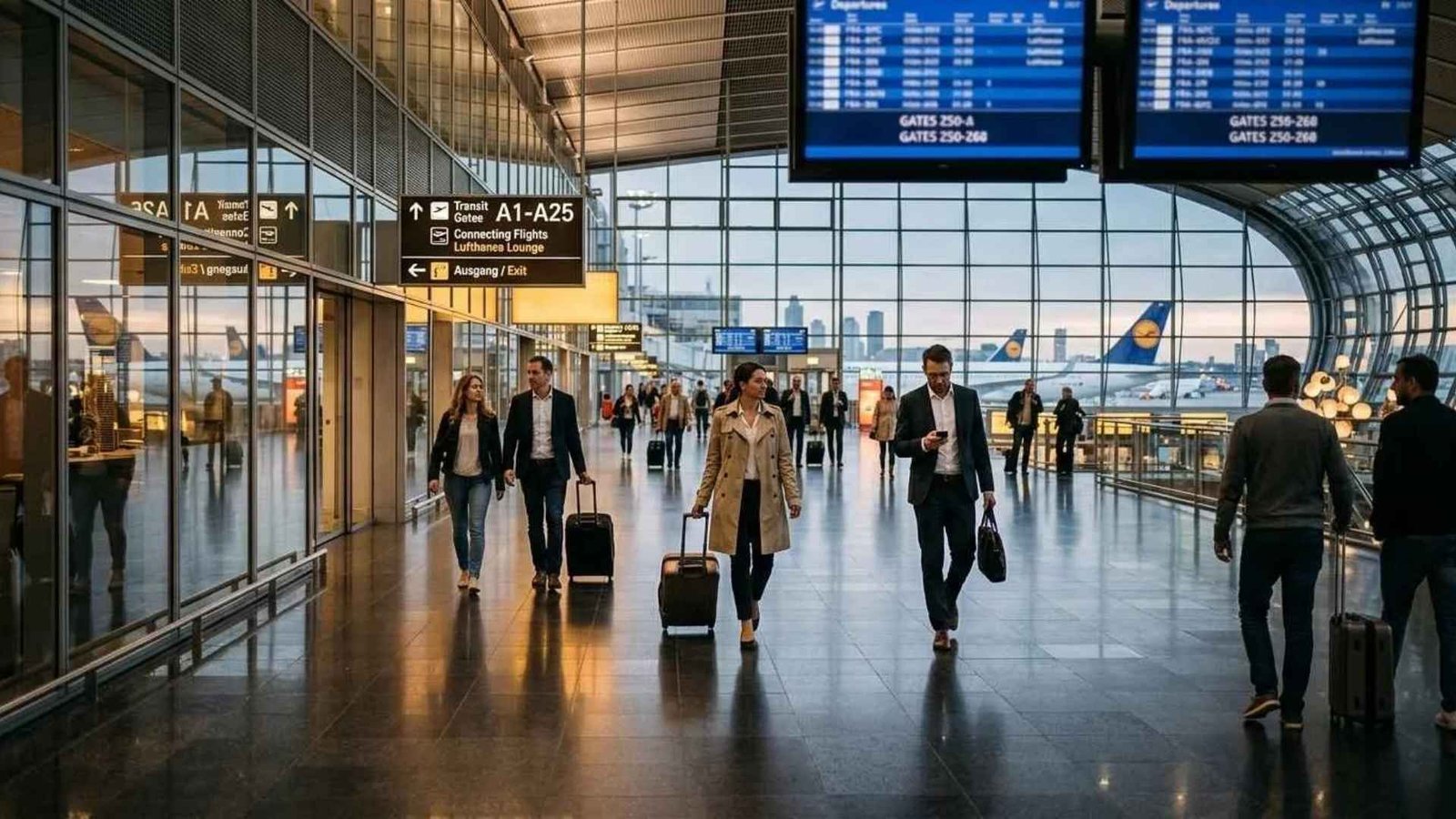
Frankfurt Airport is one of Europe’s busiest international transit hubs, connecting millions of travelers between continents every year.
For some passengers, transit at Frankfurt Airport feels smooth and efficient. For others, tight layovers, immigration queues, terminal changes, and unfamiliar Schengen procedures can quickly become stressful.
Understanding how Frankfurt Airport transit works before arrival can make international connections significantly easier. This guide explains the full transit process at Frankfurt Airport in 2026, including immigration, terminal transfers, self-transfer flights, connection times, and layover tips.
Frankfurt Airport Transit Quick Answer
Most Frankfurt Airport connections are manageable if travelers allow enough time and understand whether immigration or terminal changes are required.
Protected airline connections can sometimes work with layovers as short as 45–60 minutes, while self-transfer itineraries usually require much longer buffers. Transit between Schengen and non-Schengen flights may involve immigration, additional security screening, and long walking distances.
For many travelers, realistic timing is the most important part of a smooth Frankfurt Airport transit experience.
Why Frankfurt Airport Is One of Europe’s Most Important Transit Hubs
Frankfurt Airport handles millions of international passengers every year and serves as Lufthansa’s primary global hub, making it one of Europe’s most important connection points between Europe, North America, Asia, and the Middle East.
Because of its central location and extensive global network, Frankfurt Airport processes enormous numbers of international transfers, Schengen connections, and long-haul transit passengers every day.
Understanding Frankfurt Airport Terminals
Frankfurt Airport mainly operates through two major passenger terminals.
Terminal 1
Terminal 1 is the airport’s largest and busiest terminal.
It is mainly used by:
- Lufthansa
- Star Alliance airlines
- many long-haul international carriers
The terminal includes several concourse areas:
- A
- B
- C
- Z
For transit passengers, Concourse Z is especially important because it mainly handles non-Schengen international departures.
Depending on the route, some passengers may move between Schengen and non-Schengen areas during the same connection.
Terminal 2
Terminal 2 mainly handles:
- SkyTeam airlines
- Oneworld carriers
- additional international airlines
Transit between Terminal 1 and Terminal 2 is possible through the SkyLine train and airport shuttle buses. For most passengers, the SkyLine is usually the faster option. Travelers can also review official layouts and transfer routes using the Frankfurt Airport terminal maps
Frankfurt Airport Transit Process Step by Step
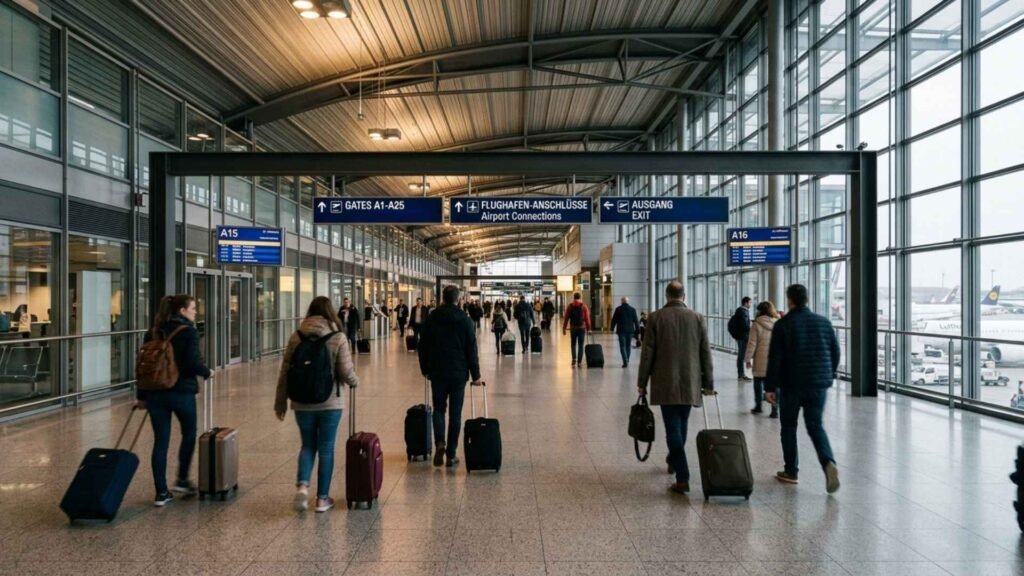
Step 1: Exit the Aircraft and Follow Transfer Signs
After leaving the aircraft, transit passengers should follow:
- “Transfer”
- “Connecting Flights”
- “Transit”
signs instead of heading toward arrivals or baggage claim.
Frankfurt Airport signage is generally clear, although some connections may still involve long corridors, escalators, trains, and multiple passport checkpoints before reaching the next gate.
Step 2: Determine Whether Immigration Is Required
One of the most important parts of Frankfurt Airport transit is understanding whether immigration applies to the connection.
Immigration is usually required if:
- you enter or leave the Schengen Area
- you change between Schengen and non-Schengen flights
- your itinerary requires formal entry into Germany
- you travel on a self-transfer booking that requires baggage collection
Some non-Schengen to non-Schengen connections may allow passengers to remain fully inside the international transit zone without formally entering Germany.
Step 3: Complete Additional Security Screening if Needed
Additional security checks are relatively common during international transit at Frankfurt Airport.
Depending on the route and terminal area, passengers may encounter:
- secondary screening
- gate-level security checks
- document inspections
- electronic device checks
Keeping passports, boarding passes, liquids, and electronics easily accessible can help speed up the process.
Step 4: Transfer Between Terminals or Concourse Areas
Some Frankfurt Airport connections require terminal or concourse changes before reaching the departure gate.
Terminal transfers between Terminal 1 and Terminal 2 are possible via the SkyLine train, which is generally the faster option for most passengers.
Passengers should carefully monitor airport screens because gate assignments can occasionally change late, especially during busy international travel periods.
Step 5: Proceed to the Departure Gate Early
Frankfurt Airport is physically large, and some departure gates may require significant walking time even after clearing immigration and security.
For international flights, reaching the departure gate earlier than expected is usually the safer approach.
Schengen vs Non-Schengen Connections
Understanding the Schengen system is essential during Frankfurt Airport transit.
Schengen to Schengen
This is usually the simplest type of connection because passengers often remain inside the same secure zone without immigration.
Non-Schengen to Schengen
This typically requires immigration and passport control before continuing to the next flight within Europe.
Schengen to Non-Schengen
Passengers usually complete exit passport control before boarding the international departure flight.
Non-Schengen to Non-Schengen
Some passengers may remain entirely inside the international transit zone, although additional document or security checks can still happen depending on the route and airline.
Is 1 Hour Enough for a Frankfurt Airport Connection?
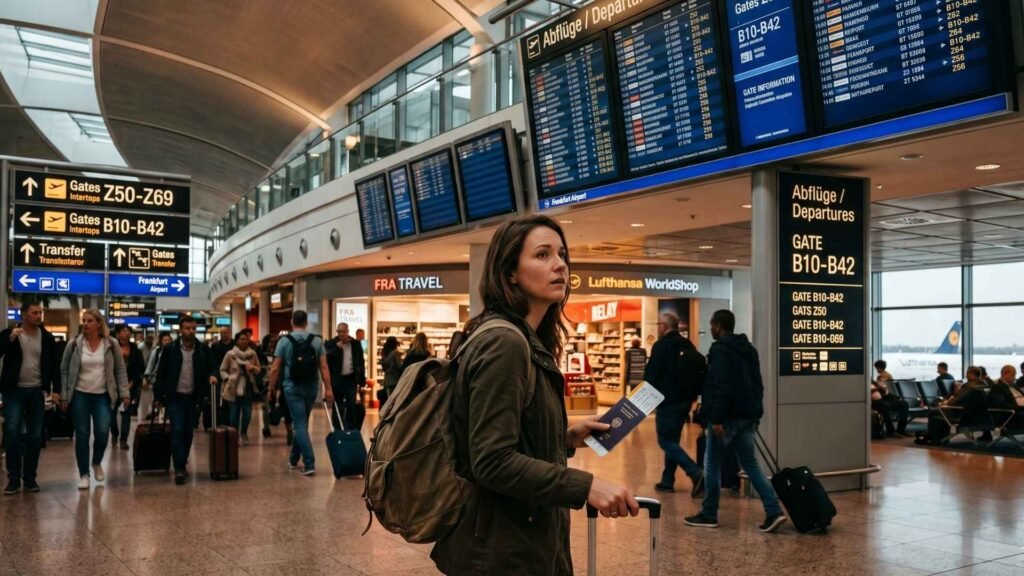
A one-hour connection at Frankfurt Airport can sometimes work, but it depends heavily on the itinerary structure.
Protected airline connections with checked-through baggage are generally much smoother than separate-ticket itineraries.
Lufthansa’s official minimum connection time at Frankfurt Airport can be as low as 45 minutes on certain protected itineraries.
However, immigration queues and long gate distances can still create delays during busy travel periods.
Connections become riskier when:
- terminals change
- immigration is required
- flights are booked separately
- baggage must be collected and re-checked
- flights arrive during peak international traffic periods
Recommended Connection Times at Frankfurt Airport
While official minimum connection times can sometimes be shorter, many passengers prefer allowing additional time for a smoother connection.
| Connection Type | Recommended Time |
|---|---|
| Schengen → Schengen | 60–90 minutes |
| Non-Schengen → Schengen | 90–120 minutes |
| International self-transfer | 3–4+ hours |
| Terminal 1 ↔ Terminal 2 transfer | Add extra 30–60 minutes |
Connection times can still vary depending on:
- immigration queues
- airline delays
- security screening
- gate distance
- baggage collection requirements
During busy travel periods, additional buffer time is usually the safer option.
Frankfurt Airport Self-Transfer Flights
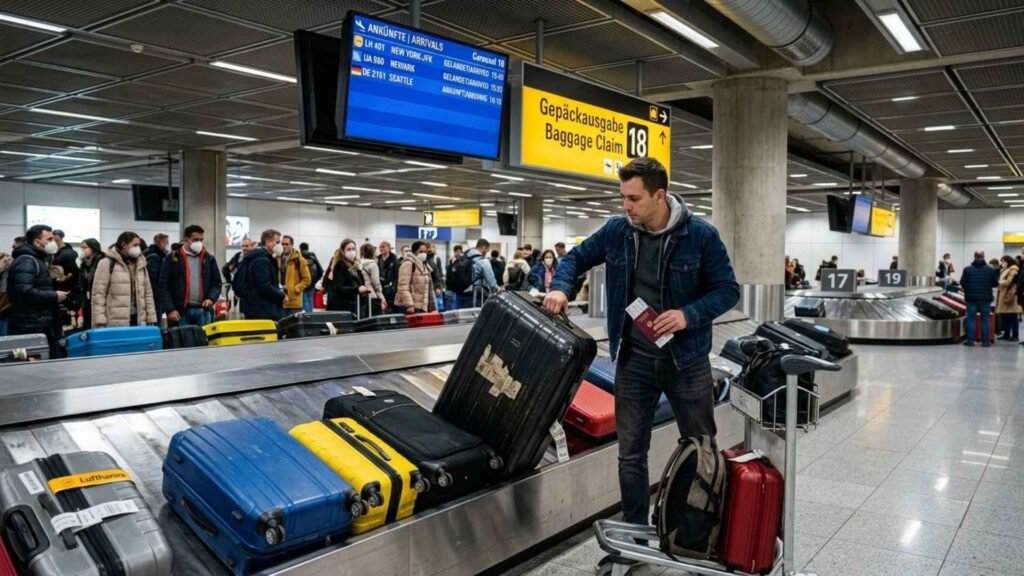
Self-transfer itineraries work differently from protected airline connections.
Passengers traveling on separate tickets may need to:
- collect baggage
- pass through immigration
- leave secure areas
- check in again
- re-enter security screening
Because of these additional procedures, international self-transfer itineraries at Frankfurt Airport usually require far more time than standard airline connections.
Lufthansa Connections vs Other Airlines
Frankfurt Airport is Lufthansa’s primary global hub, and connections within Lufthansa or Star Alliance itineraries are often more streamlined.
Passengers flying on protected Lufthansa connections usually benefit from:
- coordinated baggage transfers
- shared terminal areas
- more integrated transit procedures
Connections between unrelated airlines or separate tickets may require additional immigration, baggage collection, or terminal transfer procedures.
Can You Stay Airside During Transit at Frankfurt Airport?
In many situations, yes.
Passengers can often remain airside if:
- baggage is checked through
- flights are properly connected
- immigration procedures are not required
- airlines support direct transit routing
However, certain self-transfer bookings may require passengers to formally enter Germany before continuing to the next flight.
Frankfurt Airport Transit Visa Rules
Some travelers may require a German airport transit visa depending on:
- nationality
- destination
- routing
- transit duration
- whether formal entry into Germany occurs
Certain nationalities may face additional airport transit visa requirements depending on the itinerary and ticket structure.
Passengers who already hold valid Schengen visas or certain residence permits may qualify for exemptions in some situations.
Because transit visa policies can change, travelers should always verify current requirements through official German government sources before departure using the official German visa information available through Germany’s Federal Foreign Office
Overnight Layovers at Frankfurt Airport

Frankfurt Airport supports overnight transit relatively well compared to many major European hubs.
Passengers with long layovers may choose between:
- airport hotels
- transit hotels
- lounges
- nearby hotels
- overnight seating areas
For detailed information about lounges, sleeping areas, shower facilities, and overnight rest options, see our full Frankfurt Airport Lounge Guide. Official airport accommodation and transit facilities can also be checked through the Frankfurt Airport hotels and lounges page
What Happens If You Miss Your Connection at Frankfurt Airport?
If flights are booked on one protected ticket, the airline will usually rebook passengers onto the next available flight after a missed connection.
However, passengers traveling on separate self-transfer itineraries may need to purchase a completely new ticket themselves if delays cause a missed connection.
Travel insurance may sometimes help cover:
- hotel costs
- meals
- replacement flights
during severe delays or major disruptions.
Travelers flying within Europe may also qualify for compensation or passenger protections depending on the disruption under EU passenger rights rules
Key Frankfurt Airport Transit Tips
Allow Extra Time for International Connections
Immigration queues, terminal transfers, and security checks can increase connection times quickly at Frankfurt Airport.
Verify Terminal and Gate Information Carefully
Departure gates can occasionally change late, especially during busy travel periods.
Understand Whether Your Flights Are Protected or Self-Transfer
Separate-ticket itineraries often require baggage collection and additional immigration procedures.
Wear Comfortable Shoes
Some transit routes at Frankfurt Airport involve extensive walking between gates and concourse areas.
Keep Important Documents Accessible
Having passports and boarding passes ready can help speed up transit procedures significantly.
Frankfurt Airport Transit FAQ
What happens if my Lufthansa flight is delayed and I miss my connection?
If both flights are booked on one protected Lufthansa itinerary, the airline will usually rebook passengers onto the next available flight.
Can I leave Frankfurt Airport during a long layover?
Some travelers can leave the airport during long layovers if they meet Germany’s entry requirements. A valid Schengen visa or visa-free eligibility for Germany is usually required.
For detailed transportation information, see our Frankfurt Airport to City Center Guide.
Is there a transit hotel inside Frankfurt Airport?
Yes. Frankfurt Airport offers both transit hotel options and nearby airport hotels depending on the terminal area and immigration status.
Do I need to collect baggage during transit at Frankfurt Airport?
Passengers on protected airline connections usually have baggage transferred automatically, while self-transfer itineraries often require manual baggage collection and re-check.
Is Frankfurt Airport difficult for self-transfer flights?
Self-transfer connections can be more complicated because passengers may need to collect baggage, pass immigration, and re-enter security screening.
Final Thoughts
Frankfurt Airport can initially feel complex because of its size and international passenger volume.
However, most connections become much easier once travelers understand the terminal structure, Schengen procedures, and realistic transit timing.
For most passengers, careful layover planning and understanding whether the itinerary is protected or self-transfer are the most important parts of a smooth Frankfurt Airport transit experience.
Continue Your Frankfurt Airport Planning
Available now:
👉 Frankfurt Airport Guide (2026): Terminals, Lounges, Hotels & Travel Tips
👉 Frankfurt Airport to City Center Transfer Guide (2026)
👉 Frankfurt Airport Self-Transfer Guide (2026)
👉 Frankfurt Airport Arrival Guide (2026)
👉 Frankfurt Airport Lounges Guide (2026)
👉 Frankfurt Airport Hotels Guide (2026)