
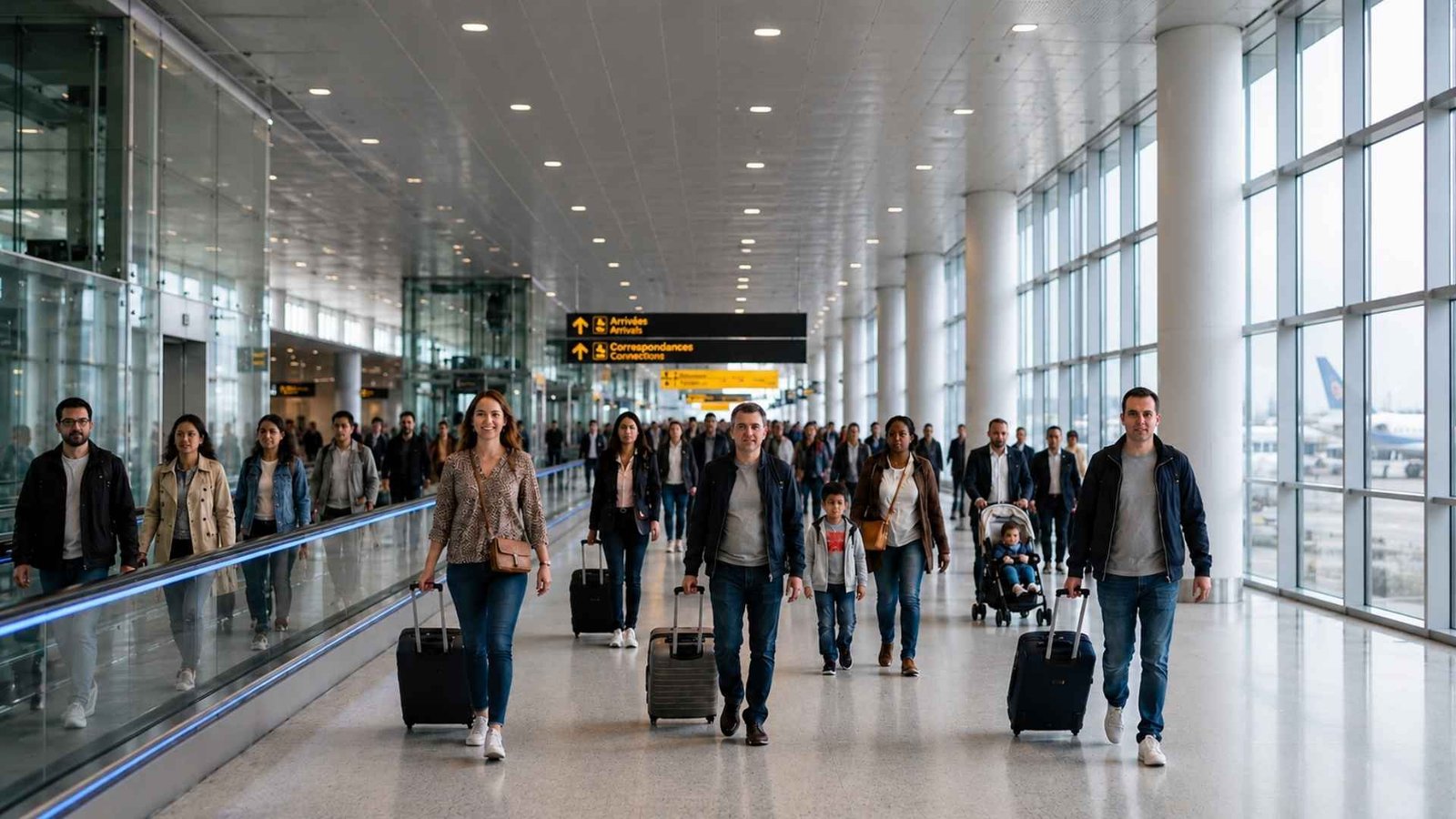
Landing at Paris Charles de Gaulle Airport for the first time can feel overwhelming, especially if you’re arriving after a long international flight. As France’s busiest airport, CDG handles millions of passengers every year, and understanding the arrival process can save you valuable time and unnecessary stress.
This Paris CDG Arrival Guide walks you through every step after your plane lands—from passport control and baggage claim to customs, arrival halls, and transportation into central Paris. Whether you’re arriving from another Schengen country or an international destination, you’ll know exactly what to expect before leaving the airport.
Quick Answer
If you’re arriving at Paris Charles de Gaulle Airport from outside the Schengen Area, your arrival typically follows these steps:
- Leave the aircraft and follow the Arrivals signs.
- Complete passport control (if required).
- Collect your checked baggage.
- Pass through customs.
- Enter the public arrivals hall.
- Continue to your train, taxi, bus, rental car, or private transfer.
Most international Paris CDG arrival procedures take between 30 and 90 minutes from landing to exiting the terminal.
Understanding the Paris CDG Arrival Process
For most travelers, arriving at Paris Charles de Gaulle Airport follows a simple sequence:
| Step | What to Expect |
|---|---|
| 1 | Leave the aircraft and follow the Arrivals signs. |
| 2 | Complete passport control if you’re arriving from outside the Schengen Area. |
| 3 | Collect your checked baggage at the assigned carousel. |
| 4 | Pass through customs using the appropriate channel. |
| 5 | Enter the public arrivals hall. |
| 6 | Continue to central Paris by train, taxi, bus, private transfer, or rental car. |
The overall Paris CDG arrival process is similar for nearly all passengers, regardless of the terminal where they land.
Before You Land at Paris CDG
A smooth arrival begins before the aircraft even reaches the gate.
Cabin crew will usually announce your arrival terminal, local time, and any immigration procedures before landing. If you’re traveling from outside the Schengen Area, it’s also a good idea to have your passport and any required travel documents ready before leaving the aircraft.
If you have checked baggage, keep your baggage claim tag until you’ve collected your suitcase. Although baggage checks are uncommon after leaving the reclaim area, airlines may occasionally request the tag if there is a question about your luggage.
Travelers entering France should also make sure they meet the country’s entry requirements before departure. You can check the latest visa rules and travel documentation through the official France-Visas website.
If you’re connecting to another flight instead of entering France, follow the Flight Connections signs rather than the Arrivals route. Our Paris CDG Transit Guide explains the transfer process in detail.
Following the Arrivals Signs
After leaving the aircraft, simply follow the overhead signs marked:
- Arrivées / Arrivals
- Baggage Claim
- Passport Control (when applicable)
These signs are available in both French and English throughout Charles de Gaulle Airport.
Walking distances vary depending on your arrival terminal and gate. Some international flights require a walk of only a few minutes, while others involve longer corridors, moving walkways, or shuttle trains between satellite buildings and the main terminal.
If you’re arriving at Terminal 2, don’t be surprised if you spend 10–20 minutes walking before reaching immigration or baggage claim.
Airport staff are stationed throughout the terminals if you need directions, and digital information screens also display onward guidance.
For terminal maps and the latest airport information, visit the official Paris Aéroport website.
Which Terminal Will You Arrive At?
Your arrival terminal depends on the airline you’re flying with and your route.
Paris Charles de Gaulle Airport has three main passenger terminals—Terminal 1, Terminal 2, and Terminal 3. Terminal 2 is divided into several sub-terminals (2A through 2G), so it’s worth checking your airline’s booking confirmation before you travel.
Regardless of which terminal you arrive at, the overall arrival process remains largely the same:
- Follow the Arrivals signs.
- Complete passport control if required.
- Collect your checked baggage.
- Pass through customs.
- Enter the public arrivals hall.
The main differences between terminals are the walking distances, baggage reclaim layouts, and available transportation connections.
If you’re unsure which terminal your flight uses, the official Paris Aéroport airline directory lists every airline alongside its terminal.
Clara’s Tip
Don’t worry too much about memorizing terminal layouts before your trip. Once you land, simply following the clearly marked Arrivals signs is usually all you need until you reach the public arrivals hall.
Passport Control
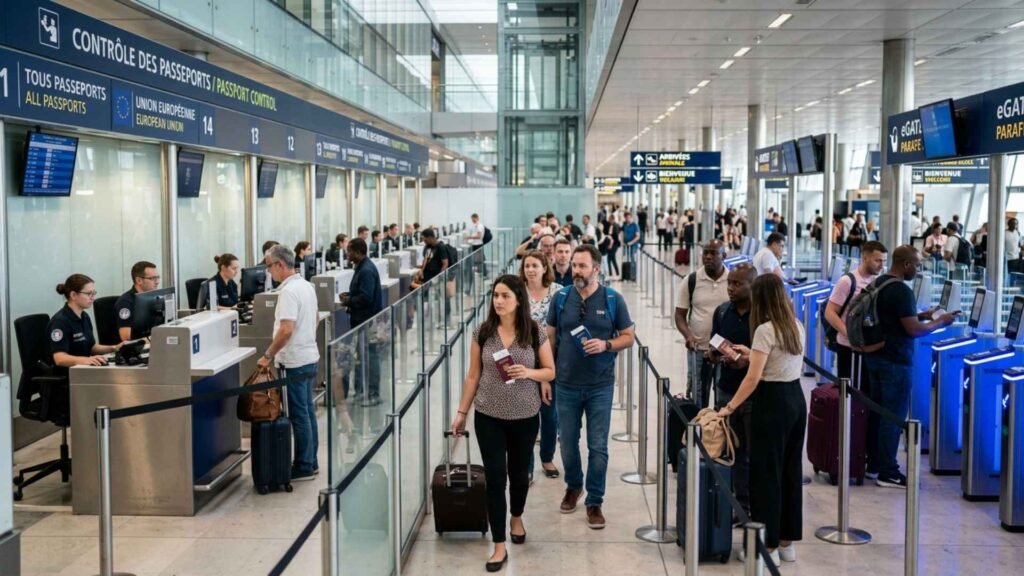
For passengers arriving from outside the Schengen Area, passport control is the first major step of the Paris CDG arrival process.
Once you reach the immigration hall, you’ll join the appropriate queue based on your nationality.
Generally, you’ll find separate lanes for:
- EU, EEA and Swiss citizens
- Other nationalities
- Families or passengers requiring assistance (at some checkpoints)
Border officers may ask routine questions about:
- The purpose of your visit
- Length of your stay
- Return or onward travel
- Accommodation details
- Proof of sufficient funds (occasionally)
To help keep the lines moving efficiently, have your passport open to the identification page before reaching the inspection desk. During busy periods, border officers may also direct passengers to different inspection lanes to balance waiting times, so simply follow the instructions given by airport staff.
Most travelers complete the process within a few minutes once they reach the inspection desk, although waiting times vary considerably throughout the day.
During busy morning arrivals or when several long-haul flights land close together, immigration queues can become significantly longer.
Typical waiting times are:
| Time | Typical Wait |
|---|---|
| Early morning | 20 – 45 minutes |
| Midday | 15 – 30 minutes |
| Evening peak | 30 – 60+ minutes |
Passengers arriving from another Schengen country generally bypass passport control and continue directly toward baggage claim.
Electronic Entry System (EES)
If you’re a non-EU traveler visiting the Schengen Area, you may be processed under the European Union’s Entry/Exit System (EES).
Instead of receiving a passport stamp, eligible travelers may have biometric information, such as fingerprints and a facial image, recorded during their first registration.
The initial enrollment can take slightly longer than a traditional passport inspection, so first-time visitors should allow extra time during busy arrival periods. Travelers who require an ETIAS travel authorization must obtain it before departing for France, as it cannot be issued after arrival.
You can learn more about the system on the official EU Entry/Exit System (EES) page.
Baggage Claim
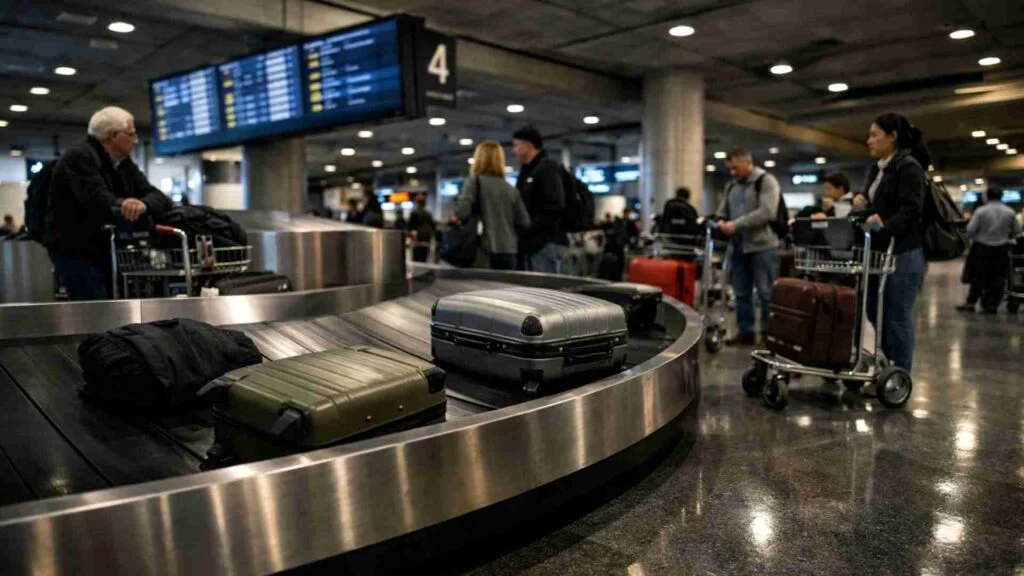
Once you’ve cleared passport control—or immediately after landing if you’re arriving from another Schengen country—follow the signs to Baggage Claim.
Large electronic display boards show the baggage carousel assigned to each arriving flight. Simply locate your flight number and proceed to the corresponding belt.
Baggage delivery times vary depending on the airline, aircraft size, and arrival terminal. As a general guide:
| Flight Type | Typical Waiting Time |
|---|---|
| Domestic & Short-Haul | 10 – 25 minutes |
| European Flights | 15 – 30 minutes |
| Long-Haul International | 20 – 45 minutes |
If your luggage doesn’t appear after the carousel has stopped, don’t leave the baggage reclaim area immediately.
Instead:
- Check the information screens to confirm you’re waiting at the correct carousel.
- Wait a few extra minutes in case oversized luggage is delivered separately.
- Visit your airline’s baggage service desk before exiting the secure area.
Airport staff can assist with delayed, damaged, or missing baggage and provide a Property Irregularity Report (PIR) if required.
If you’re traveling with oversized items such as skis, bicycles, golf bags, or strollers, these are often delivered at a separate oversized baggage collection point rather than on the standard carousel.
Customs
After collecting your luggage, you’ll continue toward customs before entering the public arrivals area.
For most visitors, the process is quick and straightforward.
France uses the standard customs channel system found across many European airports:
- Green Channel — Nothing to declare
- Red Channel — Goods to declare
Most leisure travelers carrying only personal belongings can simply use the Green Channel.
However, you should use the Red Channel if you’re carrying:
- Goods above duty-free allowances
- Commercial merchandise
- Large amounts of cash requiring declaration
- Restricted or controlled goods
Customs officers may conduct random inspections even if you pass through the Green Channel, so it’s important to remain familiar with France’s import regulations before you travel.
The official French Customs website provides up-to-date information on duty-free allowances, restricted items, and declaration requirements.
Clara’s Tip
If you’re bringing expensive electronics, cameras, or professional equipment into France temporarily, keep proof that the items were owned before your trip. This can help avoid misunderstandings when leaving the country later.
Entering the Arrivals Hall
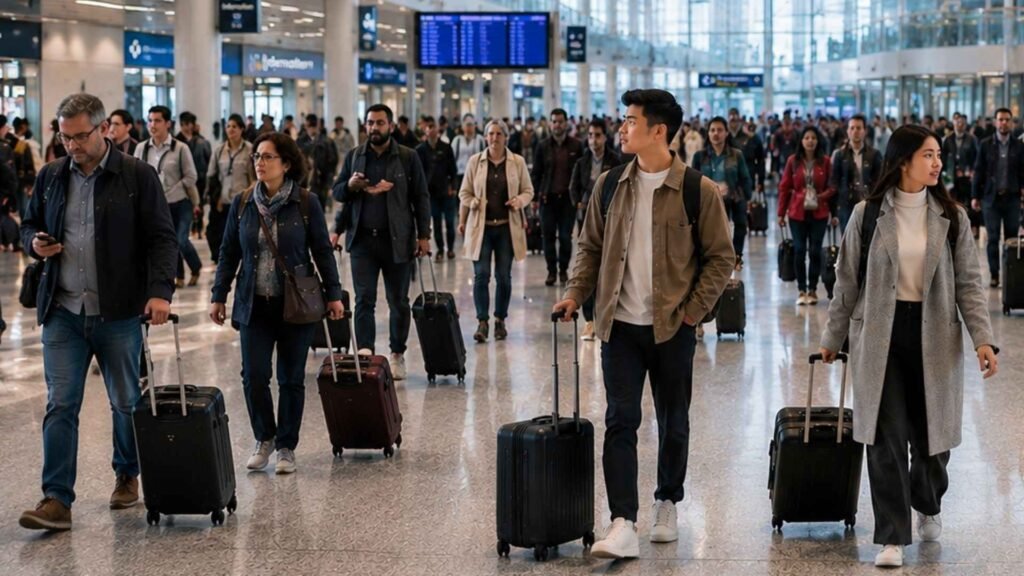
Once you’ve passed customs, you’ll enter the public arrivals hall.
This is where friends, family members, tour guides, and private transfer drivers typically wait for arriving passengers.
Depending on your terminal, you’ll also find a wide range of traveler services, including:
- Tourist information desks
- ATMs
- Currency exchange offices
- SIM card and mobile network providers
- Cafés and bakeries
- Convenience stores
- Car rental counters
- Hotel information desks
- Public transportation ticket machines
Each terminal has a slightly different layout, but signage is clear and available in both French and English.
If you’ve booked a private airport transfer, your driver will usually wait in the arrivals hall holding a sign with your name. Be sure to follow any meeting instructions provided in your booking confirmation, as some companies use designated pickup points outside the terminal.
Buying a SIM Card or Using Mobile Data
Most travelers can connect to mobile data almost immediately after landing.
If your mobile provider offers affordable international roaming, you may be able to use your phone as soon as you arrive.
Otherwise, you have several options:
- Purchase a French prepaid SIM card.
- Activate an eSIM before traveling.
- Buy a SIM card from one of the airport mobile providers after arrival.
eSIMs are often the easiest option because they’re activated before departure and allow you to connect without searching for a store after landing.
If you prefer a physical SIM card, you’ll find mobile retailers and vending machines in several arrival terminals.
ATMs, Currency Exchange, and Payments
Although you’ll find several currency exchange counters inside Charles de Gaulle Airport, they generally offer less favorable exchange rates than ATMs or city exchange offices.
For most travelers, withdrawing euros from an ATM using a debit card is usually the more cost-effective option.
France is also highly card-friendly.
Visa and Mastercard are accepted almost everywhere, including:
- Public transportation
- Restaurants
- Supermarkets
- Hotels
- Museums
- Taxis
Many businesses also accept contactless payments through smartphones and smartwatches.
It’s still worth carrying a small amount of cash for markets, smaller cafés, or occasional purchases where card payments may not be available.
Restrooms, Family Facilities, and Accessibility
Restrooms are available throughout every arrival terminal and are free to use.
Travelers arriving with children will also find:
- Baby changing facilities
- Family restrooms
- Nursing rooms in selected terminals
- Elevator access for strollers
Passengers with reduced mobility can access step-free routes, elevators, and dedicated assistance services throughout the airport.
If you’ve arranged special assistance with your airline before departure, airport staff will normally meet you at the aircraft or arrival gate and accompany you through immigration, baggage claim, and customs.
Additional accessibility information is available on the official Paris Aéroport Special Assistance page.
How to Continue Your Journey from CDG
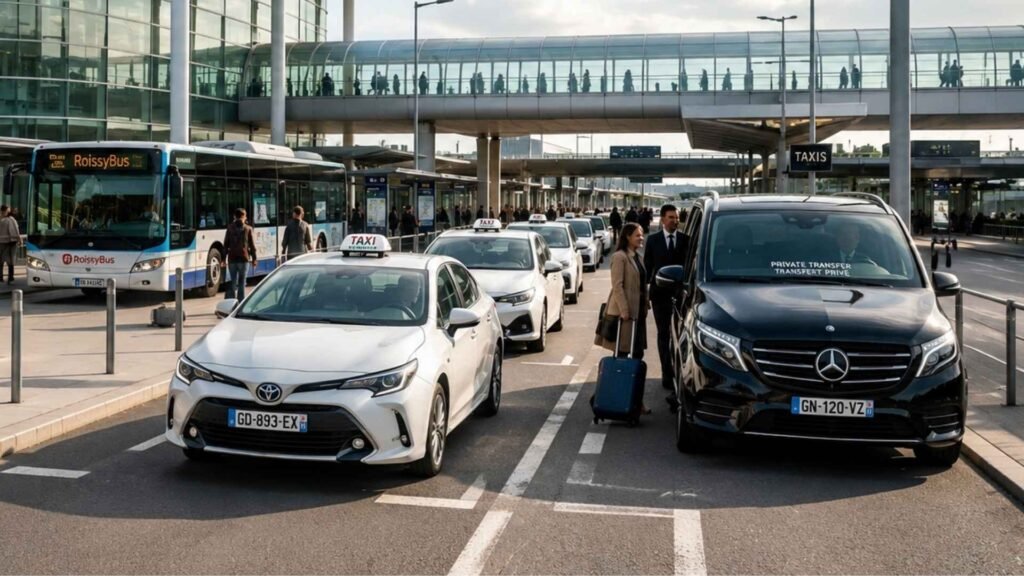
After leaving the arrivals hall, you’ll find clearly marked signs leading to trains, taxis, buses, ride-hailing services, private transfers, and rental cars.
The best transportation option depends on where you’re staying, how much luggage you’re carrying, your arrival time, and your budget. Most visitors heading to central Paris choose either the RER B train for its speed and value or a taxi or private transfer for greater convenience.
Transportation at a Glance
After leaving the arrivals hall, you’ll find clearly marked signs leading to trains, taxis, buses, ride-hailing services, private transfers, and rental cars.
The best transportation option depends on where you’re staying, how much luggage you’re carrying, your arrival time, and your budget. Most visitors heading to central Paris choose either the RER B train for its speed and value or a taxi or private transfer for greater convenience.
| Option | Best For | Typical Time |
|---|---|---|
| RER B Train | Most travelers | 35 – 45 min |
| Official Taxi | Families & heavy luggage | 40 – 70 min* |
| Private Transfer | Door-to-door convenience | 40 – 70 min* |
| RoissyBus | Direct service to Opéra | 60 – 75 min |
Note: Travel times are approximate and may vary depending on traffic conditions and the time of day.
For a detailed comparison of fares, journey times, and the best option for different travel styles, see our Paris CDG to City Center guide. You can also check the latest public transportation fares, schedules, and service updates on the official Île-de-France Mobilités website.
Common Arrival Mistakes to Avoid
Most Paris CDG arrival procedures are straightforward, but a few common mistakes can lead to unnecessary delays or stress—especially for first-time visitors.
Here are the most common mistakes and how to avoid them.
Assuming Every Passenger Goes Through Passport Control
If you’re arriving from another Schengen country, you’ll usually head directly to baggage claim without passing through immigration.
Only passengers arriving from outside the Schengen Area normally complete passport control upon arrival.
Checking your flight’s origin beforehand helps you know what to expect.
Following the Wrong Signs
During a Paris CDG arrival, you’ll often see signs for both Flight Connections and Arrivals.
If Paris is your final destination, continue following the Arrivals signs. Passengers with an onward flight on the same journey should instead follow Flight Connections to remain in the secure transit area.
Choosing the wrong route can mean unnecessary walking—or, in some cases, needing assistance from airport staff to return to the correct path.
Underestimating Walking Distances
Charles de Gaulle Airport is one of Europe’s largest airports.
Depending on your gate and terminal, it may take 10–20 minutes to reach passport control or baggage claim after leaving the aircraft.
If you’re traveling with children, older family members, or limited mobility, allow extra time rather than assuming you’ll reach the exit within a few minutes.
Leaving the Baggage Area Too Soon
If your suitcase hasn’t arrived immediately, don’t rush out of the baggage reclaim hall.
Check that you’re waiting at the correct carousel and allow additional time if several wide-body aircraft have landed close together.
Once you exit the secure baggage area, returning to file a delayed baggage report can be much more complicated.
Exchanging Large Amounts of Money at the Airport
Airport exchange counters are convenient but often offer less competitive exchange rates.
Unless you need cash immediately, many travelers save money by using an ATM or exchanging currency later in central Paris.
Since card payments are widely accepted throughout France, you may only need a small amount of cash on arrival.
Forgetting Transportation Planning
Many travelers begin comparing transportation options only after leaving the terminal.
Instead, decide in advance whether you’ll use the RER B train, a taxi, a private transfer, or another option.
Having a plan before you land makes your arrival significantly less stressful, particularly during busy travel periods.
Paris CDG Arrival FAQs
How long does it take to leave Paris CDG Airport after landing?
For most international arrivals, expect to spend 30 to 90 minutes from landing until you leave the terminal.
Your total arrival time depends on immigration queues, baggage delivery, customs, and the time of day.
Passengers arriving from another Schengen country often exit more quickly because they usually don’t pass through passport control.
Do I have to go through passport control at Charles de Gaulle Airport?
Only passengers arriving from outside the Schengen Area normally complete passport control.
If you’re arriving from another Schengen country, you’ll generally proceed directly to baggage claim before exiting through customs.
How long does baggage claim usually take?
Most bags arrive within 15–30 minutes, although long-haul flights may take slightly longer.
Oversized luggage may be delivered separately from the main baggage carousel.
Are customs checks common?
Most travelers simply walk through the Green Channel if they have nothing to declare.
However, French Customs officers may carry out random inspections, so it’s important to follow current customs regulations.
Is free Wi-Fi available after arrival?
Yes.
Free Wi-Fi is available throughout Paris Charles de Gaulle Airport, including the arrivals halls, baggage reclaim areas, and public spaces.
Can I buy a SIM card at CDG?
Yes.
Several terminals have mobile phone retailers and vending machines selling prepaid SIM cards.
Many visitors now choose an eSIM before traveling so they can connect immediately after landing.
Can I use my credit card after arriving?
Absolutely.
Visa and Mastercard are widely accepted across France, including at train stations, restaurants, hotels, supermarkets, and most taxis.
Keeping a small amount of cash can still be useful for minor purchases or small independent businesses.
Where do I meet my private transfer driver?
Most drivers wait inside the arrivals hall holding a sign with the passenger’s name.
Always check your booking confirmation, as some companies use designated meeting points outside the terminal instead.
Is Charles de Gaulle Airport easy to navigate?
Although CDG is a large airport, signage is generally clear in both French and English.
Allowing enough time for walking between gates, passport control, baggage claim, and the arrivals hall makes the experience much easier for first-time visitors.
Continue Planning Your Trip
If you’re still planning your journey through Paris Charles de Gaulle Airport, these guides can help you prepare for every stage of your trip:
- Paris CDG Airport Guide — Explore terminals, lounges, dining, and airport services.
- Paris CDG Transit Guide — Learn how to navigate connecting flights and stay airside.
- Paris CDG Self-Transfer Guide — Learn about baggage recheck and separate tickets.
- Paris CDG to City Center — Compare trains, taxis, buses, and private transfers.
Reading these guides before your trip can help you avoid common travel mistakes and make your arrival at Charles de Gaulle Airport much smoother.
Final Thoughts
A smooth Paris CDG arrival begins with knowing what to expect after landing. From passport control and baggage claim to customs and transportation, the process is generally straightforward when you understand each step in advance.
If you’re continuing your journey, our Paris CDG to City Center guide compares the best transportation options, while the Paris CDG Transit Guide helps passengers connecting to another flight without leaving the airport.