
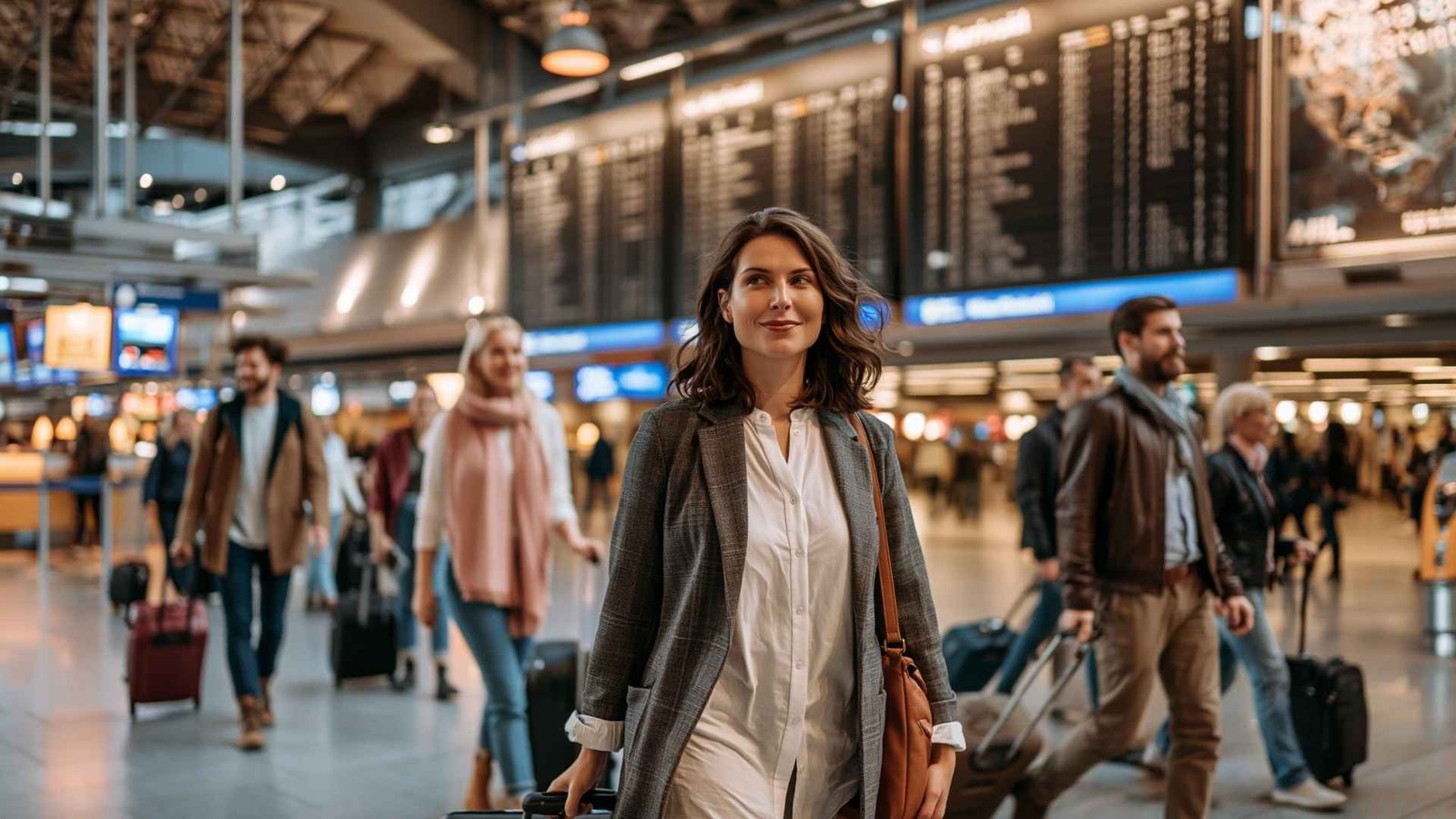
After a long flight, most travelers want the same thing: leave the airport quickly and start the trip.
At Frankfurt Airport, that process is not always as simple as walking off the aircraft and heading outside.
Long walking distances, immigration queues, baggage delays, terminal differences, and one of Europe’s busiest airport layouts can easily add unexpected time to your arrival.
This Frankfurt Airport Arrival Guide explains exactly what happens after landing, how immigration works, how long the process usually takes, where baggage claim happens, and what to expect before leaving the airport.
Quick Answer: What Happens After Landing at Frankfurt Airport?
Most passengers arriving at Frankfurt Airport follow this process:
Aircraft → Arrival Corridors → Passport Control (if required) → Baggage Claim → Customs → Public Arrivals Hall
Typical exit times often look like this:
| Arrival Situation | Typical Time to Exit Airport |
|---|---|
| Schengen + carry-on only | 20 – 45 min |
| Schengen + checked baggage | 30 – 60 min |
| Non-Schengen + baggage | 45 – 120 min |
| Heavy morning long-haul arrival waves | 60 – 150+ min |
Your total time depends heavily on:
- immigration queues
- baggage delivery speed
- aircraft parking position
- terminal assignment
- arrival waves
These stages do not always stack directly.
Longer baggage waits sometimes happen while immigration queues are shorter, meaning one slower stage does not always double your total arrival time.
What Happens After Landing at Frankfurt Airport?
The Frankfurt Airport arrival process feels much easier once you understand airport flow.
Your experience usually depends on:
- where your flight originates
- baggage status
- nationality
- terminal assignment
- arrival time
Frankfurt Airport is large enough that walking distances alone sometimes add significant time before immigration even begins, especially for remote stands or distant gates.
Understanding the process beforehand usually reduces arrival stress considerably.
Step-by-Step Frankfurt Airport Arrival Process
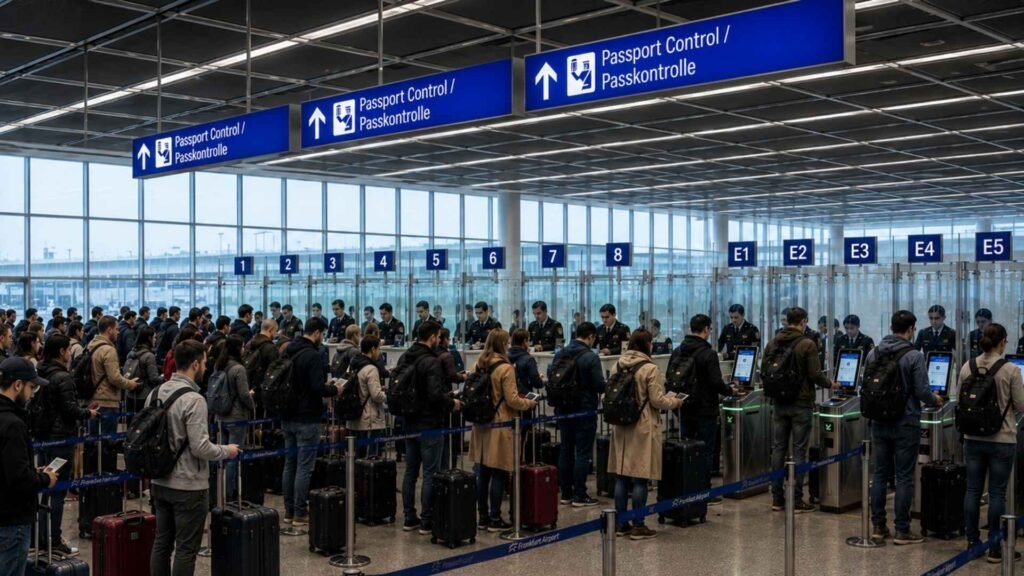
Most passengers follow a similar arrival sequence after landing, although processing times and routes vary depending on nationality, terminal assignment, and baggage status.
Understanding each stage beforehand makes navigating Frankfurt Airport much easier and helps set more realistic expectations after arrival.
1. Leaving the Aircraft and Following Arrival Signs
Passengers usually leave aircraft through jet bridges or airport buses.
After entering the terminal, follow signs for:
- Arrivals
- Passport Control
- Baggage Claim
- Exit
Walking times vary substantially.
Passengers arriving at distant gates or remote stands sometimes spend 10–20 minutes simply reaching immigration.
💡 Clara’s Insider Tip:
Many travelers assume landing time means they are almost outside.
At Frankfurt Airport, leaving the aircraft often marks the beginning of the arrival process rather than the end.
2. Immigration and Passport Control
For international arrivals, passport control is often the least predictable stage.
Schengen Arrivals
Passengers arriving from Schengen countries generally skip formal immigration procedures.
These arrivals usually move faster.
Non-Schengen Arrivals
Passengers arriving from outside the Schengen Area normally pass through German border control.
Border officers may ask for:
- passport
- visa or residence documents
- accommodation details
- onward travel information
- return tickets
Arrival timing matters.
Large morning arrival waves, especially between roughly 07:00–10:00, often create heavier queues because multiple long-haul flights land during similar periods.
Late evening arrivals sometimes move faster.
E-Gates and Automatic Passport Control
Automated passport control can significantly speed up arrivals for eligible travelers.
Eligibility usually depends on:
- passport nationality
- biometric passport availability
- age requirements
- border routing on arrival day
Many EU / EEA / Swiss travelers commonly qualify.
Some biometric passport holders from selected countries may also qualify depending on border procedures.
Availability changes regularly, so always follow airport signage.
3. Collecting Your Bags at Baggage Claim
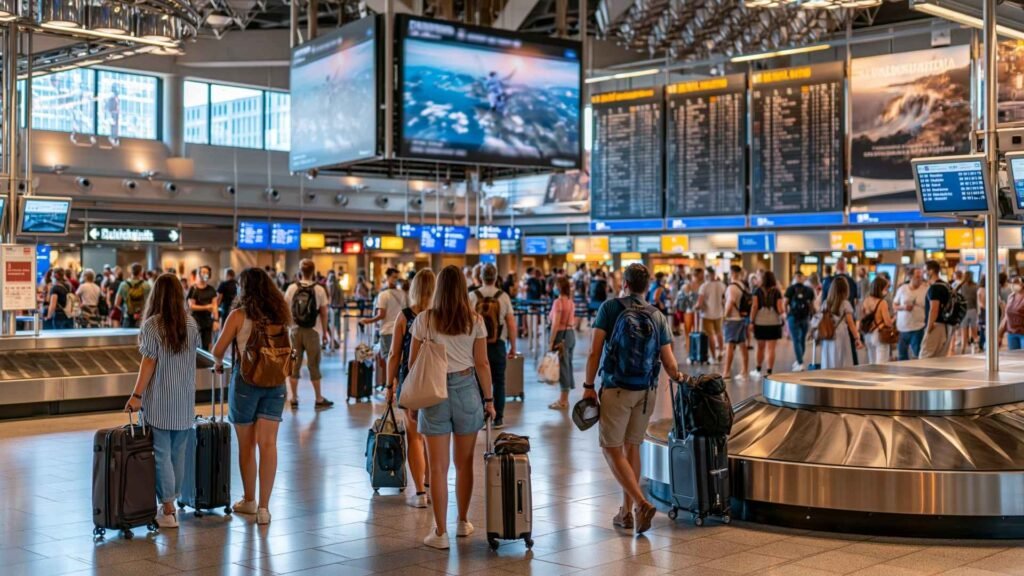
After immigration, passengers continue toward baggage reclaim.
Arrival screens display:
- baggage belt numbers
- claim area assignments
- flight information
Typical baggage waiting times often look like:
- short-haul flights: around 10–30 minutes
- long-haul flights: around 20–60+ minutes
- heavy arrival waves: potentially longer
Passengers arriving during heavy arrival periods sometimes experience longer baggage waits.
Before leaving baggage reclaim:
- confirm luggage tags
- inspect luggage immediately
- report problems before leaving secure areas
Carry-on-only travelers usually leave considerably faster.
4. Customs Procedures
After baggage claim, passengers move toward customs.
Most travelers choose between two channels.
Green Channel
Usually used by passengers carrying nothing requiring declaration.
Red Channel
Used when carrying declarable items.
Common declaration examples include:
- large cash amounts
- commercial goods
- restricted foods
- expensive purchases
- certain medications
If uncertain, declaring items is generally safer.
Customs rules vary depending on what you carry, so review current regulations through German Customs information portal before arrival.
5. Exiting Into the Arrivals Hall
After customs clearance, passengers enter public arrival areas.
This usually marks the end of the Frankfurt Airport arrival process and the beginning of transportation planning.
Most travelers immediately look for:
- train access
- taxis
- pickup areas
- food
- connectivity
- currency exchange
Planning your next step before arrival often makes a real difference.
Frankfurt Airport Terminal 1 vs Terminal 2 Arrivals
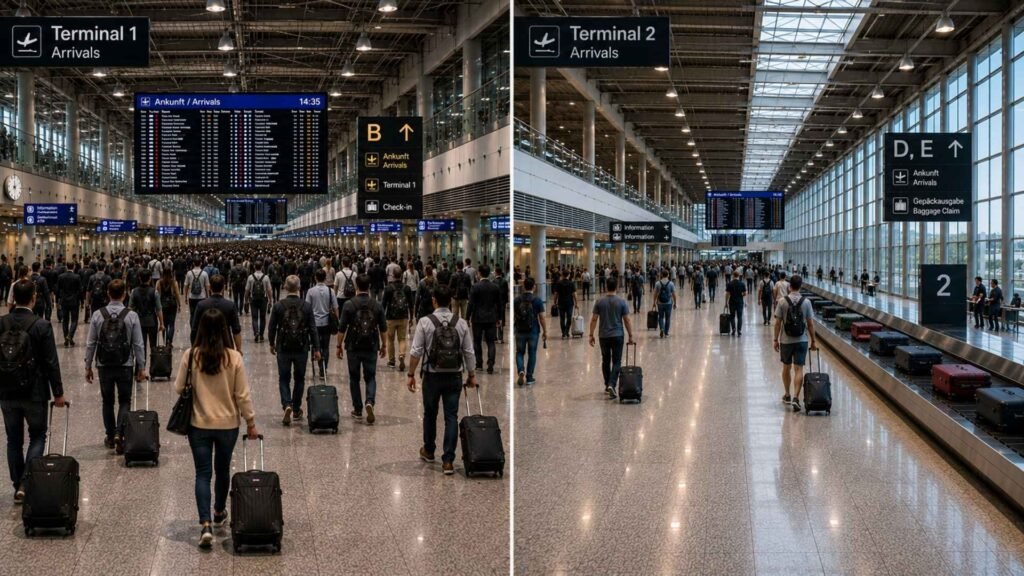
Terminal assignment influences your experience more than many passengers expect.
Terminal 1
Usually handles:
- Lufthansa operations
- Star Alliance carriers
- many intercontinental routes
Passenger volumes are often heavier.
Walking distances may also feel longer.
Terminal 2
Terminal 2 handles many international airlines, leisure carriers, and selected long-haul routes.
Passengers flying airlines such as Condor and selected non-Star Alliance international carriers may arrive here, although airline assignments occasionally change.
Passenger flow is usually influenced more by arrival waves than terminal itself.
Always verify terminal assignments before departure.
Terminal allocations occasionally change, so checking the latest information through Frankfurt Airport terminal maps and information page is recommended before travel.
How Long Does It Really Take to Leave Frankfurt Airport?
The biggest mistake travelers make is assuming landing time equals airport exit time.
Reality is often different.
Common delay points include:
- walking distances
- immigration bottlenecks
- baggage delivery delays
- customs queues
- crowded transportation hubs after arrival
For safer planning:
- Schengen + carry-on travelers may manage tighter schedules
- international arrivals with baggage should usually allow 60–90 minutes minimum before trains
- busy arrival periods may require additional buffer
💡 Clara’s Insider Tip:
Booking a train departing 20–30 minutes after landing creates unnecessary stress.
Unexpected delays of 30–60 minutes happen more often than many travelers expect.
What Facilities Are Available After Arrival?
Many travelers need practical services immediately after landing.
Frankfurt Airport arrivals areas usually provide most essentials.
SIM Cards, Wi-Fi and Connectivity
You can usually find:
- airport Wi-Fi
- SIM card counters
- mobile shops
- eSIM services
ATM and Currency Exchange
ATMs and exchange facilities are widely available.
Airport exchange desks sometimes offer weaker rates than city alternatives.
Food, Coffee and Seating Areas
Arrival zones generally include:
- cafés
- bakeries
- restaurants
- seating spaces
These facilities become especially useful after long-haul flights.
Luggage Storage
Useful for travelers exploring Frankfurt before hotel check-in.
Availability varies by terminal area.
Family, Accessibility and Mobility Support
Passengers traveling with children, mobility needs, or heavy luggage should allow additional time.
Common factors increasing arrival times:
- elevators instead of escalators
- stroller movement
- mobility assistance coordination
- longer walking routes
Planning additional buffer time usually reduces stress significantly.
Do You Need a Visa, ETIAS or Entry Authorization?

Entry requirements depend heavily on nationality.
Some travelers require:
- visas
- residence permits
- biometric registration
- digital travel authorization systems
ETIAS is expected to apply to many visa-free travelers entering much of Europe, but eligibility depends entirely on nationality.
Travelers who already require Schengen visas generally do not use ETIAS systems, while many visa-exempt travelers may need authorization before departure.
Always verify entry rules before travel because requirements differ significantly by passport.
If you want a full breakdown of eligibility, rollout timing, and application rules, read our complete ETIAS guide.
→ ETIAS Visa Waiver Guide (2026): Everything You Need Before Traveling to Europe
For official eligibility information and updates, check ETIAS official information portal.
Meeting Someone at Frankfurt Airport
Terminal differences sometimes create pickup confusion.
Before arrival:
- confirm terminal information
- check live arrival boards
- agree on meeting points
- verify arrival hall exits beforehand
Small planning mistakes often create surprisingly long waits.
Common Frankfurt Airport Arrival Mistakes
Many arrival problems are avoidable.
Booking Train Tickets Too Aggressively
Landing time rarely equals exit time.
Immigration, baggage, and walking distances frequently create delays.
Many travelers purchase ICE tickets based on scheduled landing times rather than realistic exit times.
For international arrivals with checked baggage, trains departing at least 60–90 minutes after landing are usually safer.
Assuming Terminal Differences Do Not Matter
Terminal layouts influence walking distances and passenger flow.
Leaving Secure Areas Too Early
Resolve baggage problems before exiting secure areas.
Forgetting Transportation Planning
Knowing your next step before landing reduces stress considerably.
Arriving Late at Night at Frankfurt Airport
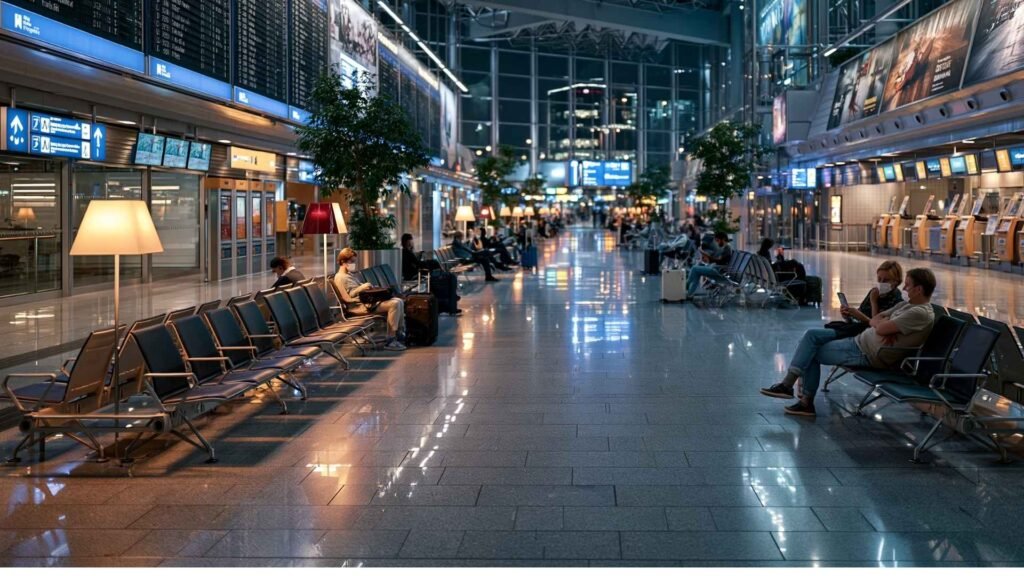
Late-night arrivals require extra planning.
Check:
- final train departures
- shuttle schedules
- taxi availability
- rental car operating hours
Transportation choices become more limited later at night.
Train schedules occasionally change during late hours, so verify departure times through Deutsche Bahn journey planner before travel.
💡 Clara’s Insider Tip:
If you land late, avoid assuming airport transportation runs with daytime frequency. Having a backup plan for taxis, hotels, or later connections usually reduces stress considerably.
Continue Planning Your Frankfurt Trip
Continue building your Frankfurt Airport planning:
→ Frankfurt Airport Guide (2026): Terminals, Lounges, Hotels & Travel Tips
→ Frankfurt Airport Transit Guide (2026): Avoid Missed Connections & Transit Mistakes
→ Frankfurt Airport Self Transfer Guide (2026): Separate Tickets, Baggage & Hidden Risks
FAQ: Frankfurt Airport Arrival Questions Answered
How long does passport control take at Frankfurt Airport?
During quieter periods, passport control during the Frankfurt Airport arrival process may take around 10–20 minutes.
During busy morning arrival waves or multiple long-haul arrivals, waits sometimes exceed 45–90 minutes.
Do Schengen passengers go through immigration?
Many Schengen arrivals skip formal immigration procedures, making arrival considerably faster.
However, airport routing occasionally varies depending on your flight and arrival setup.
Can I use e-gates at Frankfurt Airport?
Some eligible travelers can.
Many EU / EEA travelers commonly qualify, while eligibility for other biometric passport holders depends on border procedures and airport routing on arrival day.
Where do I go after landing at Frankfurt Airport?
After landing, follow signs toward Arrivals.
During the Frankfurt Airport arrival process, non-Schengen passengers normally proceed to Passport Control first, while many Schengen arrivals continue directly toward baggage claim.
From there, passengers continue through customs before entering public arrival halls.
How much buffer time should I allow before trains after landing?
International arrivals with baggage should usually allow at least 60–90 minutes before onward trains.
Passengers arriving during heavy arrival periods or traveling with checked luggage may prefer even more buffer time.
Can I leave Frankfurt Airport during a layover?
Many passengers can leave the airport during longer layovers, but this depends on visa requirements, baggage arrangements, and available connection time.
Travelers with shorter connections should carefully calculate immigration, transportation, and security screening times before exiting the airport.