
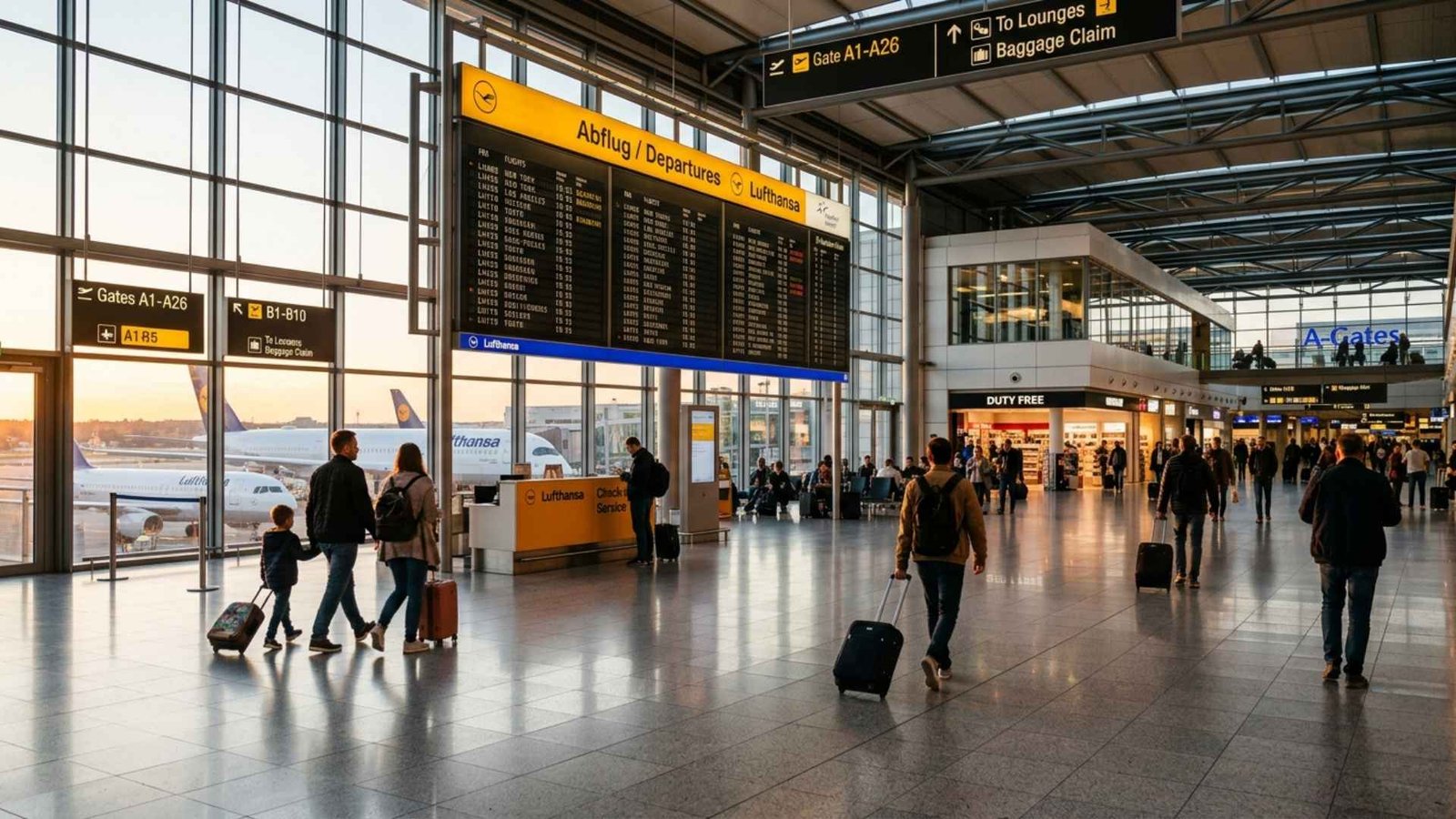
Frankfurt Airport can feel overwhelming at first — especially during tight connections, long-haul arrivals, or terminal transfers.
As Germany’s busiest airport and one of Europe’s largest international transit hubs, FRA handles millions of travelers connecting between Europe, North America, Asia, and the Middle East every year.
I’ve connected through Frankfurt Airport multiple times on international itineraries, and one thing becomes clear very quickly: small planning mistakes can easily turn into stressful transfers, long immigration lines, or missed connections.
Quick Answer: Arrival, Transit & Transfers
Frankfurt Airport (FRA) is Germany’s largest airport and one of Europe’s most important international aviation hubs.
Most travelers arriving at Frankfurt Airport in 2026 will usually go through:
- Landing and taxiing
- Passport control
- Baggage claim
- Customs inspection
- Ground transportation or onward transit
Frankfurt Airport offers:
- two major passenger terminals
- extensive transit facilities
- airline lounges
- Fast Track and VIP services
- direct rail connections
- airport hotels connected to terminals
Typical arrival times:
| Arrival Type | Estimated Time |
|---|---|
| Schengen Arrival | 20–45 minutes |
| Non-Schengen Arrival | 45–120 minutes |
| Peak Long-Haul Arrival Periods | Sometimes longer |
Transit passengers may also encounter:
- additional security checks
- terminal transfers
- baggage re-check procedures
- immigration requirements
depending on nationality and ticket structure.
Frankfurt Airport Overview
Frankfurt Airport, officially known as Flughafen Frankfurt am Main, operates under the airport code FRA.
The airport serves as:
- Lufthansa’s primary international hub
- Germany’s busiest airport
- one of Europe’s largest transit airports
- a major global connection point between continents
Located approximately 12 km from central Frankfurt, FRA offers direct rail, highway, taxi, and private transfer connections into the city and across Germany.
Understanding the Terminals
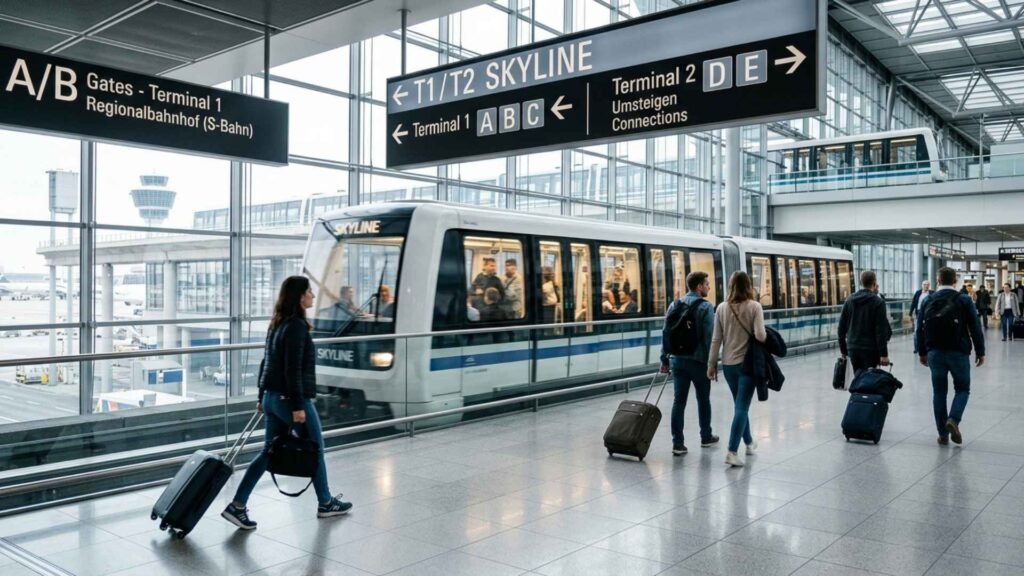
Understanding the terminal structure before arrival can make navigating Frankfurt Airport significantly easier.
Terminal 1
Terminal 1 is the airport’s largest and busiest terminal.
It is primarily used by:
- Lufthansa
- Star Alliance airlines
- most long-haul international flights
Terminal 1 includes:
- Concourses A, B, C and Z
- major passport control areas
- premium lounges
- large transit zones
Most international arrivals and Lufthansa connections operate here.
Important A/Z Gates Detail
Many Lufthansa intercontinental flights depart from Z gates, which are located above the A gates inside Terminal 1.
Passengers transferring between A and Z gate areas often pass through passport control during the connection process.
If your layover is short, monitor gate changes carefully because moving between A and Z sections can take longer than expected during busy hours.
Terminal 2
Terminal 2 mainly handles:
- many SkyTeam airlines
- several oneworld carriers
- various international airlines
Travelers commonly flying from Terminal 2 may encounter airlines such as:
- Air France
- Delta Air Lines
- KLM
- British Airways
Concourses D and E are located here.
Terminal 2 connects to Terminal 1 through:
- Skyline transfer system
- shuttle buses
- selected walking routes
Due to ongoing airport expansion and modernization projects, some inter-terminal transfers may temporarily rely more heavily on shuttle buses instead of the Skyline train.
Always follow current airport signage after arrival because transfer procedures occasionally change.
Frankfurt Airport Arrival Process
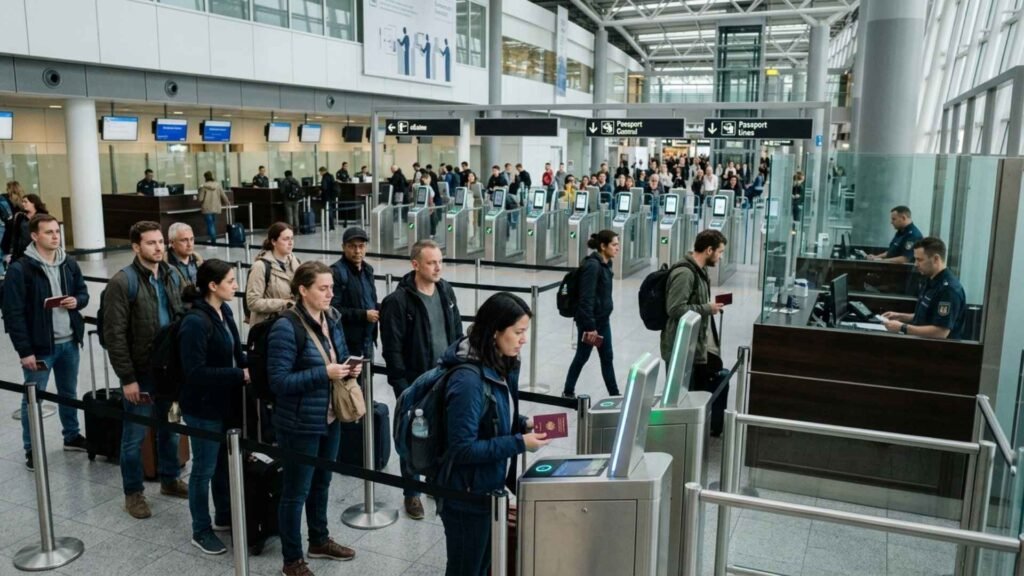
After landing, most travelers will follow a fairly predictable arrival process — from immigration and baggage claim to customs and airport exit procedures.
However, long walking distances, busy arrival waves, and terminal complexity can sometimes make the experience feel slower than expected, especially during peak hours.
1. After Landing
Frankfurt Airport is extremely large, and passengers may still spend additional time reaching the terminal after touchdown — especially during busy international arrival periods.
This is completely normal because of FRA’s high traffic volume and runway operations.
2. Passport Control
Travelers arriving from outside the Schengen Area must pass through German passport control.
Waiting times depend heavily on:
- arrival hour
- staffing levels
- simultaneous long-haul arrivals
- nationality and visa requirements
Typical processing times:
| Arrival Type | Typical Wait |
|---|---|
| Schengen Arrival | Often no formal passport control |
| Non-Schengen Arrival | 20–90 minutes |
| Peak Long-Haul Waves | Potentially longer |
In 2026, some non-EU travelers may also complete biometric registration connected to the EU Entry/Exit System (EES), including facial image and fingerprint collection.
During busy periods, this additional registration process may increase immigration waiting times.
EU/EEA travelers may be able to use automated eGates where available.
Additional information about the EU Entry/Exit System (EES) is available on the official European Union EES information page
Helpful Transit Tip
If your connection is under 90 minutes, avoid unnecessary terminal changes whenever possible. Immigration queues at Frankfurt Airport can become unpredictable during major international arrival waves.
3. Baggage Claim
Baggage claim operations are generally efficient, although walking distances inside the airport can be substantial.
Typical baggage delivery times:
- 15–40 minutes after immigration
- longer during heavy arrival periods
Oversized luggage may arrive at separate collection points.
4. Customs
After baggage collection, travelers proceed through customs inspection.
Passengers usually choose between:
- Green Channel → Nothing to Declare
- Red Channel → Goods to Declare
Germany maintains strict customs rules regarding:
- alcohol and tobacco
- commercial merchandise
- restricted food products
- large cash declarations
If uncertain, declaring goods is always safer than risking customs penalties.
Travelers can review current customs allowances and restricted goods on the official German Customs website.
Frankfurt Airport Transit Guide
Frankfurt Airport is one of the world’s busiest international transit hubs.
For experienced travelers, FRA can be highly efficient. For first-time visitors, however, the airport can feel surprisingly complex because of terminal size, walking distances, immigration procedures, and multiple security checkpoints.
Staying Airside During Transit
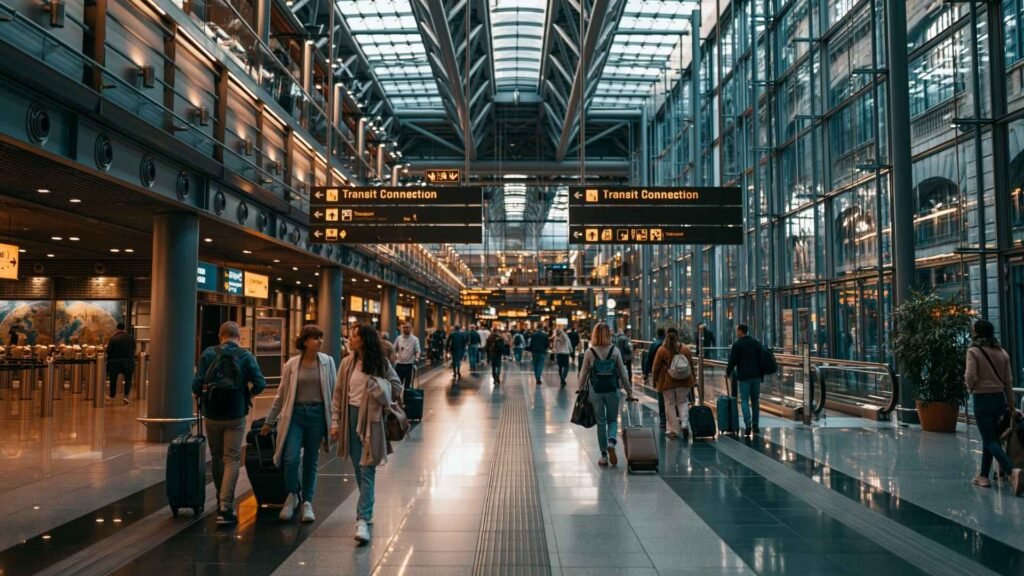
Many transit passengers can remain inside the secure international transit area without formally entering Germany.
This commonly applies when:
- flights are booked on one protected ticket
- baggage is checked through
- no terminal exit is required
- passengers remain inside the transit zone
However, transit requirements still depend on:
- nationality
- visa status
- ticket structure
- terminal routing
Some travelers may still require additional procedures during transit, including:
- airport transit visas
- Schengen entry permission
- additional immigration checks
Do Turkish Travelers Need a Transit Visa at Frankfurt Airport?
For Turkish passport holders, transit rules depend heavily on:
- final destination
- ticket structure
- whether baggage must be collected
- whether formal Schengen entry becomes necessary
Turkish travelers using fully protected airline connections and remaining inside the international transit area may not require a German airport transit visa.
However, self-transfer itineraries, overnight layovers, baggage collection, terminal exits, or formal Schengen entry can significantly change the requirements.
👉 Related Guide: Germany Airport Transit Visa for Turkish Citizens (2026)
Transit Security Checks
Even connecting passengers may need to pass additional security screening during international transfers.
This is especially common when:
- arriving from certain non-EU countries
- changing terminals
- transferring between international gate areas
During busy hours, transit security lines can become one of the slowest parts of the connection process.
If your itinerary includes a short layover, moving quickly after landing becomes extremely important.
Self-Transfer at Frankfurt Airport
Self-transfer flights are increasingly common in 2026, but separate-ticket itineraries can become risky at FRA.
Self-transfer passengers may need to:
- formally enter Germany
- pass immigration
- collect baggage
- re-check luggage
- pass security again
Travelers using separate tickets should strongly consider longer connection windows or even overnight layovers instead of tight same-day transfers.
Walking Times Between Gates & Terminals
One of the biggest mistakes travelers make at Frankfurt Airport is underestimating walking distances.
Approximate walking and transfer times:
| Route | Approximate Time |
|---|---|
| A Gates → Z Gates | 10–20 min |
| Terminal 1 → Terminal 2 | 15–25 min |
| Immigration → Long-Haul Gates | Sometimes 20+ min |
| Transit Security During Peak Hours | 15–40+ min |
These times can increase significantly during crowded travel periods.
Minimum Recommended Connection Times
| Connection Type | Recommended Time |
|---|---|
| Schengen → Schengen | 60–90 minutes |
| International → International | 90–150 minutes |
| Self-Transfer Connections | 4–6+ hours |
| Overnight Self-Transfer | Usually safest |
Official airline minimum connection times may sometimes be lower, but experienced travelers generally prefer more buffer time at Frankfurt Airport because of delays, immigration lines, and long walking distances.
Frankfurt Airport Overnight Transit
Many travelers use FRA for overnight layovers between long-haul flights.
The airport remains partially active overnight, although some terminal areas become quieter after late evening departures.
Travelers staying overnight should consider:
- overnight security rules
- reopening times for facilities
- food availability during late hours
- airport hotel access
- overall seating comfort during busy periods
The airport offers:
- seating zones
- quiet areas
- some sleeping-friendly spaces
- nearby airport hotels
For long overnight layovers, airport hotels are usually the most comfortable option.
Lounges, Fast Track & VIP Services
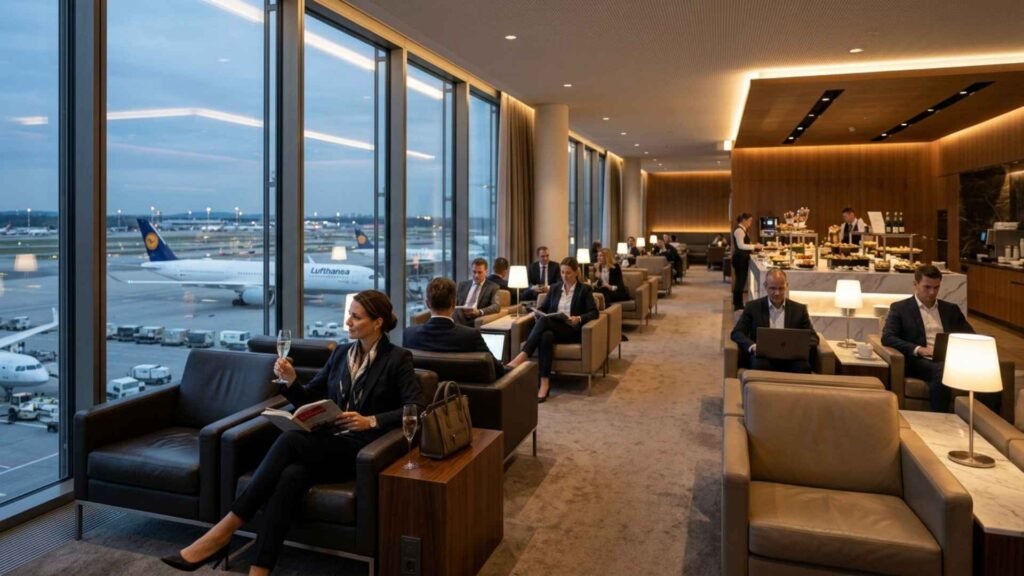
Frankfurt Airport has one of Europe’s largest airport lounge networks.
Travelers may access lounges through:
- business class tickets
- first class tickets
- airline elite status
- Priority Pass
- paid lounge access
Popular lounge options include:
- Lufthansa Business Lounge
- Lufthansa Senator Lounge
- Lufthansa First Class Lounge
- Air Canada Maple Leaf Lounge
- Priority Pass partner lounges
Many lounges provide:
- showers
- buffet dining
- quiet workspaces
- sleeping areas
- premium drinks
- runway views
Fast Track Services
Fast Track access can help reduce waiting times during:
- security screening
- premium check-in
- selected passport control areas
Fast Track access may be available through:
- premium airline tickets
- airline elite status
- VIP airport services
- paid Fast Track packages
During peak travel periods, these services can save significant time — especially for travelers with shorter connections.
Food & Restaurants
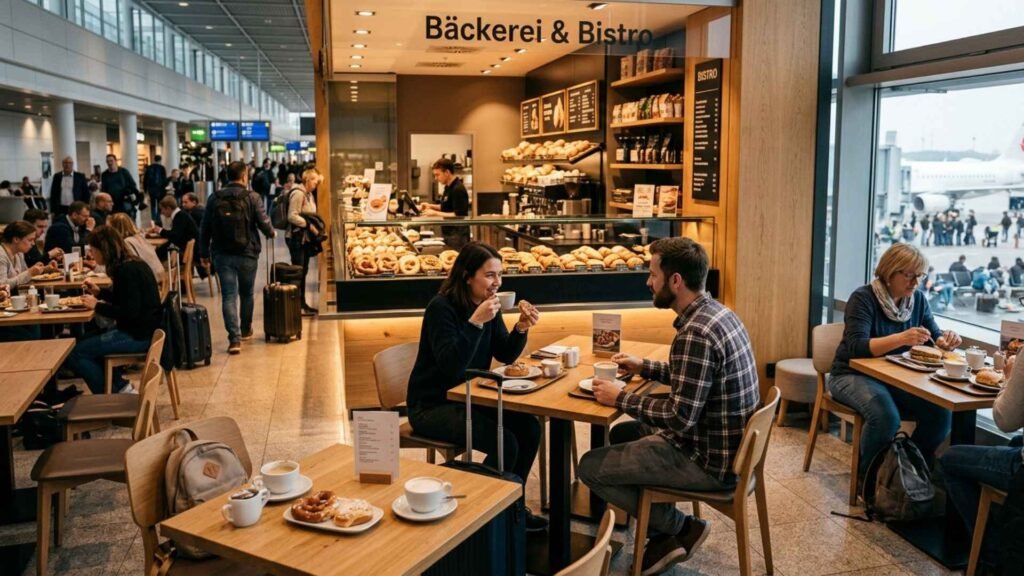
The airport offers a wide variety of dining options across both terminals.
Travelers can find:
- German cuisine
- international restaurants
- bakeries
- coffee shops
- quick snacks
- some late-night food options
Terminal 1 generally offers the largest restaurant selection.
Late-night dining options become more limited overnight.
Duty Free Shopping & Travel Essentials
Frankfurt Airport also has extensive shopping facilities inside international departure and transit zones.
Travelers can find:
- duty free stores
- luxury brands
- electronics shops
- travel accessories
- German souvenirs
- beauty and skincare stores
Duty free access depends on destination country and departure area.
Luggage Storage & Short Layover Options
Travelers with long layovers or short city visits may use luggage storage facilities inside the airport.
Storage services are available in both major terminals and are especially useful for:
- long transit connections
- short visits into Frankfurt
- overnight layovers
- travelers with heavy luggage
Availability and pricing may vary depending on luggage size and terminal location.
Airport Apps, Maps & Digital Tools
Frankfurt Airport offers several digital tools that can make navigating the airport much easier.
Travelers can use:
- live flight tracking
- digital terminal maps
- gate navigation
- estimated waiting times
- airport mobile apps
These tools become especially useful during short international connections or terminal transfers.
Travelers can also check live terminal maps, transfer information, and current airport updates on the official Frankfurt Airport website
Frankfurt Airport Transfers to the City Center
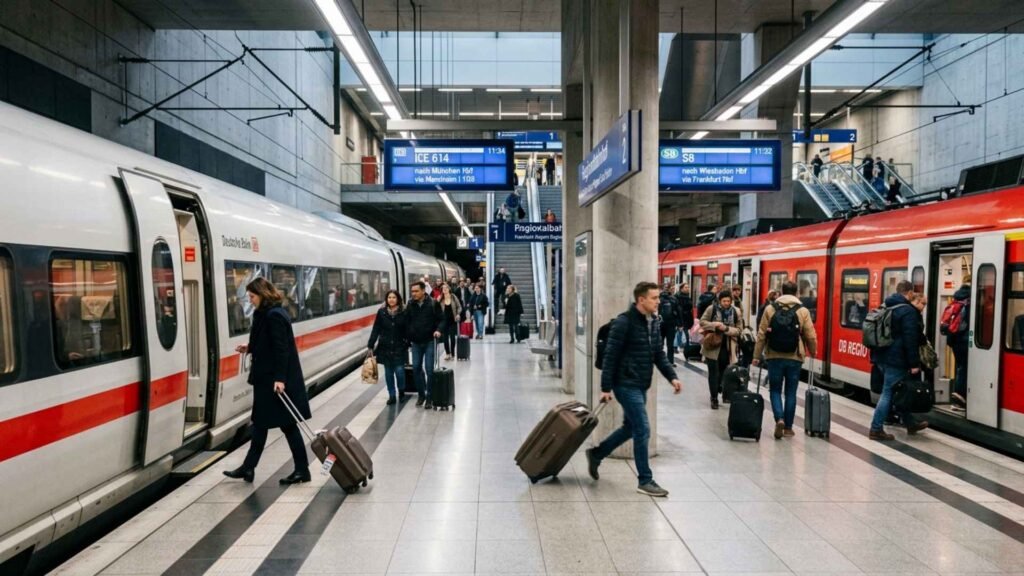
Getting into the city is relatively straightforward, with multiple transport options available for different budgets and travel styles.
Some travelers prioritize speed and convenience, while others prefer the cheapest connection into central Frankfurt.
Best Transfer Option by Travel Style
| Travel Style | Best Option |
|---|---|
| Cheapest Option | S-Bahn Train |
| Fastest City Connection | Regional Train |
| Long-Distance Germany Travel | ICE High-Speed Train |
| Families With Luggage | Private Transfer |
| Late-Night Arrival | Taxi |
| Premium Experience | Chauffeur Service |
Train
For most travelers, the train is usually the fastest and easiest way to reach central Frankfurt.
The airport includes:
- Regionalbahnhof (regional station)
- Fernbahnhof (long-distance station)
Popular train connections include:
- S8
- S9
- ICE high-speed trains
Typical travel time into central Frankfurt:
- approximately 12–20 minutes
Taxi
Taxis are available directly outside arrivals.
Typical travel time:
- 20–40 minutes depending on traffic
Taxi fares are significantly higher than rail options.
Private Transfers
Private transfers offer:
- fixed pricing
- hotel drop-off
- meet-and-greet service
- larger vehicle options
These services are especially useful after long-haul flights or late-night arrivals.
Airport Hotels & Overnight Stays

Several airport hotels are connected to terminals or located nearby.
Popular options include:
- Hilton Frankfurt Airport
- Hilton Garden Inn
- Sheraton Frankfurt Airport Hotel
- Hyatt Place Frankfurt Airport
Airport hotels are especially useful for:
- overnight layovers
- missed connections
- early departures
- long transit itineraries
SIM Cards, Wi-Fi & Currency Exchange
The airport provides:
- free Wi-Fi
- SIM card shops
- eSIM support
- ATMs
- currency exchange counters
However, airport exchange rates are usually less favorable than city-center banking options.
In 2026, many travelers primarily rely on:
- contactless cards
- Apple Pay
- Google Pay
- digital banking apps
Common Mistakes Travelers Make
Many travel problems here are surprisingly avoidable.
Most issues usually happen because travelers underestimate walking distances, security checks, or terminal complexity.
Booking Connections That Are Too Tight
Even when flights appear close together on paper, long walking distances, immigration lines, and transit security checks can quickly reduce connection time.
At a large international hub like FRA, short layovers often become stressful very quickly.
Forgetting About Terminal Changes
Terminal 1 and Terminal 2 are separate buildings connected by the Skyline train and shuttle services.
Always confirm your departure terminal before moving through the airport, especially during international transfers.
Underestimating Self-Transfer Risks
Separate-ticket itineraries create additional risks during delays, immigration bottlenecks, or baggage collection procedures.
Many missed connections happen because travelers assume self-transfer works the same way as protected airline connections.
Assuming Overnight Transit Is Always Comfortable
While the airport remains open overnight, sleeping inside terminals can become tiring without lounge access or hotel reservations.
Food options and quieter seating areas may also become limited late at night.
Is Frankfurt Airport Easy to Navigate?
Frankfurt Airport can initially feel intimidating for first-time travelers.
However, airport signage is generally:
- multilingual
- clear
- well organized
With proper preparation and enough connection time, navigating FRA becomes much easier than many travelers initially expect.
Frequently Asked Questions
Is Frankfurt Airport difficult for transit passengers?
The airport can feel complicated because of its size, terminal layout, and security procedures. However, most connections are manageable with enough transfer time.
How much time do I need for a connection?
Connection timing depends heavily on terminal changes, immigration procedures, and ticket structure.
Can I sleep inside the airport overnight?
Yes. The airport remains partially active overnight and offers seating areas, lounges, and nearby airport hotels.
Do I need to pass immigration during transit?
Not always. Some international transit passengers can remain airside without entering Germany.
Is the airport open 24 hours?
Yes. Operations continue throughout the night, although some restaurants, shops, and facilities close overnight.
Which terminal does Lufthansa use?
Most Lufthansa flights operate from Terminal 1.
Final Thoughts
Frankfurt Airport remains one of Europe’s busiest international transit hubs in 2026.
Understanding the terminal layout, transit procedures, and walking distances before arrival can make connections far less stressful — especially during long-haul journeys or tight transfers.
Whether you are arriving in Germany, connecting internationally, or planning a self-transfer itinerary, proper preparation can make the entire airport experience smoother and far more predictable.