
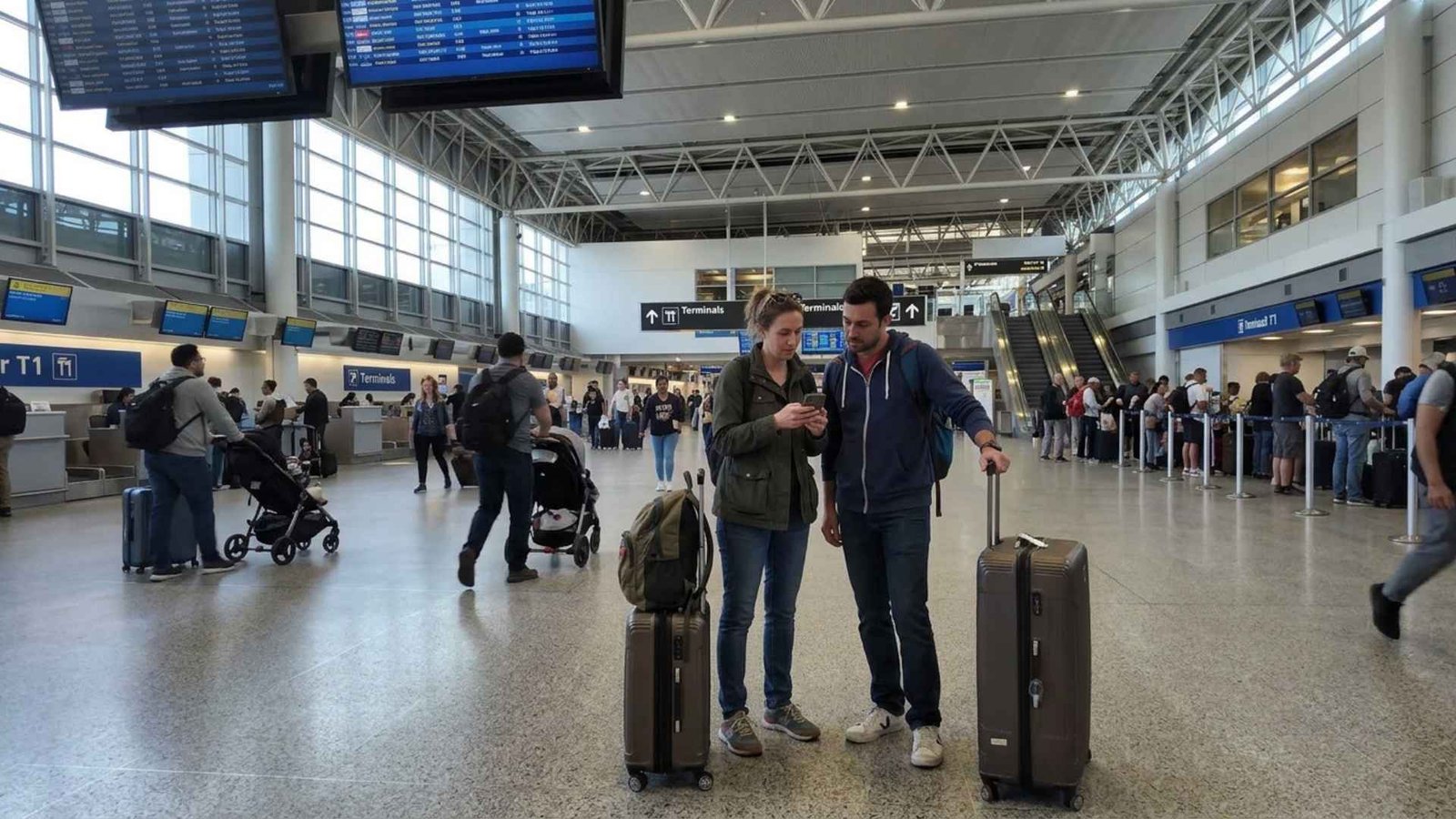
A JFK Airport self-transfer means connecting between separately ticketed flights and managing the connection yourself. A cheaper fare can come with extra responsibilities: collecting baggage, meeting fresh check-in deadlines and covering the cost if an inbound delay causes you to miss your next flight.
This guide explains how to check your booking arrangements, plan a realistic time buffer and handle the transfer from arrival to your onward gate.
Quick Answer: How Does a JFK Airport Self-Transfer Work?
On separate tickets, you manage the connection between flights, including any baggage collection, fresh check-in and terminal transfer. If these steps take you landside—the public area outside security—consider around 5–6 hours between flights as a cautious starting point.
This is our planning recommendation, not an official minimum or a guarantee. An overnight gap may be the better choice before an expensive or difficult-to-replace flight.
- Separate tickets: confirm who handles rebooking if an inbound delay causes a missed connection.
- Checked bags: plan to collect and check them in again unless the airlines confirm a different arrangement.
- International arrival: without US preclearance, expect immigration and customs even when continuing abroad.
- Deadlines: work backwards from bag-drop and boarding cut-offs, not departure time alone.
- Terminal change: allow for the landside transfer and another security check before returning airside, the secure area beyond security.
1. Confirm What Your Separate Tickets Actually Include
Before booking a JFK Airport self-transfer, establish who is responsible for the connection. Buying both flights during one checkout does not necessarily create a protected itinerary.
Look for wording such as “self-transfer”, “separate tickets” or “collect and recheck baggage”. If the arrangement is unclear, ask the seller to confirm in writing whether the airlines will rebook the onward journey after an inbound delay.
Check Protection and Baggage Separately
These are different questions:
- Will the airline accept your suitcase through to the final destination?
- Will it protect your onward flight if the first service is disrupted?
A favourable answer about baggage does not establish missed-connection protection. Confirm both arrangements, even when flying with the same airline or two alliance partners.
British Airways, for example, requires passengers travelling on separate tickets with different booking references to collect and recheck their bags. This also applies when all flights are with British Airways, BA Cityflyer or BA Euroflyer. Other airlines may apply different policies.
For the wider distinction between protected and independent connections, see our JFK Airport Transit & Connections Guide.
Read Any Booking-Site Connection Guarantee
If the seller offers a guarantee, check who provides it and what you must do to claim. Look for notification deadlines, exclusions, spending limits and whether approval is required before buying a replacement flight.
Save the terms with your booking confirmation. A seller’s promise should be assessed on its own wording; it does not automatically change the airlines’ ticket conditions.
Check That Both Flights Actually Use JFK
If the second booking shows LGA or EWR, you have an airport change. LaGuardia and Newark require a separate ground journey, with additional transport costs and potential delays.
Assess that route separately before booking. The planning buffer in this guide should not be treated as sufficient for an airport change without accounting for the ground journey and the next airport’s departure procedures.
2. Check US Entry Requirements Before You Fly
An international-to-international self-transfer at JFK does not provide a general route around US entry requirements. If your arriving flight is not precleared, plan to complete US immigration and customs.
Eligible Visa Waiver Program travellers need an approved ESTA. Other passengers generally need an appropriate visa unless an exemption applies. An existing valid visitor visa may be usable for transit; a separate transit visa is not automatically required for everyone.
Check the US Department of State’s transit visa guidance before purchasing a non-refundable itinerary. Your nationality, immigration status and journey purpose determine which requirements apply.
What Changes with US Preclearance?
If your specific flight completes US preclearance before departure, US admission formalities take place at the departure airport. Arrival at JFK normally follows a domestic-style process.
However, preclearance does not combine your tickets or arrange baggage transfer. You may still need to collect a suitcase, change terminals and check in again.
For the arrival formalities in more detail, read our JFK Airport Arrival Guide.
3. Build a Realistic JFK Airport Self-Transfer Time Buffer
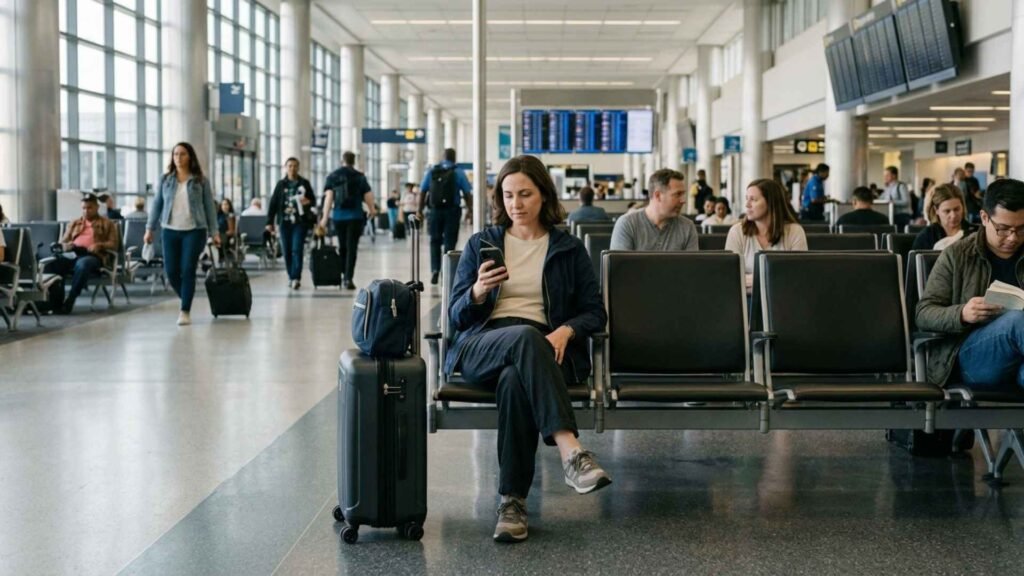
The 5–6-hour starting point is most useful when you must leave the secure area and begin another departure process. Adjust it to the actual tasks, deadlines and consequences of missing your flight.
A same-terminal connection after a domestic or precleared arrival may involve fewer steps. Before choosing a shorter gap, confirm whether baggage collection, a desk visit or another security check is required.
Work Backwards from the Earliest Deadline
Write down the onward airline’s check-in deadline, bag-drop deadline and required gate-arrival time. Use the rules for your departure airport and route; a carrier’s general guidance may have airport-specific exceptions.
For example, Delta currently lists a 60-minute minimum check-in time for domestic departures from JFK with checked baggage, compared with its general 45-minute requirement at many US airports.
Here is a hypothetical calculation for a five-hour gap:
- Scheduled arrival at JFK: 13:00.
- Onward departure: 18:00.
- Assumed bag-drop cut-off: 17:00, if your airline requires 60 minutes.
- Available time before bag drop closes: four hours, starting from scheduled arrival.
Those four hours must absorb any inbound delay, getting off the aircraft, applicable entry checks, baggage reclaim, terminal transfer and the check-in queue. Security and the walk to the gate still follow.
Joining a bag-drop queue at 17:00 is not the same as having your bag accepted by the deadline. The 60-minute cut-off is only an example: use the actual deadline for your onward airline and route, whether domestic or international.
When to Choose an Overnight Gap
Consider arriving the previous day when the onward flight is expensive, operates infrequently or is the last useful departure. An overnight stay also gives you more room to respond when travelling with children, needing assistance or carrying baggage that takes extra handling.
It reduces exposure to a modest delay but cannot guarantee success after a cancellation or major disruption. Compare the hotel, transport and meals with the price of a protected through-ticket before deciding which option offers better value.
Clara’s Tip: Before buying separate tickets, check what a replacement onward flight might cost. If that amount would be difficult to absorb, a small saving on the original fare may not justify the connection.
4. Collect and Recheck Your Baggage Correctly
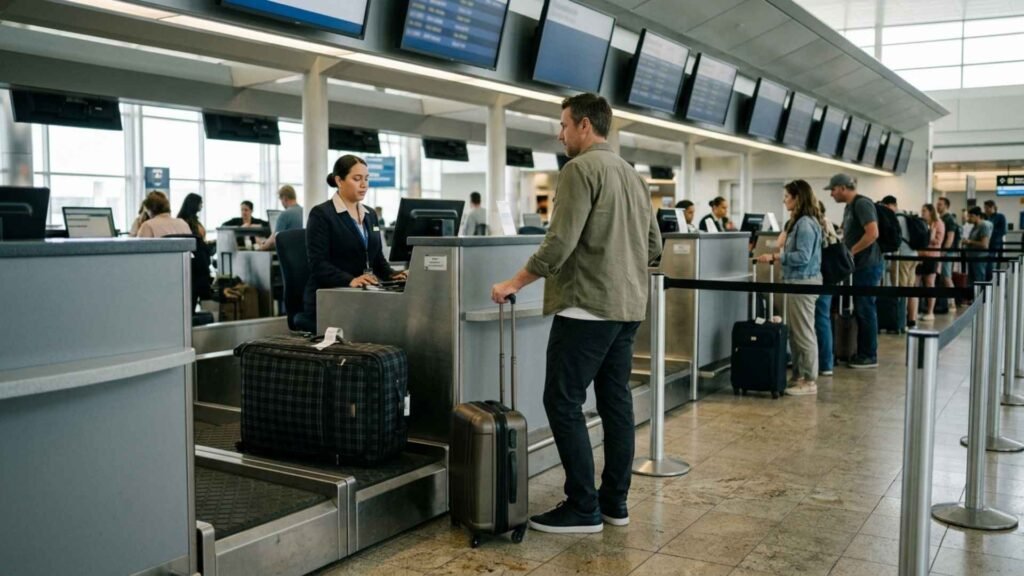
For a JFK Airport self-transfer, plan around reclaiming your checked luggage unless the operating airlines explicitly confirm otherwise. At your first check-in, inspect the baggage receipt and ask where you must physically collect the bag.
If Your Bag Is Tagged Only to JFK
Collect it at JFK and take it to the onward airline’s accepted check-in or bag-drop point. A separate ticket can mean a new baggage allowance and another fee, so compare weight, size and included bags for both bookings before packing.
An arrivals transfer belt may not issue new tags or accept luggage for every airline. Ask staff whether it handles your particular onward flight; otherwise, follow the departure airline’s check-in instructions.
If Your Bag Is Tagged to the Final Destination
After a standard international arrival without preclearance, normally collect your bag for US customs even if its tag shows the final destination. Follow any flight-specific exception confirmed by the airline and border officials.
Once customs is complete, confirm where the bag should be handed back. An onward tag does not tell you whether a particular recheck point is open or accepts your flight.
If Your Bag Does Not Arrive
Speak to the arriving airline’s baggage service team and obtain a report reference. Explain your separate onward booking and confirm how to provide delivery details if your itinerary changes.
Keep the onward airline informed if the delay threatens its check-in deadline. Waiting for a suitcase does not automatically exempt you from missed-flight rules.
If You Travel with Cabin Baggage Only
Cabin baggage (carry-on) removes the carousel wait and checked-bag handover. Check both airlines’ allowances, though: a bag accepted on the first flight may exceed the second airline’s limit.
After a domestic or precleared arrival, remaining airside may be possible if you already have the required boarding pass and can access your next gate. Ask airline staff whether any outstanding document check can be completed at a transfer desk or gate before leaving the secure area.
After a standard international arrival, travelling with cabin baggage still involves the required US entry procedures and onward security screening.
5. Reach the Correct Terminal and Complete Departure Checks
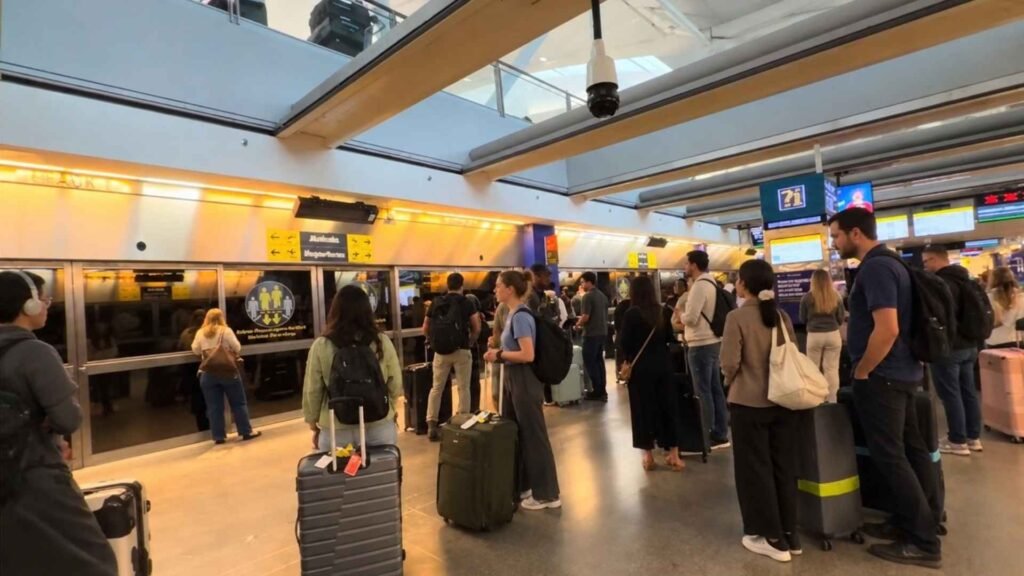
Check the operating carrier and live departure information for your onward flight. The airline selling a codeshare ticket may not be the airline operating it.
AirTrain travel between JFK terminals is free, but it takes place landside. A terminal change therefore means another TSA security check at the departure terminal. Include station walks and waiting time in your plan, and check current service notices.
The official JFK connections guide explains the airport’s transfer arrangements. For the wider layout and facilities, see our JFK Airport Guide.
Allow for Check-In Opening Times
A long gap does not necessarily mean you can hand over baggage immediately. Confirm when the onward airline opens its counter and accepts bags, particularly before an overnight connection.
If you are staying at a hotel, plan to keep your luggage with you unless the airline confirms that it will accept it earlier. Check the hotel shuttle’s operating hours, pick-up location and route back to your departure terminal before booking.
Once your bags and document checks are settled, complete security and locate the gate before planning a meal or lounge visit.
6. Know Who Pays If You Miss the Onward Flight
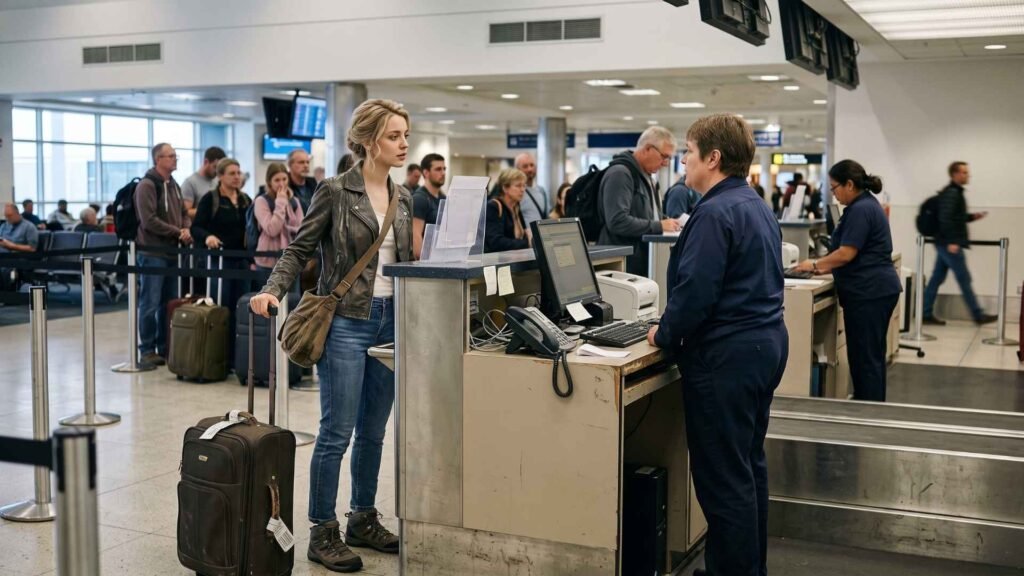
The main financial risk of a JFK Airport self-transfer is that the second booking may be treated as a missed flight even when the first airline caused the delay. The onward airline’s fare rules, any specific protection and applicable law determine your options.
You may need to pay a fare difference, an applicable change fee or the price of a new ticket.
Contact the Onward Airline Before Departure
Act as soon as the connection looks doubtful. Explain that you are arriving on a separate ticket and ask:
- Can the flight be changed before you are recorded as a no-show?
- What is the total cost of the next available option?
- Will missing this flight affect later or return flights on the same booking?
- What action preserves any remaining ticket value?
No-show consequences can be substantial. Delta, for example, states that non-refundable tickets not changed or cancelled before departure have no remaining value. Other carriers’ rules differ, so obtain advice for your exact booking.
Keep the Two Tickets’ Rights Separate
You may still have refund or other rights concerning the disrupted first flight. Any reimbursement for the separately booked onward ticket must be assessed separately.
Under US Department of Transportation rules, a cancelled or significantly changed flight can qualify for a refund when you do not accept the alternative transport or other compensation offered. That is different from missing a separate onward flight that operates as scheduled.
Depending on the route and operating airline, EU or UK passenger-rights rules may also apply to the disrupted flight. These rights do not automatically extend connection protection to a separately booked onward ticket.
Meal, hotel and replacement-travel assistance depend on the circumstances and relevant terms. Confirm coverage before paying for arrangements you expect someone else to reimburse.
Follow Any Insurance or Guarantee Claim Process
If you purchased cover, check whether it applies to independent connections and the specific cause of disruption. Follow its notification and approval requirements before committing to replacement travel.
Keep booking confirmations, delay notifications, boarding passes, receipts and written support responses. These help document what happened; they do not establish coverage on their own.
FAQs About JFK Airport Self-Transfer
Is a Three-Hour Layover Enough for a Self-Transfer at JFK?
It may work for a straightforward domestic arrival with cabin baggage and no terminal change. For a transfer involving immigration, baggage collection and fresh check-in, our cautious starting point is around 5–6 hours. Choose more time when the onward flight would be difficult to replace.
Can I Self-Transfer at JFK on the Same Airline?
Yes. Ask the carrier whether your separate bookings include missed-connection protection and through-checked baggage; using the same airline does not automatically provide either.
Does Online Check-In Mean I Can Go Straight to the Gate?
Only if you can reach your onward gate without further entry procedures, baggage collection, security screening or an airline desk visit.
Is a Self-Transfer Worth the Saving?
Compare both fares, baggage charges, any overnight stay and the potential cost of replacing the onward flight. Separate tickets can suit a flexible trip with a generous gap. A protected itinerary may offer better value when the saving is small or the onward journey is difficult to replace.
Final Thoughts
A well-planned JFK Airport self-transfer starts before booking. Confirm entry documents, baggage arrangements and onward deadlines, then choose a time buffer that reflects the cost of missing your flight. Treat the two tickets as independent unless specific protection is confirmed.