
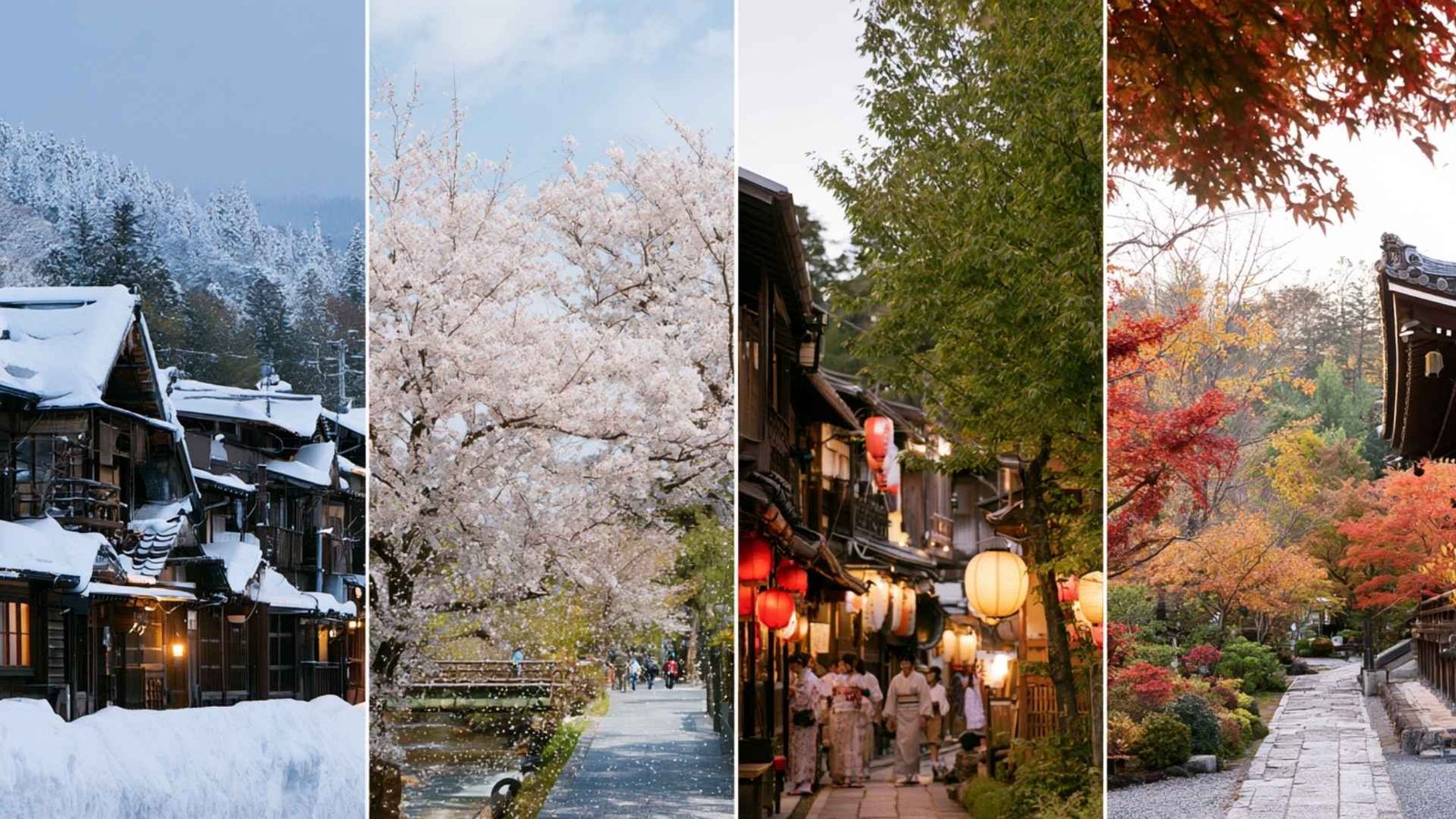
The best time to visit Japan depends on the experiences you value most and the regions included in your itinerary.
Late March and early April are famous for cherry blossoms but also bring high prices and large crowds. The second half of May offers comfortable spring conditions after Golden Week, while October and November are ideal for outdoor sightseeing and autumn scenery. January and February are particularly rewarding for skiing, snow-covered landscapes, and quieter city visits.
Regional differences are equally important. Hokkaido may still feel wintry when Tokyo enters spring, while subtropical Okinawa can already be warm. Comparing seasonal weather, crowds, costs, and local highlights will help you choose the right dates for your route.
Quick Answer: When Is the Best Time to Visit Japan?
For most first-time visitors traveling through Tokyo, Kyoto, and Osaka, the strongest periods are:
- Late March to early April for cherry blossoms
- The second half of May for comfortable spring weather after Golden Week
- October for walking, hiking, and regional travel
- Mid-November to early December for autumn colors
- January and February for skiing, snow scenery, and quieter cities
If you want the best balance of comfortable weather and manageable demand, choose the second half of May or the second half of October.
If seasonal scenery is your main priority, visit central Japan in late March or early April for cherry blossoms and from mid-November into early December for autumn foliage.
| Travel Priority | Best Time | Main Trade-Off |
|---|---|---|
| Best overall weather | Mid-to-late May, October, November | Popular cities can still be busy |
| Cherry blossoms | Late March to early April | High prices and large crowds |
| Autumn colors | Mid-November to early December | Kyoto and famous temples become crowded |
| Skiing and snow | January to February | Cold weather and possible transport disruption |
| Fewer crowds | Mid-January, February, June, early December | Cold, rain, or limited seasonal scenery |
| Better-value city stays | Mid-January, June, early December | Local events may increase prices |
| Festivals | July and August | Intense heat, humidity, and domestic demand |
| Hiking | May, summer at high elevation, October | Mountain access changes seasonally |
| Okinawa beaches | Late June to early July, October | Rain or tropical storms remain possible |
| Hokkaido road trips | June to September | Flower areas become busy in July |
💡 Clara’s Tip
If your dates are flexible and you do not need to see cherry blossoms, travel shortly after Golden Week in the second half of May. The weather is usually comfortable, spring scenery remains attractive, and demand is easier to manage than during peak sakura season.
Best Time to Visit Japan at a Glance
Japan has four distinct seasons, but they do not arrive everywhere at the same time.
The country extends from snowy Hokkaido in the north to subtropical Okinawa in the south. Elevation, proximity to the coast, and whether you visit the Pacific or Sea of Japan side can also affect local conditions.
| Season | Typical Months | General Conditions | Best For |
|---|---|---|---|
| Winter | December–February | Cold and dry in many Pacific-side cities; heavy snow in northern and mountain regions | Skiing, snow, onsen, winter food |
| Spring | March–May | Cool to warm, with rapidly changing temperatures | Sakura, gardens, walking, first visits |
| Summer | June–August | Rainy at first, followed by heat and humidity | Festivals, fireworks, mountains, beaches |
| Autumn | September–November | Hot in September, mild in October, cool in November | Foliage, hiking, food, city sightseeing |
The official JNTO weather and geography guide provides a useful overview of conditions across Japan’s major regions.
Understanding Japan’s Regional Climate Differences
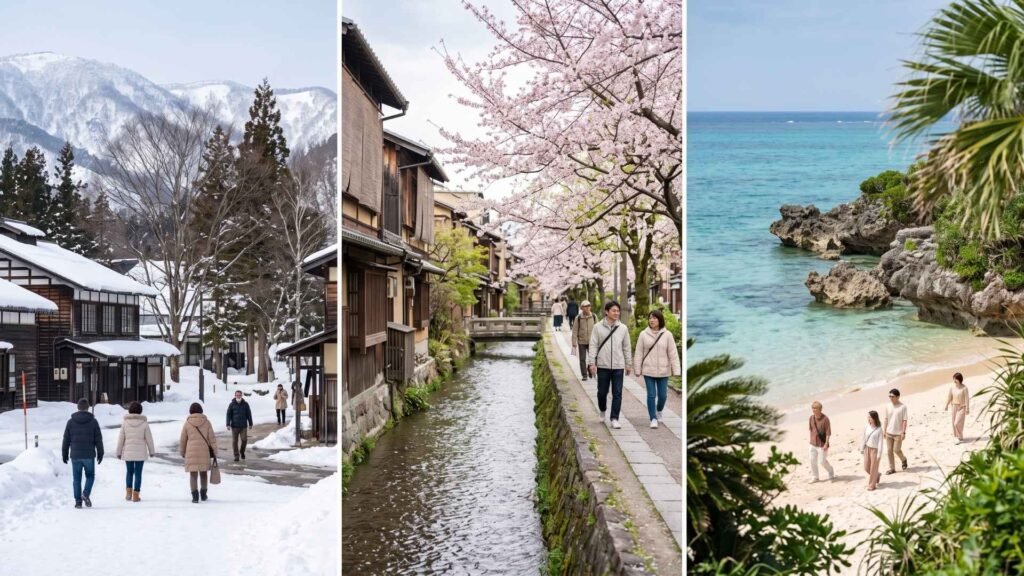
Choosing a month without considering your route can create misleading expectations. Sapporo, Tokyo, Kyoto, and Naha may experience completely different conditions on the same day.
Hokkaido and Northern Japan
Hokkaido has long, snowy winters and comparatively mild summers.
January and February are prime months for powder snow, winter festivals, and skiing. Spring arrives later than it does in Tokyo and Kyoto, with cherry blossoms often appearing from late April into early May.
Hokkaido is less affected by Japan’s main rainy season, making June particularly attractive for countryside drives, national parks, and outdoor activities.
July and August are warmer but usually less humid than central Japan. Autumn also begins early, with fall colors appearing at higher elevations in September before spreading through lower areas during October.
Tokyo, Kyoto, Osaka and Central Honshu
The classic Tokyo–Kyoto–Osaka route has cool to cold winters, humid summers, and generally comfortable spring and autumn weather.
Cherry blossoms usually arrive from the second half of March into early April, although exact dates vary every year.
Summer heat becomes increasingly noticeable in June and is normally strongest in July and August. Kyoto can feel particularly uncomfortable because of its inland location and limited air movement.
October usually brings better walking conditions, but it is often too early for peak foliage in Tokyo and Kyoto. Autumn colors across these cities generally become strongest during the second half of November.
The Japanese Alps and Mountain Regions
Elevation can be more important than latitude in Nagano, Gifu, Toyama, and other mountain areas.
Snow may remain after nearby cities have entered spring. Some alpine roads, hiking trails, cable cars, buses, and mountain accommodations operate only during defined seasonal windows.
May and October are rewarding for lower-level walks and scenery. Higher trails are generally more accessible during summer, but conditions can change quickly.
Check individual trail and transport opening dates rather than relying on the weather forecast for the nearest city.
Kyushu and Shikoku
Kyushu and Shikoku generally become warm earlier in spring and remain mild later into autumn.
Cherry blossoms often arrive slightly earlier than in Tokyo and northern Japan. The rainy season can bring substantial precipitation, particularly during June.
October and November are comfortable for cities, hot springs, countryside drives, and outdoor sightseeing. Autumn foliage usually develops later than it does in Hokkaido, northern Honshu, or high mountain regions.
Okinawa and the Southern Islands
Okinawa has a subtropical climate and follows a different seasonal pattern from mainland Japan.
Winter is mild, although it may be too cool or windy for a conventional beach holiday. Okinawa’s cherry blossoms can appear in January and February, long before the main sakura season reaches Tokyo.
The rainy season also begins earlier. Late June and early July can provide good beach conditions after the heaviest seasonal rain and before the main late-summer typhoon period.
October can be another attractive option, although tropical weather remains less predictable than in central Japan.
Japan Weather by Month
The temperatures below are approximate historical low-to-high ranges for Tokyo. They should not be treated as national averages because Hokkaido, Okinawa, mountain regions, and Sea of Japan destinations can be considerably different.
| Month | Approximate Tokyo Range | General Conditions |
|---|---|---|
| January | 1–10°C / 34–50°F | Cold, often clear and dry |
| February | 2–11°C / 36–52°F | Cold, with occasional snow |
| March | 5–14°C / 41–57°F | Changeable early spring weather |
| April | 10–19°C / 50–66°F | Mild, with cool mornings and evenings |
| May | 15–24°C / 59–75°F | Warm and generally comfortable |
| June | 19–26°C / 66–79°F | Humid with more frequent rain |
| July | 22–30°C / 72–86°F | Hot, humid, and increasingly sunny |
| August | 24–31°C / 75–88°F | Very hot and humid |
| September | 20–28°C / 68–82°F | Warm, humid, and changeable |
| October | 15–22°C / 59–72°F | Mild and comfortable |
| November | 9–17°C / 48–63°F | Cool and often clear |
| December | 4–12°C / 39–54°F | Cold, crisp, and generally dry |
Recent summers can produce temperatures well above historical averages. Check the forecast for each destination shortly before departure rather than relying only on monthly averages.
Month-by-Month Guide to the Best Time to Visit Japan
Japan changes noticeably from month to month, from January snow and March–April cherry blossoms to July–August festivals and November foliage. The year opens with winter at its most rewarding.
Japan in January — Snow, Skiing and Quiet Cities
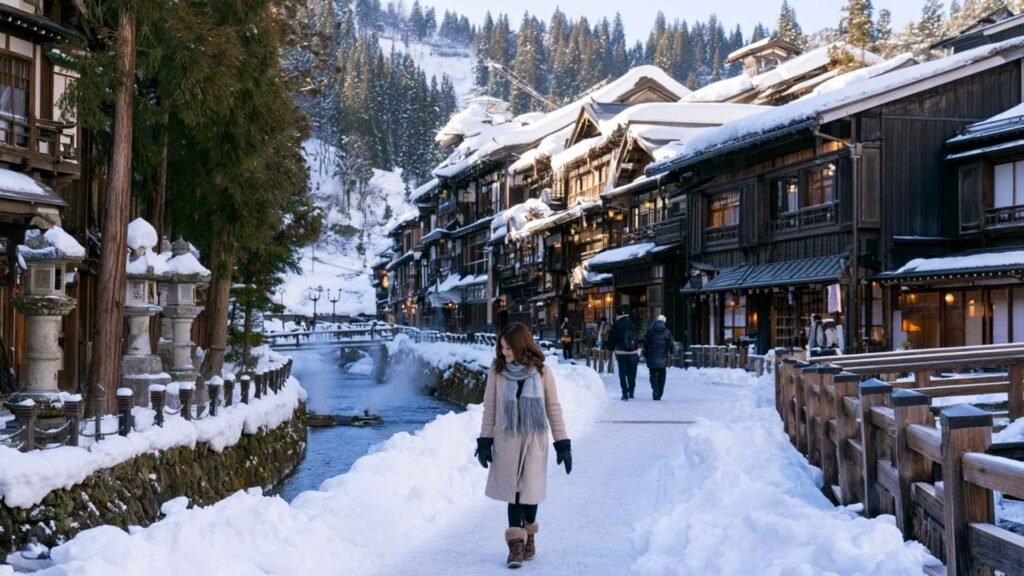
January is one of the best months for winter sports in Hokkaido, Nagano, Niigata, and Tohoku. Established ski resorts normally have reliable snow, while traditional onsen towns look especially atmospheric.
Tokyo, Osaka, and Kyoto are cold, but many days on the Pacific side are clear and dry. These conditions suit city sightseeing if you pack warm layers.
The first days of January require additional planning. The New Year holiday generally affects travel and business hours from around December 29 to January 3. Transport becomes busy, while some independent shops, museums, and restaurants close temporarily.
Visitor numbers often become more manageable after the holiday period.
Best for: Skiing, snow scenery, onsen, Mount Fuji views
Consider carefully: New Year closures and winter transport conditions
Japan in February — Winter Festivals and Excellent Snow
February remains cold but offers some of Japan’s strongest winter experiences.
Ski conditions are often excellent in Hokkaido and the Japanese Alps. Snow festivals and illuminated winter events attract visitors to northern destinations, including Sapporo.
This creates two different travel patterns: accommodation can be expensive around ski resorts and major festivals, while Tokyo, Kyoto, and Osaka remain comparatively quiet.
Plum blossoms begin appearing in warmer areas toward the end of the month. Okinawa is already experiencing its much earlier cherry blossom season.
Best for: Powder snow, winter festivals, photography, quieter cities
Consider carefully: Cold temperatures and high ski-resort prices
Japan in March — Early Spring and the Start of Sakura Season
March marks the transition from winter to spring, but conditions can change rapidly.
The first half of the month may still feel cold in Tokyo and Kyoto, particularly in the mornings and evenings. Skiing continues in many mountain areas while lower elevations begin moving into spring.
Plum blossoms and other early flowers appear before the main cherry blossom season. Sakura may reach warmer regions and major central cities during the second half of March.
Hotel demand can rise quickly once flowering dates become clearer. A route covering several regions gives you more flexibility than relying on one city and a narrow date window.
Best for: Early blossoms, late-season skiing, spring atmosphere
Consider carefully: Variable temperatures and rising hotel prices
Japan in April — Cherry Blossoms and Peak Spring Demand
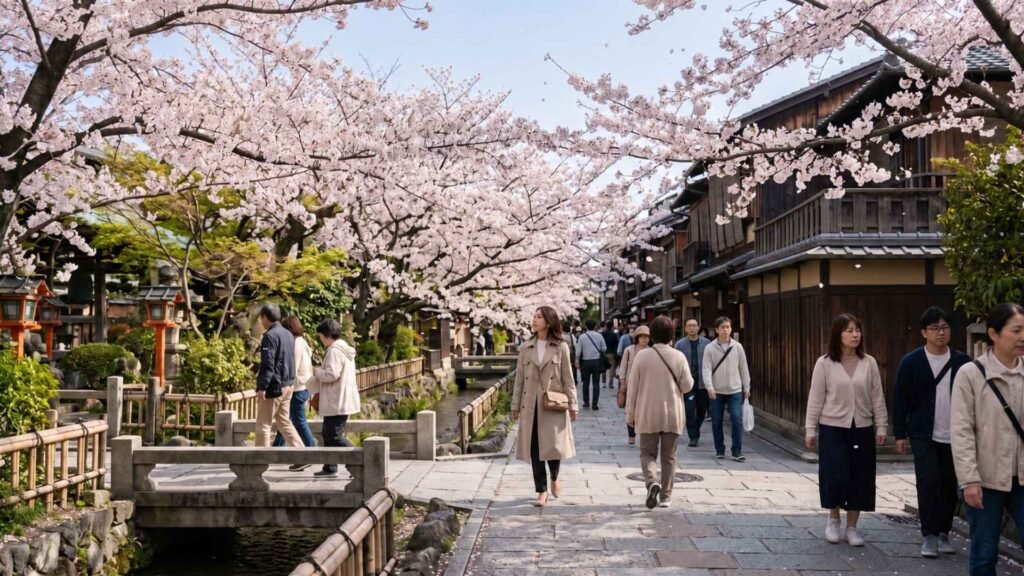
For many travelers, April represents the classic image of Japan.
Tokyo, Kyoto, Osaka, Hiroshima, and other central destinations often experience peak cherry blossom viewing from late March into early April. Parks, riversides, castles, and temple gardens become exceptionally beautiful.
The disadvantage is demand. Famous viewing areas can be crowded from early morning, and well-located hotels may sell out months ahead.
The season continues after the petals fall in Tokyo. Tohoku, mountain regions, and parts of Hokkaido may offer later blossoms from mid-April into early May.
Golden Week begins near the end of April, creating another major increase in domestic travel.
Best for: Cherry blossoms, gardens, mild daytime weather
Consider carefully: High prices, crowds, late-April holiday travel
Japan in May — Comfortable Weather After Golden Week
May can be one of the best times to visit Japan, provided you avoid or prepare for Golden Week.
Golden Week extends from late April into early May. Its exact pattern varies by year, but crowded trains, limited hotel availability, and strong domestic demand are common.
Conditions improve once the holiday period ends. The second half of May usually brings warm but manageable weather across Tokyo, Kyoto, Osaka, Hiroshima, and much of central Japan.
Spring greenery is vibrant, daylight hours are long, and the main rainy season has not fully developed across most of Honshu.
Hokkaido may still have late cherry blossoms in early May, while mountain destinations begin opening more fully.
Best for: First-time trips, gardens, walking, countryside travel
Consider carefully: Golden Week and warmer southern destinations
Japan in June — Rainy Season and Lush Scenery
June overlaps with the rainy season, known as tsuyu, but this does not necessarily mean continuous rain every day.
Travelers should expect higher humidity, cloudy periods, and more frequent showers. The rain generally reaches Okinawa and southern Japan before progressing north.
Kyushu and Shikoku can receive substantial rainfall, while Hokkaido is comparatively less affected. This makes Hokkaido a strong choice for early summer road trips, national parks, and outdoor activities.
In Tokyo, Kyoto, and Osaka, flexible planning is essential. Museums, covered shopping streets, aquariums, cafés, and indoor cultural attractions provide useful alternatives on wet days.
Hydrangeas, moss gardens, and misty temple grounds also give June a distinctive atmosphere.
Best for: Hokkaido, hydrangeas, gardens, indoor culture
Consider carefully: Rain, humidity, and outdoor day trips
Japan in July — Festivals, Mountains and Rising Heat
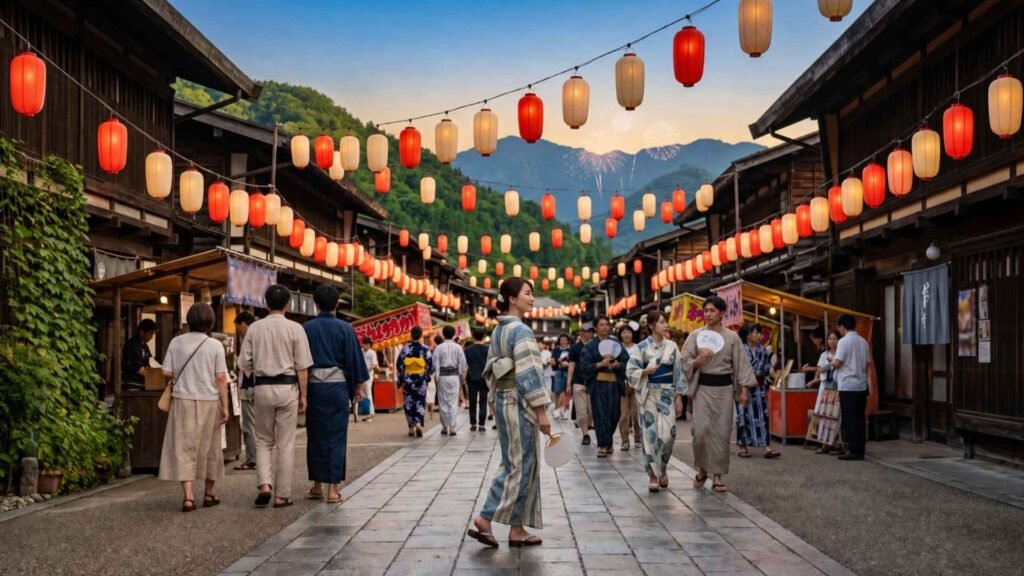
The rainy season gradually ends across much of Japan during July, although the timing differs by region and year.
Once the rain subsides, temperatures and humidity rise quickly. Tokyo, Kyoto, and Osaka can feel more uncomfortable than the temperature alone suggests.
July also brings summer festivals, fireworks displays, beach openings, and greater access to high mountain routes. The Mount Fuji climbing season generally operates during summer, but trail dates, reservations, rules, and conditions must be checked each year.
Travelers who struggle with heat can shift their route toward Hokkaido, Tohoku, or higher-altitude destinations in the Japanese Alps.
Best for: Festivals, fireworks, mountain trips, Hokkaido
Consider carefully: Heat, humidity, and early-month rain
Japan in August — Major Festivals, Obon and Intense Heat
August is one of Japan’s most energetic months, with major festivals, fireworks, and traditional events across the country.
It is also usually the hottest and most humid month in Tokyo, Kyoto, Osaka, and much of central and southern Japan. Long outdoor sightseeing days can become exhausting.
Several important Tohoku festivals take place in early August, but accommodation in event cities should be reserved early.
Obon, commonly observed around August 13–16, creates heavy domestic travel demand. Trains, flights, highway buses, and regional hotels can sell out as families travel across the country.
Typhoons may also disrupt transport, so avoid building an itinerary with no room for changes.
Best for: Major festivals, fireworks, summer culture
Consider carefully: Extreme heat, Obon demand, typhoon disruption
Japan in September — Smaller Crowds and Unsettled Weather
September is a transitional month.
School holidays end, and many attractions become less crowded than they were in August. However, summer heat often continues in Tokyo, Kyoto, Osaka, and southern Japan, particularly during the first half of the month.
Typhoons are most frequent from late August through September. A storm can affect flights, ferries, trains, and outdoor plans even if it does not make landfall directly where you are staying.
Hokkaido is the major exception to the late-summer pattern. Temperatures become cooler, and early autumn colors can appear at high elevations such as Daisetsuzan National Park.
Best for: Early Hokkaido foliage and reduced summer demand
Consider carefully: Typhoons, lingering heat, transport changes
Japan in October — Comfortable Weather and Outdoor Travel
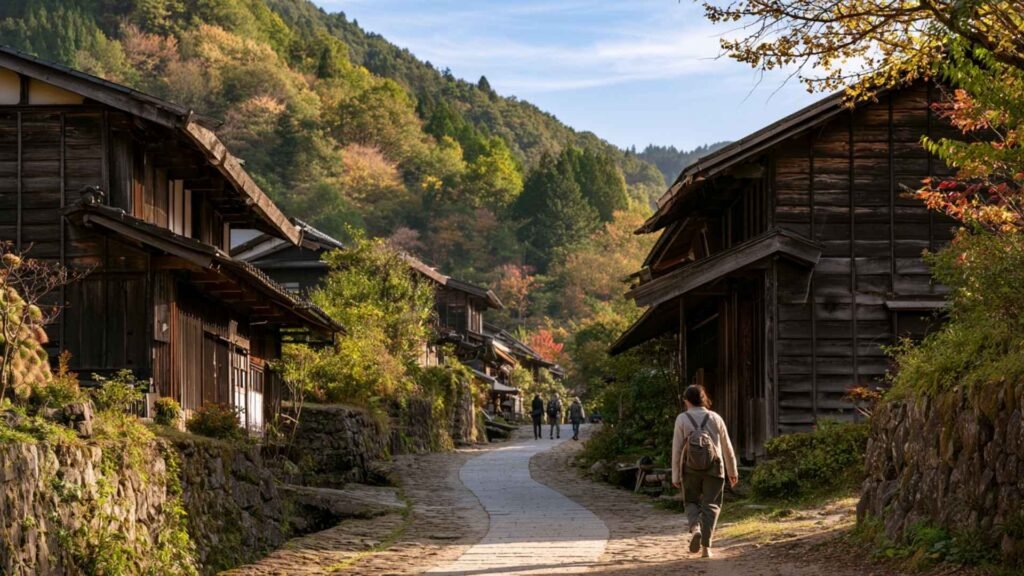
October is one of the strongest all-round months for visiting Japan.
Humidity usually falls, daytime temperatures become more comfortable, and typhoon activity generally decreases as the month progresses. Conditions suit city walking, countryside routes, cycling, and hiking.
Autumn colors appear in Hokkaido, Tohoku, the Japanese Alps, and other high-elevation destinations. Tokyo, Kyoto, and Osaka are normally still too early for peak foliage.
October has become increasingly popular, so major cities, weekend destinations, and famous hiking areas can still be busy.
For first-time visitors who value comfortable weather more than cherry blossoms or peak foliage, October is an excellent choice.
Best for: Walking, hiking, first visits, regional travel
Consider carefully: Popular weekends and early-month weather
Japan in November — Autumn Colors and Cool Weather
November is another leading candidate for the best time to visit Japan.
Much of the country experiences cool, comfortable conditions while autumn colors move from northern and mountain areas into central cities.
Tokyo’s parks and gardens often become colorful from mid-to-late November. Kyoto’s foliage season generally strengthens during the second half of the month and may continue into early December.
Temples, gardens, and famous day-trip destinations can become extremely busy during peak color. Kyoto accommodation is particularly sensitive to foliage demand.
Mornings and evenings can be cold even when the afternoon feels mild, making layers more practical than one heavy coat.
Best for: Autumn foliage, photography, city sightseeing, seasonal food
Consider carefully: Peak foliage crowds and cold evenings
Japan in December — Clear Skies, Illuminations and Early Snow
Early December can be an underrated period for visiting Japan.
Late autumn colors may remain in Tokyo, Kyoto, Osaka, and southern destinations during the first part of the month. Winter illuminations also begin across major cities.
The weather becomes colder, but Pacific-side destinations often experience crisp, relatively dry days. Clear winter conditions can improve the chance of seeing Mount Fuji, although visibility is never guaranteed.
Some ski resorts begin opening, but travelers seeking consistently deep snow should usually choose January or February.
Demand rises again toward the end of December as the New Year holiday approaches.
Best for: Illuminations, clear skies, late foliage, quieter sightseeing
Consider carefully: Early-season snow and New Year closures
Best Time to Visit Japan by Travel Priority
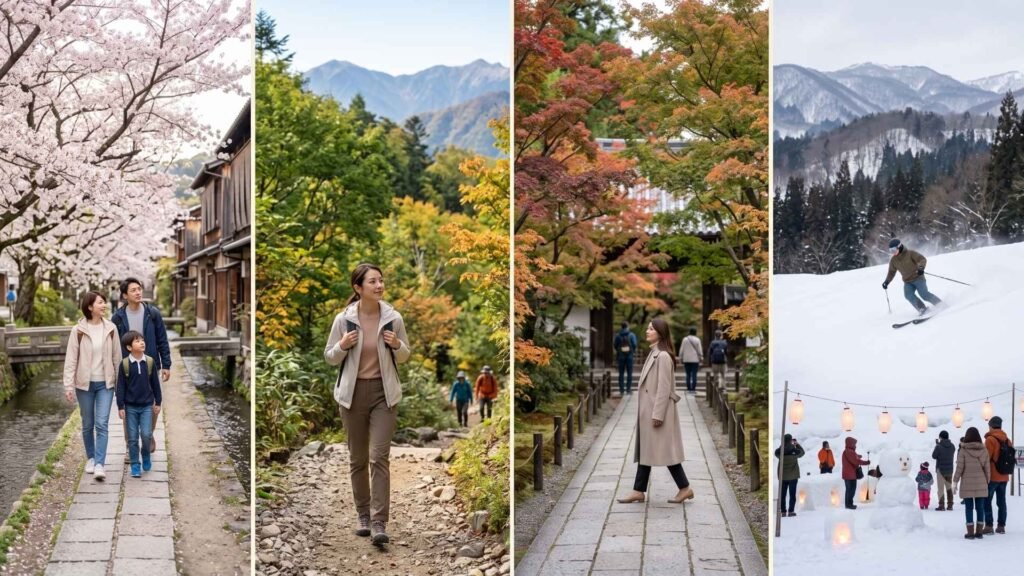
After comparing Japan month by month, the next step is to match the season to the experience you value most. For many travelers, that begins with cherry blossom season.
Best Time to Visit Japan for Cherry Blossoms
The main cherry blossom window for Tokyo, Kyoto, Osaka, and Hiroshima usually falls between the second half of March and early April.
However, flowering dates are weather-dependent. A warm winter or early spring can bring blossoms forward, while cooler conditions can delay them.
The season lasts much longer nationwide than it does in one city:
| Region | Typical Sakura Period |
|---|---|
| Okinawa | January to February |
| Kyushu, Shikoku and warmer areas | Mid-to-late March |
| Tokyo, Kyoto and Osaka | Late March to early April |
| Northern Honshu and mountain regions | Early to late April |
| Hokkaido | Late April to early May |
Do not plan your entire trip around one predicted day. Include several viewing locations or regions and consult the official Japan cherry blossom forecast as your departure approaches.
Best Time to Visit Japan for Autumn Colors
Autumn foliage progresses from colder northern and high-elevation areas toward central and southern Japan.
| Region | Typical Foliage Period |
|---|---|
| High-elevation Hokkaido | September |
| Hokkaido and northern Tohoku | October |
| Japanese Alps and northern Honshu | October to early November |
| Tokyo, Kyoto and central Honshu | Mid-November to early December |
| Southern Honshu, Shikoku and Kyushu | Late November to December |
November is the most versatile month for a conventional Tokyo–Kyoto itinerary. Higher-elevation destinations offer earlier alternatives if city foliage has not yet developed.
Best Time for Skiing and Snow
January and February provide the most reliable conditions for a snow-focused trip.
Hokkaido is known for powder snow and large ski areas. Nagano and Niigata are easier to combine with Tokyo, while Tohoku offers winter scenery and less internationally famous resorts.
December is less reliable at lower elevations. March brings longer daylight and milder temperatures, but snow quality may become less consistent.
Best Time for Hiking
May and October are excellent for lower-elevation hiking across central Japan.
High mountain routes generally become accessible later, often from June or July, before beginning to close again in autumn. Access depends on elevation, snow conditions, and local transport schedules.
Always confirm trail, cable car, mountain hut, and bus operations before traveling.
Best Time for Festivals
July and August contain the largest concentration of summer festivals and fireworks events.
Festival travel can be a highlight of a Japan itinerary, but accommodation in smaller event cities often sells out. Heat, humidity, and crowded transport also limit how much additional sightseeing you can comfortably schedule.
Winter snow festivals and autumn cultural events provide cooler alternatives.
Best Time for Families
The second half of May, October, and early November are particularly practical for family trips.
These periods generally offer more comfortable walking temperatures than midsummer and fewer weather complications than the rainy season.
Families traveling during July or August should include indoor attractions, shaded breaks, frequent hydration, and shorter outdoor sightseeing blocks.
For a longer family route, use this 14-day Japan itinerary to balance cities, travel days, and slower-paced stops.
Japan’s Busiest Travel Periods
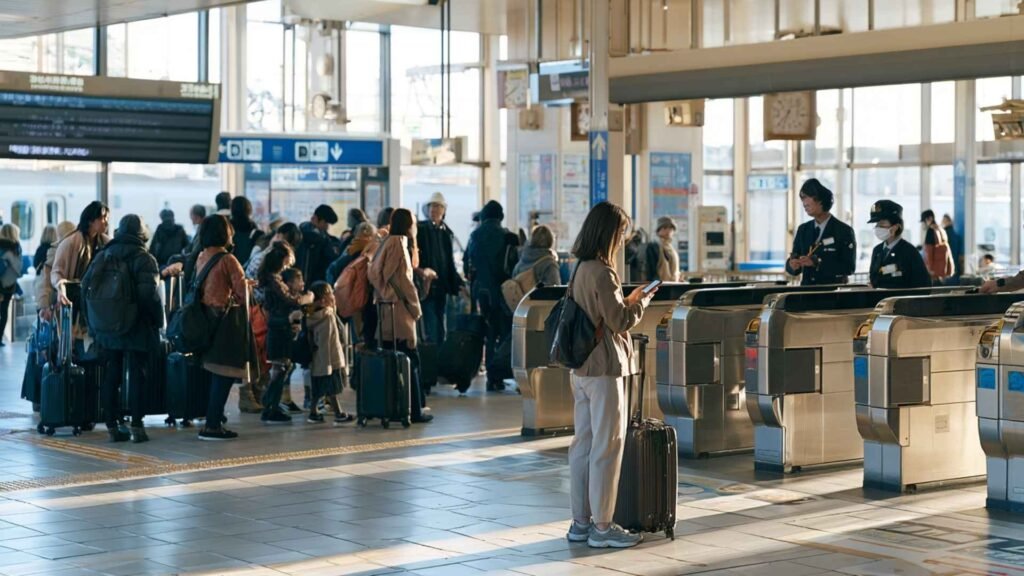
Japan’s most famous attractions can feel busy in any month, but several periods require additional preparation.
Cherry Blossom Season
Late March and early April bring heavy international and domestic demand to Tokyo, Kyoto, Osaka, Nara, Hiroshima, and other popular destinations.
Reserve accommodation early and visit famous viewing areas in the morning. Neighborhood parks, canals, and riversides often provide a calmer experience than landmark locations.
Golden Week
Golden Week extends from late April into early May and is one of Japan’s busiest domestic travel periods.
The precise holiday sequence changes each year. Intercity trains, flights, highway buses, theme parks, and hotels can become heavily booked.
Travel is still possible, but reservations should be made early and the itinerary should avoid unnecessary hotel changes.
Obon
Obon is commonly observed around August 13–16, although local customs and dates can vary.
Long-distance transport and regional destinations become busy as people visit family or take domestic holidays. Reserve intercity travel early if your dates overlap.
New Year
The New Year period generally affects travel from around December 29 to January 3.
Shrines and temples attract enormous numbers of visitors, while some museums, restaurants, and independent businesses close. Transport demand and hotel prices may also increase.
Peak Autumn Foliage
Autumn demand is spread across a longer period because foliage moves gradually across the country.
However, Kyoto, Nikko, Hakone, and famous temple gardens can still become exceptionally crowded on peak October and November weekends.
How Seasons Affect Your Japan Itinerary
Your travel month should influence the structure of your route, not only what you pack.
In spring, include several blossom locations instead of relying on a single park or date.
In summer, schedule outdoor attractions in the morning, use the afternoon for indoor activities, and allow additional rest time.
In autumn, follow foliage from north to south or from higher elevations toward lower cities.
In winter, reduce tightly timed connections through snowy regions and avoid placing an international departure immediately after a long overland journey.
Rail travel remains efficient throughout the year, but the value of a national pass depends on your route and distances rather than the season. Compare individual fares with the options in this Japan Rail Pass guide before purchasing.
How Far Ahead Should You Book Japan?
Booking requirements depend heavily on the season and type of accommodation.
| Travel Period | Suggested Planning Approach |
|---|---|
| Cherry blossom season | Reserve popular cities several months ahead |
| Golden Week | Book hotels and transport as soon as plans are fixed |
| Summer festivals | Reserve event cities early because room supply may be limited |
| Obon | Book long-distance transport in advance |
| October and November | Reserve Kyoto and major foliage destinations early |
| Ski season | Book popular resorts before peak winter demand |
| January, June, early December | Greater flexibility may be available |
These are planning guidelines rather than fixed deadlines. Small ryokan, family rooms, luxury hotels, and accommodation near major stations can sell out earlier than standard business hotels.
Travel dates also affect your overall budget. Use this average Japan trip cost guide to compare accommodation, transport, food, and daily spending before booking flights.
How to Choose the Right Month for Your Japan Trip
Use this process if several seasons appeal to you:
- Decide which experience is non-negotiable, such as cherry blossoms, skiing, hiking, festivals, or autumn colors.
- Identify the regions included in your route.
- Compare regional conditions instead of relying only on Tokyo weather.
- Check whether your dates overlap with Golden Week, Obon, or New Year.
- Compare hotel prices before committing to flights.
- Leave flexibility for rain, heat, typhoons, or changing bloom dates.
Choose the route and month together. Replacing Kyoto with Hokkaido or Tokyo with Okinawa can completely change which travel period works best.
Frequently Asked Questions About the Best Time to Visit Japan
What is the best month to visit Japan?
May after Golden Week, October, and November provide the best overall balance for many visitors. May offers comfortable spring weather, October suits outdoor sightseeing, and November brings autumn colors. The best individual month still depends on your route and seasonal priorities.
Is April or October better for Japan?
Choose April if cherry blossoms are a major priority and you accept higher prices and crowds. Choose October for more comfortable walking weather, hiking, and easier regional travel. October is generally too early for peak autumn colors in Tokyo and Kyoto.
When is cherry blossom season in Japan?
Cherry blossom season moves across Japan from January in Okinawa to early May in Hokkaido. Tokyo, Kyoto, and Osaka usually bloom from late March into early April, but annual weather conditions can move the dates earlier or later.
When is autumn foliage season in Japan?
Autumn colors begin in Hokkaido and high mountain areas during September and October. Tokyo, Kyoto, Osaka, and much of central Japan generally see their strongest foliage from mid-November into early December.
What is the cheapest month to visit Japan?
Mid-to-late January, June, and early December often provide better-value accommodation in Japan’s major cities. However, there is no nationwide cheapest month because ski resorts, festivals, public holidays, and local events can increase prices during otherwise quieter periods.
When is Japan least crowded?
Japan’s major cities are generally quieter in mid-to-late January, February, June, and early December. Famous attractions in Tokyo and Kyoto can still be busy, so arriving early in the morning may make a greater difference than the month alone.
Should I avoid Japan during the rainy season?
Not necessarily. June can work well for city trips, gardens, hydrangeas, and travelers who prefer smaller peak-season crowds. Rain often comes in periods rather than lasting all day, while Hokkaido is comparatively less affected by the main rainy season.
Should I avoid Japan during typhoon season?
You do not need to avoid the entire season, but flexibility is important. Typhoons are most frequent from late August through September and may disrupt flights, ferries, and trains. Refundable bookings, travel insurance, and itinerary buffers reduce the risk.
Is summer a bad time to visit Japan?
Summer is challenging but not automatically a poor choice. July and August offer festivals, fireworks, beaches, and mountain activities. The main disadvantage is intense heat and humidity across central and southern Japan. Hokkaido and higher-elevation regions provide cooler alternatives.
Is winter suitable for a first trip to Japan?
Yes. Tokyo, Kyoto, and Osaka remain easy to explore, while visitor numbers may be lower outside New Year. Add Hokkaido, Nagano, Niigata, or Tohoku if snow is a priority, but leave additional time for weather-related transport changes.
Final Thoughts
The best time to visit Japan is the period that matches your route and most important travel experience.
Choose late March or early April for cherry blossoms, the second half of May for balanced spring travel, October for comfortable outdoor sightseeing, November for autumn colors, or January and February for snow.
Once you have selected your season, use the Japan itinerary for first-time visitors to turn those dates into a practical route through Japan.