
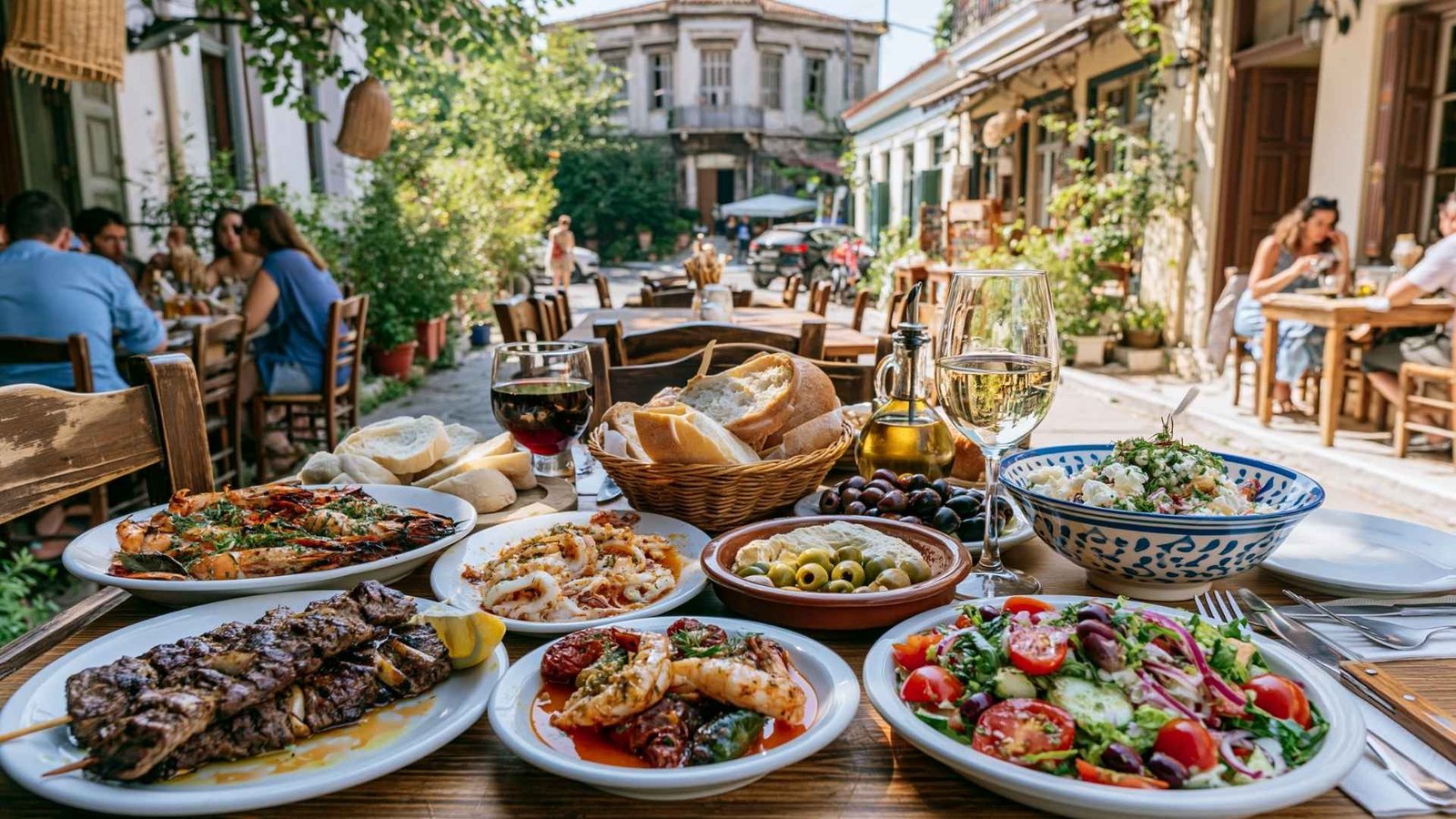
Athens is known for its ancient landmarks, but the city’s food culture is just as memorable.
From bakery breakfasts and street-food lunches to long meze dinners and fresh seafood by the coast, Athens offers one of the most rewarding food scenes in Greece.
If you’re wondering what to eat in Athens, this guide covers the traditional dishes, street foods, desserts, local specialties, and neighborhood food experiences that deserve a place on your itinerary.
Quick Answer: What to Eat in Athens?
If you only have a few days in the city, prioritize these classic Athens foods:
- Souvlaki
- Gyros
- Moussaka
- Spanakopita
- Greek Salad (Horiatiki)
- Grilled Octopus
- Seafood Meze
- Loukoumades
- Koulouri
- Galaktoboureko
Together, these dishes provide a strong introduction to traditional Greek food, Athens street food, seafood culture, bakery traditions, and local dining habits.
Traditional Foods You Should Try in Athens
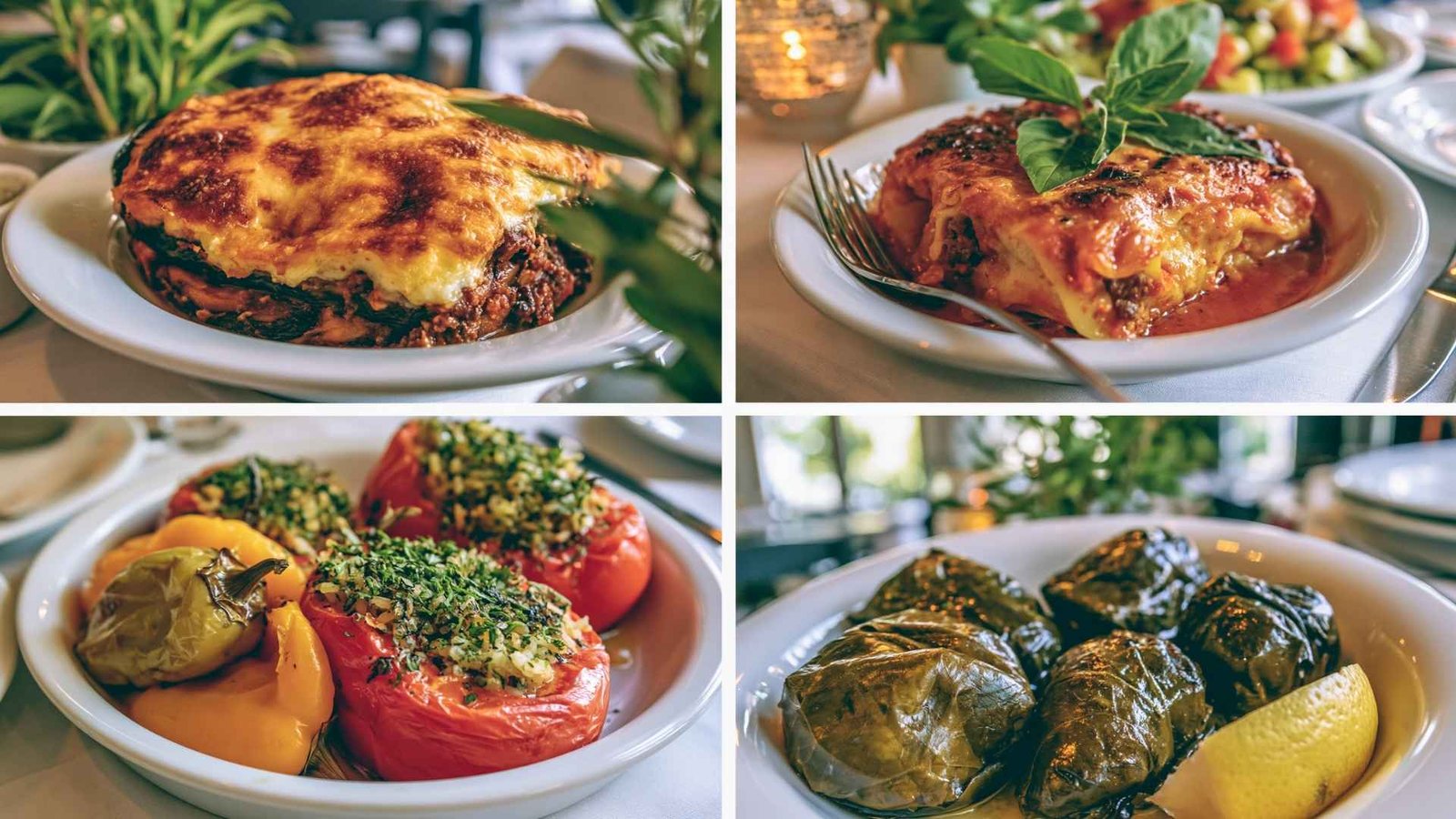
For visitors researching what to eat in Athens, traditional dishes often provide the best introduction to Greek cuisine.
From rich baked classics such as moussaka and pastitsio to vegetable-based favorites like gemista and dolmades, these dishes reveal the flavors and traditions that continue to shape everyday food culture across Athens.
Moussaka – Greece’s Most Famous Baked Dish
No list of what to eat in Athens would be complete without moussaka.
Often considered Greece’s most internationally recognized dish, moussaka typically combines layers of eggplant, potatoes, seasoned minced meat, and béchamel sauce.
While many tourist restaurants serve their own versions, some of the most satisfying plates are often found in traditional neighborhood tavernas where recipes have changed very little over the years.
The best versions feel rich without becoming heavy and allow the flavors of the vegetables and spices to remain distinct beneath the creamy topping.
Pastitsio – Traditional Greek Comfort Food
Pastitsio is sometimes described as Greece’s answer to baked pasta.
The dish combines tubular pasta, seasoned meat sauce, and a thick layer of béchamel before being baked until golden.
Comfort food is probably the most accurate description.
Unlike many street foods, pastitsio is usually associated with family meals and traditional tavernas rather than quick lunches.
For visitors looking to experience everyday Greek cooking, it remains one of the most satisfying dishes available.
Gemista – Vegetables Stuffed the Greek Way
Gemista refers to vegetables stuffed with rice, herbs, and occasionally minced meat.
Tomatoes and peppers are the most common versions, although other vegetables may also appear depending on the season.
Many Greeks associate gemista with home cooking rather than restaurant dining.
Because of that, finding a particularly good version often feels like discovering a glimpse into everyday family life rather than a tourist attraction.
Dolmades – Classic Vine Leaves Filled with Rice and Herbs
Dolmades are vine leaves filled with rice, herbs, and sometimes meat.
They are commonly served as part of a meze spread and work especially well alongside seafood, grilled vegetables, and local wines.
Although simple in appearance, well-made dolmades showcase the balance of herbs, olive oil, and acidity that defines much of Greek cuisine.
Athens Street Food: Cheap, Fast, and Surprisingly Good

Street food plays an important role in everyday life across Athens, offering quick, affordable meals that locals regularly eat throughout the day.
When people ask locals what to eat in Athens, souvlaki and gyros are usually among the first recommendations. Alongside bakery favorites such as koulouri, tiropita, and spanakopita, they provide some of the easiest and most authentic introductions to Athens food culture.
Souvlaki – Athens’ Most Popular Street Food
Few foods are more closely associated with Athens than souvlaki.
At its simplest, souvlaki consists of grilled meat served on skewers or wrapped inside pita bread with tomatoes, onions, fries, and tzatziki.
Its popularity comes from its simplicity.
Affordable, filling, and available almost everywhere, souvlaki remains one of the city’s most dependable meals.
Many visitors eat it on their first day in Athens and continue ordering it throughout their trip.
💡 Isabella’s Note
Many visitors spend hours researching the “best” souvlaki in Athens. In reality, some of the most memorable versions come from small neighborhood shops with only a few tables. A busy local spot during lunch is often a better indicator than online rankings.
Gyros – The Rotisserie Sandwich Every Visitor Tries
Gyros and souvlaki are often confused, but they are not the same thing.
Souvlaki uses grilled pieces of meat.
Gyros uses meat cooked on a vertical rotisserie before being shaved into thin slices.
The resulting texture is different, and many Athenians have strong opinions about which is better.
Fortunately, visitors rarely need to choose. Most people end up trying both.
Koulouri – Athens’ Iconic Sesame Bread Ring
One of Athens’ most iconic breakfast foods is also one of its simplest.
Koulouri is a circular bread ring covered in sesame seeds and sold throughout the city.
You will find it near metro stations, bakeries, kiosks, and street vendors.
Its popularity reflects a broader truth about Athens food culture: not every memorable meal needs to be elaborate.
Sometimes the foods locals eat every day reveal more about a destination than the dishes travelers spend weeks researching.
Tiropita and Spanakopita – Greece’s Favorite Savory Pastries
Greek bakery culture deserves far more attention than it often receives.
Among the most common bakery foods are tiropita (cheese pie) and spanakopita (spinach pie).
Both appear throughout Athens and work equally well for breakfast, lunch, or an afternoon snack.
Many visitors discover that neighborhood bakeries become a regular part of daily life during their stay.
Seafood in Athens: What to Order
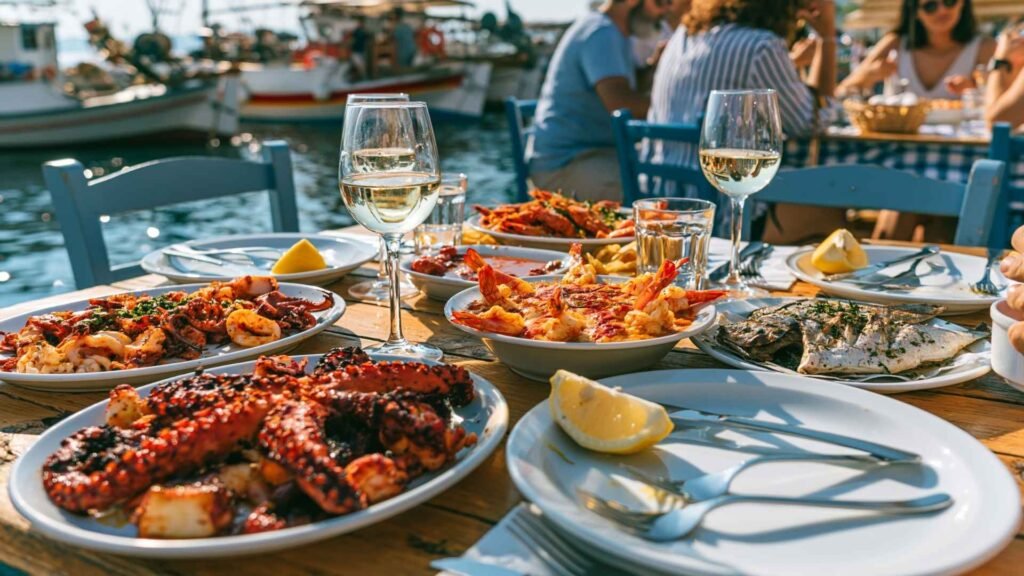
Although many visitors focus on the historic center, Athens remains closely connected to the sea.
Seafood is another important answer to the question of what to eat in Athens, especially for travelers willing to explore beyond the city’s most visited neighborhoods.
That connection becomes obvious once seafood starts appearing on menus.
Popular choices include:
- Grilled octopus
- Calamari
- Sardines
- Anchovies
- Shrimp saganaki
- Small fried fish
While seafood can be found throughout the city, coastal districts and nearby Piraeus often provide some of the most authentic experiences.
Prices also vary significantly.
A simple seafood lunch may remain reasonably affordable, while premium fish restaurants charging by weight can become one of the most expensive dining experiences in Athens.
For that reason, checking prices before ordering larger fish is always wise.
Greek Meze Culture: How Athenians Actually Eat
One of the biggest mistakes visitors make is approaching Athens dining as if every person should order a separate meal.
In reality, sharing sits at the center of many Greek dining experiences.
Meze culture encourages tables filled with smaller dishes designed to be enjoyed collectively.
A typical meal might include:
- Tzatziki
- Dolmades
- Grilled octopus
- Fried cheese
- Seafood dishes
- Salads
- Bread
- Wine
The experience tends to feel slower than many visitors expect.
Food arrives gradually.
Conversation becomes part of the meal.
Dinner often lasts longer than originally planned.
For many travelers, these relaxed evenings become their favorite food memories from Athens.
Athens Desserts You Should Not Skip

Greek desserts often lean toward honey, syrup, nuts, and rich textures.
Even visitors who normally skip dessert frequently find themselves making exceptions.
Loukoumades – Athens’ Famous Honey-Drenched Dough Balls
Loukoumades are small fried dough balls typically covered with honey, cinnamon, and nuts.
They remain one of Athens’ most famous sweet treats and appear everywhere from traditional bakeries to modern dessert shops.
Served warm, they are difficult to resist.
Baklava – The Sweet Pastry Known Across the Mediterranean
Baklava requires little introduction.
Layers of pastry, nuts, butter, and syrup have made it one of the region’s most recognizable desserts.
While versions differ across countries, Athens offers countless opportunities to try this classic sweet.
Galaktoboureko – The Greek Custard Dessert Many Visitors Overlook
Galaktoboureko rarely receives the same international attention as baklava, yet many Greeks consider it one of the country’s most satisfying desserts.
The dessert combines a creamy semolina custard with layers of delicate pastry and sweet syrup, creating a texture that feels lighter and smoother than many syrup-based sweets.
For visitors who have already tried baklava elsewhere, galaktoboureko often provides a more distinctive introduction to traditional Greek desserts.
💡 Isabella’s Note
If you only try one Greek dessert beyond baklava, make it galaktoboureko. It remains one of the most underrated traditional sweets in Athens and often surprises first-time visitors.
Breakfast Culture in Athens
Breakfast in Athens is often simpler than many visitors expect.
While hotels may offer extensive buffets, everyday breakfast habits tend to be lighter and more practical. Many Athenians start the day with coffee and a small pastry rather than a large meal.
That simplicity is part of what makes Athens food culture feel authentic. Breakfast is usually designed to fit naturally into daily routines rather than becoming a major event.
Popular Athens Breakfast Foods
Some of the most common breakfast choices include:
- Koulouri
- Tiropita
- Spanakopita
- Greek yogurt with honey
- Freddo Espresso
- Greek coffee
Neighborhood bakeries often provide a better glimpse into local breakfast culture than restaurants specifically targeting tourists.
Many visitors discover that a fresh pastry, a sesame-covered koulouri, or a strong coffee from a local bakery can become one of the most memorable parts of a morning in Athens.
Food Markets in Athens

Food markets offer another way to experience Athens beyond restaurants and tavernas.
The best-known example is Varvakios Central Market, where locals shop for seafood, meat, spices, cheeses, and fresh produce throughout the week.
Smaller neighborhood markets can also be worth visiting, particularly for olives, honey, herbs, and seasonal products.
While markets may not be essential for every visitor, they provide useful insight into the ingredients and traditions behind many of the foods that define Athens cuisine.
Looking for market-specific recommendations?
See our Best Food Markets in Athens guide.
Best Neighborhoods for Food in Athens
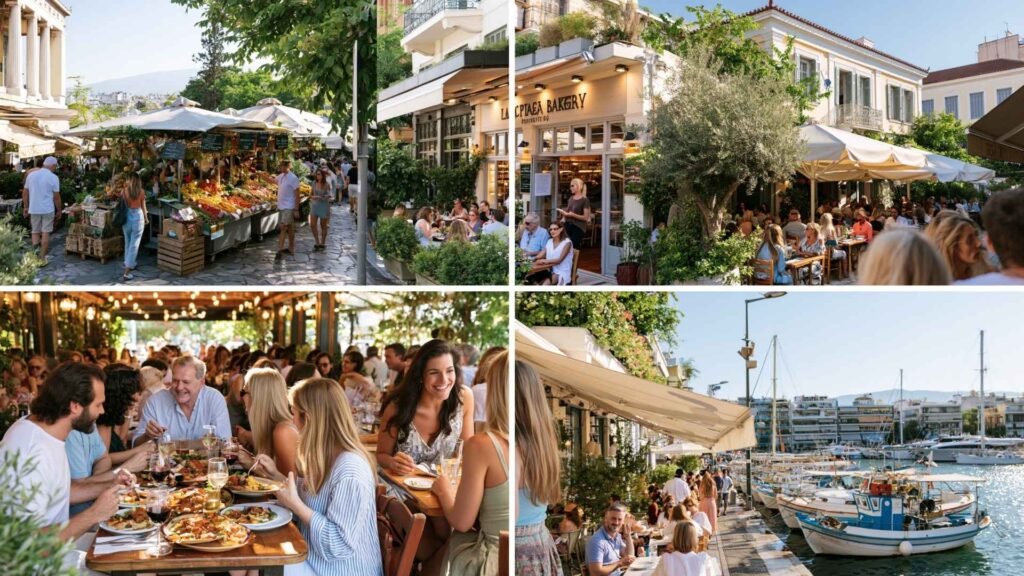
Choosing where to eat can be just as important as deciding what to eat in Athens.
Different neighborhoods offer very different dining experiences.
Monastiraki – Best for Street Food and First-Time Visitors
Monastiraki is one of the easiest neighborhoods for first-time visitors to explore. Located close to many of Athens’ major attractions, it combines convenience with some of the city’s most accessible street food options.
Best for:
- gyros
- souvlaki
- quick meals
- casual dining
Psiri – Best for Traditional Tavernas and Meze Culture
Psiri is one of Athens’ most enjoyable food neighborhoods after sunset. Traditional tavernas, meze restaurants, and lively streets create an atmosphere that encourages long dinners and shared plates rather than quick meals.
It works particularly well for travelers looking for:
- meze restaurants
- local wine
- relaxed dinners
- nightlife dining
💡 Isabella’s Note
Psiri is one of the neighborhoods I usually recommend first to food-focused travelers. The area combines traditional tavernas, meze culture, and lively evening energy without feeling as heavily tourism-focused as some of the city’s busiest landmarks.
Koukaki – Best for Local Cafés and Neighborhood Dining
Located near the Acropolis, Koukaki offers a more residential side of Athens dining. The neighborhood is known for local cafés, bakeries, and smaller restaurants that often feel calmer than the city’s busiest tourist districts.
Expect:
- neighborhood cafés
- bakeries
- smaller restaurants
- fewer tourist crowds
Pangrati – Best for Modern Athens Food Culture
Pangrati has become increasingly popular among locals looking for a mix of traditional and contemporary dining. The neighborhood offers a more everyday perspective on Athens food culture while remaining close to the city center.
The area is known for:
- modern cafés
- contemporary Greek restaurants
- local dining culture
Piraeus – Best for Seafood and Waterfront Dining
Although technically known as Athens’ port area, Piraeus is also one of the city’s most rewarding destinations for seafood. Waterfront restaurants, fish tavernas, and maritime traditions give the area a very different atmosphere from central Athens.
Many restaurants specialize in:
- fresh fish
- grilled octopus
- shrimp dishes
- seafood meze
💡 Isabella’s Note
Many visitors never venture beyond central Athens for food. That is often a missed opportunity. Piraeus regularly delivers some of the most memorable seafood meals in the metropolitan area while offering a very different atmosphere from the historic center.
Vegetarian Food in Athens
Vegetarian travelers usually find Athens easier than expected.
Many traditional Greek dishes naturally rely on vegetables, legumes, herbs, olive oil, and cheese.
Popular vegetarian choices include:
- Gemista
- Briam
- Spanakopita
- Greek salad
- Gigantes beans
- Fava
Rather than feeling like modern alternatives, many of these dishes have been part of Greek cooking traditions for generations.
What to Drink in Athens

Food and drink are closely connected throughout Athens.
Although Greek wine receives growing international attention, coffee culture remains equally important.
Popular drinks include:
- Greek coffee
- Freddo Espresso
- Freddo Cappuccino
- Frappé
- Ouzo
- Tsipouro
- Retsina wine
Coffee shops often stay busy throughout the day, reflecting how important café culture remains in modern Athens life.
Athens Food Prices: What Should You Expect?
Food prices in Athens can vary significantly depending on location, restaurant style, and season.
As a general guide:
| Food Type | Typical Price |
|---|---|
| Gyros wrap | €3 – €6 |
| Bakery breakfast | €2 – €6 |
| Souvlaki meal | €6 – €12 |
| Casual taverna meal | €15 – €30 |
| Seafood meal | €30 – €70+ |
| Premium fish restaurants | €60 – €100+ |
| Coffee | €2 – €5 |
Tourist-heavy locations around major landmarks often cost more.
Neighborhood tavernas frequently offer better value while delivering a more local experience.
Food Etiquette and Tipping in Athens
Athens dining culture tends to feel relaxed and social.
Visitors should not be surprised if meals move at a slower pace than expected.
A few things worth knowing:
- Sharing dishes is common.
- Bread may arrive automatically.
- Dinner often starts after 20:00.
- Meals can last several hours.
- Servers rarely rush guests.
Tipping is appreciated but generally not mandatory.
Many visitors simply round up the bill or leave approximately 5–10% for good service.
Common Food Mistakes to Avoid in Athens
Knowing what to avoid can be just as useful as knowing what to order.
Choosing Restaurants Solely for the View
Restaurants with Acropolis views can be memorable.
However, the best food is not always found at the locations with the best photographs.
Many neighborhood tavernas offer stronger food experiences than highly visible tourist restaurants.
Ignoring Bakery Culture
Some visitors focus entirely on restaurant meals.
Doing so means missing one of Athens’ most enjoyable food traditions.
Local bakeries remain an essential part of everyday life and often provide excellent value.
Assuming Empty Restaurants Are Bad
Athens dining schedules are later than many visitors expect.
A restaurant that appears quiet at 18:00 may become completely full a few hours later.
Ordering Seafood Without Checking Prices
Most seafood restaurants are transparent.
However, fish sold by weight can increase bills significantly.
Checking prices before ordering larger fish is always a good idea.
Local Eating Habits in Athens
Understanding local eating habits can make dining in Athens feel far more natural.
Typical patterns include:
Breakfast: Light and quick, often centered around coffee, pastries, yogurt, or bakery foods.
Lunch: Usually enjoyed between 13:00 and 15:00.
Dinner: Often begins after 20:00, especially during warmer months.
Evening Socializing: Frequently continues late into the night, with meals often shared among friends and family.
Food in Athens is rarely rushed. Meals often become social occasions where conversation matters almost as much as the food itself.
Where Food Lovers Should Start
Visitors wondering what to eat in Athens for the first time can keep things surprisingly simple.
Start the day with a bakery breakfast, try souvlaki or gyros for lunch, reserve one evening for a traditional meze dinner, and make time for at least one seafood meal.
Together, these experiences provide a well-rounded introduction to Athens food culture, from everyday street food and bakery traditions to the longer, more social meals that define Greek dining.
Continue Planning Your Athens Trip
Continue exploring Athens:
→ Best Areas in Athens for Digital Nomads
Frequently Asked Questions About Food in Athens
What is the most famous food in Athens?
Souvlaki, gyros, moussaka, Greek salad, and loukoumades are among the most famous foods in Athens.
What street food should I eat in Athens?
Most visitors start with gyros, souvlaki, koulouri, tiropita, and spanakopita.
Is Athens expensive for food?
Not necessarily. Street food and neighborhood tavernas remain relatively affordable compared with many Western European capitals.
What is the best area for food in Athens?
Psiri, Monastiraki, Koukaki, Pangrati, and Piraeus all offer different food experiences depending on what you are looking for.
Is Athens good for vegetarian travelers?
Yes. Many traditional Greek dishes are naturally vegetarian and widely available throughout the city.
What time do locals eat dinner in Athens?
Dinner commonly starts after 20:00, especially during warmer months.
Final Thoughts: What to Eat in Athens
The best way to discover what to eat in Athens is to balance the classics with local favorites.
Try the famous dishes, spend time in neighborhood bakeries and tavernas, and leave room for a few unexpected discoveries along the way.
From souvlaki and seafood to meze and traditional desserts, Athens offers a food culture that feels deeply connected to everyday life — and that is often what visitors remember most.