
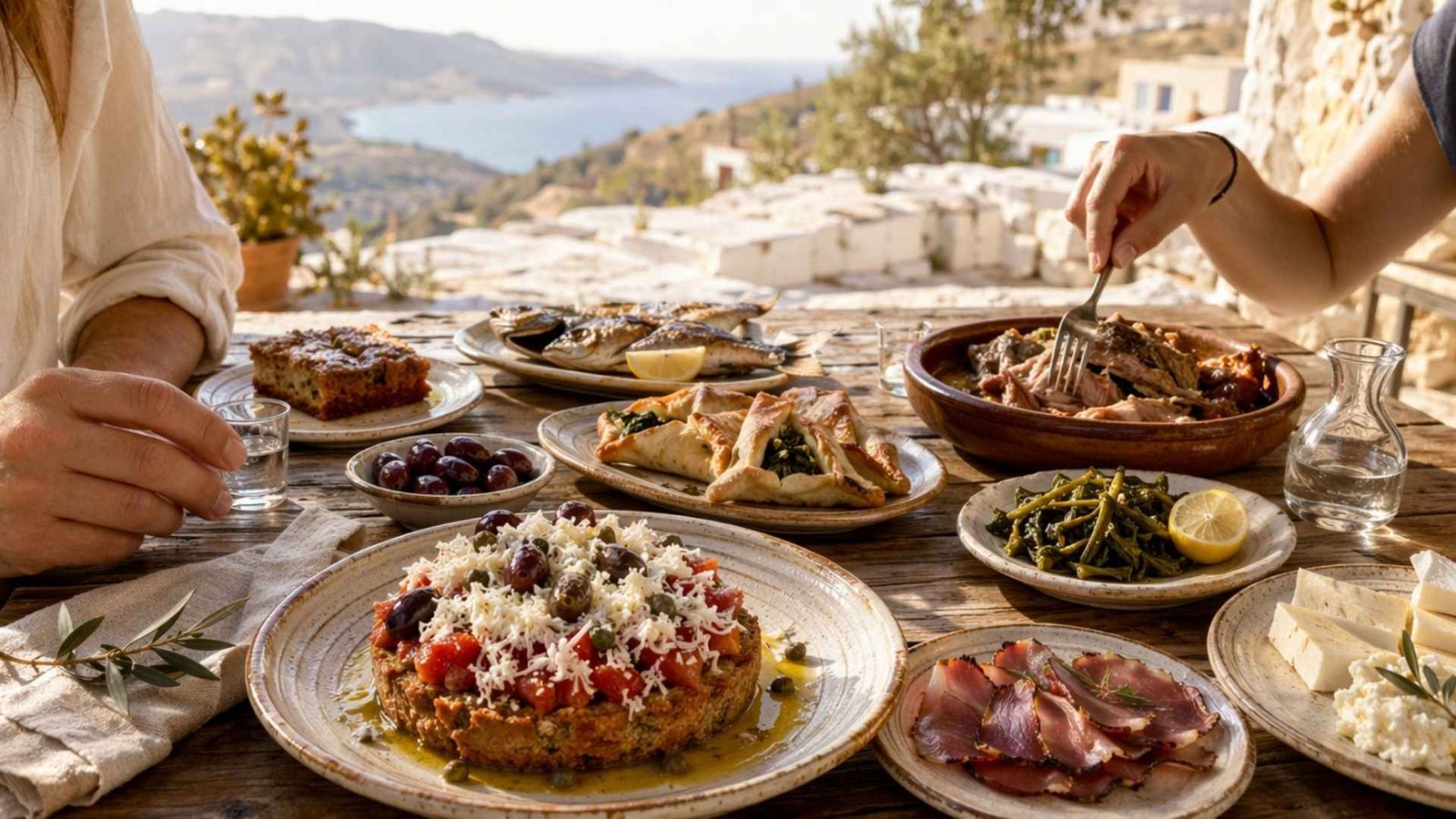
Crete has one of Greece’s most distinctive regional cuisines. Its food is shaped by extra virgin olive oil, seasonal vegetables, wild greens, mountain herbs, local cheeses, seafood, lamb, and goat.
If you are wondering what to eat in Crete, begin with dishes that reflect these traditions: dakos topped with ripe tomatoes, small cheese-filled kalitsounia, rosemary-scented snails, fire-roasted lamb, and warm Sfakian pie served with honey.
This guide covers 15 essential Cretan foods, desserts, and drinks, along with practical advice on where and how to try them.
Quick Answer: What to Eat in Crete
These are the traditional Cretan specialties worth prioritizing:
| Cretan specialty | What it is | Best for |
|---|---|---|
| Dakos | Barley rusk with tomato, cheese, and olive oil | Starter or light lunch |
| Kalitsounia | Small pies filled with cheese or wild greens | Breakfast or snack |
| Chochlioi boubouristi | Fried snails with rosemary and vinegar | Shared meze |
| Apaki | Smoked and cured Cretan pork | Meze |
| Gamopilafo | Rice cooked in rich meat broth | Main course |
| Antikristo | Lamb or goat roasted around an open fire | Traditional dinner |
| Tsigariasto | Slowly cooked lamb or goat | Main course |
| Stamnagathi | Slightly bitter wild greens | Salad or side dish |
| Cretan cheeses | Graviera, mizithra, xinomizithra, and more | Meze or dessert |
| Fresh seafood | Grilled fish, octopus, squid, and cuttlefish | Lunch or dinner |
| Vegetable dishes | Seasonal greens, pulses, courgettes, and artichokes | Vegetarian meals |
| Sfakian pie | Thin cheese-filled pie with honey | Breakfast or dessert |
| Bougatsa | Pastry filled with cheese or custard | Breakfast |
| Cretan desserts | Honey pastries, yogurt, nuts, and preserved fruit | Dessert |
| Tsikoudia and Cretan wine | Local grape spirit and indigenous wines | With or after a meal |
If you only have time for five, try dakos, kalitsounia, chochlioi boubouristi, antikristo, and Sfakian pie.
What Makes Cretan Food Different?
Cretan cuisine depends less on complicated techniques and more on fresh ingredients, seasonality, and regional traditions. Its distinctive character comes from several elements:
- Extra virgin olive oil: Used generously in salads, vegetable dishes, pulses, pies, and cooked meals rather than only as a finishing ingredient.
- Seasonal vegetables and wild greens: Artichokes, courgettes, tomatoes, legumes, and slightly bitter greens bring freshness and variety throughout the year.
- Mountain cooking: Crete’s inland villages are strongly associated with lamb, goat, handmade pies, local cheeses, and slowly cooked dishes.
- Coastal seafood: Grilled fish, octopus, squid, and cuttlefish become more prominent in seaside towns and fishing villages.
- Local cheeses: Graviera, mizithra, xinomizithra, pichtogalo, and xygalo appear in meze, pies, salads, main dishes, and desserts.
- Honey, herbs, and simple seasoning: Thyme honey, oregano, rosemary, and other local herbs add flavor without concealing the main ingredients.
The Region of Crete’s overview of local products identifies olive oil, dairy products, honey, herbs, greens, fruit, vegetables, and cereals as foundations of the island’s culinary traditions.
Regional differences also matter. Chania is especially known for western Cretan pies and meat dishes, Heraklion offers easy access to the island’s main wine-producing areas, and Rethymno combines coastal seafood with mountain cooking.
Traditional Cretan Starters and Small Plates
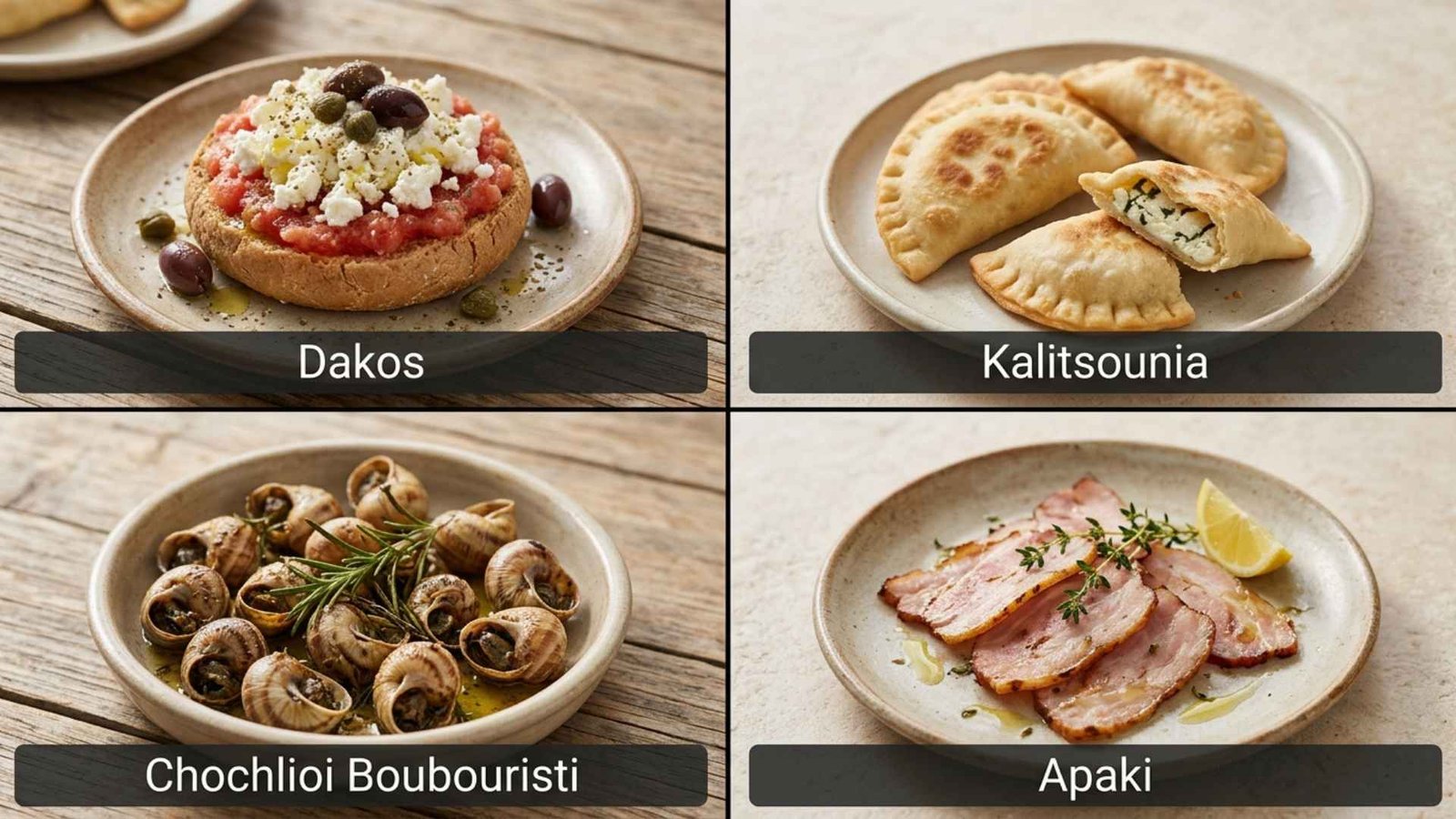
Meze is one of the easiest ways to discover Cretan food. Rather than ordering a separate starter for each person, choose several small plates for the table and share them.
1. Dakos — Crete’s Essential Barley Rusk Salad
Dakos is one of Crete’s most recognizable dishes. A firm barley rusk is lightly moistened and topped with ripe tomato, local cheese, extra virgin olive oil, oregano, and sometimes olives or capers.
The rusk gradually absorbs the tomato juice and olive oil while retaining a slightly crunchy texture. Although the ingredients are simple, their quality determines the dish.
You may see dakos listed as ntakos, koukouvagia, or Cretan salad. Traditional versions often use mizithra or xinomizithra, which creates a softer and tangier result than feta.
Dakos is particularly enjoyable during summer when tomatoes are at their best. It works well as a shared starter or a light lunch.
When possible, choose a version made with local mizithra or xinomizithra rather than standard feta.
2. Kalitsounia — Cretan Cheese and Herb Pies
Kalitsounia are small pastries filled with cheese, wild greens, herbs, or a combination of these ingredients. They may be baked or fried and can be savory or lightly sweet.
Cheese-filled versions often contain mizithra, while savory varieties may include spinach, fennel, mint, onions, or seasonal greens. Their shape varies across Crete, from folded half-moons to small open pastries.
Kalitsounia can be eaten at breakfast, purchased from a bakery as a snack, included in a meze selection, or served with honey as dessert.
Recipes differ between regions and families, so it is worth trying more than one variety. Ordering one cheese-filled and one herb-filled version provides the best contrast.
3. Chochlioi Boubouristi — Fried Snails with Rosemary
Snails are one of the island’s most unusual traditional foods. The best-known preparation is chochlioi boubouristi, in which snails are cooked with flour, olive oil, rosemary, salt, and vinegar or wine.
The rosemary creates a strong herbal aroma, while vinegar adds acidity and balances the richness of the olive oil. The snails themselves have a firm, slightly chewy texture.
This dish has deep roots in Cretan home cooking but is now found in traditional tavernas, particularly in inland villages. The Region of Crete also documents a traditional preparation of snails cooked with rosemary and wine.
If you have never eaten snails, order them as a shared meze rather than choosing a full portion for yourself.
4. Apaki — Smoked Cretan Pork
Apaki is lean pork traditionally cured with salt, vinegar, herbs, and smoke. Sage, oregano, thyme, or other local herbs may be used, depending on the producer.
The meat is generally cut into small pieces and briefly grilled or pan-fried before being served as a meze. Some restaurants combine it with eggs, mushrooms, vegetables, or local cheese.
Apaki has a concentrated smoky flavor but is usually less fatty than many other cured pork products. It pairs well with Cretan wine, beer, or tsikoudia.
For your first taste, choose simply grilled apaki. More elaborate preparations can sometimes conceal the distinctive flavor of the meat.
Traditional Cretan Main Dishes
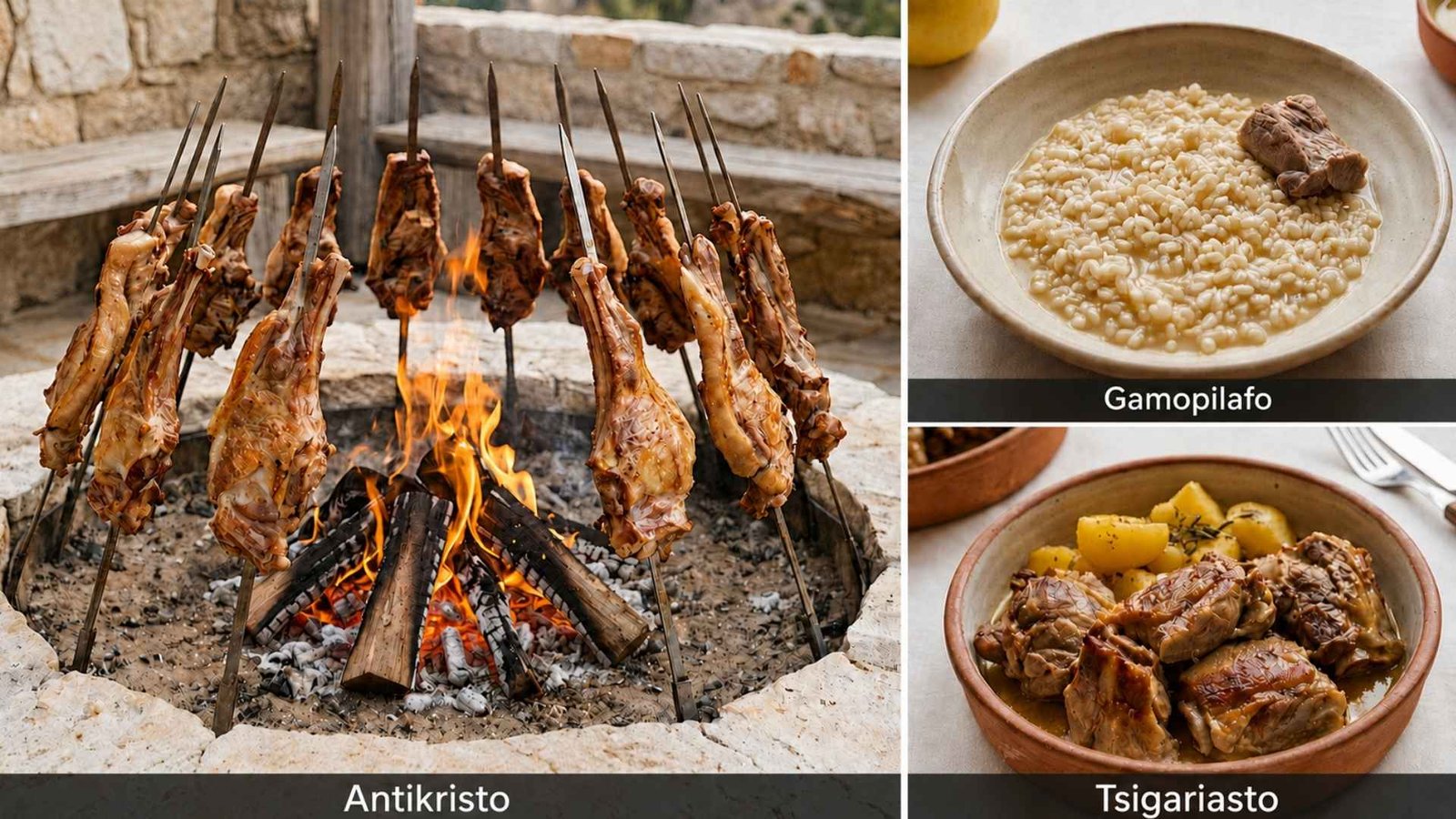
Crete’s most distinctive main courses originate largely from its mountain and pastoral traditions. Lamb and goat are often cooked slowly with minimal seasoning, allowing the flavor of the meat to remain central.
5. Gamopilafo — Traditional Cretan Wedding Rice
Gamopilafo means “wedding rice,” reflecting its traditional connection with weddings, festivals, and large family celebrations.
The rice is cooked in a rich broth made from slowly boiled lamb, goat, or chicken. It may be finished with lemon and stakovoutyro, a rich local butter associated with the production of staka.
The result is creamy and deeply savory but differs from risotto because its flavor comes primarily from the concentrated meat broth rather than cheese or cream.
Some tavernas serve gamopilafo alongside pieces of boiled meat, while others present it as a separate course.
Ask whether it has been freshly prepared that day. Good gamopilafo depends on the depth and freshness of its broth.
6. Antikristo — Lamb Cooked Around an Open Fire
Antikristo is one of Crete’s most memorable cooking traditions. Large pieces of lamb or goat are arranged around an open wood fire and cooked slowly through radiant heat.
As the meat cooks, its fat renders gradually, the exterior becomes lightly crisp, and the center remains tender. Authentic antikristo needs little more than good meat, salt, fire, and time.
The cooking method is closely connected with shepherds and mountain communities. Today, it is most commonly found at village tavernas, farm restaurants, and establishments specializing in rural Cretan cuisine.
Antikristo may only be prepared on certain days or for a minimum number of guests. Contact the restaurant in advance if trying it is a priority.
7. Tsigariasto — Slowly Cooked Lamb or Goat
Tsigariasto is particularly associated with western Crete. Lamb or goat is cooked slowly in its own juices with olive oil, salt, and minimal additional seasoning.
Unlike many Greek stews, traditional tsigariasto does not depend on tomato sauce. Its character comes from the quality of the meat and the slow cooking process.
The finished dish is tender, rich, and intensely savory. It may be served with fried potatoes, rice, village bread, or seasonal greens.
Tsigariasto is a good alternative to antikristo if you prefer softer meat without a pronounced smoky flavor. Goat has a stronger taste than lamb, so ask which meat is being served if you have a preference.
Cretan Greens, Cheese, and Seafood
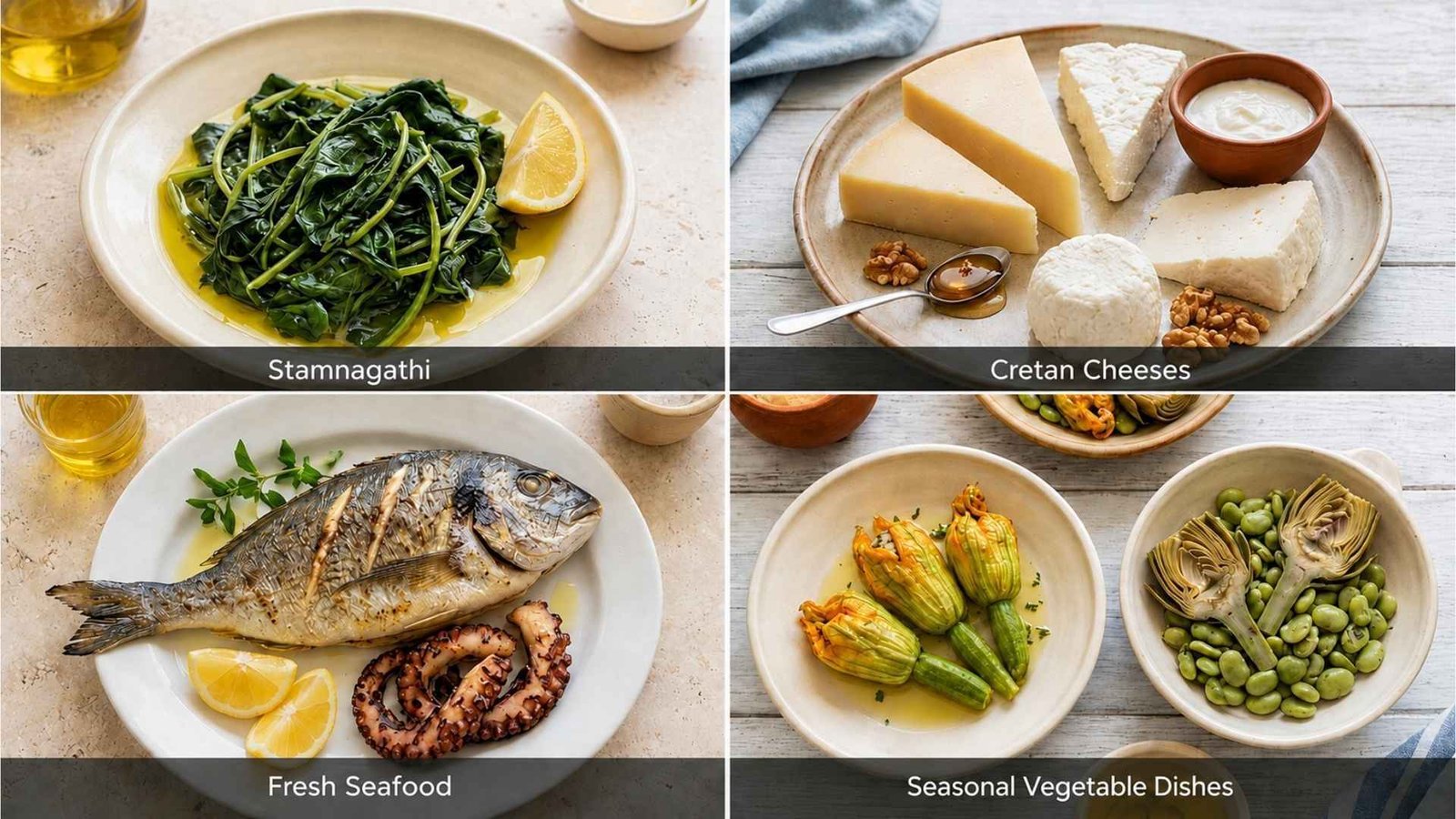
Traditional Cretan cuisine is not dominated by meat. Wild greens, vegetables, pulses, local cheeses, and coastal seafood provide some of the island’s most rewarding meals.
8. Stamnagathi — Crete’s Distinctive Wild Greens
Stamnagathi is a wild green related to chicory and widely used in Cretan cooking. It has a fresh but noticeably bitter flavor that pairs particularly well with olive oil and lemon.
The greens may be boiled and served as a salad, cooked with other vegetables, or combined with lamb. One classic preparation pairs lamb and stamnagathi with a light egg-lemon sauce.
Stamnagathi provides a refreshing contrast to rich meat, fried cheese, and cured pork. Its intensity can vary according to the season and whether it is wild or cultivated.
The simplest preparation is often the best: boiled stamnagathi dressed with local olive oil, lemon, and a little salt.
9. Cretan Cheeses — Graviera, Mizithra, and More
Cheese is fundamental to Cretan food and can appear in pastries, salads, meze, main courses, and desserts.
The main varieties to look for include:
- Graviera Kritis: A firm sheep’s milk cheese with a mildly sweet, nutty flavor.
- Mizithra: A soft and delicate whey cheese commonly used in pies.
- Xinomizithra: A soft, tangier cheese that works particularly well with dakos.
- Pichtogalo Chanion: A creamy, slightly sour cheese associated with Chania.
- Xygalo Siteias: A fresh, tangy dairy specialty from eastern Crete.
- Anthotyro: A mild whey cheese available in fresh and aged varieties.
For a broader introduction, request a mixed Cretan cheese plate rather than ordering only fried cheese. Graviera is also sometimes served with local honey as a simple dessert.
10. Fresh Fish and Seafood
Crete has strong mountain food traditions, but its long coastline also offers excellent fish and seafood.
Common choices include:
- Grilled whole fish
- Octopus with vinegar
- Grilled or fried calamari
- Cuttlefish cooked with wine
- Small fried fish
- Mussels and shellfish
- Fish baked with tomato, herbs, and olive oil
The best seafood dishes are often the simplest. Fresh whole fish grilled with olive oil and lemon can be more rewarding than an elaborate mixed platter.
Whole fish is frequently sold by weight rather than at a fixed price. Ask to see the fish and confirm its approximate total cost before it is cooked.
Instead of automatically choosing a familiar species, ask what was caught locally or delivered fresh that day.
11. Seasonal Vegetable and Legume Dishes
Some of the best food in Crete contains neither meat nor seafood. Vegetables, legumes, grains, wild greens, and olive oil have always been central to the island’s cuisine.
Look for:
- Stuffed courgette flowers
- Artichokes with broad beans
- Green beans cooked with tomato
- Chickpeas and white beans
- Stuffed tomatoes and peppers
- Aubergines with herbs
- Courgette fritters
- Boiled wild greens
- Fava and other pulse-based spreads
Many vegetable dishes belong to the Greek category of ladera, meaning they are cooked generously with olive oil.
These dishes change with the growing season and may not appear on the permanent menu. In a family-run taverna, asking which vegetables were cooked that day can lead to a better choice than ordering directly from the printed menu.
Cretan Breakfasts, Desserts, and Drinks
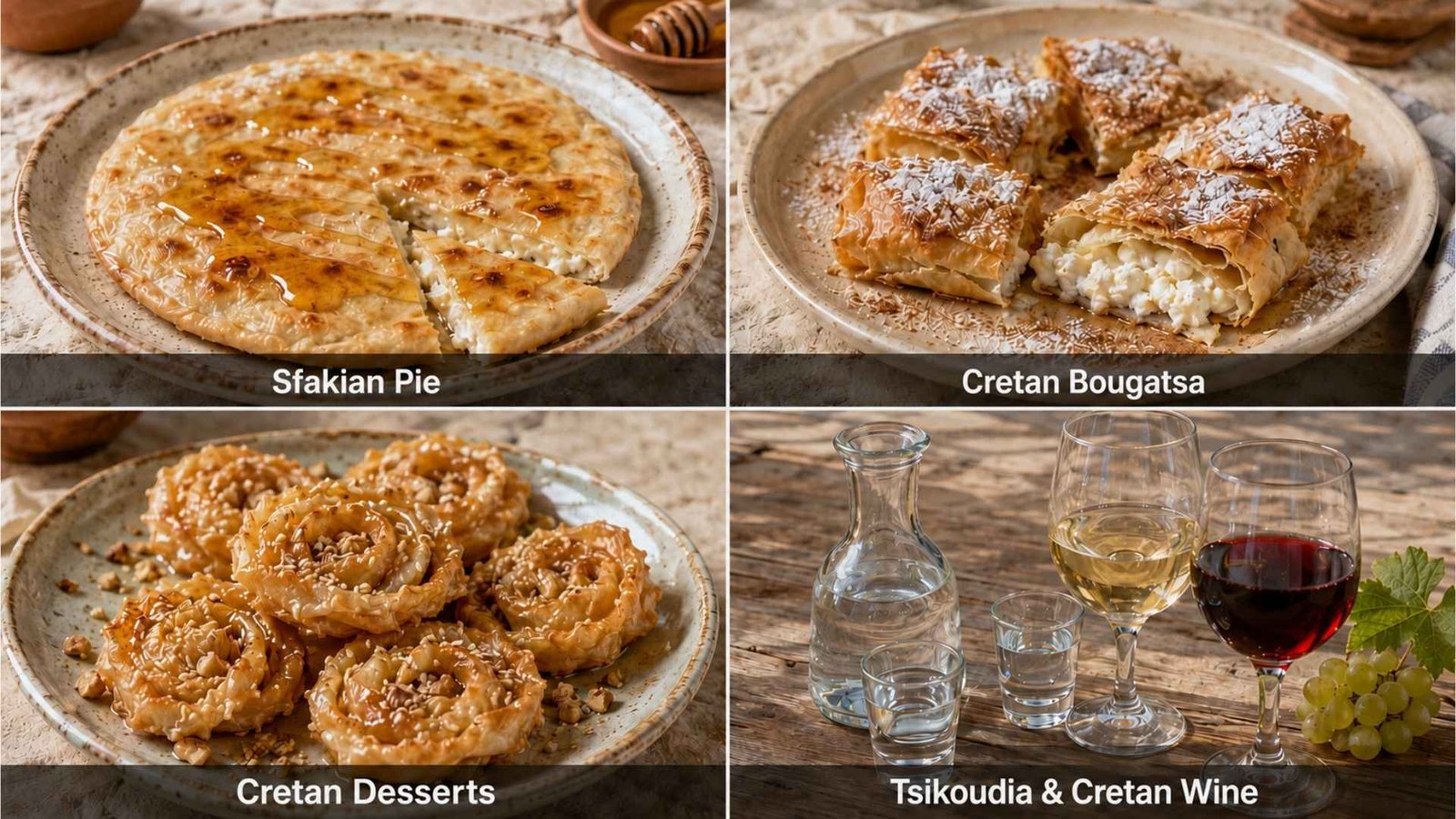
Crete’s sweeter traditions frequently combine cheese, honey, nuts, pastry, fruit, and grape products. Several dishes can be eaten either at breakfast or as dessert.
12. Sfakian Pie — Thin Cheese Pie with Honey
Sfakian pie, or Sfakiani pita, comes from the mountainous Sfakia region in southwestern Crete.
It is a thin, round pie filled with soft local cheese and cooked on a flat surface. Unlike layered phyllo pastries, Sfakian pie is soft and flat, with an appearance closer to a filled pancake.
The pie is normally served warm with Cretan honey. The combination of delicate dough, lightly salty cheese, and floral sweetness makes it suitable for breakfast or dessert.
Although most closely connected with Sfakia, it is widely available in traditional restaurants around Chania and western Crete.
Eat it while it is still warm, when the cheese is soft and the honey is most aromatic.
13. Cretan Bougatsa — A Traditional Breakfast
Bougatsa is found in several parts of Greece, but Crete has distinctive local versions and long-standing bakery traditions.
In Chania, bougatsa is commonly filled with local mizithra cheese. This creates a mildly savory and tangy filling, even when the pastry is finished with powdered sugar and cinnamon.
In Heraklion, you may find both cheese-filled and sweeter custard-filled versions. The pastry is normally served warm and cut into small pieces.
Bougatsa is best enjoyed for breakfast or as a mid-morning snack. Visit a traditional bakery early, as popular versions may sell out before lunchtime.
Ask whether the filling is cheese or custard because the two varieties taste very different.
14. Cretan Desserts and Honey
Cretan desserts often combine pastry, cheese, nuts, fruit, or honey rather than relying on heavy cream.
Desserts worth trying include:
- Loukoumades: Small pieces of fried dough served with honey and cinnamon.
- Xerotigana: Thin spiral-shaped pastries covered with honey.
- Sweet kalitsounia: Cheese-filled pastries, sometimes flavored with cinnamon.
- Yogurt with honey: Frequently served with walnuts.
- Spoon sweets: Fruit preserved in sweet syrup.
- Mustalevria: A soft pudding made from grape must.
- Amygdalota: Almond-based sweets with a soft texture.
Many tavernas bring a small complimentary dessert after the meal, sometimes accompanied by tsikoudia. Wait until the table has been cleared before ordering another dessert.
15. Tsikoudia and Cretan Wine
A traditional Cretan meal often ends with tsikoudia, a clear grape spirit also known locally as raki. Unlike Turkish rakı, it is not flavored with anise.
Tsikoudia is served in small glasses and may arrive with fruit or dessert. Although it is frequently complimentary, it is relatively strong and should be sipped slowly.
You may also encounter rakomelo, a sweeter drink made by combining tsikoudia with honey and spices.
Crete also has an increasingly diverse wine scene built partly around indigenous grape varieties:
- Vidiano: An aromatic and textured white variety
- Vilana: A generally fresh and lighter white variety
- Dafni: A distinctive white variety with herbal aromas
- Kotsifali: A soft and aromatic red variety
- Mandilari: A more structured red often used in blends
- Liatiko: A red grape used for both dry and sweet wines
Ask for a wine made from an indigenous Cretan grape instead of choosing only a generic house white or red.
What to Order for Breakfast, Lunch, and Dinner
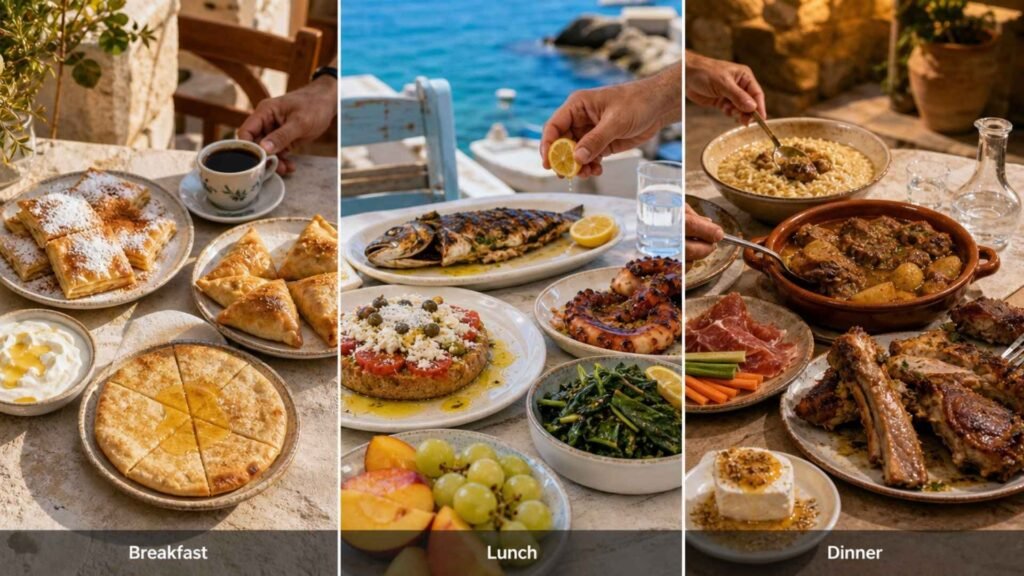
You do not need to try every specialty during one large meal. Spreading these dishes throughout the day creates a more balanced experience.
Breakfast
Choose bougatsa, kalitsounia, Sfakian pie with honey, Greek yogurt, local cheese, or eggs with apaki.
Traditional bakeries are usually the best places to find bougatsa and freshly prepared pies. Visit early for the widest selection.
Lunch
Lunch is well suited to dakos, wild greens, vegetable dishes, grilled fish, octopus, and other shared meze.
Along the coast, a simple meal of dakos, boiled greens, grilled fish, and seasonal fruit is often more satisfying than a heavy multi-course menu.
Dinner
Dinner is a better time for gamopilafo, antikristo, or tsigariasto. Begin with apaki, snails, local cheese, or seasonal vegetables and finish with Sfakian pie or a complimentary dessert.
Cretan portions can be generous. Start with fewer shared plates and add more only if needed.
Where to Find Traditional Cretan Food
Different parts of Crete offer slightly different culinary experiences.
| Area | Foods and experiences to prioritize |
|---|---|
| Chania | Bougatsa, kalitsounia, Sfakian pie, tsigariasto, seafood |
| Heraklion | Cretan wine, snails, apaki, gamopilafo, meat dishes |
| Rethymno | Mountain cooking, wild greens, lamb, goat, coastal seafood |
| Lasithi and Sitia | Xygalo, eastern Cretan wines, vegetable dishes, honey |
| Mountain villages | Antikristo, goat, fresh cheese, seasonal home cooking |
| Coastal villages | Grilled fish, octopus, calamari, and seafood meze |
Chania’s Venetian Harbor provides an atmospheric dining setting, but it should not be your only option. Neighborhood restaurants and nearby villages often offer quieter and more traditional experiences.
For specific recommendations, continue to our Best Restaurants in Chania guide.
How to Choose an Authentic Cretan Restaurant
An authentic restaurant does not necessarily need rustic decoration or an old-fashioned menu. Many contemporary restaurants preserve Cretan flavors while using lighter techniques and modern presentation.
Good signs include:
- A focused menu rather than dozens of unrelated dishes
- Local cheeses and ingredients identified by name
- Seasonal dishes or daily specials
- Cretan wines made from indigenous grapes
- Staff who can explain where the fish or meat comes from
- Dishes designed for sharing
- A mix of local residents and visitors
Be more cautious when a restaurant has an extremely long international menu or describes every dish as traditional without naming its ingredients or regional origin.
Isabella’s Pick
Choose the daily special whenever it reflects what is fresh and seasonal.
Ask one simple question: “What was cooked today?” The answer may lead you to freshly made pies, slow-cooked goat, seasonal vegetables, or a local fish that receives little attention on the printed menu.
Food Markets and What to Buy in Crete
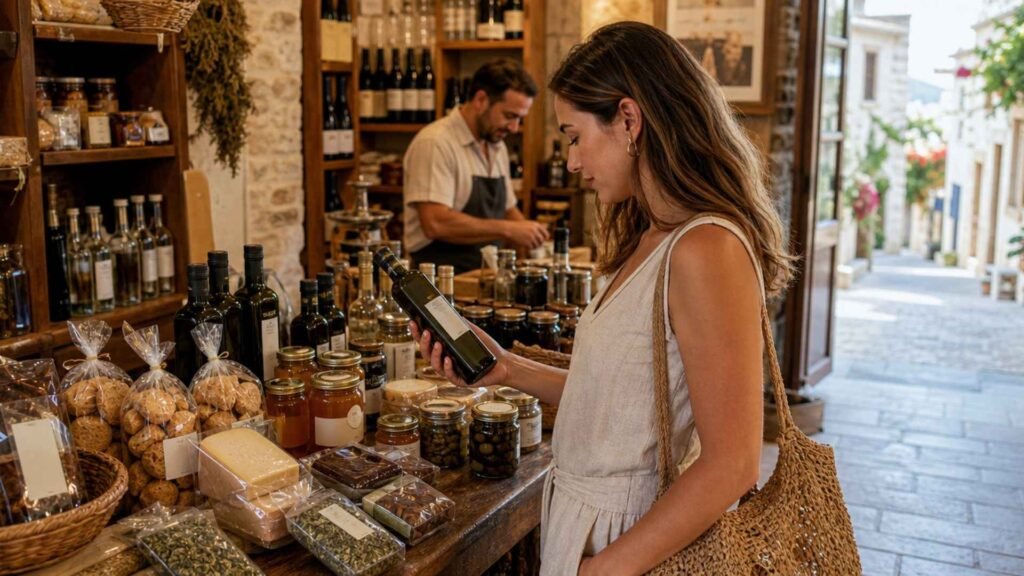
Markets, bakeries, wineries, and specialty food shops offer several products that are easy to enjoy during your trip or take home.
Look for:
- Extra virgin olive oil
- Cretan thyme honey
- Barley rusks
- Graviera
- Olives and olive paste
- Dried oregano and mountain herbs
- Carob products
- Spoon sweets
- Cretan wine
- Tsikoudia
Check the customs regulations of your destination before purchasing cheese, cured meat, honey, alcohol, or other regulated products. Sealed and clearly labeled packaging is generally more practical for international travel.
What to Eat in Crete by Season
| Season | Foods to look for |
|---|---|
| Spring | Wild greens, artichokes, broad beans, herbs, vegetable pies |
| Summer | Tomatoes, dakos, courgettes, aubergines, seafood, fresh fruit |
| Autumn | Grapes, new wines, grape-must desserts, mushrooms, olive products |
| Winter | Pulses, soups, pork, goat, lamb, and hearty vegetable dishes |
Traditional specialties may be available throughout the year, but choosing seasonal ingredients usually results in better flavor and a more authentic meal.
Vegetarian and Vegan Food in Crete
Crete is a good destination for vegetarians because many traditional dishes are based on vegetables, legumes, cheese, grains, and greens.
Vegetarian choices include dakos, cheese-filled kalitsounia, Sfakian pie, vegetable fritters, stuffed courgette flowers, local cheese plates, and yogurt with honey.
Vegan travelers can look for:
- Wild greens with olive oil and lemon
- Beans and lentils
- Ladera vegetable dishes
- Stuffed vine leaves
- Fava
- Grilled vegetables
- Dakos without cheese
- Olives and barley rusks
Explain your dietary restrictions clearly. A vegetable or rice dish may occasionally contain meat broth, while pastries can include cheese, eggs, or butter.
Common Mistakes to Avoid When Eating in Crete
Ordering Too Much at Once
Meze plates and main courses may be larger than expected. Begin with a few dishes for the table before ordering more.
Eating Only Around Tourist Harbors
Historic harbors are atmospheric, but neighborhood tavernas and inland villages reveal a broader side of Cretan cuisine.
Choosing Only Familiar Greek Food
Moussaka and souvlaki are widely available, but they do not fully represent Crete. Prioritize regional specialties such as dakos, apaki, snails, gamopilafo, and tsigariasto.
Ignoring Daily Specials
Seasonal dishes may be explained verbally rather than printed on the menu. Always ask what was freshly prepared.
Forgetting to Confirm Fish Prices
Whole fish is often priced by weight. Confirm the approximate total cost before it is cooked.
Frequently Asked Questions About Cretan Food
What food is Crete most famous for?
Crete is best known for dakos, kalitsounia, antikristo, chochlioi boubouristi, gamopilafo, Cretan cheeses, wild greens, Sfakian pie, olive oil, and tsikoudia.
What is the traditional dish of Crete?
Crete does not have one official signature dish. Dakos is among its most recognizable everyday foods, while gamopilafo and antikristo have stronger connections to celebrations and rural traditions.
Is Cretan food different from other Greek food?
Cretan cuisine is part of Greek cuisine but has a strong regional identity. It makes extensive use of barley rusks, wild greens, sheep and goat cheeses, snails, local herbs, extra virgin olive oil, and indigenous wines.
Is Crete good for vegetarians?
Yes. Vegetable stews, pulses, wild greens, pies, cheeses, salads, and olive oil-based dishes make Crete a relatively easy destination for vegetarians. Vegans should confirm whether a dish contains dairy, eggs, or meat broth.
What should you drink in Crete?
Try tsikoudia and at least one wine produced from an indigenous Cretan grape. Vidiano is a good introduction to the island’s white wines, while Kotsifali, Mandilari, and Liatiko are important red varieties.
Final Thoughts
Deciding what to eat in Crete is less about completing a checklist and more about following the island’s seasons and regional traditions.
Begin with dakos and kalitsounia, try one mountain meat dish, explore the local cheeses, and leave room for Sfakian pie. Most importantly, ask what was prepared that day—the answer may lead to your most memorable meal in Crete.