
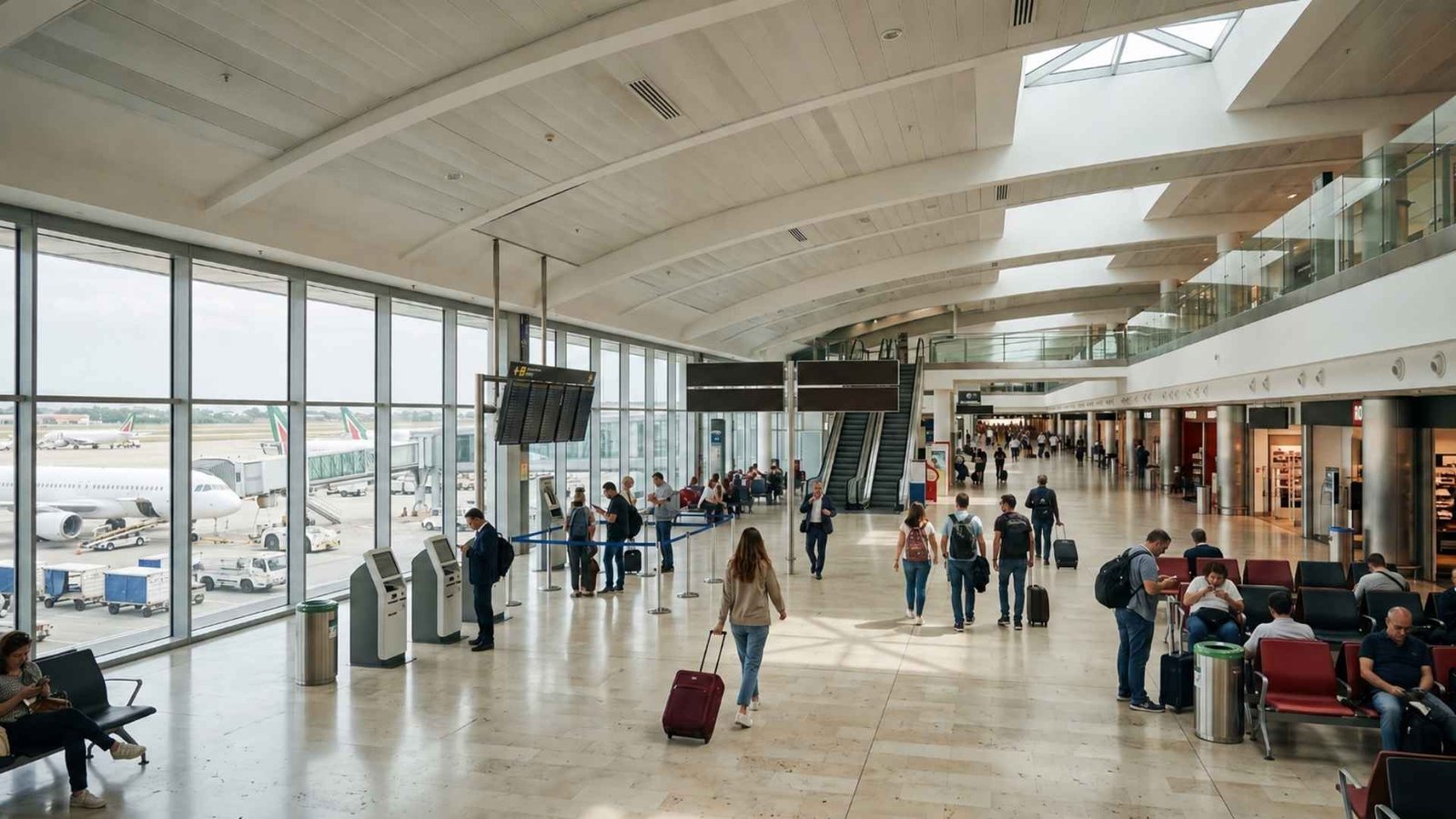
Rome Fiumicino Airport can initially feel complicated because the terminal number and boarding area shown for a flight are not the same thing. Once you understand this distinction, navigating check-in, security, passport control and the departure gates becomes considerably easier.
This Rome Fiumicino Airport Guide takes you through each stage of the journey, from arriving or connecting at FCO to collecting baggage, reaching central Rome or staying near the airport overnight.
Quick Answer
Rome Fiumicino Airport (FCO), officially named Leonardo da Vinci–Fiumicino Airport, is located approximately 30 kilometres southwest of central Rome. Most passengers travel through Terminal 1 or Terminal 3, while departure gates are organised within separate boarding areas. Always confirm both details with your airline before travelling because operational assignments may change.
| Essential detail | Information |
|---|---|
| Passenger terminals | Terminal 1 and Terminal 3 |
| Main boarding areas | A and E |
| Direct train to Roma Termini | Leonardo Express |
| Train journey to Termini | Approximately 32 minutes |
| Other transport options | FL1 regional train, airport buses, official taxis and private transfers |
| Airport Wi-Fi | Free and unlimited |
| Left-luggage location | Terminal 3 |
| Official taxi ranks | Outside Arrivals at Terminals 1 and 3 |
| Airport operator | Aeroporti di Roma |
Fiumicino is Rome’s principal airport for international and long-haul travel, but it is not the city’s only airport. Rome Ciampino Airport (CIA) is smaller and primarily serves short-haul and low-cost routes.
To navigate Fiumicino correctly, the first thing to understand is how its terminals and boarding areas work.
How Is Rome Fiumicino Airport Organised?
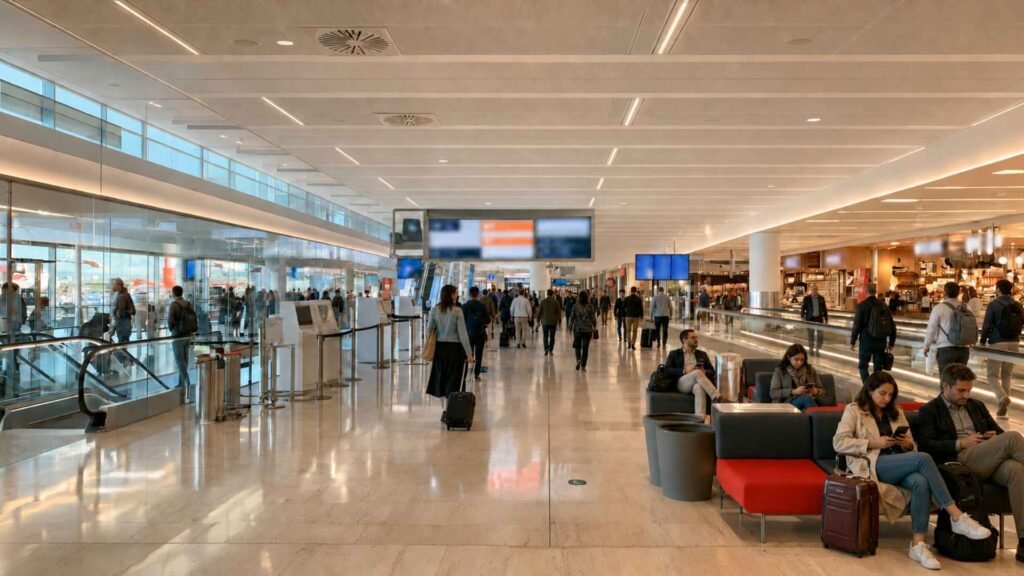
Rome Fiumicino Airport currently operates two principal passenger terminals:
- Terminal 1
- Terminal 3
Terminal 2 is no longer used as a regular passenger terminal, which is why the numbering jumps from Terminal 1 to Terminal 3.
The most important distinction to understand is the difference between your terminal and your boarding area.
The terminal is normally where you check in, drop off baggage or enter the departures process. The boarding area is the airside zone containing your departure gate.
For example, your airline may direct you to Terminal 1 for check-in while your boarding pass displays a gate within Boarding Area A.
Terminal 1
Terminal 1 serves many domestic and Schengen-area flights, although individual airline and route assignments can change.
Facilities include:
- Check-in and bag-drop areas
- Security screening
- Shops, cafés and restaurants
- Access to Boarding Area A
- Baggage claim and arrival facilities
- Ground transportation connections
Terminal 1 is modern and generally straightforward to navigate. However, passengers may still face a considerable walk when their flight departs from a distant gate.
Terminal 3
Terminal 3 handles a large share of international traffic, including many non-Schengen and long-haul flights.
It contains:
- Extensive check-in areas
- Security screening
- Passport-control access
- Shops, cafés and restaurants
- Left-luggage services
- Baggage claim and customs facilities
- Connections towards Boarding Areas A and E
Boarding Area E is particularly important for many non-Schengen departures. Reaching some E gates can involve a long walk or an automated people-mover journey.
Do not remain in the central shopping or dining area until the final boarding call. Check the estimated walking time to your gate and move towards it early.
Is It Easy to Walk Between Terminal 1 and Terminal 3?
Yes. Terminal 1 and Terminal 3 are located within the same airport complex and are connected by signed pedestrian routes.
Walking between their public areas generally takes around 10–15 minutes, depending on your starting point, luggage and walking speed.
This estimate does not include the time required to:
- Find an airline check-in desk
- Drop off baggage
- Pass through security
- Complete passport control
- Reach a distant boarding gate
Airside movement is more complicated because access depends on your boarding pass, destination and border-control requirements. Do not assume that you can freely move between all gate areas simply because the terminal buildings are close together.
Basic Rome Fiumicino Airport Layout
| Area | What you will find |
|---|---|
| Terminal 1 landside | Check-in, arrivals, transport access and passenger services |
| Boarding Area A | Many domestic and Schengen flights |
| Terminal 3 landside | International check-in, arrivals, baggage services and transport access |
| Boarding Area E | Many non-Schengen and long-haul departures |
| Airport railway station | Reached from the terminals through signed pedestrian walkways |
| Taxi ranks | Outside Arrivals at Terminals 1 and 3 |
| Bus stops | Outside the terminal arrival areas |
| Car-rental offices | Office Tower 2, reached through pedestrian tunnels |
| Hilton Rome Airport | Connected to the airport complex by a covered walkway |
Clara’s Tip: Download or screenshot the official Fiumicino Airport map before travelling, but treat the airport screens and airline notifications as the final authority on the day of your flight.
Arriving at Rome Fiumicino Airport
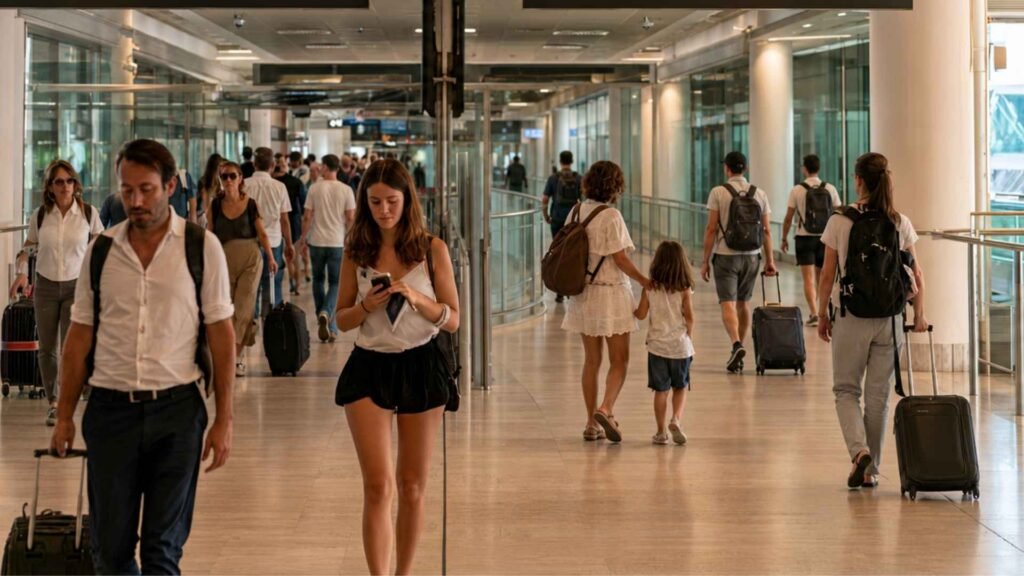
Your arrival procedure depends primarily on whether your flight comes from within or outside the Schengen Area.
Arriving From a Schengen Country
Flights arriving from another Schengen country normally do not require passport control at Fiumicino.
Passengers usually proceed to:
- Baggage claim
- Customs, when applicable
- The public arrivals hall
- Trains, taxis, buses or onward connections
You may still be asked to show identification by your airline or the authorities, so keep your passport or accepted national identity card available.
Arriving From Outside the Schengen Area
Passengers arriving from a non-Schengen country normally complete passport control before collecting checked baggage.
The usual sequence is:
- Leave the aircraft
- Follow signs for Arrivals or Flight Connections
- Complete passport control
- Collect checked baggage
- Pass through customs
- Enter the public arrivals hall
Do not automatically follow the Arrivals signs when you have an onward flight on a protected booking. Depending on your itinerary, you may need to follow the Flight Connections route instead.
EES Checks at Fiumicino
The Entry/Exit System, or EES, became fully operational across participating European countries on 10 April 2026. It applies at external Schengen borders to non-EU nationals travelling for a short stay, including both visa-exempt visitors and travellers holding a short-stay visa.
The system can record:
- Passport information
- A facial image
- Fingerprints
- The date and place of entry or exit
- A refusal of entry
EES does not require travellers to submit a separate application before departure. It digitally records external-border crossings and replaces routine manual passport stamping for eligible travellers.
Initial biometric registration or additional identity checks may take longer than a repeat crossing. If you arrive from outside Schengen, avoid booking a tightly timed train, tour or appointment immediately after landing.
ETIAS is a separate system. As of August 2026, ETIAS is not yet operational and applications are not being accepted. It is expected to begin in the last quarter of 2026, but an exact launch date has not been announced. Travellers should consult the European Commission’s official EES and ETIAS guidance before departure.
The separate Rome Fiumicino Airport Arrival Guide will explain EES registration, passport queues, baggage claim, customs and late-night arrivals in greater detail.
Departing From Rome Fiumicino Airport
Before travelling to the airport, confirm your terminal and airline check-in instructions. Do not rely entirely on an old itinerary screenshot because operational assignments can change.
How Early Should You Arrive?
A practical planning guideline is:
| Type of flight | Suggested arrival time |
|---|---|
| Domestic flight | About 2 hours before departure |
| Schengen flight | About 2–2.5 hours before departure |
| Non-Schengen or long-haul flight | About 3 hours before departure |
| Peak season, complex documentation or special assistance | Allow additional time |
These are general planning estimates rather than guaranteed processing times. Follow your airline’s instructions when it recommends an earlier arrival.
Add extra time if you:
- Need to check baggage
- Require a visa or document check
- Are travelling with children
- Have oversized or special baggage
- Need mobility assistance
- Plan to claim a tax refund
- Are unfamiliar with the airport
- Depart during a holiday or summer peak
Check-In and Bag Drop
Flight-information screens display the terminal, check-in desk and current status of each departure. Many airlines also offer online check-in, self-service kiosks or automated bag-drop facilities.
Even after checking in online, you may need to visit an airline desk if:
- Your travel documents require verification
- The airline cannot issue a mobile boarding pass
- You have checked baggage
- You are travelling with an infant or pet
- Your destination has additional entry requirements
After completing check-in, follow signs for security and the boarding area assigned to your flight.
Security Checks at Fiumicino
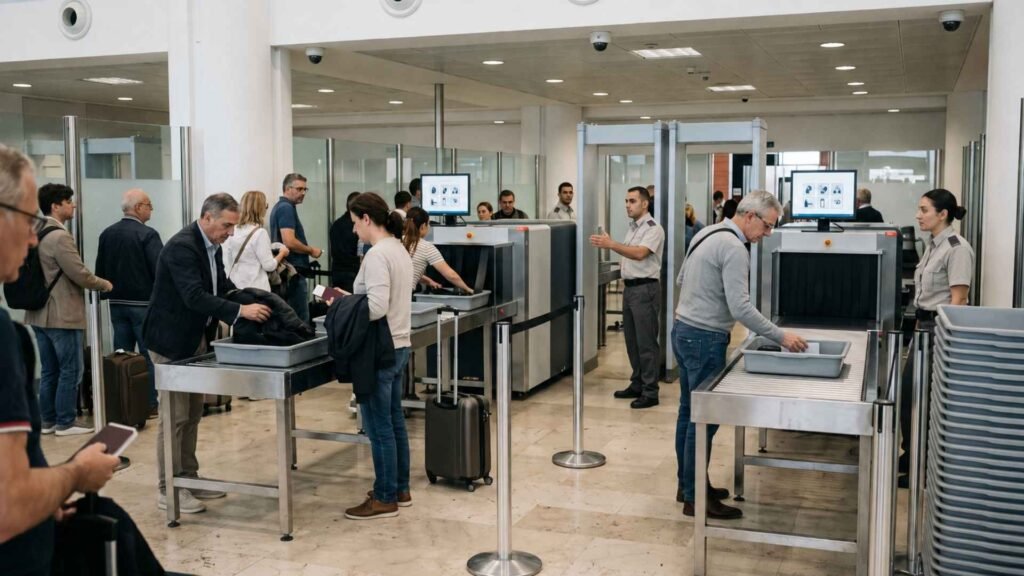
Terminal 1 and Terminal 3 both have security-screening facilities. Waiting times vary according to season, departure waves and daily operating conditions.
Have the following ready:
- Boarding pass
- Travel document
- Liquids or restricted items that require separate presentation
- Electronic devices when requested
- Coats, belts or other items officers instruct you to remove
Fiumicino uses modern screening equipment in several areas, but passengers should not assume that every checkpoint follows identical procedures. Follow the instructions displayed at your specific security lane.
Family Lanes and Accessible Travel
Dedicated family lanes may be available for passengers travelling with young children.
Baby food, milk and medically necessary liquids can be screened separately from ordinary liquids. Keep them accessible and declare them to security staff when requested.
Passengers requiring reduced-mobility assistance should normally request the service through their airline or travel provider at least 48 hours before departure. Assistance meeting points are available around the airport, but advance notification allows the airport and airline to coordinate the service more effectively.
Fast Track Security
Fast Track lanes are available in Terminal 1 and Terminal 3. Access may be included with particular airlines, cabin classes, memberships or airport services. It may also be available for purchase.
Fast Track usually applies to airport security screening. It should not be interpreted as automatic priority at immigration, airline document checks or every other queue in the airport.
The separate Rome Fiumicino Airport Fast Track guide will compare eligibility, purchase methods and the situations in which the service may be worthwhile.
Passport Control at Rome Fiumicino
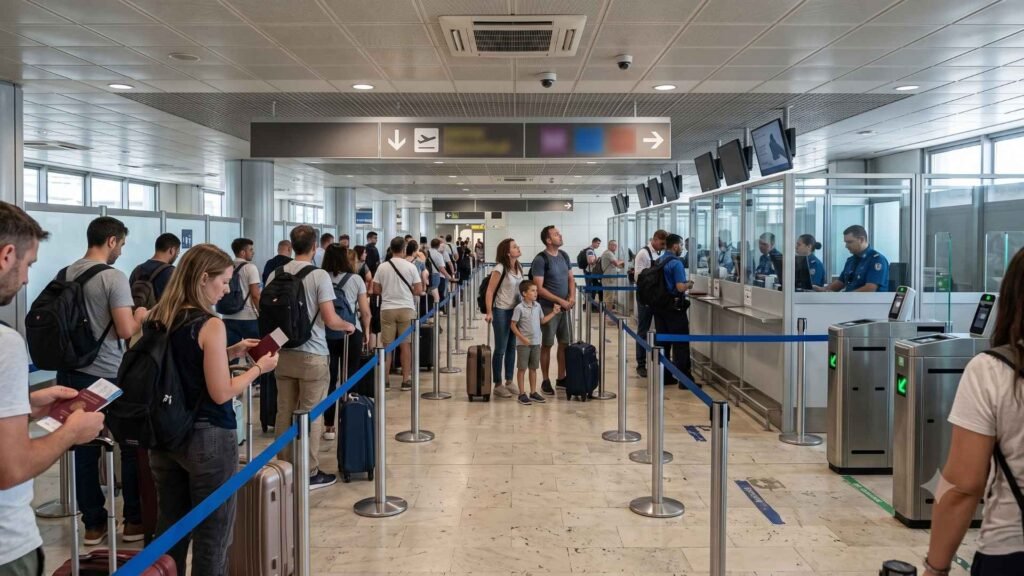
Passport control is required when your journey crosses the external Schengen border.
You will normally complete it when:
- Arriving in Rome from a non-Schengen country
- Departing Rome for a non-Schengen destination
- Connecting between Schengen and non-Schengen flights
- Entering Italy during certain self-transfer itineraries
A journey entirely within the Schengen Area normally does not involve border control at Fiumicino.
Who Can Use the eGates?
Fiumicino operates electronic passport gates for eligible passengers carrying biometric passports.
Eligibility can depend on:
- Nationality
- Age
- Passport type
- Current Italian and Schengen border rules
Some travellers may still be directed to a border officer after using an eGate. Automated processing does not remove the obligation to satisfy Italy’s entry requirements.
Follow the signs and instructions displayed in the border-control area rather than choosing a queue based on another traveller’s experience.
Connecting at Rome Fiumicino
Connections at FCO range from straightforward same-zone transfers to itineraries involving passport control, security and baggage collection.
Your procedure depends on:
- Whether both flights are on one booking
- Whether baggage is checked to the final destination
- The Schengen status of each flight
- Your arrival and departure boarding areas
- Your nationality and visa position
- Whether the itinerary requires you to enter Italy
Protected Connections
When both flights are issued on one protected booking, the airline is generally responsible for rebooking you if a qualifying delay causes you to miss the connection.
Checked baggage is often transferred to the final destination, but confirm this when you first check it in. Do not assume that bags will be transferred simply because both flights are operated by partner airlines.
After landing, follow the Flight Connections signs and check the airport screens for your departure gate.
Self-Transfers
Separate tickets create a different process and a greater level of risk. Depending on the itinerary, you may need to:
- Enter Italy through passport control
- Collect checked baggage
- Pass through customs
- Walk to the correct departure terminal
- Check in again
- Clear security
- Complete exit passport control for a non-Schengen departure
Because this process may require formal entry into Italy, some travellers need a Schengen visa even when Rome is only a connection point.
Do not treat an airline’s published minimum connection time as a safe self-transfer allowance. When tickets are separate, the second airline is generally not responsible if a delay on the first booking causes you to miss its flight.
The Rome Fiumicino Airport Transit Guide will cover protected transfers. The Rome Fiumicino Airport Self-Transfer Guide will examine separate tickets, visa exposure, baggage collection and safer connection times.
Baggage Services
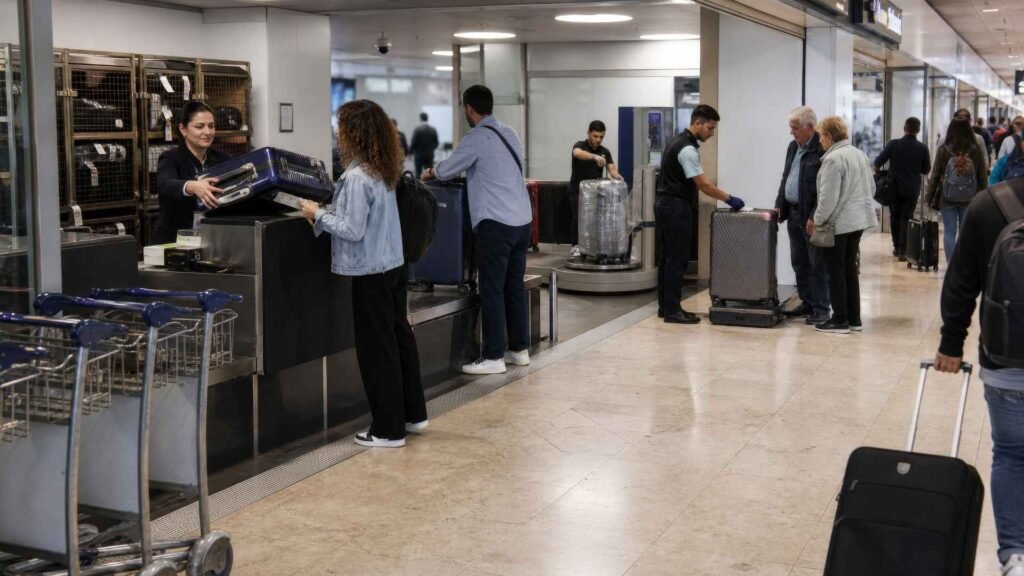
Fiumicino provides baggage trolleys, wrapping, porter services and left-luggage storage.
Left-Luggage Storage
The airport’s staffed luggage-storage facility is located in Terminal 3.
Its currently published opening hours are from 7:00 a.m. to 11:00 p.m. Check the official Fiumicino baggage-services page before relying on these hours, particularly around public holidays or periods of operational disruption.
Left-luggage storage can be useful during:
- A long layover
- An overnight stay outside the terminal
- A short visit to Rome
- A gap before hotel check-in
- Travel with equipment you do not need in the city
Keep your receipt and allow sufficient time to retrieve your belongings before the facility closes.
Lost Checked Baggage
If checked baggage does not arrive, report it before leaving the baggage-claim area.
The responsible contact is usually the ground-handling company acting for your airline, not the airport’s general lost-property office.
You will normally receive a Property Irregularity Report with a tracking reference. Keep:
- Your baggage receipt
- Boarding pass
- Report reference
- Receipts for essential replacement purchases
- A photograph or description of the bag
The airport lost-property service primarily handles belongings misplaced inside the terminal. Delayed or missing checked baggage remains the responsibility of the airline and its ground handler.
Wi-Fi, Charging and Mobile Connectivity
Fiumicino provides free and unlimited Wi-Fi throughout the airport. Passengers connect to the airport network and follow the on-screen access steps.
Charging points are available in terminal seating areas, workspaces and lounges. Convenient sockets can still be occupied during busy periods, so carrying a charged power bank is useful on a long travel day.
SIM Cards and eSIMs
Physical SIM cards and mobile services may be available from airport retailers, but airport packages are not always the least expensive option.
An eSIM may be more convenient when:
- Your phone supports eSIM technology
- You want mobile data immediately after landing
- You do not require an Italian telephone number
- You prefer to compare plans before travelling
Download and configure the eSIM before departure while you have reliable internet access.
Do not activate a time-limited plan too early unless its conditions clearly state that the validity period begins only after it first connects to a supported Italian network.
ATMs, Currency Exchange and Payments
ATMs and currency-exchange services are available throughout the terminal complex.
Italy uses the euro, and card payments are widely accepted at the airport and across Rome. Nevertheless, a small amount of cash can be useful for minor purchases or unexpected payment problems.
When using an ATM:
- Prefer a machine operated by a recognised bank
- Review all displayed charges before confirming
- Decline dynamic currency conversion when your bank provides a better rate
- Choose to be charged in euros rather than your home currency
- Avoid withdrawing more cash than you realistically expect to use
Airport exchange desks are convenient but may provide less favourable rates than bank withdrawals or currency arranged before the journey.
Getting From Fiumicino Airport to Rome
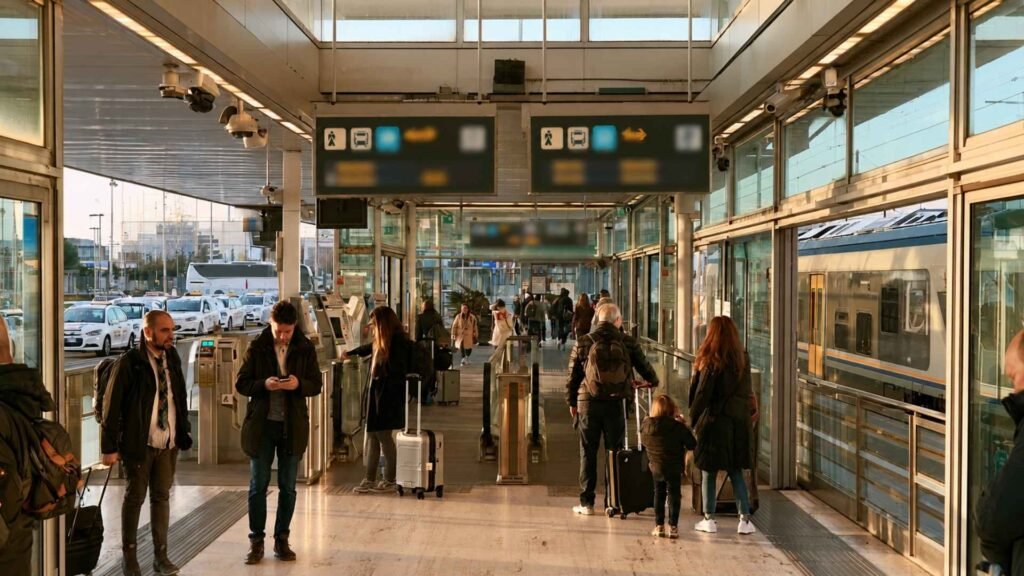
Fiumicino is connected to Rome by direct and regional trains, airport buses, taxis, private transfers and rental cars.
| Transport | Best for | Approximate journey |
|---|---|---|
| Leonardo Express | Direct travel to Roma Termini | 32 minutes |
| FL1 regional train | Trastevere, Ostiense, Tuscolana and Tiburtina | Varies by station |
| Airport bus | Lower-cost travel to central Rome | Usually 45–75+ minutes |
| Official taxi | Door-to-door convenience | Often 40–60+ minutes |
| Private transfer | Pre-arranged pickup, families and larger groups | Traffic-dependent |
| Rental car | Travel outside Rome | Usually unsuitable for central Rome |
Leonardo Express
The Leonardo Express runs non-stop between Fiumicino Airport and Roma Termini.
It is generally the simplest railway option for travellers staying close to Termini or continuing by metro or intercity train. The published journey time is approximately 32 minutes, although passengers should still check the current timetable before travelling.
FL1 Regional Train
The FL1 regional train serves stations including Trastevere, Ostiense, Tuscolana and Tiburtina. It does not provide the same direct airport-to-Termini service as the Leonardo Express.
The FL1 may be more convenient if your accommodation is near:
- Trastevere
- Testaccio or Ostiense
- San Giovanni and Tuscolana
- Tiburtina
- A connecting regional railway line
Choosing the correct train according to your neighbourhood can prevent an unnecessary journey through Termini.
Official Taxis
Official taxi ranks are located outside the Arrivals areas of Terminal 1 and Terminal 3.
Licensed taxis are white, display a TAXI sign and carry municipal identification. Ignore drivers who approach you inside the terminal offering an unofficial ride.
Use the organised taxi queue and confirm whether the fixed municipal fare applies to your precise destination before setting off.
Buses and Private Transfers
Several companies operate buses between Fiumicino and central Rome. They can cost less than the Leonardo Express, but journey times are more vulnerable to road congestion.
A private transfer may suit:
- Families with young children
- Groups sharing the cost
- Travellers carrying substantial luggage
- Late-night arrivals
- Passengers requiring a pre-arranged pickup
Before booking, check whether the quoted price includes waiting time, child seats, additional luggage, parking and after-hours charges.
The full Rome Fiumicino Airport to Rome City Center guide will compare current fares, schedules and the most practical choices for Termini, Trastevere, the Vatican and other parts of Rome. Live options can also be checked on the official Aeroporti di Roma transportation page.
Food, Shopping and Lounges
Fiumicino offers a wide range of cafés, restaurants, duty-free stores and Italian retail outlets. The largest selection is generally found after security within the main boarding areas.
Not every gate zone has the same choice of food and shops. Check your gate location before settling into a restaurant, particularly when departing from a distant section of Boarding Area E.
Lounge access can depend on:
- Airline status
- Cabin class
- Lounge membership
- Eligible credit-card benefits
- A paid reservation
- The boarding area used by your flight
A lounge in another travel zone may not be accessible from your departure route, even if it appears geographically close on the airport map.
The forthcoming Rome Fiumicino Airport Lounges guide will compare lounge locations, access rules, showers, food, workspaces and paid-entry options.
Can You Stay Overnight at Rome Fiumicino Airport?
Fiumicino operates around the clock, but sleeping inside the terminal should be considered a backup rather than a comfortable alternative to a hotel.
Overnight conditions can be affected by:
- Closed shops and restaurants
- Cleaning and maintenance
- Seating divided by armrests
- Lighting and announcements
- Temporary restrictions in individual areas
- Airside access rules
Keep your passport, phone, wallet and other valuables attached to you. Never leave luggage unattended while sleeping.
More comfortable alternatives include:
- Hilton Rome Airport, connected by a covered walkway
- Air Rooms near the terminal complex
- Airport hotels offering scheduled shuttles
- Hotels in Fiumicino town
- Accommodation in Ostia when transport times suit your flight
The upcoming Hotels Near Rome Fiumicino Airport guide will distinguish genuinely walkable hotels from properties requiring a shuttle, taxi or private transfer.
15 Essential Rome Fiumicino Airport Tips
Use this checklist before travelling:
- Confirm that your flight uses FCO rather than Ciampino Airport.
- Check the current terminal directly with your airline.
- Note both your terminal and boarding area.
- Arrive earlier for non-Schengen and long-haul departures.
- Allow additional time when crossing an external Schengen border.
- Follow Flight Connections signs when continuing to another flight.
- Confirm whether checked baggage is tagged to your final destination.
- Leave a generous buffer between separate-ticket flights.
- Do not assume Fast Track security includes passport control.
- Use the Leonardo Express when you need a direct train to Termini.
- Consider the FL1 for Trastevere, Ostiense, Tuscolana or Tiburtina.
- Take only licensed white taxis from the official rank.
- Check your gate before stopping for food or shopping.
- Keep essential medication and documents in your hand luggage.
- Recheck transport schedules and flight information on the day of travel.
Frequently Asked Questions About Rome Fiumicino Airport
Is Rome Fiumicino Airport easy to navigate?
Yes. The airport is large, but signs clearly separate Arrivals, Departures and Flight Connections. The longest journeys are often towards distant boarding gates rather than between the two terminal buildings.
Which terminal should I use at Rome Fiumicino Airport?
Your airline and flight determine the terminal. Check your airline app, current boarding pass or the airport’s live departure information rather than relying on a previous journey.
Can you walk between Terminal 1 and Terminal 3?
Yes. Their landside areas are connected by signed pedestrian routes. Airside access is different and depends on your boarding pass, destination and any required security or passport checks.
Which train should I take from Fiumicino Airport to Rome?
Choose the Leonardo Express for a direct journey to Roma Termini. The FL1 regional train is often more convenient for Trastevere, Ostiense, Tuscolana and Tiburtina.
Can I stay overnight at Rome Fiumicino Airport?
The airport operates overnight, but services and access to individual areas may be limited. A connected or nearby hotel is normally the more comfortable choice.
Can I use an eGate at Fiumicino Airport?
Eligible passengers with biometric passports may use the electronic gates. Access depends on nationality, age and current border rules, and an additional check by a border officer may still be required.
Do I need passport control for a connection at Fiumicino?
Passport control is normally required when your itinerary crosses the external Schengen border or requires you to enter Italy. A connection entirely within the Schengen Area usually does not involve border control.
Is one hour enough for a connection at Fiumicino?
It can work for certain protected connections, but it is not a safe universal allowance. Gate distance, passport control, security and baggage arrangements can make one hour insufficient, particularly when the flights are on separate tickets.
Final Thoughts
Rome Fiumicino is large, but it becomes manageable once you confirm three details: your terminal, boarding area and whether your journey crosses the Schengen border.
Allow extra time for border formalities, distant gates and separate-ticket transfers. When travelling into Rome, choose your transport according to your actual neighbourhood rather than automatically heading to Termini.