

Singapore entry requirements can be easy to overlook when you do not need a visa. Visa-free travel still comes with preparation: a suitable passport, an arrival declaration and, depending on your journey, additional supporting documents.
The key is knowing which requirements apply to your passport and itinerary before you fly. This guide covers short visits and connections that involve entering Singapore, helping you prepare the right documents without confusing a visa, the SG Arrival Card and your permitted length of stay.
Singapore Entry Requirements: Quick Answer
For a short visit, prepare an individual passport with at least six months’ validity when entering Singapore, a visa if your travel document requires one, and evidence of your onward journey and sufficient funds. Submit the free SG Arrival Card within three calendar days, including your arrival date. Additional health documentation may apply depending on your recent travel history.
Keep these three documents separate in your planning:
| Document | What it does | Who needs it |
|---|---|---|
| Passport or recognised travel document | Establishes your identity and nationality | Every traveller |
| Singapore entry visa | Allows the holder to travel to Singapore and seek entry | Travellers whose nationality or document type requires one |
| SG Arrival Card | Records arrival information and an electronic health declaration | Travellers entering Singapore, subject to specific exemptions |
If you are connecting at Changi without passing through arrival immigration, the entry process is different. Confirm whether your airline arrangements allow you to remain airside before preparing for your connection.
1. Check Your Passport and Supporting Documents
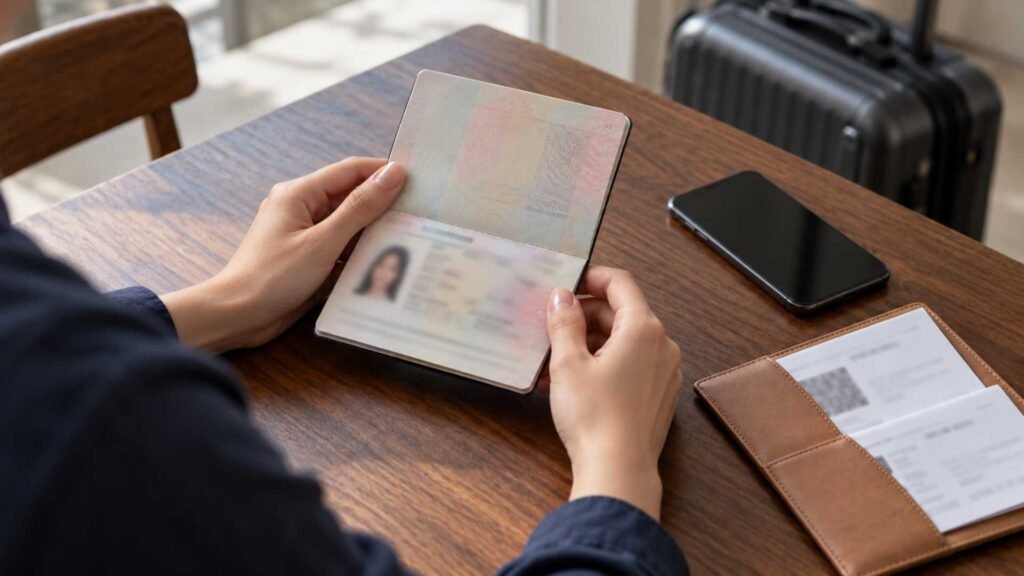
Begin with the documents that take longest to replace. Discovering a passport problem is much easier to manage before booking than at airline check-in.
Passport Validity
Foreign visitors should have at least six months remaining on their passport when entering Singapore. Every traveller needs an individually issued travel document, including babies and children.
Check the expiry date against your Singapore arrival date, particularly if you are visiting other countries first. If you renew your passport before travelling, use the new document’s details for subsequent applications and declarations.
Onward Travel, Accommodation and Funds
Have the following information readily available:
- A confirmed return or onward booking, where applicable.
- Any visa or entry permission needed for your next destination.
- Evidence that you can support yourself during the visit.
- Your accommodation booking or your host’s address and contact details.
If you are staying with friends or family, prepare their address rather than assuming you need to book a hotel solely for the arrival declaration. Your accommodation details should accurately reflect your plans.
Clara’s Tip: Save your flight bookings, accommodation details and relevant approvals in one offline folder. Name files clearly so you can find the right document without searching through email at the check-in desk.
2. Do You Need a Visa for Singapore?
Visa requirements depend on your nationality and the travel document you use. The country you fly from does not, by itself, determine whether you need a Singapore visa.
Check Your Exact Passport Type
Travellers using ordinary passports from countries including India, Bangladesh, Pakistan and Russia generally need a visa. Many other nationalities can make short visits without applying for one in advance.
Refugee travel documents, certain temporary passports and documents of identity can have different requirements from ordinary national passports. Check the document you will actually present, particularly if you hold more than one passport.
Use the official Singapore visa requirements checker and open the instructions for your country or document type. Check any exemptions on that individual page before applying.
How to Apply
Depending on your circumstances, the application route may involve an eligible local contact in Singapore, a Singapore Overseas Mission or an authorised visa agent appointed by that mission.
An eligible Singapore citizen or permanent resident with Singpass can submit through ICA’s online system as a local contact. If you use an agent, verify its appointment through the relevant Singapore mission rather than relying on advertising or an official-looking website.
Prepare the document checklist specified for your application. For example, ICA’s instructions for Indian applicants include Form 14A, a recent passport photograph and a copy of the passport biodata page. Additional supporting documents may be requested.
The visa processing fee is S$30 and is non-refundable. Authorised agents may charge an additional service fee. Processing times depend on the application route and individual case, so allow a buffer rather than treating an advertised turnaround as a guarantee.
Visa Validity Is Not Your Allowed Stay
A visa lets you travel to Singapore and request admission; it does not guarantee entry or permission to remain until the visa expires.
The electronic Visit Pass, or e-Pass, records the stay granted after entry. Check its last permitted day and plan around that date. Do not assume every visitor receives the same number of days.
3. Complete Your SG Arrival Card

The SG Arrival Card is a separate arrival and health declaration. Visa-exempt visitors still need it when entering Singapore unless an exemption applies.
Who Needs It and When?
Submit within three calendar days, including arrival day. For arrival on 10 November, the window opens on 8 November. Use your Singapore arrival date, not your departure date.
The main exemptions cover:
- Travellers remaining airside without clearing arrival immigration.
- Singapore citizens, permanent residents and long-term pass holders entering through the land checkpoints.
These residents still need to submit when arriving by air. The land-checkpoint exemption does not apply to foreign tourists simply because they arrive from Malaysia by road.
How to Submit
Use the official SG Arrival Card service or MyICA app.
- Select the appropriate traveller category.
- Enter your passport and contact information.
- Complete the requested journey and accommodation details.
- Answer the health declaration accurately.
- Review, submit and save the acknowledgement.
Check your passport number, arrival date and email address carefully before submitting.
Submission through the official channels is free. ICA does not endorse paid arrival-card intermediaries, and their charges are separate from any legitimate visa application fee. Paying an intermediary does not provide a visa or special entry permission.
Families, Corrections and Repeat Visits
Group submission can cover up to ten people travelling together. Check each person’s passport details and ensure the shared itinerary information is accurate; adding one adult does not automatically cover the rest of the family.
If your plans change, update an unexpired submission through the e-service or edit the trip in MyICA and submit the changes. Update your health declaration if your health circumstances change before arrival.
Records expire after the arrival date or completed trip, whichever comes first. Complete a new declaration for a later entry rather than reusing an earlier acknowledgement.
4. Singapore Entry Requirements for Transit and Self-Transfer
For connecting passengers, the key question is whether you must pass through Singapore arrival immigration. A short connection does not automatically exempt you from entry requirements.
Staying Airside or Entering Singapore?
If you continue to another country without clearing arrival immigration, you are travelling as an airside transit passenger. Confirm with your airline that your baggage and onward boarding arrangements allow this. Our Singapore Changi Airport Transit Guide explains how to plan the connection.
If you need to collect checked baggage, use a landside check-in desk or leave the transit area, Singapore’s entry requirements apply.
Separate tickets are a reason to check your arrangements, rather than proof that immigration clearance is always necessary. Before booking, establish whether you can legally enter Singapore if your transfer requires it. The Singapore Changi Airport Self-Transfer Guide covers the practical planning.
The 96-Hour Visa-Free Transit Facility
Singapore’s Visa-Free Transit Facility, or VFTF, is a conditional entry arrangement for certain travellers who would otherwise require a visa.
Eligibility depends on nationality or document type, onward travel and, for some travellers, a qualifying visa or long-term pass from another country. Indian nationals, for example, must meet additional document conditions and hold an onward air or sea ticket departing within 96 hours. Different conditions apply to other eligible groups.
A connecting ticket alone does not establish eligibility. Check the VFTF section linked from ICA’s visa requirements page before relying on it. Admission is assessed at entry, and a VFTF stay cannot be extended.
5. Check Health Documents and Personal Medication
Health preparation depends partly on where you have travelled before Singapore. Review your full itinerary, including lengthy airport connections.
Yellow Fever Certificates
A valid yellow fever vaccination certificate is required if you have visited a country with yellow fever transmission risk during the six days before arrival. The rule also covers airport transit exceeding 12 hours in a risk country.
The certificate becomes valid ten days after vaccination and remains valid for life. If this applies to your route, arrange advice well before departure.
Travellers without a valid certificate may face quarantine, including those who cannot receive the vaccine. A medical contraindication does not automatically remove the border requirement; non-residents who refuse quarantine can be denied entry.
Singapore no longer applies routine COVID-19 entry measures based on vaccination status, but the SG Arrival Card health declaration remains required unless you qualify for an exemption.
Prescription Medicines
Check your medicine’s active ingredients against Health Sciences Authority requirements before packing. A prescription from home does not automatically authorise every medicine.
Where no approval is required, eligible prescribed medicines can generally be brought in quantities of up to three months’ supply. Carry the prescription or doctor’s letter and keep medicines in their original, appropriately labelled packaging.
Medicines containing controlled substances require prior approval. HSA advises submitting the application at least two weeks before arrival. Keep any approval and supporting documents accessible during travel.
Airside transit does not require HSA approval for personal medication, but prohibited medicines remain prohibited even in transit.
6. Check Your Luggage and Customs Declarations

Before packing, check whether your belongings are permitted and whether any purchases or cash require a declaration.
- Vape products: Do not pack e-cigarettes, vaporisers or their prohibited components.
- Cigarettes and tobacco: There is no duty-free concession or GST import relief for these products. Standardised packaging requirements also apply; paying tax does not make non-compliant products eligible for entry.
- Chewing gum: Import restrictions apply, with specific exceptions for approved dental and medicinal products. Do not assume a product bought legally elsewhere is permitted.
- Shopping and alcohol: Check the conditions for GST import relief and duty-free concessions. An airport duty-free purchase is not automatically exempt when brought into Singapore.
- Cash: A declaration is required when physical currency and bearer negotiable instruments together exceed S$20,000, or the equivalent in other currencies. This is a reporting threshold, not a maximum amount you can carry.
If a cash declaration is required, submit Form NP 727 online within 72 hours before arrival through the e-727 e-service, MyICA or the “Submit Cash (CBNI) Declaration” option shown after completing your SG Arrival Card. Keep the acknowledgement accessible for inspection.
Check these rules before buying gifts or packing restricted products. Completing the SG Arrival Card does not replace any separate customs or cash declaration.
7. Organise Your Preparation Before Departure
Work backwards from your flight so that tasks needing approval come before the arrival declaration.
| When | What to organise |
|---|---|
| Before committing to your itinerary | Passport validity, visa eligibility and whether your connection requires entry |
| Several weeks before travel | Medication checks and any route-specific health preparation |
| Within the application window specified for your visa | Required documents, application and processing buffer |
| At least two weeks before arrival, if applicable | HSA approval application for controlled medication |
| Within three calendar days, including arrival day | SG Arrival Card and health declaration |
| Within 72 hours before arrival, if required | Online cash declaration using Form NP 727 |
| Before leaving for the airport | Original documents, offline copies and any required goods declarations |
Follow the specific application instructions for your nationality and circumstances. For example, ICA advises Indian visa applicants to apply within 30 days before arrival, while medication approvals follow a different timetable.
Once your documents are ready, use our Singapore Changi Airport Arrival Guide for the practical steps after landing.
Singapore Entry Requirements: Frequently Asked Questions
Can I Apply for a Singapore Visa on Arrival?
Do not plan to obtain a required visa at the immigration counter. ICA does not accept visa applications there. Arrange it before travel unless you qualify for a specific exemption or facility.
Is the SG Arrival Card a Visa?
No. It is an arrival and health declaration. If your passport requires a Singapore visa, submitting the SG Arrival Card does not replace that application.
When Should I Submit the SG Arrival Card?
Submit it within three calendar days, including your arrival date in Singapore. Base the submission window on when you land, not when your flight departs.
Do I Need an SG Arrival Card for a Transit Flight?
No, if you remain airside without clearing arrival immigration. If you enter Singapore during your connection, you need to submit it and meet the applicable entry requirements.
How Long Can I Stay in Singapore?
Your e-Pass shows how long you may stay in Singapore; remaining beyond that date requires an approved extension.
Final Thoughts
A little preparation makes Singapore entry requirements easier to manage. Check your passport and visa needs early, account for any health requirements along your route, and complete the SG Arrival Card when your submission window opens.
With your documents ready, you can focus on the more enjoyable decisions—where to stay, what to explore and which hawker dish to try first.