
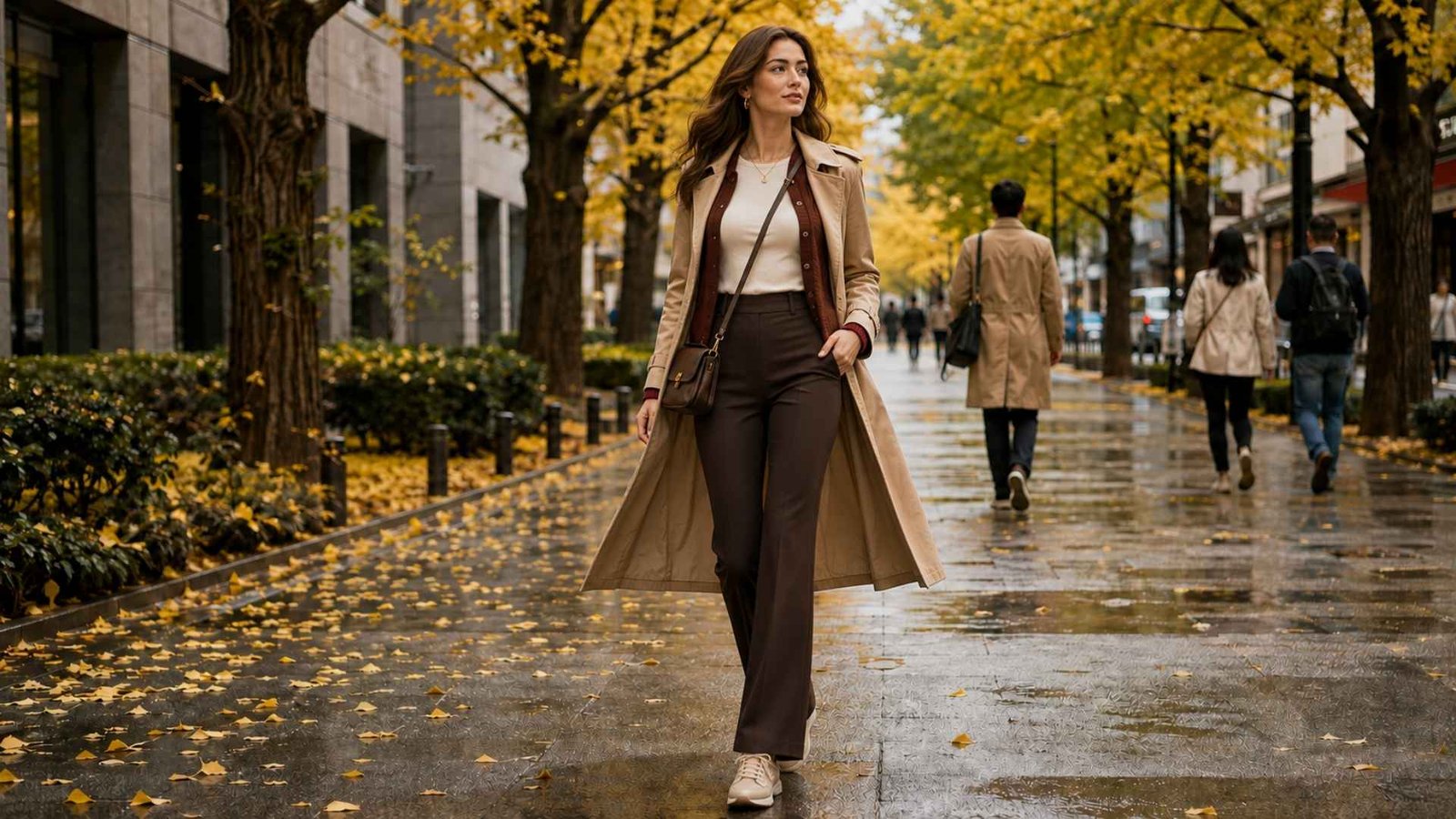
Knowing what to wear in Japan in fall can be surprisingly difficult. September often feels like an extension of summer, October brings comfortable sightseeing weather, and November can require proper outerwear—especially in northern Japan.
The key is to pack breathable clothes alongside a few versatile layers. This guide explains what to wear in September, October and November, with practical outfit ideas for Tokyo, Kyoto, Osaka and Hokkaido.
Quick Answer: What Should You Wear in Japan in Fall?
For most autumn trips to Japan, pack breathable tops, comfortable trousers or midi skirts, a light knit, a weather-resistant jacket and supportive walking shoes.
Your exact wardrobe should depend on when and where you are travelling:
- September: Lightweight summer clothing, breathable fabrics and rain protection
- October: T-shirts or shirts with a cardigan, overshirt or light jacket
- November: Sweaters, long trousers and a medium-weight coat
- Hokkaido: Warmer layers and an insulated jacket, particularly from late October
- Tokyo, Kyoto and Osaka: Flexible layers that can be removed during warmer afternoons
September can remain hot and humid across central Japan, while November mornings and evenings may feel distinctly cold. Checking the local forecast shortly before departure is more reliable than packing for “autumn” as a single season.
What to Wear in Japan in Fall: Weather at a Glance
Japan’s autumn season generally covers September, October and November, but conditions vary considerably by month and region.
According to the Japan National Tourism Organization, autumn temperatures across the country can range broadly from about 8°C to 27°C. Northern areas cool much earlier, while warm weather may linger in southern and central Japan.
The figures below are approximate seasonal norms rather than a forecast:
| Destination | September | October | November |
|---|---|---|---|
| Tokyo | 21–28°C | 15–22°C | 9–17°C |
| Kyoto | 20–29°C | 13–23°C | 7–17°C |
| Osaka | 22–30°C | 16–24°C | 10–18°C |
| Sapporo | 15–23°C | 8–16°C | 2–9°C |
September also falls within Japan’s typhoon season. Hot, humid days can be interrupted by heavy rain, strong winds and transport disruption. October is usually calmer and more comfortable, while November becomes cooler and drier in many major sightseeing destinations.
If the season is still flexible, our Best Time to Visit Japan guide compares weather, crowds and seasonal experiences throughout the year.
Lina’s Tip:
Do not build your Japan fall wardrobe around the season’s name alone. A September trip to Tokyo may require almost entirely summer clothing, while a November journey through Hokkaido can call for winter-level layers. Choose your outerwear only after comparing the month, destination and latest forecast.
What to Wear in Japan in September
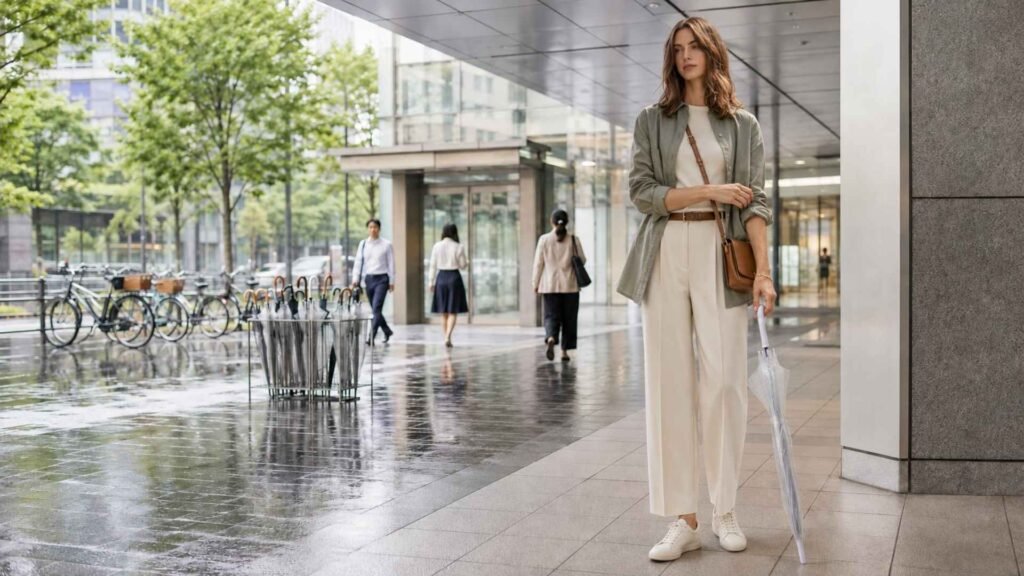
September may be considered the beginning of fall, but it often feels like late summer in Tokyo, Kyoto and Osaka.
Daytime temperatures can remain high, and humidity may make heavier autumn clothing uncomfortable. Lightweight fabrics should therefore form the foundation of your wardrobe.
Choose Breathable Clothing
Pack short-sleeved T-shirts, relaxed shirts, breathable blouses, lightweight dresses and loose trousers. Linen blends, cotton, Tencel and technical moisture-wicking fabrics are more practical than thick denim or heavy knitwear.
A typical September daytime outfit could include:
- A breathable T-shirt or short-sleeved blouse
- Lightweight wide-leg trousers or a midi skirt
- Comfortable walking sneakers
- A compact crossbody bag
- Sunglasses and a packable umbrella
Shorts are commonly seen and are generally acceptable for casual sightseeing. However, lightweight trousers, culottes or a midi skirt provide more coverage for temples, traditional restaurants and air-conditioned interiors.
Carry One Light Layer
Even when the streets feel warm, trains, department stores and restaurants can be strongly air-conditioned. A thin cardigan, linen overshirt or lightweight wrap can make indoor stops more comfortable.
Avoid packing a heavy jacket for a standard September trip through Tokyo, Kyoto and Osaka unless the forecast indicates unusually cool weather.
Prepare for Rain and Typhoons
September weather can be unpredictable, with typhoons occurring most frequently from late August through much of the month. The official September travel guide recommends leaving some flexibility in travel plans because severe weather can affect transport.
Bring:
- A compact, sturdy umbrella
- A light water-resistant jacket
- Quick-drying clothes
- Water-resistant footwear or a protective shoe spray
- A small waterproof pouch for electronics and documents
A very thin rain shell is more useful than a heavy waterproof coat, which may feel uncomfortable in humid weather.
What to Wear in Japan in October
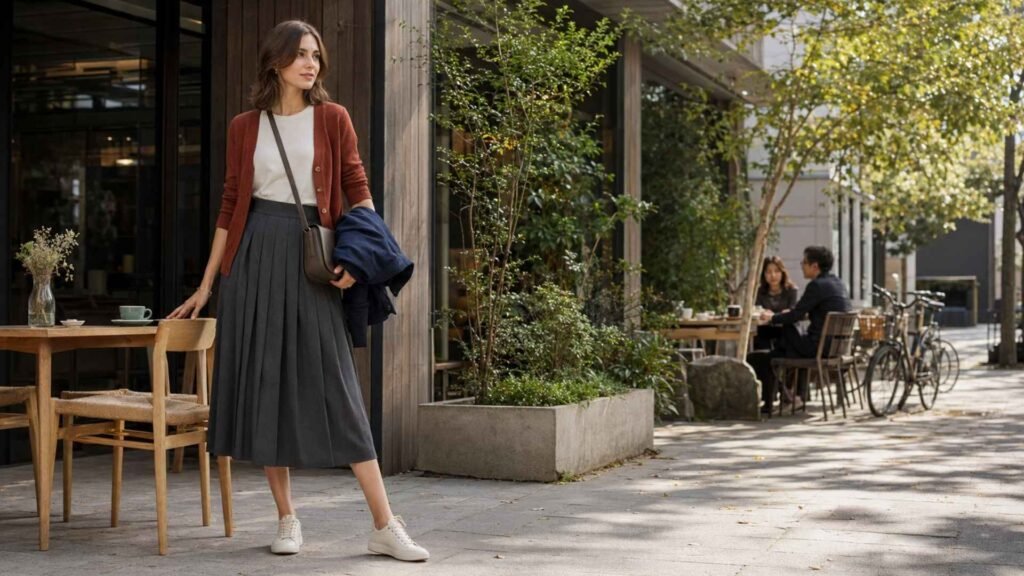
October is one of the easiest months to dress for in Japan. Conditions are generally milder, humidity begins to fall and typhoon season is largely over by the end of September.
The Japan National Tourism Organization’s October guide describes the month as offering some of the country’s fairest and most comfortable weather.
Build Outfits With Light Layers
Mornings may feel cool, afternoons pleasantly mild and evenings cooler again. A layered outfit allows you to adjust without returning to your hotel.
Useful combinations include:
- A cotton shirt, straight-leg trousers and a light trench coat
- A T-shirt, cardigan and midi skirt
- A fine-knit top, relaxed jeans and a lightweight jacket
- A casual dress with a cardigan and comfortable sneakers
A light trench, utility jacket, unlined blazer or compact windbreaker is normally sufficient in Tokyo, Kyoto and Osaka during much of October.
Bring Both Short and Long Sleeves
Early October may still be warm enough for short sleeves during the afternoon. By late October, long-sleeved tops and light knits become more useful, particularly after sunset.
Instead of filling your suitcase with thick sweaters, pack layers of different weights:
- Two or three breathable base tops
- Two long-sleeved shirts or tops
- One fine-knit sweater
- One cardigan
- One light outer layer
This creates more outfit combinations without adding unnecessary bulk.
Consider Your Autumn Foliage Plans
Autumn foliage appears at different times depending on elevation and latitude. Mountain areas and parts of Hokkaido cool earlier than Tokyo or Kyoto.
If your itinerary includes Nikko, the Japanese Alps, Mount Fuji viewpoints or elevated hiking areas, add a warmer mid-layer and a wind-resistant jacket. Temperatures in the mountains can be significantly lower than those in nearby cities.
What to Wear in Japan in November
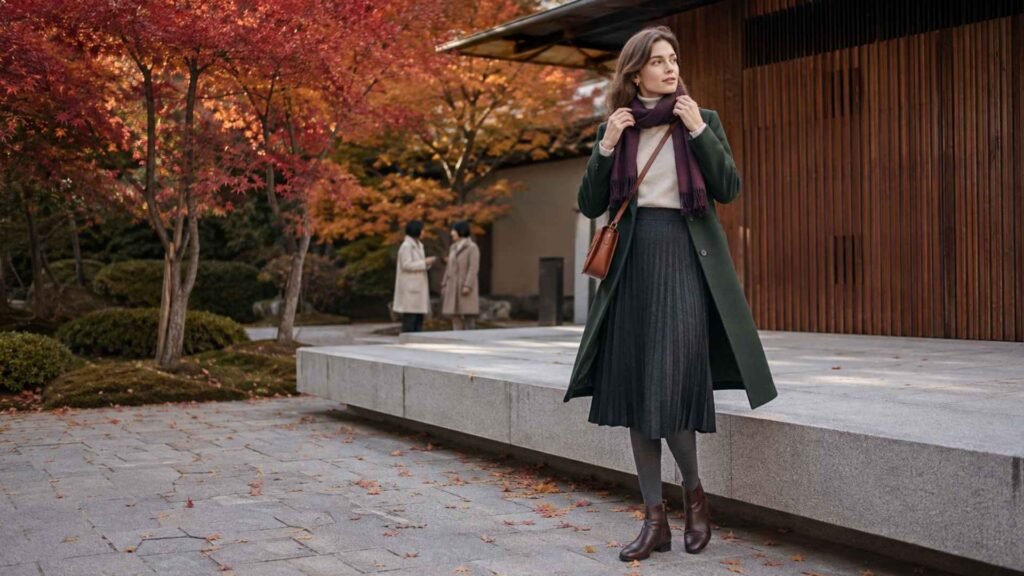
November brings classic fall conditions to much of central Japan. Days are often comfortable for walking, but mornings, evenings and shaded temple grounds can feel cold.
The official Japan in November guide describes conditions as ranging from cool to chilly, making sweaters increasingly useful.
Pack Warmer Knits
Fine- to medium-weight sweaters become practical in November. Merino wool, cotton knitwear and compact fleece layers provide warmth without taking up as much luggage space as oversized sweaters.
For most city itineraries, consider packing:
- Long-sleeved base tops
- One or two sweaters
- Long trousers or warm midi skirts
- A medium-weight jacket or coat
- Closed-toe walking shoes
- A light scarf
Thermal base layers are not always necessary in Tokyo, Kyoto or Osaka during early November, but one thin thermal top can be helpful for late-November evenings or travellers who feel the cold easily.
Choose a Proper Outer Layer
A light trench may still work on mild afternoons, but a lined jacket, wool-blend coat or lightweight insulated coat becomes more dependable as the month progresses.
The best option is warm enough for evening walks but not so bulky that it becomes uncomfortable inside trains, cafés and shops.
Dress for Early Starts and Evening Illuminations
Autumn foliage viewing often involves early temple visits, shaded gardens or evening illuminations. These conditions can feel colder than the daytime temperature suggests.
A sweater beneath a medium-weight coat, combined with a scarf that can be removed indoors, creates a practical November outfit.
What to Wear in Tokyo, Kyoto, Osaka and Hokkaido
Where you travel matters almost as much as the month. Japan extends across several climate zones, so the same packing list will not suit every itinerary.
What to Wear in Tokyo in Fall
Tokyo’s early autumn can be hot and humid, but conditions generally become mild in October and noticeably cooler in November.
Tokyo also involves a great deal of walking, frequent train journeys and transitions between outdoor streets and air-conditioned or heated interiors.
Prioritise:
- Breathable layers
- Comfortable but polished casual outfits
- Supportive walking shoes
- A compact jacket that is easy to carry
- A small umbrella
Tokyo style is diverse, and visitors do not need to copy local trends. Neat, comfortable clothing in coordinated colours works well almost everywhere, from casual neighbourhoods to department stores and restaurants.
What to Wear in Kyoto in Fall
Kyoto can feel warmer than expected during the day, especially in September, but temple grounds and evening sightseeing become cooler later in the season.
The city’s historic atmosphere may encourage more refined outfits, but practicality remains essential. Temple visits can involve gravel paths, stone steps and long walking distances.
Good choices include:
- Midi skirts or relaxed trousers
- Shirts, fine knits and cardigans
- A light trench in October
- A medium-weight coat in November
- Comfortable shoes that are easy to remove
Kyoto becomes particularly busy during the late-November foliage season. Choose outfits that remain comfortable during long periods of walking and standing rather than planning solely around photographs.
What to Wear in Osaka in Fall
Osaka is often slightly warmer than Tokyo or Kyoto, especially in September and early October.
Casual, relaxed clothing works well for exploring neighbourhoods such as Dotonbori, Namba and Shinsekai. Breathable tops, loose trousers and sneakers are usually more practical than structured outfits.
Evening food districts can remain lively late into the night, so carry a light layer rather than returning to your hotel to change.
What to Wear in Hokkaido in Fall
Hokkaido experiences autumn earlier than central Japan. Temperatures begin dropping during September, October brings peak fall colour to many areas, and November may deliver the first snow.
JNTO’s Hokkaido climate guide recommends sweaters or coats during autumn and winter jackets, scarves, hats and gloves for November.
Depending on the month, pack:
- Long-sleeved base layers
- Warm sweaters or fleece
- A wind-resistant jacket
- An insulated coat for November
- Warm socks
- Water-resistant footwear
- A scarf, beanie and light gloves
If your itinerary combines Hokkaido with Tokyo, use compact thermal layers rather than packing two entirely separate wardrobes.
Essential Clothing to Pack for Japan in Fall
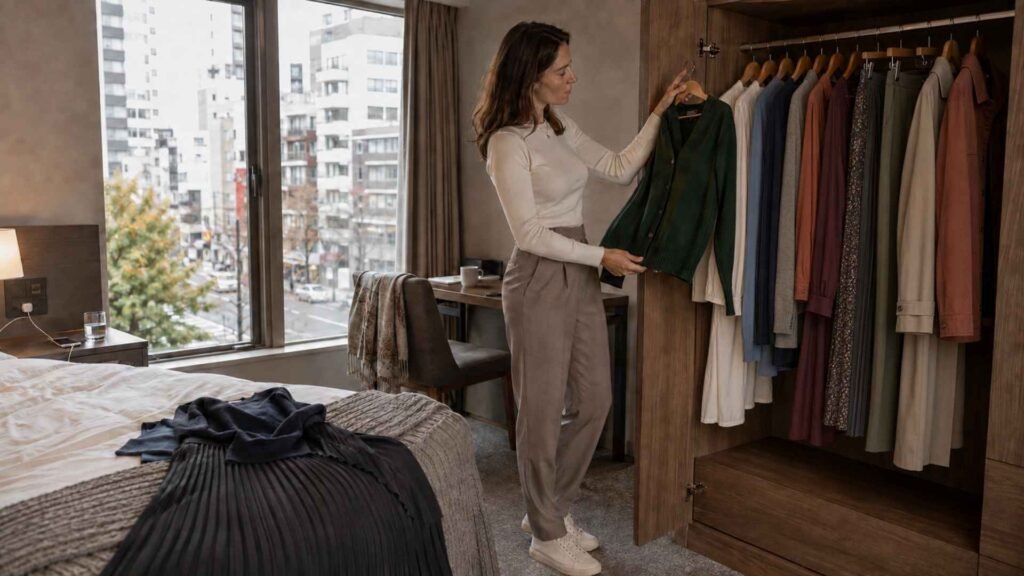
A well-planned fall wardrobe should cover temperature changes without creating an oversized suitcase.
Breathable Base Tops
Pack a combination of short- and long-sleeved tops. Short sleeves remain useful in September and early October, while long sleeves provide a better base later in the season.
Neutral shades such as cream, black, navy, grey and soft brown are easy to combine, but there is no need to avoid colour. Burgundy, forest green, rust and muted blue work particularly well in autumn outfits.
Comfortable Bottoms
Choose bottoms that work with every top:
- Relaxed trousers
- Straight-leg jeans
- Wide-leg trousers
- A midi skirt
- Weather-appropriate leggings for active days
Very tight or rigid trousers can become uncomfortable during long flights, train journeys and full sightseeing days.
A Fine-Knit Sweater
One lightweight sweater provides warmth without occupying too much luggage space. It can be worn over a shirt, beneath a jacket or tied loosely over the shoulders when the afternoon becomes warmer.
A Cardigan or Overshirt
A cardigan, shirt jacket or structured overshirt creates an adaptable middle layer. This is especially useful in October, when temperatures can change significantly throughout the day.
A Weather-Appropriate Jacket
Select your jacket according to the month and destination:
- September: Thin rain jacket or breathable windbreaker
- October: Light trench, utility jacket or unlined coat
- November: Lined coat or lightweight insulated jacket
- Hokkaido in late fall: Warm insulated and wind-resistant outerwear
One versatile jacket is normally more useful than packing several competing outer layers.
A Practical Dress or Skirt
A midi dress or skirt can work for restaurants, city sightseeing and cultural attractions. In September, choose breathable fabric. In November, add tights, a knit and a coat.
Avoid garments that require special shoes or cannot be layered with the rest of your wardrobe.
Best Shoes for Japan in Fall
Japan trips often involve far more walking than expected. Large stations, underground passages, temple grounds and full sightseeing days can quickly expose uncomfortable footwear.
Supportive Walking Sneakers
A broken-in pair of supportive sneakers should be your primary shoe. Choose a pair with:
- Reliable cushioning
- Stable soles
- Enough toe room
- Breathable lining
- Reasonable grip in wet conditions
Do not bring brand-new shoes that have not been tested on long walks.
Water-Resistant Shoes
A second water-resistant pair can be useful in September or when prolonged rain is forecast. This could be a weather-treated sneaker, a low-profile walking shoe or a lightweight ankle boot.
Heavy hiking boots are unnecessary for a city-only itinerary and can become tiring on paved streets.
Shoes That Are Easy to Remove
Some temples, traditional accommodation, restaurants and indoor cultural sites require visitors to remove their shoes. JNTO advises wearing shoes that are easy to take off and put back on, along with clean, presentable socks.
Complicated laces, very tight boots and shoes worn without socks can be inconvenient on these days.
What to Wear to Temples and Traditional Places
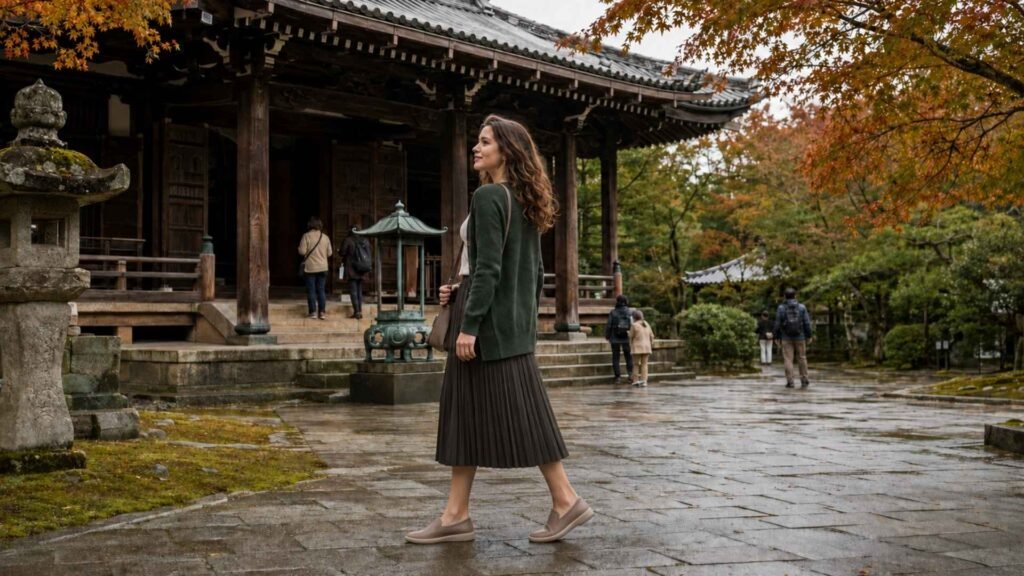
Japan does not impose one universal tourist dress code, and everyday clothing is accepted at most temples and shrines. However, a slightly more conservative and tidy outfit is a respectful choice at places of worship.
JNTO’s etiquette guidance notes that conservative dress may be wise when visiting temples and shrines.
Practical choices include:
- A top that provides comfortable coverage
- Midi skirts, long dresses or trousers
- Clean socks
- Shoes that can be removed easily
- A cardigan or light wrap for additional coverage
You do not need formal clothing. The objective is simply to appear neat and behave respectfully.
Some traditional buildings have tatami flooring and require shoes to be removed. In cooler months, thicker socks can make these visits more comfortable.
What Not to Wear in Japan in Fall
There is no need to follow a rigid fashion formula, but several clothing choices are less practical for this season.
Heavy Fall Clothing in September
Thick sweaters, wool coats and lined boots can be uncomfortable in September’s lingering heat and humidity. Check the forecast before assuming the month will feel cool.
Only Summer Clothes
The opposite mistake is packing only short sleeves because the trip begins in warm weather. Evenings, indoor air conditioning, rain and regional travel can make at least one layer necessary.
Uncomfortable Fashion Shoes
Thin soles, high heels and rigid leather shoes may work for a short dinner but are poor primary choices for full sightseeing days.
Long Hems on Rainy Days
Floor-length trousers and maxi skirts can become wet on station stairs, crowded pavements and temple paths. Choose hems that remain clear of the ground when rain is expected.
Bulky Layers That Cannot Be Removed
Indoor spaces and public transport may feel much warmer than the street. Several light, removable layers usually work better than one extremely heavy sweater.
Clothing With No Outfit Compatibility
Avoid packing individual statement pieces that work with only one combination. Every top, bottom and layer should coordinate with several other items.
Japan Fall Packing List
The following list works as a starting point for a seven- to ten-day trip through Tokyo, Kyoto and Osaka. Adjust the outerwear and warm layers according to the month and destinations on your itinerary.
Clothing
- 4–5 short- or long-sleeved tops
- 2–3 bottoms
- 1 casual dress or additional coordinated outfit
- 1 cardigan or overshirt
- 1 fine-knit sweater
- 1 weather-appropriate jacket or coat
- Sleepwear
- Underwear
- Comfortable socks
- Optional tights or thin thermal base layer
Shoes
- 1 pair of supportive walking sneakers
- 1 optional water-resistant or smarter pair
- Clean socks for shoe-removal settings
Weather Accessories
- Compact umbrella
- Lightweight rain jacket
- Sunglasses
- Scarf for November
- Hat and gloves for late-fall Hokkaido
- Waterproof pouch for documents and electronics
Day-Bag Essentials
- Compact crossbody bag or lightweight backpack
- Reusable water bottle
- Portable charger
- Small hand towel
- Tissues
- Blister plasters
- Foldable shopping bag
For a multi-city journey, the Japan Itinerary for First-Time Visitors can help you decide how many climate zones and travel days your wardrobe needs to cover.
If you plan to move frequently between Tokyo, Kyoto and Osaka, our How to Use the Shinkansen in Japan guide explains luggage rules and practical train travel.
How to Pack Light for Japan in Fall
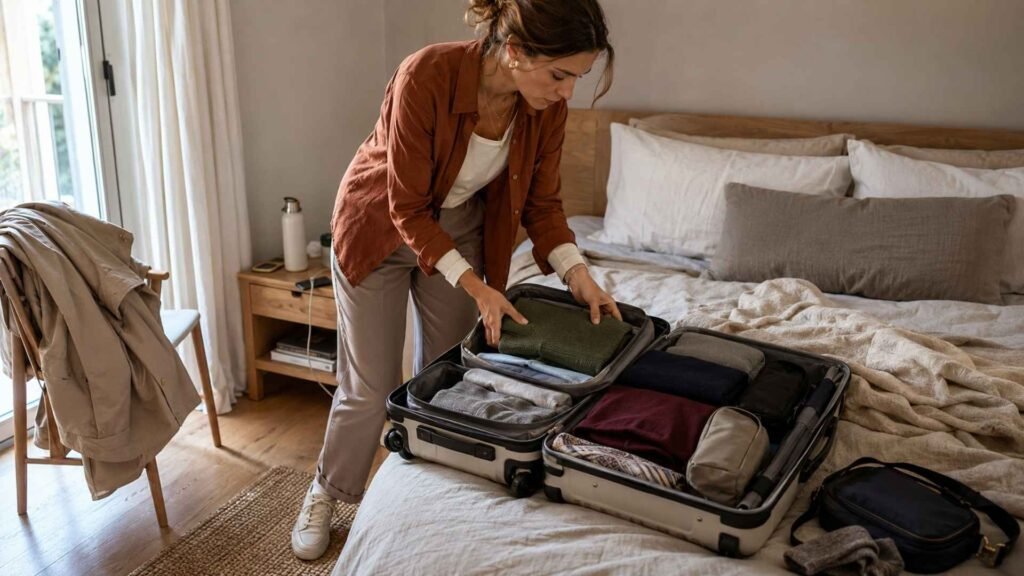
Packing light is particularly useful in Japan, where travellers may need to navigate busy stations, stairs, compact hotel rooms and several train transfers.
Start with one coordinated colour palette and make sure every top works with at least two bottoms. Repeat trousers, jackets and shoes while changing the lighter base layers worn closest to the body.
Choose pieces that perform more than one role. A fine-knit sweater can work as an October outer layer or a November mid-layer, while a relaxed shirt can be worn alone in September and beneath a jacket later in the season.
Wear your bulkiest shoes and outer layer during the flight, and avoid filling the suitcase completely if you expect to shop. Coin laundries, hotel laundry facilities and luggage-forwarding services also make it unnecessary to carry a separate outfit for every day.
Frequently Asked Questions
Is Japan cold in the fall?
Japan is not consistently cold throughout fall. September can remain hot and humid in Tokyo, Kyoto and Osaka. October is generally mild, while November brings cooler mornings and evenings. Hokkaido and mountain regions cool much earlier than central Japan.
Do I need a coat in Japan in October?
A heavy coat is usually unnecessary in Tokyo, Kyoto and Osaka during early October. A light trench, utility jacket or wind-resistant layer is normally sufficient. A warmer jacket may be needed in late October, Hokkaido or higher-altitude destinations.
Do I need a coat in Japan in November?
A medium-weight coat is advisable in November, particularly for early mornings and evenings. Travellers visiting Hokkaido or mountain areas may need an insulated winter jacket.
Can I wear shorts in Japan in September?
Yes. Shorts are commonly worn during warm September weather and are acceptable for general sightseeing. Lightweight trousers, culottes or a midi skirt may be more versatile for temples, traditional settings and strongly air-conditioned interiors.
Can I wear leggings in Japan?
Leggings are practical for flights, hiking and casual sightseeing, especially when styled with a longer shirt, sweater or jacket. For restaurants and cultural attractions, tailored trousers or a coordinated casual outfit may feel more polished.
What shoes should I wear in Japan in fall?
Wear broken-in, supportive walking sneakers with cushioning and reliable grip. If rain is expected, choose water-resistant footwear or bring a second quick-drying pair. Shoes that are easy to remove are useful for temples and traditional interiors.
Does it rain in Japan during the fall?
Yes. September can bring heavy rainfall and typhoons, while October and November are generally more settled in many regions. Conditions vary by location, so check the official forecast shortly before and during your trip.
What colours should I wear in Japan in autumn?
There are no required colours. Neutrals are easy to combine, while burgundy, rust, forest green, navy and muted brown complement the season. A coordinated wardrobe is more useful than trying to imitate a particular Japanese style.
Should I bring thermal clothing to Japan in November?
Thermal clothing is optional for most November trips to Tokyo, Kyoto and Osaka, although a thin thermal top may help on cold evenings. Thermal layers are more valuable in Hokkaido, mountain regions and during late-November cold spells.
Final Thoughts
The best answer to what to wear in Japan in fall depends on both the month and destination. September calls for breathable clothing and rain protection, October suits flexible light layers, and November requires warmer knits with a dependable coat.
Build your wardrobe around comfortable shoes, coordinated separates and layers that can be added or removed easily. With those essentials in place, you can move comfortably between warm city afternoons, cool temple mornings and changing regional conditions without overpacking.