

A lower fare can make a Paris CDG self-transfer look like an easy win. Yet at a large and complex airport, separate tickets may require far more than walking to the next gate. Baggage reclaim, passport control, terminal changes, a second check-in and another security screening can all stand between you and the onward flight—and if the first flight is delayed, the second airline will not usually protect your booking.
A self-transfer can still work well when you understand the route and leave enough breathing room. This guide explains what to expect at CDG, whether you can remain airside, when you must enter France and how much connection time to allow without relying on everything going perfectly.
Quick Answer: Paris CDG Self-Transfer Times
For most travellers, these are sensible planning ranges:
| Self-transfer situation | Recommended interval |
|---|---|
| Cabin baggage, boarding pass ready and simple route | 3–4 hours |
| Cabin baggage with passport control or major terminal change | 4–5 hours |
| Checked baggage that must be collected and rechecked | 5–6 hours |
| Checked baggage plus external-border and complex terminal procedures | 6–7 hours |
| Transfer between CDG and Orly | At least 8 hours |
| Expensive, long-haul or last flight of the day | Consider an overnight connection |
These are planning ranges rather than guarantees.
Use the upper end when the journey involves Terminal 2G, first-time EES registration, children, reduced mobility, several suitcases or an onward flight with no convenient replacement.
Most importantly, measure your available time against the second airline’s check-in, bag-drop and gate-closing deadlines, not only its scheduled departure time.
What Is a Paris CDG Self-Transfer?
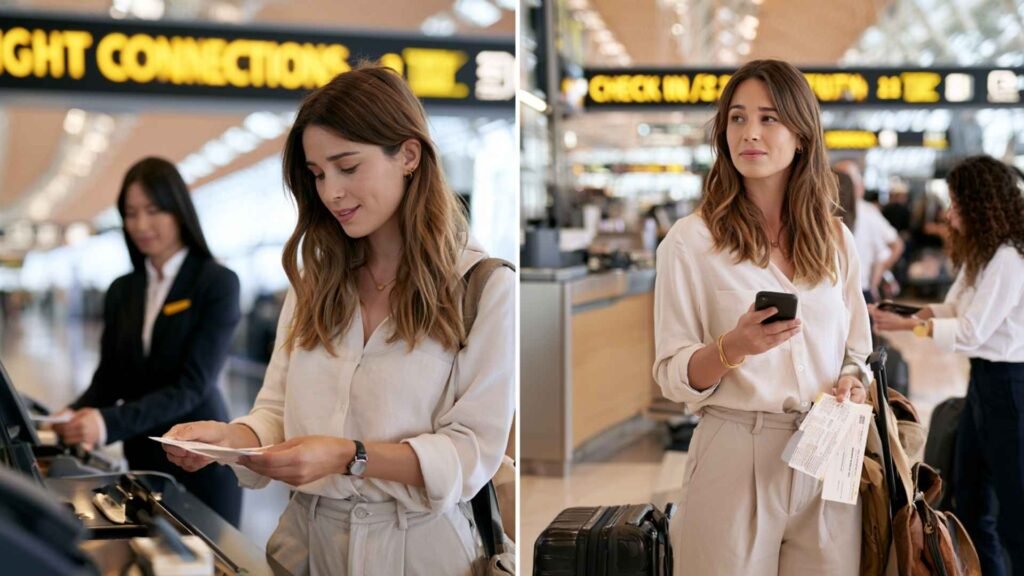
A self-transfer occurs when connecting flights are not fully protected as one continuous journey.
The flights may have been purchased separately, or a booking platform may have combined independent tickets and labelled the itinerary as a self-transfer.
The defining feature is not necessarily that the airlines are different. It is that the complete journey does not receive the normal protection of a through-ticket.
Self-Transfer vs Protected Connection
| Feature | Protected connection | Self-transfer |
|---|---|---|
| Booking structure | Normally one through-ticket or protected reservation | Usually independent tickets or reservations |
| Checked baggage | Normally transferred to the final destination | May need to be collected and rechecked |
| Missed onward flight after a delay | Airline normally arranges eligible rebooking | Passenger may need to buy a replacement ticket |
| Connection time | Built around the airline’s accepted connection rules | Must include a personal safety buffer |
| Boarding passes | Often issued for the full journey | Second check-in may be required |
| Terminal movement | Usually follows an established connection route | May require entering the public area |
| Overnight expenses after disruption | May be covered when passenger-rights conditions apply | Often depend on insurance or a platform guarantee |
A protected itinerary can still involve passport control, security and terminal changes. Our Paris CDG Transit Guide explains the standard process for passengers travelling on a single protected reservation. The key difference is what happens if disruption causes the passenger to miss the next flight.
How to Tell Whether Your Flights Are Separate
Check the booking documents rather than relying only on the itinerary displayed by the seller.
Look for:
- Separate reservation codes
- More than one ticket number
- A self-transfer or “collect and recheck baggage” warning
- Instructions to check in separately with each airline
- A booking-platform guarantee instead of airline protection
- A disclaimer stating that missed connections are the traveller’s responsibility
Two flights appearing in one confirmation email do not necessarily form one protected ticket.
If the structure remains unclear, ask the booking platform or airline whether the complete journey is protected and who is responsible for rebooking if the first flight is late.
How a Paris CDG Self-Transfer Works
The exact procedure depends on baggage, route, terminal, boarding-pass availability and border requirements.
A full landside self-transfer normally follows this sequence:
- Leave the first aircraft.
- Pass through Schengen entry passport control when required.
- Collect checked baggage.
- Pass through customs.
- Travel through the public area to the onward terminal.
- Check in with the second airline.
- Recheck baggage.
- Pass through security.
- Complete Schengen exit passport control when required.
- Reach the gate before boarding closes.
A cabin-baggage-only passenger may avoid several stages. If the onward boarding pass is accepted and the terminals have a compatible airside route, the passenger may be able to follow Flight Connections signs without visiting the public check-in hall.
However, cabin baggage alone does not guarantee an airside transfer. An in-person document check, incompatible terminal route or missing boarding pass can still require the passenger to go landside.
Which Signs Should You Follow?
Follow Flight Connections when:
- You already have an accepted onward boarding pass.
- Your baggage is checked to the final destination or you have cabin baggage only.
- The onward airline permits airside processing.
- The terminal route is available within the secure area.
Follow Arrivals when:
- Your baggage tag ends at CDG.
- You need to enter France.
- The second airline requires landside check-in.
- You must use the public-area CDGVAL.
- You are changing between CDG and Orly.
- You are staying at a landside hotel.
Leaving the airside connection route can be difficult or impossible to reverse without completing the normal departure process. Ask airport staff before proceeding if the correct route is uncertain.
The official Paris Aéroport connecting-flight information provides current route and shuttle guidance, but your operating airline remains the best source for itinerary-specific instructions.
Do You Need to Collect and Recheck Checked Baggage?
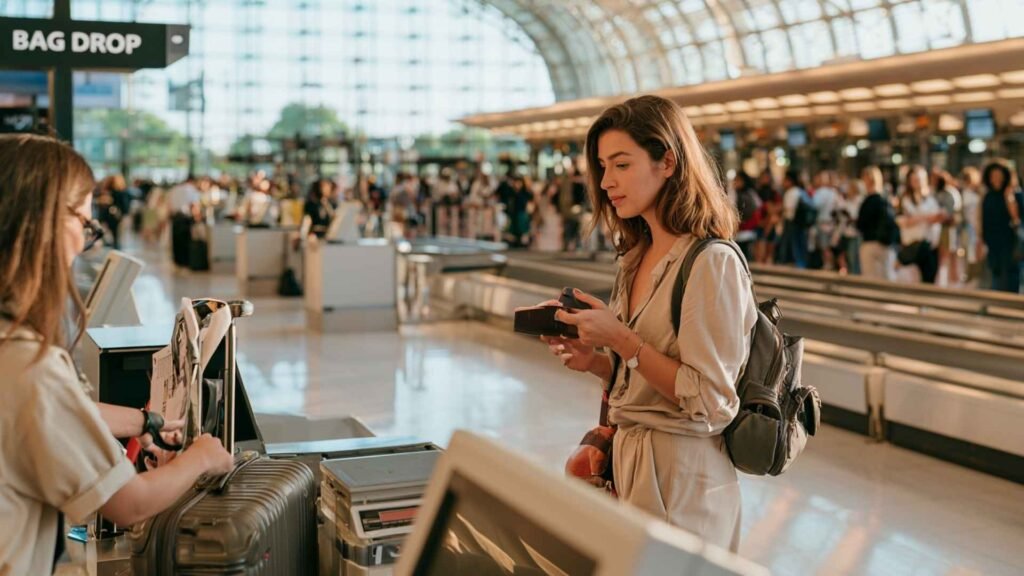
On genuinely separate tickets, assume that checked baggage must be collected unless through-checking has been explicitly confirmed.
The most reliable evidence is the baggage receipt issued at the first airport.
- If the tag shows CDG, collect the suitcase in Paris.
- If it shows the final destination, the airline intends to transfer it onward.
- If the routing is unclear, ask before leaving the first check-in desk.
Do not rely solely on what a booking platform displayed when the itinerary was purchased.
Can Baggage Be Checked Through on Separate Tickets?
Sometimes, but it should be treated as an exception rather than an entitlement.
Through-checking may depend on:
- Whether the airlines have an interline baggage agreement
- The first airline’s policy
- The airports and route involved
- Whether both flights are visible in the check-in system
- Baggage restrictions on the second flight
- Visa and customs requirements
- The willingness and ability of the check-in agent to process the request
Even two flights operated by the same airline group do not guarantee through-checking when the tickets are separate.
Ask at the first airport, then inspect the printed baggage tag. A verbal assurance is less useful than a tag showing the final airport code.
What Happens When the Bag Is Tagged Only to CDG?
The normal process is:
- Complete entry passport control when arriving from outside Schengen.
- Go to the assigned baggage carousel.
- Collect the suitcase.
- Pass through customs.
- Travel to the second airline’s departure terminal.
- Check in and recheck the bag before bag drop closes.
If the suitcase is delayed, report it to the first airline’s baggage service before leaving the reclaim area.
A delayed-baggage report does not automatically protect the second flight. Contact the onward airline or booking guarantor immediately if waiting for the suitcase threatens the connection.
Can You Ask the Airline to Send the Bag Without You?
Generally, no.
Airlines normally cannot load checked baggage onto a flight when the passenger has not completed the required check-in and boarding procedures. Security rules may also require an already-loaded bag to be removed when its passenger does not board.
The safest approach is to plan enough time to complete the standard reclaim and recheck process.
Can You Stay Airside During a CDG Self-Transfer?
Remaining airside may be possible when all of the following conditions are satisfied:
- You have cabin baggage or confirmed through-checked baggage.
- You hold an accepted onward boarding pass.
- The airline does not require a landside document check.
- Your terminals are connected by an eligible airside route.
- You meet any airport-transit visa requirements.
- The onward flight departs from CDG rather than Orly.
- You do not need a landside hotel or other public-area service.
If one condition fails, you may need to enter France and restart the journey as a departing passenger.
Does an Online Boarding Pass Guarantee Airside Transit?
No.
The boarding pass may still be marked for document verification, or the airline may require the passenger to visit a staffed desk.
Airlines can request an in-person check for:
- Passport and visa documents
- Residence permits
- Proof of onward travel
- Destination-specific entry forms
- Travel documents that could not be verified online
- Certain passenger or baggage categories
A mobile boarding pass can also be rejected if it is not valid for the departure airport or route.
Check for messages such as:
- Document check required
- Boarding pass available at airport
- See check-in agent
- Verification required
If the onward airline does not operate an airside transfer desk, the passenger may have to enter the public departures area.
Moving Between Terminals at Paris CDG
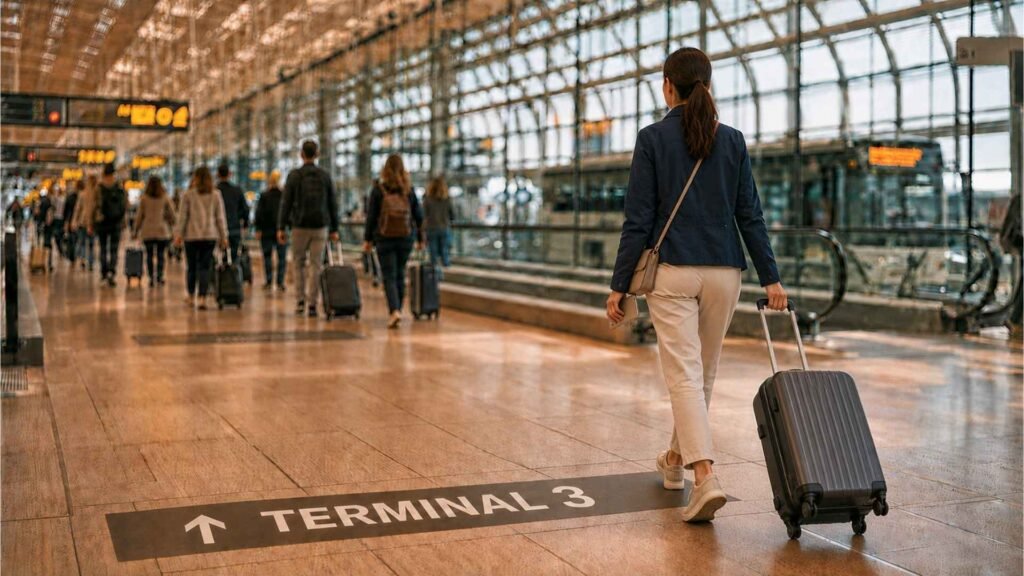
As outlined in our Paris Charles de Gaulle Airport Guide, Paris CDG consists of Terminal 1, Terminal 3 and the Terminal 2 complex, which includes 2A, 2B, 2C, 2D, 2E, 2F and the more remote Terminal 2G.
A booking that simply says “Terminal 2” does not provide enough information to judge the connection.
Airside Transfer Routes
Eligible connecting passengers may be directed through airside corridors or colour-coded transfer shuttles.
Which route is available depends on:
- Arrival and departure terminal
- Schengen or non-Schengen status
- Gate area
- Airline arrangements
- Security requirements
- Current airport operations
Do not choose an airside shuttle based only on a map. Follow the connection signs and confirm the route on the day of travel.
CDGVAL Is a Landside Service
CDGVAL is the airport’s free automated rail service connecting the public areas of Terminal 1, Terminal 2, Terminal 3–Roissypôle, parking areas and nearby transport connections.
It does not operate as a universal airside transfer train.
A non-Schengen passenger who must use CDGVAL will normally need permission to enter France before reaching it. This distinction is particularly important for travellers holding only an airport transit visa.
Terminal 2G Requires Additional Time
Terminal 2G is separate from the main Terminal 2 halls and requires a dedicated shuttle journey.
Passengers travelling landside generally reach it via the shuttle connection from Terminal 2F. Eligible airside passengers should follow the connection route assigned by the airport.
Allow additional time for:
- Finding the correct shuttle stop
- Waiting for departure
- Boarding with baggage
- The road journey
- Walking from the arrival point
- Security or passport procedures that remain outstanding
A connection involving Terminal 2G should therefore use the upper end of the recommended range.
Terminal 3 Is Not Directly Served by a CDGVAL Platform
The Terminal 3 public building is reached on foot from the Terminal 3–Roissypôle area. This adds a walking stage after leaving CDGVAL.
Passengers with several suitcases, young children or reduced mobility should not treat the station name as meaning that the train stops directly beside the check-in desks.
Passport Control, Security and Customs

Self-transfer passengers do not all complete the same border process.
The determining factors are:
- Whether the arriving country is inside Schengen
- Whether the onward destination is inside Schengen
- Whether the passenger remains airside
- Whether baggage must be collected
- Whether a public terminal transfer is required
Border Procedures by Route
| Route | Normal border position at CDG |
|---|---|
| Non-Schengen to Schengen | Schengen entry passport control at CDG |
| Schengen to non-Schengen | Schengen exit passport control at CDG |
| Non-Schengen to non-Schengen, remaining airside | Normally no Schengen entry or EES event |
| Non-Schengen to non-Schengen, going landside | Entry into France; appropriate permission required |
| Schengen to Schengen | Normally no routine external-border passport control |
Temporary checks, airline identification requirements and individual document inspections remain possible.
Non-Schengen to Schengen
A passenger arriving from outside Schengen and continuing to a Schengen destination enters the area at CDG.
Examples include:
- Istanbul → Paris CDG → Rome
- London → Paris CDG → Madrid
- New York → Paris CDG → Athens
The passenger completes entry passport control in Paris, even when the final destination is another Schengen country.
If the traveller requires a Schengen visa, it must be valid for this entry. A Type A airport transit visa is not sufficient because the passenger is entering the Schengen Area.
Schengen to Non-Schengen
A passenger arriving from within Schengen and continuing outside the area normally completes exit passport control at CDG.
Examples include:
- Rome → Paris CDG → Istanbul
- Barcelona → Paris CDG → New York
- Athens → Paris CDG → London
When baggage is tagged only to CDG, the passenger may first collect it in the public area and then begin the departure process again.
The traveller must also hold the documents required by the final destination. A Schengen visa does not replace a UK, US, Turkish or other destination-specific visa.
Non-Schengen to Non-Schengen
A traveller may remain in the international transit area when arriving from one non-Schengen country and continuing to another.
Examples include:
- Istanbul → Paris CDG → London
- Cairo → Paris CDG → Montreal
- New York → Paris CDG → Casablanca
Remaining airside usually requires a valid boarding pass, compatible terminals and no need to collect baggage or visit a landside desk.
If the passenger must enter the public area, stay landside or travel to Orly, the journey is no longer a simple international transit.
Schengen to Schengen
Flights between Schengen destinations normally operate without external-border passport control at CDG.
The self-transfer may still require baggage reclaim, a terminal change, check-in and another security screening.
Will You Pass Through Security Again?

Often, yes.
A new security check is required when you:
- Enter the public arrivals area
- Recheck baggage
- Use a landside terminal route
- Start the second flight as a new departure
Some airside connecting passengers may also be rescreened depending on the origin airport, terminal and applicable security rules.
Duty-free liquids require particular care during a self-transfer. Liquids over 100 ml can normally pass through another security checkpoint only when the product and proof of purchase remain sealed together inside the official tamper-evident security bag. Do not open the bag before reaching your final destination.
Security officers may reopen it for inspection, so tell them if you have another flight and make sure the items are resealed before continuing. An opened or damaged bag, or a missing receipt, may result in the liquids being refused.
When Does Customs Apply?
Passengers entering France with checked baggage normally pass through customs after baggage reclaim.
Customs is different from passport control. Passport control determines whether you may cross the border, while customs concerns the goods you are carrying.
Choosing the green channel means declaring that you have nothing requiring declaration. It does not mean that customs has been skipped; officers can still conduct checks.
Our Paris CDG Arrival Guide explains the complete arrivals process, including passport control, baggage reclaim, customs and reaching the arrivals hall.
Visa Rules for a Paris CDG Self-Transfer
Visa requirements depend on nationality, passport type, residence status, route and whether you must enter France.
Two travellers using the same flights may have different requirements.
Airport Transit Visa vs Short-Stay Schengen Visa
| Feature | Type A airport transit visa | Type C short-stay Schengen visa |
|---|---|---|
| Main purpose | Airside transit between two non-Schengen flights | Entry into the Schengen Area for an eligible short stay or transit |
| Leave the international zone | No | Normally permitted, subject to border approval |
| Collect baggage landside | No | Normally possible |
| Use a landside hotel | No | Normally possible |
| Continue to a Schengen destination | No | Yes |
| Transfer from CDG to Orly | No | Normally possible if all visa conditions are met |
France-Visas explains that an airport transit visa is intended for eligible passengers who remain in the international zone while travelling between two non-Schengen destinations. Its official airport transit visa information also lists affected nationalities and possible exemptions.
A Type A visa does not permit baggage collection in the public area or travel across Paris.
When Must You Be Able to Enter France?
You generally need permission to enter France when:
- The onward destination is inside Schengen.
- Checked baggage is tagged only to CDG.
- The next airline requires landside check-in.
- The terminal route requires leaving the secure area.
- You need CDGVAL after a non-Schengen arrival.
- You are staying at a landside hotel.
- You want to leave the airport.
- You are transferring from CDG to Orly.
Entering France does not necessarily mean visiting central Paris. Passing through passport control to collect a suitcase already constitutes entry into France and the Schengen Area.
Check the Visa Details
A valid-looking Schengen visa may still be unsuitable for the journey.
Verify:
- Territorial validity
- Start and expiry dates
- Number of entries: 01, 02 or MULT
- Remaining authorised stay
- Passport number
- Personal details
A journey from Istanbul through CDG to Rome normally uses one Schengen entry. Continuing from France to Italy does not consume another entry because both countries are inside Schengen.
A previously used single-entry visa cannot normally be used again simply because its printed expiry date has not passed.
ETIAS for Visa-Exempt Travellers
At the time of this 24 July 2026 update, ETIAS is not operational and applications are not being accepted.
The European Union expects it to begin in the last quarter of 2026, followed by transitional arrangements. Travellers should check the official ETIAS website shortly before departure.
ETIAS will apply to eligible visa-exempt travellers. It will not replace a Schengen visa for nationalities that require one.
EES at Paris CDG
The Entry/Exit System became fully operational at participating countries’ external border points on 10 April 2026.
EES records eligible non-EU short-stay travellers when they cross the Schengen external border, whether they are visa-exempt or hold a short-stay visa. Information can include travel-document data, entry and exit details, a facial image and fingerprints.
For self-transfer purposes:
- Non-Schengen → Schengen normally creates an entry record at CDG.
- Schengen → non-Schengen normally creates an exit record.
- Non-Schengen → non-Schengen while remaining airside normally creates no EES border event.
- Going landside can trigger entry processing even when the final destination is outside Schengen.
First-time registration or biometric verification can extend passport-control time. The recommended connection ranges already allow for ordinary border processing, but travellers with several risk factors should choose the upper end.
Current eligibility and procedures can be checked through the official EU Entry/Exit System information.
Paris CDG Self-Transfer Connection Times
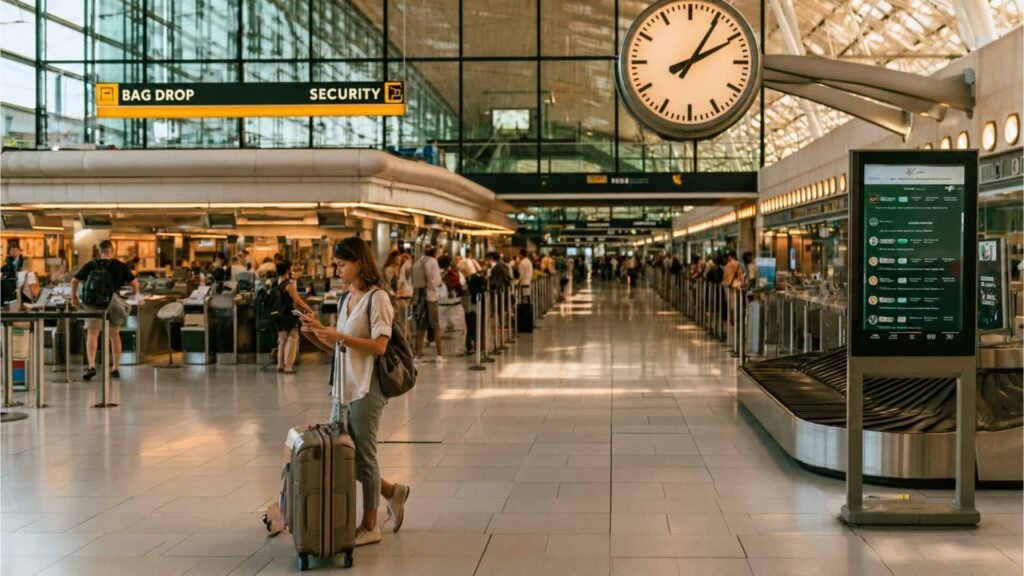
Minimum Connection Time and a safe self-transfer buffer are not the same.
Minimum Connection Time is the shortest interval accepted for a qualifying scheduled connection under the applicable airline and airport rules. It may assume automatic baggage transfer, an established connection route and airline responsibility if the connection is missed.
A self-transfer buffer must also cover passenger-controlled stages and some recovery time.
Recommended Planning Ranges
| Situation | Recommended interval | Main risks |
|---|---|---|
| Cabin baggage, boarding pass ready, simple airside route | 3–4 hours | Walking, security, gate change |
| Cabin baggage plus external-border control | 4–5 hours | Immigration, EES, terminal movement |
| Baggage collection and recheck | 5–6 hours | Reclaim, customs, bag-drop deadline |
| Checked baggage plus complex terminals | 6–7 hours | Border processing, shuttles, security |
| CDG to Orly | 8+ hours | Border entry, road or rail travel, complete new departure |
| High-risk onward journey | Overnight | Few replacement flights or high financial loss |
A three-hour carry-on connection can be reasonable under favourable conditions. It is not equally safe for a passenger arriving from outside Schengen, changing to Terminal 2G and requiring an in-person document check.
Calculate Backwards From the Earliest Deadline
Suppose the onward flight departs at 6:30 p.m., but:
- Bag drop closes at 5:30 p.m.
- Boarding begins at 5:40 p.m.
- The gate closes at 6:00 p.m.
The passenger does not have until 6:30 p.m. to complete the transfer.
When checked baggage is involved, bag-drop closure may be the most important deadline. For cabin-baggage-only travellers, gate closure is normally the final limit.
Check the operating airline’s rules because deadlines vary by airport, route and carrier.
When to Increase the Buffer
Choose a longer connection when:
- The first flight commonly arrives late.
- The aircraft may park remotely.
- Baggage must be reclaimed.
- The journey crosses the Schengen external border.
- Terminal 2G is involved.
- The onward airline requires document verification.
- Children or reduced-mobility passengers are travelling.
- The connection occurs during a busy holiday period.
- The second flight is long-haul or expensive.
- It is the last suitable departure of the day.
- Missing it would affect hotels, trains, tours or later flights.
Do not build the itinerary around every procedure operating at its fastest possible speed.
Worked Example: Istanbul to Rome via CDG
Consider a traveller holding separate tickets:
- Istanbul to Paris CDG, arriving at 12:30 p.m.
- Paris CDG to Rome, departing at 6:30 p.m.
- Checked baggage tagged only to CDG
- Bag drop closing at 5:30 p.m.
- Gate closing at 6:00 p.m.
Türkiye is outside Schengen and Italy is inside it, so the passenger enters the Schengen Area at CDG.
A Turkish ordinary-passport holder normally needs a valid short-stay Schengen visa for this journey. A Type A airport transit visa is insufficient.
An illustrative timeline might look like this:
| Time | Stage |
|---|---|
| 12:30–1:00 | Taxiing, parking and disembarkation |
| 1:00–1:50 | Passport control and possible EES processing |
| 1:50–2:30 | Baggage reclaim |
| 2:30–2:45 | Customs and entry into the public area |
| 2:45–3:15 | Travel to the onward terminal |
| 3:15–3:35 | Check-in and baggage recheck |
| 3:35–4:20 | Security screening |
| 4:20–4:40 | Walk to the departure area |
| 4:40–6:00 | Recovery margin before gate closure |
Although the flights are six hours apart, only around one hour and twenty minutes remains after the normal process.
If the first flight arrives one hour late, most of that protection disappears.
This is why six hours is reasonable for the example but not excessive. Through-checked baggage would make the connection easier, yet the independent tickets would still remain unprotected.
What Happens If You Miss the Second Flight?

When the flights are independent, the onward airline will usually treat a late passenger as a no-show.
It may not be required to provide:
- Free rebooking
- A refund
- Hotel accommodation
- Meals
- Ground transport
- Reimbursement for a replacement ticket
The airline may offer a paid change, standby place or discretionary rescue fare, but these options are not guaranteed.
What Should You Do Immediately?
If the connection becomes doubtful:
- Check the earliest remaining airline deadline.
- Contact any booking-platform guarantor.
- Contact the onward airline before departure.
- Ask whether the booking can be changed before you become a no-show.
- Follow the guarantor or insurer’s instructions before buying another ticket.
- Keep evidence of the delay and all necessary expenses.
Useful evidence includes booking confirmations, boarding passes, baggage receipts, delay notices, screenshots, messages and receipts.
Do not assume that purchasing the first available replacement flight will automatically result in reimbursement.
Check the Rest of the Reservation
If the missed flight belongs to a booking with later segments, the airline may cancel those segments under its no-show rules.
For example, missing Paris–Rome could affect a Rome–Athens flight or the return journey on the same reservation.
Contact the airline promptly and confirm that every remaining segment is still active.
Airline Liability, Guarantees and Insurance
Separate tickets do not remove the rights attached to each individual flight. They usually prevent the two flights from being treated as one protected journey.
The first airline may be responsible for an eligible delay or cancellation affecting its own flight. The second airline may still have departed normally and have no responsibility for the passenger arriving late.
Official EU air-passenger-rights guidance states that missed-connection compensation depends on the flights forming part of a single reservation and meeting the other legal conditions.
Compensation or assistance for the disrupted first flight does not automatically include the cost of an unrelated onward ticket.
Booking-Platform Guarantees
Some booking platforms combine separate tickets and add their own self-transfer guarantee.
Depending on the terms, a guarantee may offer:
- Replacement travel
- Refund of an unused segment
- Hotel accommodation
- Meals
- Ground transportation
- Limited reimbursement of additional expenses
Before booking, check:
- The minimum connection time required by the platform
- Whether checked baggage and airport changes are covered
- How quickly disruption must be reported
- Whether approval is required before rebooking
- Reimbursement limits
- Whether payment is cash or platform credit
- Exclusions for visas, security queues or denied entry
- Protection for later flights in the itinerary
A platform guarantee is a contract with the seller. It is not equivalent to an airline-protected through-ticket.
Travel Insurance
Ordinary travel insurance does not always cover independent connecting flights.
Confirm in writing:
- Whether separate reservations are covered
- The minimum permitted connection interval
- Whether baggage reclaim and airport changes are included
- Which causes of delay qualify
- Whether passport-control or security queues are excluded
- Whether prior approval is required
- The maximum replacement-flight reimbursement
- Whether hotels, meals and transport are included
Insurance is most valuable when its limit reflects the possible cost of a last-minute replacement ticket.
CDG to Orly Self-Transfers
CDG and Orly are separate airports on different sides of Paris. An airport change requires a complete landside transfer.
The passenger must normally:
- Enter France when arriving from outside Schengen.
- Collect checked baggage.
- Pass through customs.
- Travel from CDG to Orly.
- Check in and recheck baggage.
- Pass through security.
- Complete exit passport control when required.
- Reach the gate before it closes.
A Type A airport transit visa is not sufficient because the traveller must enter France.
Transport Options
| Route | Main stages |
|---|---|
| RER B + Metro Line 14 | CDG to Châtelet–Les Halles, then Line 14 to Aéroport d’Orly |
| RER B + Orlyval | CDG to Antony, then Orlyval to Orly |
| Taxi or private transfer | Direct road transfer between the terminals |
If Paris is your final destination rather than Orly, our Paris CDG to Paris City Center guide compares the RER B, buses, official taxis and private transfers.
The public-transport journey alone can take around 75 minutes under normal conditions. The complete self-transfer takes substantially longer.
Check the current routes through the official Paris Aéroport CDG–Orly transfer information.
A taxi avoids station changes but remains vulnerable to congestion, accidents and road closures.
Allow at least eight hours between scheduled arrival at CDG and departure from Orly. Choose longer when baggage, EES processing, children, reduced mobility or an expensive onward flight is involved.
An overnight stay is often safer when the Orly flight departs early or operates infrequently.
Overnight Self-Transfers

An overnight connection is worth considering when:
- The second flight is expensive or long-haul.
- It is the only suitable flight that day.
- Checked baggage must be rechecked.
- The route involves different Paris airports.
- Children or reduced-mobility passengers are travelling.
- A missed flight would disrupt several later bookings.
The safest structure is often to arrive at CDG the previous day, collect baggage, stay landside and begin the onward journey as a normal departure the following morning.
Airside vs Landside Hotels
An airside hotel is suitable only when the passenger can remain in the correct secure terminal area, has an eligible boarding pass and does not need to collect baggage.
A landside hotel is more practical when:
- The baggage tag ends at CDG.
- The second airline requires public check-in.
- The onward terminal is incompatible with the airside hotel.
- The passenger wants to restart the journey the next morning.
Permission to enter France is required for a landside stay.
YOTELAIR Paris Charles de Gaulle is located airside above Gate L in Terminal 2E. It is available only to eligible passengers using the Terminal 2E K, L or M international gate areas, or passengers remaining in transit within the same terminal.
Only cabin baggage can be taken into the hotel, and passengers who need to collect and recheck a suitcase cannot use it without first completing the required landside baggage process. Access from the public area is currently unavailable between 10:30 p.m. and 5:00 a.m., so confirm the latest access conditions before booking.
Sheraton Paris Charles de Gaulle Airport Hotel is located landside inside the Terminal 2 complex. It is therefore more practical for passengers who must collect baggage or restart their journey the following morning. However, travellers arriving from outside Schengen must have permission to enter France before reaching it.
Before booking, verify the hotel-access route, shuttle hours, onward terminal and early-morning check-in arrangements. A property marketed as an airport hotel may still require CDGVAL, a hotel shuttle or a taxi.
Sleeping in the public terminal should not be the main plan for protecting an expensive flight. Terminal access, seating and overnight services can change.
Children and Passengers With Reduced Mobility
Families and passengers requiring assistance should use the upper end of the recommended time range.
Additional time may be needed for:
- Pushchairs or mobility devices
- Family passport-control processing
- Child travel documents
- Feeding, toilet and rest breaks
- Oversized-baggage collection
- Accessible vehicles and lifts
- Assistance handovers between airlines
Every child, including a baby, needs the travel document required for the itinerary.
Ask where a pushchair will be returned. Delivery at the aircraft door is different from collection at an oversized-baggage area.
Mobility assistance should be requested through both airlines because the flights have separate reservations. Explain that the journey includes a self-transfer, terminal movement and possibly baggage collection.
Paris Aéroport recommends requesting assistance at least 48 hours before departure through the airline or booking provider. Current arrangements are available on the official mobility-assistance page.
Confirm where the first airline’s assistance ends and where the second airline’s service begins. Assistance attached to one reservation may not automatically cover every landside stage.
Common Paris CDG Self-Transfer Mistakes
1. Using Minimum Connection Time as a Safe Buffer
MCT is intended for qualifying connections and does not include every separate-ticket procedure.
2. Treating Terminal 2 as One Building
Always identify the complete terminal, including whether 2G is involved.
3. Assuming Baggage Will Be Transferred
Check the printed tag. A bag tagged to CDG must be collected.
4. Believing Cabin Baggage Guarantees an Airside Route
Document checks and terminal incompatibility can still force you landside.
5. Counting Until Scheduled Departure
Bag drop or gate closure may occur much earlier.
6. Ignoring Visa Entries
An unexpired single-entry visa may already have been used.
7. Expecting Automatic Rebooking
The second airline can apply its no-show rules to independent tickets.
8. Treating CDG and Orly as Terminals
They are separate airports requiring a landside journey.
9. Forgetting Later Flights on the Same Booking
Missing one segment can cancel the remaining itinerary.
10. Choosing the Last Flight Without a Backup
A missed late-evening flight may leave no same-day alternative.
Paris CDG Self-Transfer Checklist
Before Booking
- Confirm whether the flights are protected or separate.
- Identify both complete terminals.
- Check baggage, visa and entry requirements.
- Review the second airline’s deadlines.
- Look for later alternative flights.
- Read any platform guarantee.
- Confirm insurance coverage.
- Select a buffer based on the complete process.
Before Departure
- Check in online for the second flight when possible.
- Save both bookings and boarding passes offline.
- Confirm the final airport printed on the baggage tag.
- Recheck terminal assignments.
- Save airline and platform contact details.
- Request mobility assistance at least 48 hours ahead.
- Keep documents and essential medication in cabin baggage.
After Landing
- Check the actual arrival and onward gate information.
- Follow Flight Connections or Arrivals as appropriate.
- Ask staff before leaving the airside route if uncertain.
- Collect baggage when the tag ends at CDG.
- Monitor the earliest airline deadline.
- Contact the airline or guarantor immediately if the connection is at risk.
- Preserve delay evidence and receipts.
Paris CDG Self-Transfer FAQ
Is Two Hours Enough for a Self-Transfer at CDG?
Generally, no.
Two hours leaves little protection against taxiing, passport control, security, terminal movement or airline deadlines. It should not be treated as a safe self-transfer interval.
Is Three Hours Enough With Cabin Baggage?
Three hours can work when the boarding pass is ready and the route is simple and airside-compatible.
Allow longer for passport control, Terminal 2G, a major terminal change or document verification.
Is Six Hours Enough With Checked Baggage?
Six hours is usually reasonable for collecting and rechecking baggage within CDG.
Choose longer when border processing, complex terminals or an expensive onward flight increases the risk.
Must I Collect Baggage on Separate Tickets?
Usually, unless through-checking has been confirmed.
The printed baggage tag is decisive. If it shows CDG, collect the suitcase in Paris.
Can I Stay Airside?
Possibly, with cabin baggage or through-checked baggage, an accepted boarding pass and a compatible connection route.
Baggage reclaim, landside check-in, CDGVAL, a public-area hotel or an Orly transfer requires leaving the airside route.
Do I Need a Visa?
It depends on nationality, passport, destination and whether you must enter France.
A Type A airport transit visa does not permit baggage collection landside, a public-area hotel stay, travel to Orly or onward travel to a Schengen destination.
Will the Airline Rebook Me?
Usually not when the flights are independent.
Protection may come from a flexible fare, platform guarantee, insurance policy or airline discretion, but it should not be assumed.
Is There One Self-Transfer Desk at CDG?
No.
Each airline controls its own check-in, document and baggage arrangements. CDG does not have one universal desk that turns unrelated tickets into a protected connection.
Can I Transfer From CDG to Orly?
Yes, if you can legally enter France and allow enough time.
Plan at least eight hours and increase the interval for checked baggage, border processing or a high-value onward flight.
Is an Overnight Connection Safer?
Usually, especially when the onward flight is expensive, infrequent or departs early the next morning.
Confirm whether the hotel is airside or landside and whether your baggage and visa position allow access.
Clara’s Tip: Price the Risk, Not Only the Ticket
A self-transfer is worthwhile only when the saving remains attractive after the replacement risk is considered.
Compare:
- The saving over a protected ticket
- The cost of a last-minute replacement flight
- The number of later departures
- Prepaid hotels, trains or tours that could be lost
- The actual reimbursement limit of any guarantee or policy
Saving €100 is rarely worthwhile if missing the connection could require a €600 replacement ticket.
Self-transfers are more defensible on routes with several later flights and affordable alternatives. When the onward service operates only once per day, an overnight connection or protected ticket is often better value.
Final Verdict
A Paris CDG self-transfer is worthwhile when the saving justifies the risk and the itinerary leaves enough recovery time.
If checked baggage, border processing, complex terminals or an expensive last flight are involved, an overnight connection or protected through-ticket is usually safer.