
Amsterdam Schiphol Airport is one of Europe’s largest transit hubs, connecting travelers between destinations across Europe and the rest of the world.
While many connections are straightforward, transfer procedures can vary depending on whether you are traveling between Schengen and non-Schengen destinations.
This Amsterdam Schiphol Transit Guide explains everything you need to know about connections, immigration, security screening, transfer times, baggage procedures, transit visas, and long layovers at Schiphol Airport.
Quick Answer: Can You Transit Through Amsterdam Schiphol Airport?
Yes.
Amsterdam Schiphol transit is generally straightforward because Schiphol operates as a single-terminal airport, making connections easier than at many large international hubs.
If your flights are booked on a single ticket and your baggage is checked through to your final destination, you can usually follow the airport’s transfer signs directly to your next gate.
Whether you need to pass through immigration depends on your itinerary:
| Route | Immigration Required? |
|---|---|
| Schengen → Schengen | No |
| Schengen → Non-Schengen | Yes |
| Non-Schengen → Schengen | Yes |
| Non-Schengen → Non-Schengen | Usually No |
For official airport maps and terminal information, visit the Schiphol website.
How Amsterdam Schiphol Transit Works

One of the biggest advantages of Amsterdam Schiphol Airport is its layout.
Unlike airports that require passengers to transfer between separate terminals, Schiphol operates within a single integrated terminal complex.
Although the airport is divided into departure halls, piers, and gate areas, most connecting passengers remain within the same terminal throughout their journey.
For most travelers, Amsterdam Schiphol transit follows a simple process:
- Arrive at Schiphol Airport
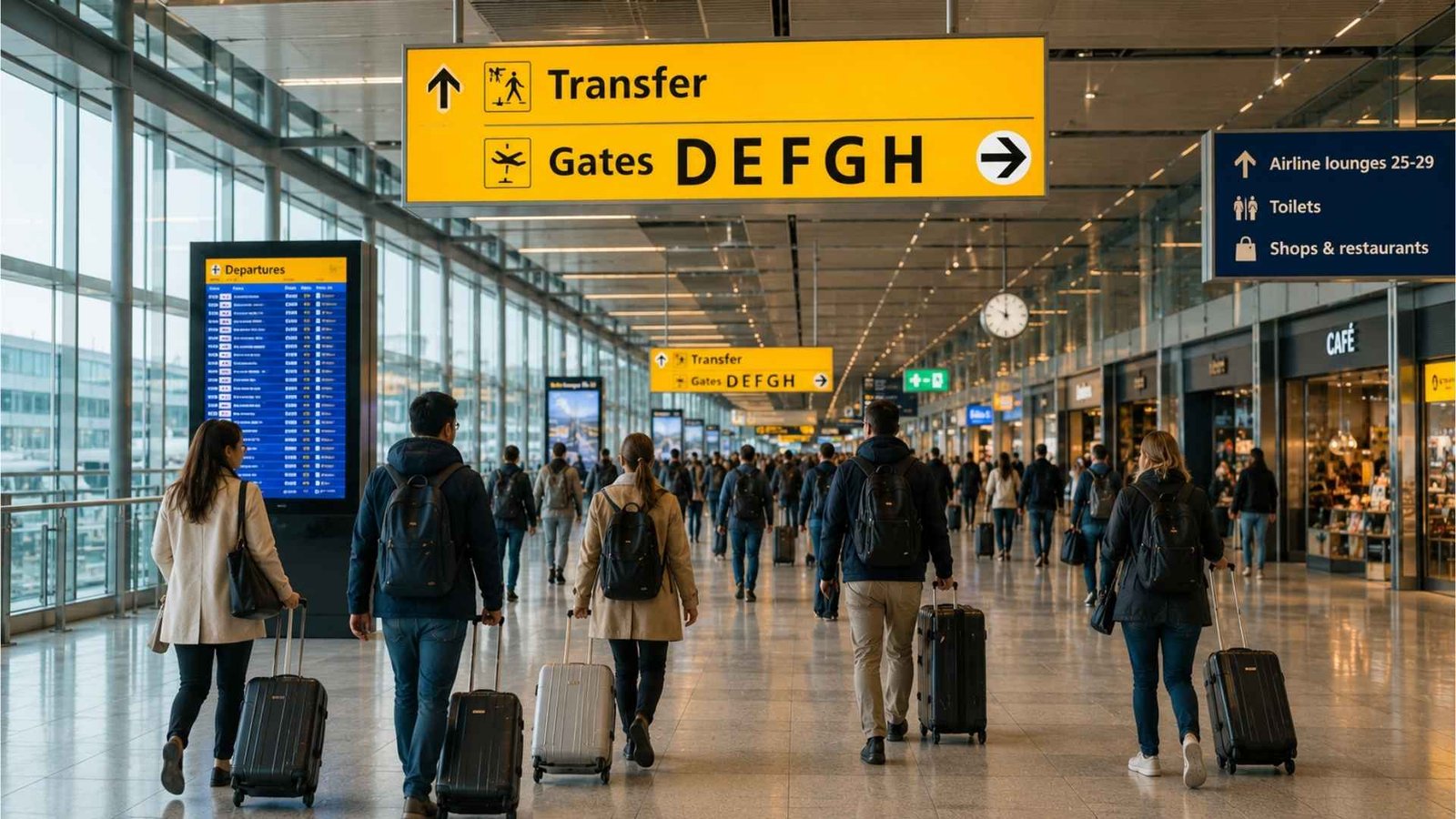
- Follow yellow Transfer signs
- Complete immigration if required
- Complete security screening if required
- Proceed to your departure gate
Passengers traveling on a single booking generally do not need to collect checked baggage during transit.
Instead, luggage is normally transferred automatically to the final destination.
Because Schiphol handles a large number of connecting passengers every day, transfer routes are clearly marked throughout the airport.
Large yellow signs guide travelers toward:
- Transfer areas
- Departure gates
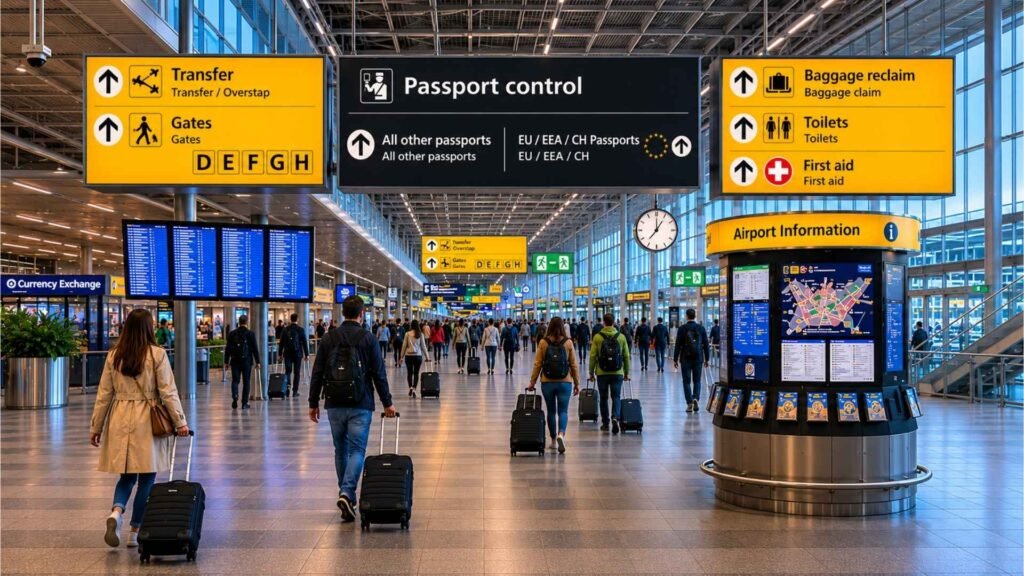
- Passport control
- Security checkpoints
- Airport facilities
This clear wayfinding system is one reason why Amsterdam Schiphol transit is often considered easier than connecting through many other major European airports.
Finding Your Connecting Flight at Schiphol
After leaving your arriving aircraft, your first priority should be locating your next departure gate.
Fortunately, Schiphol is known for having some of the clearest airport signage in Europe.
Throughout the terminal, large yellow directional signs provide guidance toward transfer routes, departure areas, and airport services.
Passengers making a connection should follow signs marked:
- Transfer
- Departures
- Gates
Avoid following signs marked Arrivals unless you intentionally plan to enter the Netherlands.
Many first-time visitors accidentally leave the transit area by following arrival signs instead of transfer signs.
Electronic information screens are located throughout the airport and display:
- Flight number
- Destination
- Departure gate
- Boarding status
- Scheduled departure time
Even if a gate number already appears on your boarding pass, continue checking departure screens during your transit.
Gate assignments occasionally change throughout the day.
Immigration During Amsterdam Schiphol Transit
One of the most common questions travelers ask is whether they need to pass through immigration during transit.
The answer depends entirely on whether your journey involves entering or leaving the Schengen Area.
Because the Netherlands is part of the Schengen Area, immigration procedures are based on Schengen border rules rather than domestic Dutch travel requirements.
Below are the four most common transit scenarios at Schiphol Airport.
Schengen to Schengen Transit
Examples:
- Paris → Amsterdam → Rome
- Barcelona → Amsterdam → Athens
- Lisbon → Amsterdam → Munich
Passengers traveling entirely within the Schengen Area usually do not pass through immigration during transit.
After arrival, simply follow the transfer signs toward your next departure gate.
Since both flights operate inside the Schengen zone, there is normally no passport control between flights.
If your baggage has been checked through to your final destination, this is typically the fastest and easiest type of Amsterdam Schiphol transit.
For many travelers, the connection process involves little more than walking directly to the next gate.
Schengen to Non-Schengen Transit
Examples:
- Madrid → Amsterdam → New York
- Rome → Amsterdam → Dubai
- Athens → Amsterdam → Toronto
In this situation, you are leaving the Schengen Area.
As a result, outbound passport control is required before reaching your departure gate.
Border officers may verify:
- Passport validity
- Travel documents
- Visa eligibility
- Destination information
After passport control, passengers continue into the non-Schengen departure area and proceed to their gate.
Waiting times can vary depending on passenger volumes and time of day.
Non-Schengen to Schengen Transit
Examples:
- Istanbul → Amsterdam → Paris
- Dubai → Amsterdam → Berlin
- Doha → Amsterdam → Vienna
This is one of the most common international transfer patterns at Schiphol Airport.
Because you are entering the Schengen Area, immigration control is required before continuing your journey.
A typical process involves:
- Arrive at Schiphol
- Follow Transfer signs
- Complete immigration procedures
- Continue to your departure gate
For many travelers, immigration queues represent the longest part of the transfer process.
Since the Entry/Exit System (EES) became operational across participating European countries, some non-EU travelers may experience additional processing during their first registration within the system.
During busy travel periods, border processing times may be significantly longer than many travelers expect. For this reason, passengers entering the Schengen Area should allow additional connection time whenever possible.
Travelers can learn more about the Entry/Exit System (EES) on the official European Union website.
Clara’s Tip
If you’re arriving from outside the Schengen Area during the summer travel season, avoid booking extremely short connections. Immigration procedures can occasionally take longer than expected, particularly during peak travel periods. Whenever possible, choose a connection of at least two hours when entering the Schengen Area through Schiphol.
For a more detailed explanation of EES procedures and arrival formalities, see our Amsterdam Schiphol Arrival Guide.
Non-Schengen to Non-Schengen Transit
Examples:
- New York → Amsterdam → Dubai
- Istanbul → Amsterdam → Toronto
- Doha → Amsterdam → Washington D.C.
Many travelers connecting between two non-Schengen destinations remain entirely within the airport’s international transit area.
In these cases, Dutch immigration is usually not required.
Passengers typically follow airport transfer routes directly toward their next departure gate.
However, depending on the countries involved and airline procedures, some travelers may still encounter additional security screening before reaching the departure area.
Always follow airport signage and instructions provided by Schiphol staff during transit.
For many international travelers, this remains one of the simplest forms of transit at Schiphol Airport.
Do You Need to Go Through Security During Transit?
Many travelers assume that transit simply involves walking from one gate to another.
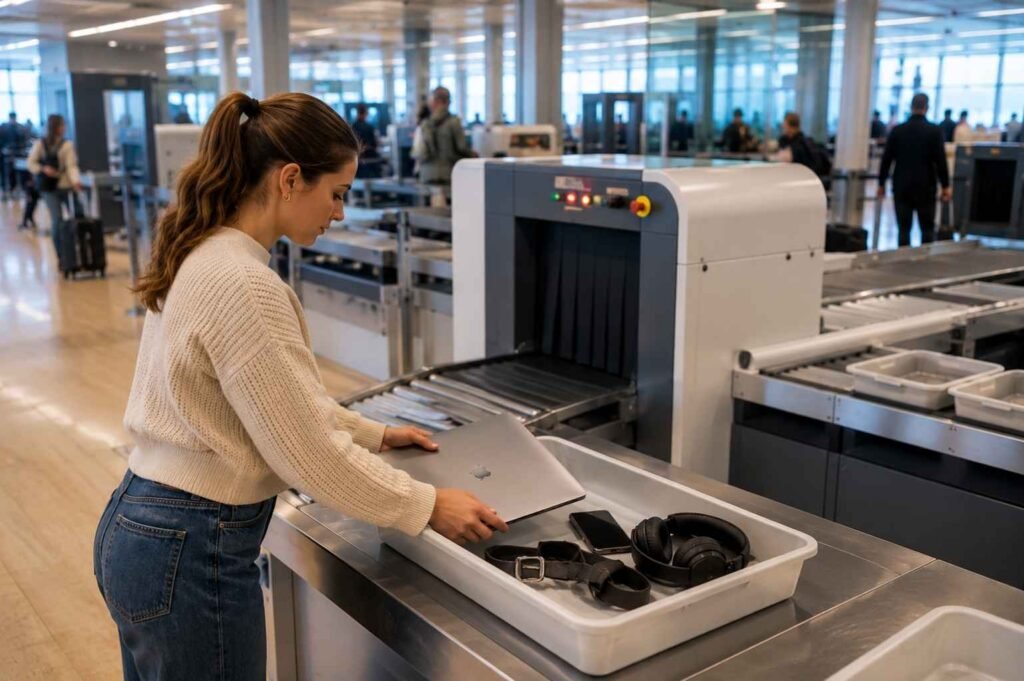
However, security procedures can sometimes be part of the Amsterdam Schiphol transit process, even when immigration is not required.
Whether you need to pass through an additional security checkpoint depends on several factors, including your arrival country, destination, airline procedures, and applicable security agreements.
For some international connections, passengers may be directed through a security screening area before entering another departure zone.
This can occur even when remaining entirely inside the airport’s transit area.
As a result, travelers should always allow enough time for potential security procedures, particularly during busy travel periods.
If airport staff or transfer signs direct you toward a security checkpoint, simply follow the designated route and have your boarding pass and travel documents readily available.
While security checks are usually efficient, waiting times can increase during peak morning and afternoon departure periods.
For this reason, passengers should avoid planning extremely short connections whenever possible.
Minimum Connection Times at Schiphol
One of the most important questions travelers have about Amsterdam Schiphol transit is how much time they need between flights.
Although airlines publish official minimum connection times, practical connection times are often more useful when planning a journey.
The amount of time required depends on factors such as immigration procedures, security screening, gate locations, and whether the itinerary includes Schengen or non-Schengen flights.
As a general guideline:
| Connection Type | Recommended Connection Time |
|---|---|
| Schengen → Schengen | 60 minutes |
| Schengen → Non-Schengen | 75 minutes |
| Non-Schengen → Schengen | 90 minutes |
| Non-Schengen → Non-Schengen | 75 minutes |
These recommendations assume that flights are booked on a single ticket and checked baggage is transferred automatically.
Several factors can increase the time required for a successful connection:
- Immigration queues
- Security screening
- Delayed arrivals
- Gate changes
- Peak-season congestion
- Long walking distances between gates
Whenever possible, additional connection time provides greater flexibility and reduces the risk of missing a flight.
Is 1 Hour Enough for a Connection at Schiphol?
Sometimes.
A one-hour connection can be sufficient for certain routes, particularly when both flights operate within the Schengen Area and the arriving flight is on time.
Because Schiphol functions as a single-terminal airport, some connections can be completed relatively quickly.
However, a 60-minute connection may feel considerably tighter when:
- Entering the Schengen Area
- Passing through immigration
- Connecting from a long-haul flight
- Traveling during summer peak periods
- Experiencing arrival delays
Even though airlines may sell legal connections with shorter transfer times, travelers should understand that unexpected delays can quickly reduce available transfer time.
For most international journeys, allowing additional time creates a more comfortable and less stressful travel experience.
Passengers unfamiliar with Amsterdam Schiphol transit may benefit from choosing longer connection windows whenever possible.
What Is the Best Connection Time at Schiphol?
While every itinerary is different, many experienced travelers prefer connection times that provide a reasonable buffer for delays and airport procedures.
For most passengers, the following connection times provide a comfortable balance between efficiency and flexibility:
| Route Type | Ideal Connection Time |
|---|---|
| Schengen → Schengen | 90 minutes |
| Schengen → Non-Schengen | 90–120 minutes |
| Non-Schengen → Schengen | 2–3 hours |
| Non-Schengen → Non-Schengen | 90–120 minutes |
Longer connections help protect against:
- Flight delays
- Immigration queues
- Security screening delays
- Gate changes
- Operational disruptions
This is particularly important during busy summer travel periods, major holidays, and peak morning departure waves.
Transit Visa Requirements for Amsterdam Schiphol Transit
Not every traveler requires a transit visa when connecting through Schiphol Airport.
Requirements depend on several factors, including:
- Nationality
- Destination
- Length of transit
- Whether you leave the international transit area
- Whether immigration procedures are required
Many travelers can complete Amsterdam Schiphol transit without obtaining an additional visa.
However, some nationalities may require an Airport Transit Visa (ATV), even when remaining inside the airport’s international transit zone.
Airport Transit Visa requirements most commonly affect travelers from certain countries in Africa, Asia, and the Middle East. However, eligibility rules vary significantly depending on nationality, destination, residence status, and travel documents.
Because visa requirements can change over time, travelers should always verify their eligibility using the official Dutch government transit visa guidance before departure.
Never assume that a transit visa is unnecessary simply because you do not plan to leave the airport.
Checking requirements in advance can help prevent denied boarding, travel disruptions, or missed connections.
What Happens to Checked Baggage During Transit?
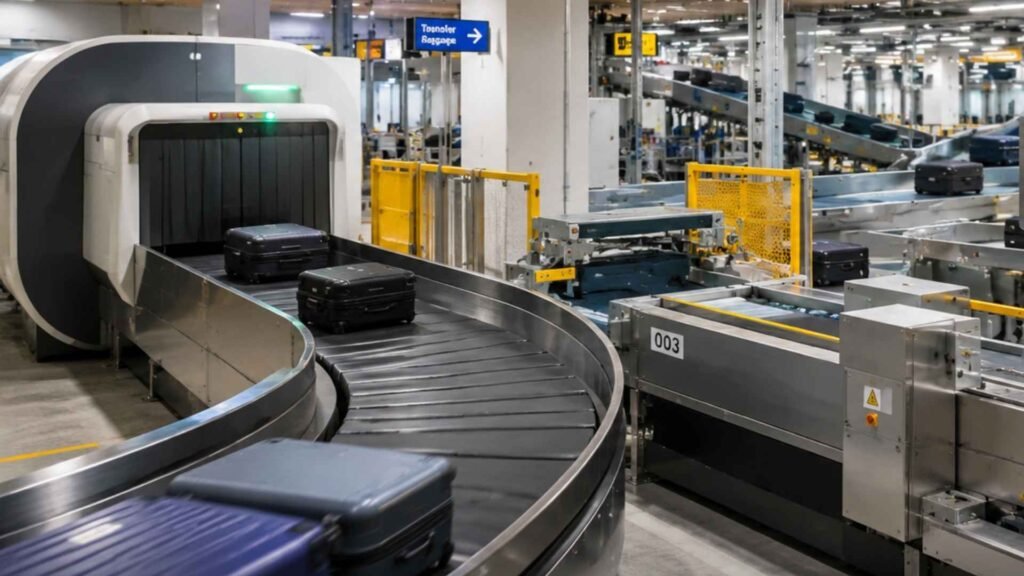
For most passengers traveling on a single booking, checked baggage is transferred automatically to the final destination.
This means travelers generally do not need to:
- Collect baggage
- Leave the transit area
- Re-check luggage
- Visit baggage reclaim
After arriving at Schiphol, passengers can usually follow the Transfer signs and continue directly toward their next flight.
This is one of the reasons Amsterdam Schiphol transit is considered relatively efficient compared with many other large international hubs.
However, baggage procedures can vary depending on airlines and ticket structures.
Automatic baggage transfer is most common when:
- Flights are booked under a single reservation
- Airlines have interline agreements
- The itinerary is sold as a connecting journey
In these situations, checked baggage is typically tagged to the final destination at the first airport.
There are exceptions.
Passengers traveling on separate tickets may need to:
- Enter the Netherlands
- Collect checked baggage
- Check in again with the next airline
- Re-check luggage
- Pass through security once more
These situations are commonly referred to as self-transfers and involve different procedures than standard airline connections.
If you are traveling on separate tickets, always verify baggage arrangements before departure.
We cover these scenarios in greater detail in our upcoming Amsterdam Schiphol Self-Transfer Guide.
Before traveling, the safest approach is to confirm baggage handling procedures directly with your airline.
What Happens If You Miss Your Connection at Schiphol?
Missed connections can happen for many reasons, including flight delays, immigration queues, severe weather, or operational disruptions.
What happens next depends largely on how your flights were booked.
If your itinerary was booked on a single ticket, the airline will normally assist you with rebooking onto the next available flight.
Depending on the situation, the airline may also provide accommodation, meal vouchers, or additional assistance if a long delay is involved.
If you are traveling on separate tickets, responsibility is usually yours.
In these situations, a missed connection may require purchasing a new ticket and arranging onward travel independently.
For this reason, travelers using separate tickets should generally allow more time between flights than passengers traveling on a single booking.
Long Layovers at Amsterdam Schiphol Airport

If you have several hours between flights, Amsterdam Schiphol Airport offers a wide range of facilities that can make a long layover more comfortable.
As one of Europe’s largest international hubs, Schiphol is designed to accommodate large numbers of connecting passengers throughout the day.
Travelers will find:
- Restaurants and cafés
- Airport lounges
- Duty-free shopping
- Charging stations
- Workspaces
- Quiet seating areas
- Airport hotels
Many of these facilities are located inside the secure transit area, allowing passengers to remain airside without entering the Netherlands.
For travelers with connections of four hours or more, there is usually enough time to relax, have a meal, catch up on work, or simply take a break before the next flight.
More information about airport facilities, passenger services, and amenities can be found on the Schiphol website.
Can You Leave Schiphol During a Layover?
Yes, many travelers can leave Schiphol Airport during a longer layover.
However, whether this is possible depends on your nationality, visa requirements, layover length, and eligibility to enter the Netherlands.
Passengers who meet Dutch entry requirements may choose to visit Amsterdam or nearby areas before returning for their onward flight.
One of Schiphol’s advantages is its direct rail connection to Amsterdam city center.
Amsterdam Centraal Station can be reached in approximately 15–20 minutes by train, making short visits possible during longer layovers.
Train schedules, fares, and journey planning tools are available on the NS Dutch Railways website.
As a general guideline:
| Layover Length | Recommendation |
|---|---|
| Under 4 Hours | Remain at the airport |
| 4–6 Hours | Limited time outside the airport |
| 6–8 Hours | Possible short visit to Amsterdam |
| 8+ Hours | Comfortable city visit possible |
Before leaving the airport, always allow sufficient time to return, pass through security, and complete any required immigration procedures before boarding your next flight.
Common Amsterdam Schiphol Transit Mistakes
Most connections at Schiphol are relatively straightforward, but certain mistakes can lead to unnecessary stress or even missed flights.
Understanding these issues before travel can make the entire Amsterdam Schiphol transit experience much smoother.
Assuming Every Transit Avoids Immigration
Many travelers believe transit automatically means staying inside the secure area without passing through passport control.
In reality, passengers entering or leaving the Schengen Area often need to complete immigration procedures.
Always review your route before departure so you understand which requirements apply to your itinerary.
Choosing Extremely Short Connections
Although airlines may sell legal connections with limited transfer times, short connections leave little room for delays.
Immigration queues, security checks, gate changes, and late arrivals can quickly reduce available transfer time.
Whenever possible, a longer connection offers greater flexibility.
Ignoring Gate Changes
Gate assignments occasionally change throughout the day.
Do not rely solely on the gate number printed on your boarding pass.
Continue checking airport information screens during transit, particularly if your layover is several hours long.
Not Checking Transit Visa Requirements
Some travelers incorrectly assume that remaining inside the airport means no visa requirements apply.
Transit visa requirements vary based on nationality and itinerary.
Always verify requirements before departure using official government resources.
Following Arrivals Instead of Transfer Signs
After leaving your aircraft, always follow yellow signs marked:
- Transfer
- Departures
- Gates
Passengers who accidentally follow Arrivals signs may leave the transit area unnecessarily and create additional immigration or security procedures for themselves.
Amsterdam Schiphol Transit FAQ
Is Amsterdam Schiphol Airport Good for Connecting Flights?
Yes.
Amsterdam Schiphol Airport is widely considered one of Europe’s best airports for connecting flights thanks to its single-terminal layout, extensive route network, and clear passenger signage.
Do I Need to Collect My Bags During Amsterdam Schiphol Transit?
Usually not.
If your flights are booked on a single ticket and your baggage is checked through to your final destination, luggage is normally transferred automatically.
Do I Need to Go Through Immigration During Transit at Schiphol?
It depends on your route.
Passengers entering or leaving the Schengen Area typically pass through passport control, while many non-Schengen to non-Schengen transfers do not require Dutch immigration.
Do I Need to Go Through Security During Transit at Schiphol?
Some passengers may need additional security screening during transit depending on their arrival country, destination, and airline procedures.
Always follow airport signs and instructions provided by airport staff.
Is One Hour Enough for a Connection at Schiphol?
Sometimes.
A one-hour connection may be sufficient for certain Schengen routes, but international connections generally benefit from additional transfer time.
Can I Leave Schiphol During a Layover?
Many travelers can leave the airport during longer layovers if they meet Dutch entry requirements and allow enough time to return before their next flight.
Do I Need a Transit Visa for Schiphol?
Transit visa requirements vary by nationality and itinerary.
Always verify requirements using official Dutch government resources before travel.
What Is the Best Connection Time at Schiphol?
For most travelers, 90 minutes to 2 hours provides a comfortable connection window.
Passengers arriving from non-Schengen destinations often benefit from allowing at least two hours between flights.
Final Thoughts
Amsterdam Schiphol Airport is one of Europe’s busiest transit hubs, but most connections are straightforward when you understand the transfer process in advance.
Whether your itinerary requires immigration, security screening, or transit visa checks, planning ahead can help you avoid delays and move through Schiphol with confidence.
Continue Planning Your Schiphol Journey
→ Amsterdam Schiphol Airport Guide (2026)
→ Amsterdam Schiphol Self-Transfer Guide (2026)
→ Amsterdam Schiphol Fast Track Guide (2026)
→ Amsterdam Schiphol Lounges Guide (2026)
→ Amsterdam Schiphol Hotels Guide (2026)