
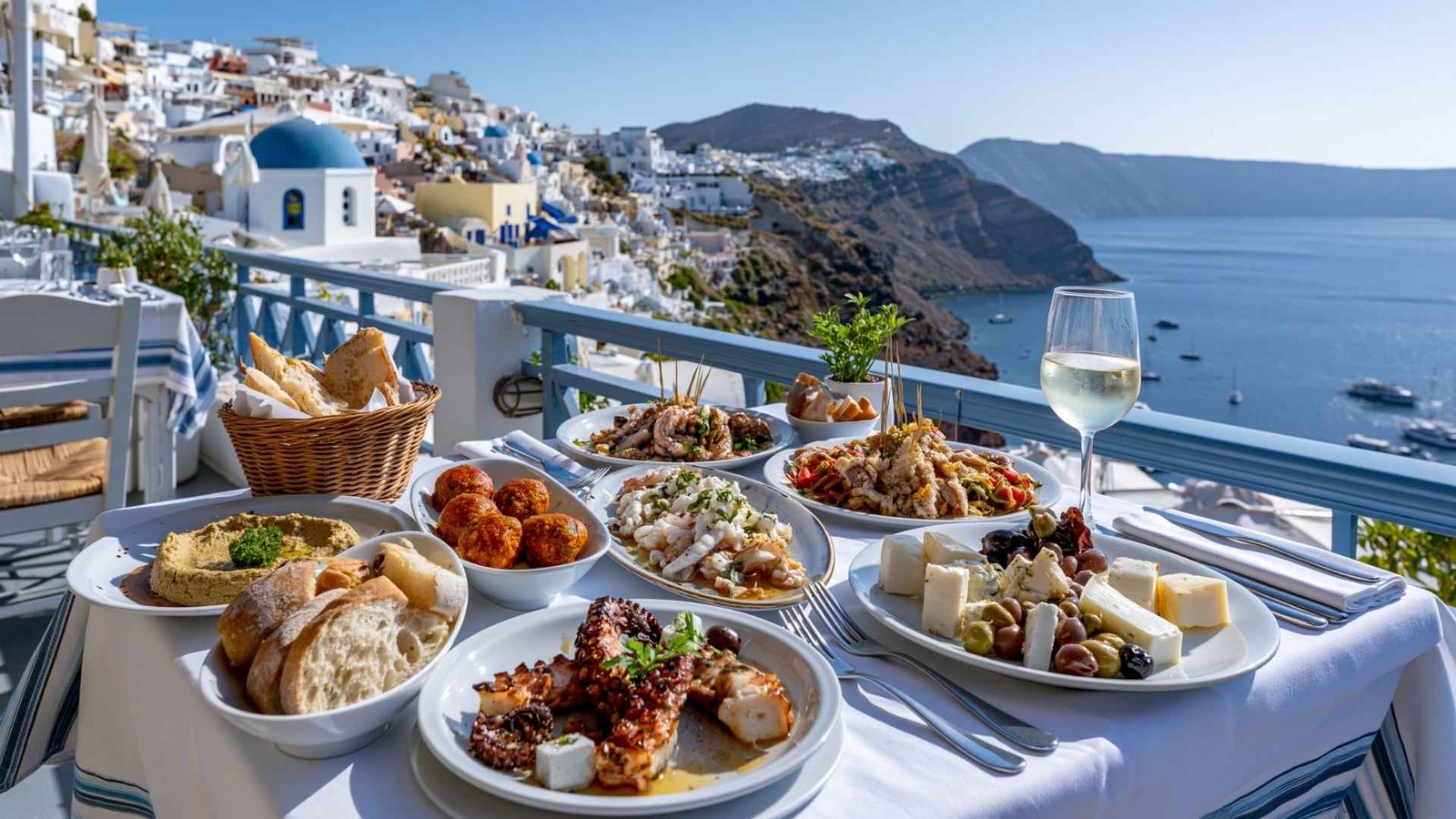
Santorini is famous for sunsets, white villages, and blue domes above volcanic cliffs. But for many travelers, the island becomes memorable for something else: the food.
Volcanic farming, local ingredients, seafood traditions, and centuries of island cooking create flavors that feel noticeably different from mainland Greece.
This guide explains what to eat in Santorini, which foods deserve priority, where to find them, and how to avoid spending too much on average tourist meals.
Quick Answer: What Food Is Santorini Known For?
If you only have a few days, prioritize these local specialties:
✅ Fava
✅ Tomato keftedes
✅ White eggplant dishes
✅ Fresh seafood
✅ Santorini salad
✅ Chloro cheese
✅ Assyrtiko wine
✅ Grilled octopus
✅ Melitinia pastries
✅ Local desserts
✅ Capers
✅ Wine-based specialties
These dishes represent the ingredients and traditions that make food in Santorini different from many other Greek islands.
Why Food in Santorini Tastes Different
One reason travelers searching for what to eat in Santorini often leave impressed is simple: the island grows food differently.
Very little rainfall, strong Aegean winds, and mineral-rich volcanic soil create difficult growing conditions. Yet those same conditions often produce sweeter tomatoes, more mineral-driven wines, and vegetables with surprisingly concentrated flavor.
Simple meals often become the most memorable meals on the island.
Traditional Foods You Should Try in Santorini
Santorini’s food culture revolves around simple dishes built around local ingredients, seafood traditions, and products shaped by volcanic farming.
The dishes below include local specialties many travelers specifically come to Santorini to try — and a few others they accidentally miss.
1. Fava — Santorini’s Most Famous Dish
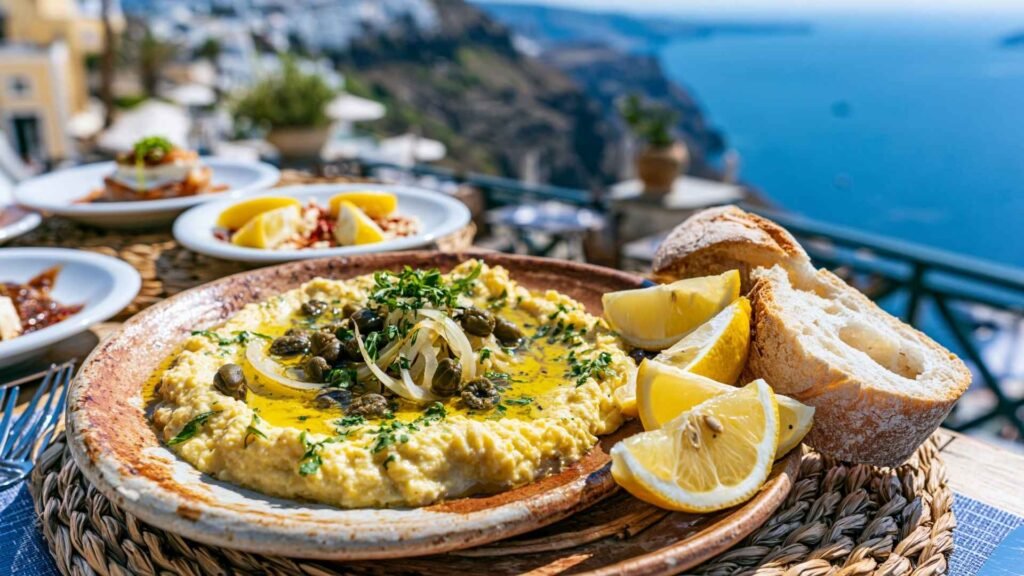
If locals recommend only one dish when discussing what to eat in Santorini, fava usually appears first. Despite the name, this is not made from fava beans.
Santorini fava uses locally grown yellow split peas that develop strong flavor because of volcanic conditions.
Expect:
- creamy texture
- earthy flavor
- smooth consistency
- simple preparation
Usually served with:
- olive oil
- onions
- capers
- lemon
- bread
Because it appears almost everywhere, fava is one of the easiest introductions to local cuisine.
Best for: appetizers, meze plates, sunset dinners
2. Tomato Keftedes (Tomato Fritters)
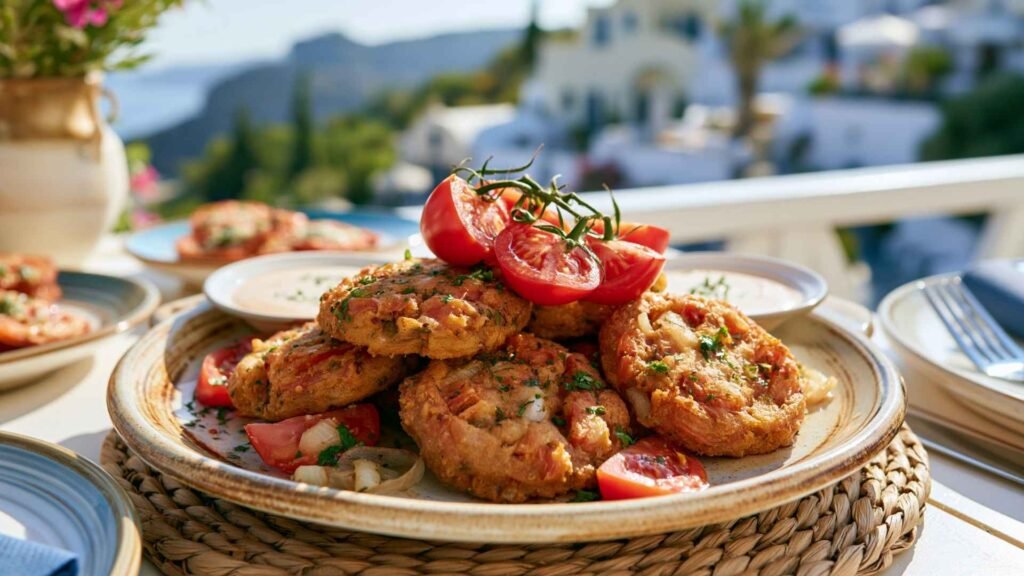
Tomatokeftedes are among the most iconic foods in Santorini because local tomatoes behave differently here. Dry weather and volcanic soil create smaller tomatoes with sweeter, more concentrated flavor.
Traditional versions usually combine:
- chopped tomatoes
- herbs
- onions
- flour
Expect:
✅ crispy exterior
✅ soft center
✅ fresh herbs
✅ slight sweetness
Smaller tavernas often prepare better versions than restaurants focused purely on views.
Best for: appetizers, sharing plates, vegetarian meals
3. White Eggplant Dishes
Santorini white eggplants differ noticeably from typical purple varieties.
They are usually:
- sweeter
- softer
- less bitter
You’ll commonly find them:
- grilled
- baked
- stuffed
- fried
Their mild flavor works especially well with olive oil, herbs, tomatoes, and local cheeses. Many visitors overlook them because they look simple on menus.
Best for: vegetarian dishes, traditional tavernas, local specialties
4. Fresh Seafood and Grilled Octopus
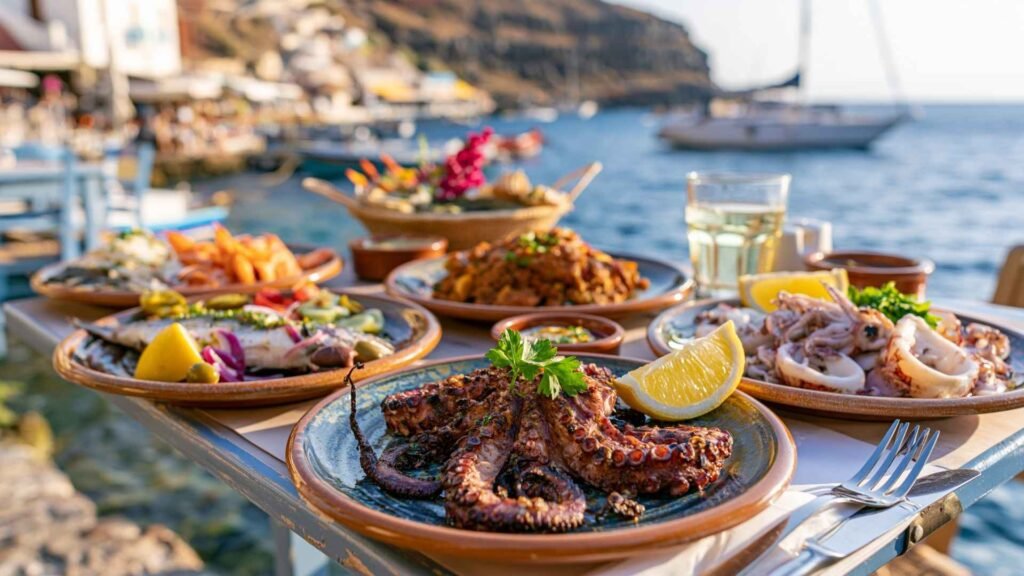
Seafood appears almost everywhere in Santorini, but quality varies more than many visitors expect. Restaurants chosen only for sunset views sometimes prioritize location over food quality.
Popular seafood dishes include:
- grilled octopus
- sea bream
- calamari
- shrimp dishes
- red mullet
💡 Clara’s Note
Fishing areas like Ammoudi and smaller coastal villages often feel more authentic and less rushed than restaurants concentrated around sunset crowds.
Fresh seafood matters more than views alone.
Best for: seafood lovers, coastal dining, sunset dinners
5. Santorini Salad and Local Ingredients
Greek salad exists across Greece, but Santorini salad feels slightly different because local ingredients play a much bigger role here. Local tomatoes, island-grown cucumbers, cheeses, capers, and caper leaves create stronger flavors than many visitors expect from such simple dishes.
Expect ingredients such as:
- local tomatoes
- capers and caper leaves
- island-grown cucumbers
- local cheeses
- olive oil
Many travelers underestimate how important ingredients are here. Santorini’s volcanic growing conditions shape everything from tomatoes to capers, which is one reason simple dishes often become the most memorable meals.
Best for: light lunches, vegetarian meals, local specialties
6. Chloro Cheese and Other Local Cheeses
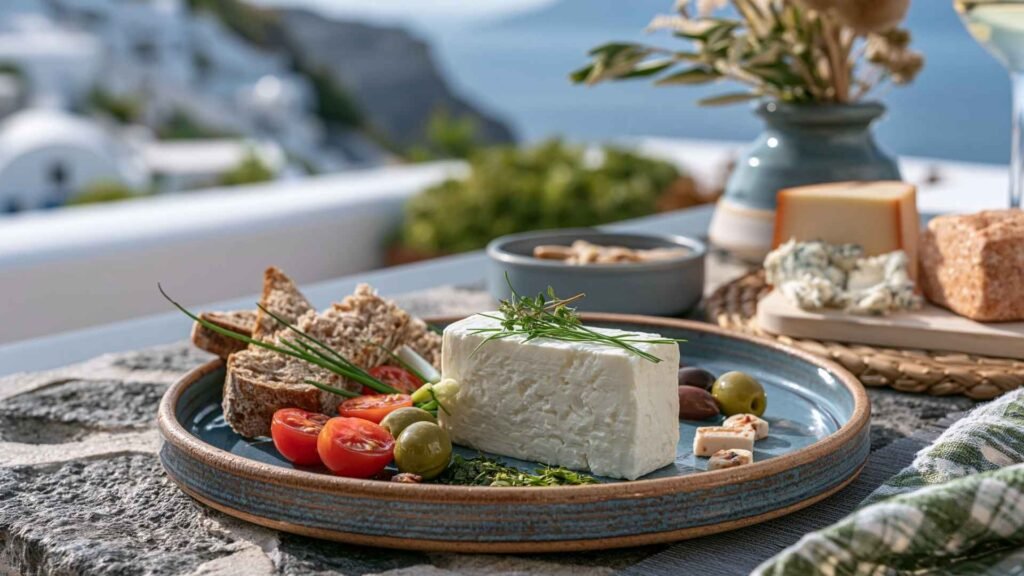
Chloro remains one of Santorini’s lesser-known specialties. Usually made from sheep and goat milk, the cheese feels soft, creamy, and slightly tangy.
Often paired with:
- bread
- salads
- tomatoes
- wine
You may also encounter Kopanisti, a stronger and spicier cheese sometimes served on meze plates.
Best for: cheese lovers, wine pairings, meze plates
7. Assyrtiko Wine
Food in Santorini and wine culture are closely connected. Assyrtiko remains the island’s most famous grape variety and one of the reasons many travelers extend dinners long past sunset.
Expect:
✅ dry finish
✅ strong acidity
✅ mineral notes
Pairs especially well with:
- seafood
- local cheeses
- tasting menus
- sunset dinners
Wine tastings have become one of the island’s most popular experiences, especially during sunset hours.
Best for: winery visits, seafood dinners, sunset experiences
8. Local Meze Plates
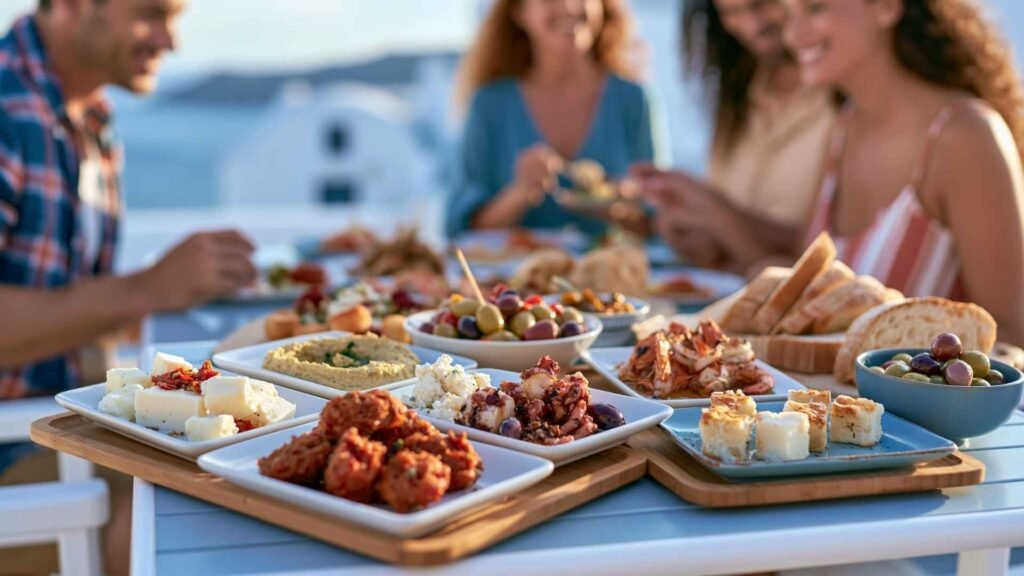
Traditional dining often works best when shared. Instead of ordering one large dish, many tables combine smaller plates into longer, more social meals.
Popular combinations include:
- fava
- cheeses
- tomato fritters
- seafood
- olives
- bread
Ordering several dishes together usually creates a more local experience.
Best for: groups, sharing plates, first-time visitors
9. Melitinia
Melitinia are traditional pastries associated with celebrations and religious holidays, especially Easter traditions.
Usually filled with:
- local cheese
- sugar
- aromatic spices
Smaller bakeries often prepare better versions than tourist-focused dessert shops.
Best for: desserts, bakeries, local specialties
10. Traditional Desserts, Loukoumades and Vinsanto
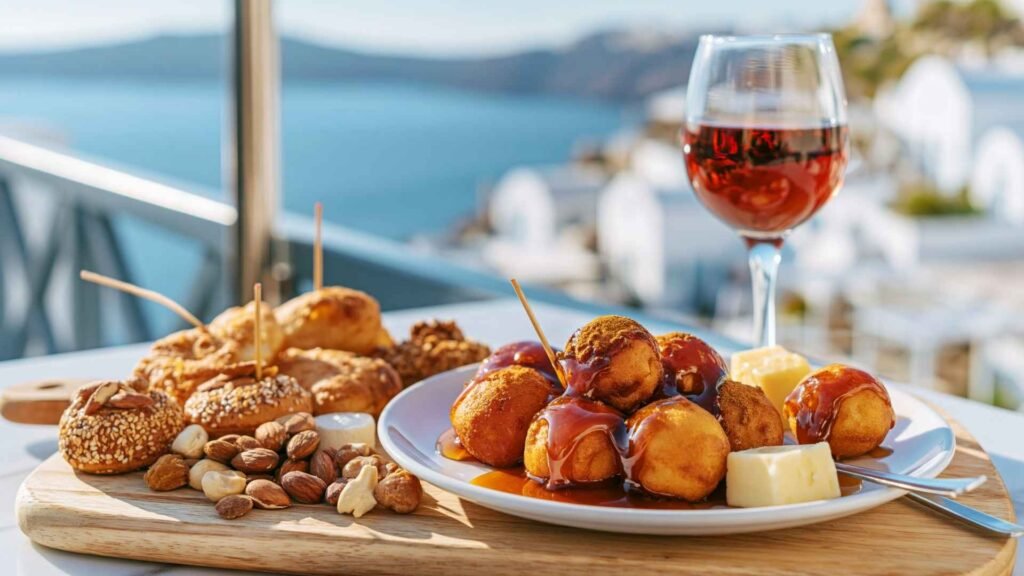
Dessert culture in Santorini often feels lighter and simpler than many visitors expect. Honey, nuts, sesame, local cheeses, and sweet wines appear repeatedly across traditional desserts.
Popular dessert experiences include:
- Loukoumades covered with honey or cinnamon
- honey-based desserts
- local pastries
- Vinsanto dessert pairings
Vinsanto, the island’s best-known sweet wine, is commonly served alongside desserts or cheeses during tastings. Rich sweetness, dried fruit flavors, and strong connections to local wine culture make it one of the easiest ways to combine dessert experiences with Santorini’s food traditions.
Best for: dessert lovers, winery visits, sunset tastings
Where to Find the Best Food in Santorini
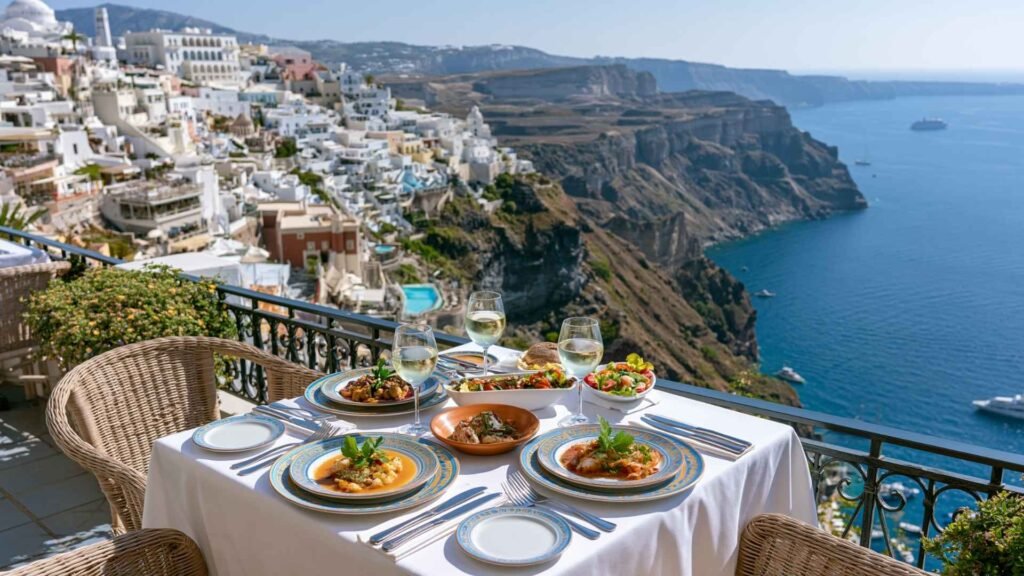
Food experiences change dramatically depending on where you eat. Some areas focus on sunset dining and upscale restaurants, while others feel quieter, more traditional, or seafood-oriented.
Choosing the right village often matters almost as much as choosing the restaurant itself.
Oia
Best for:
- sunset dining
- romantic restaurants
- upscale experiences
Oia works best for travelers prioritizing atmosphere, caldera views, and longer dinners. Expect higher prices, strong reservation demand, and many restaurants designed around sunset experiences.
Fira
Best for:
- variety
- nightlife dining
- casual restaurants
Fira offers the widest restaurant selection on the island. It works especially well for travelers wanting flexibility, later dining hours, and a mix of casual and upscale options.
Pyrgos
Best for:
- traditional tavernas
- quieter meals
- local atmosphere
Pyrgos generally feels slower and less crowded than Santorini’s busiest areas. Smaller tavernas and traditional dining experiences often feel easier to find here.
Ammoudi
Best for:
- seafood
- waterside restaurants
- relaxed lunches
Ammoudi is one of the better areas for seafood-focused meals. Many visitors come here specifically for waterside restaurants and slower lunches near the harbor.
How Much Does Food Cost in Santorini?
| Food Type | Typical Price |
|---|---|
| Fava | €5–9 |
| Tomato fritters | €6–10 |
| Seafood mains | €18–40+ |
| Wine tastings | €20–80+ |
| Traditional dinner | €20–45 pp |
Restaurants with sunset views generally cost more — sometimes significantly more.
Best Time to Eat in Santorini
Meal timing affects the experience more than many travelers expect. Restaurants often become significantly busier around sunset hours, while many locals eat later than visitors initially expect.
Typical dining hours:
Lunch: 13:00–15:30
Dinner: 20:00–23:00
Seasonality matters too:
May–June
Best balance between restaurant availability, smaller crowds, and easier reservations.
July–August
The busiest period of the year. Sunset restaurants often require reservations several days in advance.
September
Excellent for wine experiences and harvest season, with many local ingredients reaching peak quality.
Tomatoes, grapes, seafood, and local produce generally feel at their best during warmer months, which is one reason food experiences often feel different depending on when you visit.
Food Experiences Worth Trying in Santorini
Eating in Santorini is not only about choosing restaurants. Some of the island’s best food memories happen through experiences built around local ingredients, wine culture, and slower dining traditions.
Popular experiences include:
- winery tastings with Assyrtiko and Vinsanto
- seafood lunches near fishing villages
- sunset dinners overlooking the caldera
- cooking classes focused on island recipes
- guided food tours through local tavernas
Many travelers remember these experiences more than individual dishes because they combine food with places, views, and local traditions.
Local Food Markets and Where to Shop
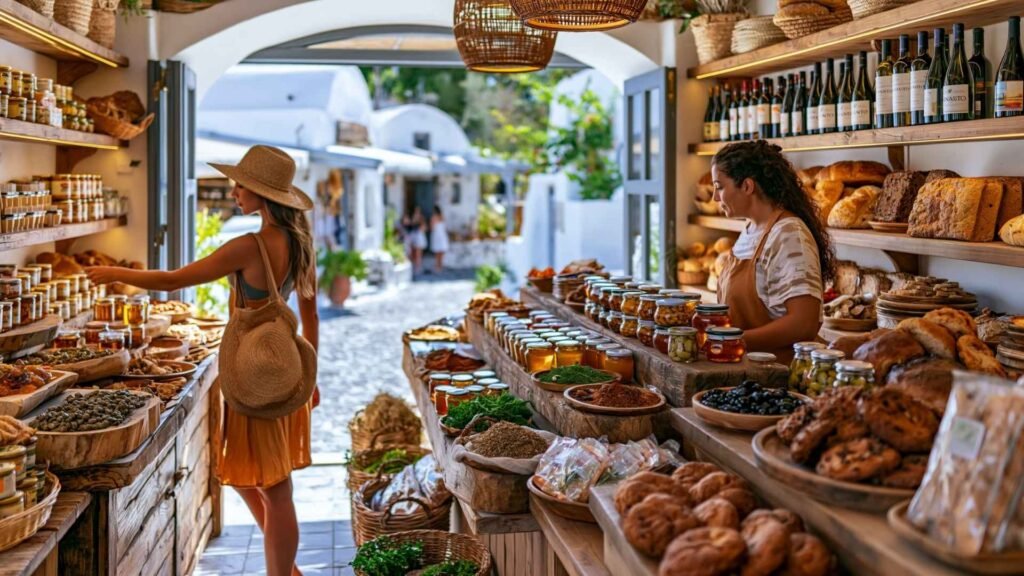
If you want to bring part of Santorini’s food culture home, local markets, bakeries, and specialty shops often work better than tourist-focused souvenir stores.
Look for:
Village bakeries
Best for melitinia, pastries, bread, and smaller local desserts that are harder to find in tourist areas.
Wine shops and wineries
Ideal for Assyrtiko, Vinsanto, and local wine gifts. Many wineries also sell bottles unavailable outside the island.
Small local markets
Good places to look for capers, honey, herbs, spices, and packaged products that travel more easily.
Food shopping often feels more authentic outside the busiest streets of Oia and Fira, where prices tend to rise and product selections become more tourist-focused.
Common Tourist Food Mistakes in Santorini
Many visitors accidentally miss some of Santorini’s best food experiences — not because the food is bad, but because they eat in the wrong places, order the wrong things, or rely too heavily on convenience.
Common mistakes include:
Only eating in Oia
Prices rise dramatically around caldera viewpoints, while food quality does not always increase at the same pace. Some of the island’s best meals happen outside the busiest areas.
Booking sunset restaurants too late
Popular restaurants often fill up days in advance during peak season, especially for sunset seating.
Ignoring smaller villages
Places like Pyrgos, Ammoudi, and quieter villages often offer more traditional tavernas, slower dining, and less crowded experiences.
Ordering generic menus repeatedly
Restaurants offering large international menus sometimes focus less on island specialties. Simpler menus often produce more memorable meals.
Ordering seafood without checking prices
Fresh seafood can be excellent in Santorini, but pricing varies significantly. Restaurants that clearly display seafood prices usually create fewer surprises.
Choosing restaurants only for views
Caldera views are memorable, but views alone rarely guarantee good food. Some restaurants prioritize location more than local ingredients or cooking quality.
Buying imported products sold as local
Products like capers, honey, wine, and packaged foods sometimes vary in authenticity. Smaller shops and local markets often provide better local options.
FAQ: What to Eat in Santorini
What is the most famous food in Santorini?
Fava is usually considered the island’s signature dish, followed closely by tomato keftedes, local wines, and seafood dishes.
Is food expensive in Santorini?
Compared with many Greek islands, yes. Restaurants with caldera views and sunset seating usually cost more than smaller tavernas in quieter villages.
Is Santorini vegetarian friendly?
Generally yes. Travelers researching what to eat in Santorini as vegetarians will usually find plenty of options, including fava, tomato fritters, salads, cheeses, and eggplant dishes.
Is seafood worth trying in Santorini?
Absolutely. Fresh seafood remains one of the highlights of food in Santorini, especially around fishing villages and smaller coastal areas.
How many days are enough for food experiences?
Three to four days usually allows enough time to explore local specialties, wine experiences, and traditional tavernas across different villages.
What should I eat first in Santorini?
If you only have limited time, prioritize fava, tomato keftedes, seafood, Assyrtiko wine, and local desserts before moving on to smaller regional specialties.
Which area has the best food in Santorini?
Different villages offer different experiences. Oia works best for sunset dining, Ammoudi for seafood, Pyrgos for traditional tavernas, and Fira for restaurant variety.
Final Thoughts on What to Eat in Santorini
The best food in Santorini is rarely complicated.
Fresh ingredients. Long dinners. Seafood tavernas. Local traditions.
If you’re still wondering what to eat in Santorini, start with simple local dishes, explore smaller villages, and focus less on famous restaurants and more on ingredients shaped by the island itself.
Many travelers arrive expecting sunsets.
Many leave remembering the food.