

Landing at a new airport can feel overwhelming, especially after a long flight. Signs, queues, and decisions come quickly, and it’s not always clear what comes next.
Barcelona Airport is well organized, but a smooth arrival depends on how you move through each step.
This Barcelona Airport Arrival Guide walks you through the process, so you can move confidently from landing to exit.
💡 For maps, terminal updates, and real-time information, you can check the Barcelona Airport official website before your arrival.
⚡ Quick Answer: Barcelona Airport Arrival Guide
After landing at Barcelona Airport, the process is straightforward but time-sensitive.
Arrival flow:
Gate → Walk → Passport Control → Baggage Claim → Customs → Exit → Transport
⏱️ Realistic timing:
- Schengen: 20–45 minutes
- Non-Schengen: 30–90 minutes
⏱️ Peak hours:
- 08:00 – 11:00
- 18:00 – 21:00
💡 Clara’s Insider Tip:
Delays usually happen at passport control and baggage claim. If you travel with carry-on only, you can save up to 30–40 minutes.
👤 Who This Barcelona Airport Arrival Guide Is For
This guide is designed for travelers who want to move efficiently and avoid unnecessary delays.
✔ First-time visitors
✔ Non-Schengen travelers
✔ Short stays
✔ Late-night arrivals
✔ Travelers with luggage or family
This Barcelona Airport Arrival Guide is especially useful if you want to avoid time loss on arrival.
✈️ How to Get Through Barcelona Airport After Landing

Once you step off the plane, the process begins immediately.
You follow the signs, move with the crowd, and go through each stage without stopping — but each step affects how quickly you get out of the airport.
Barcelona Airport is easy to navigate, but knowing what comes next makes everything faster and more predictable.
This section of the Barcelona Airport Arrival Guide walks you through each step, so you can move smoothly from arrival to exit.
🛬 Step 1: Landing and First Steps
When you step out of the aircraft, everything feels calm for a moment.
Then the cabin comes to life. People stand up, overhead bins open, and the flow begins.
You don’t need to think much yet. Just follow the signs.
👉 Arrivals.
🚶♂️ Step 2: Walking Through the Terminal

At first, it feels like a short walk. Then you keep going.
In Terminal 1, distances are longer than expected, and this is often your first hidden delay.
⏱️ Walking time:
- Terminal 2: 3–8 minutes
- Terminal 1: 5–15 minutes
🧭 Step 3: Terminal 1 vs Terminal 2
Knowing your terminal is the most critical part of your arrival.
The Free Shuttle: There is a green shuttle bus connecting T1 and T2 (10–15 min trip). Crucial: The R2N Train departs only from Terminal 2. If you land in T1 and want the train, follow signs for the “Bus Transit” to T2.
Terminal 1 (T1): Larger, handles major international airlines. Expect long walks (5–15 mins) from the gate.
Terminal 2 (T2): Smaller, mostly low-cost carriers. Faster to exit but fewer amenities.
🛂 Step 4: Passport Control
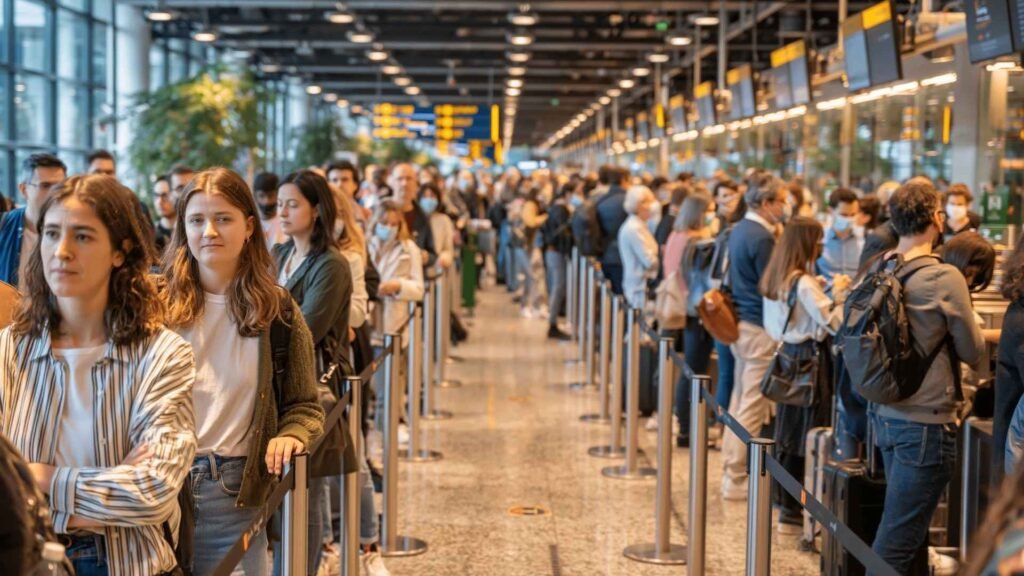
If you arrive from a Schengen country, you skip this step and go directly to baggage claim.
If not, passport control is required.
⏱️ Waiting time:
- 10–20 minutes
- 20–40 minutes normally
- 40+ minutes during peak
The line may look long, but it usually moves steadily.
🇪🇺 ETIAS Requirement
From 2026, visa-free travelers must have an approved ETIAS before arrival.
This is not something you present physically.
- It is digitally linked to your passport
- It is checked automatically
- Airlines may deny boarding without it
You must apply before your trip. It cannot be obtained at the airport.
👉 Full breakdown: Complete Guide to ETIAS Travel Authorization (2026)
⚡ Fast Track & VIP Airport Services
Barcelona Airport does not widely offer standard fast-track lanes for arrivals like some major international airports.
However, VIP Meet & Greet services are available and provide a much faster and more comfortable experience.
These services typically include:
- Personal assistance from the moment you arrive
- Priority processing at passport control
- Faster movement through the airport
- Optional help with baggage and exit
In practice, this is the closest alternative to fast track at Barcelona Airport.
💡 Clara’s Tip:
If you land during peak hours or want to avoid waiting in long queues, this service can easily save you 30–60 minutes — especially after long-haul flights.
🧳 Step 5: Baggage Claim
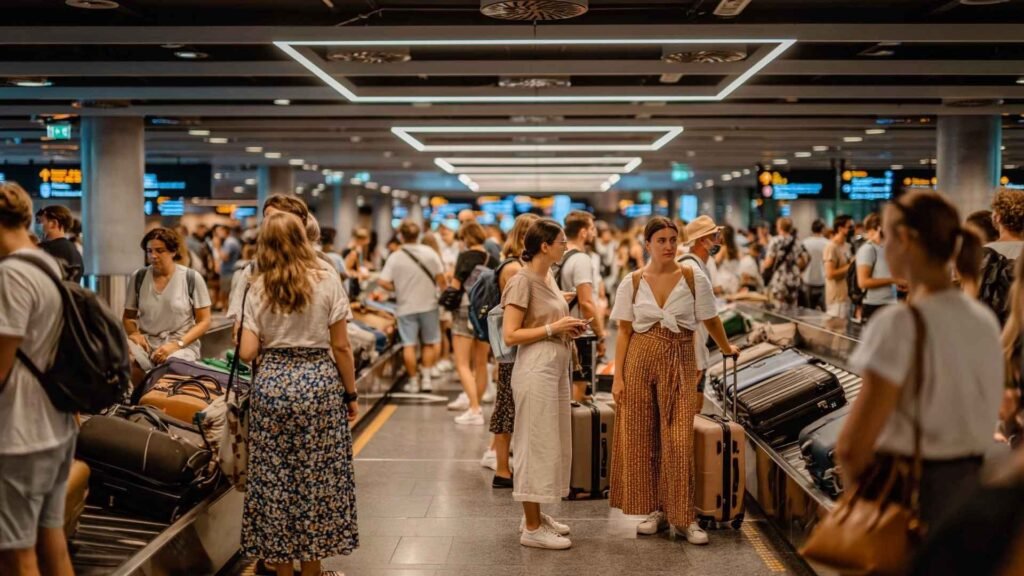
After passport control, you head to baggage claim and check the screens for your carousel.
It may feel like the slow part is over, but this is often where time is lost.
Bags arrive in waves. What looks like a short wait can take longer than expected.
⏱️ Typical wait:
- 20–35 minutes for long-haul flights
- Usually shorter for European routes
💡 Baggage claim can take longer than passport control, especially during busy periods.
Once you collect your luggage, you move toward customs.
For most travelers, this step is quick. If you have nothing to declare, you follow the green lane and walk straight through.
🧳 Left Luggage
If your hotel check-in is later, storing your bags at the airport can save you time and effort.
Barcelona Airport offers luggage storage through the Excess Baggage Company, available in both terminals.
- Terminal 1: open 24 hours
- Terminal 2: open until around 22:00
💡 If you arrive early and want to head straight into the city, this is one of the easiest ways to stay flexible without carrying your luggage around.
🛃 Step 6: Customs
For most travelers, this step is quick and straightforward.
As you approach the exit, you will see two options:
🟢 Green lane if you have nothing to declare
🔴 Red lane if you need to declare goods
In practice, the process is simple. If you are not carrying restricted or high-value items, you can walk straight through the green lane without stopping.
💡 If you are carrying large amounts of cash, restricted food, or expensive items, you should use the red lane. Otherwise, this step usually takes only a few seconds and feels almost invisible.
📶 Step 7: Internet and First Decisions

This is usually the first moment you pause after arrival.
You check your phone, look for internet, and decide how to get connected before heading into the city.
Staying connected is one of the smartest steps in any Barcelona Airport Arrival Guide.
📱 SIM Card & eSIM Setup After Arrival
Staying connected is one of the first things most travelers handle after landing.
Inside the airport, you’ll find:
✔ SIM card kiosks
✔ Mobile operator stores
✔ Vending machines (in some terminals)
However, the easiest option is to set everything up before you land. You can buy an eSIM for Barcelona before arrival and activate it instantly — no waiting, no paperwork.
💡 Clara’s Tip:
Airport SIM kiosks often have queues during busy hours. eSIM saves you 20–30 minutes right after landing.
💧 Essentials
- Free water fountains are available in Terminal 1
- Coffee and food options are widely available
- Use official bank ATMs like CaixaBank or Santander
Avoid Euronet machines due to high fees.
🚪 Step 8: Exit
You walk out of the airport, and everything changes.
Inside, everything was controlled and predictable. Outside, the city begins to move.
This is where your arrival experience really starts.
The next step is deciding how to get into the city, and your choice here will shape your first 30 to 60 minutes in Barcelona.
🚕 Barcelona Airport to City Transport

Once you step outside the terminal, the next decision is how to get into the city, and this is where the Barcelona Airport Arrival Guide becomes especially useful.
Your choice here will shape your first 30–60 minutes in Barcelona — whether that feels smooth and easy, or slow and frustrating.
You’ll find several transport options right outside the arrivals area, each with its own advantages depending on your time, budget, and comfort.
For real-time terminal updates, maps, and official information, visit the Barcelona Airport official website. You can also download the free Aena app (available on iOS and Android) for live gate updates and boarding alerts.
1. Aerobus (The Fast Choice)
- A1 (from T1) or A2 (from T2)
- Price: €7.45 (Single) / €12.85 (Return)
- Pros: Direct to Plaça Catalunya, frequent departures, luggage racks, free WiFi and USB charging on board
This is usually the best balance between speed, comfort, and price for most travelers.
2. Metro (L9 Sud – The Budget Choice)
- Price: ~€5.90 (special airport ticket required — standard travel cards are not valid here)
- Important: Not a direct route to the city center. You must transfer at Torrassa or Collblanc to reach the center.
- Total journey: around 45–55 minutes
Best for budget travelers who are not in a rush and traveling light.
3. Train (R2 Nord)
- Price: ~€5.05 (single ticket)
- Departs only from Terminal 2. If you arrive at T1, take the free shuttle bus first.
- The station is approximately 200 meters from the terminal via a covered glass bridge.
- Note: Unlike the Metro, T-Casual card holders can use this train at no extra cost — making it a smart option if you already have one.
Best option for reaching Sants Station quickly.
4. Taxi
- Fare: €30–€35 to the city center
- Note: All airport taxis include a €4.60 airport surcharge. The minimum fare is €21.00, already reflected in the estimate above.
- All taxis legally accept credit cards
- Door-to-door, no transfers, available 24 hours
Best choice after a long flight, with heavy luggage, or during late-night arrivals.
5. Rideshare (Bolt & Others)
- Bolt is widely available and reliable in Barcelona
- Uber operates but is less common
- Follow “VTC” signs to the designated pickup area, usually located within the airport parking structures and clearly marked with blue signage
6. Night Transport Options
If you arrive late at night, your options are:
- Night buses N16, N17, and N18 connect the airport to the city center — the most affordable option, though slower and less convenient
- Taxi is the most practical and reliable choice after midnight
- Pre-booked private transfer is ideal if you want guaranteed comfort with no waiting
👉 Barcelona Airport Transfer (2026): Best Ways to Reach the City Center
🎯 Quick Decision Guide
- Luggage → Taxi
- Budget → Metro or Train
- Fast → Aerobus
- Night → Taxi or Night Bus
- Family → Private Transfer
- Staying 2+ days → Get the Hola Barcelona Travel Card
Choosing correctly is one of the most important parts of this Barcelona Airport Arrival Guide.
💡 Clara’s Insider Tip
If you land during peak hours or after a long flight, choosing the right transport before you arrive can easily save you 20–30 minutes. The Aerobus is usually the smartest first choice — fast, direct, and no surprises. If you’re on a budget and already have a T-Casual card, the R2 Nord train is the hidden gem most travelers overlook.
🎫 Bonus: Travel Smarter in the City
If you plan to stay in Barcelona for a few days, how you move around the city matters just as much as how you arrive.
👉 Check the Hola Barcelona Travel Card Guide to see whether it fits your itinerary and travel style.
It offers unlimited access to metro, buses, and trains — and can help you save both time and money, especially if you plan to explore multiple areas.
💡 In many cases, this is one of the easiest ways to avoid buying individual tickets and simplify your daily travel.
🎯 Final Insight
Barcelona Airport is not difficult, but it is time-sensitive.
Nothing feels slow on its own.
But together, small delays add up.
This Barcelona Airport Arrival Guide is designed to help you make the right decisions before you even leave the airport.