

You land in London — tired, excited, and ready to start your trip. But within minutes, your experience is shaped by a decision you made long before takeoff:
Heathrow vs Gatwick
At one airport, you move smoothly through passport control.
At another, you’re stuck in a queue watching the clock.
In 2026, the difference between Heathrow vs Gatwick is no longer just about size —
it’s about technology, timing, and system efficiency.
⚡ Quick Answer: Heathrow vs Gatwick (2026)
Heathrow Airport = higher capacity, more eGates, more predictable flow
Gatwick Airport = faster security, but more sensitive to delays
💡 Choose Heathrow for consistency — especially during peak hours
💡 Choose Gatwick for speed — if you land at the right time
🧭 Heathrow vs Gatwick: Key Differences at a Glance
Here’s a quick overview of the key differences between Heathrow and Gatwick — from size and passenger volume to security and overall experience, helping you choose the better airport faster.
| Feature | Heathrow Airport | Gatwick Airport |
|---|---|---|
| Size | Very large (4 terminals) | Medium (2 terminals) |
| Passenger Volume | Very high | High |
| Security Technology | Mixed rollout | Full CT scanners |
| eGates Availability | Extensive | Moderate |
| Queue Stability | More controlled | More variable |
| Overall Experience | Structured & scalable | Faster but sensitive |
🛂 Technology & Passport Control (2026 Update)

✈️ Heathrow Airport
- Extensive eGate network
- High processing capacity for long-haul arrivals
- Advanced biometric and automated border systems
⏱️ Typical arrival time:
👉 10–25 minutes (when systems run smoothly)
✈️ Gatwick Airport
- Fewer eGates
- Smaller processing capacity
- Can feel faster — but only during low traffic periods
⏱️ Typical arrival time:
👉 15–45 minutes depending on flight waves
💡 2026 Reality Check:
Border control today is no longer just about people — it’s also about systems working in sync.
- ETA verification
- Biometric matching
- eGate availability
All of these directly affect your waiting time.
Even though Heathrow has more advanced infrastructure, system-wide disruptions (such as eGate slowdowns) can still impact speed.
Capacity does not always mean faster — it means more stable under pressure
Learn how the process works step-by-step:
👉 UK Passport Control Guide: What to Expect on Arrival
⚠️ UK ETA Impact (2026 Travel Rule)
Since February 2026, all visa-free travelers must have an approved UK ETA before entering the country.
This applies equally when comparing Heathrow vs Gatwick, but it can still influence how quickly you pass through border control.
What this means:
- Your ETA is verified before boarding
- Your passport must match your approved ETA
- Additional checks may occur if details don’t align
💡 Important insight:
Border control today is not just about queues — it’s also about digital verification.
Even when lines look short, processing time can vary depending on system checks happening behind the scenes.
Learn more: 👉 UK ETA Visa Guide 2026: Who Needs It, How to Apply & Entry Rules
🔍 Security Speed: Why Gatwick Has an Advantage
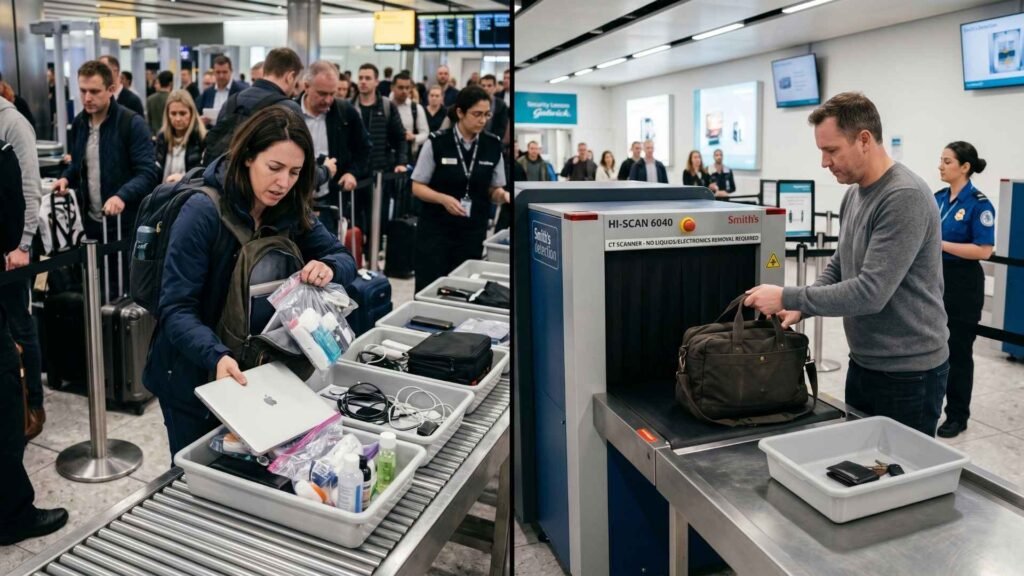
This is one of the biggest differences between the two airports in 2026.
✈️ Gatwick Airport
- Full rollout of next-generation CT scanners
- No need to remove:
- liquids
- laptops
- Higher liquid allowance (up to 2L in many cases)
💡 Result:
Security is smoother, faster, and far less stressful — especially during busy travel periods.
✈️ Heathrow Airport
- CT scanners are still being rolled out
- In several terminals:
- liquids must be removed
- laptops must be taken out separately
💡 Result:
Security can take longer, especially during peak hours or when manual checks are required.
💡 Note:
At Heathrow, some terminals may still apply the 100ml liquid rule and require clear plastic bags.
→ Always check your departure terminal in advance.
⚖️ What This Means for You
Gatwick can move passengers through security noticeably faster
Heathrow is improving — but not yet fully optimized across all terminals
💡 Real impact:
This difference alone can save you 10–20 minutes — especially during busy periods.
🧠 Key Insight
In 2026, the Heathrow vs Gatwick decision is no longer just about queues — it’s also about how efficiently security is handled before you even reach passport control.
⏱️ Real Queue Times: Heathrow vs Gatwick

Queue times depend more on arrival waves than the airport itself.
In most cases, timing matters more than which airport you choose.
✈️ Heathrow Airport
- Handles large passenger volumes more efficiently
- Queue flow is generally more stable
- Better equipped for peak-hour arrivals
✈️ Gatwick Airport
- Can be faster during quiet periods
- More sensitive to flight clustering
- Queues can increase quickly when multiple flights land together
👉 Full timing strategy: UK Airport Queues 2026: Best Times to Land & Avoid Delays
💰 Fast Track & VIP Services
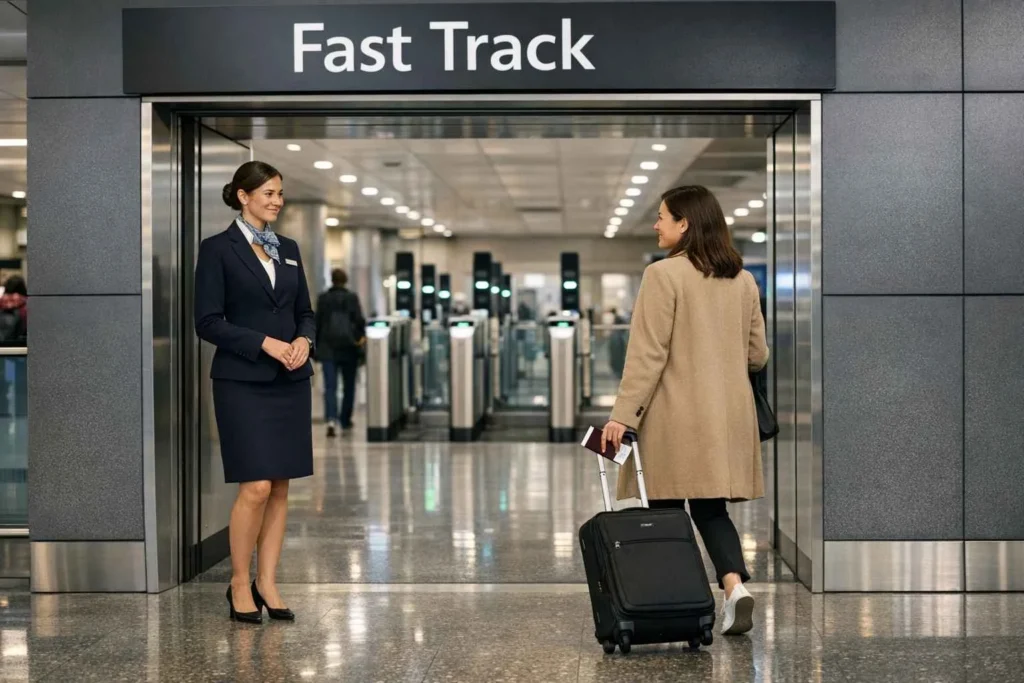
When comparing Heathrow vs Gatwick, Fast Track and VIP services can significantly change your airport experience — especially during busy periods.
✈️ Heathrow Airport
- Multiple Fast Track lanes across terminals
- Wide range of VIP and premium services
- Better availability during peak hours
✈️ Gatwick Airport
- More limited Fast Track availability
- Fewer premium service options
- Can sell out quickly during busy times
⚖️ What This Means for You
Heathrow offers more flexibility and availability
Gatwick can still be faster — but depends heavily on timing
💡 Key insight:
Fast Track helps most when queues are long — but may not be necessary during off-peak hours.
Detailed breakdown:
👉 Is UK Fast Track Worth It in 2026? Honest Heathrow & Gatwick Wait Times Explained
🚆 Getting to the City: Elizabeth Line Advantage
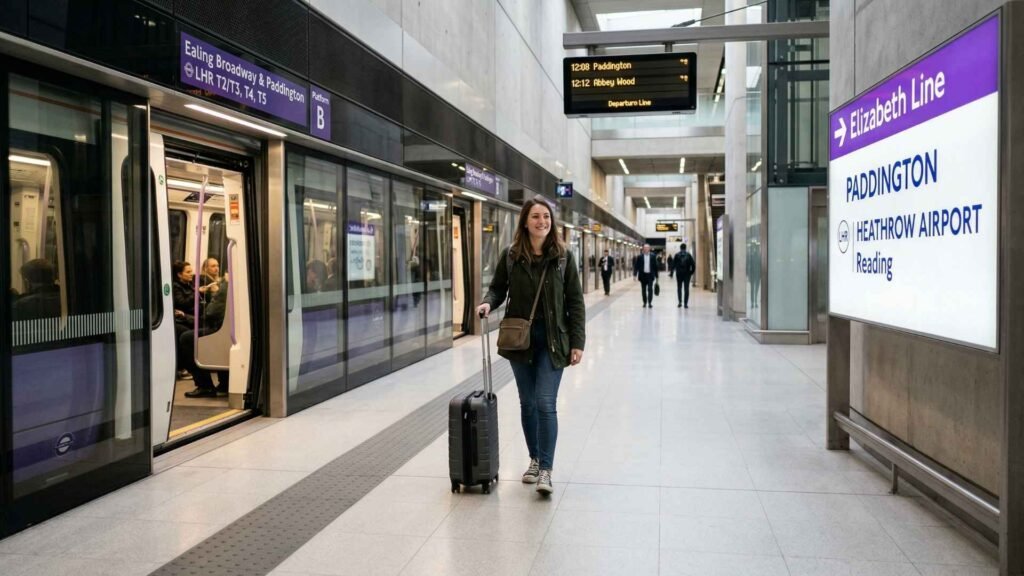
In the Heathrow vs Gatwick comparison, getting into central London is often faster and more straightforward from Heathrow.
✈️ Heathrow Airport
- Elizabeth Line → fast, direct, and more affordable than older options
- Connects easily to central London (Paddington, Tottenham Court Road, Liverpool Street)
💡 Result:
A balanced option — combining speed, comfort, and cost efficiency.
✈️ Gatwick Airport
- Gatwick Express → faster but more expensive
- Southern / Thameslink trains → cheaper but slower and less direct
💡 Result:
Flexible options — but often a trade-off between speed and price.
⚖️ What This Means for You
Heathrow offers the best overall balance (speed + cost + convenience)
Gatwick requires a choice between faster or cheaper — rarely both
💡 Traveler insight:
In 2026, Heathrow is not just easier — it’s often the most cost-efficient way to reach central London
🎯 Which Airport Should You Choose?
When comparing Heathrow vs Gatwick, the right choice depends on how you prioritize time, predictability, and convenience.
Choose Heathrow if:
- You want a more predictable and structured arrival experience
- You are landing during peak hours
- You plan to rely on eGates for faster processing
Choose Gatwick if:
- You want faster security with minimal hassle
- You are traveling light (carry-on only)
- You land during off-peak hours, when queues are lighter
⚖️ Quick Decision Guide
Heathrow = consistency and control
Gatwick = speed and simplicity (with the right timing)
💡 Best strategy:
Don’t choose based on airport alone — choose based on arrival time + each airport’s strengths
⚠️ Worst Case Scenario: What Can Go Wrong?

No airport guarantees a fast arrival — even when you choose carefully between Heathrow vs Gatwick.
Heathrow risks:
- eGate slowdowns or temporary system issues
- Multiple long-haul flights arriving at the same time
- Increased pressure during peak international arrivals
Gatwick risks:
- Sudden queue spikes due to limited processing capacity
- Fewer staff or lanes open during off-peak hours
- Delays when several flights land close together
Additional risk:
- Occasional ETA and eGate synchronization issues, requiring manual passport checks
⚖️ What This Means for You
Heathrow is more resilient — but not immune to delays
Gatwick can be faster — but less forgiving when busy
💡 Reality check:
Even the best airport choice can be affected by factors outside your control.
- Flight timing
- Arrival waves
- System performance
💡 Key takeaway:
Timing matters more than airport branding — and small differences in arrival time can change everything.
🚀 Pro Tips to Pass Faster
No matter whether you choose Heathrow vs Gatwick, small actions can significantly reduce your waiting time.
- Keep your passport ready before reaching passport control
- Look directly at the eGate camera and avoid hats or glasses
- Travel during off-peak arrival times whenever possible
- Double-check that your ETA is approved and linked correctly
⚡ What This Means for You
- Faster processing at eGates
- Fewer delays caused by manual checks
- Smoother overall arrival experience
💡 Small actions can save 10–30 minutes — especially during busy periods
🧠 Smart Traveler Strategy (2026)
Most travelers focus on the question:
“Heathrow vs Gatwick — which is better?”
Smart travelers think differently:
“Which airport is better for my arrival time and conditions?”
⚖️ The Real Strategy
Heathrow = more predictable and stable
Gatwick = potentially faster, but timing-dependent
💡 What this means in practice:
The best choice is not fixed — it changes based on:
- Your arrival time
- Airport traffic levels
- System performance on the day
💡 Key insight:
In 2026, choosing between the two is not about picking a “better airport” — it’s about choosing the right moment to arrive.
🎯 Final Insight
In 2026, the winner of Heathrow vs Gatwick is not fixed.
Heathrow stands out for capacity and consistency, while Gatwick offers faster security and a simpler experience.
The real advantage, however, doesn’t come from choosing the “better” airport —
it comes from choosing the right airport at the right time.
💡 Smart travelers don’t just compare airports.
They understand how timing, systems, and passenger flow shape the entire arrival experience.