
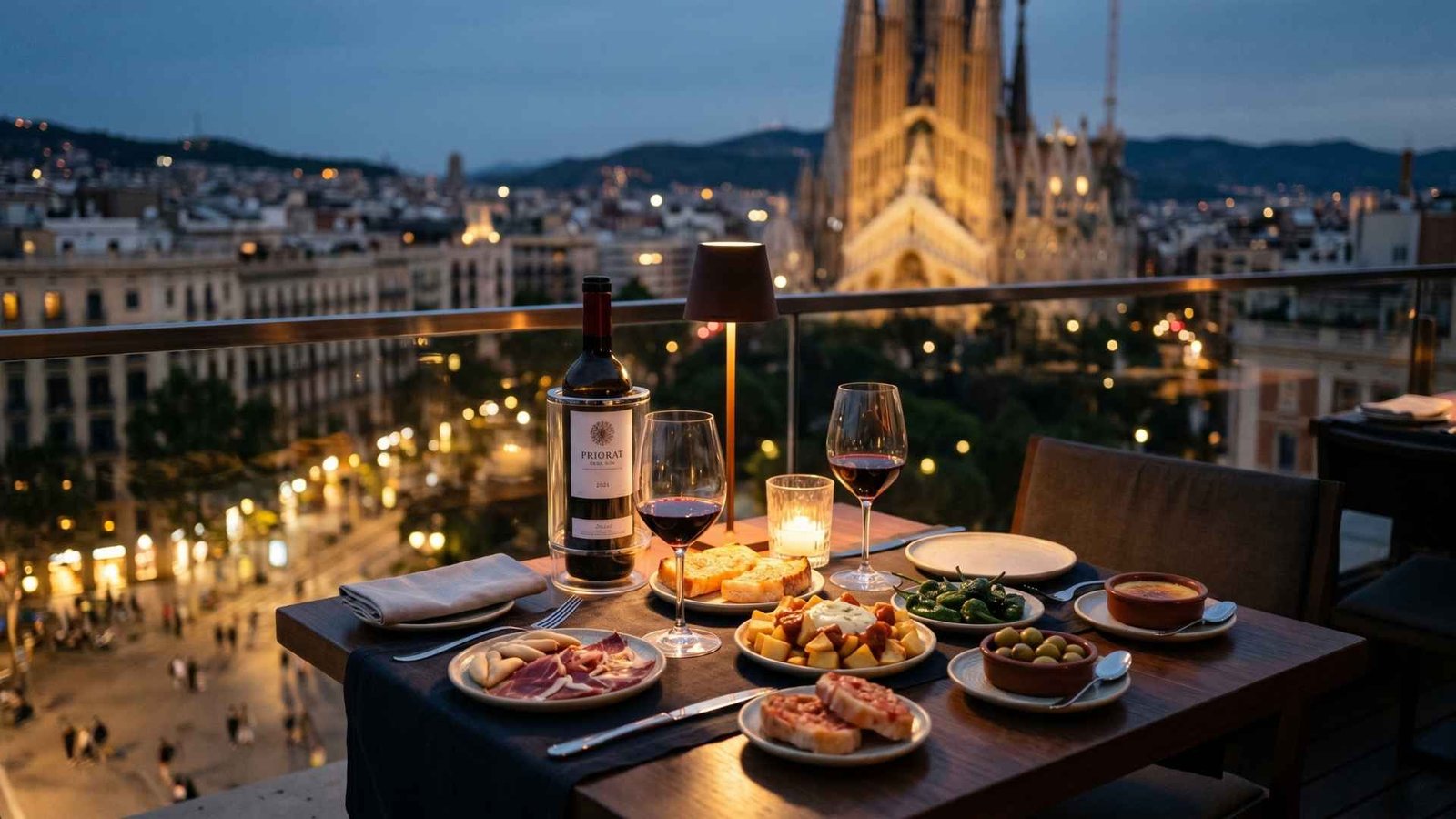
What to eat in Barcelona is more than a list of dishes. It follows a rhythm shaped by time, place, and atmosphere.
Mornings are simple and quiet, afternoons stretch into long, social lunches, and evenings come alive with shared plates and conversation.
Understanding what to eat in Barcelona means understanding how locals eat—slowly, socially, and with intention.
⚡ Quick Answer: What to Eat in Barcelona
Short on time? These are the essential dishes that define what to eat in Barcelona:
🥖 Pa amb tomàquet (pan con tomate) — simple, fresh, and a staple of Catalan cuisine.
🍟 Patatas bravas — crispy potatoes with bold, flavorful sauce
🥓 Jamón ibérico — rich, delicate, and deeply traditional
🥘 Seafood paella — a classic, best when done properly
🍤 Gambas a la plancha — grilled shrimp, fresh and full of flavor
🍜 Fideuà (served with allioli) — a more local, deeper alternative to paella
🧆 Bombas — crispy outside, soft and flavorful inside
🥪 Bocadillo — a simple, everyday sandwich locals rely on
🥗 Escalivada — slow-roasted vegetables with a rich, smoky taste
🍮 Crema catalana — light custard with a caramelized finish
💡 From simple tapas to rich seafood dishes, this list captures the essence of Barcelona’s food culture.
But in Barcelona, it’s never just about the dish, it’s about where you sit, when you eat, and how the experience unfolds.
🕒 Best Time to Eat in Barcelona (Eat Like a Local)
Timing shapes the entire food experience in Barcelona.
✅ Lunch: 13:30 – 15:30
✅ Dinner: 20:30 – 23:00
Arrive too early, and restaurants may feel quiet, not due to quality, but because the rhythm of the city hasn’t kicked in yet.
💡 Shift your schedule, and everything changes: full terraces, lively conversations, and a dining atmosphere that feels genuinely local.
In Barcelona, timing is part of the experience, not just the meal itself.
🥖 Pa amb Tomàquet (Pan con Tomate) — The Foundation
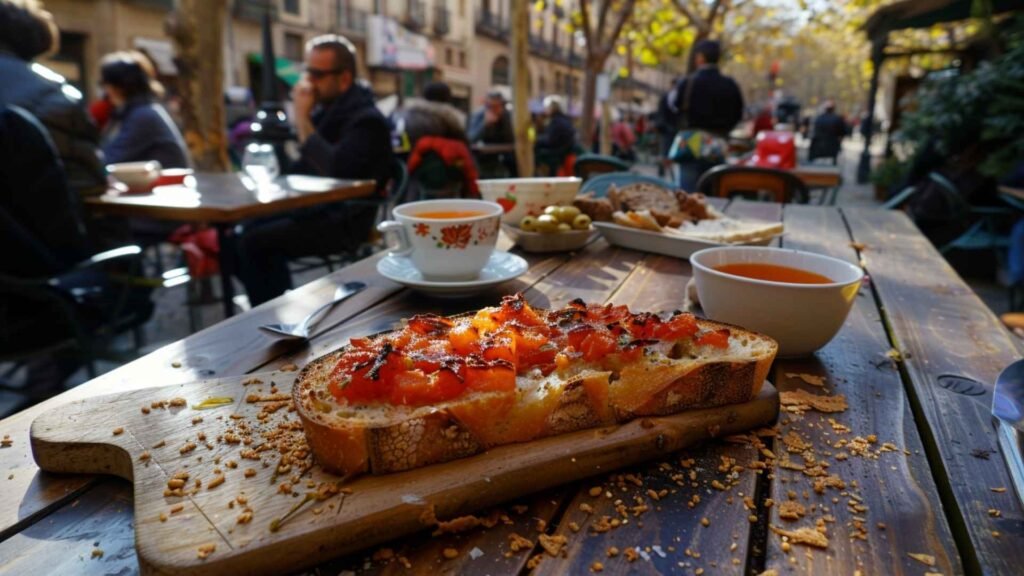
It arrives without ceremony, just bread, tomato, and olive oil.
But this is where everything begins.
Pa amb tomàquet isn’t just something you eat in Barcelona; it’s something you see on every table, at any time of day. From quiet breakfasts to long evening meals, it quietly anchors the entire food culture.
✅ Rustic bread, lightly toasted
✅ Ripe tomato rubbed directly into the surface
✅ Finished with olive oil and a pinch of salt
💡 The difference is in the technique: the tomato isn’t added, it’s absorbed. That’s what gives it its depth.
Often served on its own, but just as commonly paired with anchovies, adding a sharper, saltier edge that balances the sweetness of the tomato.
🍟 Patatas Bravas — A Quality Test
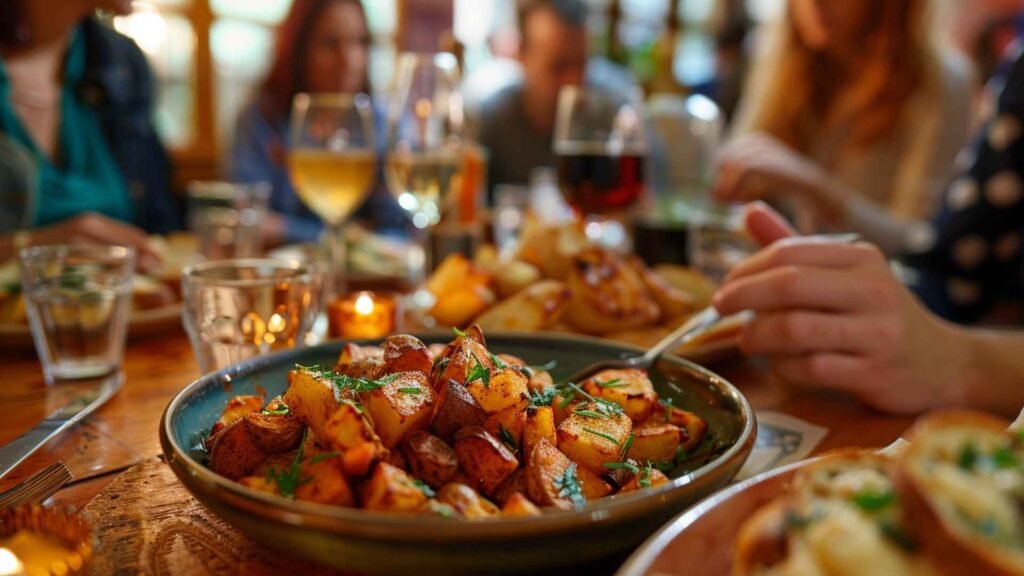
At first glance, it seems simple, almost too simple.
But in Barcelona, patatas bravas is where you learn the difference between a tourist stop and a place locals return to. One bite tells you everything.
✅ Crispy on the outside, soft in the center
✅ Cut unevenly, never perfectly uniform
✅ Finished with a bold, house-made sauce
💡 The sauce is the signature: if it tastes generic, the place probably is too.
🥓 Jamón Ibérico — A Premium Experience
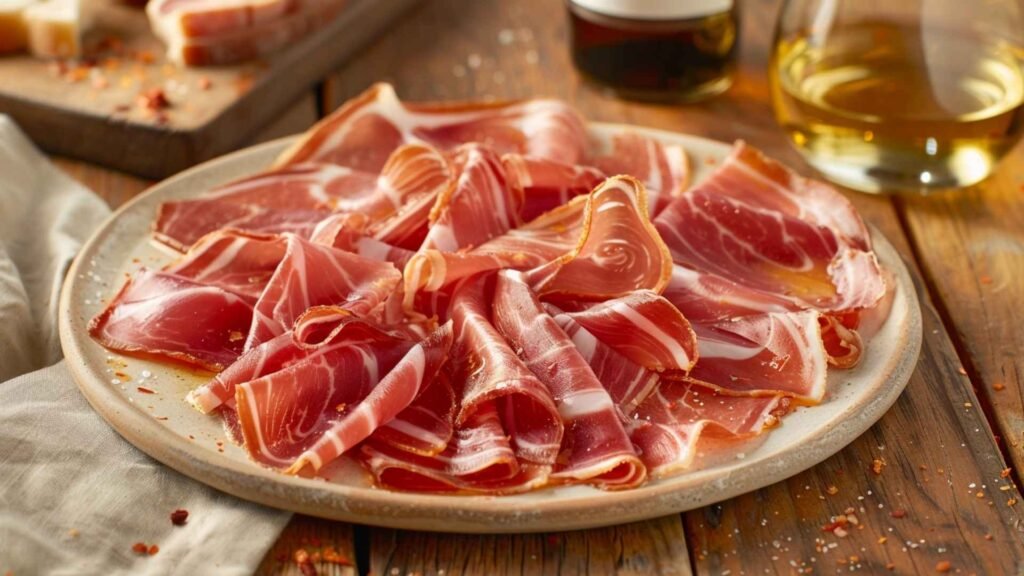
Before anything else arrives, this often comes first.
Thin slices, almost translucent, laid gently across a plate. No decoration, no excess—just flavor that speaks for itself.
✅ Aged for years to develop depth
✅ Sliced paper-thin for texture and balance
✅ Served at room temperature
💡 This isn’t just ham—it’s tradition: rushed or cold versions miss the entire point.
🥘 Seafood Paella — Choose Carefully
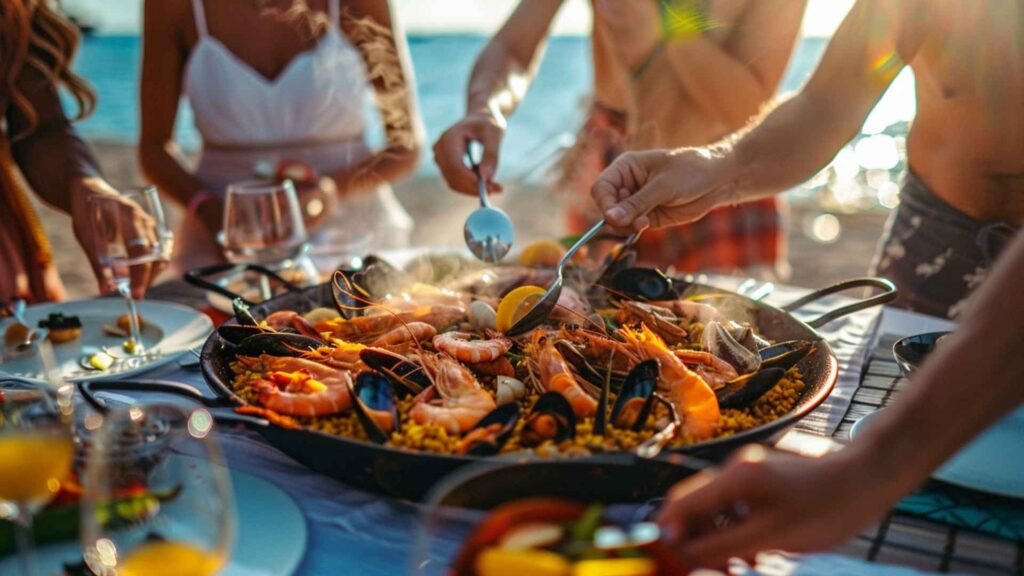
You’ll see it everywhere, but not all of it is worth ordering.
A good paella takes time, patience, and the right ingredients. The kind you remember isn’t rushed—it’s built slowly, layer by layer.
✅ Cooked in a wide, shallow pan
✅ Thin layer of rice for even texture
✅ Finished with a crispy base (socarrat)
💡 If it arrives too quickly, it wasn’t made for you. And that’s usually your answer.
🍤 Gambas a la Plancha — The Taste of the Sea
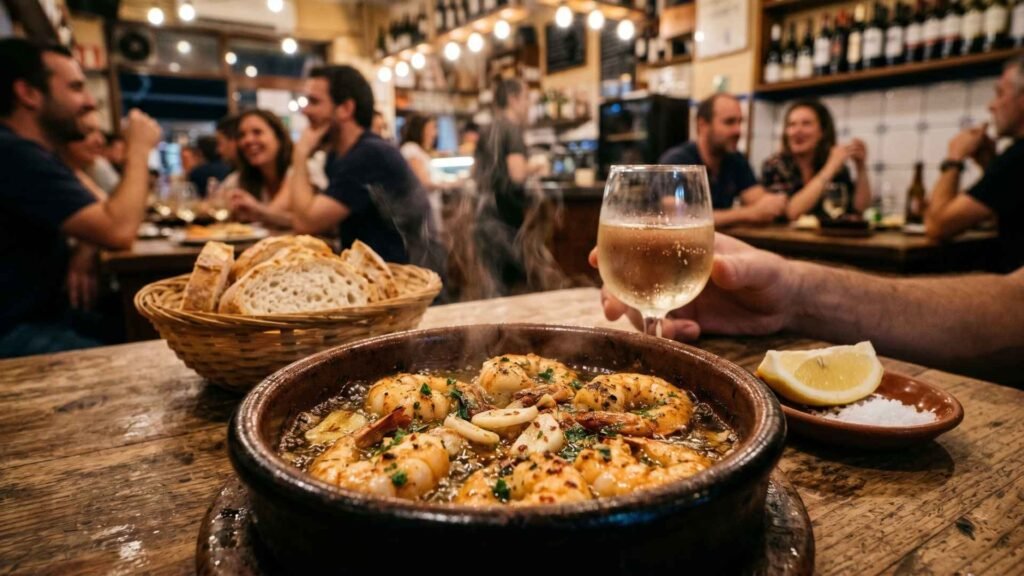
No sauce, no complexity—just heat, salt, and freshness.
Gambas a la plancha is Barcelona at its most honest. When the ingredients are right, nothing else is needed.
✅ Fresh shrimp, quickly grilled
✅ Finished with olive oil and sea salt
✅ Slight char for added depth
💡 The closer you are to the sea, the better it gets. Barceloneta is where this dish truly shines.
🍜 Fideuà (with Allioli) — The Local Favorite
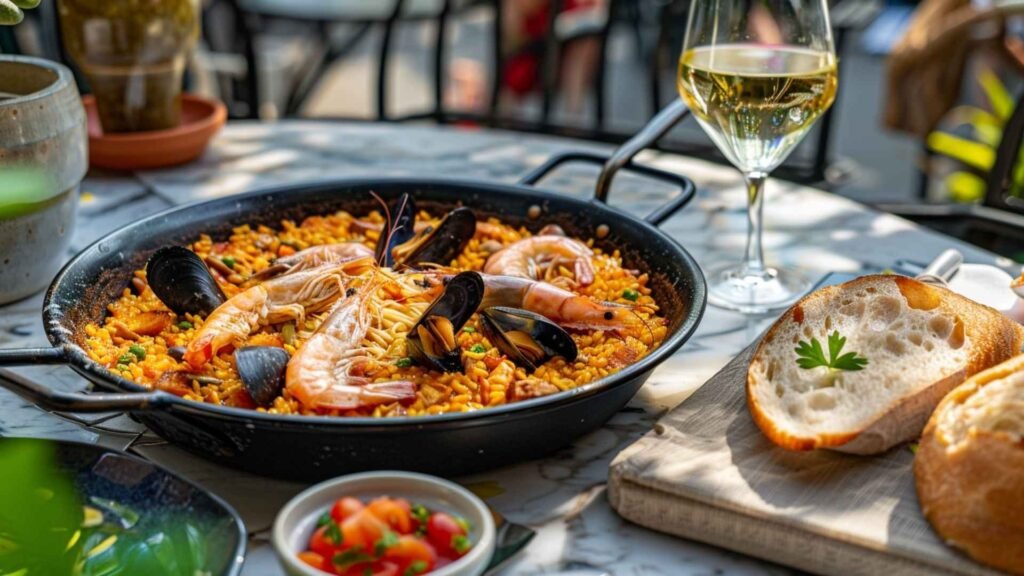
At first glance, it feels familiar, but it isn’t.
Fideuà follows the same rhythm as paella, but swaps rice for short noodles, creating something deeper, richer, and often more satisfying.
✅ Short noodles absorb the full flavor of the broth
✅ Seafood adds depth without heaviness
✅ Always paired with allioli for balance
💡 Locals often choose this over paella, and once you try it, you’ll understand why.
🧆 Bombas — Originally from Barceloneta
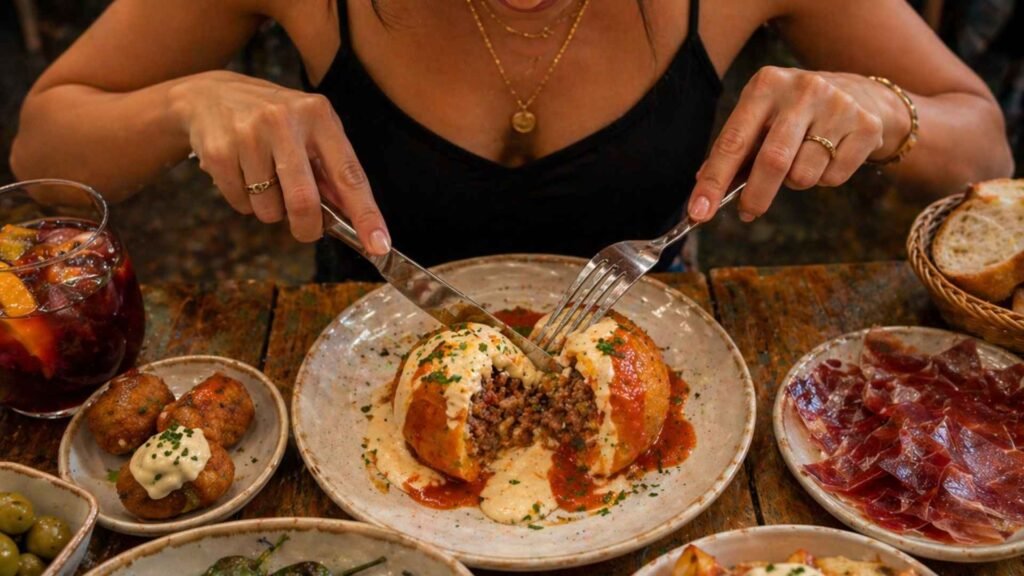
This is where street food meets history.
Born in the Barceloneta neighborhood, bombas were originally created as a bold, filling bite—simple ingredients, strong flavors, no compromise.
✅ Crispy outer layer
✅ Soft, rich filling inside
✅ Topped with spicy sauce and allioli
💡 The original versions are still the best: especially in small, traditional spots where nothing has changed.
🥪 Bocadillo — Everyday Barcelona
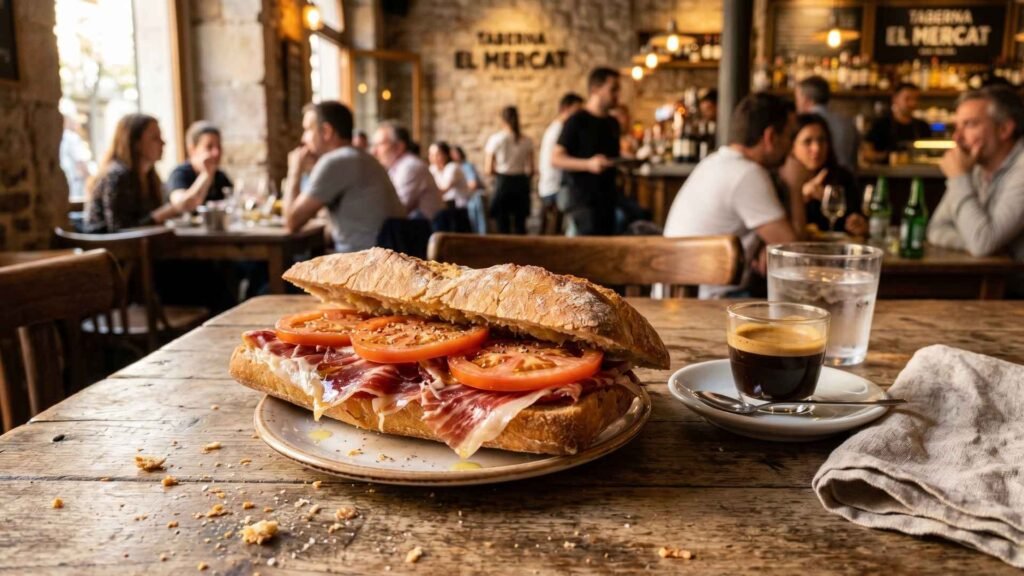
It’s not fancy, and that’s exactly the point.
Bocadillo is what locals eat when they’re not trying to impress anyone. A quick stop, a short break, a simple meal that fits into the rhythm of the day.
✅ Crusty bread, usually baguette-style
✅ Filled with jamón, cheese, or tortilla
✅ Served warm or at room temperature
💡 You won’t find it on “top 10” lists in restaurants—but you’ll see it everywhere that matters.
🥗 Escalivada — Slow, Simple, and Deeply Local
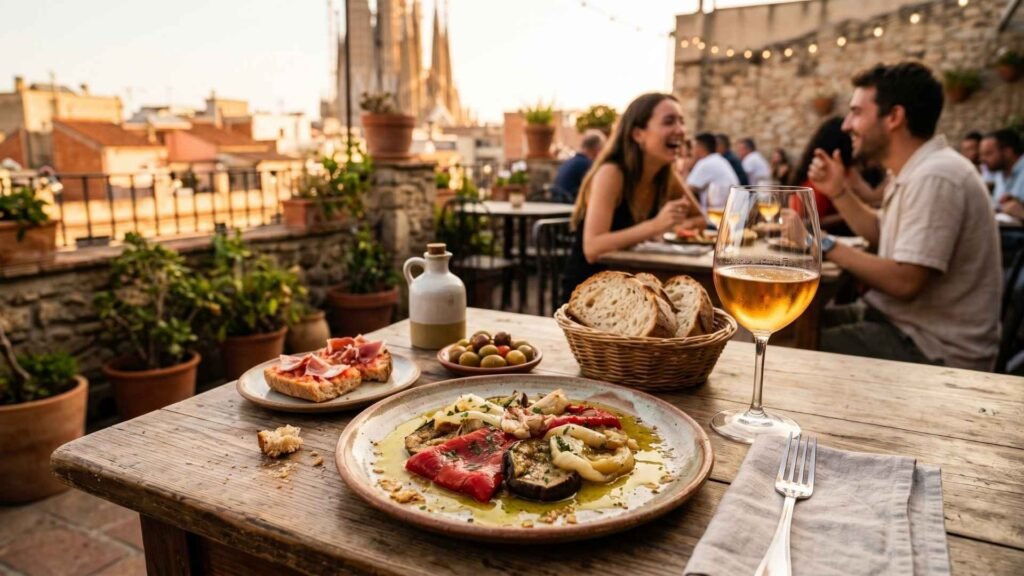
It may not stand out at first, but it stays with you.
Escalivada is built on patience. Vegetables are slowly roasted until soft, smoky, and full of flavor, then finished with olive oil.
✅ Eggplant, peppers, and onions
✅ Soft texture with a light smoky taste
✅ Served cold or at room temperature
💡 It’s one of the simplest dishes on the table—and often one of the most memorable.
🍮 Crema Catalana — The Perfect Ending
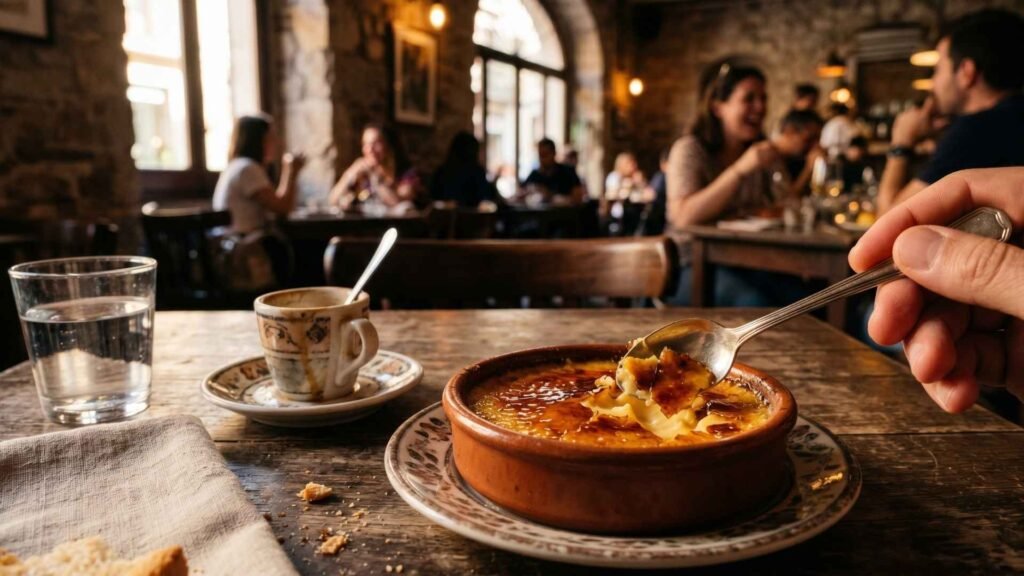
It doesn’t try to impress, and that’s exactly why it works.
Served in a simple dish, with a caramelized top that cracks under your spoon, crema catalana ends the meal the way Barcelona prefers: quietly, but perfectly.
✅ Smooth custard with subtle citrus notes
✅ Thin caramelized sugar layer
✅ Light, never overwhelming
💡 It’s not meant to stand out—it’s meant to complete the experience.
🍷 What to Drink in Barcelona
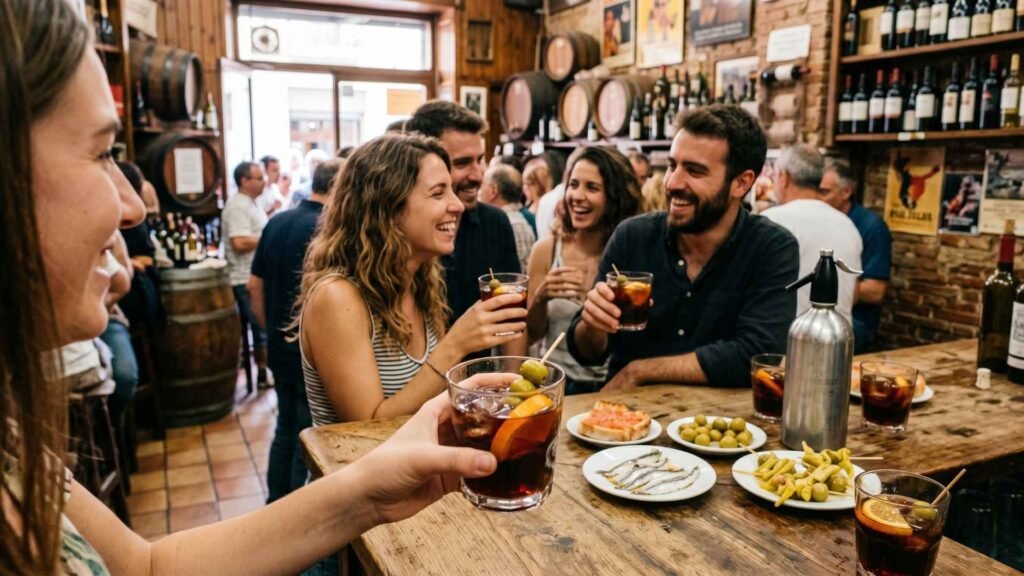
In Barcelona, drinks aren’t separate from the meal, they’re part of the rhythm.
- Cava → Catalonia’s crisp, sparkling wine, often shared over long meals
- Vermut → a lightly bitter, aromatic drink that marks the start of something social
- Orxata → a cool, refreshing option, especially in the heat of summer
🍊 The Vermut Ritual
Sundays in Barcelona don’t begin with lunch, they begin with “fer el vermut.”
A small pause before the meal, where time slows down.
👉 A glass of vermouth, served with an olive and a slice of orange
👉 Standing or sitting in a local bodega, with no rush to move on
💡 It’s not just a drink, it’s a transition. A quiet moment that turns into a long, shared afternoon.
🏪 Food Markets in Barcelona
To truly understand what to eat in Barcelona, step inside its markets.
This is where the city’s food culture feels most alive—fresh ingredients, quick bites, and a constant flow of local life.
- La Boqueria → iconic, energetic, and packed with color, crowds, and variety
- Santa Caterina Market → quieter, more local, and easier to explore at your own pace
Ideal for tasting multiple flavors in one place—without committing to a full meal.
🌿 Seasonal Food in Barcelona
Barcelona’s food changes with the seasons.
What you eat often depends on when you visit, with some dishes available only for a short time each year.
- Calçots (winter–spring) → grilled green onions with romesco sauce, eaten by hand
- Fresh seafood (summer) → at its best, with simple preparations
💡 Seasonal choices don’t just improve your meal — they often lead to the most memorable ones.
💸 Food Prices in Barcelona
Barcelona isn’t the cheapest city, but it offers good value if you understand what to eat in Barcelona and where to find it.
Prices vary by area, with tourist-heavy spots often charging more for lower quality.
Typical costs:
- Tapas → €3 – €8 per plate
- Paella → €15 – €25 per person
- Street food → €5 – €12
- Restaurant meals → €20 – €40
💡 Move a few streets away from major attractions, and you’ll usually find better food at more reasonable prices.
🧭 Best Areas for Food in Barcelona
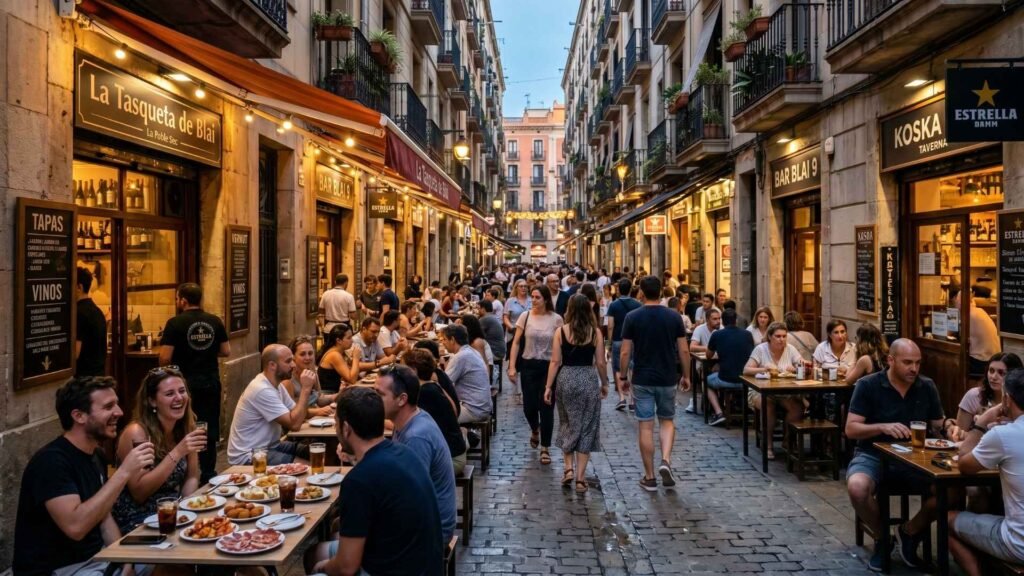
Where you eat in Barcelona shapes the experience and plays a big role in what to eat in Barcelona overall.
Each neighborhood offers a different atmosphere, so choosing the right area matters as much as choosing the right dish.
- El Born → lively and great for modern tapas
- Gràcia → relaxed, local, and less touristy
- Barceloneta → best for fresh seafood by the water
- Poble Sec → known for its tapas streets, especially Carrer de Blai
💡 Walk a few streets further, and you’ll often find better food and a more local feel.
👉 Full guide: Where Locals Eat in Barcelona (coming soon)
🥗 Vegetarian Food in Barcelona
While much of Barcelona’s cuisine leans toward meat and seafood, finding what to eat in Barcelona as a vegetarian is easier than it first seems.
Many traditional dishes are naturally plant-based—or can be adapted with minimal effort.
- Pa amb tomàquet → simple, fresh, and already vegetarian
- Patatas bravas → widely available (just check the sauce)
- Escalivada → slow-roasted vegetables with deep flavor
- Vegetable tapas → often part of most menus
💡 A small detail makes a big difference: say “sin carne” when ordering, and most places will adjust without hesitation.
With a little awareness, Barcelona becomes a surprisingly easy city to navigate as a vegetarian.
⚠️ Common Food Mistakes in Barcelona
Barcelona has great food—but a few common mistakes can lead you the wrong way.
❌ Eating in tourist-heavy streets → convenient, but often overpriced
❌ Choosing restaurants with photo menus → usually lower quality
❌ Ordering paella everywhere → not every place does it well
❌ Ignoring local neighborhoods → where the best food is often found
💡 If it feels too easy or too obvious, it’s probably not the best choice.
🍴 Local Food Etiquette
Eating in Barcelona follows a relaxed, social rhythm.
- Bread is usually Pa amb tomàquet, not butter → simple and part of most meals
- Meals are shared → dishes are placed in the center
- Dining is slow and social → more about conversation than speed
💡 There’s no rush—staying a little longer is part of the experience.
🔗 Where to Eat in Barcelona
Knowing what to eat in Barcelona is only part of the experience.
Where you eat matters just as much.
To find places that are actually worth your time:
👉 Explore our guide to the best restaurants in Barcelona (coming soon)
❓ Barcelona Food Guide: FAQs
Is food expensive?
Moderate overall, with prices varying by area.
Do you tip?
Not required, but rounding up is common.
Can you drink tap water?
Yes, it’s safe to drink.
When do locals eat?
Late—lunch after 13:30, dinner after 20:30.
Do you need reservations?
For popular spots and dinner times, it’s often a good idea.
✨ Final Thoughts
Barcelona isn’t just about food—it’s about timing, atmosphere, and experience.
From simple bread with tomato to long dinners filled with conversation, every meal becomes part of the city itself.
If you truly understand what to eat in Barcelona, you won’t just eat well—you’ll experience the city the way locals do.
Pa amb Tomàquet: The Ultimate Symbol of Catalan Culinary Identity in 5 Simple Elements