
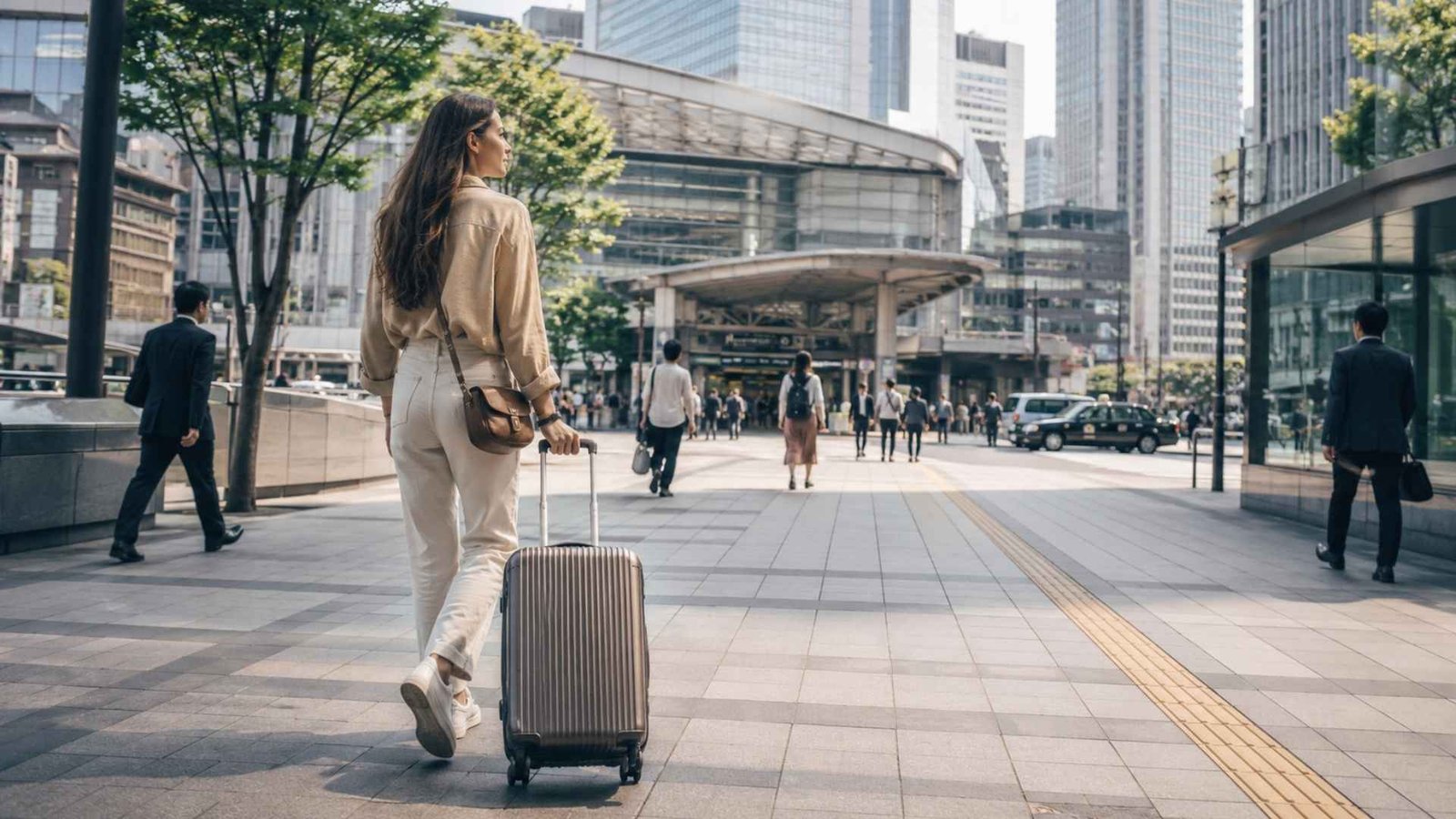
Seven days in Japan is enough for an excellent first trip if you keep the route focused. The best Japan itinerary for 7 days combines Tokyo and Kyoto rather than trying to squeeze too many cities into one week.
With three nights in Tokyo and three nights in Kyoto, you can experience modern neighborhoods, historic temples, traditional streets and Japan’s high-speed rail network without constantly changing hotels. Nara or Osaka can then be added if your priorities and departure schedule allow.
Quick Answer: The Best Japan Itinerary for 7 Days
For most first-time visitors, this is the most practical Japan itinerary for 7 days:
| Day | Overnight | Main Plan |
|---|---|---|
| Day 1 | Tokyo | Arrival and an easy first evening |
| Day 2 | Tokyo | Asakusa, Ueno and eastern Tokyo |
| Day 3 | Tokyo | Meiji Jingu, Harajuku, Shibuya and Shinjuku |
| Day 4 | Kyoto | Shinkansen to Kyoto, Higashiyama and Gion |
| Day 5 | Kyoto | Fushimi Inari, Kiyomizu-dera and eastern Kyoto |
| Day 6 | Kyoto | Arashiyama or Nara |
| Day 7 | — | Final Kyoto morning, optional Osaka and departure |
Best for: First-time visitors
Main bases: Tokyo and Kyoto
Hotel changes: One
Optional addition: Nara or Osaka
Best flight strategy: Tokyo in, Kansai out when fares and schedules work
This route assumes six nights and seven calendar days in Japan. Arrival and departure times will determine how much sightseeing is realistic on Days 1 and 7.
If you have not decided how long to stay yet, our Japan Itinerary for First-Time Visitors compares the main trip lengths and explains when a longer route makes more sense.
Is 7 Days Enough for Japan?
Yes. A Japan itinerary for 7 days gives you enough time for a rewarding first visit, but it works best when you accept that you will not see everything.
Tokyo and Kyoto make the strongest two-base combination. Tokyo introduces contemporary Japan through enormous neighborhoods, shopping, food and nightlife, while Kyoto adds shrines, temples, traditional streets and a completely different atmosphere.
The mistake is assuming Japan’s fast trains make it sensible to add another city every day or two. Each additional overnight stop means packing, checking out, reaching another station and checking into another hotel.
For one week, two hotel bases are enough.
If you have three additional days available, our Japan Itinerary for 10 Days expands the route to include Osaka as a proper overnight base and gives Nara more room without making the trip feel as compressed.
Before Your 7-Day Japan Trip
Keep pre-trip preparation simple.
Book your flights and well-located Tokyo and Kyoto accommodation first. Reserve any high-demand timed attraction that is important to you, but avoid scheduling every meal and every hour before arrival.
Entry rules depend on nationality and individual circumstances, so check our Japan Entry Requirements article before departure rather than relying on old social-media advice.
Japan’s Digital Agency also provides the official Visit Japan Web service for online arrival procedures including immigration and customs.
You will not need a rental car for this route. Local public transportation covers Tokyo and Kyoto, while the Tokaido Shinkansen connects the two cities.
Day 1 – Arrive in Tokyo and Keep It Easy

Your arrival day should be the easiest day of the trip.
After landing, you still need to complete arrival procedures, collect your luggage, reach central Tokyo and check into your hotel. Jet lag and an unfamiliar transportation system can make an ambitious sightseeing schedule feel much harder than it looked at home.
Once you have checked in, stay relatively close to your hotel.
If you are based around Shibuya and still have energy, explore the crossing and surrounding streets after dark. If you are staying elsewhere, walk around your own neighborhood, find somewhere casual for dinner and learn where your nearest useful station is.
There is no essential attraction in this Japan itinerary for 7 days that needs to be squeezed into your arrival evening.
Where Should You Stay in Tokyo?
For a one-week trip, location matters more than saving a small amount on the nightly rate.
Shinjuku works well for transport, restaurants and evening activity. Shibuya puts you directly in one of Tokyo’s most energetic districts, while Tokyo Station/Marunouchi makes the later Shinkansen departure particularly convenient. Ueno is useful for eastern Tokyo and can offer good transport connections.
Choose a hotel within easy walking distance of a useful station. Long commutes from cheaper outer neighborhoods can consume valuable sightseeing time on a short trip.
Day 2 – Asakusa, Ueno and Eastern Tokyo
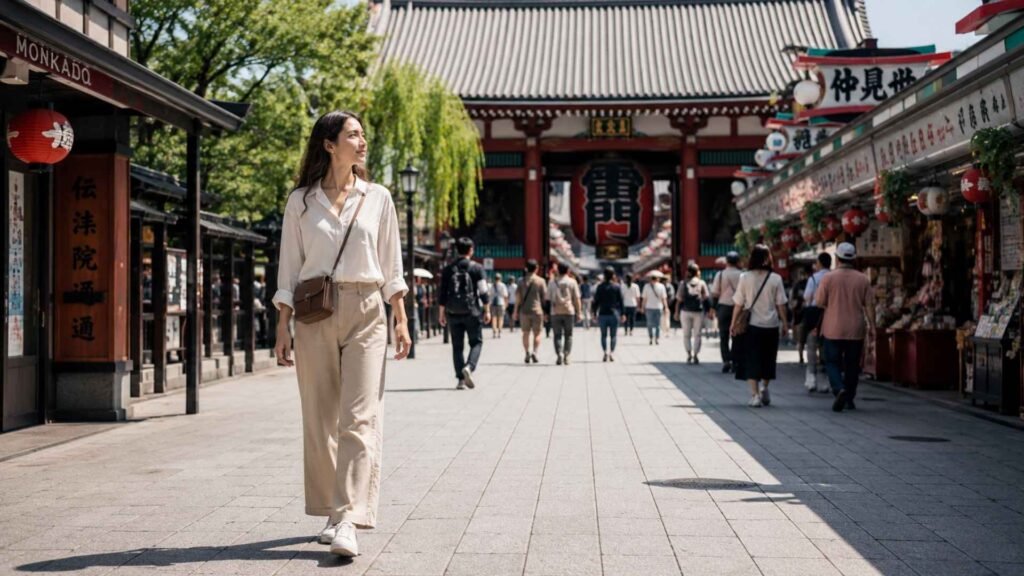
Your first full day concentrates on eastern Tokyo and gives you a more traditional introduction to the city.
Morning: Senso-ji and Asakusa
Start in Asakusa, preferably earlier in the morning.
Walk through Kaminarimon and Nakamise-dori toward Senso-ji, then spend some time exploring the surrounding streets instead of leaving immediately after seeing the main temple complex.
Asakusa offers a useful contrast to the modern Tokyo neighborhoods planned for Day 3.
Late Morning and Lunch: Ueno
Continue to Ueno.
If museums interest you, choose one around Ueno Park rather than trying to visit several. Otherwise, combine a walk through the park with Ameyoko and lunch nearby.
Afternoon: Akihabara or More Ueno
Choose according to your interests.
Akihabara is the obvious option for anime, manga, gaming and electronics. Travelers more interested in museums or a slower afternoon can remain around Ueno.
Do not worry about checking every famous Tokyo neighborhood off a list. A good Japan itinerary for 7 days depends on choosing what matters most rather than maximizing the number of places visited.
Have dinner in eastern Tokyo or return toward your hotel for an easier evening.
Day 3 – Meiji Jingu, Harajuku, Shibuya and Shinjuku
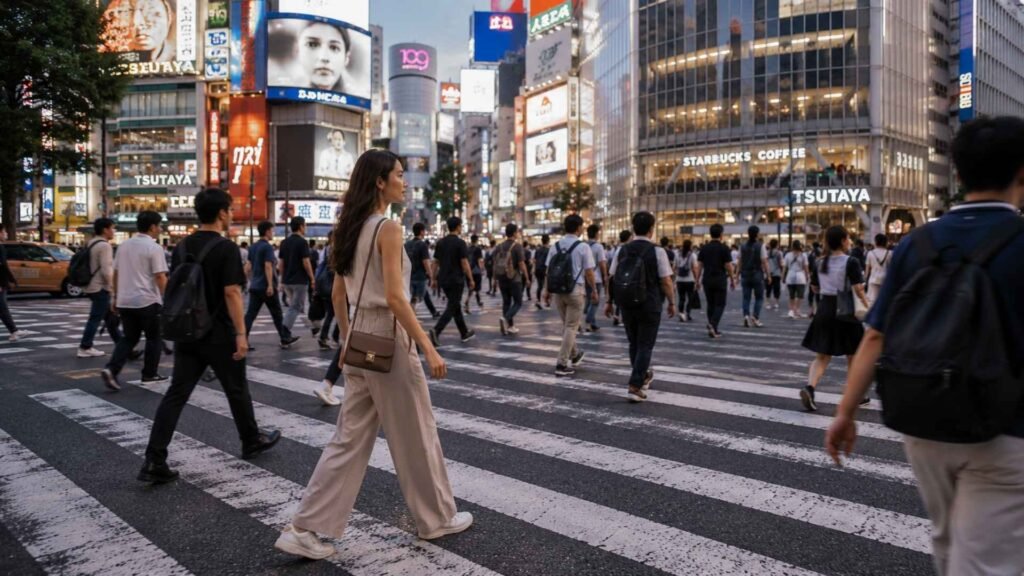
Day 3 shows you Tokyo’s more contemporary side.
The route works geographically from Meiji Jingu through Harajuku and Shibuya before finishing around Shinjuku.
Morning: Meiji Jingu
Begin at Meiji Jingu.
Allow time for the forested approach rather than treating the shrine as a quick stop before Harajuku. Starting earlier also gives you a calmer beginning before the surrounding shopping districts become busier.
Late Morning: Harajuku and Omotesando
Continue into Harajuku.
Takeshita Street shows the district’s colorful youth-oriented side, while nearby Omotesando offers cafés, architecture and more polished shopping.
Unless shopping is one of your main priorities, you do not need to spend the entire afternoon here.
Afternoon: Shibuya
Continue to Shibuya for the famous crossing and time exploring the streets around the station.
If a popular observation deck is important to you, reserve a timed entry in advance when possible instead of depending on last-minute availability.
Evening: Shinjuku
Finish your last full Tokyo day around Shinjuku.
Explore after dark and have dinner before returning to your hotel. If you are already tired, staying in Shibuya for dinner is perfectly reasonable.
Pack before bed so tomorrow’s transfer to Kyoto remains straightforward.
Day 4 – Take the Shinkansen from Tokyo to Kyoto
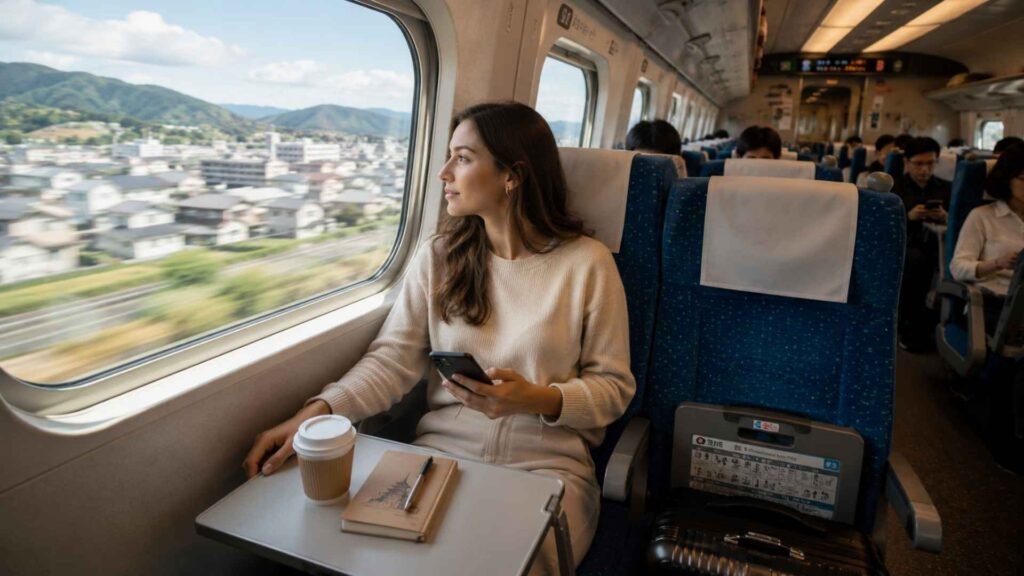
Day 4 begins the second half of your Japan itinerary for 7 days.
Take a morning Tokaido Shinkansen from Tokyo or Shinagawa to Kyoto. Leaving in the morning preserves a useful part of the afternoon for your first Kyoto walk.
If you are traveling during a busy holiday period or want a particular train and seat, reserving ahead gives you more certainty.
What About Large Luggage?
Check large suitcase dimensions before boarding.
JR Central currently requires passengers with baggage whose three dimensions total 161–250 cm to reserve appropriate oversized-baggage space on applicable Tokaido Shinkansen services. Check the official JR Central luggage information before traveling because railway rules can change.
For a one-week trip, packing relatively light makes stations and the single Tokyo-to-Kyoto hotel transfer considerably easier.
Afternoon: Higashiyama
After arriving in Kyoto, leave your luggage at your hotel and head toward Higashiyama.
Keep the first afternoon relatively relaxed. Walk through the traditional streets and become familiar with eastern Kyoto instead of trying to complete several major temples immediately after the train journey.
Evening: Gion
Continue toward Gion in the late afternoon or early evening.
Explore public streets respectfully and follow local private-property and photography restrictions. Have dinner around Gion, Kawaramachi or Pontocho before returning to your hotel.
Where Should You Stay in Kyoto?
Kyoto Station is convenient for transportation and particularly useful if you choose Nara on Day 6.
Gion/Higashiyama provides more traditional atmosphere, while Kawaramachi/Downtown Kyoto balances restaurants, shopping and transport.
Whichever area you choose, stay in the same hotel for all three Kyoto nights.
Day 5 – Fushimi Inari, Kiyomizu-dera and Eastern Kyoto
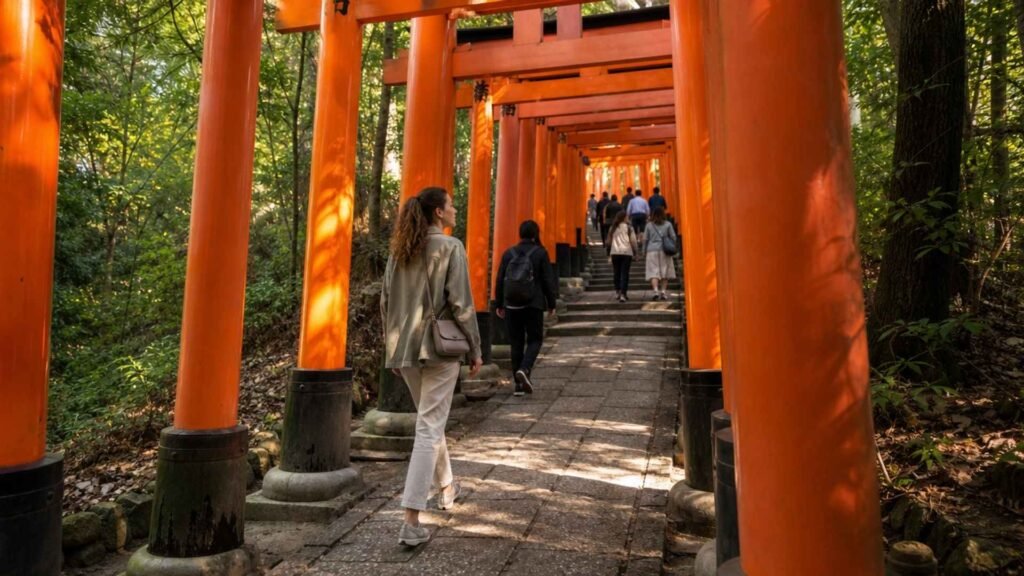
Day 5 is one of the busiest sightseeing days in this Japan itinerary for 7 days, so start early.
Early Morning: Fushimi Inari Taisha
Begin at Fushimi Inari Taisha.
You do not need to complete the entire Mount Inari route. For many first-time visitors, walking beyond the busiest lower torii sections before turning back provides enough of the experience without consuming half the day.
Late Morning: Kiyomizu-dera
Continue toward Kiyomizu-dera.
After visiting the temple, walk through the historic Sannenzaka and Ninenzaka area. Leave time for lunch or a café rather than treating these streets purely as a route between attractions.
Afternoon: Stay in Eastern Kyoto
Continue gradually through Higashiyama.
Depending on your pace, you could include Yasaka Shrine, Maruyama Park, smaller temples or simply more time walking through the traditional streets.
The important part is geographic planning. Kyoto becomes tiring when you repeatedly cross the city simply to complete a list of famous attractions.
Finish with dinner around Gion, Pontocho or Kawaramachi.
Day 6 – Arashiyama or Nara: Choose One
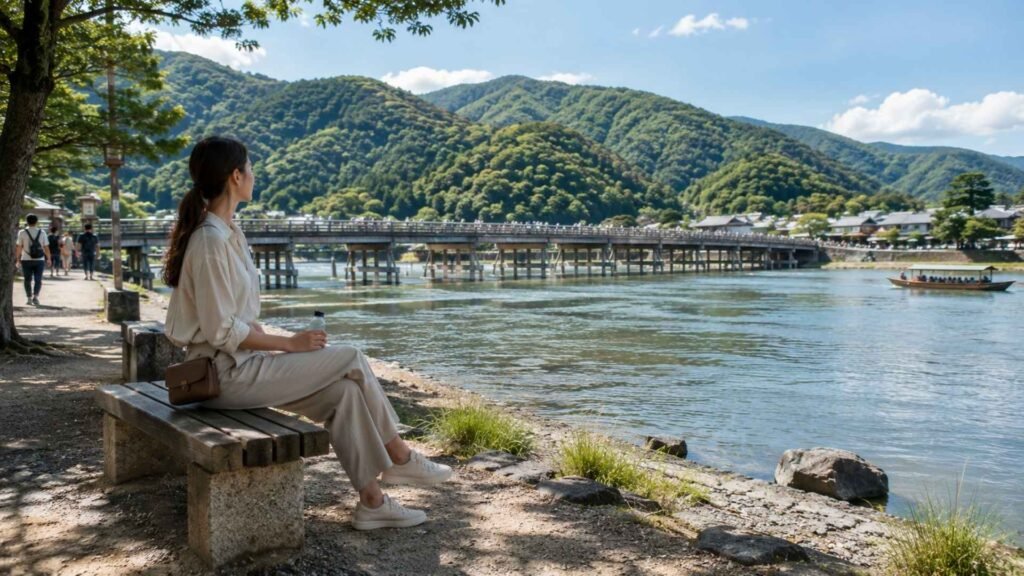
Day 6 is the main choice in this Japan itinerary for 7 days.
Trying to combine Arashiyama and Nara in one sightseeing day adds unnecessary transportation and weakens both experiences. Pick the one that better matches your priorities.
Option 1: Arashiyama – Best for More Kyoto
For most first-time visitors with only a week, I would choose Arashiyama.
Go early and begin around the Bamboo Grove, but do not build the entire day around it. The famous bamboo path is only one part of the district.
Combine it with places such as Tenryu-ji, Togetsukyo Bridge, riverside scenery or quieter surrounding streets.
If your energy and timing allow, you can add Kinkaku-ji later. Otherwise, return to central Kyoto and enjoy a slower final afternoon.
Arashiyama is the better option if you want to experience more of Kyoto while minimizing additional intercity travel.
Option 2: Nara – Best for Another Historic City
Choose Nara if Todai-ji and Nara Park are already high on your Japan wish list.
Travel from Kyoto in the morning and concentrate on the Nara Park area rather than trying to cover the entire city.
A first visit can comfortably focus on Nara Park, Todai-ji, Kasuga Taisha and nearby historic streets before returning to Kyoto for your final evening.
The deer around Nara Park are accustomed to visitors but remain animals. Give them space and follow local instructions if you choose to feed them.
Arashiyama or Nara?
| Choose Arashiyama if… | Choose Nara if… |
|---|---|
| You want more time in Kyoto | Nara is already a priority |
| You prefer less transportation | You want to see Todai-ji |
| Scenery and gardens appeal to you | Nara Park interests you |
| You want a slightly simpler day | You want another historic city |
For most first-time travelers with only seven days, Arashiyama fits the route more naturally. Nara is the better choice when it is one of the places you specifically came to Japan to see.
Day 7 – Final Kyoto Morning, Osaka or Departure

The final day should revolve around your flight rather than another full sightseeing schedule.
If You Fly From Kansai International Airport
Use the morning for breakfast, a final Kyoto walk or souvenir shopping before collecting your luggage and traveling toward Kansai International Airport.
Leave a comfortable margin for the airport journey and international departure procedures.
If You Have Time for Osaka
Osaka can work as the final taste of the trip without becoming a third hotel base.
If your departure schedule allows, concentrate on Namba and Dotonbori for food, shopping and Osaka’s lively street atmosphere.
Do not attempt to cover the whole city before a flight.
If You Fly Home From Tokyo
A round-trip Tokyo ticket changes the end of the route.
Return to Tokyo with a generous buffer. If your international flight leaves early on Day 7, it is safer to return during Day 6 and spend the final night in Tokyo.
In that situation, remove Arashiyama or Nara rather than forcing everything into the schedule.
Should You Add Mount Fuji?
Usually not unless Mount Fuji is one of your highest priorities.
Hakone or the Fuji Five Lakes can technically fit between Tokyo and Kyoto, but doing so adds transportation and potentially another hotel stay. Mountain visibility is also weather-dependent.
With only one week, Tokyo and Kyoto generally provide better use of limited time.
If seeing Mount Fuji matters more to you than another Tokyo day, replace part of the itinerary rather than adding the excursion on top of the existing schedule.
Getting Around During Your 7 Days
You can complete this route entirely by public transportation.
For everyday local journeys, an IC card is convenient on many participating trains, subways and buses. It does not automatically replace every Shinkansen or reserved-seat ticket.
Rather than duplicating all of the card types, digital options and purchasing rules here, our Japan IC Card Guide explains Suica, PASMO, ICOCA and visitor options in detail.
Do You Need a Japan Rail Pass?
Usually not for this exact route.
One Tokyo-to-Kyoto Shinkansen journey alone is not a reason to automatically buy a nationwide pass. If you fly home from Kansai, you also avoid the long-distance return journey to Tokyo.
Compare your actual planned journeys before purchasing. Current pass conditions can be checked through the official Japan Rail Pass website.
Our Japan Rail Pass Guide covers current pricing, eligible trains and the situations where a pass may still make financial sense.
How Much Does 7 Days in Japan Cost?
Costs vary substantially by accommodation, season and travel style, so treat any single figure as a planning estimate rather than a guaranteed budget.
| Travel Style | Approx. Daily Budget | Approx. 7-Day Budget |
|---|---|---|
| Budget | $80–120 | $560–840 |
| Mid-range | $150–250 | $1,050–1,750 |
| Luxury | $350+ | $2,450+ |
These estimates exclude international flights.
Accommodation during cherry blossom season, autumn foliage periods and major holidays can push the total higher.
For accommodation, food, transportation and sightseeing estimates, use our full Japan Trip Cost breakdown rather than trying to build your entire budget from this itinerary page.
Best Time for a 7-Day Japan Trip
Tokyo and Kyoto can be visited year-round.
Spring – Best for Cherry Blossoms but Expect Peak Demand: Late March and early April are especially popular, with higher demand and heavier crowds.
Summer – Best for Festivals but Prepare for Heat: June can bring rainy-season conditions, while July and August are typically hot and humid.
Autumn – Best for Fall Colors and Comfortable Sightseeing: October and November suit a walking-heavy Tokyo–Kyoto itinerary particularly well, although popular foliage periods can be busy.
Winter – Best for a Calmer City Trip: Colder weather and shorter days are balanced by lighter crowds outside major holiday periods.
Seasonal conditions vary by year and region. If your dates are flexible, our Best Time to Visit Japan article compares the country month by month.
What Should You Book in Advance?
Do not turn a one-week holiday into a spreadsheet of reservations.
Prioritize the things that could genuinely affect the trip if they sell out:
- international flights;
- Tokyo and Kyoto accommodation;
- high-demand timed attractions that matter to you;
- special restaurants where reservations are required;
- important train reservations during particularly busy periods;
- appropriate Shinkansen seating if your luggage requires it.
Leave ordinary meals, neighborhood walks and some evening time flexible.
That flexibility gives you room for weather, fatigue and places you discover after arriving.
Common 7-Day Japan Itinerary Mistakes
Trying to Visit Too Many Cities
Tokyo, Hakone, Kyoto, Osaka, Nara and Hiroshima do not all need to fit into one week.
The route becomes stronger when you choose priorities.
Changing Hotels Too Often
Every hotel change takes more time than the train journey alone suggests. Two main bases keep this Japan itinerary for 7 days much easier.
Treating Kyoto Like a Checklist
Group nearby attractions together. Three memorable areas are better than spending the day crossing Kyoto to collect six famous sights.
Underestimating Walking
Tokyo and Kyoto both involve substantial walking even when you use public transportation. Comfortable shoes matter more than an overpacked sightseeing schedule.
💡 Clara’s Tip:
When planning a Japan itinerary for 7 days, count hotel changes rather than cities.
Tokyo and Kyoto already provide two very different experiences. Keeping three nights in each and adding Nara or Osaka only when it fits naturally usually creates a better first trip than sleeping somewhere new every night or two.
If flight schedules and prices work, arriving in Tokyo and departing from Kansai is especially efficient because you can travel steadily east to west without returning across the country just to catch your flight.
FAQ: Japan Itinerary for 7 Days
Is 7 days in Japan worth it?
Yes. A Japan itinerary for 7 days is long enough for a rewarding first visit when you concentrate on Tokyo and Kyoto instead of trying to cover several regions.
How many cities should I visit in Japan in 7 days?
Use two main hotel bases. Tokyo and Kyoto provide the strongest first-time combination, with Nara or Osaka added only if they match your priorities.
How should I split 7 days between Tokyo and Kyoto?
Three nights in Tokyo and three nights in Kyoto is a practical starting point. Your flight times determine how much usable sightseeing time remains on the first and final days.
Can I visit Tokyo, Kyoto and Osaka in 7 days?
Yes. Stay in Tokyo and Kyoto, then add a short Osaka visit if your Day 7 schedule allows. You do not need a third hotel simply to include Osaka.
Is the Japan Rail Pass worth it for 7 days?
Usually not for a simple Tokyo-to-Kyoto route, particularly if you fly home from Kansai. Compare your actual journeys with the current pass price before buying.
Can I include Mount Fuji in a Japan itinerary for 7 days?
Yes, but preferably by replacing part of your Tokyo schedule rather than adding another destination to an already full route.
Is it better to fly into Tokyo and out of Osaka?
For this route, often yes. An open-jaw flight lets you travel naturally from Tokyo to Kyoto and then toward Kansai International Airport without returning to Tokyo solely for your departure.
Final Thoughts
A successful Japan itinerary for 7 days is less about fitting in as many destinations as possible and more about protecting enough time to enjoy Tokyo and Kyoto properly.
Keep those two cities as your bases, choose Arashiyama or Nara according to your priorities, and add Osaka only when it fits naturally with your departure. One week will not show you all of Japan—but it can give you an excellent first trip without making every day feel rushed.