
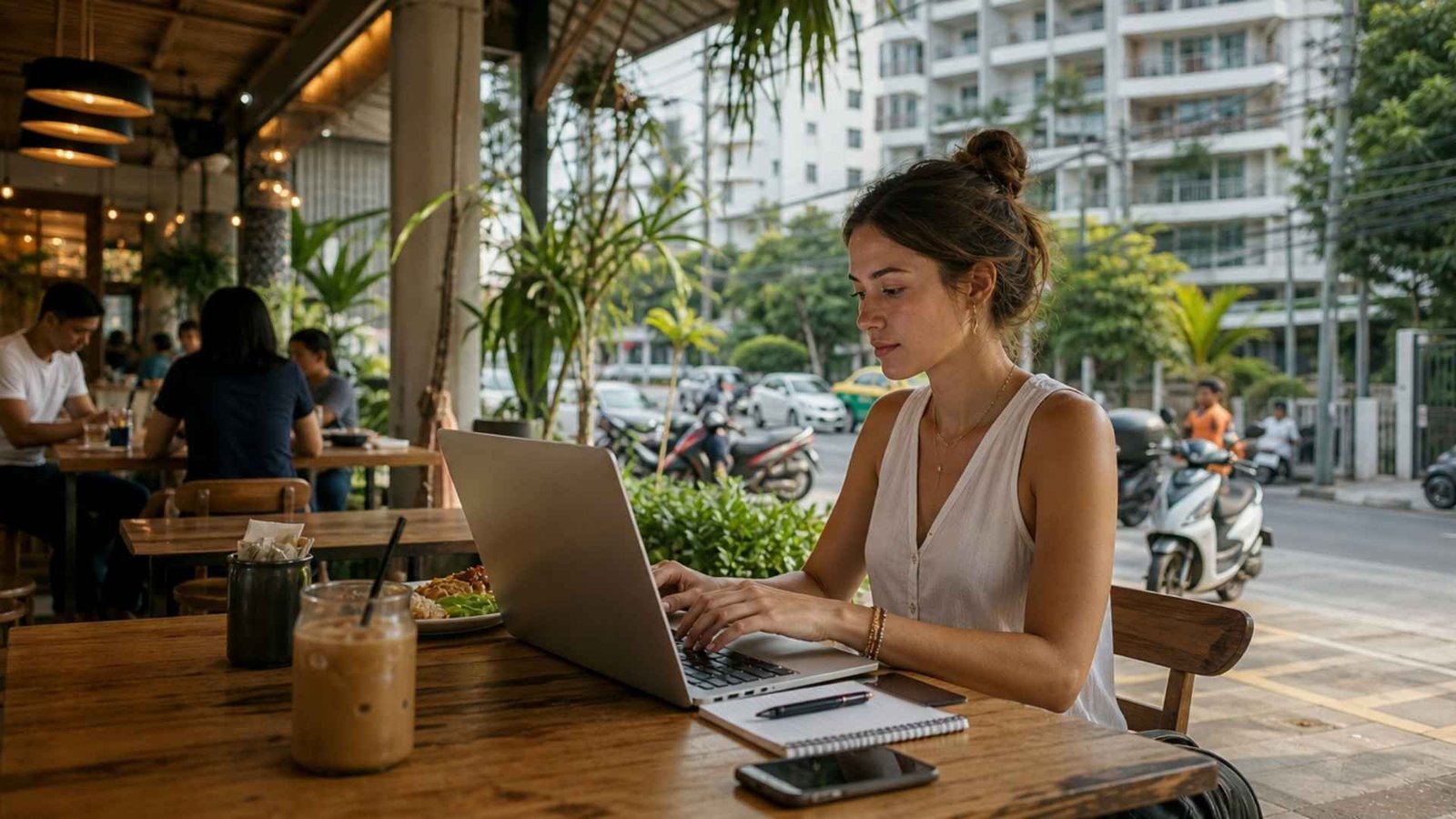
The cost of living in Thailand for digital nomads in 2026 can range from approximately ฿30,000 per month for a careful solo budget in an affordable northern destination to more than ฿100,000 for a modern central Bangkok or premium island lifestyle.
Rent remains the largest variable, but air-conditioning, transport, coworking, international food, health insurance and rental length can change the final total substantially.
This guide compares nine popular remote-work destinations using realistic monthly planning ranges rather than short holiday prices.
Quick Answer: How Much Is the Cost of Living in Thailand for Digital Nomads?
Most solo digital nomads should budget ฿35,000–฿65,000 per month in Chiang Mai, Pai or another value-focused destination.
A realistic mid-range budget rises to approximately ฿60,000–฿85,000 in Bangkok and ฿65,000–฿100,000 in Phuket, Koh Samui or Koh Phangan.
Living on ฿30,000 is possible in selected locations, but it normally requires a simple long-term rental, mostly local food, limited paid coworking and careful transport choices.
It is not a realistic target for a beachfront apartment, frequent international dining or a modern condo in central Bangkok.
2026 Monthly Budget Comparison for One Person
| Destination | Budget | Mid-Range | Comfortable |
|---|---|---|---|
| Chiang Mai | ฿30,000–฿40,000 | ฿45,000–฿60,000 | ฿70,000–฿95,000 |
| Bangkok | ฿40,000–฿55,000 | ฿60,000–฿85,000 | ฿100,000–฿150,000 |
| Phuket | ฿45,000–฿60,000 | ฿70,000–฿100,000 | ฿120,000–฿180,000 |
| Koh Samui | ฿42,000–฿58,000 | ฿65,000–฿90,000 | ฿110,000–฿165,000 |
| Hua Hin | ฿32,000–฿45,000 | ฿50,000–฿70,000 | ฿80,000–฿115,000 |
| Krabi | ฿35,000–฿48,000 | ฿55,000–฿75,000 | ฿90,000–฿125,000 |
| Pattaya | ฿35,000–฿48,000 | ฿52,000–฿75,000 | ฿85,000–฿125,000 |
| Koh Phangan | ฿42,000–฿58,000 | ฿65,000–฿95,000 | ฿110,000–฿170,000 |
| Pai | ฿25,000–฿35,000 | ฿38,000–฿55,000 | ฿65,000–฿90,000 |
All figures are shown in Thai baht. Exchange rates change regularly, so convert your final monthly budget using the live rate available when planning your move.
These are planning ranges for one person, not guaranteed prices.
A budget lifestyle assumes simple accommodation and mostly local spending. Mid-range adds a good one-bedroom rental, mixed dining, coworking and an insurance allowance. Comfortable reflects a newer property, more international dining and greater transport flexibility—not unlimited luxury.
The estimates were checked in August 2026 using current city-level cost benchmarks, long-term rental ranges and live service prices. Short stays and peak-season island rentals can cost considerably more.
What Is Included in These Monthly Budgets?
A realistic monthly budget for remote workers in Thailand should cover more than rent and food. Utilities, work infrastructure, insurance, transport and routine administrative expenses all affect the amount needed each month.
The monthly estimates include:
- Furnished accommodation
- Electricity and water
- Home internet or mobile data
- Local and international food
- Local transport
- A coworking allowance where relevant
- Basic fitness and social spending
- A health or travel-insurance allowance
- Amortized visa and routine administration costs
- Everyday miscellaneous expenses
They do not include international flights, personal income tax, major medical treatment, international school tuition, luxury nightlife or frequent domestic trips.
A refundable rental deposit is also excluded from normal monthly spending. However, you must have enough available cash to cover it when signing a lease.
Average Monthly Expenses by Category
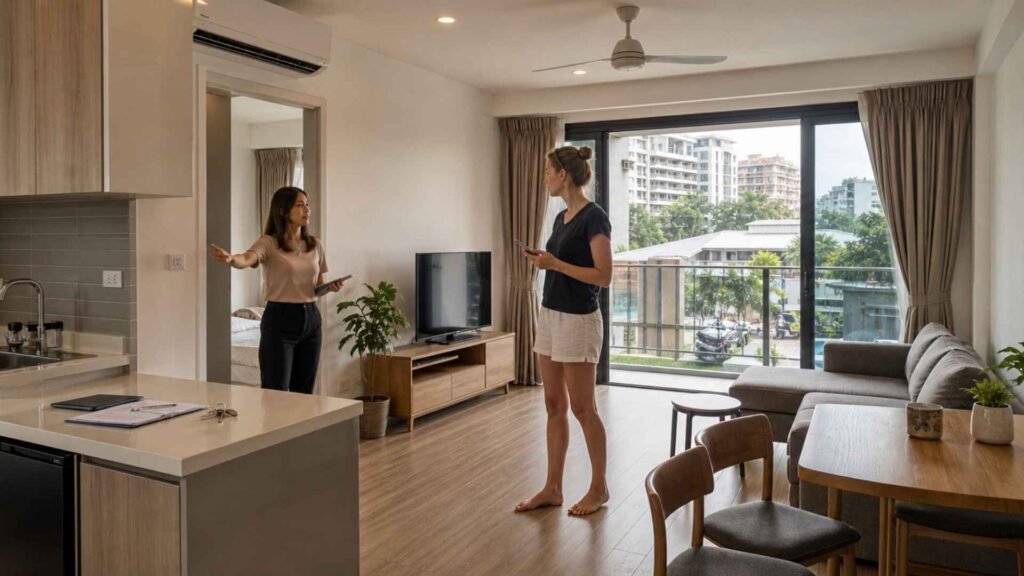
Your total monthly spending depends on how you divide your budget between housing, food, transport, work infrastructure and everyday expenses. The following categories show where the biggest differences occur and what to budget for each one in 2026.
Rent and Accommodation
Housing has a greater effect on the total cost of living in Thailand for digital nomads than any other category.
A basic apartment can cost less than half the price of a newer condo in a popular international neighborhood. A six- or twelve-month lease is also normally cheaper than a flexible one-month booking.
Typical 2026 Rent for a Furnished Studio or One-Bedroom
| Destination | Typical Long-Term Monthly Rent |
|---|---|
| Chiang Mai | ฿9,000–฿20,000 |
| Bangkok | ฿12,000–฿35,000 |
| Phuket | ฿18,000–฿35,000 |
| Koh Samui | ฿14,000–฿35,000 |
| Hua Hin | ฿10,000–฿22,000 |
| Krabi | ฿10,000–฿25,000 |
| Pattaya | ฿10,000–฿25,000 |
| Koh Phangan | ฿15,000–฿40,000 |
| Pai | ฿7,000–฿18,000 |
The lower end generally represents an older studio, less central location or longer contract. The upper end reflects a modern one-bedroom in an area popular with international residents.
Beachfront units, private villas and premium central Bangkok condos can exceed these ranges.
Before signing, confirm whether internet, cleaning, water and common-area fees are included. Ask for the exact electricity rate, photograph the meter and obtain a written inventory of the property.
Electricity and Water
A solo renter should usually allow ฿1,500–฿4,000 per month for electricity and water on the mainland.
Island properties, larger homes or units using air conditioning throughout the day can reach ฿2,500–฿6,000 or more.
Thailand uses progressive residential electricity pricing, while fuel-adjustment charges can change during the year. Some rental properties bill directly through the utility company, whereas others apply a contractual rate through the landlord.
Air conditioning is the main variable. Working from home throughout the hottest months can produce a very different bill from using a fan during the day and air conditioning only at night.
Ask to see a recent bill from the exact property before committing to a long lease.
Home Internet and Mobile Data
Allow approximately ฿500–฿1,000 per month for fixed fiber internet and ฿300–฿1,200 for a mobile plan, depending on speed, data allowance and contract type.
Many condos and serviced apartments include Wi-Fi, but included internet should not automatically be treated as work-ready.
Test the connection inside the exact unit, check upload speed and ask whether the network is shared across the building.
Fixed-broadband contracts may include installation charges or early-cancellation conditions. For a one- to three-month stay, a strong 5G plan can be more practical than arranging a new fiber contract.
Remote workers should still maintain a mobile connection from a different network as a backup.
Coworking Spaces

Monthly hot-desk memberships commonly cost ฿3,000–฿7,000.
Premium Bangkok offices may cost ฿6,000–฿12,000, while Phuket and island memberships range from basic local workspaces to premium facilities above ฿10,000.
Chiang Mai remains one of the easiest places to find a professional workspace below Bangkok prices.
Koh Phangan also has a developed coworking market, but demand and seasonal availability can affect both price and desk capacity.
Working from cafés removes the membership fee, but daily drinks and lunches can still cost several thousand baht per month. Coworking may offer better value when it replaces that spending and provides call rooms, ergonomic seating and backup internet.
Food and Groceries
Food can remain affordable when local restaurants and markets form the base of your diet.
Typical planning prices in 2026 include:
- Local Thai meal: ฿60–฿120
- Casual meal in a tourist area: ฿180–฿350
- Mid-range international restaurant: ฿300–฿600+ per person
- Specialty coffee: ฿80–฿150
A solo monthly food budget may look like this:
| Eating Style | Monthly Food Budget |
|---|---|
| Mostly local meals and markets | ฿8,000–฿12,000 |
| Local food plus cafés and international meals | ฿12,000–฿20,000 |
| Frequent delivery and international dining | ฿20,000–฿35,000+ |
Imported cheese, wine, cereal, supplements and specialty products can be expensive.
Island supermarkets also tend to carry higher logistics costs than markets in Chiang Mai or Bangkok.
Local Transport
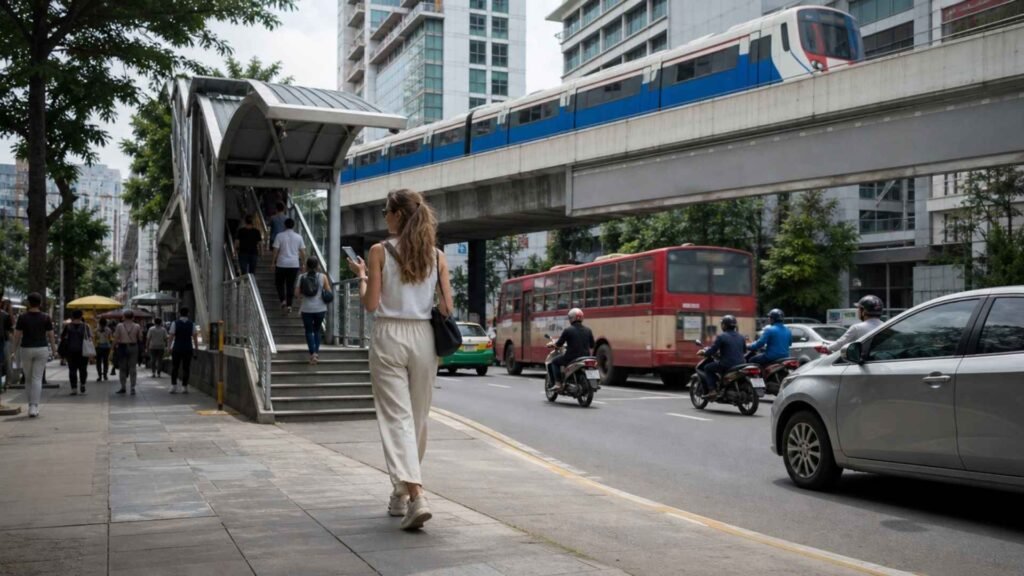
Transport costs depend on whether the destination has useful public transit.
In Bangkok, ฿2,000–฿5,000 per month can cover regular BTS, MRT, bus and occasional ride-hailing use if you live near a station.
Choosing a cheaper apartment far from rail may simply move the saving into daily taxi costs and lost time.
In Chiang Mai, Pai and most coastal destinations, a scooter is often the practical choice. A monthly rental may cost approximately ฿3,000–฿5,000, before fuel, deposits and possible damage charges.
Phuket, Koh Samui and Koh Phangan require a larger transport allowance because destinations are spread out and taxis can be comparatively expensive.
A small car can add ฿15,000–฿30,000 or more per month before fuel, making transport a major family budget item.
Only ride or drive with the correct licence, protective equipment and insurance. A low-cost scooter rental can become extremely expensive if your policy excludes the vehicle or you are not legally licensed.
Health Insurance and Medical Costs
Health-insurance prices cannot be estimated accurately from destination alone. Age, medical history, deductible, inpatient limits, outpatient cover and geographic coverage all affect the premium.
For initial planning:
- Emergency-focused travel or nomad cover may begin around ฿1,500–฿3,500 per month for some younger travelers.
- Local private inpatient policies may cost roughly ฿15,000–฿50,000 per year for some younger or middle-aged applicants.
- Broader international health insurance may cost ฿5,000–฿15,000+ per month and can rise sharply with age or worldwide coverage.
These figures are planning allowances, not insurance quotes.
Check inpatient limits, outpatient benefits, evacuation cover, pre-existing-condition exclusions and scooter clauses. Travel insurance and comprehensive international health insurance should not be treated as identical products.
Hospitalization can still create a serious financial loss, so insurance and emergency savings should remain separate budget lines.
Gym, Wellness and Everyday Spending
A basic local gym may cost ฿800–฿2,000 per month, while a modern air-conditioned gym, boutique studio or premium club can cost ฿2,500–฿5,000.
Yoga, recovery programs and Muay Thai training can increase the total substantially. An intensive monthly Muay Thai package may add ฿8,000–฿20,000 or more, particularly in Phuket.
Also allow for laundry, household supplies, haircuts, coffee, entertainment and occasional day trips.
Together, these smaller expenses can easily add ฿3,000–฿10,000 per month.
DTV, Extensions and Administration
Visa fees are not the largest monthly expense, but they should not be ignored.
The Thai Ministry of Foreign Affairs’ DTV overview lists a ฿10,000 visa fee, five-year multiple-entry validity and stays of up to 180 days per entry.
DTV holders may request one extension of up to another 180 days while in Thailand. Approval, supporting documents and the fee applied by immigration should be confirmed before relying on this option.
Applicants outside Thailand normally pay the amount set by the embassy or consulate in local currency. A separate application and fee are generally required for each dependent.
Proof of funds is not a visa fee and should not be counted as money available for normal spending. Translation, certification, agent assistance and travel connected with an application or immigration appointment can also increase the real cost.
Read our complete Thailand Digital Nomad Visa article before building a long-term budget around the DTV.
Three Realistic Monthly Budget Scenarios
To make the cost of living in Thailand for digital nomads easier to compare, the following examples show how one solo remote worker might divide a budget, mid-range or comfortable monthly allowance.
These scenarios are not tied to a single destination, so housing and transport should be adjusted using the location tables above.
| Expense | Budget | Mid-Range | Comfortable |
|---|---|---|---|
| Rent | ฿10,000 | ฿18,000 | ฿32,000 |
| Utilities | ฿1,800 | ฿3,000 | ฿4,500 |
| Internet and mobile | ฿500 | ฿1,000 | ฿1,500 |
| Coworking | ฿0 | ฿4,000 | ฿6,000 |
| Food | ฿8,000 | ฿14,000 | ฿24,000 |
| Transport | ฿2,500 | ฿4,500 | ฿8,000 |
| Insurance allowance | ฿2,000 | ฿4,000 | ฿8,000 |
| Fitness and social life | ฿2,000 | ฿4,500 | ฿8,000 |
| Visa and administration | ฿500 | ฿500 | ฿500 |
| Miscellaneous | ฿3,200 | ฿6,000 | ฿10,000 |
| Estimated Total | ฿30,500 | ฿59,500 | ฿102,500 |
The budget scenario is realistic only in destinations where inexpensive long-term housing is available. It assumes mostly local food, limited paid coworking and controlled leisure spending.
The comfortable scenario may cost less in Pai or Chiang Mai but substantially more in a prime Bangkok district or during high season on an island.
Solo, Couple and Family Budgets
Couples can share rent, internet and utilities. Families need more bedrooms, broader insurance, additional transport and larger contingency funds.
Realistic Mid-Range Monthly Household Budgets
| Household | Northern or Value Destination | Bangkok or Major Coastal City | Premium Island Destination |
|---|---|---|---|
| One person | ฿45,000–฿60,000 | ฿55,000–฿85,000 | ฿65,000–฿100,000 |
| Couple | ฿65,000–฿90,000 | ฿85,000–฿125,000 | ฿100,000–฿155,000 |
| Family of four | ฿95,000–฿140,000 | ฿130,000–฿200,000 | ฿155,000–฿250,000 |
The family totals exclude international school tuition.
Depending on the school and year group, tuition can range from approximately ฿200,000 to more than ฿1.2 million per child per year. Application, registration, transport, uniforms, meals and activities may be charged separately.
Families should request the complete annual fee schedule from each school rather than adding tuition alone.
Monthly Costs by Destination
The cost of living in Thailand for digital nomads changes significantly between northern cities, Bangkok, mainland beach destinations and popular islands. Rent and transport create most of the difference.
1. Chiang Mai — Best Overall Value for Remote Workers
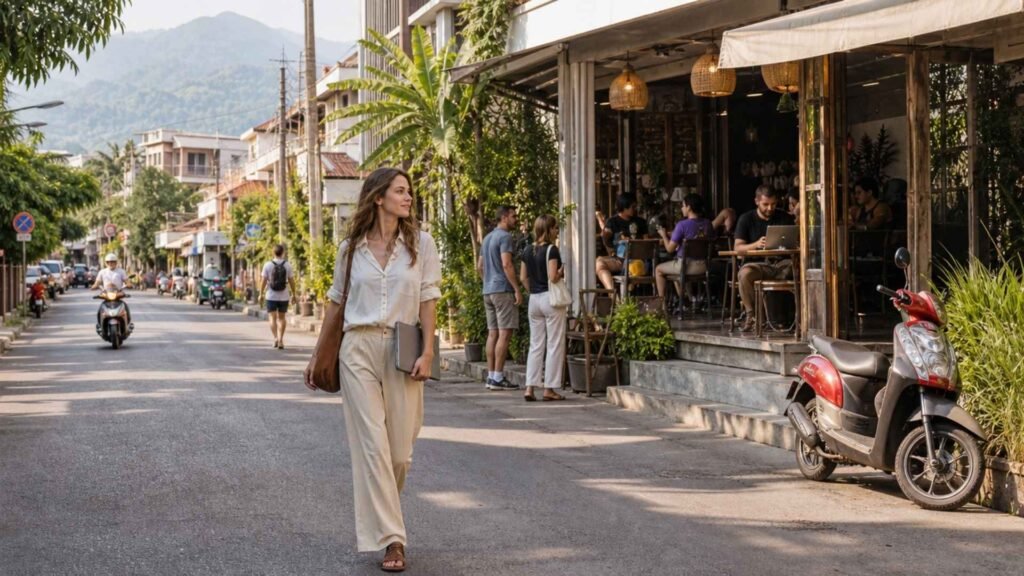
Chiang Mai offers the easiest route to a balanced monthly budget.
Long-term studios outside the most popular parts of Nimman can remain below ฿12,000, while a good one-bedroom, coworking membership and mixed local-international diet can fit within approximately ฿45,000–฿60,000 per month.
Air quality is the largest seasonal budget risk. An air purifier, better indoor filtration or temporary relocation during smoke season should be included in the annual plan.
2. Hua Hin — Strong Beach Value for Longer Stays
Hua Hin generally costs less than Phuket or Koh Samui.
A solo remote worker can plan around ฿50,000–฿70,000 per month for a good condo, mixed dining, transport, insurance and regular leisure spending.
Older condos and properties a few streets inland often provide better value than beachfront buildings.
A scooter or bicycle may reduce transport costs, although families living outside the center may still prefer a car.
3. Bangkok — Best for Controlling Transport Without a Scooter
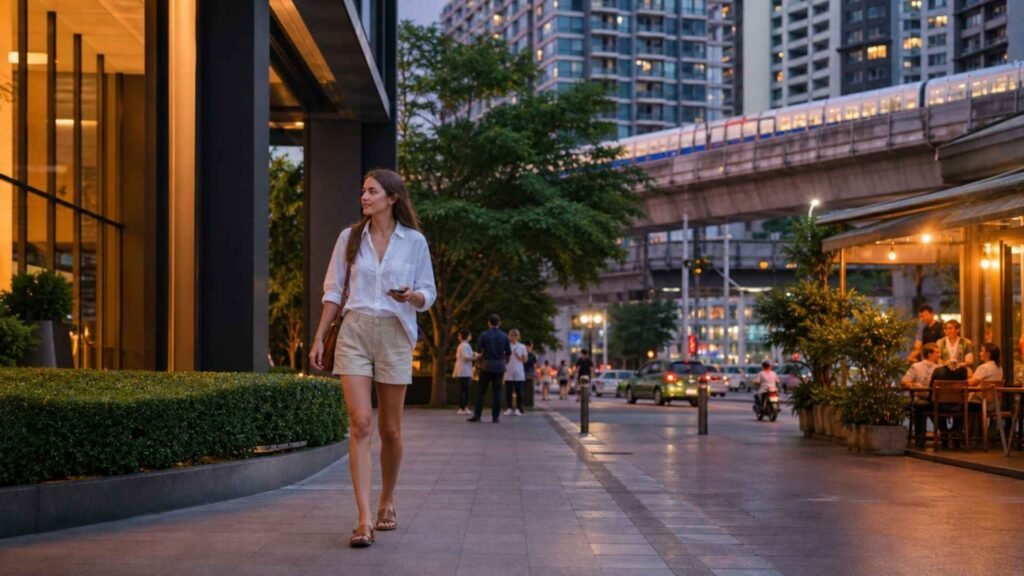
Bangkok has the broadest range of prices.
A modest outer-district apartment can keep the total near ฿40,000–฿55,000, while a newer condo close to a central BTS or MRT station can push rent alone above ฿30,000.
Compare rent and commuting together. Paying more to live near rail can cost less overall than relying on taxis from a poorly connected neighborhood.
International dining, nightlife, delivery and premium fitness can move a Bangkok budget above ฿100,000.
4. Pattaya — Competitive Rent With Urban Convenience
Pattaya can be cheaper than Phuket while still offering a large condominium market, private hospitals, shopping and extensive everyday services.
A mid-range digital nomad can budget approximately ฿52,000–฿75,000 per month.
Central Pattaya, Jomtien and Pratumnak prices vary by building age, sea view and distance from transport.
Entertainment spending can distort the total quickly, so separate normal social costs from nightlife and weekend travel.
5. Koh Samui — Expensive When Rent and Transport Combine
Koh Samui can support a mid-range lifestyle at around ฿65,000–฿90,000 per month, but the total depends heavily on location and transport.
An affordable inland rental may require a scooter or car, while properties near Bophut, Chaweng and popular beaches command a premium.
Imported groceries, air-conditioning and frequent taxis create further pressure on the budget.
6. Phuket — Highest Mainstream Beach Budget
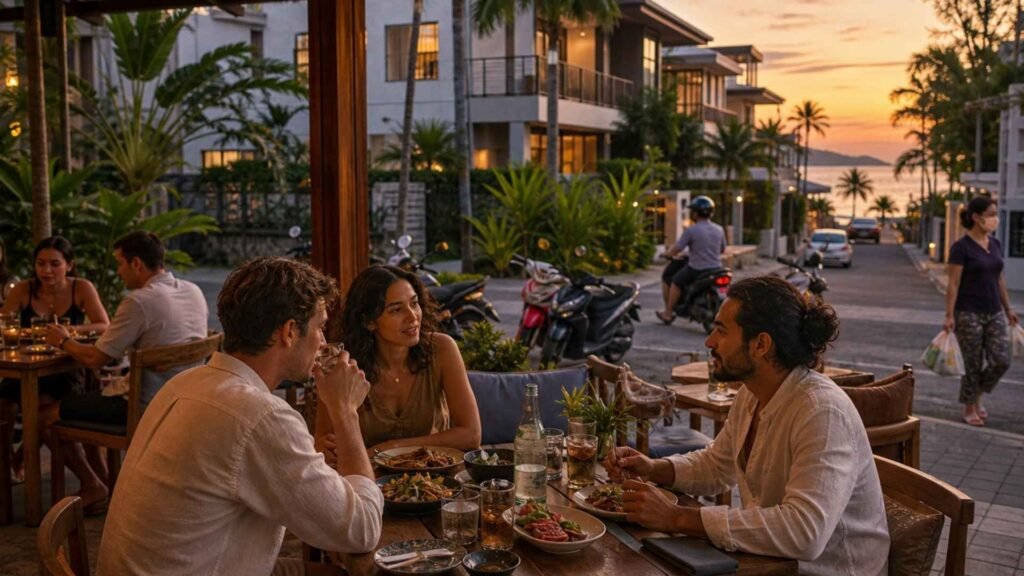
Phuket is usually the most expensive of Thailand’s established digital-nomad destinations.
A realistic mid-range solo budget is approximately ฿70,000–฿100,000 per month.
Rent varies sharply between inland areas and beach zones such as Bang Tao, Kata and Rawai. Transport, premium gyms, international food and electricity can all raise the total.
Do not use a low-season offer to estimate year-round housing costs without checking renewal terms and high-season pricing.
7. Krabi — Affordable Inland, More Expensive Around Ao Nang
Krabi’s costs change substantially by area.
Krabi Town can support a lower budget, while Ao Nang and other tourism-focused areas carry higher rents and restaurant prices.
A realistic mid-range solo total is ฿55,000–฿75,000 per month.
Housing, coworking and beaches may not be close together, so calculate transport separately. Treat regular island excursions as travel spending rather than normal living costs.
8. Koh Phangan — Affordable in Theory, Seasonal in Practice

Koh Phangan is no longer automatically a low-cost island.
A realistic mid-range solo budget is around ฿65,000–฿95,000 per month, particularly in popular remote-work and wellness areas.
Long-term bungalows may still offer value, but limited supply, peak season and major event dates can raise rents. Most residents also need a scooter.
Coworking, yoga, international food and wellness activities can add more than expected. Secure accommodation early, but avoid paying for a long lease before checking the property and internet in person.
9. Pai — Lowest Base Cost but Fewer Backup Services
Pai can support the lowest monthly total in this comparison.
A simple room or bungalow, local food and a scooter can keep a careful solo budget near ฿25,000–฿35,000, while ฿38,000–฿55,000 allows greater comfort.
The trade-off is reduced choice. Internet quality depends on the exact property, coworking options are limited and specialist healthcare may require travel to Chiang Mai.
A backup mobile connection and emergency transport allowance are more important than the low rent initially suggests.
For lifestyle, infrastructure and destination suitability—not just price—compare the best places in Thailand for digital nomads.
Hidden Costs That Can Change Your Budget
Several expenses can make long-term living in Thailand more expensive than the main comparison tables suggest. Deposits, short-term rental premiums, seasonal prices and utility markups are among the most common surprises.
Rental Deposits and the First Month
Many rentals require the first month in advance plus one or two months of security deposit.
A ฿20,000 apartment may therefore require ฿40,000–฿60,000 at signing, even though only ฿20,000 is the recurring monthly rent.
Keep refundable deposits separate from ordinary spending, and document the condition of the property before moving in.
Short-Term Rental Premiums
A flexible one-month booking can cost 20–50% more than a longer lease.
Platform fees, cleaning charges, utilities and peak-season pricing can widen the difference further.
High Season and Event Pricing
Phuket, Koh Samui, Koh Phangan, Krabi and Pai all experience seasonal demand.
On Koh Phangan, major event periods can affect accommodation availability and transport. Build an annual average rather than assuming the lowest seasonal price will remain available all year.
Electricity Markups and Air Conditioning
Two similar apartments can produce very different electricity bills when one uses the utility rate and another charges a higher contractual rate.
Ask for the billing method and a recent sample bill before signing.
Island Transport and Deliveries
Cheaper accommodation away from the beach or town may require daily scooter use.
Island delivery charges and higher prices for imported groceries can also reduce the apparent saving.
ATM, Card and Currency Conversion Fees
Foreign bank charges, Thai ATM fees and poor card-terminal conversion rates can become significant during a long stay.
Review the exchange rate before accepting dynamic currency conversion and compare withdrawal or international transfer methods.
Visa Administration and Travel
The government fee is only one part of a visa budget.
Photographs, printing, certification, translations, agents and travel connected with an application, extension or immigration appointment can cost more than expected.
Smoke-Season or Weather Relocation
Northern residents may temporarily relocate because of air pollution, while island residents may travel during difficult weather periods.
If you expect to move for several weeks each year, include duplicate accommodation and transport in your annual plan.
How to Lower Your Monthly Costs
Monthly expenses for remote workers in Thailand become easier to control when housing, transport and rental duration are planned together rather than treated as separate decisions.
- Book flexible accommodation for arrival, then inspect long-term rentals locally.
- Compare rent and transport together rather than choosing the cheapest property.
- Test upload speed, video calls and mobile backup before committing.
- Use local restaurants as the default and treat imported groceries as a separate allowance.
- Compare a monthly coworking pass with your actual café spending.
- Negotiate longer rental and coworking terms only after testing the property or service.
- Track electricity during the first month to understand air-conditioning costs.
- Keep travel, nightlife and island excursions outside the normal living budget.
- Maintain a contingency allowance of at least 10–15% above planned monthly spending.
💡 Maya’s Tip:
Create two separate budgets before moving: a landing-month budget and a normal-month budget.
The landing month should include rental deposits, temporary accommodation, transport setup, household items, visa administration and possible installation fees.
Your normal-month budget should contain only recurring costs.
This prevents a ฿60,000 lifestyle from appearing to cost ฿120,000 simply because the first month includes refundable deposits and one-time expenses.
Keep at least three months of normal living costs accessible in addition to your return-flight and medical emergency funds.
Are Taxes Included in These Estimates?
No. Personal income tax is not included because the result depends on tax residence, income source, remittance timing, deductions and any applicable tax treaty.
The Thai Revenue Department’s personal income tax information states that an individual staying in Thailand for 180 days or more in a calendar year is considered a Thai tax resident.
Immigration permission and tax residence are separate matters. Holding a DTV does not automatically determine whether a particular source of income is taxable.
Anyone planning an extended stay should obtain qualified tax advice based on their residence history, income structure and applicable treaty.
Frequently Asked Questions
How much money does a digital nomad need per month in Thailand?
Start with accommodation type and rental length rather than relying on one national average.
A long-term studio and mostly local routine can keep costs controlled in northern Thailand. Short-term condos, island transport, coworking and frequent international dining require a considerably larger budget.
Add a contingency of at least 10–15% after calculating your expected rent, transport and insurance.
Is ฿30,000 per month enough to live in Thailand?
It can be enough for one person in Pai, Chiang Mai or another affordable area with a simple long-term room, mostly local food and limited paid entertainment.
It is a tight budget for Bangkok and generally unrealistic for a comfortable lifestyle in Phuket or a popular island area.
Is ฿50,000 per month enough for a digital nomad in Thailand?
Yes. ฿50,000 can support a comfortable but controlled solo lifestyle in Chiang Mai, Pai, Hua Hin or parts of Pattaya.
In Bangkok it requires careful housing choices, while in Phuket, Koh Samui and Koh Phangan it may feel restrictive during high season.
Is Chiang Mai cheaper than Bangkok for digital nomads?
Chiang Mai usually has lower rent, coworking and dining costs.
Bangkok can partially offset its higher housing costs through public transport, particularly when living near BTS or MRT removes the need for a scooter or frequent taxis.
Is Phuket more expensive than Bangkok?
Phuket can be more expensive for a comparable lifestyle once transport, beach-area rent, utilities and international food are included.
Bangkok offers more low-cost neighborhood and public-transport combinations, although a premium central Bangkok lifestyle can exceed Phuket prices.
How much is rent in Thailand for digital nomads?
A furnished studio or one-bedroom can range from approximately ฿7,000–฿20,000 in Pai or Chiang Mai to ฿18,000–฿40,000 in Phuket or Koh Phangan.
Central Bangkok condos, beachfront properties and private villas can cost substantially more.
How much should a couple budget for Thailand?
A couple should plan around ฿65,000–฿90,000 per month in a value destination, ฿85,000–฿125,000 in Bangkok or a major coastal city, and ฿100,000–฿155,000 for a mid-range premium-island lifestyle.
How much does a family need to live in Thailand?
A family of four may need approximately ฿95,000–฿250,000 per month, depending on location, housing, transport and insurance.
International school tuition is additional and may become one of the household’s largest expenses.
Does the DTV application fee cover a spouse and children?
No. Dependents generally submit separate applications and pay the applicable fee individually.
Confirm the current amount and required documents with the embassy or consulate processing each application.
Do digital nomads pay tax in Thailand?
They may.
Staying in Thailand for 180 days or more during a calendar year generally creates Thai tax-resident status, but the taxation of specific income depends on several additional factors.
A visa does not automatically determine the final tax result.
Final Thoughts
The cost of living in Thailand for digital nomads varies sharply by destination, housing and lifestyle. For most solo remote workers, ฿45,000–฿75,000 per month is a realistic starting range.
Compare the exact cost of rent and transport, then add insurance and a 10–15% contingency before committing to a longer stay.