
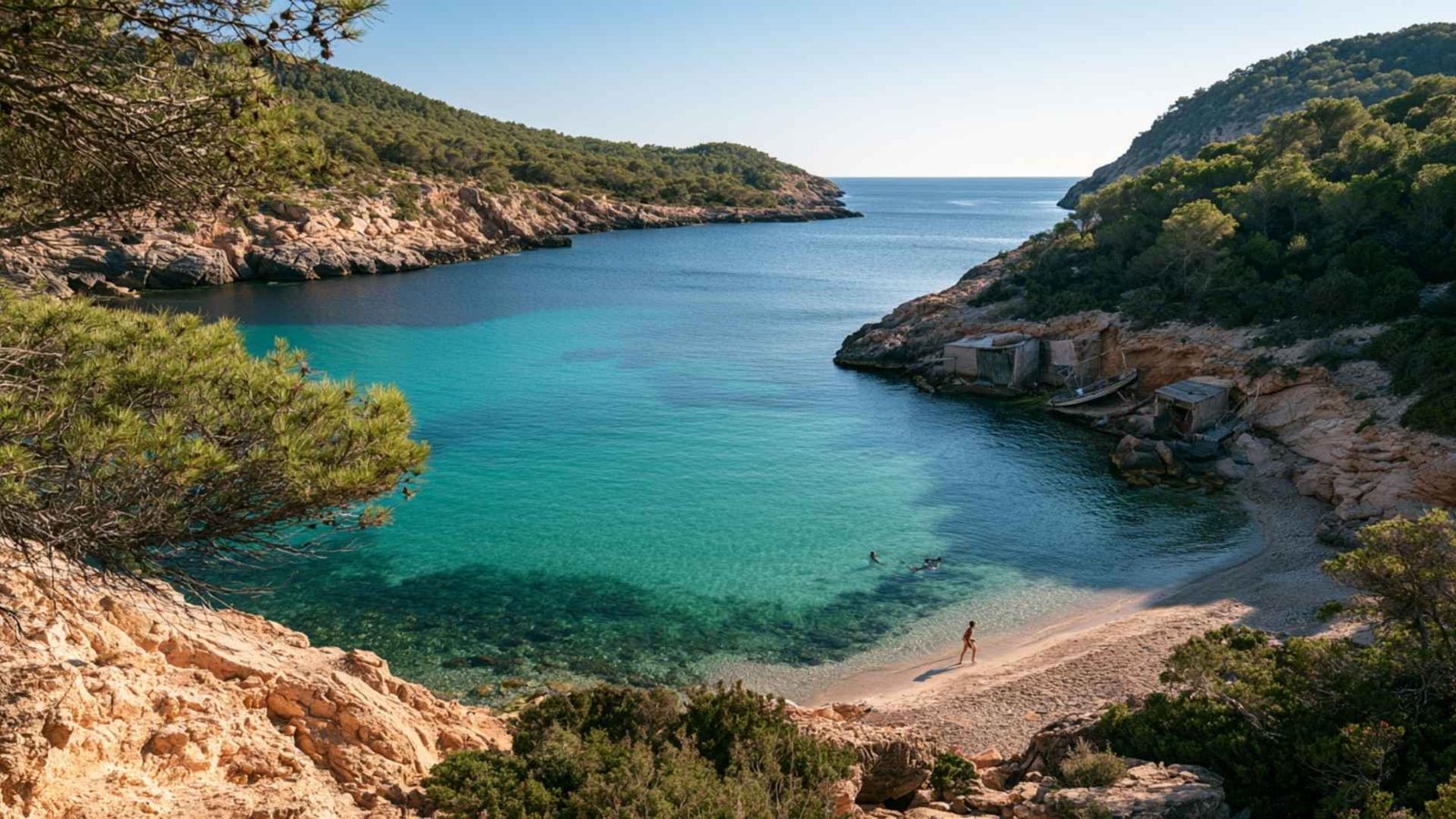
Ibiza may be famous for superclubs, glamorous beach venues, and sunset parties, but that is only one side of the island.
Travel north, follow the rural roads, or walk beyond the most accessible beaches and the atmosphere changes. Pine-covered hills replace resort strips, fishing coves appear beneath the cliffs, and whitewashed villages sit among vineyards and almond groves.
These ten quiet places in Ibiza offer space to swim, walk, explore, and experience the island at a slower pace.
Quick Answer: Where Are the Best Quiet Places in Ibiza?
For secluded beaches, choose Cala d’en Serra, Cala Mestella, Cala Llentrisca, or S’Estanyol.
S’Illot des Renclí is better for a relaxed beach day with some seasonal facilities. Sant Joan de Labritja, Santa Agnès de Corona, and Es Cubells provide peaceful village settings, while Sa Talaia and the Moscarter Lighthouse trail are ideal for walking and panoramic views.
North Ibiza and the rural northwest generally feel quieter than Ibiza Town, Platja d’en Bossa, central Sant Antoni, and the island’s best-known sunset beaches.
Quiet Places in Ibiza at a Glance
| Place | Area | Best For | Access | Facilities |
|---|---|---|---|---|
| Cala d’en Serra | North | Secluded swimming | Car and steep approach | Limited |
| S’Illot des Renclí | North | Slow beach day | Car | Seasonal restaurant |
| Cala Mestella | Northeast | Fishing-cove atmosphere | Car and short walk | Very limited |
| Cala Llentrisca | South | Genuine seclusion | Car and coastal walk | None |
| S’Estanyol | East | Walking and swimming | Car and short walk | Seasonal |
| Sant Joan de Labritja | North | Village life | Car or seasonal bus | Cafés and restaurants |
| Santa Agnès de Corona | West | Rural scenery | Car | Limited |
| Es Cubells | South | Cliff and sea views | Car | Limited |
| Sa Talaia | Southwest | Panoramic views | Car and walking | None on the trail |
| Moscarter Lighthouse | North | Coastal hiking | Walk from Portinatx | None on the trail |
Where to Find the Quieter Side of Ibiza
The north, northeast, and rural west contain many of the island’s most peaceful landscapes.
Northern Ibiza combines pine forests, cliffs, small coves, and coastal trails. In the west, Santa Agnès and nearby Sant Mateu are surrounded by farmland, vineyards, orchards, and traditional stone walls.
The south and southwest are better known for fashionable beaches, but quieter corners remain around Es Cubells, Cala Llentrisca, and Sa Talaia.
No destination is guaranteed to be empty. A tiny cove can feel secluded in May but crowded by midday in August. Visiting early, traveling on weekdays, and avoiding peak summer will make a noticeable difference.
1. Cala d’en Serra — Best for a Secluded Northern Cove
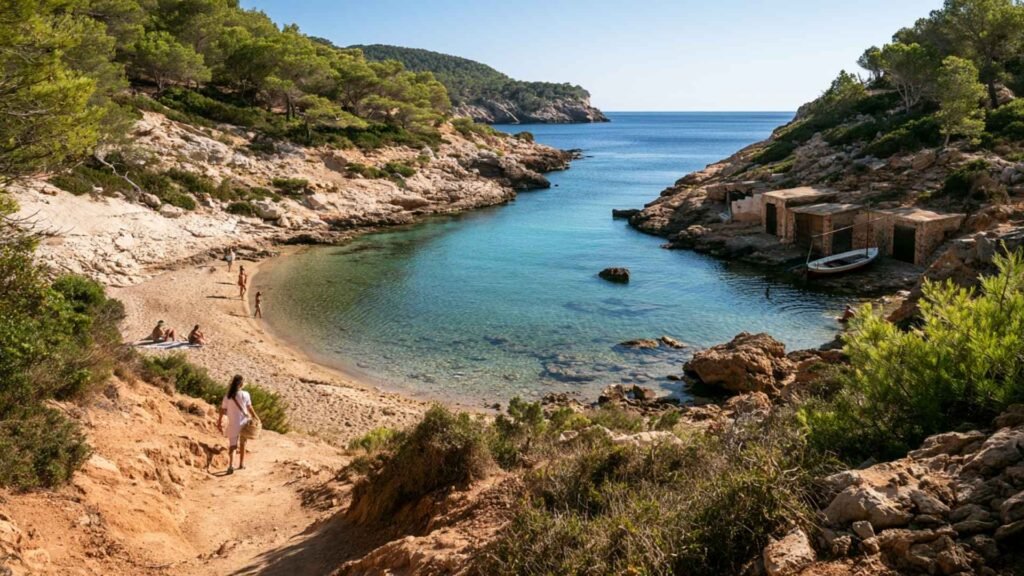
Cala d’en Serra sits among forested cliffs near Portinatx in the far north of Ibiza.
The small horseshoe-shaped cove combines clear water, a mixture of sand and pebbles, rocky edges, and traditional fishermen’s huts. Its enclosed natural setting feels far removed from the island’s main resort areas.
A winding road leads toward the coast, followed by a steep final descent. Trainers or secure walking sandals are more practical than flip-flops. Once beside the water, the rocky edges offer good snorkeling when the sea is calm.
The beach is small, so a modest number of visitors can quickly change its atmosphere. Do not depend on its seasonal facilities being open; bring water, sun protection, and anything else you need.
Best time to visit: Before 10:30 a.m. or later in the afternoon.
Clara’s Tip: Keep your beach bag light. The downhill approach may feel easy, but everything must be carried back up.
2. S’Illot des Renclí — Best for a Slow Beach Day
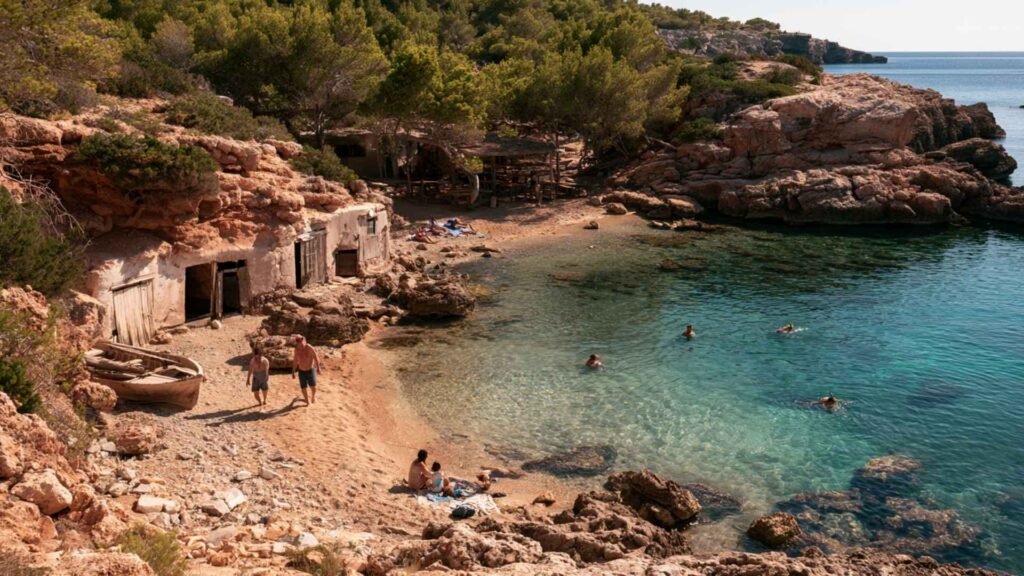
S’Illot des Renclí is a compact northern cove between Cala Xarraca and Portinatx.
Coarse golden sand, pine trees, rocky edges, and traditional boat huts give it a distinctly Mediterranean character. It provides more comfort than Ibiza’s most isolated coves while remaining less commercial than the larger resort beaches.
The water is inviting for swimming, and the rocky sections appeal to snorkelers. Short coastal paths also lead away from the central shoreline.
A seasonal restaurant beneath the pine trees makes S’Illot des Renclí suitable for a longer beach day. Confirm its opening schedule before planning your visit around lunch.
This is one of the more practical quiet beaches for couples and families, but the limited parking and shoreline can fill quickly in July and August.
Best time to visit: Morning or late afternoon on a weekday.
3. Cala Mestella — Best for a Tiny Fishing Cove
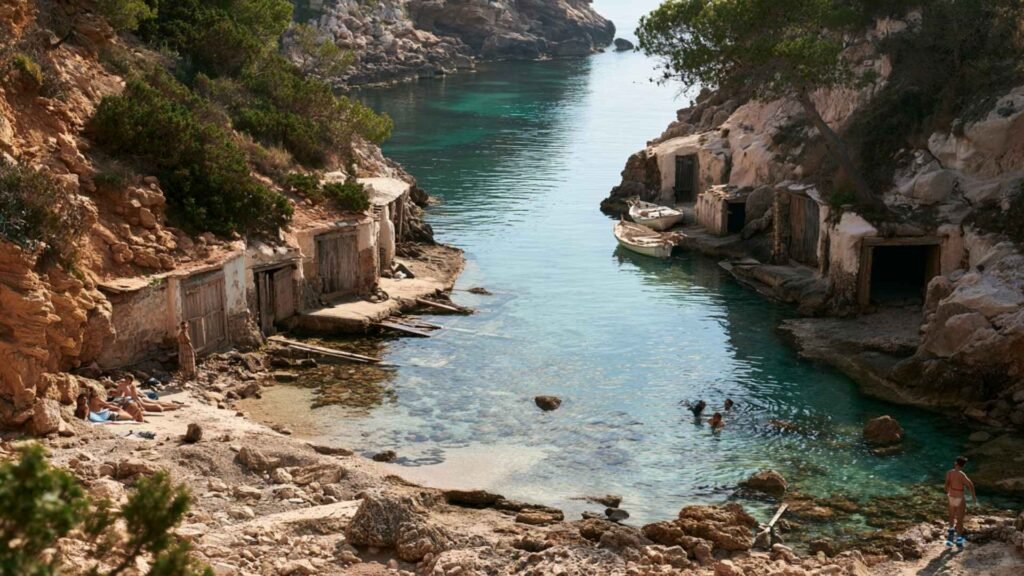
Cala Mestella is one of the smallest coastal escapes in northeast Ibiza.
The narrow shoreline sits beneath pine-covered slopes and is framed by traditional boat huts. Its modest size, limited services, and position away from the main roads help preserve its peaceful atmosphere.
Do not expect sunbed rows, water sports, shops, or a broad sandy beach. Cala Mestella is better suited to visitors who value clear water, local character, and a simple few hours beside the sea.
Parts of the shore and seabed are rocky, so water shoes may be useful. Bring drinking water rather than relying on facilities.
A well-known fish restaurant operates nearby, but it should be treated as a separate planned experience. Check current opening days and reserve well in advance.
You can also combine the cove with breakfast or coffee in Sant Carles de Peralta before continuing toward the coast.
Best time to visit: Early morning, or around lunchtime with a confirmed restaurant reservation.
4. Cala Llentrisca — Best for Genuine Seclusion
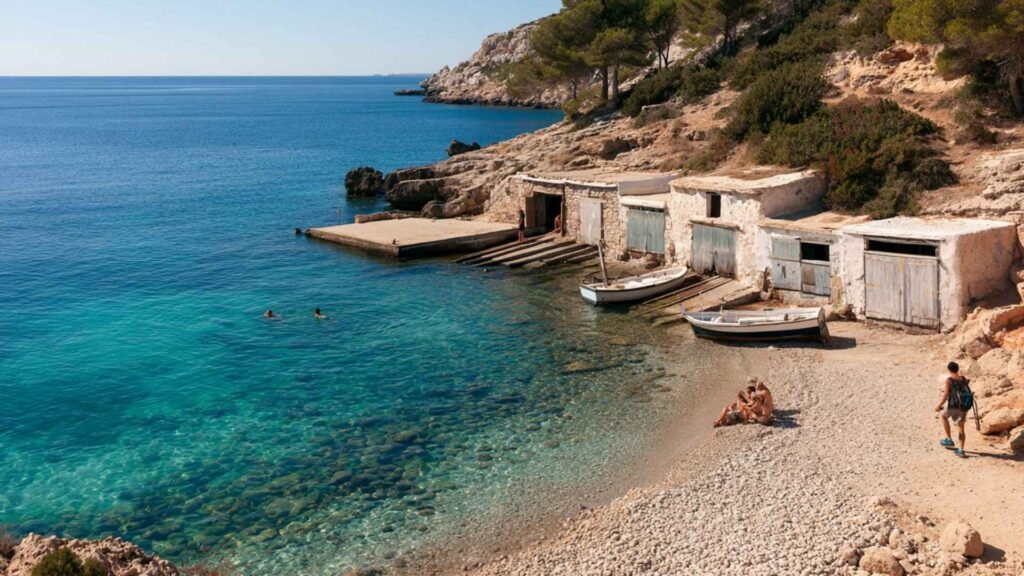
Hidden beneath the cliffs near Es Cubells, Cala Llentrisca is one of the most secluded quiet places in Ibiza.
The small fishing cove has a pebbly shoreline, traditional boat huts, a simple pier, and clear water in calm conditions. There are no sunbeds, shops, beach clubs, or dependable tourist facilities.
Reaching the cove requires more planning than an ordinary beach visit. The approach passes through a residential area before continuing on foot over uneven coastal terrain. Longer routes from the Es Cubells area include steep, exposed sections and limited shade.
Access arrangements around private residential roads can change. Follow local signs, stay outside restricted property, and never block gates or narrow roads.
Cala Llentrisca is best for experienced, well-prepared visitors who value isolation more than convenience. It is not a suitable choice for anyone expecting an effortless beach day.
Best time to visit: Early morning in calm, settled weather.
Clara’s Tip: Wear proper shoes, carry enough water, and begin your return well before dusk.
5. S’Estanyol — Best for Hiking and Swimming
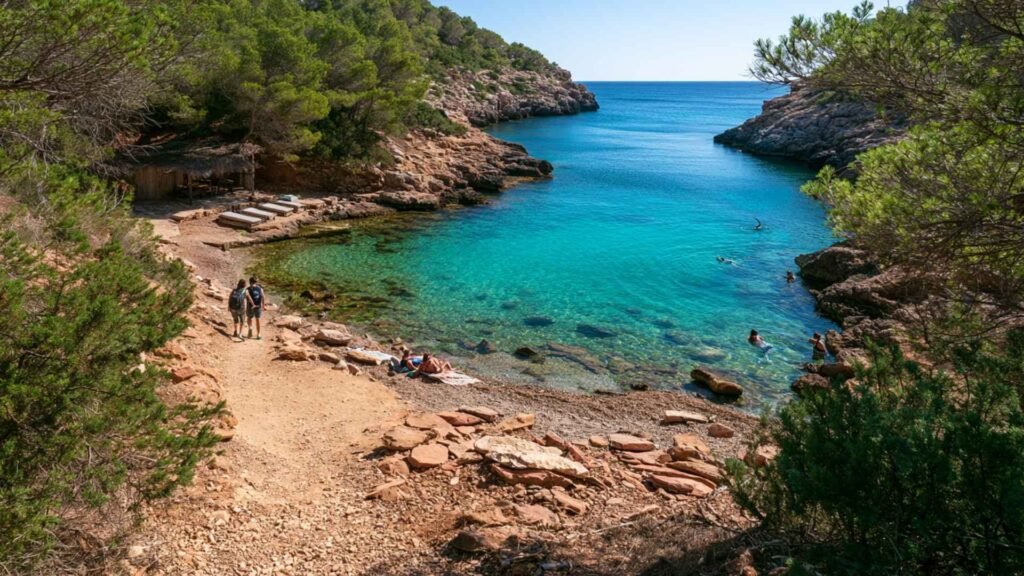
S’Estanyol lies on Ibiza’s eastern coast amid pine and juniper woodland.
Its compact shoreline is rocky in places and generally receives fewer visitors than the beaches near Ibiza Town or Santa Eulària. Forest paths make it particularly appealing if you want to combine a walk with time beside the sea.
Water shoes can be helpful, and swimming conditions should be assessed on arrival. A seasonal beach venue may operate at the cove, but opening dates vary, so carry your own water.
S’Estanyol works well as a half-day escape for travelers staying near Ibiza Town who do not want to drive to the far north. The final road is narrower and less developed than the short distance on a map might suggest.
Best time to visit: Morning, particularly outside July and August.
6. Sant Joan de Labritja — Best for Experiencing North Ibiza
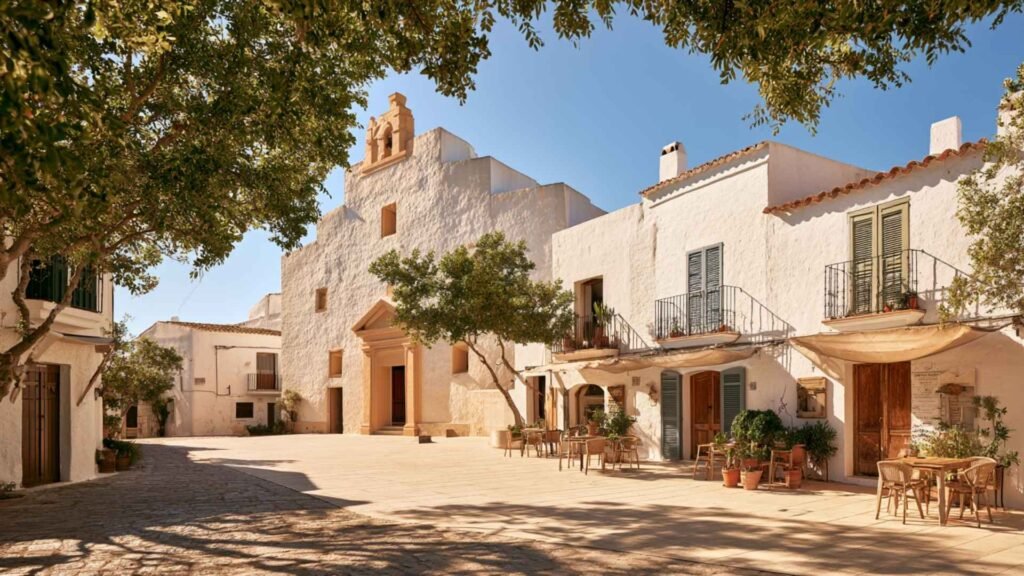
Sant Joan de Labritja is an excellent starting point for exploring Ibiza’s quieter north.
The small village centers on a whitewashed church and a compact collection of cafés, restaurants, and local businesses. Beyond it are forested hills, agricultural land, and roads leading toward Cala d’en Serra, Cala Xarraca, S’Illot des Renclí, and Portinatx.
Sant Joan does not have a long sightseeing checklist. Its appeal lies in its scale and unhurried rhythm. Stop for breakfast, walk around the church square, and then continue into the surrounding countryside or toward the coast.
The village becomes livelier during its Sunday market. Choose another morning if peace is your main priority.
Rural hotels and agrotourism properties around Sant Joan can also make good bases for a quiet Ibiza holiday, although a car is usually valuable.
Best time to visit: Morning for breakfast and a short village walk.
7. Santa Agnès de Corona — Best for Rural Landscapes
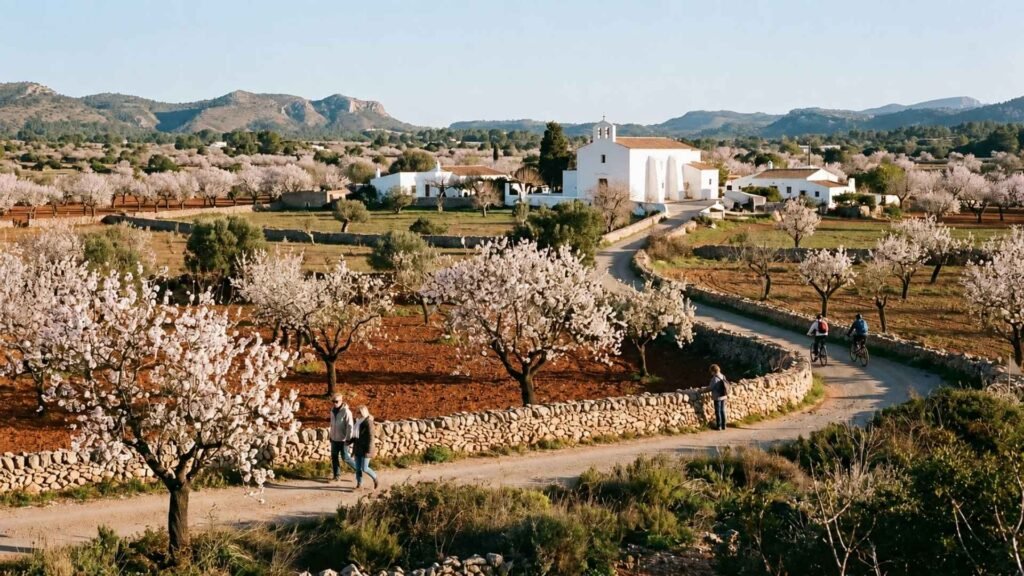
Santa Agnès de Corona is a tiny western village surrounded by the agricultural plain known as Pla de Corona.
Traditional houses, red soil, orchards, stone walls, and open fields create one of Ibiza’s most peaceful rural landscapes. The area feels far removed from the coastal resorts despite being within driving distance of Sant Antoni.
The village has a whitewashed church, a small square, and only a few businesses. The surrounding countryside, rather than a collection of attractions, is the main reason to visit.
January and February are traditionally associated with almond blossom, although flowering dates depend on the weather and cannot be guaranteed for a particular week.
During warmer months, explore early or late in the day. Remain on established roads and paths, and do not enter cultivated fields for photographs.
Santa Agnès can be combined with nearby Sant Mateu d’Albarca, a similarly quiet village surrounded by vineyards and farmland.
Best time to visit: Late afternoon or during the winter almond-blossom period.
8. Es Cubells — Best for Cliff Views and Village Calm
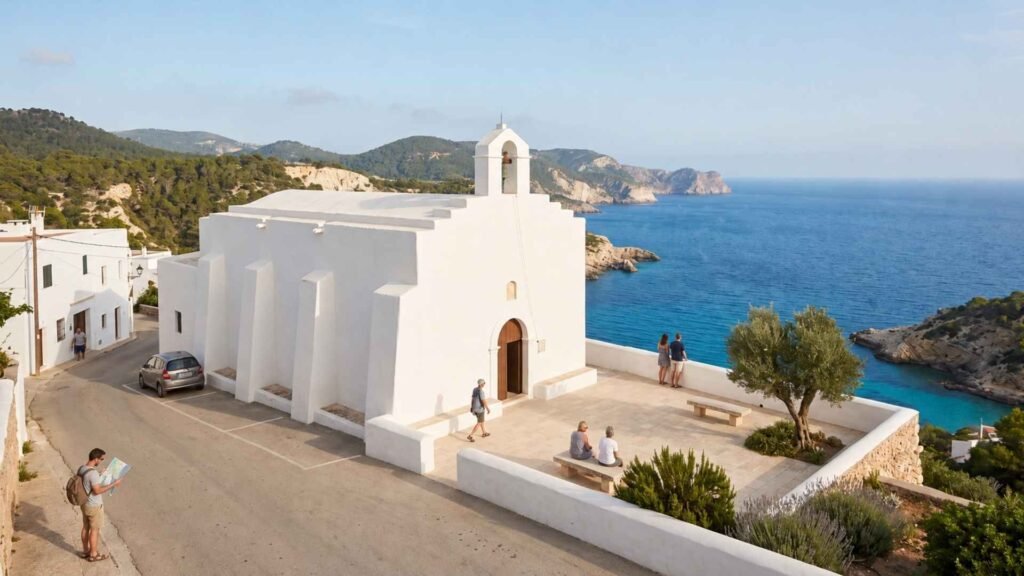
Es Cubells stands high above Ibiza’s southern coastline.
The village centers on a small whitewashed church overlooking the Mediterranean. Its cliff-top position, limited development, and far-reaching sea views create an atmosphere that feels peaceful and dramatic.
Es Cubells is not a conventional sightseeing destination or beach resort. Visit for the viewpoint, the church surroundings, or as the starting point for exploring the quieter coastline below.
Nearby coves include Ses Boques, Cala Llentrisca, Es Torrent, and Porroig. Access varies considerably, and some require more preparation than their distance on a map suggests.
The narrow roads pass homes and private entrances. Park only in suitable spaces, keep noise low, and avoid using residential roads as informal viewpoints.
Best time to visit: Morning or late afternoon.
9. Sa Talaia — Best for Panoramic Island Views
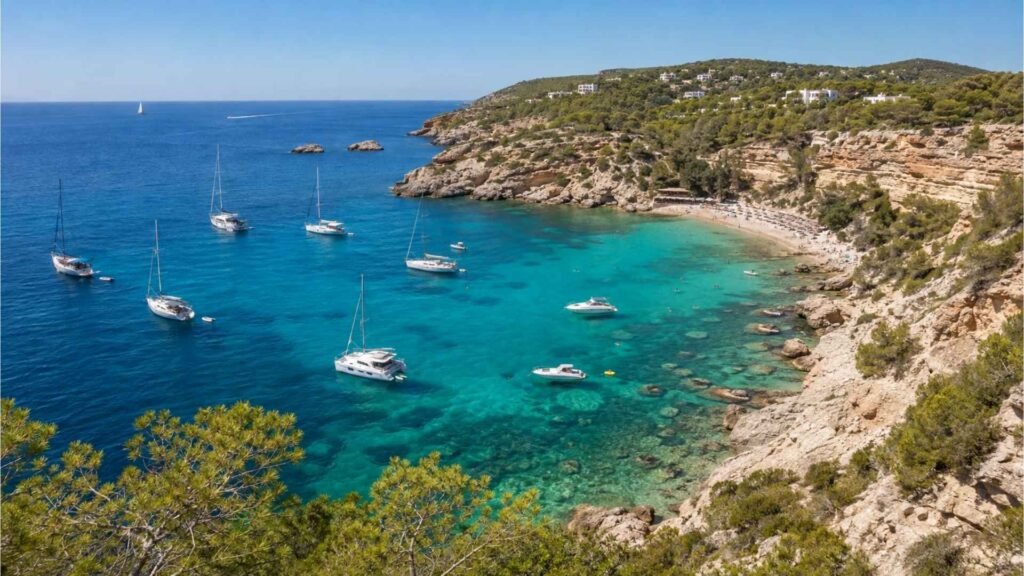
Sa Talaia, near Sant Josep de sa Talaia, is Ibiza’s highest point at approximately 475 meters.
From the summit area, visitors can see the island’s wooded hills, settlements, coastline, and surrounding sea. The view is particularly attractive in the softer light of early morning or late afternoon.
Several routes and access points lead toward Sa Talaia. Some visitors walk from Sant Josep, while others drive part of the way and complete a shorter route on foot.
The ground can be uneven, and shade is limited in places. Wear secure footwear, carry sufficient water, and avoid walking during the strongest summer heat.
Sa Talaia is a peaceful alternative to Ibiza’s crowded coastal sunset locations. If you visit for the evening light, allow enough time to descend before dark.
Best time to visit: Early morning or well before sunset.
Clara’s Tip: Download your route before leaving Sant Josep. Mobile coverage can be inconsistent, and several tracks near the summit are easy to confuse.
10. Moscarter Lighthouse Trail — Best for a Quiet Coastal Walk
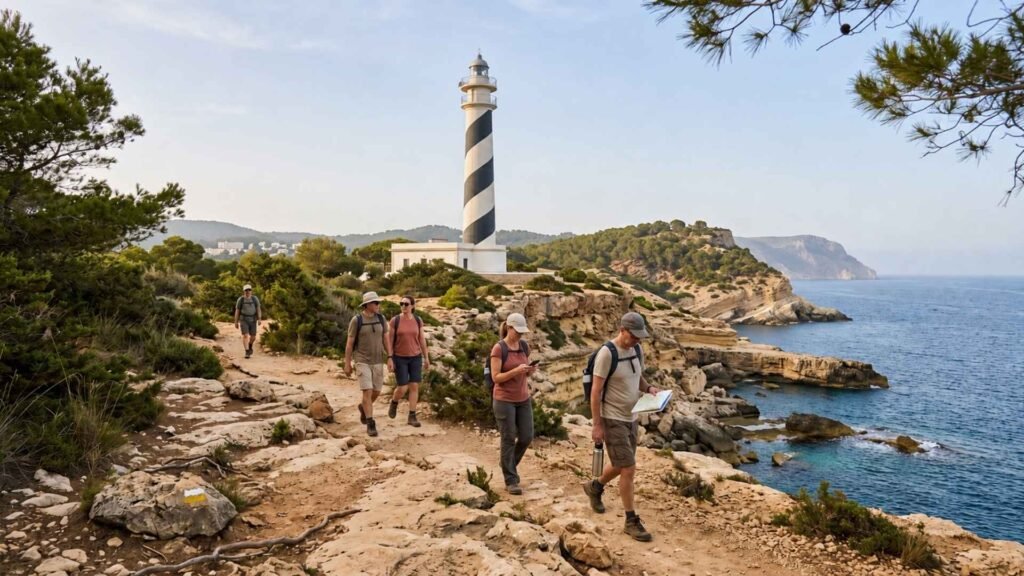
The Moscarter Lighthouse stands on the rugged northern coast near Portinatx.
Once you leave the developed resort area, rocky paths, pine-covered slopes, cliffs, and open Mediterranean views replace hotels and beach restaurants.
A shorter walk can begin near Port de Portinatx and follow the coast toward the lighthouse. A longer option connects Cala d’en Serra, the lighthouse, and Portinatx.
The official Ibiza hiking guide describes the complete route as approximately eight kilometers with an estimated walking time of around two hours. Actual time depends on your starting point, pace, conditions, and stops.
The trail is exposed, with no dependable facilities outside the developed area. Take secure footwear, water, sun protection, and an offline map. Avoid extreme heat, strong winds, poor visibility, and unstable cliff edges.
Best time to visit: Morning or late afternoon in mild weather.
Which Quiet Place in Ibiza Should You Choose?
Choose according to the experience you want:
- For a quiet beach: Cala d’en Serra offers dramatic scenery, S’Illot des Renclí provides more convenience, and Cala Mestella preserves the atmosphere of a tiny fishing cove.
- For genuine seclusion: Cala Llentrisca is the strongest choice, but it also requires the most preparation.
- For peaceful village life: Choose Sant Joan for exploring northern Ibiza, Santa Agnès for rural landscapes, or Es Cubells for cliff-top sea views.
- For walking: S’Estanyol combines woodland paths with swimming, Sa Talaia offers panoramic island views, and the Moscarter Lighthouse trail provides the most exposed coastal route.
Even remote coves can feel busy during summer because their usable shoreline and parking areas are limited.
Where to Stay for a Quiet Ibiza Holiday
Your choice of base will shape the trip more than any individual beach. Before booking, decide whether you prefer complete rural seclusion or a quieter town with restaurants and everyday services.
North Ibiza
The countryside around Sant Joan and Sant Miquel is best for rural hotels, restored fincas, and agrotourism properties. This area suits travelers who plan to explore by car and do not need shops or restaurants within walking distance.
Portinatx offers more hotels, restaurants, and family-friendly services. It is more convenient than the surrounding countryside but will not feel equally secluded during peak summer.
Northeast Ibiza
Stay outside Sant Carles or inland from Santa Eulària if you want a peaceful rural property while remaining within driving distance of restaurants, markets, and the eastern beaches.
Santa Eulària itself is suitable for travelers who value walkable services and a calmer evening atmosphere. It is quieter than Ibiza Town, but it should not be treated as a secluded retreat.
Rural West
Santa Agnès, Sant Mateu, and the countryside north of Sant Antoni are particularly well suited to fincas, small rural hotels, and slow driving itineraries. A car is usually essential, and evening dining options may require advance planning.
South and Southwest
Es Cubells and the countryside outside Sant Josep combine quieter accommodation with relatively practical access to Ibiza Town, the airport, and the southern coast.
Check the immediate surroundings carefully, as properties marketed under the same village name may be several kilometers apart.
Always inspect the property’s exact map location before booking. In rural Ibiza, accommodation described as being “near” a village or beach is not necessarily within walking distance.
How to Reach Quiet Places in Ibiza
A rental car is usually the most practical way to reach remote coves, inland villages, rural hotels, and hiking access points.
A compact car is easier to maneuver and park than a large SUV on narrow roads bordered by stone walls. Avoid blocking gates, passing spaces, or emergency access when roadside parking is limited.
Public transportation connects the principal towns and selected beaches, but it does not serve every secluded location. Ibiza introduced a reorganized bus network in 2026, so consult the official Ibiza bus website for current routes and schedules rather than relying on an older travel article.
Taxis can work for village restaurants and one-way journeys, but arranging a return from an isolated beach may be difficult. Scooters offer flexibility but require confidence on steep, poorly lit, or uneven rural roads.
How to Find Peace in Ibiza During Summer
A quiet location can still become busy during peak season. A few practical choices will improve your chances of a more relaxed visit:
- Arrive before 10:00 a.m. Parking is easier, temperatures are lower, and the shore is less crowded.
- Travel from Tuesday to Thursday. Small coves often receive more traffic at weekends.
- Explore one region each day. Crossing the island repeatedly creates unnecessary driving and parking stress.
- Consider shoulder season. May, early June, late September, and October are usually calmer than July and August.
- Use established paths. A short walk may lead away from the busiest access point, but never cross private land or damage vegetation in search of a “secret” viewpoint.
Responsible Travel in Quiet Ibiza
Remote places have fewer bins, toilets, staff, and environmental controls, making responsible behavior especially important.
Carry all rubbish away, keep music low, and never block narrow roads, gates, fishermen’s huts, or emergency access.
Respect fishing equipment and traditional boat houses. They are part of Ibiza’s living coastal heritage, not changing rooms or picnic shelters.
Remain on established paths near cliffs and protected vegetation. Avoid publishing unsafe shortcuts or encouraging access across private land.
Quiet Ibiza remains special only when visitors respect the landscapes and communities that make it peaceful.
Frequently Asked Questions About Quiet Places in Ibiza
Is There a Quiet Part of Ibiza?
Yes. North Ibiza, the rural northwest, and smaller inland villages are generally quieter than Ibiza Town, Platja d’en Bossa, and central Sant Antoni.
The countryside around Sant Joan, Santa Agnès, Sant Mateu, and Es Cubells is particularly suitable for a slower trip.
What Is the Quietest Beach in Ibiza?
Cala Llentrisca is among the most secluded beaches because reaching it requires extra effort and there are no general tourist facilities.
Cala d’en Serra and Cala Mestella are more accessible alternatives, although no small beach is guaranteed to be empty in summer.
Is North Ibiza Worth Visiting?
Yes. North Ibiza is worth visiting for its pine forests, cliffs, coastal walks, traditional villages, and small beaches.
It is especially suitable for couples, nature lovers, repeat visitors, and anyone who wants to experience Ibiza beyond its nightlife.
Can You Explore Quiet Ibiza Without a Car?
You can, but your choices will be more limited.
Buses serve the principal towns and selected beaches, while taxis can cover individual journeys. A rental car provides considerably more flexibility for remote coves, rural villages, and trailheads.
Are Ibiza’s Secluded Beaches Suitable for Children?
Suitability varies according to access, shade, facilities, and sea conditions.
S’Illot des Renclí is more practical for many families than Cala Llentrisca, which has difficult access and no facilities. Parents should assess walking distance, toilets, shade, water conditions, and emergency access before visiting a remote cove.
When Is the Best Time for a Quiet Ibiza Holiday?
May, early June, late September, and October usually offer the best balance of pleasant weather, lower visitor numbers, and operating businesses.
Winter is quieter, but many seasonal restaurants, accommodations, and beach services close.
Final Thoughts on Quiet Places in Ibiza
The best quiet places in Ibiza reveal an island of fishing traditions, pine forests, rural villages, farmland, and rugged Mediterranean coastline.
Choose one part of the island, begin early, and leave enough time to experience it without rushing.
Continue planning your trip with our guides to the best Ibiza beach clubs, the best sunset spots in Ibiza, and what to wear in Ibiza.