
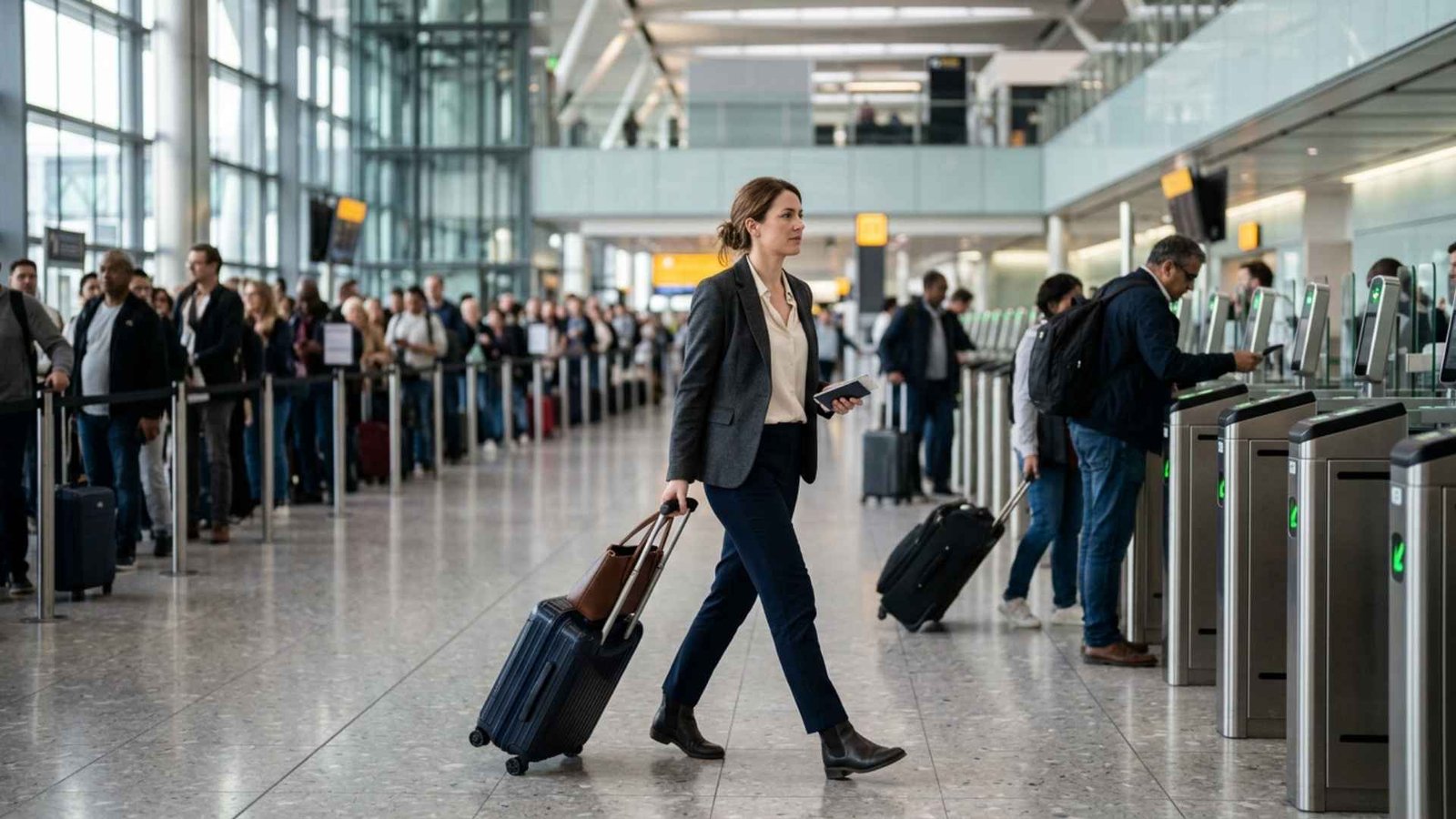
Landing in the UK used to mean one thing: long queues and unpredictable waiting times. You follow the signs, join the line, and wait — often without knowing how long it will take.
But in 2026, that experience has changed. Travelers can now move through the process in seconds using automated systems and biometric technology. Still, many people don’t fully understand how it works — and small mistakes can still lead to delays.
Can you use it with an ETA?
Why are some passengers rejected?
How can you avoid delays?
In this guide, you’ll learn everything you need to know — including rules, eligibility, and practical tips for a faster arrival.
⚡ UK eGates 2026: Quick Overview
⏱️ Processing time: 10–20 seconds per passenger
🧍 Manual queues: up to 90 minutes
📷 Technology: facial recognition + biometric passport
📄 ETA required: ✔ for visa-free travelers
🛂 Passport stamp: ❌ no longer required
👨👩👧 Age: 10+ (minors must be with an adult)
📍 Airports: Heathrow, Gatwick, Manchester, Edinburgh
UK eGates are the fastest way to skip queues — if everything is correctly set up.
🚨 UK ETA Rule 2026: Why You Can Be Denied Boarding
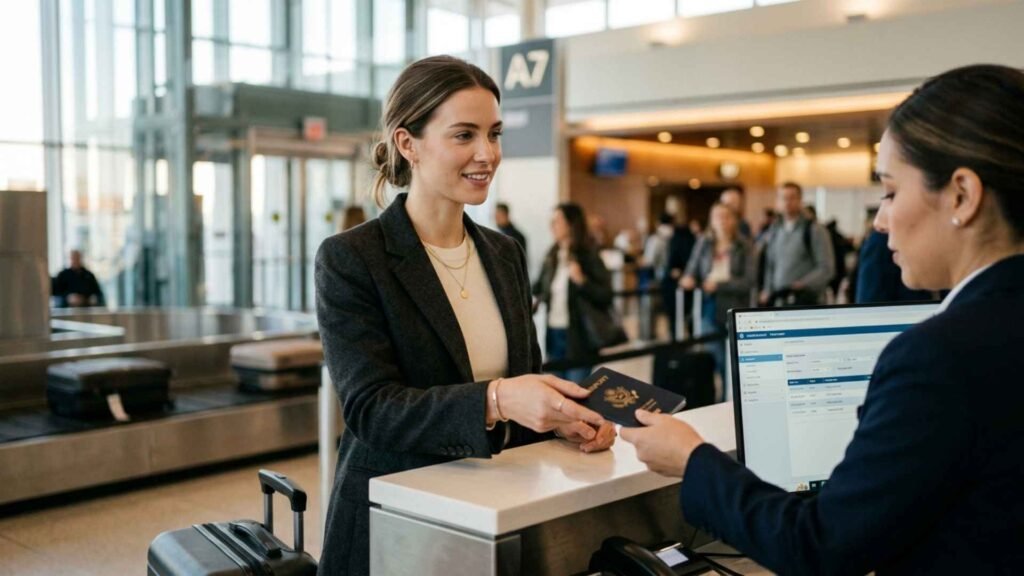
In 2026, the UK introduced a fully digital entry system — and it changed the travel process completely.
Before, most issues were handled at passport control after landing.
Now, everything starts before you even board your flight.
✈️ No Permission, No Travel
Airlines are legally required to verify your UK ETA (Electronic Travel Authorisation) before allowing you to board.
If your ETA is:
- missing
- not approved
- linked to the wrong passport
❌ You will be denied boarding
💡 Why This Matters
This is the biggest shift in UK travel.
You no longer “fix problems” at passport control
👉 You must arrive at the airport fully approved
In many cases, travelers don’t fail at UK eGates — they fail at check-in or the boarding gate
🔑 What This Means for Your Journey
✔ They only work if your ETA is already verified
✔ Your passport details must match perfectly
If everything is correct, your arrival can take seconds
If not, your journey may stop before it even begins
⚠️ Key Takeaway
👉 The UK border process no longer starts in the UK
👉 The UK border process now starts at your departure airport.
🔗 Go Deeper: UK Entry Rules & ETA Explained
If you want to fully understand how UK entry works in 2026 — including who needs ETA and how to avoid common mistakes — start here:
👉 UK ETA Guide 2026: Who Needs It & How to Apply
For official information and the latest updates, check the UK government website:
👉 UK ETA official application and requirements page
🔑 UK eGates Explained: How the System Works
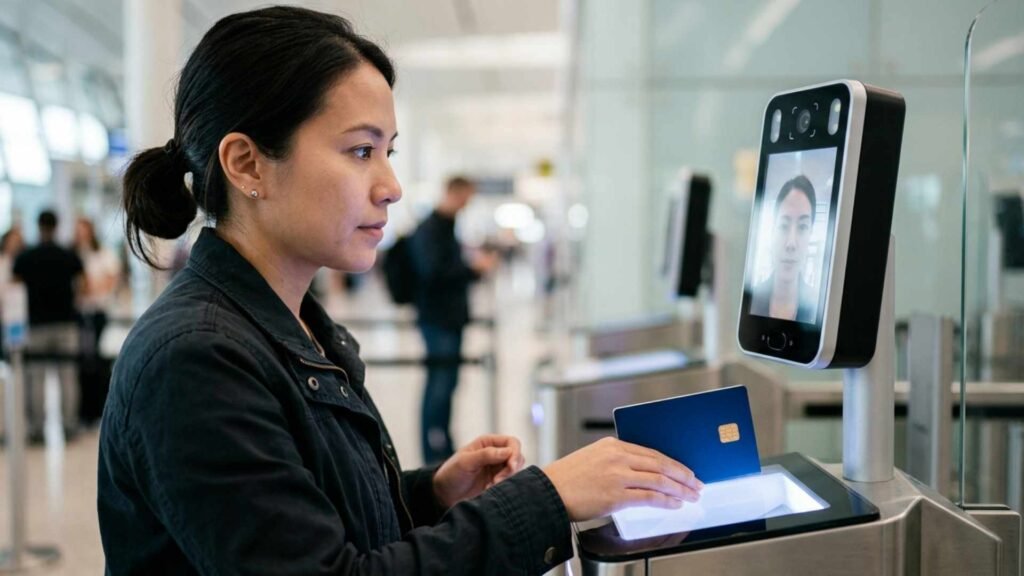
Using UK eGates may feel simple — but behind that quick process, a fully automated system is performing multiple checks in seconds.
When you scan your passport and look at the camera, several verifications happen at the same time:
- Your passport chip is scanned and validated
- Your face is matched with your passport photo using facial recognition
- Your data is checked against UK border security systems
This entire process takes just a few seconds and requires no interaction with a border officer.
✔ If everything matches → the gate opens and you continue
❌ If something doesn’t match → the system stops and redirects you to manual control
🔗 Where ETA Fits In
In 2026, UK eGates are part of a fully digital entry system — and your ETA plays a critical role.
Before you even reach UK eGates:
👉 Your ETA is verified before you travel
👉 It is then checked again when you use UK eGates
At the gate, the system confirms:
- Your ETA is valid
- Your passport matches the ETA record
- Your identity is consistent across all checks
If everything is aligned, the process is seamless.
If not, UK eGates will not allow you to pass.
❌ What Happens If Something Fails
Even small inconsistencies can stop the system.
👉 Common issues include:
- Passport and ETA mismatch
- Facial recognition issues
- Damaged or unreadable passport chip
❌ When this happens:
👉 You are redirected to a border officer for manual inspection
⚠️ Key Insight
UK eGates are not just fast — they are precise.
👉 They require perfect alignment between your passport, your identity, and your ETA.
✔ When everything matches → entry takes seconds
❌ When it doesn’t → delays are unavoidable
Want to understand the full arrival process in more detail?
UK Passport Control 2026: 👉 How to Pass Faster with eGates & Avoid Delays
⚠️ What Most Travelers Get Wrong About UK eGates
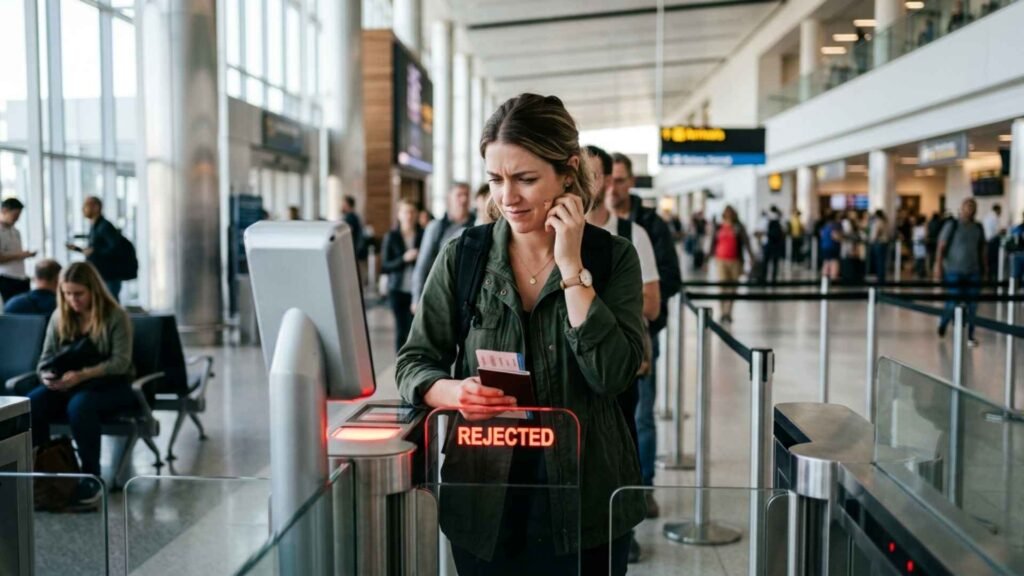
Most delays at UK eGates are preventable.
🚫 Common mistakes
- Applying for ETA with one passport and traveling with another
- Assuming ETA guarantees entry
- Moving during facial scan
- Wearing glasses or hats
- Using a damaged passport
These are the most common reasons travelers fail at UK eGates.
💡 Why This Matters
The system depends on precision.
👉 Even a small mismatch can stop the process
✔ Result: instant entry
❌ Result: manual passport control
🌍 Who Can Use UK eGates in 2026?

UK eGates are available to travelers from the following regions:
✔ Eligible travelers
- UK & Ireland
- EU / EEA / Switzerland
- USA, Canada, Australia, New Zealand
- Japan, Singapore, South Korea
Most of these travelers can enter the UK visa-free, but now require an approved ETA in 2026.
✔ Requirements
- Biometric passport
- Approved ETA
- Matching identity data
✔ Age rules
- ❌ Under 10 → cannot use UK eGates
- ✔ 10–17 → must be accompanied
- ✔ Adults → independent use
⚠️ Who cannot use UK eGates?
- Non-biometric passport holders
- Travelers without ETA
- Certain visa holders
👉 These travelers must use manual passport control.
⚠️ Special Situations That Affect UK eGates
Some situations can affect your ability to use UK eGates — even if you seem eligible.
- Dual nationality → travel with the passport linked to your digital status
- Right of Abode (formerly C-V holders) → status must be digitally linked, as physical certificates are no longer issued
- eVisa holders → ensure your passport details are fully updated in the UK system
- Any mismatch between your passport and digital record → may result in denied boarding or redirection at UK eGates
✈️ Transit Travelers: Do You Need an ETA?
If you need to pass through UK passport control during transit:
– Changing airports (e.g. Heathrow to Gatwick)
– Collecting and re-checking baggage
You will need an ETA, even if you are not staying in the UK.
Without a valid ETA, you may be denied boarding.
❌ Why You Get Rejected at UK eGates
Being rejected at UK eGates is common — and usually not serious.
🚫 Common reasons
- Face mismatch
- Passport scan failure
- Damaged passport
⚠️ Less obvious reasons
- ETA mismatch
- Wrong passport
- Random checks
If rejected, you are sent to a border officer.
⚡ Step-by-Step: How to Use UK eGates
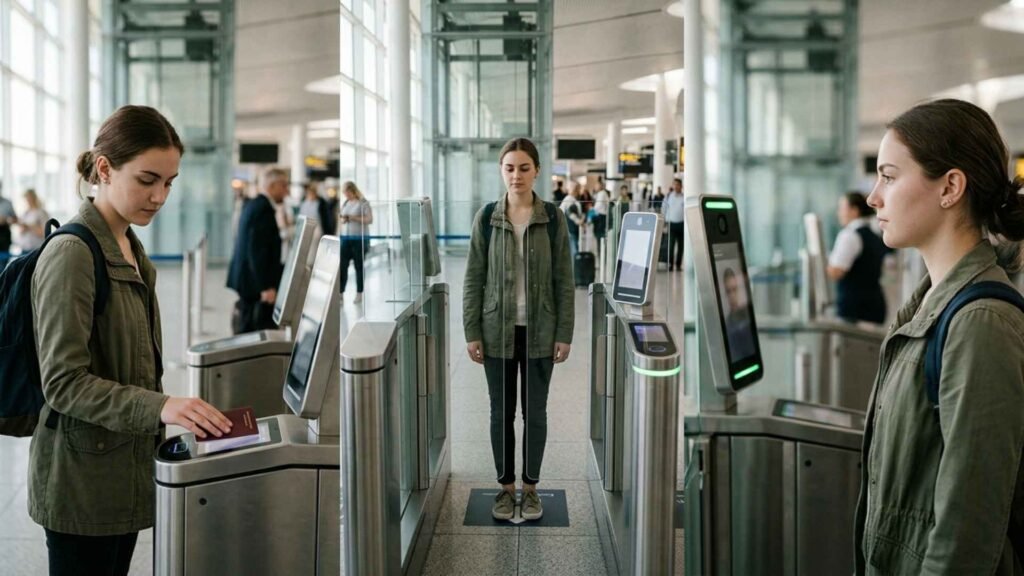
Before using UK eGates, it helps to know exactly what to expect.
👉 The process is simple — but small mistakes can slow you down.
1️⃣ Approach the UK eGates
👉 Have your passport ready before you reach the gate
👉 Remove any passport covers or holders
2️⃣ Scan your passport
👉 Place your passport flat on the scanner
👉 Wait until the system fully reads the chip
👉 Do not move the passport too quickly
3️⃣ Look at the camera
👉 Stand still and look directly ahead
👉 Remove glasses, hats, or anything covering your face
👉 Keep a neutral expression (no smiling or turning)
4️⃣ Wait for verification
👉 Stay still for a few seconds
👉 The system is matching your face with your passport and ETA
✔ Gate opens → proceed through
❌ Gate stays closed → follow staff instructions and go to manual control
💡 Pro Tip: Small movements, poor lighting, or incorrect positioning can cause delays
✔ Stay still
✔ Look straight
✔ Be patient for a few seconds
📊 UK eGates vs Passport Control: Real Wait Times (2026)
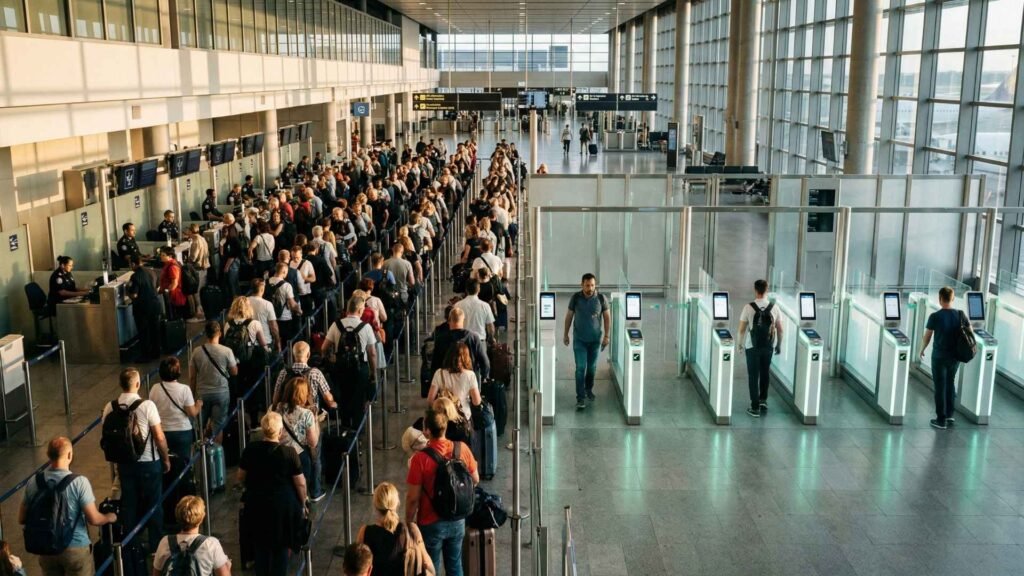
Real-world wait times at UK airports can vary significantly depending on location, time of day, and passenger volume. While UK eGates process passengers in seconds, total waiting time often depends on queue length and airport conditions.
The table below shows typical arrival times across major UK airports in 2026, comparing UK eGates with manual passport control.
| Airport | UK eGates | Manual Control |
|---|---|---|
| Heathrow T5 | 5–12 min | 45–90 min |
| Heathrow T2 | 8–15 min | 40–70 min |
| Gatwick | 10–20 min | 35–60 min |
| Manchester | 5–10 min | 30–50 min |
💡 What Affects Your Speed?
Your total time at passport control is influenced by several factors:
- Peak arrival hours
- Number of active eGates
- Passenger volume
- Occasional technical checks
Even though the system itself is fast, queues can still form depending on airport conditions.
⚠️ Key Insight
UK eGates don’t just save seconds — they can save up to an hour or more compared to manual control.
👨👩👧 Using UK eGates as a Family (Important Rules)
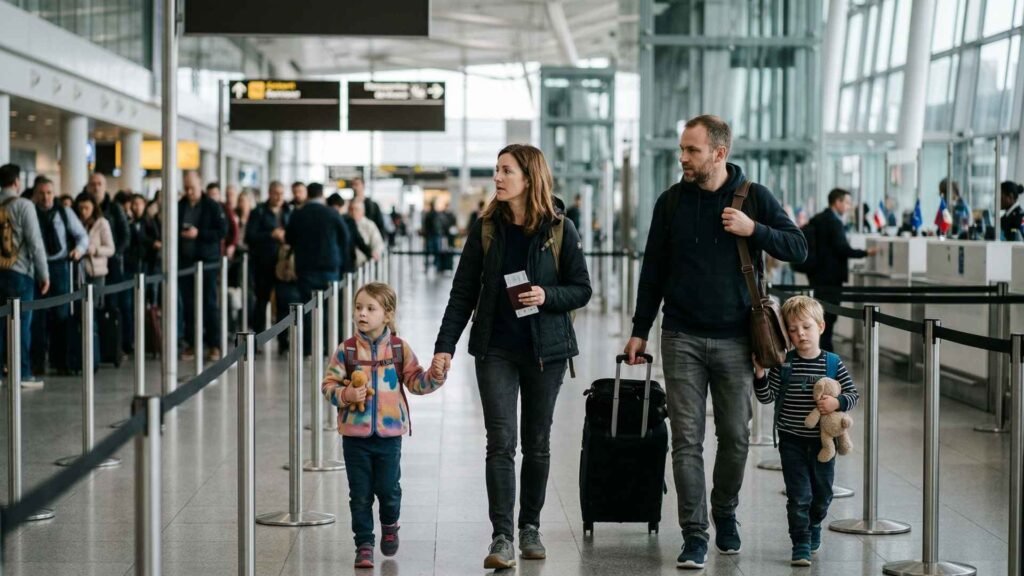
Traveling as a family can slightly change how you use UK eGates.
Not everyone in your group may be eligible.
👶 Age Rules You Should Know
❌ Children under 10 → cannot use UK eGates
✔ Ages 10–17 → can use, but must be accompanied by an adult
✔ Adults → can use independently
⚠️ What This Means in Practice
Even if most of your group can use UK eGates:
One ineligible traveler changes your entire strategy
- Families often get split into different queues
- This can lead to confusion and longer total waiting time
💡 Smart Family Strategy
👉 If one member cannot use UK eGates:
✔ Go through manual passport control together
✔ Stay as a group to avoid delays and miscommunication
Pro Tip: At busy airports, splitting up might seem faster — but: waiting separately can take longer than going through manual control together.
🧠 How to Pass UK eGates Faster (Pro Traveler Tips)
Using UK eGates is fast — but small details determine whether you pass in seconds or get delayed.
💰 2026 ETA Fee Update
Current ETA fee is £16. However, from April 8, 2026, the fee will increase to £20.
If your trip is after April, applying now can help you avoid the price increase and save money.
⚡ Before You Travel
✔ Apply for ETA at least 72 hours before departure
✔ Make sure your ETA is linked to the same passport you will travel with
✔ Double-check your passport is biometric and undamaged
📍 At the Airport
✔ Keep your passport out and ready before you reach the gate
✔ Remove passport covers or sleeves before scanning
✔ Choose lanes with fewer passengers (often far left or right)
🎯 At the Gate
✔ Place your passport flat and wait for the scan to complete
✔ Look directly at the camera — keep your head still
✔ Remove glasses, hats, or anything covering your face
✔ Keep a neutral expression (avoid smiling or moving)
⏱️ Timing Matters
✔ Avoid peak arrival times (early morning & late afternoon)
✔ Large international arrivals can increase queue times
Even though UK eGates are fast, queues can still form.
💡 Insider Insight
Most delays are not caused by the system — they are caused by user mistakes or poor timing.
⚠️ Key Takeaway
The difference between a 20-second entry and a 60-minute delay often comes down to small details.
🎯 Final Thoughts
In 2026, entering the UK is faster — if you are prepared.
ETA gets you on the plane.
UK eGates get you through passport control.
Used correctly, the process takes seconds. Used incorrectly, it can cost you up to an hour.
The difference is in the details.
An approved ETA allows you to travel — not to enter the UK.