

You don’t have a focus problem. You have an overstimulation problem. A dopamine detox is not about removing technology — it’s about recalibrating how your brain responds to stimulation.
You’re not distracted because you lack discipline.
You’re distracted because your brain has adapted to constant mental noise.
Every notification, scroll, and quick burst of content trains your brain to expect instant rewards. Over time, this reduces your ability to focus, think deeply, and stay motivated.
A structured dopamine detox helps restore your brain’s natural balance and rebuild your ability to focus.
🧠 What Is Dopamine & Why It Matters
Dopamine is a neurotransmitter that drives motivation, reward, and behavior.
It’s often misunderstood as a “pleasure chemical,” but its real role is anticipation — it pushes you to take action, seek rewards, and stay engaged.
Dopamine is released when your brain expects or experiences something rewarding.
This can come from:
- checking your phone
- notifications
- social media
- completing tasks
- eating enjoyable food
The key difference is how often and how intensely this happens.
Natural rewards create stable signals. Digital environments create rapid spikes — followed by quick drops.
Over time, this imbalance starts to affect how your brain functions.
🧠 Why You Feel Mentally Overloaded (The Dopamine Loop)
Your brain isn’t built for continuous digital overload.
Every time you switch between notifications, messages, and short content, your attention resets. Over time, this creates attention fragmentation, making it harder to focus.
Modern platforms are designed around fast, repeated rewards. Each interaction triggers a small dopamine spike.
At first, this feels engaging. But over time, your brain begins to depend on these quick hits.
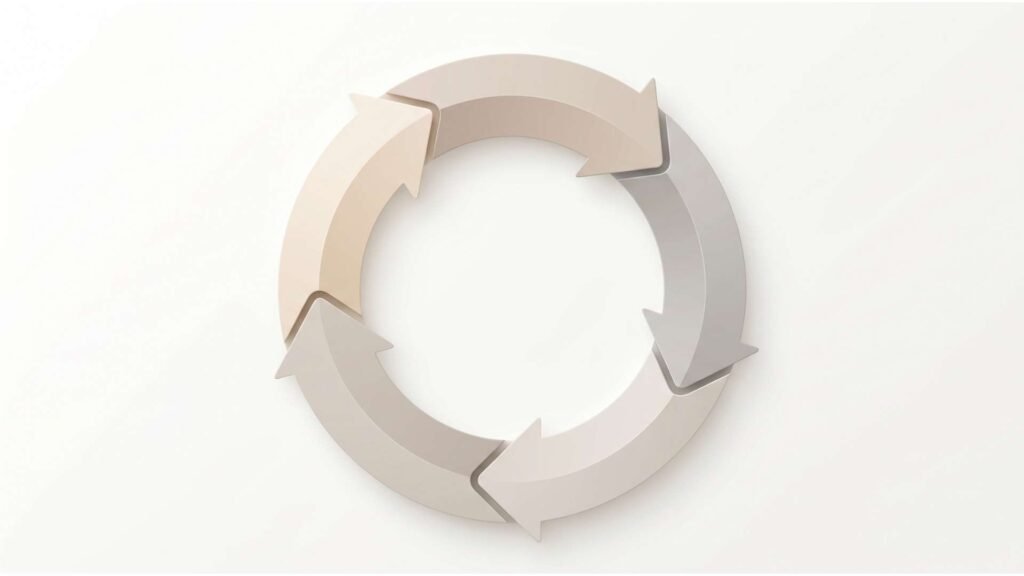
This creates a loop:
trigger → spike → short satisfaction → drop → craving → repeat
As this continues, your focus weakens and your baseline motivation drops.
Instead of choosing what to focus on, your brain reacts to what appears next.
The result:
→ lower motivation
→ shorter attention span
→ ongoing mental fatigue
⚡ What Is a Dopamine Detox?
A dopamine detox is a structured way to reduce overstimulation so your brain can return to a more stable state.
It doesn’t remove dopamine — it helps you regain control over how your brain responds to stimulation.
With a consistent dopamine detox, you can:
- think more clearly
- rebuild focus
- stabilize energy
- reduce impulsive behavior
🧠 The Dopamine Reset Framework

A successful dopamine detox is not about restriction — it’s about restructuring how your brain responds to stimulation.
Instead of relying on willpower, this framework helps you reset your system in a sustainable way.
1. Awareness
Before you can change anything, you need to see what’s driving your behavior.
Identify your main dopamine triggers:
- social media
- notifications
- fast, short-form content
- constant multitasking
Most of these are not intentional — they’re automatic habits.
Becoming aware of them is the first step to regaining control.
2. Reduction
Once you recognize your triggers, the goal is not to eliminate everything — but to reduce high-frequency stimulation.
Focus on:
- limiting fast, low-value content
- reducing constant switching between tasks
- creating space between inputs
This allows your brain to stabilize instead of constantly reacting.
3. Rewiring
This is where the real transformation happens.
You’re not just removing stimulation — you’re replacing it with activities that rebuild focus and mental endurance.
Shift toward:
- deep work sessions
- long-form reading
- single-task focus
- intentional thinking
Over time, your brain relearns how to engage without needing constant rewards.
💡 A well-structured dopamine detox doesn’t force focus — it restores the conditions where focus becomes natural again.
⚖️ High vs Low Dopamine Activities

Not all activities affect your brain the same way.
Some constantly push your brain into a reactive state, while others help it slow down and regain balance.
Understanding this difference is the first step to improving your focus.
High Dopamine (Instant Reward)
These activities create rapid, repeated rewards that train your brain to seek constant input:
- scrolling social media
- short-form video content
- multitasking between apps
- frequent notifications
- fast, low-effort entertainment
These don’t just take your time — they increase mental noise and reduce your ability to focus deeply.
Low Dopamine (Sustainable Reward)
These activities feel slower, but they help your brain rebuild attention and clarity:
- walking without your phone
- reading long-form content
- journaling or quiet thinking
- working on a single task
- spending time in nature
These activities strengthen your ability to stay present and think clearly.
💡 A structured dopamine detox shifts your brain from quick spikes to more stable, sustainable rewards.
🌿 Habits That Naturally Increase and Balance Dopamine
A dopamine detox is not only about reducing stimulation — it also supports your brain through sustainable habits.
You can naturally balance dopamine with:
- regular movement
- natural sunlight
- quality sleep
- protein-rich nutrition (tyrosine sources)
- completing small tasks
- deep focus sessions
These habits build stable motivation instead of short-term spikes.
💥 The “Boredom Threshold” (Why Most People Quit)

When stimulation drops, your brain doesn’t feel calm — it feels uncomfortable. It’s used to constant input and instant rewards, so without that, a temporary imbalance appears.
You may notice:
- restlessness
- unfamiliar silence
- a short-term drop in motivation
Most people quit here thinking something is wrong — but this is where the reset begins.
Boredom isn’t something to avoid; it’s where focus, clarity, and real motivation return.
⏱️ How Long Does a Dopamine Detox Take to Work?
A dopamine detox doesn’t create instant change — it works gradually as your brain returns to a more natural state.
Most people notice small but meaningful shifts within a few days:
- 24 hours → less mental noise, reduced urge to check your phone
- 2–3 days → clearer thinking, more stable attention
- 5–7 days → stronger focus, better control over distractions
These changes happen as your brain stops reacting to constant mental noise and begins to stabilize.
💡 Consistency matters more than speed — small habits repeated daily create lasting results.
⚡ Quick Dopamine Reset (5–10 Minutes)

When your brain feels overloaded, you don’t need a full reset — you need a short interruption in the stimulation cycle.
A quick dopamine reset helps your mind step away from constant digital noise and regain clarity.
Try this:
- step away from screens
- take a short walk
- drink water
- sit in silence
These simple actions create space for your brain to stabilize and reset.
💡 Even a few minutes can reduce mental noise, restore clarity, and help you regain control over your focus.
🛠 3 Simple Fixes That Work Fast
If your focus feels broken, start with these three simple actions:
1. Reduce input → cut notifications and fast content
2. Create space → step away from screens throughout the day
3. Replace stimulation → switch to low-dopamine activities
These three shifts help reset your brain quickly and make focus feel natural again.
🎯 Who Should Try a Dopamine Detox?
A dopamine detox is especially useful when your focus feels scattered and your energy doesn’t match your effort.
This approach is ideal if you:
- feel mentally tired without a clear reason
- struggle to stay focused on simple tasks
- feel constantly distracted or pulled in different directions
- rely heavily on constant digital stimulation
If this feels familiar, your brain may not need more effort — it needs less noise.
🔄 What to Do Instead of Constant Stimulation
Reducing input is only part of the process — what you replace it with is what actually rebuilds focus.
Shift toward activities that require presence and intention:
- walking without your phone
- journaling
- reading
- quiet thinking
- creative work
These may feel slower at first, but they help your brain regain depth and sustained attention.
⚠️ Common Dopamine Detox Mistakes
A dopamine detox often fails because of how it’s applied.
Common mistakes include:
- quitting everything at once
- replacing one distraction with another
- relying only on willpower
- not building supportive habits
A sustainable approach works better than an extreme one.
🛠 Tools That Support a Dopamine Detox
A dopamine detox becomes much easier when your environment supports your focus instead of constantly competing for your attention.
Instead of relying only on discipline, use simple tools to reduce unnecessary digital noise:
- app blockers to limit access to distracting platforms
- notification filters to reduce constant interruptions
- grayscale mode to make your screen less stimulating
- screen tracking to increase awareness of your usage
These tools don’t just limit behavior — they reshape your environment so focus becomes easier by default.
⚖️ The Impact of a Dopamine Detox

A dopamine detox doesn’t create instant results — but as your brain stabilizes, the difference becomes clear.
At first, the change is subtle. Then it becomes noticeable in how you think, feel, and work.
Before:
- low focus and constant distraction
- reactive, scattered thinking
- mental fatigue without a clear reason
- difficulty staying on one task
After:
- deeper, more sustained focus
- clearer and more structured thinking
- stable energy throughout the day
- improved ability to stay present
As overstimulation decreases, your brain begins to process information more efficiently and sustain attention with less effort.
- sharper thinking
- higher quality output with fewer errors
- reduced mental fatigue and lower risk of burnout
Instead of constantly reacting, your brain begins to operate with intention and depth.
💥 This is not just a wellness habit — it’s a performance advantage in a distraction-heavy world.
🌿 How Often Should You Do It?
A dopamine detox works best when it becomes part of your routine.
- daily → small adjustments
- weekly → a partial reset
- monthly → a deeper reset
Each level builds on the other to create a sustainable system.
💡 Small, consistent actions lead to lasting change.
🧪 Is Dopamine Detox Scientifically Proven?
A dopamine detox doesn’t remove dopamine — it helps stabilize how your brain responds to stimulation.
It’s not a medical protocol, but it aligns with key neuroscience principles:
- attention regulation
- reward system balance
- habit formation
By reducing overstimulation, your brain returns to a more stable baseline and responds to rewards more naturally.
💡 In simple terms, it works with your brain — not against it.
🔗 Go Deeper
If you’re struggling with focus and mental clarity, these guides will help you go deeper:
👉 Still feel mentally overloaded? → Digital Detox Guide (reduce daily noise)
👉 Brain feels slow or foggy? → Brain Fog Fix (clear your mind fast)
👉 Struggling to stay focused all day? → Stay Focused Guide (build deep focus habits)
💬 Final Insight
You don’t need less dopamine — you need control over it.
Focus isn’t something you’ve lost;
it’s something buried under constant noise.
When you reduce that noise, your mind doesn’t become empty — it becomes clear.
💡 And that’s where real focus, motivation, and mental clarity begin to return.