
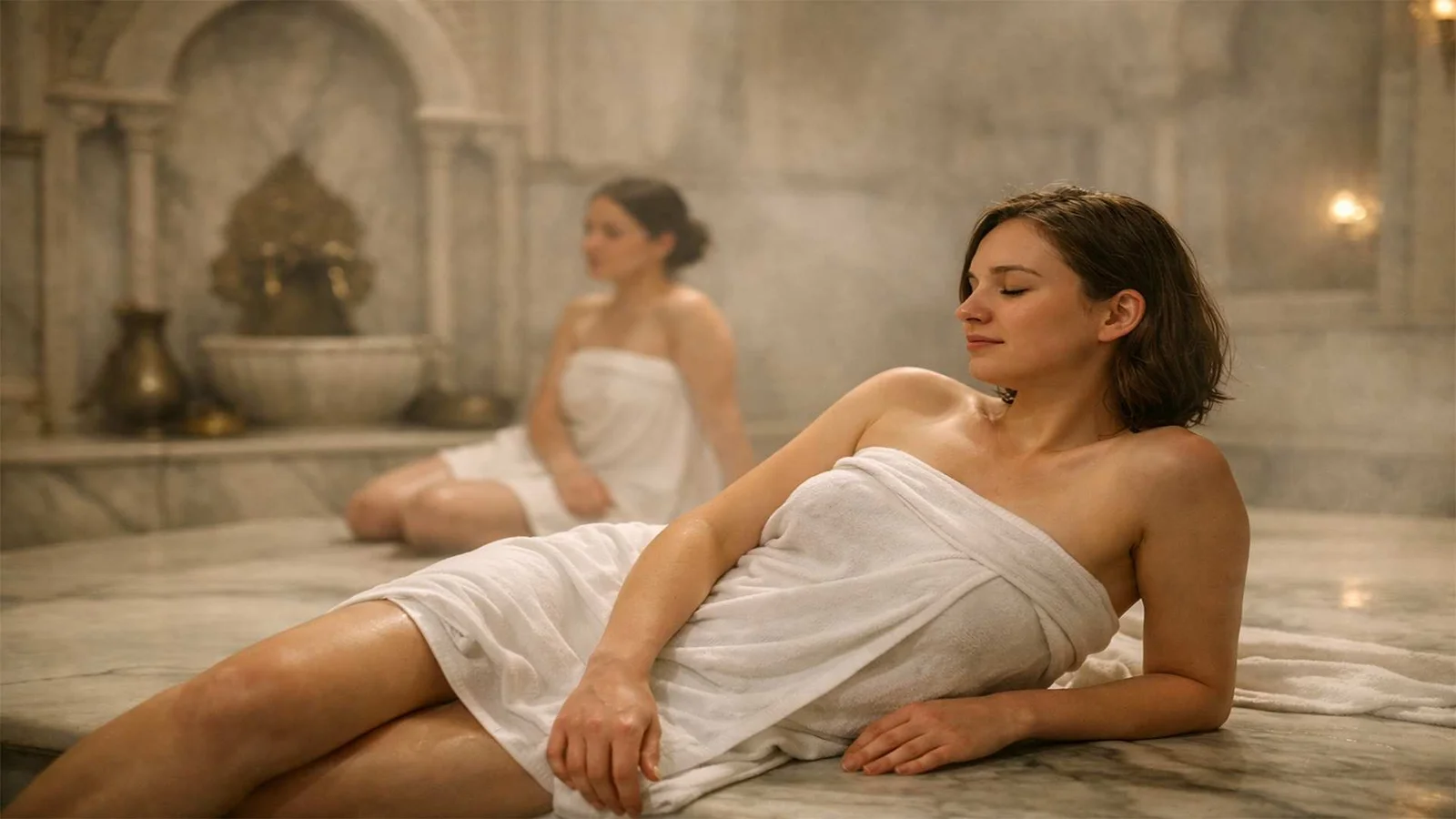
A traditional Turkish bath is one of the most memorable cultural experiences you can have in Türkiye. Yet for first-time visitors, the idea of entering a hammam can raise plenty of questions: What should you wear? Do you have to get naked? Is the scrub painful? Are men and women separated?
This Turkish Bath Guide explains the entire experience from arrival to relaxation, including what happens inside, what to bring, how much it costs, whether you should tip, and how to choose the right hammam.
Quick Answer: What to Expect at a Turkish Bath
A traditional Turkish bath usually combines time in a heated marble room with washing, exfoliation, and a foam massage performed by a hammam attendant.
| Question | Quick Answer |
|---|---|
| What happens? | You warm up, receive a body scrub, rinse, enjoy a foam wash, and relax |
| What should you wear? | Usually disposable underwear, swimwear, or a traditional peştemal |
| Do you get completely naked? | Usually not; most visitors keep their lower body covered |
| Are men and women separated? | Usually yes, through separate sections or operating hours |
| Can couples visit together? | Only at selected hammams |
| How long does it take? | Usually 60–90 minutes; premium packages may take two hours |
| Is the scrub painful? | It can feel vigorous but should not be genuinely painful |
| How much does it cost? | Prices range from inexpensive local baths to €100–€300+ luxury rituals |
| Should you tip? | Often yes, unless service is explicitly included |
| What should you bring? | Dry underwear, swimwear if required, and basic toiletries |
| Is it hygienic? | Reputable hammams regularly rinse surfaces and use fresh linens, but standards vary |
| Is it worth it? | Yes, especially if you value cultural experiences, historic architecture, and traditional wellness rituals |
If you are still deciding where to go, compare the city’s leading historic bathhouses in our guide to the best Turkish hammams in Istanbul.
What Is a Turkish Bath?
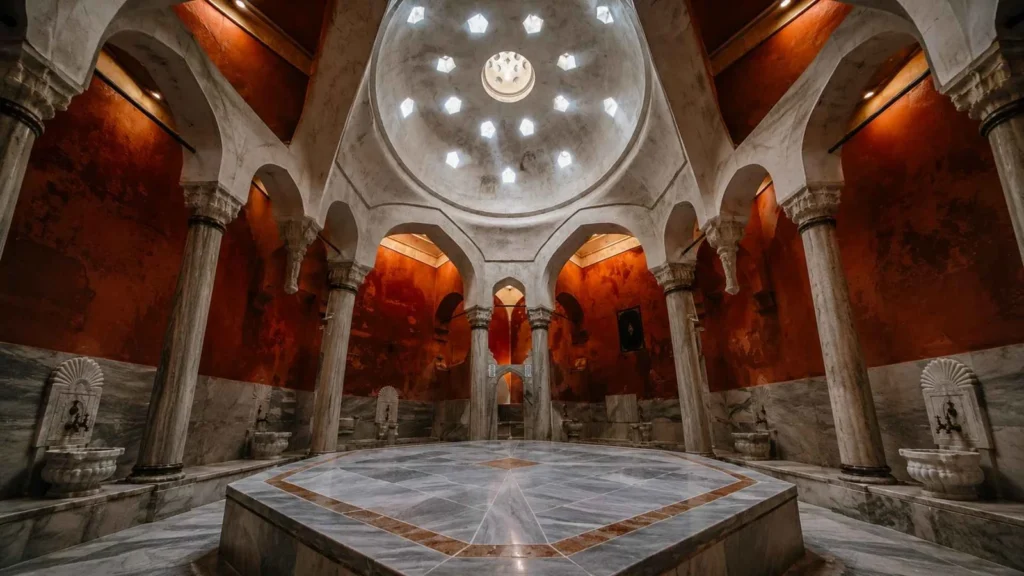
A Turkish bath, known locally as a hamam or hammam, is a traditional public bath built around heat, water, cleansing, and relaxation.
Unlike a modern sauna, a hammam does not normally rely on extremely hot, dry air. The bathing rooms are warm and humid, with heated marble surfaces, running water, stone basins, and a large central platform known as the göbek taşı.
A traditional hammam ritual may include:
- Relaxing on heated marble
- Washing with warm water
- Full-body exfoliation with a kese mitt
- A foam or bubble wash
- A short massage during the washing ritual
- Additional oil or aromatherapy massage
- Tea, sherbet, water, or refreshments afterward
The precise experience depends on the hammam and the package you select. Some neighborhood bathhouses allow visitors to bathe independently, while restored historic hammams usually offer structured treatments led by an attendant.
The attendant is traditionally called a tellak in the men’s section and a natır in the women’s section, although many businesses now simply use terms such as hammam attendant or therapist.
A Brief History of the Turkish Hammam
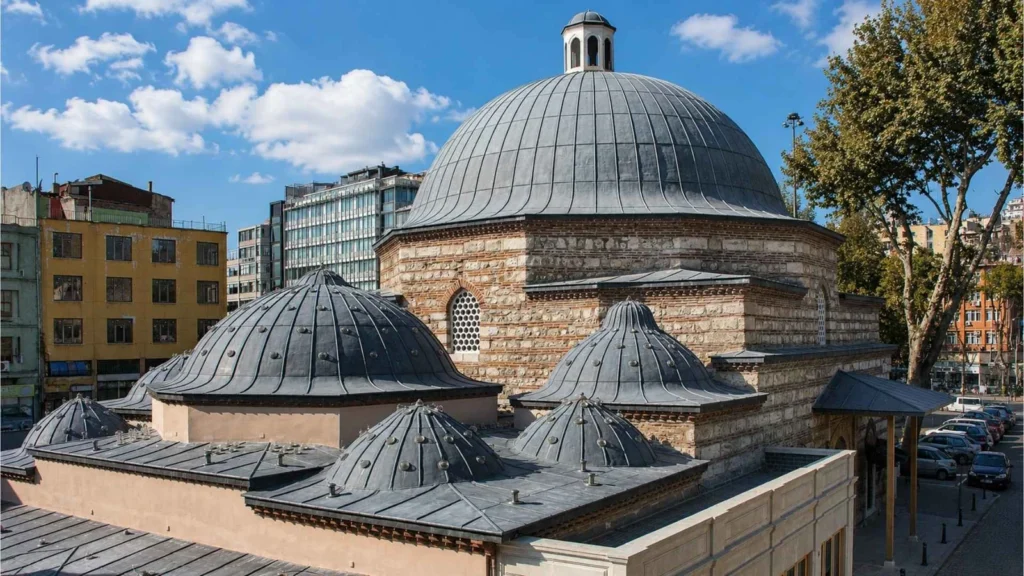
Turkish hammam culture developed through a combination of Roman public bathing traditions and Islamic practices emphasizing cleanliness and access to flowing water.
During the Ottoman period, hammams became an essential part of urban life. They were not simply places to wash. They also functioned as social spaces where people gathered, rested, celebrated important occasions, and exchanged local news.
Hammams were particularly important before private bathrooms became common. Some were built as independent neighborhood baths, while others formed part of larger religious and charitable complexes that included mosques, schools, kitchens, and fountains.
Several of Istanbul’s most famous bathhouses were designed by the celebrated Ottoman architect Mimar Sinan. These include Kılıç Ali Paşa Hamamı, Süleymaniye Hamamı, and Hürrem Sultan Hamamı.
The official GoTürkiye overview of Turkish hammam culture offers further background on the hammam’s role in Ottoman cleanliness, community life, and ceremonial traditions.
Today, Istanbul’s hammams range from simple neighborhood baths to carefully restored architectural landmarks offering premium spa-style packages.
How Does a Turkish Bath Work?
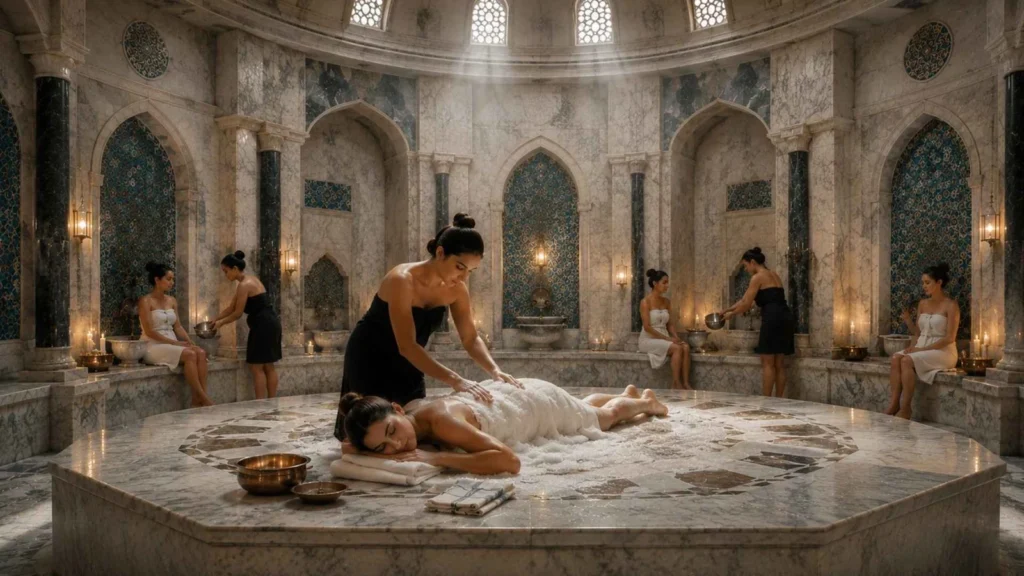
Although each property has its own routine, most Turkish bath experiences follow the same general sequence.
1. Arrival and Check-In
When you arrive, the receptionist confirms your reservation and explains the package you selected. You may be asked whether you have any health concerns, skin sensitivity, recent injuries, or preferences regarding the strength of the scrub.
Some hammams request payment in advance, while others collect payment after the treatment. Confirm whether tips, massages, drinks, and additional treatments are included.
Arrive approximately 15 minutes before your scheduled appointment. Historic hammams can have multiple changing areas and unfamiliar layouts, so arriving early makes the beginning of the experience less stressful.
2. Changing and Receiving Your Peştemal
You will be directed to a private changing cabin, locker, or dressing area.
Most hammams provide:
- A peştemal, the thin cotton towel wrapped around the body
- Disposable underwear or briefs
- Slippers
- A locker or private changing cabin
- Towels for drying afterward
- Basic toiletries
The peştemal is one of the most recognizable elements of Turkish bathing culture. It is lightweight, dries quickly, and is used to maintain coverage while moving through the hammam.
You can read more about this traditional textile in GoTürkiye’s introduction to Turkish bath products.
3. Entering the Warm Room
Traditional hammam buildings often have three main areas:
- Soğukluk: the cooler entrance, changing, and relaxation area
- Ilıklık: the transitional warm room
- Sıcaklık: the hot bathing chamber
Modern visitor experiences do not always move formally through all three spaces, but the gradual transition in temperature remains an important part of the ritual.
The attendant may lead you directly into the main marble chamber and ask you to sit beside a basin or lie on the heated central stone.
4. Warming Up on the Marble
You normally spend around 10–20 minutes warming up before exfoliation begins.
The combination of warmth and humidity softens the skin and prepares the body for the scrub. You may pour warm water over yourself using a metal or copper bowl called a tas.
This stage should feel warm and relaxing rather than overwhelmingly hot. If you become dizzy, nauseous, weak, or uncomfortable, leave the hot room and tell a staff member immediately.
5. The Kese Exfoliation
The attendant uses a textured mitt called a kese to exfoliate the body.
The scrub usually covers the arms, legs, back, shoulders, and torso. The attendant may ask you to turn over or sit up so they can reach different areas.
First-time visitors are often surprised by the visible rolls of dead skin removed during this stage. This is normal and does not mean that your skin was particularly dirty.
A traditional kese scrub can be vigorous. It should feel firm, but it should not cause sharp pain, broken skin, or significant discomfort. Ask for a gentler scrub if you have sensitive skin.
6. Rinsing
After exfoliation, the attendant rinses away the loosened skin with bowls of warm water.
The water may initially feel cooler than expected after lying on hot marble. The attendant will normally check whether the temperature is comfortable.
This stage creates a clear transition between exfoliation and the foam treatment.
7. Foam Wash and Massage
The attendant creates a large amount of foam using a soapy cloth or special fabric pouch. The bubbles are spread across your body while you lie on the warm marble.
This part is sometimes described as a foam massage, but it is primarily a cleansing and washing ritual. It may include rhythmic pressure, light stretching, and brief massage movements.
The standard foam wash is not equivalent to a full therapeutic massage. If you want a longer oil, aromatherapy, or deep-tissue massage, you will usually need to select a package that includes it.
8. Final Rinse and Hair Washing
Once the foam ritual is complete, the attendant rinses your body thoroughly. Some packages also include shampooing and washing the hair.
If you have treated, colored, very dry, curly, or textured hair, ask whether you can skip the hair wash or use your own products.
You may also want to avoid washing your hair if you plan to continue sightseeing immediately afterward.
9. Cooling Down and Relaxing
After the washing ritual, you are wrapped in dry towels and guided back to the cooler relaxation area.
Depending on the hammam, you may be offered:
- Water
- Turkish tea
- Herbal tea
- Traditional sherbet
- Coffee
- Fruit or light refreshments
Take time to cool down and rehydrate. Standing up quickly after spending time in a hot room can make some visitors feel lightheaded.
Premium packages may continue with an oil massage, facial, foot treatment, body mask, or private relaxation session.
What Happens During a Turkish Bath?
The basic ritual is straightforward, but the atmosphere varies considerably between hammams.
In a local bathhouse, the experience may feel communal, practical, and largely self-directed. Visitors may bring their own soap, shampoo, towel, and kese, then pay separately if they want an attendant to perform the scrub.
In a restored historic hammam, the visit is usually more structured. Staff guide you through each stage, textiles and toiletries are provided, and reservations are often required. These hammams tend to place greater emphasis on architecture, hospitality, and presentation.
Luxury hammams may add private massage rooms, premium skincare products, longer treatments, robes, refreshments, and personalized service.
None of these formats is automatically more authentic than another. The best choice depends on whether you want a local bathing experience, an accessible introduction, or a luxurious cultural ritual.
What Should You Wear to a Turkish Bath?
What you wear depends on the property’s rules, the gender arrangement, and your personal comfort.
Most visitors wear one of the following:
- Disposable underwear supplied by the hammam
- Swimwear or bikini bottoms
- Their own underwear
- A peştemal wrapped around the body
In many traditional hammams, guests keep the lower body covered throughout the experience. Women may remove their bikini top or bra during the scrub and foam wash, but this varies according to the hammam and personal preference.
Some attendants may reposition the peştemal so they can exfoliate your back, shoulders, or legs. They are accustomed to working around appropriate coverage.
You should not assume that swimwear is either required or prohibited. Check the hammam’s current policy before arriving, especially if privacy is important to you.
Our upcoming guide to what to wear to a Turkish bath will explain the clothing options, changing process, and packing essentials in greater detail.
Do You Get Naked in a Turkish Bath?
Usually, you do not need to be completely naked.
Traditional hammams generally involve more body exposure than a hotel spa, but visitors normally retain some form of lower-body covering. The peştemal provides additional coverage while walking through communal areas.
Levels of modesty vary between local and visitor-oriented hammams. If you feel uncomfortable at any point, tell the attendant clearly. You can keep more clothing on, decline a particular part of the treatment, or ask for the towel to be repositioned.
A reputable hammam should respect reasonable privacy boundaries.
What Should You Bring?
Most established hammams provide everything needed for the basic ritual. However, bringing a few personal items can make the visit more comfortable.
Consider packing:
- Dry underwear for afterward
- Swimwear if the hammam requires it
- A waterproof bag for damp clothing
- Your preferred shampoo and conditioner
- A comb or hairbrush
- Hair ties
- Moisturizer
- Contact-lens case and solution
- A small amount of cash for tipping
Avoid wearing valuable jewelry. Rings, necklaces, watches, and bracelets can become hot, interfere with the scrub, or be misplaced in the changing area.
You also do not need to bring an expensive kese. Visitor-oriented historic hammams normally supply the necessary exfoliation mitt, often using a new or individually allocated one for each guest.
Are Turkish Baths Mixed?
Most traditional Turkish baths are not mixed-gender spaces.
A hammam generally operates in one of three ways:
- Separate men’s and women’s sections
- One bathing area used by women and men at different times
- Mixed or couples-oriented sessions at designated hours
Large historic hammams such as Hürrem Sultan Hamamı and Cağaloğlu Hamamı have separate bathing sections, allowing men and women to visit at the same time while receiving their treatments separately.
Other properties use the same historic chamber at different hours. Kılıç Ali Paşa Hamamı, for example, traditionally schedules separate operating periods for women and men.
Always verify the current timetable before booking. Do not assume that everyone in your group can enter together simply because the hammam is open.
Can Couples Visit a Turkish Bath Together?
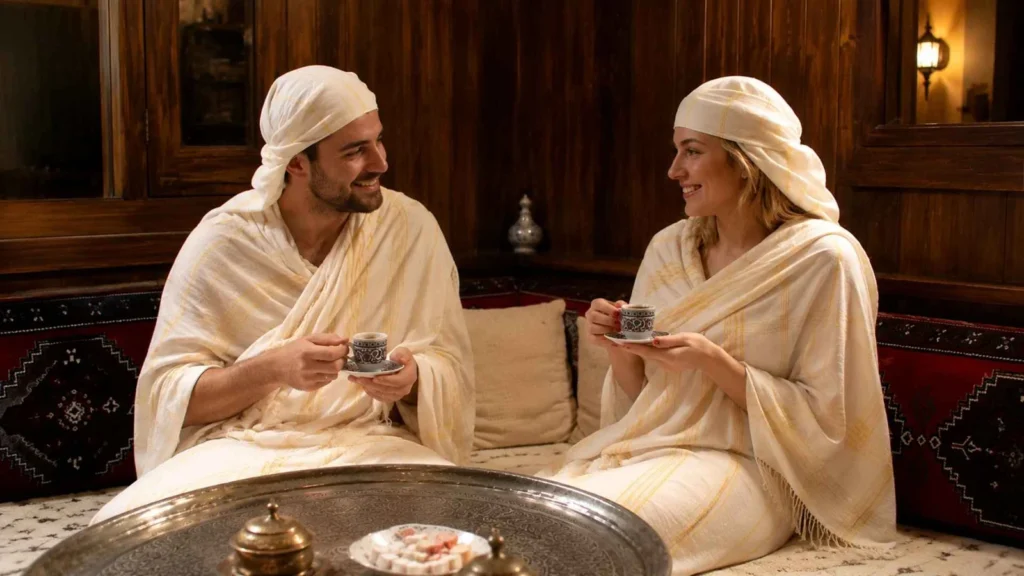
Yes, but only at selected hammams.
Most traditional bathhouses separate guests according to gender, meaning heterosexual couples may arrive and relax afterward together but complete the bathing ritual in different sections or at different times.
Süleymaniye Hamamı is unusual because its main visitor experience is designed primarily for couples and mixed groups. This makes it one of the most practical choices for travelers who want to share the same historic bathing room.
However, a couples-friendly hammam is not necessarily the same as a private couples spa. Other guests may be present, and treatments may be performed by attendants rather than experienced side by side in total privacy.
How Long Does a Turkish Bath Take?
A complete Turkish bath experience usually takes between 60 and 90 minutes.
A typical schedule may look like this:
| Stage | Approximate Time |
|---|---|
| Changing and preparation | 10–15 minutes |
| Warming up | 10–20 minutes |
| Kese scrub | 10–15 minutes |
| Foam wash and rinse | 15–25 minutes |
| Cooling down and relaxing | 15–30 minutes |
Premium packages with an oil massage, facial, body mask, or refreshments may last between 90 minutes and more than two hours.
Do not plan a tight sightseeing schedule immediately afterward. Allow additional time for changing, drying your hair, cooling down, and traveling to your next destination.
How Much Does a Turkish Bath Cost?
Turkish bath prices vary dramatically according to the location, architecture, level of service, and treatment package.
As a broad planning guide:
| Type of Hammam | Typical Experience |
|---|---|
| Local neighborhood hammam | Basic admission, self-service bathing, optional scrub |
| Mid-range visitor hammam | Admission, kese, foam wash, towels, and basic refreshments |
| Historic premium hammam | Restored architecture, guided ritual, quality textiles, and polished service |
| Luxury package | Extended massage, facial, body treatments, private rooms, or premium refreshments |
A neighborhood hammam can cost only a small fraction of a premium visitor experience. At Istanbul’s best-known historic bathhouses, entry-level rituals commonly begin around €50–€100, while elaborate packages may reach €200–€300 or more.
Prices quoted in Turkish lira can change frequently because of inflation and exchange-rate movements. Treat any online figure as a planning estimate and confirm the current package price on the hammam’s official website before booking.
Also check exactly what the price includes. A low advertised rate may cover admission only, while the kese, foam wash, massage, drinks, and tip may be charged separately.
For an accessible historic introduction, consider our Çemberlitaş Hamamı review. For a more elaborate premium ritual, compare our reviews of Hürrem Sultan Hamamı and Cağaloğlu Hamamı.
Should You Tip at a Turkish Bath?
Tipping is customary at many Turkish hammams, especially when an attendant performs the scrub, washing ritual, or massage.
There is no universal percentage that applies to every bathhouse. Around 10–15% of the treatment price is a reasonable starting point when service is not already included, but premium properties may provide their own guidance.
Before tipping, ask:
- Whether a service charge is included
- Whether tips can be added by card
- Whether attendants prefer cash
- Whether multiple therapists should be tipped separately
If one person performs the hammam ritual and another provides an oil massage, you may wish to tip them individually.
Carry some Turkish lira in small denominations, as cash is often the simplest option.
Is a Turkish Bath Painful?
A Turkish bath should not be painful, but the kese scrub can feel surprisingly vigorous.
The attendant applies enough pressure to remove softened dead skin. Visitors who have never experienced this type of exfoliation may find the sensation intense, particularly around the arms, legs, chest, and back.
Tell the attendant immediately if you want:
- Less pressure
- A gentler scrub
- A particular area avoided
- The treatment to stop
💡 Milena’s Tip:
If this is your first hammam, ask the attendant to begin with gentle pressure. It is always easier to request a stronger scrub once you know how the kese feels than to calm already irritated skin.
Do not treat pain as a necessary part of an “authentic” experience.
Avoid exfoliating at home, shaving, waxing, using retinoids, applying strong acids, or getting sunburned shortly before your appointment. These can make the skin more sensitive and increase irritation.
If you have eczema, psoriasis, open wounds, a contagious skin condition, or a recent surgical incision, seek appropriate medical advice before booking and inform the hammam.
Is a Turkish Bath Hygienic?
A reputable Turkish bath should follow clear hygiene practices, but standards can vary.
Traditional hammams use continuously running water rather than having guests bathe in a shared pool. Marble platforms, basins, floors, bowls, and treatment areas should be rinsed and cleaned regularly.
Well-managed properties generally provide:
- Freshly laundered towels and peştemals
- Clean slippers
- A new or properly sanitized kese
- Clean treatment surfaces
- Regularly maintained changing rooms
- Suitable ventilation and drainage
Before booking, read recent reviews that specifically mention cleanliness. Once inside, pay attention to towels, floors, basins, changing areas, and the condition of reusable equipment.
Visitors who are especially concerned can ask whether the exfoliation mitt is single-use or individually allocated.
Is a Turkish Bath Safe for Everyone?
Most healthy adults can enjoy a hammam without difficulty, but prolonged heat is not suitable for everyone.
Speak to a qualified healthcare professional before visiting if you:
- Have cardiovascular or blood-pressure problems
- Are pregnant
- Have a condition affected by heat
- Recently underwent surgery
- Frequently experience dizziness or fainting
- Have an active skin infection or open wounds
- Take medication that affects hydration or heat tolerance
Avoid alcohol before the experience, drink water, and do not enter the hammam immediately after a very heavy meal.
Leave the hot room if you feel dizzy, weak, nauseous, short of breath, or unwell. A hammam is a cultural and wellness experience, not a medical treatment.
Turkish Bath vs Spa: What Is the Difference?
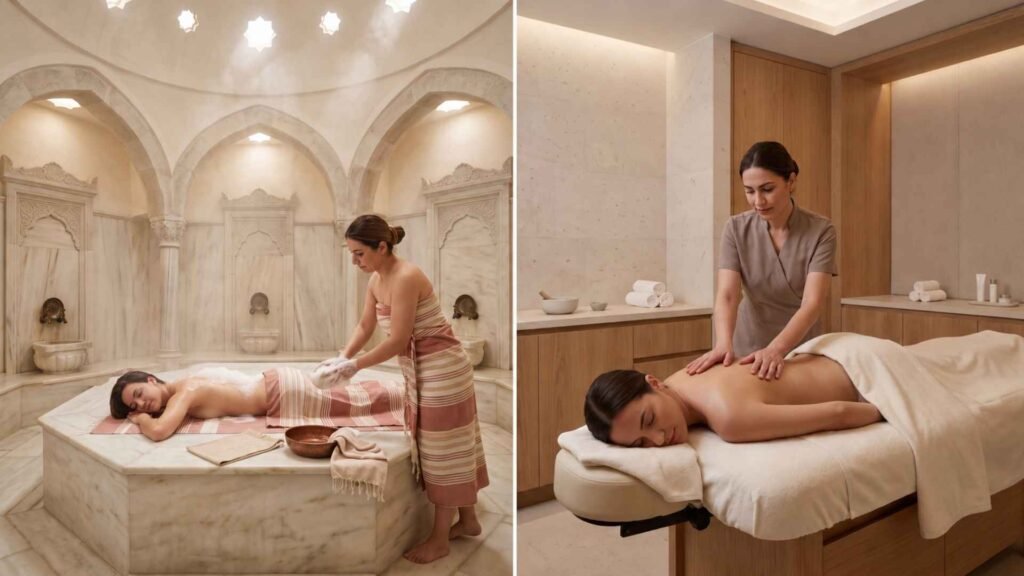
A Turkish bath and a modern spa may both involve relaxation and body treatments, but the experience is quite different.
| Turkish Bath | Modern Spa |
|---|---|
| Built around water, heat, and marble | Built around private treatment rooms |
| Often communal or semi-communal | Usually private |
| Includes kese exfoliation and foam washing | Often focuses on oil or therapeutic massage |
| Has a strong cultural and architectural identity | Usually follows an international wellness format |
| Treatment may feel brisk and traditional | Service is often slower and highly personalized |
| Lower-body covering is commonly worn | The body is usually covered with towels or sheets |
Choose a Turkish bath if you want cultural immersion, historic surroundings, deep exfoliation, and a traditional cleansing ritual.
Choose a modern spa if your priority is privacy, therapeutic massage, quiet treatment rooms, or personalized skincare.
Some luxury hammams combine both formats by offering the traditional marble ritual followed by a private oil massage.
Is a Turkish Bath Worth It?
For most first-time visitors to Türkiye, yes.
A good hammam combines architecture, cultural history, relaxation, and a bathing ritual that feels entirely different from an ordinary spa visit. It can also provide a welcome pause after several days of sightseeing.
The experience is especially worthwhile if you:
- Enjoy historic buildings
- Want a traditional Turkish cultural activity
- Like strong exfoliation
- Feel comfortable in communal wellness environments
- Choose a hammam that matches your privacy expectations
It may not be ideal if you dislike heat, strongly prefer private treatments, have highly sensitive skin, or expect a long therapeutic massage from the standard package.
Choosing the right property makes a significant difference. Zeyrek Çinili Hamamı is particularly appealing for restoration and cultural heritage, while Kılıç Ali Paşa Hamamı offers an elegant experience in Karaköy.
Common Turkish Bath Mistakes to Avoid
Booking Without Checking the Gender Schedule
Some hammams operate separate hours for women and men. Confirm the schedule for the specific date of your visit, particularly if you are traveling as a couple or group.
Assuming Every Hammam Allows Couples
Most traditional hammams separate men and women. Choose a couples-oriented property if sharing the same room is important.
Shaving or Exfoliating Beforehand
Shaving, waxing, or using a body scrub shortly before a kese treatment can make the skin uncomfortable and irritated.
Arriving With Sunburn
The scrub should not be performed over sunburned, damaged, or inflamed skin.
Expecting a Private Spa Experience
Traditional hammams can be communal. Other guests may be washing, talking, or receiving treatments nearby.
Confusing the Foam Wash With a Full Massage
The washing ritual may include brief massage movements, but a long oil massage is normally an additional service.
Failing to Explain Your Preferences
Tell the attendant if you want gentle pressure, do not want your hair washed, need more coverage, or prefer to avoid a particular area.
Bringing Valuables
Leave expensive jewelry and unnecessary electronics at your hotel whenever possible.
Scheduling Too Little Time
Allow time to arrive early, change, complete the ritual, cool down, and get ready afterward.
Forgetting to Rehydrate
Drink water before and after the visit, particularly during warm weather.
Frequently Asked Questions About Turkish Baths
Can you visit a Turkish bath alone?
Yes. Solo visitors are extremely common, and staff at visitor-oriented hammams guide first-time guests through each stage.
Do you need to book a Turkish bath in advance?
Advance reservations are strongly recommended for popular historic hammams, weekends, holidays, and preferred gender sessions. Neighborhood hammams may accept walk-ins.
Can you wear a swimsuit in a Turkish bath?
Usually yes, although some properties prefer disposable underwear or bikini bottoms. Check the individual dress policy before arriving.
Are Turkish baths suitable for shy visitors?
They can be, provided you choose a visitor-friendly hammam and communicate your boundaries. However, the experience still involves some body exposure and may take place in a shared room.
Will the attendant be the same gender as me?
In traditional gender-separated sessions, attendants are usually the same gender as the guests. However, arrangements can vary, particularly at couples-oriented hammams. Ask before booking if this is important to you.
Can you keep the peştemal on during the treatment?
You normally remain covered while moving through the hammam. The attendant may adjust the towel during the scrub while maintaining lower-body coverage.
Should you wash before going to a hammam?
A basic shower beforehand is fine, but avoid scrubbing, shaving, waxing, or applying heavy body lotion before the appointment.
Can children visit a Turkish bath?
Policies vary. Some hammams welcome children above a specified age, while luxury or adult-oriented properties may impose restrictions. Heat exposure and treatment intensity should also be considered carefully.
Can you take photographs inside?
Photography is usually restricted in bathing and changing areas to protect guest privacy. Some hammams permit photos in the entrance or relaxation area when no other visitors are visible. Ask staff first.
What is the best time to visit?
Morning sessions are often quieter, while late-afternoon appointments can be convenient after sightseeing. Avoid booking immediately after a large meal or before a tightly scheduled activity.
Is a hammam good before or after a flight?
A hammam can be relaxing after arrival, but it is better to wait until you are rested and hydrated. Before a flight, leave enough time to cool down, dry your hair, and travel to the airport without rushing.
How often should you have a kese scrub?
For most travelers, one treatment during a trip is sufficient. Frequent or aggressive exfoliation can irritate the skin, particularly if it is dry or sensitive.
Continue Exploring Istanbul’s Hammams
Use these detailed reviews to choose the experience that best matches your budget, location, and preferred atmosphere:
- Best Turkish Hammams in Istanbul — compare six leading historic bathhouses
- Hürrem Sultan Hamamı Review — best for a luxurious Sultanahmet experience
- Cağaloğlu Hamamı Review — best for historic grandeur and premium treatments
- Çemberlitaş Hamamı Review — best for a classic Ottoman bathing atmosphere
- Kılıç Ali Paşa Hamamı Review — best for elegant architecture in Karaköy
- Zeyrek Çinili Hamamı Review — best for heritage and restoration
- Süleymaniye Hamamı Review — best for couples wishing to bathe together
Final Thoughts
A Turkish hammam can initially seem unfamiliar, but the ritual itself is easy to follow: warm up, exfoliate, rinse, enjoy the foam wash, and relax afterward.
The most important step is choosing a hammam that suits your expectations. Check the gender policy, treatment inclusions, privacy arrangements, current price, and appointment duration before booking. With the right preparation, your first Turkish bath can become one of the most distinctive experiences of your trip to Türkiye.