
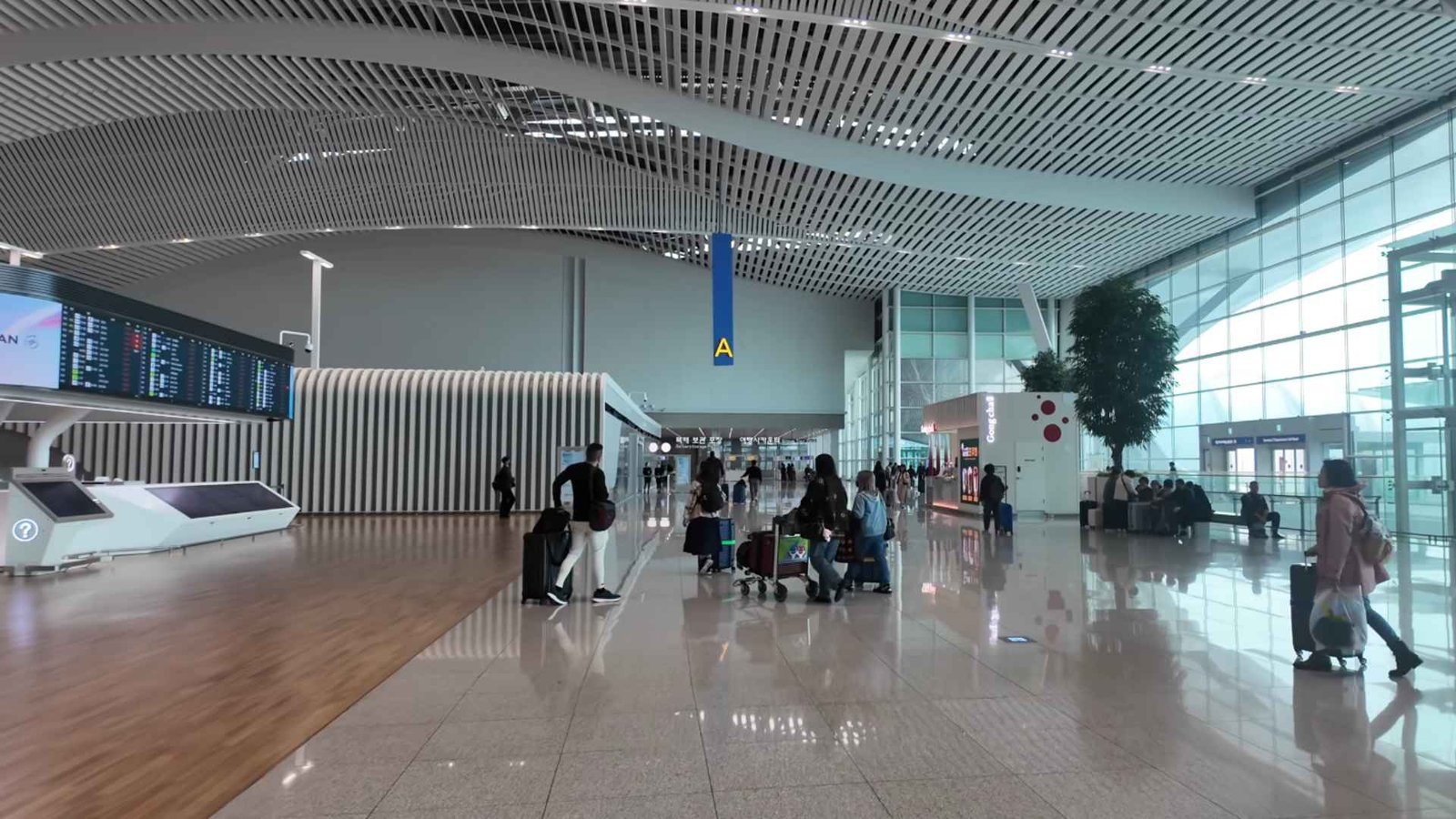
Connecting at Incheon Airport is manageable once you know your arrival terminal, departure terminal and whether your route uses the Concourse. This Incheon Airport Transit guide explains the transfer process from the green signs after landing to your next departure gate.
The order of transfer security and shuttle-train travel varies by route. Check your onward flight and follow the airport’s directions for your terminal connection.
How Incheon Airport Transit Works: 6 Steps
These six steps take you from the transfer signs to your next gate, with terminal-specific train routes explained in Step 4.
1. Follow the Transfer Signs After Landing
After leaving the aircraft, look for the green Transfer signs. They guide connecting passengers toward the transit area. Follow Arrivals or Baggage Claim only if your itinerary requires you to enter South Korea, collect checked baggage or check in again.
Check the departure screens for your onward flight number, terminal and gate. Your e-ticket and airline app may also show the terminal, but confirm it at the airport. Codeshare flights and other airline arrangements can affect which terminal a flight uses, so do not rely on the airline’s name alone.
For a broader airport overview, see the Incheon Airport Guide, especially the section “Work Out Whether Your Connection Is Airside.” If you are entering South Korea rather than transferring airside, the Incheon Airport Arrival Guide explains the steps from the gate to the arrivals hall.
2. Confirm Whether You Can Stay Airside
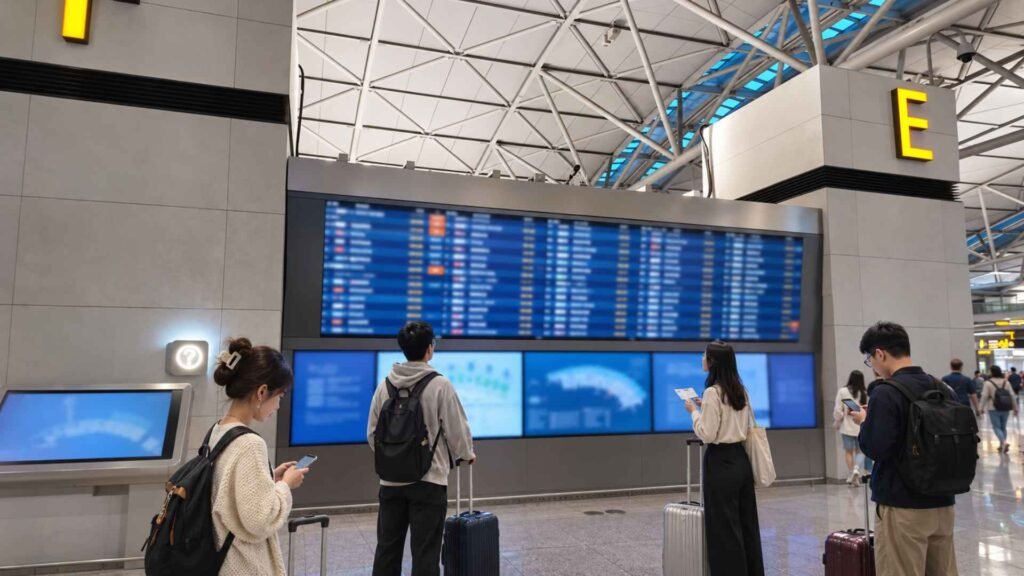
An airside connection lets you continue to your next flight without entering the public arrivals area. Whether you can do this depends on your tickets, airline arrangements and checked baggage.
Before travelling, confirm with your airline whether your checked bag is tagged through to your final destination and whether you can get your next boarding pass in the transit area. Do not assume that two flights on the same day, or flights operated by partner airlines, automatically mean your baggage will be transferred.
If you must collect your bag and check in again, you may need to pass through immigration and enter the public area. This is a different process from an airside transfer. Confirm the arrangements for both flights before departure, since you may need time for baggage collection, check-in and security.
3. Pass Through Transfer Security When Directed
Connecting passengers are directed through transfer security before continuing to their departure area. Keep your passport and boarding pass accessible, and follow staff instructions about cabin baggage, electronics and liquids.
Incheon Airport’s transfer security information says liquids generally need to be in containers of 100 ml or less and placed in a transparent, sealed 1-litre plastic bag. Duty-free liquids must remain in an approved sealed duty-free liquid bag. Security rules may differ at later airports, so check the requirements for the rest of your itinerary.
4. Take the Shuttle Train If Your Route Requires It
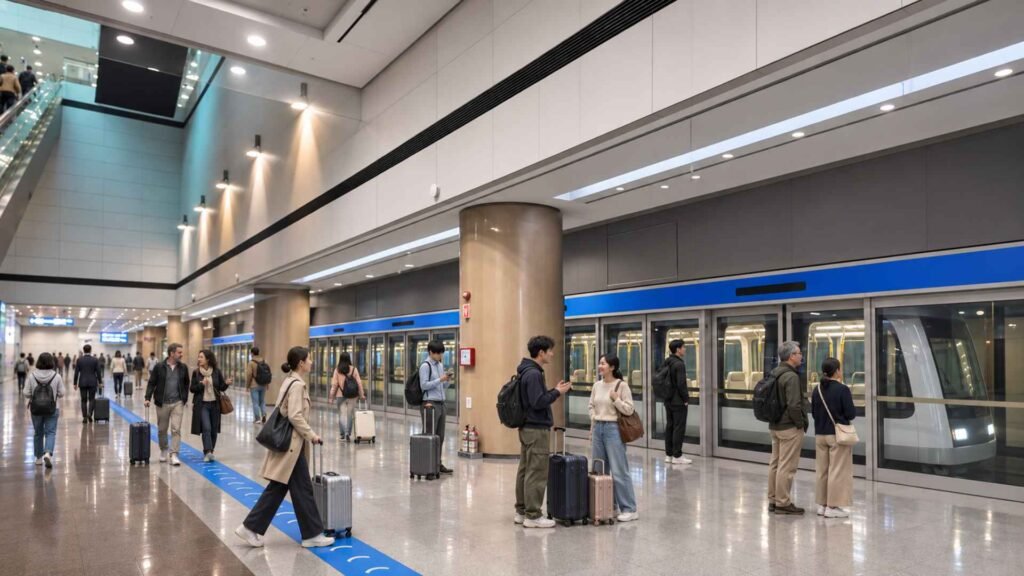
The Concourse is a separate building connected to the passenger terminals by an airside shuttle train. The train platform is on basement level B1. Incheon Airport’s route pages list departures about every five minutes and state that passengers cannot return to the previous area after boarding. Check the displayed destination before getting on.
Use the airport’s official transfer route finder to check your arrival and departure terminal pair. The routes below show the main patterns; follow the current airport signs if they differ from a route you checked earlier.
| Connection | Transfer route |
|---|---|
| Terminal 1 to Terminal 1 | Follow the transfer signs to your gate within Terminal 1. The route does not require an inter-terminal shuttle train. |
| Terminal 2 to Terminal 2 | Follow the transfer signs to your gate within Terminal 2. The route does not require an inter-terminal shuttle train. |
| Terminal 1 to the Concourse | Pass through transfer security in Terminal 1, then take the shuttle train to the Concourse. |
| Terminal 2 to the Concourse | Take the shuttle train to the Concourse, then pass through transfer security there. |
| Terminal 1 to Terminal 2 | Pass through transfer security in Terminal 1, take the train to the Concourse, then change trains for Terminal 2. |
| Terminal 2 to Terminal 1 | Take the train from Terminal 2 to the Concourse and change trains for Terminal 1. Pass through transfer security after arriving in Terminal 1. |
| Concourse to a passenger terminal | Follow the signs and check the train destination. The route and screening point depend on your destination terminal. |
5. Get Your Boarding Pass if You Need One
If you already have your onward boarding pass, keep it available as you continue through the transfer area. If you do not have one, contact your airline or look for a transfer desk.
Incheon Airport says an onward boarding pass may be issued at a transfer desk near the gate, but the process varies by airline. Ask your airline whether it can issue your pass in the transit area and where its desk is located. Keep your passport and booking details ready.
6. Check Your Gate and Continue to Boarding
After security and any required train ride, check the departure screens for your gate and boarding time. Follow the overhead signs and allow time for the walk, especially if your flight leaves from the Concourse or a distant gate.
If you need help, ask airport staff or visit a transfer guide desk. Incheon Airport lists desk locations and service details on its official transfer guide service page.
💡 Clara’s Tip: Before you travel, enter your arrival and departure terminals in the airport route finder and save a screenshot. You can refer to it after landing if you need to move between terminals.
How Much Time Do You Need for an Incheon Airport Connection?
There is no single connection time that works for every passenger. Your route may stay in one terminal or involve a train ride, a terminal change and transfer security. Your airline’s connection rules and baggage arrangements also affect what you need to do.
If both flights are on one itinerary, check that the airline has accepted the connection for your booking. If the first flight is delayed, contact the airline for instructions. For separate tickets, build in extra time for the baggage, check-in and security steps described above.
The airport’s route information shows which transfer steps apply to your terminal pair, but it does not give one minimum time for every international connection. Avoid relying on a general “one hour is enough” rule; check the connection for your actual flights with the airline.
What Can You Do During a Longer Layover?
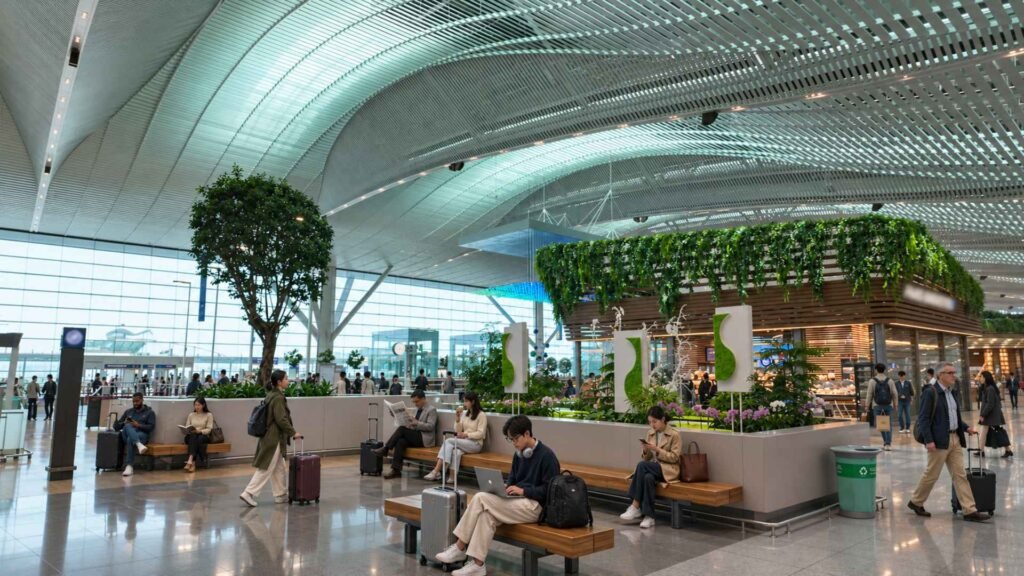
For a longer connection, you can stay in the airport and look into lounges, rest areas or airport hotels. Check where each option is located before leaving your departure area, since your terminal and access eligibility may affect whether it is practical for your layover.
Incheon Airport also offers transit tours for eligible passengers. The airport says the layover must be 24 hours or less, and participants need a passport and boarding passes for both flights. You must meet the applicable entry conditions because the tours involve passing through immigration. Check the official transit tour information and current schedule before planning around one; the program can change.
The Korea Tourism Organization describes the transit tours as free, though some attraction admission fees and meals are excluded. It lists tours of different lengths, including one-, two-, four- and five-hour options. Choose a tour that fits your layover, allow at least 30 minutes for registration before departure, and make sure you have enough time for the selected tour.
A visit to Seoul is separate from an airside connection. Check the entry rules that apply to your passport and plan your return to the airport before leaving.
Frequently Asked Questions
Do I need to go through immigration when transferring at Incheon?
You can generally remain airside if your itinerary allows you to continue without collecting baggage or checking in outside the transit area. If you need to enter South Korea to collect bags, check in again or leave the airport, you may need to pass through immigration.
Is the Concourse the same as Terminal 1?
No. The Concourse is a separate airside building connected to the passenger terminals by shuttle train. Follow the train signs if your departure gate is there.
Are Incheon Airport transit tours free?
The Korea Tourism Organization describes the tours as free, but some attraction admission fees and meals are not included. Tour lengths and availability vary, so check the current schedule before booking.
Can a group arrange transfer assistance in advance?
Yes. Individual passengers can ask for help at a transfer guide desk. Groups of ten or more can arrange a guide in advance; the airport’s transfer guide service page has the contact details.
Final Thoughts
Check the route for your arrival and departure terminals before travelling, then follow the airport signs through the transfer area. Confirm your baggage arrangements with your airline so you know whether you can remain airside.