
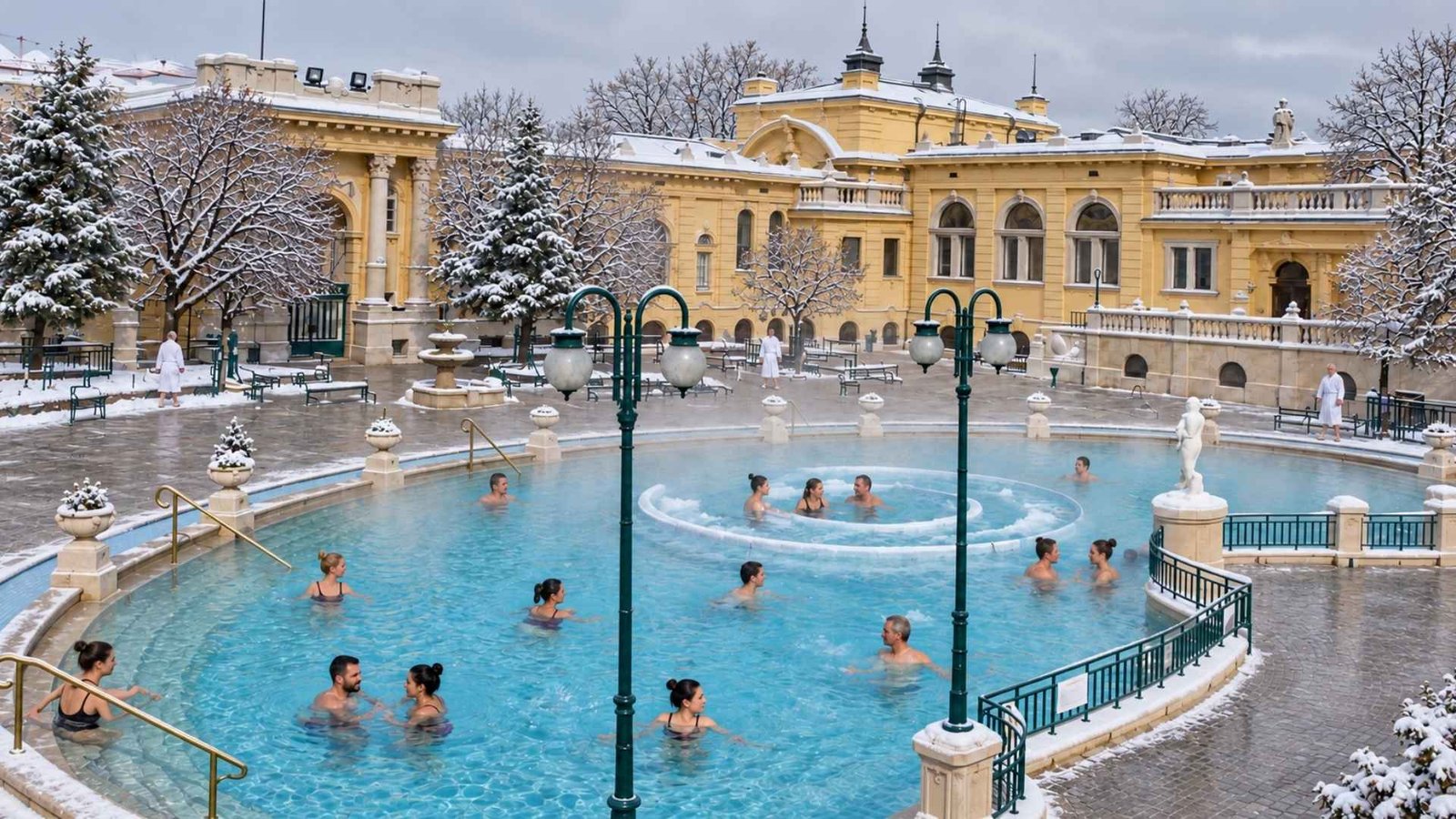
Budapest thermal baths in winter offer one of the city’s most memorable contrasts: warm outdoor water, cold air on your face and historic buildings appearing through the steam. After a day of sightseeing, a bath visit can become the part of your trip where you finally slow down.
The experience is more enjoyable with a little preparation. Outdoor pools have different temperatures, tickets do not always cover the same areas, and a wet towel is poor protection between pools. This guide helps you choose a bath, pack for the cold and organise a comfortable winter visit.
Quick Answer: Are Budapest’s Thermal Baths Worth Visiting in Winter?
Yes—especially if you enjoy warm outdoor bathing and leave enough time to change, take breaks and dry off afterwards. Choose Széchenyi for the classic outdoor setting, Rudas for its rooftop pool and historic Turkish bath, or Lukács for a less expensive alternative.
Allow roughly 2–3 hours for the overall visit, rather than continuous soaking. Bring swimwear, non-slip slippers, a towel and preferably a bathrobe.
1. Choose the Right Budapest Thermal Baths in Winter
The best choice depends on whether you want outdoor atmosphere, a scenic rooftop or a simpler bathing day. These three options offer different experiences.
Széchenyi: Best for the Classic Outdoor Experience
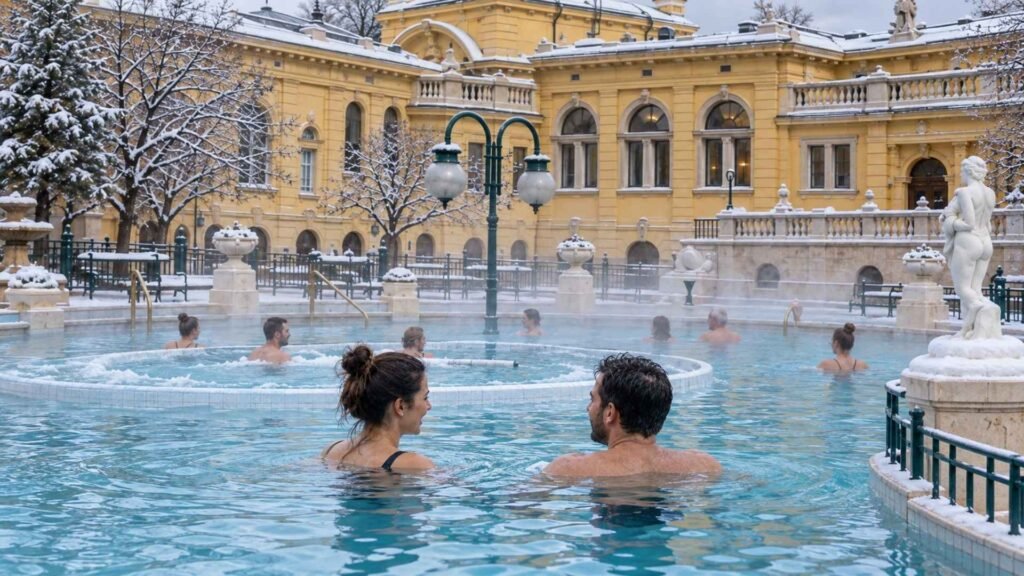
Széchenyi is our first choice for a first winter visit. Its yellow buildings frame a large courtyard, giving outdoor bathing a sense of occasion even when you have no other sightseeing planned.
Do not assume every outdoor pool is equally warm. The official Széchenyi pool specifications list the outdoor thermal pool at 36–38°C, the leisure pool at 32–34°C and the swimming pool at 26–28°C. Choose according to temperature and purpose: a pool designed for swimming will feel different from one intended for soaking.
If cold-weather bathing is the main reason for your visit, start by locating the warmer thermal pool and the indoor route back to the changing area. Individual facilities can close for maintenance, so check availability shortly before you go.
Rudas: Best for Rooftop Views and Historic Interiors
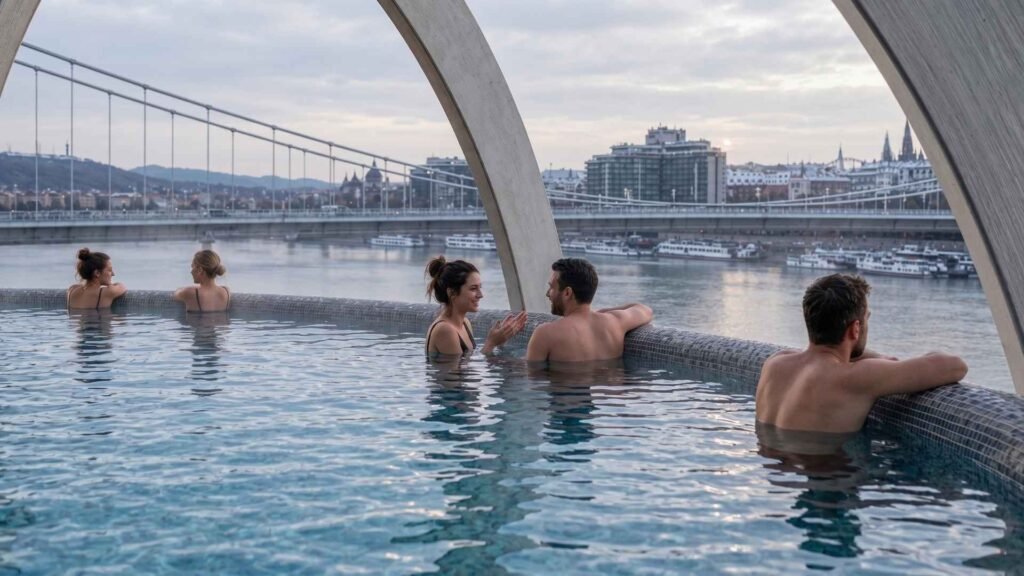
Rudas suits travellers who want a smaller outdoor experience alongside a historic indoor bath. Its rooftop pool overlooks the Danube, while the Turkish bath offers a more enclosed, atmospheric setting.
The important detail is access. Turkish-bath sessions include men-only, women-only and mixed periods; the wellness area has a separate schedule. A ticket covering all zones does not override the Turkish bath’s gender restrictions.
For couples planning to use both areas, choose a mixed Turkish-bath session and confirm that your ticket includes the wellness facilities. Check the official Rudas opening hours and access schedule before choosing your date.
Lukács: Best for a Lower-Cost Bathing Day
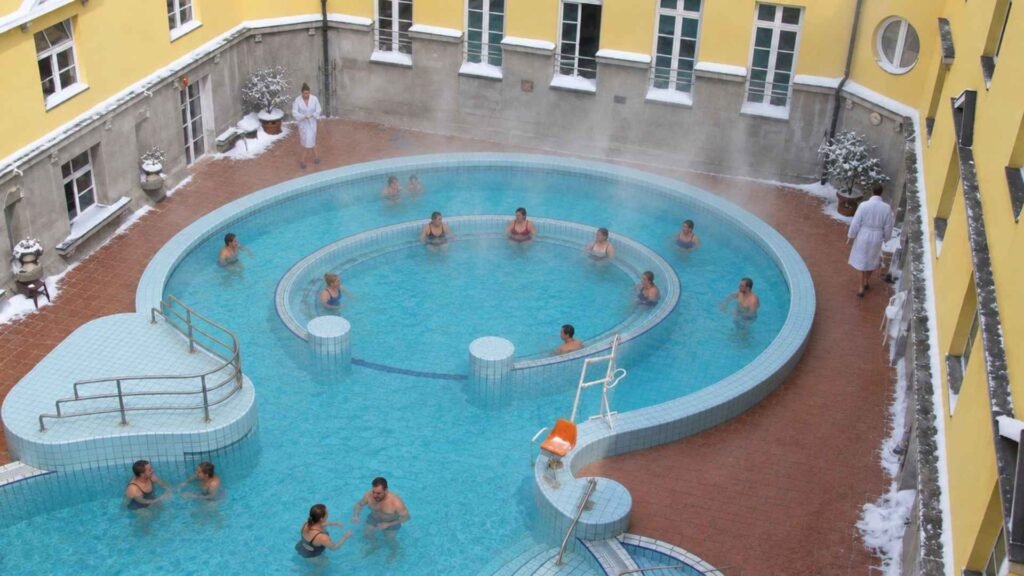
Lukács is worth considering when your priority is the bathing itself. Its thermal facilities offer an alternative to building your day around Széchenyi’s courtyard or Rudas’s rooftop.
Standard adult admission is currently cheaper than the comparable full-day options at those two baths. The official Lukács admission prices list Sauna World as an additional ticket, so include that in your comparison if it matters to you.
Check temporary facility notices as well: a bath being open does not mean every pool or changing facility is available.
What About Gellért?
Gellért closed on 1 October 2025 for renovation, with reopening planned for 2028. It is therefore not an option for winter 2026–27.
Older articles and photographs may still recommend it, so check opening status before organising a trip around a particular bath.
For a broader comparison of facilities, atmosphere and other options across the city, see our guide to the best thermal baths in Budapest.
2. Plan for the Cold Between Pools
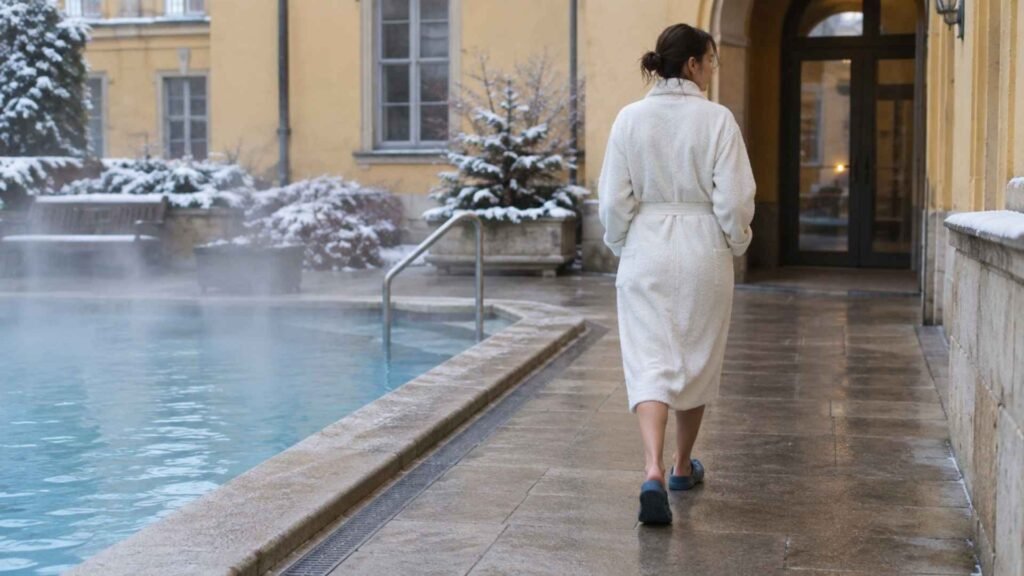
The exposed part of winter bathing is often the journey between the warm water and the building. Wind, wet skin and damp towels can make a short walk feel longer than expected.
Before entering an outdoor pool, identify the steps, handrails and route indoors. Keep your towel or robe in a permitted place nearby, and wear non-slip pool footwear on the walking surfaces. Remove it before entering pools where required.
Walk carefully rather than rushing. You do not need to sample every outdoor pool to enjoy the visit; staying near a comfortable pool and an easy indoor route can make the day more relaxing.
Snow is a bonus, not a booking condition. The experience does not depend on a white courtyard, and photographs cannot tell you what the weather will be on your chosen date.
Milena’s Wellness Tip
Keep one towel dry for the end of your visit. A robe is useful between pools, but a separate dry towel makes showering and changing afterwards much easier. If your luggage is small, prioritise a compact spare towel and a waterproof bag for wet swimwear.
3. Pick Your Visit Time Before Booking
For Budapest thermal baths in winter, the time of day changes both the atmosphere and the rest of your itinerary.
Morning: Best for an Unhurried Start
An early weekday visit is our preferred starting point if you value a calmer arrival. It cannot guarantee an empty bath, but it avoids squeezing your visit between afternoon sightseeing and dinner.
Széchenyi currently opens at 7 a.m. on weekdays and 8 a.m. at weekends. Check the date-specific timetable before visiting, particularly during holidays.
Late Afternoon: Best for a Change of Atmosphere
Arriving while there is still daylight lets you see the outdoor setting before the evening lights take over.
Leave enough time for admission, changing and finding your way around; arriving just before sunset does not mean you will be in the water before dark. If the outdoor atmosphere matters to you, make it part of your arrival plan rather than something to squeeze in at the end.
Christmas and New Year: Check the Exact Date
Do not assume a normal weekday ticket or schedule applies over the festive period. Holiday pricing, entry arrangements and opening hours can differ.
If your bath visit anchors a short Christmas trip, confirm admission first and fit sightseeing around it. Avoid relying on a general year-round timetable for 24, 25, 26 or 31 December, or 1 January.
4. Compare What Your Ticket Actually Includes
These adult prices were checked on 27 September 2026. They are planning references, not guaranteed winter or future-year rates.
| Bath and ticket | Mon–Thu | Fri–Sun |
|---|---|---|
| Széchenyi: daily entry with locker | 13,200 HUF | 14,800 HUF |
| Rudas: daily all-zone entry | 12,000 HUF | 15,000 HUF |
| Lukács: standard adult entry | 7,000 HUF | 8,000 HUF |
Published holiday/peak rates are 15,800 HUF at Széchenyi and 16,000 HUF at Rudas. Lukács lists 8,000 HUF for its standard adult holiday ticket. Prices and products can change.
Look beyond the headline price. Check the permitted entrance time, covered zones, locker or cabin provision, and cancellation conditions. A cabin is a private changing space, not a private pool.
At Széchenyi, ordinary admission does not include towels or robes, and standard rental is currently unavailable. Bringing your own avoids buying essentials on arrival. Check the official Széchenyi ticket prices and options before booking.
Advance purchase is sensible for a fixed itinerary, but read the terms before paying. Do not assume that every online ticket provides immediate entry or allows a date change.
5. Pack for a Winter Bath Visit
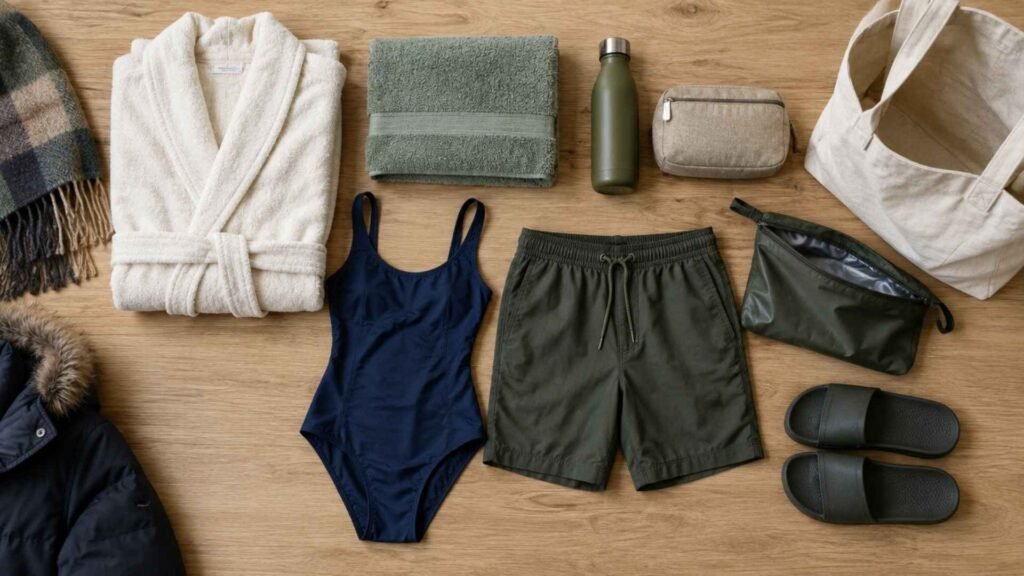
A small, organised bath bag makes Budapest thermal baths in winter much easier to enjoy.
- Swimwear suitable for pool use.
- Non-slip slippers or flip-flops for walking around the bath.
- A towel, plus a compact dry spare if possible.
- A bathrobe for time outside the water.
- A waterproof bag for damp items.
- A swimming cap if you plan to use a pool requiring one.
- Dry underwear, socks and warm clothes for afterwards.
- Your ticket and a payment card.
At Széchenyi, a swimming cap is required in the lap pool, rather than the thermal pools. Follow signs at each facility instead of assuming the same rules apply everywhere.
Keep valuables to a minimum and store them before bathing. A phone is unnecessary for enjoying the pools; if you take photographs where permitted, respect other bathers’ privacy and keep devices away from restricted areas.
6. Allow Time for Breaks and Changing
Plan around 2–3 hours for the overall visit, including entry, changing, bathing breaks and getting ready to leave. Add time if you book a treatment or prefer a particularly slow pace.
That is not a recommendation to remain in hot water for hours. Follow the pool’s displayed bathing guidance and take breaks. Széchenyi lists a recommended 20-minute bathing time for its indoor medical pools; this is not a universal limit for every pool or visitor.
If you are unsure whether hot-water bathing is suitable for you because of a health condition or pregnancy, seek advice from a qualified healthcare professional before visiting. Follow the bath’s own restrictions and the guidance displayed at each pool.
Leave enough time to shower, dry off and dress comfortably before going outside. Avoid placing a timed tour immediately after your expected departure from the changing room.
Age and Accessibility Checks
For ordinary leisure visits, Széchenyi and Rudas do not admit children under 14. Do not book these baths as all-ages family activities based on older advice. Families should verify age rules and winter children’s facilities at a suitable alternative.
As of September 2026, Rudas states that the bath is not accessible to visitors with disabilities. If you need step-free access or assistance entering pools, contact the bath before booking to confirm whether it can accommodate your requirements.
7. Build a Simple Winter Day Around One Bath
One well-planned bath visit is usually easier to enjoy than trying to visit several complexes in a single day. You avoid repeated admission costs, changing and carrying wet belongings across the city.
For a Széchenyi day, consider a short City Park walk before bathing, followed by a relaxed meal. Keep the outdoor portion flexible if conditions are uncomfortable.
For a Rudas day, pair your visit with a short riverside outing and dinner nearby, making the bath’s access schedule the fixed point of your plan.
Leave some flexibility after bathing rather than filling every remaining hour. A relaxed meal or café stop gives you an easy next step without turning the day into another tightly timed sightseeing route.
Frequently Asked Questions About Budapest Thermal Baths in Winter
Are Budapest Thermal Baths in Winter Too Cold to Enjoy?
The warmer outdoor thermal pools are designed for a different experience from cooler swimming pools. Your comfort also depends on the air temperature, wind and time spent outside the water. Choose an appropriate pool and keep a dry layer nearby for the walk indoors.
Can You Visit the Baths When It Is Snowing?
Snow does not automatically mean that a bath is closed. However, outdoor access depends on the facility’s operating and safety decisions. Check same-day notices and staff instructions rather than assuming every pool will remain available in all weather.
Is a Morning or Evening Visit Better in Winter?
Choose morning if you prefer to start slowly and leave the afternoon free. Choose late afternoon if seeing the setting in daylight and after dark is your priority. Either way, allow time for changing and check the relevant entry window.
Do You Need a Bathrobe?
A robe is a useful comfort item for outdoor winter bathing, rather than a universal admission requirement. It gives you something dry to put on between pools. Bring your own unless your specific booking confirms that one is provided.
Are the Baths Open at Christmas?
Széchenyi normally operates on holidays, but check the exact opening hours and available facilities for your date before visiting. Other baths set their own arrangements. Holiday admission can cost more than a regular weekday visit.
Final Thoughts
Budapest thermal baths in winter are most rewarding when you give the visit room in your itinerary. Choose the setting that appeals to you, check the ticket and access rules, and bring what you need to stay comfortable between pools. A single unhurried visit can be a memorable part of a winter city break.