
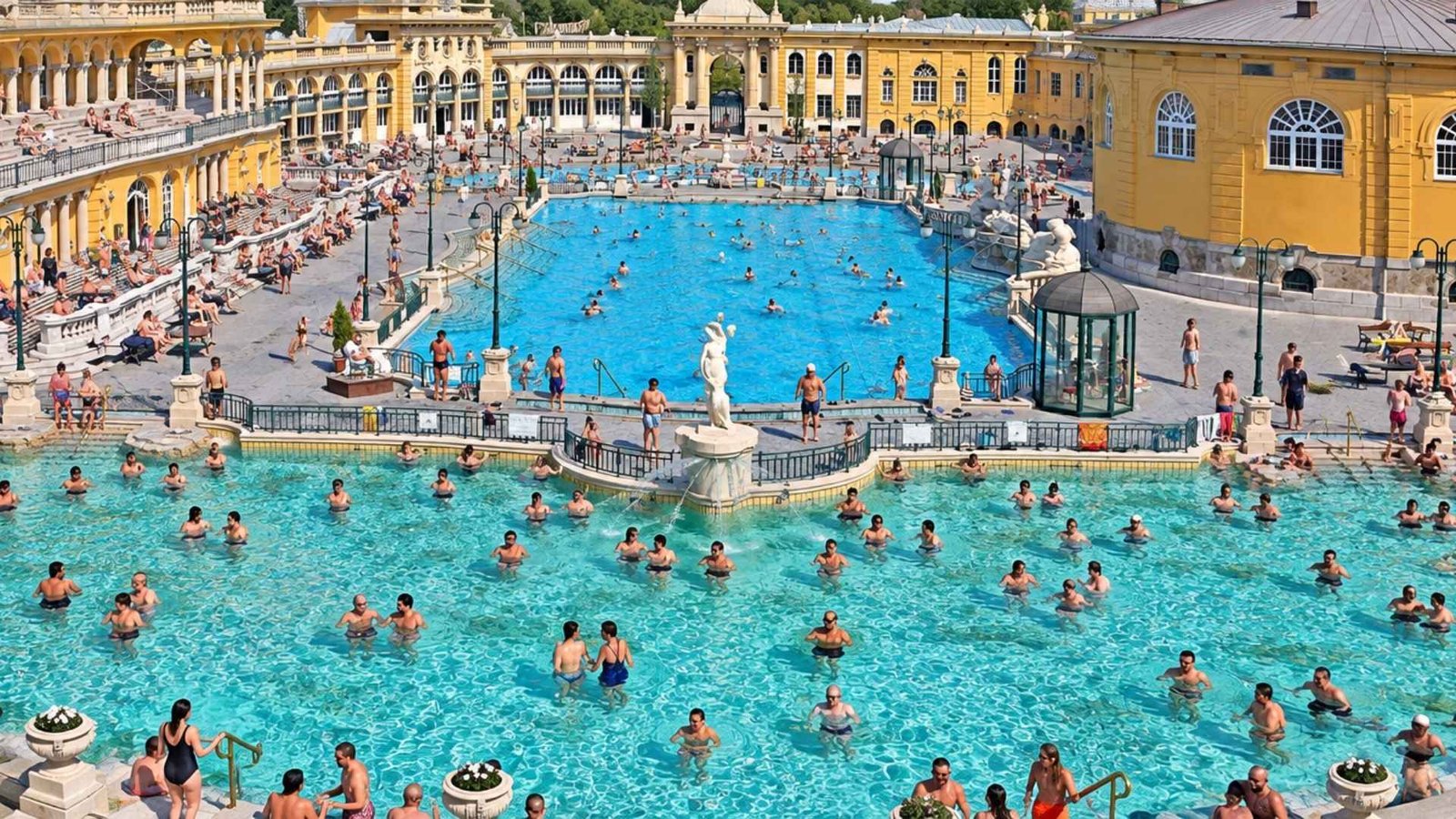
Budapest’s thermal baths range from grand architectural landmarks to quiet Ottoman-era pools and affordable neighbourhood spas. Choosing the right one depends on whether you want iconic surroundings, historic atmosphere, family-friendly facilities, local character or better value.
This guide compares six of the best thermal baths in Budapest, including current prices, opening hours, age restrictions and the main advantages and drawbacks of each option.
Last fact-checked: August 21, 2026
Quick Answer: What Are the Best Thermal Baths in Budapest?
Széchenyi is the best overall choice for most first-time visitors. Choose Rudas for Ottoman architecture and Danube views, Lukács for a more local atmosphere, Veli Bej for a quiet historic experience, Palatinus for families and Dandár for the lowest admission price.
| Bath | Best for | Price from | Good to know |
|---|---|---|---|
| Széchenyi | First-time visitors | 13,200 HUF | Budapest’s most iconic option |
| Rudas | Ottoman history and views | 12,000 HUF | Check the gender schedule |
| Lukács | Local atmosphere | 7,000 HUF | Free once with Budapest Card |
| Veli Bej | Quiet Ottoman experience | 6,700 HUF | Closed through August 31, 2026 |
| Palatinus | Families and summer visits | 6,000 HUF | Children cannot use thermal pools |
| Dandár | Budget-conscious travellers | 3,500 HUF | Small and less central |
Prices shown are standard weekday adult admission rates or the closest comparable ticket available. Weekend, holiday and peak-season prices may be higher.
Why Is Budapest Famous for Thermal Baths?
Budapest’s bathing culture developed over several historical periods. The city preserves Ottoman-era domed bathhouses, grand baths built during the Austro-Hungarian period and modern thermal complexes used by residents throughout the year.
That variety is what makes Budapest different from a destination with one famous spa. You can soak beneath a Neo-Baroque palace at Széchenyi, enter a 16th-century Turkish bath at Rudas or choose a smaller neighbourhood facility such as Dandár.
The baths also serve different purposes. Some visitors come for architecture and photography, while others prioritise swimming, saunas or a quiet break from sightseeing. Separate medical and balneological services are available at certain facilities, but ordinary admission should be viewed primarily as a leisure and wellness experience.
A Wellness Experience, Not a Medical Promise
Budapest’s thermal baths fit naturally into a slower wellness itinerary. Warm-water bathing, quiet pools, steam rooms and unhurried breaks can provide a welcome change of pace between long days of walking and sightseeing.
This guide compares the visitor experience rather than promising medical or therapeutic results. Although some Budapest baths provide separate medical services, these should not be confused with a standard visitor ticket.
Anyone seeking treatment—or unsure whether prolonged heat exposure is appropriate for them—should obtain suitable professional advice instead of relying on general travel content.
How We Chose the Best Thermal Baths in Budapest
The baths were compared according to five practical factors:
- Overall atmosphere and architectural interest
- Facilities available to ordinary visitors
- Admission price and value
- Suitability for different types of travellers
- Current opening status and visitor restrictions
Medical treatments and unverified health claims were not used to rank the baths. Prices, schedules and temporary closures can change, so check the linked official website before your visit.
1. Széchenyi Thermal Bath — Best Overall for First-Time Visitors
Best for: First-time visitors, architecture and large outdoor pools
Location: City Park
Adult admission: From 13,200 HUF
Typical visit: 3–4 hours
Main drawback: Crowds and higher prices
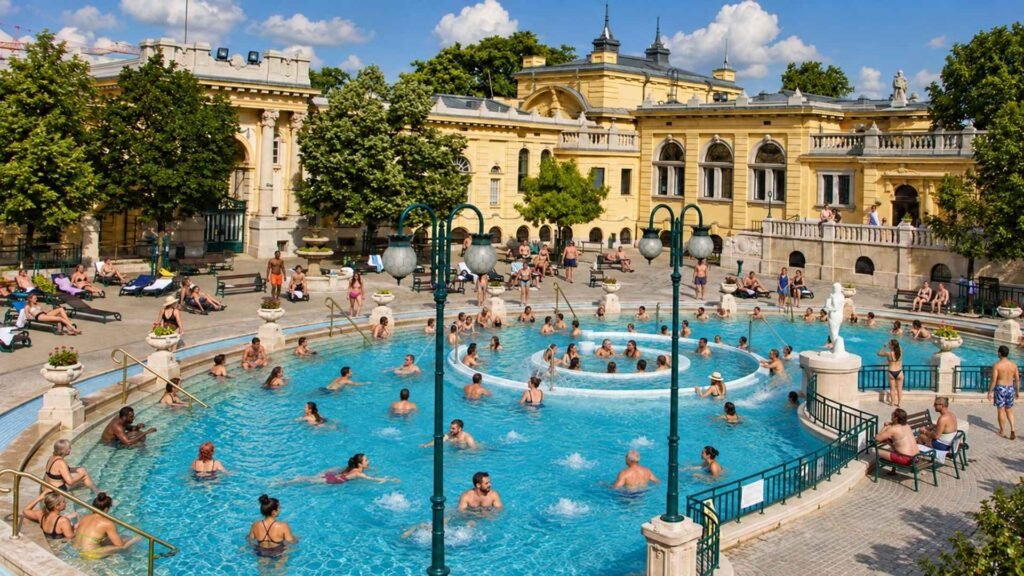
Széchenyi is the safest choice if you have time for only one thermal bath in Budapest. Its yellow Neo-Baroque buildings, expansive courtyards and steaming outdoor pools create the classic Budapest bath experience many travellers imagine before arriving.
The complex combines indoor thermal pools, outdoor pools, swimming areas, saunas and hot-air chambers. Its size gives you more variety than the smaller Ottoman baths, although navigating the interior corridors can initially feel confusing.
Széchenyi is also highly photogenic, particularly during winter when steam rises above the outdoor water. However, its fame means it can feel busy and heavily oriented towards international visitors.
Széchenyi Prices and Opening Hours
A standard daily ticket with locker use costs:
- 13,200 HUF from Monday to Thursday
- 14,800 HUF on Friday and weekends
- 15,800 HUF during holidays and peak periods
A discounted Good Morning Budapest ticket is available for entry before 9:00 a.m., starting at 10,500 HUF from Monday through Thursday. Fast-track tickets start at 15,200 HUF.
The bath normally opens at 7:00 a.m. from Monday to Friday and 8:00 a.m. on weekends. Friday closing is later, at 10:00 p.m., while the regular closing time on other days is 8:00 p.m.
Check the latest ticket options and daily schedule through the official Széchenyi Thermal Bath website.
Is Széchenyi Worth the Price?
Yes, particularly for a first Budapest visit. You are paying partly for scale and partly for one of the city’s best-known architectural experiences.
Arriving close to opening time gives you a quieter first hour and more space in the outdoor pools. It can also make the visit feel more like a wellness experience and less like a crowded attraction.
Bring your own towel, swimsuit and slippers. Széchenyi currently sells these items but does not offer a standard rental service. Visitors under 14 are not admitted.
2. Rudas Thermal Bath — Best for Ottoman History and Danube Views
Best for: Ottoman architecture, couples and rooftop views
Location: Buda side, near Elisabeth Bridge
All-zone adult admission: From 12,000 HUF
Typical visit: 2–3 hours
Main drawback: Complicated access schedule
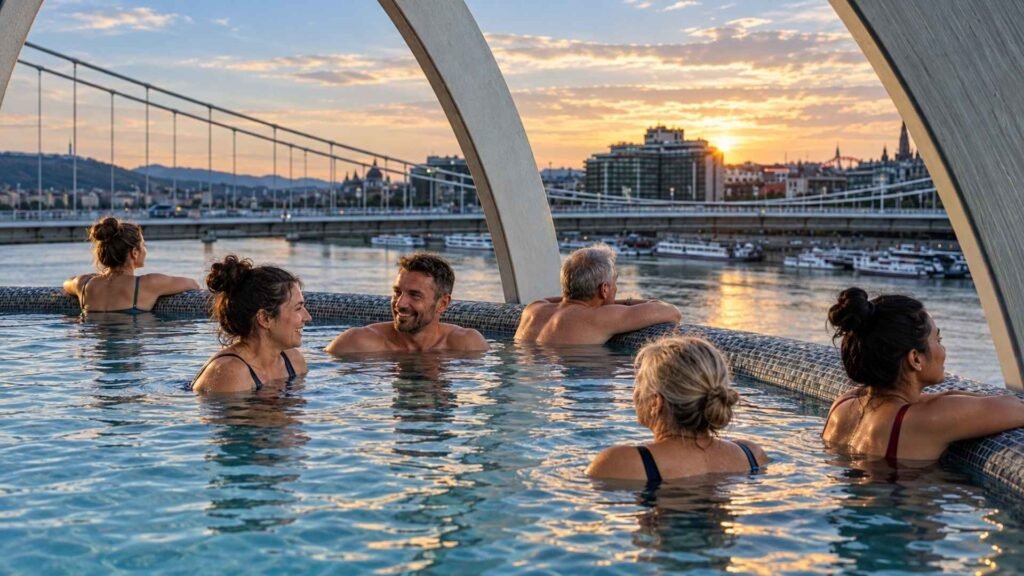
Rudas offers one of Budapest’s most distinctive combinations: a historic Ottoman bathhouse beneath a traditional dome and a modern wellness section with a rooftop pool overlooking the Danube.
The Turkish bath is the main reason to visit. Its central octagonal pool, stone columns and openings in the dome produce a darker and more atmospheric experience than the bright outdoor spaces at Széchenyi.
The rooftop pool changes the character of the visit. Instead of remaining entirely within a historical interior, you can finish with views across the river and the Pest skyline. This combination makes Rudas particularly appealing to couples and travellers interested in both architecture and scenery.
Rudas Prices and Ticket Types
A daily all-zone ticket costs:
- 12,000 HUF from Monday to Thursday
- 15,000 HUF from Friday to Sunday
- 16,000 HUF during holidays and high season
The all-zone ticket provides the simplest experience because it includes the Turkish bath and wellness facilities. Restricted single-zone tickets are available for 8,000 HUF during certain weekday periods.
Friday and Saturday night bathing runs from 10:00 p.m. until 3:00 a.m. and costs 15,000 HUF. Night tickets are sold online.
Current ticket conditions are available on the official Rudas Thermal Bath price page.
Check the Gender Schedule Carefully
Rudas does not operate as a standard mixed bath throughout the entire week. Its Turkish bath has separate men-only, women-only and mixed periods.
Under the regular schedule:
- Tuesday is reserved for women in the Turkish bath.
- Wednesday is reserved for men.
- Monday, Thursday and Friday combine men-only morning periods with mixed sessions later in the day.
- Weekends are generally mixed and swimsuits are required.
Schedules can change during holidays, maintenance periods and special events. Confirm the latest arrangement through the official Rudas opening-hours page, particularly if you are planning a couples visit.
Rudas does not admit visitors under 14. As of the last fact-check, the official website also states that the facility is not accessible to visitors with disabilities.
3. Lukács Thermal Bath — Best for a More Local Atmosphere
Best for: Repeat visitors, quieter bathing and Budapest Card users
Location: Buda side, near Margaret Bridge
Adult admission: From 7,000 HUF
Typical visit: 2–3 hours
Main drawback: Less visually dramatic than Széchenyi or Rudas
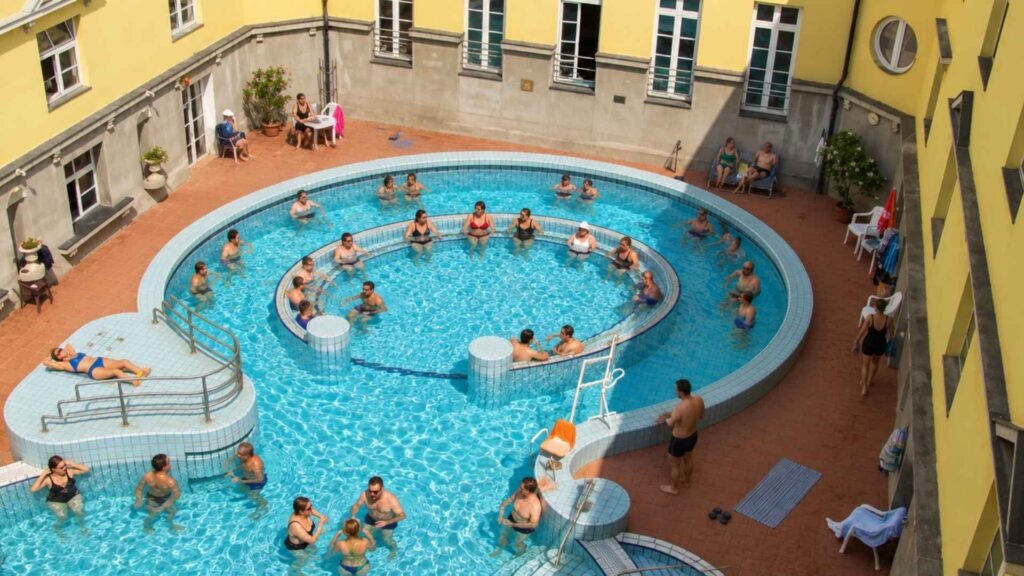
Lukács feels more like a functioning city bath than a major tourist attraction. You will still find historic details, thermal pools, swimming areas and saunas, but the atmosphere is generally more practical and less theatrical.
That makes it a strong choice for travellers who have already visited Budapest’s famous baths or prefer a setting where local routines remain more visible. It is also easier to justify financially than Széchenyi if architecture is not your main priority.
The complex includes thermal pools at different temperatures, outdoor swimming areas and a separate sauna world. The layout is not immediately intuitive, so allow a few minutes to understand which areas your ticket covers.
Lukács Prices and Opening Hours
Standard adult admission costs:
- 7,000 HUF from Monday to Thursday
- 8,000 HUF from Friday to Sunday and on holidays
An online complex ticket is available on weekends for 8,900 HUF. Access to the sauna world costs an additional 1,300 HUF.
Lukács normally opens from 7:00 a.m. to 7:00 p.m. It remains open until 10:00 p.m. on Tuesday. The sauna world opens from 2:00 p.m. on weekdays and operates throughout regular opening hours on weekends and holidays.
Lukács does not admit children under 14. Its relatively restrained atmosphere may also make it less suitable for travellers looking primarily for famous Budapest photographs.
4. Veli Bej Bath — Best for a Quiet Ottoman Experience
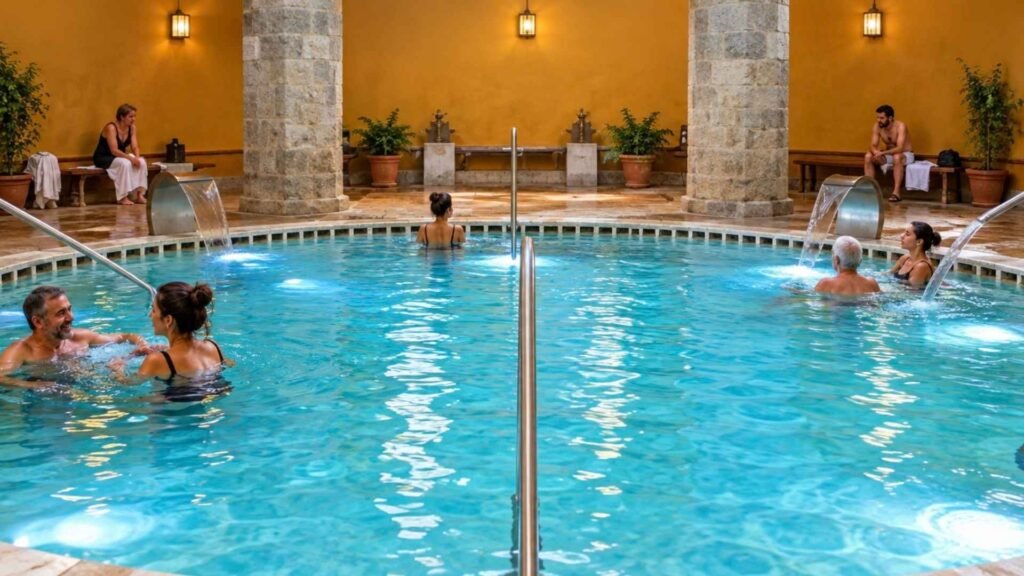
Best for: Historic atmosphere, quiet bathing and couples
Location: Buda side, close to Lukács Bath
Adult admission: From 6,700 HUF
Typical visit: 1.5–3 hours
Main drawback: Limited capacity and no online booking
Veli Bej is one of Budapest’s most intimate Ottoman-era bath experiences. The central thermal pool sits beneath a traditional dome and is surrounded by smaller pools at different temperatures.
Unlike Széchenyi, the attraction is not scale. Veli Bej works because it feels contained, quiet and historically focused. The dimmer interior encourages visitors to slow down rather than move constantly between large pool areas.
The bath is situated within a hospital complex, and the entrance can be less obvious than at the city’s major tourist baths. Advance online booking is not normally available, so tickets must be purchased at the cashier.
Admission starts at 6,700 HUF, and a ticket is valid for three hours. The facility operates in morning and afternoon sessions with a closure between sessions.
Important Temporary Closure
Veli Bej is temporarily closed for maintenance from August 13 through August 31, 2026. Regular opening is expected to resume on September 1 at 3:00 p.m.
Because opening schedules and maintenance periods can change, confirm the latest information before travelling across the city, particularly during the first days after the planned reopening.
Veli Bej is an excellent alternative to Rudas if your priority is a quiet Ottoman interior rather than a rooftop view. It is less suitable for families, large groups or travellers who want to reserve a guaranteed entry time online.
5. Palatinus Thermal Bath — Best for Families and Summer Days
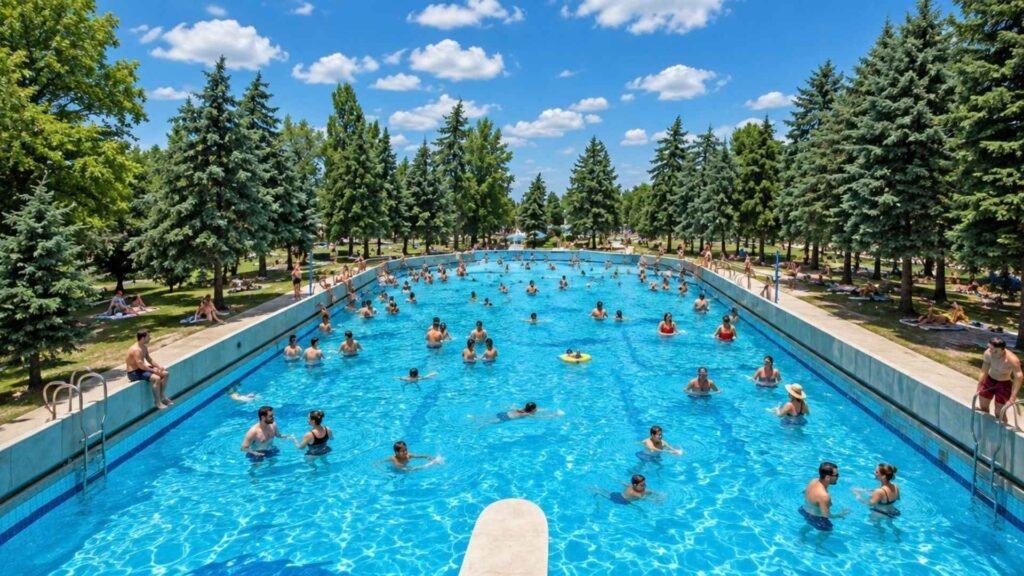
Best for: Families, outdoor pools and warm-weather visits
Location: Margaret Island
Adult admission: From 6,000 HUF
Typical visit: 3–5 hours
Main drawback: Less historic atmosphere than the central baths
Palatinus is closer to an outdoor swimming and recreation complex than a traditional domed thermal bath. Located on Margaret Island, it combines pools, green surroundings, sports areas, a playground and seasonal water attractions.
This makes Palatinus the most practical option on this list for families. Children are admitted, and family tickets are available, unlike at Széchenyi, Rudas, Lukács and Dandár.
However, children under 14 cannot use pools containing thermal water without written medical advice. Families should therefore choose the age-appropriate leisure and children’s pools rather than treating every pool as accessible.
Palatinus Prices and Opening Hours
Standard admission costs:
- 6,000 HUF on weekdays
- 6,500 HUF on weekends and holidays
A two-hour adult ticket starts at 4,400 HUF. Family tickets start at 13,200 HUF for three people, provided the group includes at least one child aged 3–14.
Palatinus is currently open daily from 9:00 a.m. to 7:00 p.m. Pool and sauna availability may vary by season.
Choose Palatinus if you want to combine swimming with a relaxed day on Margaret Island. It is not the strongest choice if your priority is Ottoman history or ornate spa architecture.
6. Dandár Thermal Bath — Best Budget Choice
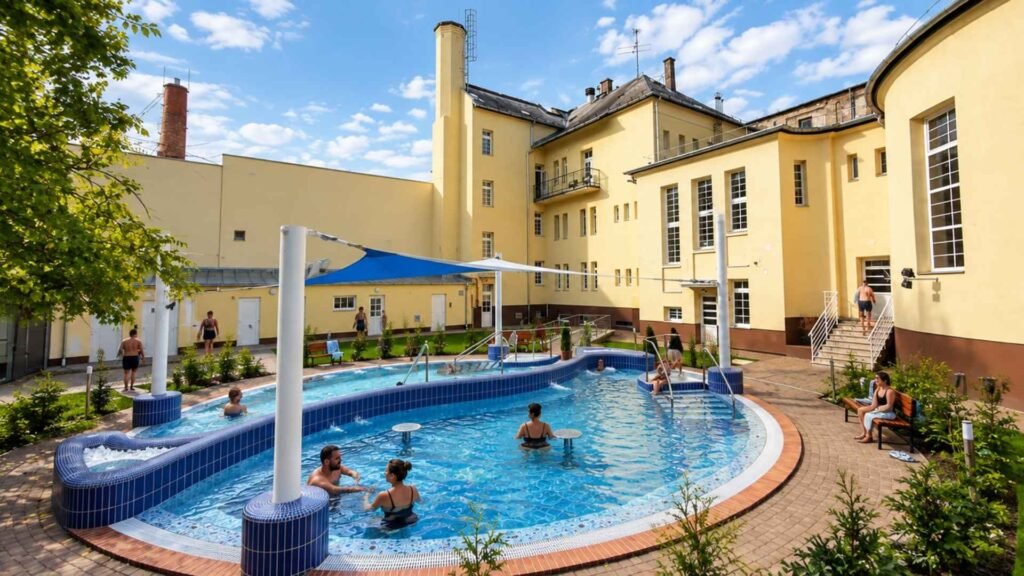
Best for: Low-cost bathing and a neighbourhood atmosphere
Location: District IX
Adult admission: From 3,500 HUF
Typical visit: 1.5–2.5 hours
Main drawback: Smaller and less central
Dandár is the most affordable option in this comparison. It offers a simpler experience with indoor thermal pools, outdoor pools, a sauna and a cold plunge rather than grand architecture or extensive leisure facilities.
The thermal-only adult ticket starts at 3,500 HUF on weekdays. A 4,500 HUF complex ticket adds sauna and outdoor access. Weekend prices rise to 4,000 HUF for thermal admission and 5,000 HUF for the complex ticket.
Dandár normally opens from 9:00 a.m. to 7:00 p.m. It stays open until 10:00 p.m. on Thursday, although some jet features stop operating earlier.
Dandár is unlikely to replace Széchenyi for a first-time visitor seeking a landmark experience. It makes more sense for budget travellers, longer stays and visitors who value a quieter, functional bath over famous surroundings. Because visitors under 14 are not admitted, it is not suitable for families travelling with younger children.
Is Gellért Thermal Bath Open in 2026?
No. Gellért Thermal Bath closed on October 1, 2025, for a major renovation. Its reopening is planned for 2028.
Some older travel guides and booking pages still include Gellért among the best thermal baths in Budapest without clearly displaying the closure. Do not build your itinerary around visiting it in 2026.
For the latest renovation status, consult the official Gellért Thermal Bath website.
What to Know Before Visiting Budapest’s Thermal Baths
Bring a Swimsuit
Standard swimwear is required during mixed bathing sessions. Even if you are attending one of Rudas’s single-gender Turkish bath periods, bringing a conventional swimsuit is the safest approach because rules can vary by zone and schedule.
Budapest’s thermal bath experience is different from the treatment structure found in many Turkish hammams. You are normally moving independently between pools rather than receiving a complete washing ritual from an attendant.
Pack Slippers
Slippers or flip-flops are mandatory at baths operated by Budapest Spas. Wet tiled floors can be slippery, and ordinary outdoor shoes are not suitable for pool areas.
Bring a Swim Cap if You Plan to Swim
A swim cap is required in designated swimming pools. It is not generally required simply for sitting in a thermal pool, but carrying one gives you access to more of the facility.
Take Your Own Towel
Do not assume that inexpensive towel rental will be available. At Széchenyi and several other baths, towels, swimwear, caps and slippers are sold at comparatively high prices.
Packing your own towel, swimsuit, slippers and reusable water bottle is more convenient and can considerably reduce the total cost of the visit.
Shower Before Entering the Pools
The official hygiene rules require visitors to shower with soap before and after using the pools. Eating and drinking in pool water are prohibited.
Visitors with fever, vomiting, diarrhoea or infectious skin or respiratory conditions are not permitted to enter.
Understand Lockers and Cabins
A locker is normally sufficient for solo travellers and couples who are comfortable changing in the standard facilities. A private changing cabin provides more privacy and can make organising clothes and luggage easier.
A cabin is not a private relaxation room. It is primarily a small changing and storage space.
Avoid Arriving Too Late
Cash desks frequently close one hour before the bath itself, while pool areas may close around 20 minutes before the published closing time.
Allow at least two hours inside smaller baths and three to four hours at Széchenyi or Palatinus. Arriving shortly before closing can make a full-price ticket poor value.
Can the Budapest Card Save You Money on Thermal Baths?
The Budapest Card currently includes one free admission to Lukács Thermal Bath. After that one-time admission has been used, cardholders can receive a 20% discount on an additional Lukács visit. The same 20% discount is also available at Széchenyi, Rudas and Palatinus.
This does not automatically make the card worthwhile for every visitor. Compare the complete card price with the public transport, museum and bath benefits you genuinely expect to use.
The card is not a universal multi-bath pass, and benefits may change. Confirm the latest conditions through the official Budapest Spas FAQ before purchasing.
Budapest Thermal Baths vs Turkish Hammams
Budapest’s thermal baths and traditional Turkish hammams share historical connections, but the modern visitor experiences are different.
A Budapest bath usually centres on independent access to thermal pools, swimming areas, saunas and steam rooms. You decide how long to remain in each area and normally move around without an attendant.
A Turkish hammam focuses more strongly on the bathing ritual. Depending on the package, this may include heating the body on a warm marble platform, washing, exfoliation and a foam massage performed by an attendant.
If you are deciding between these experiences, our complete Turkish bath guide explains what happens inside a hammam. You can also compare the best Turkish hammams in Istanbul for a more treatment-focused Ottoman bathing experience.
Continue Planning Your Budapest Visit
A thermal bath works well as the slower half of a Budapest day. You could visit Széchenyi after exploring City Park, combine Rudas with a walk along the Buda riverfront or pair Lukács and Veli Bej with Margaret Island.
For an evening contrast to the spa experience, consider a daytime or nighttime Danube River cruise through central Budapest.
Frequently Asked Questions About Budapest Thermal Baths
Which Budapest thermal bath is best for first-time visitors?
Széchenyi is the most straightforward first choice because it combines famous architecture, indoor and outdoor pools and extensive facilities. Visit early if you want a calmer atmosphere.
Is Széchenyi or Rudas better?
Choose Széchenyi for large outdoor pools and the classic Budapest postcard experience. Choose Rudas for Ottoman history, a more atmospheric interior and its rooftop Danube view.
Can children visit Budapest thermal baths?
Children under 14 are not admitted to Széchenyi, Rudas, Lukács or Dandár. Veli Bej is also unsuitable for young children. Palatinus admits families, but children under 14 cannot use thermal-water pools without written medical advice.
Do you need a swimsuit in Budapest thermal baths?
Yes. Bring standard swimwear, especially for mixed sessions. Do not assume that a towel or swimsuit will be included with admission.
Do you need a swim cap?
A swim cap is required in designated swimming pools but not generally in ordinary thermal sitting pools.
Should you book Budapest thermal baths in advance?
Advance booking is advisable for Széchenyi and Rudas during weekends, holidays and peak travel periods. Veli Bej normally does not offer online booking, so admission is purchased on arrival.
How long should you spend at a Budapest thermal bath?
Allow around two hours for smaller baths such as Dandár or Veli Bej. Three to four hours is more comfortable for Széchenyi, while Palatinus can fill most of a summer day.
Are Budapest thermal baths open in winter?
Many of Budapest’s thermal baths operate throughout the year. Winter is particularly atmospheric at baths with outdoor thermal pools, although opening times and available facilities should always be checked in advance.
Is Gellért Thermal Bath open?
No. Gellért closed on October 1, 2025, and is expected to remain closed until its planned reopening in 2028.
Final Verdict
Budapest does not have one thermal bath that is right for every traveller. Choose according to the atmosphere you want, your budget, the age of your group and the time available.
For most first-time visitors, Széchenyi remains the safest starting point—but the city’s quieter alternatives may provide the more memorable experience.