

Thailand combines reliable connectivity, diverse accommodation, established coworking communities and long-stay options with lifestyles ranging from major cities to tropical islands.
However, the best places in Thailand for digital nomads offer very different experiences. Chiang Mai stands out for affordability and community, Bangkok for professional connections, and Phuket and Koh Samui for remote workers seeking island living.
This guide compares nine destinations by budget, internet, coworking, transport and lifestyle to help you choose the right base for the way you work.
Quick Answer: What Is the Best Place in Thailand for Digital Nomads?
Chiang Mai is the best overall place in Thailand for most digital nomads, combining affordable living costs, reliable internet, coworking spaces and one of the country’s most established remote-work communities.
Bangkok is better for business, networking and public transport, while Phuket suits a premium beach lifestyle and Koh Samui a calmer island routine. The comparison below shows how the best places in Thailand for digital nomads differ by budget, internet, coworking, transport and lifestyle.
Best Places in Thailand for Digital Nomads at a Glance
| Destination | Best For | Monthly Budget | Internet | Coworking |
|---|---|---|---|---|
| Chiang Mai | Best overall value | ฿35,000–฿60,000 | Excellent | Excellent |
| Bangkok | Business & networking | ฿50,000–฿90,000 | Excellent | Excellent |
| Phuket | Premium beach lifestyle | ฿60,000–฿110,000 | Very Good | Good |
| Koh Samui | Island living | ฿55,000–฿100,000 | Very Good | Moderate |
| Hua Hin | Quiet long stays | ฿40,000–฿70,000 | Very Good | Moderate |
| Krabi | Nature & outdoor lifestyle | ฿40,000–฿75,000 | Good | Limited |
| Pattaya | Convenience & infrastructure | ฿40,000–฿75,000 | Very Good | Moderate |
| Koh Phangan | Wellness & community | ฿50,000–฿90,000 | Good | Good |
| Pai | Creative retreat | ฿30,000–฿55,000 | Moderate | Limited |
Monthly budgets are practical planning ranges rather than fixed costs. Accommodation prices can rise significantly during high season, particularly in Phuket, Koh Samui and Koh Phangan.
Why Thailand Appeals to Digital Nomads
Thailand combines several advantages that are difficult to find in one destination. Bangkok offers international connectivity, healthcare, public transport and business infrastructure; Chiang Mai adds an established remote-work community at a lower cost; and the southern coast provides options ranging from developed islands to quieter beach towns.
Reliable internet, widespread mobile coverage and a strong network of cafés and coworking spaces make remote work practical in the main digital-nomad hubs. The Tourism Authority of Thailand’s remote-work guide highlights Bangkok, Chiang Mai and Phuket while also noting Koh Phangan’s growing popularity among international remote workers.
Thailand’s Destination Thailand Visa (DTV) has also made longer stays more accessible to eligible remote workers. The five-year multiple-entry visa generally allows stays of up to 180 days per entry, although requirements, extensions and fees depend on current immigration rules.
Before planning a long-term stay, read our complete Thailand Digital Nomad Visa guide and confirm the latest requirements through the official Thai e-Visa portal.
The 9 Best Places in Thailand for Digital Nomads
From affordable northern cities to well-connected capitals and tropical islands, each destination offers a different balance of cost, connectivity, community and lifestyle. Here are the nine strongest options for remote workers.
1. Chiang Mai — Best Overall for Digital Nomads
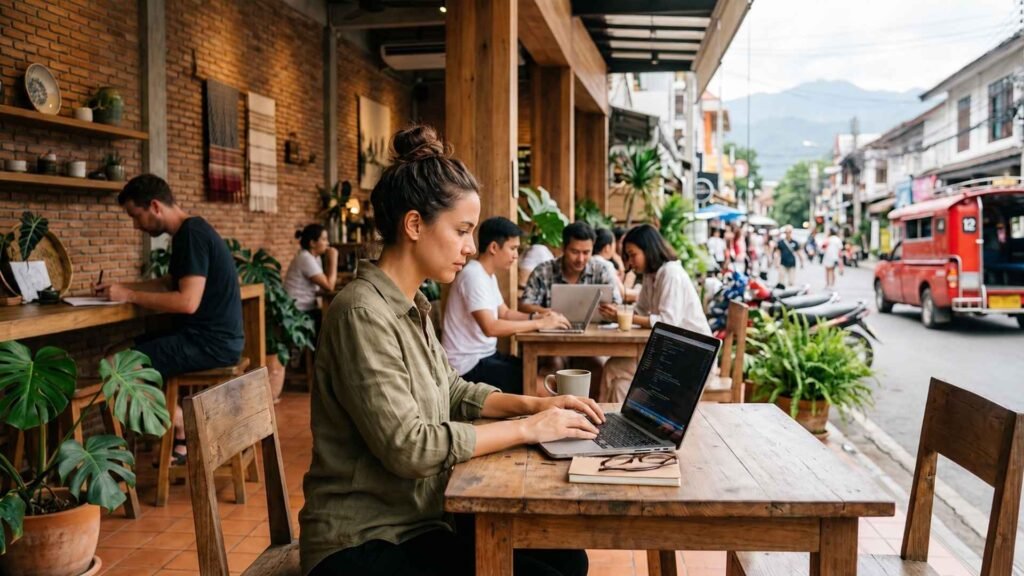
Best For: Affordability, community, cafés and coworking
Estimated Monthly Budget: ฿35,000–฿60,000
Internet and Coworking: Very good
Getting Around: Ride-hailing, songthaews and scooters
Chiang Mai remains the most balanced choice for remote workers who want an easy introduction to life in Thailand. It combines comparatively affordable accommodation with a strong café culture, established coworking spaces and one of the country’s most visible international remote-work communities.
Nimman is the most convenient neighborhood for many newcomers. It places cafés, restaurants, shopping centers, gyms and coworking spaces within a relatively compact area. The Old City has more traditional character and guesthouse-style accommodation, while Santitham can provide better value without placing you too far from Nimman.
Chiang Mai works particularly well for freelancers, content creators, independent consultants and online business owners who want opportunities to meet other remote professionals. It is generally easier to build a social routine here than in destinations where villas, beaches and coworking spaces are spread across a large area.
Day-to-day costs can remain manageable, especially with a longer lease and a mix of local and international food. However, the city is no longer the ultra-cheap destination portrayed in many older digital nomad guides. Premium apartments, specialty cafés and frequent international dining can quickly increase your budget.
The most important drawback is seasonal air pollution. Agricultural burning and regional fires can cause severe haze during parts of the late dry season. The exact timing and intensity vary each year, but remote workers sensitive to poor air quality should monitor current conditions and avoid committing to a long lease without considering this period.
Who Should Choose Chiang Mai?
Choose Chiang Mai if you want the strongest combination of value, coworking availability and digital nomad community—and you do not need regular beach access or constant direct international flights.
2. Bangkok — Best for Business, Networking and City Life

Best For: Business meetings, professional networking and international connectivity
Estimated Monthly Budget: ฿50,000–฿90,000
Internet and Coworking: Excellent
Getting Around: BTS, MRT, boats, taxis and ride-hailing
Bangkok is Thailand’s most capable base for remote professionals who need more than a relaxed lifestyle. It offers the country’s broadest selection of coworking spaces, serviced offices, business events, private hospitals, international restaurants and air connections.
The BTS Skytrain and MRT make neighborhood selection extremely important. Living close to a station can reduce your dependence on taxis and help you avoid some of Bangkok’s traffic.
Asok and Phrom Phong provide central convenience but command higher rents. Thonglor and Ekkamai appeal to those seeking restaurants, nightlife and a more premium lifestyle. On Nut and Phra Khanong can offer better value while retaining relatively easy access to central Bangkok.
Bangkok is particularly suitable for consultants, founders, technology professionals and remote employees who frequently attend meetings or fly internationally. It is also the easiest destination on this list for people who do not want to drive a scooter.
The trade-offs are heat, humidity, traffic, noise and higher central-city rents. A cheap apartment located far from rapid transit may save money but create a frustrating daily routine. For many remote workers, paying more to live within walking distance of a BTS or MRT station is worth the difference.
Who Should Choose Bangkok?
Choose Bangkok if professional opportunity, transport, healthcare and international connections matter more than quiet surroundings or beach access.
3. Phuket — Best for Premium Beach Living
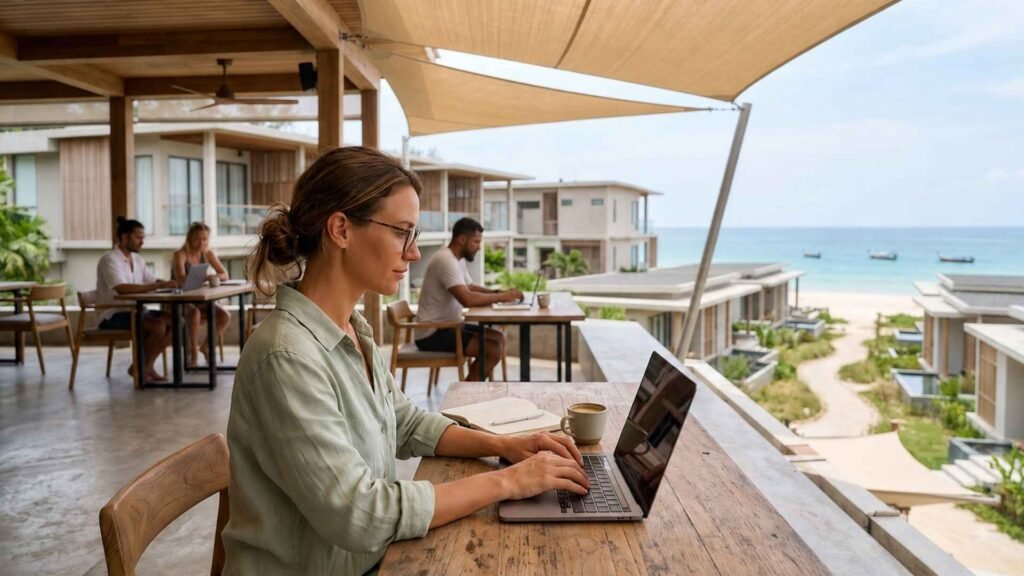
Best For: Beaches, modern conveniences and an upscale island lifestyle
Estimated Monthly Budget: ฿60,000–฿110,000
Internet and Coworking: Very good in developed areas
Getting Around: Car or scooter often useful
Phuket offers a combination few Thai islands can match: international flights, modern supermarkets, private hospitals, gyms, coworking spaces, restaurants and a wide choice of beaches.
The island’s different areas suit different remote-worker profiles. Rawai has become a popular long-stay base with cafés, fitness facilities and an international community. Bang Tao attracts remote workers seeking higher-end accommodation, beach clubs and premium services. Phuket Town offers culture, local food and a more urban atmosphere, although it does not provide the immediate beach lifestyle many newcomers expect.
Phuket is one of the best places in Thailand for digital nomads who want island scenery without giving up too much infrastructure. It can also work well for couples, families and established professionals with a higher accommodation budget.
However, Phuket is significantly more expensive than Chiang Mai and can rival or exceed Bangkok once rent, transport and imported products are included. The island is also geographically large. Choosing an inexpensive property far from your preferred beach, gym or coworking space may lead to considerable transport costs and travel time.
Weather is another consideration. Phuket’s southwest monsoon can bring heavier rain, rougher seas and less predictable beach conditions, so seasonal timing matters if outdoor activities and island trips are a major part of your lifestyle.
Who Should Choose Phuket?
Choose Phuket if you have a flexible mid-range or premium budget and want beaches, developed infrastructure and convenient air connections in the same destination.
4. Koh Samui — Best for a Balanced Island Lifestyle
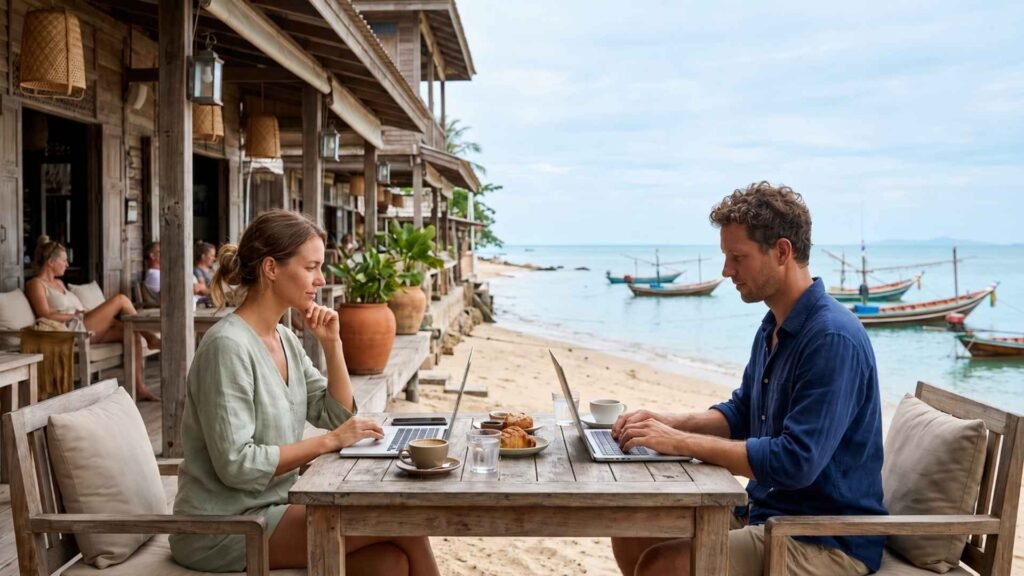
Best For: Comfortable island living, beaches and long-term routines
Estimated Monthly Budget: ฿55,000–฿100,000
Internet and Coworking: Good to very good in developed areas
Getting Around: Scooter or car often useful
Koh Samui is smaller and generally calmer than Phuket while still offering an airport, private hospitals, supermarkets, gyms, international restaurants and long-term rental options.
Bophut and Fisherman’s Village provide restaurants and a polished social atmosphere. Bangrak offers a practical location near the airport and ferry connections. Lamai is often more relaxed, while quieter parts of the island suit remote workers who value privacy and nature.
Samui can be a strong choice for couples, wellness-focused professionals and remote workers who want to establish a stable island routine rather than move between party areas and tourist attractions.
The main difficulty is transport. Public transportation is limited compared with Bangkok, and taxis can become expensive. A scooter or car often makes everyday life considerably easier, so choose your neighborhood carefully if you prefer not to drive.
Rental prices can also increase sharply during popular travel periods. The island’s wettest conditions do not always follow the same pattern as Phuket, so travelers should not assume that all southern islands share one identical monsoon calendar.
Who Should Choose Koh Samui?
Choose Koh Samui if you want a comfortable island base with more everyday infrastructure than a small island but a slower atmosphere than Phuket.
5. Hua Hin — Best for Quiet and Convenient Coastal Living
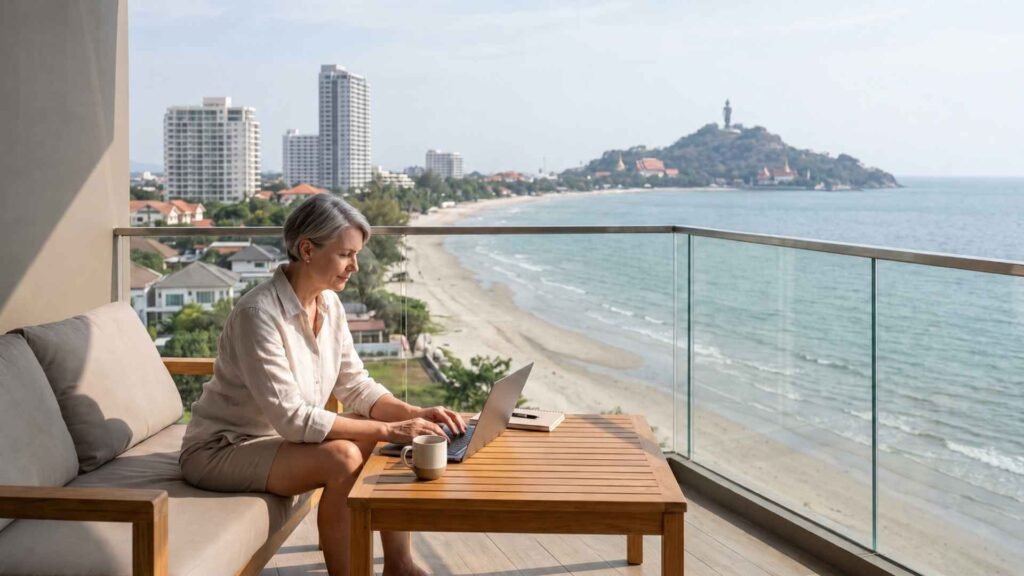
Best For: Calm routines, long stays and access from Bangkok
Estimated Monthly Budget: ฿40,000–฿70,000
Internet and Coworking: Very good in modern accommodation
Getting Around: Manageable centrally; transport useful farther out
Hua Hin provides a quieter alternative to Thailand’s major islands. It combines a long coastline, condominium developments, supermarkets, golf courses, local markets and access to private healthcare.
The city attracts retirees and long-term residents as well as remote workers, creating a more settled atmosphere than short-term nomad hubs. It is a sensible choice for people who want to focus on work, exercise and everyday routines without constant nightlife or networking events.
Central Hua Hin can be manageable without driving if you choose accommodation near shops, restaurants and the beach. Properties farther along the coast may offer more space and quieter surroundings but can increase your dependence on taxis or personal transport.
Coworking and networking choices are more limited than in Bangkok or Chiang Mai. Many remote professionals in Hua Hin work from home, condominium common areas or cafés rather than relying on a large coworking community.
Who Should Choose Hua Hin?
Choose Hua Hin if you prefer peaceful coastal living, plan to stay for several months and do not need an intense digital nomad social scene.
6. Krabi — Best for Nature and a Slower Pace
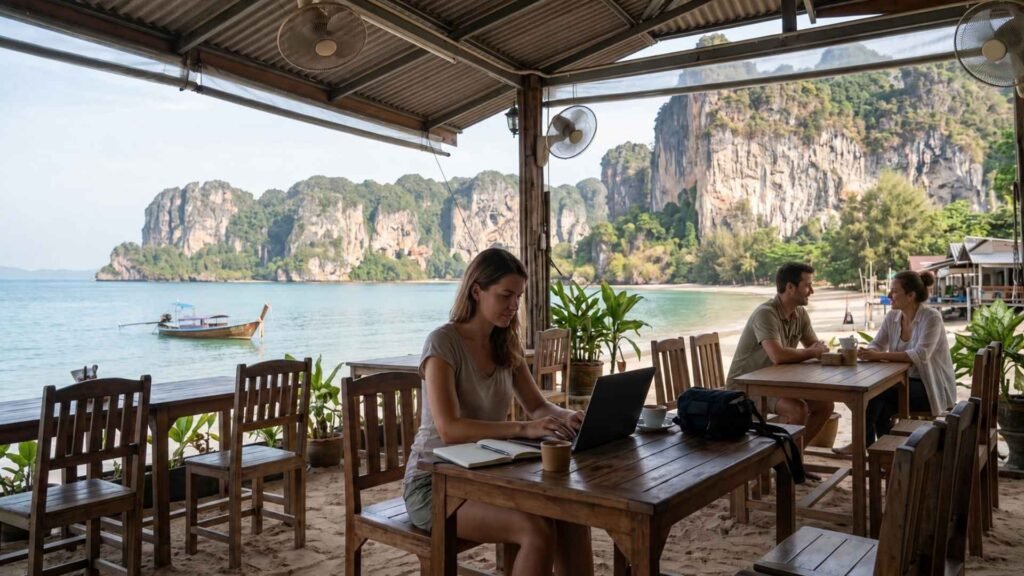
Best For: Dramatic landscapes, outdoor activities and relaxed coastal living
Estimated Monthly Budget: ฿40,000–฿75,000
Internet and Coworking: Good, but accommodation should be checked carefully
Getting Around: Scooter or private transport useful
Krabi appeals to remote workers who prioritize limestone landscapes, beaches, island excursions, climbing and outdoor activities over professional networking.
Ao Nang is the most practical area for many newcomers because it offers restaurants, cafés, accommodation and tourism services within a relatively accessible area. Krabi Town provides a more local atmosphere and can be less expensive, but it does not offer the same immediate beach access.
The destination works well for independent remote workers who are comfortable working from their accommodation or cafés. Dedicated coworking options and large professional communities are less developed than in Chiang Mai, Bangkok or Phuket.
Internet quality can vary by property, particularly outside the most developed areas. If reliable video calls or large uploads are essential to your work, verify the exact accommodation connection before committing to a longer stay.
Krabi shares the Andaman coast’s wetter southwest monsoon pattern. Heavy rain and rough-sea conditions may affect island trips and outdoor plans, although they do not necessarily prevent remote work.
Who Should Choose Krabi?
Choose Krabi if access to nature matters more than coworking variety, nightlife or frequent business events.
7. Pattaya — Best for Transport and Apartment Choice
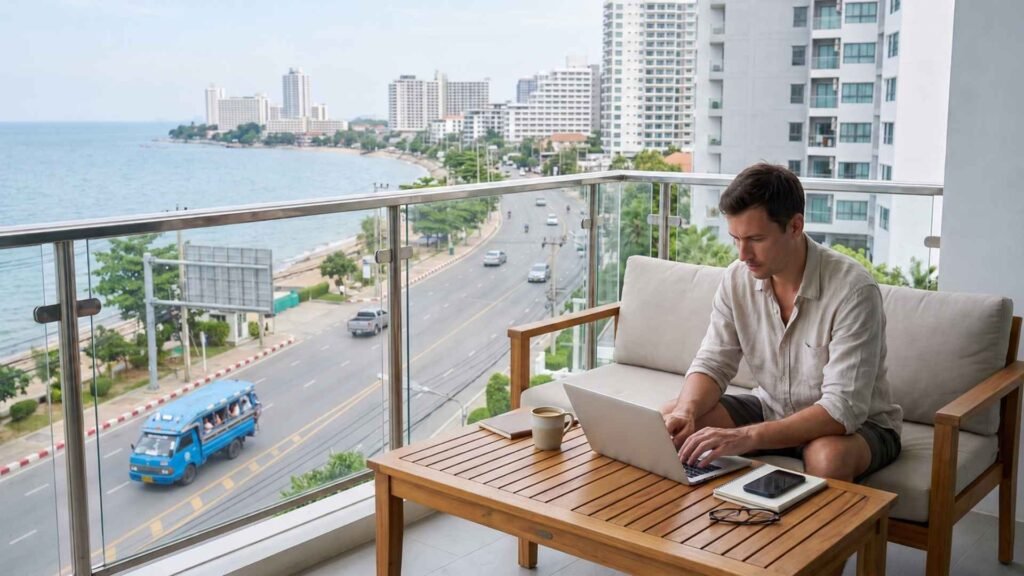
Best For: Accommodation variety, convenience and access from Bangkok
Estimated Monthly Budget: ฿40,000–฿75,000
Internet and Coworking: Very good
Getting Around: Songthaews, taxis, ride-hailing and local transport
Pattaya is often reduced to its nightlife reputation, but it can be a practical remote-work base when the correct neighborhood is selected.
The city offers a wide range of condominiums, shopping centers, restaurants, gyms and services. It is also accessible from Bangkok and Suvarnabhumi Airport, making it more convenient than destinations that require an additional domestic flight or ferry.
Jomtien is generally more suitable for remote workers seeking a calmer coastal routine. Central Pattaya provides maximum convenience and entertainment, while Wongamat offers a more residential atmosphere with modern condominiums.
Internet is typically reliable in contemporary apartments, and the large rental supply gives remote workers more choice than on smaller islands. However, dedicated coworking culture is less central to the experience than in Chiang Mai or Bangkok.
Neighborhood research is essential. Noise levels, traffic and the immediate street atmosphere can change significantly within a short distance. Remote workers planning a longer stay should view the property and surrounding area at different times of day whenever possible.
Who Should Choose Pattaya?
Choose Pattaya if you want coastal access, abundant apartment options and relatively easy connections to Bangkok without paying Phuket’s typical island premium.
8. Koh Phangan — Best for Community and Wellness
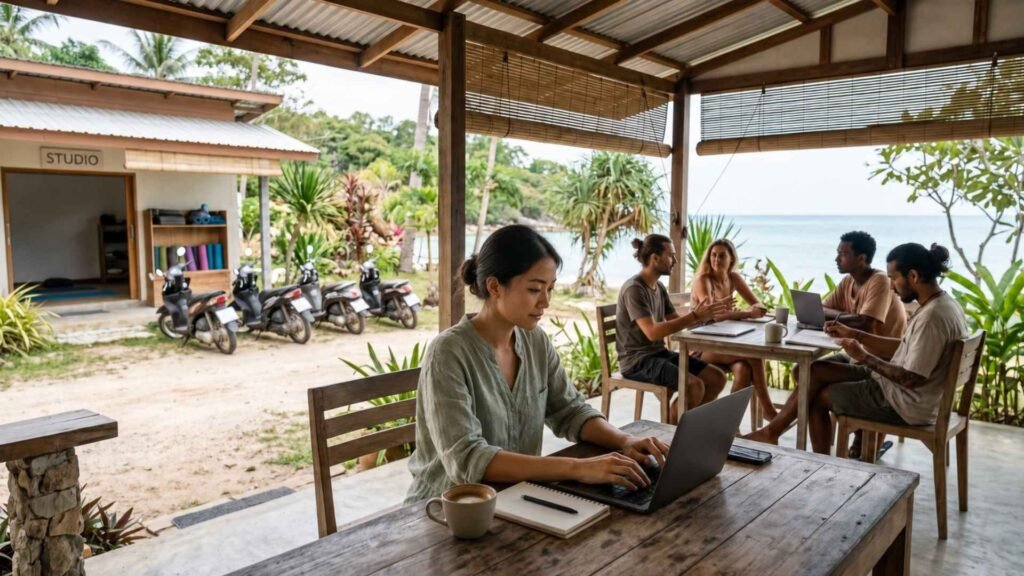
Best For: Wellness, community, yoga and creative remote work
Estimated Monthly Budget: ฿50,000–฿90,000
Internet and Coworking: Good in established remote-work areas
Getting Around: Scooter often expected
Koh Phangan has developed far beyond its Full Moon Party image. Parts of the island now support an active international community built around yoga, wellness, fitness, creative work and online entrepreneurship.
Sri Thanu and the island’s western side are particularly popular with remote workers. Cafés, healthy restaurants, yoga centers and coworking spaces make it easier to create a routine and meet other long-term visitors.
The island can be rewarding for freelancers, coaches, creators and wellness-focused professionals who value community more than corporate networking. Its social environment can feel more personal than Bangkok or Phuket because people often return to the same cafés, classes and shared workspaces.
Accommodation can be difficult and expensive during periods of high demand. Internet is generally strongest in established remote-work areas, but the connection at an individual villa or bungalow should still be verified before booking long term.
Koh Phangan is reached primarily by ferry, making travel more sensitive to weather and transport schedules. Conditions vary by year, so check local forecasts and ferry notices before traveling during stormier periods.
Who Should Choose Koh Phangan?
Choose Koh Phangan if wellness, creative community and tropical island living are central to your ideal remote-work experience.
9. Pai — Best for a Slow Mountain Lifestyle
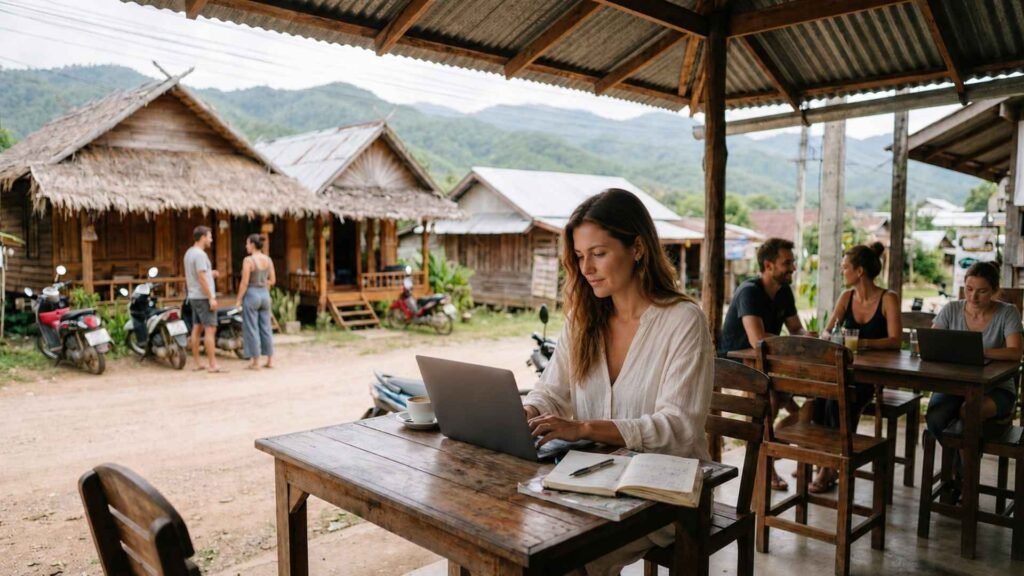
Best For: Small-town living, nature and temporary creative retreats
Estimated Monthly Budget: ฿30,000–฿55,000
Internet and Coworking: Good in suitable properties, but inconsistent
Getting Around: Scooter useful
Pai is a small mountain town in northern Thailand with cafés, guesthouses, natural scenery and a relaxed social atmosphere. It is one of the least urban choices in this guide.
Writers, creators and independent freelancers may find Pai useful for a temporary retreat. Daily life can be inexpensive, distances are manageable and the surrounding countryside provides a significant change from Thailand’s large cities and resort areas.
However, Pai is not the strongest option for remote workers who require formal coworking facilities, frequent meetings, advanced private healthcare or easy air connections. Travel normally involves a winding road journey from Chiang Mai, which can be uncomfortable for people prone to motion sickness.
Internet reliability varies by property, so remote workers who depend on video meetings or large uploads should verify their accommodation connection before committing to a longer stay.
Pai is also affected by northern Thailand’s seasonal haze. Anyone with asthma, respiratory sensitivity or concerns about air pollution should check current conditions before visiting during the late dry season.
Who Should Choose Pai?
Choose Pai for a short, slow-living retreat if you can work independently and do not depend on big-city services or constant professional networking.
Which Thai Destination Fits Your Remote-Work Lifestyle?
Price and popularity alone should not determine where you live. Your ideal base also depends on whether you are traveling alone, moving with a partner or family, relying on public transport or looking for an instant community.
Best for First-Time Digital Nomads: Chiang Mai
Chiang Mai is the easiest starting point for most first-time digital nomads thanks to its established community, accessible coworking spaces and manageable living costs. Choose Bangkok instead if public transport, specialist healthcare or frequent international flights are more important.
Best for Solo Digital Nomads: Chiang Mai or Bangkok
Chiang Mai makes it relatively easy to meet other remote workers through cafés, coworking spaces and community events. Bangkok offers a much larger social and professional network but requires more effort to build a routine because of its size.
Best for Couples: Koh Samui or Hua Hin
Koh Samui suits couples who want beaches, restaurants and a comfortable island routine. Hua Hin is better for those who prefer quieter coastal living and easier access to Bangkok without depending on flights or ferries.
Best for Families: Bangkok or Phuket
Bangkok provides the strongest combination of private healthcare, public transport, international services and educational options. Phuket is the better choice for families prioritizing beach living, provided the higher costs of housing, transport and education fit the budget.
Best for Budget-Conscious Remote Workers: Chiang Mai or Pai
Chiang Mai offers the better long-term balance of affordability, coworking, healthcare and everyday services. Pai can cost less but is more suitable for temporary retreats than remote workers who depend on extensive professional infrastructure.
Best for Remote Workers Who Do Not Ride a Scooter: Bangkok
Bangkok is the clearest choice because living near the BTS or MRT can eliminate most need for personal transport. Central Hua Hin and Pattaya can also work without a scooter, although convenience depends more heavily on the neighborhood.
Best for Wellness and Creative Work: Koh Phangan
Koh Phangan stands out for yoga, fitness, wellness and its creative international community. It works particularly well for remote workers comfortable with island transport, ferry travel and seasonal variations in accommodation availability.
Important Seasonal Considerations
Thailand can be visited throughout the year, but its regional weather patterns should influence where and when you settle.
Chiang Mai and Pai
Northern Thailand can experience serious seasonal haze associated with agricultural burning and regional fires. Conditions vary from year to year, but the late dry season is the main period of concern.
Check current and historical air-quality data before committing to accommodation during this period. Travelers with respiratory conditions may prefer to base themselves elsewhere until conditions improve.
Phuket and Krabi
Phuket and Krabi are on the Andaman side of southern Thailand. Their wetter southwest monsoon season can bring frequent rain, strong waves and occasional disruption to boat activities.
Rain does not necessarily continue all day, and remote work can remain practical, but travelers choosing these destinations primarily for beaches and island trips should consider the season carefully.
Koh Samui and Koh Phangan
Samui and Phangan are in the Gulf of Thailand and can experience a different rainfall pattern from Phuket and Krabi. Wetter and stormier conditions often become more noticeable later in the year.
Ferry services normally operate regularly, but severe weather can cause delays, cancellations or uncomfortable crossings.
Bangkok and Central Thailand
Bangkok is hot and humid for much of the year. Heavy rain can temporarily worsen traffic and cause localized flooding, while the hottest months can make long walks uncomfortable.
Living close to rapid transit, supermarkets and indoor services can significantly improve the experience.
For a broad overview of regional conditions, consult the Tourism Authority of Thailand’s weather information.
Apartments, Villas or Coliving: Which Is Best for Remote Workers?
The type of accommodation you choose can affect your budget, internet reliability, transport needs and ability to meet other people.
Apartments and condominiums are usually the most practical choice in Bangkok, Chiang Mai, Pattaya and Hua Hin. They may include reception, security, shared facilities and an established fixed internet connection, although the exact unit should still be tested.
Villas and houses provide more space and privacy and are common in Phuket, Koh Samui and Koh Phangan. However, they can increase electricity, maintenance and transport costs. More isolated properties may also have less dependable internet or mobile reception.
Coliving accommodation can be useful for solo travelers and first-time digital nomads who want a ready-made community, workspace and flexible booking period. This convenience normally comes at a higher nightly or monthly cost than a conventional long lease.
For most newcomers, the safest approach is to book flexible accommodation first and compare several long-term properties after arrival. Never assume that an attractive villa or apartment includes fast private internet without confirming it directly.
Internet and Coworking in Thailand
Thailand generally provides strong internet and mobile connectivity in its principal cities and developed tourist destinations. Bangkok and Chiang Mai offer the deepest selection of coworking spaces, while Phuket and Koh Phangan have established remote-work venues in their most popular long-stay areas.
However, country-level internet statistics do not guarantee that a particular apartment, villa or bungalow will support professional work.
Before booking long-term accommodation:
- Ask which fixed internet provider serves the property.
- Request a recent speed test from inside the exact unit.
- Confirm whether the connection is private or shared.
- Check mobile coverage as a backup.
- Read recent reviews mentioning video calls or remote work.
- Keep a local SIM or eSIM with sufficient data for emergencies.
These checks are particularly important on islands and in rural properties, where two accommodations located relatively close together can have very different connection quality.
Remote workers who depend on constant video meetings should prioritize a verified apartment connection and nearby coworking backup rather than choosing accommodation solely for its view.
Do You Need a Scooter in Thailand?
You do not need a scooter everywhere in Thailand.
In Bangkok, living near the BTS or MRT makes rail, taxis and ride-hailing more practical than owning or renting a scooter. Central areas of Pattaya and Hua Hin can also be manageable without one when accommodation is chosen carefully.
A scooter can be much more useful in Phuket, Koh Samui, Koh Phangan, Krabi and Pai, where attractions, beaches and residential areas are spread out. However, convenience should not override safety.
Only ride if you have:
- A driving licence valid for the appropriate motorcycle category
- Any international driving permit required for your circumstances
- A properly fitted helmet
- Insurance that explicitly covers motorcycle use
- The experience needed for local road and weather conditions
Many travel insurance policies exclude motorcycle accidents when the rider lacks the correct licence, does not wear a helmet or operates a vehicle outside the policy’s conditions.
If you are inexperienced or prefer not to ride, choose accommodation within walking distance of your workspace, shops, restaurants and essential services. Paying more for the right location can be safer and ultimately less expensive than relying on daily taxis.
Is Thailand Suitable for Long-Term Remote Work?
Thailand can be an excellent long-term base for remote workers, offering strong connectivity, diverse accommodation, good healthcare access in major centers and the flexibility to move between cities, mountains and islands.
The main challenges are seasonal weather, northern air pollution, road safety, visa compliance and potential tax obligations. The Destination Thailand Visa (DTV) can support longer stays for eligible digital nomads, remote workers and freelancers, but it does not provide unrestricted access to local employment.
Immigration status and tax residence are separate issues. Spending a substantial part of the year in Thailand may affect your tax position depending on your circumstances, so long-term residents should check the rules that apply to them.
Maya’s Tip:
Before choosing a long-term base, compare rent, verified internet, transport, healthcare and seasonal conditions. Book flexible accommodation for the first two to four weeks so you can explore neighborhoods and test the exact internet connection before signing a longer lease.
For individual immigration or tax questions, consult a qualified Thai professional rather than relying solely on social media advice.
Best Places in Thailand for Digital Nomads: FAQs
What is the best place in Thailand for digital nomads?
Chiang Mai is the best overall choice for affordability, coworking and community. Bangkok is better for remote professionals who prioritize business, public transport and international connectivity.
Is Bangkok or Chiang Mai better for digital nomads?
Chiang Mai is generally better for affordability, community and a slower lifestyle. Bangkok is better for professional networking, international flights, public transportation, specialist healthcare and big-city entertainment.
Which Thai island is best for remote workers?
Phuket is the most developed option and offers international flights, hospitals and extensive services. Koh Samui provides a calmer but still comfortable island base, while Koh Phangan is best for wellness and a community-oriented lifestyle.
What is the cheapest place in Thailand for digital nomads?
Pai and Chiang Mai are among the most affordable destinations in this comparison. Chiang Mai is usually the more practical long-term base because it offers stronger coworking, healthcare, transport and accommodation infrastructure.
Can digital nomads work legally in Thailand?
Eligible remote workers and freelancers may apply for the Destination Thailand Visa under its workcation category. However, the visa should not be interpreted as general permission to work for Thai employers or serve Thai clients. Confirm the rules applicable to your work before traveling.
Do digital nomads need a scooter in Thailand?
No. Bangkok is particularly easy to navigate without one when living near the BTS or MRT, while scooters are more useful in destinations such as Phuket, Koh Samui, Koh Phangan, Krabi and Pai.
Where is the best internet in Thailand?
Bangkok and Chiang Mai offer some of the strongest overall connectivity for remote workers, with developed parts of Phuket also performing well. Always verify the connection at your exact accommodation.
Is Thailand safe for solo digital nomads?
Thailand is widely used as a solo travel and remote-work destination. Nevertheless, travelers should take normal precautions involving road safety, accommodation security, nightlife, valuables and travel insurance. Motorcycle accidents are a particularly important risk.
How much money does a digital nomad need in Thailand?
A realistic monthly budget starts around ฿35,000–฿60,000 in Chiang Mai and ฿50,000–฿90,000 in Bangkok. Phuket and the major islands generally require a higher budget, especially during high season.
Final Thoughts: Where Should You Live in Thailand?
The best places in Thailand for digital nomads suit different budgets and lifestyles. Chiang Mai is the strongest all-round choice for affordability, coworking and community, while Bangkok is better for networking, transport and international access. For coastal living, consider Phuket for maximum infrastructure or Koh Samui for a calmer island routine.
Wherever you choose, verify your accommodation, internet connection, transport needs and seasonal conditions before signing a long lease. The right neighborhood can make as much difference as the destination itself.