

Barcelona remains one of Europe’s most popular cities for expats, remote workers, and digital nomads thanks to its Mediterranean lifestyle, strong public transport, international atmosphere, and year-round livability.
But how expensive is Barcelona in 2026?
The real cost of living in Barcelona depends heavily on your neighborhood, housing choices, and daily lifestyle expectations.
This guide breaks down the real monthly costs of:
- rent
- groceries
- restaurants
- transportation
- healthcare
- coworking
- and everyday life in Barcelona
Whether you are planning a temporary stay or a long-term relocation, this guide helps you understand what living in Barcelona actually costs in 2026.
⚡ Quick Answer: Is Barcelona Expensive in 2026?
Barcelona is no longer considered a cheap European city, but it is still more affordable than many major Western capitals.
Average monthly living costs in Barcelona:
| Lifestyle | Estimated Monthly Cost |
|---|---|
| Budget Solo Living | €1,400 – €1,900 |
| Comfortable Digital Nomad | €2,200 – €3,200 |
| Couple Lifestyle | €3,000 – €4,800 |
| Premium Expat Lifestyle | €5,000+ |
Housing remains the largest expense.
Meanwhile, transport, groceries, healthcare, and local dining are still relatively manageable compared to cities with similar international appeal.
Why Barcelona Still Attracts Expats & Digital Nomads
Despite rising prices, Barcelona continues to attract foreigners looking for a better balance between lifestyle and affordability.
The city combines:
- Mediterranean climate
- walkable neighborhoods
- beach access
- strong café culture
- international communities
- and reliable public transport
Barcelona also works exceptionally well for remote workers because daily life can be managed comfortably without owning a car.
For many expats, the overall lifestyle still justifies the cost of living in Barcelona in 2026.
Rent Prices in Barcelona (2026)

Housing is the biggest factor affecting the cost of living in Barcelona.
Prices vary depending on:
- neighborhood
- apartment condition
- metro access
- contract type
- and whether utilities are included
💡 Many newcomers underestimate how competitive Barcelona’s rental market has become in 2026, especially in expat-friendly neighborhoods.
Some landlords now use 11-month “seasonal contracts” instead of traditional long-term agreements.
In these cases, agency fees may still be charged to tenants — potentially increasing upfront moving costs by several thousand euros.
For expats and digital nomads, this can become one of the most overlooked parts of the cost of living in Barcelona.
Average Monthly Rent Prices
| Apartment Type | Average Price |
|---|---|
| Room in shared apartment | €500–€900 |
| Studio apartment | €1,000–€1,600 |
| 1-bedroom apartment | €1,300–€2,300 |
| 2-bedroom apartment | €1,900–€3,800+ |
Central areas like:
- Eixample
- El Born
- Barceloneta
- Gràcia
- Poblenou
typically have the highest rental prices.
Best Areas Based on Budget

💸 Budget-Friendly Areas
- Sant Andreu
- Hospitalet
- Badalona
- El Clot
These areas usually offer:
- lower rents
- larger apartments
- quieter residential environments
while still maintaining good metro access.
⚖ Mid-Range Lifestyle Areas
- Gràcia
- Poble Sec
- Sant Antoni
- Poblenou
These neighborhoods balance:
- lifestyle
- café culture
- coworking access
- and local atmosphere
without reaching premium price levels.
💎 Premium Areas
- Eixample
- El Born
- Barceloneta
- Sarrià-Sant Gervasi
These districts attract many:
- international professionals
- entrepreneurs
- remote workers
- and higher-income expats
The lifestyle quality is excellent, but housing costs rise significantly.
Utility Costs in Barcelona
Utility costs are moderate compared to many major European cities.
Typical Monthly Utility Costs
| Expense | Estimated Cost |
|---|---|
| Electricity + water | €90–€180 |
| Internet | €30–€50 |
| Mobile plan | €15–€35 |
| Gas (if applicable) | €20–€60 |
Older apartments may also become more expensive during colder months due to weaker insulation.
During peak summer months, heavy air conditioning usage can sometimes double electricity bills in poorly insulated apartments.
Grocery Prices in Barcelona

Groceries remain one of the more manageable parts of the cost of living in Barcelona.
Shopping at local supermarkets and markets can significantly reduce monthly expenses.
Average Grocery Prices (2026)
| Product | Average Price |
|---|---|
| Milk (1L) | €1.10 – €1.50 |
| Eggs (12) | €2.50 – €4 |
| Chicken breast (1kg) | €8 – €13 |
| Bread loaf | €1.20 – €2.50 |
| Local wine | €5 – €12 |
| Coffee beans | €6 – €15 |
Popular supermarkets include:
- Mercadona
- Lidl
- Carrefour
- Aldi
- Bonpreu
- Veritas
Restaurant & Café Costs
Barcelona offers a wide range of food prices depending on location and dining style.
Tourist-heavy districts are usually more expensive, while local neighborhoods often provide better value.
Typical Food & Drink Prices
| Item | Average Price |
|---|---|
| Espresso | €1.50 – €2.50 |
| Casual lunch menu | €14 – €22 |
| Dinner for two | €45 – €90 |
| Cocktail | €10 – €16 |
| Tapas dish | €4 – €12 |
The traditional menú del día remains one of the best-value dining options in the city.
Many local restaurants still offer:
- starter
- main course
- drink
- dessert
for a fixed midday price.
👉 Related: Best Restaurants in Barcelona (2026)
👉 Related: What to Eat in Barcelona (2026)
Transportation Costs

Barcelona has one of Europe’s most efficient urban transport systems.
Most residents do not need a car.
Typical Monthly Transport Costs
| Transport Type | Estimated Cost |
|---|---|
| Single metro ticket | ~ €2.65 |
| T-usual monthly pass | ~ €42–€45 |
| Taxi start fare | ~ €2.75 |
| Airport metro line | included in some travel cards |
The metro, buses, trams, and commuter trains are well integrated throughout the city.
For many residents, transportation remains one of the easiest areas to save money.
👉 Related: Hola Barcelona Travel Card: Is It Worth It?
👉 Related: Official Barcelona public transport information: TMB
Healthcare Costs in Barcelona
Spain’s healthcare system is one of the reasons many foreigners relocate to Barcelona.
Private healthcare is also significantly more affordable than in countries like the United States.
Typical Healthcare Costs
| Service | Estimated Cost |
|---|---|
| Private insurance | €80 – €180/month |
| GP consultation | €40 – €90 |
| Dentist cleaning | €50 – €120 |
| Gym membership | €35 – €90 |
Many expats combine public healthcare eligibility with private insurance for faster appointments and English-speaking clinics.
Coworking & Remote Work Costs

Barcelona has become one of Europe’s leading remote-work hubs.
Coworking spaces are available across most central neighborhoods.
Average Coworking Prices
| Membership Type | Average Price |
|---|---|
| Day pass | €15 – €35 |
| Part-time access | €80 – €180 |
| Full monthly membership | €180 – €350 |
Popular remote-work areas include:
- Poblenou
- Eixample
- Gràcia
- Sant Antoni
💰 Taxes & Legal Considerations for Expats
If you stay in Spain for more than 183 days per year, you may become a Spanish tax resident.
Many expats and digital nomads also explore:
- Beckham Law tax benefits
- autónomo registration
- private healthcare requirements
- and Spanish social security contributions
Freelancers registered as autónomos in Spain may also need to pay monthly social security contributions.
While reduced startup rates are sometimes available during the first year, standard contributions can later exceed €300/month depending on income level.
These factors can become an important part of the overall cost of living in Barcelona for long-term residents and remote workers.
👉 Related: Spain Digital Nomad Visa Taxes Explained
👉 Related: Taxes in Spain for Foreigners
👉 Related: Official Spanish tax authority: Agencia Tributaria (AEAT)
💳 Banking & International Transfers
Many expats living in Barcelona use services like Wise or Revolut to reduce international transfer fees and currency conversion costs.
Opening a Spanish bank account is often required for:
- apartment rentals
- utility payments
- local contracts
- and residency-related paperwork
For foreigners paid in non-euro currencies, exchange rates and transfer fees can quietly increase the overall cost of living in Barcelona over time.
Some traditional Spanish banks may also charge:
- monthly maintenance fees
- international transfer fees
- or account setup requirements for non-residents
Using international banking platforms can help simplify everyday spending during the first months of relocation.
Realistic Monthly Budgets

🧳 Budget Digital Nomad
Approximate monthly cost:
👉 €1,400–€1,900
Usually includes:
- shared accommodation
- moderate dining
- public transport
- limited nightlife
💻 Comfortable Remote Worker Lifestyle
Approximate monthly cost:
👉 €2,200–€3,200
Usually includes:
- private apartment
- coworking membership
- regular dining out
- gym membership
- moderate travel
🏡 Couple Living Comfortably
Approximate monthly cost:
👉 €3,000–€4,800
Often includes:
- central apartment
- private healthcare
- regular restaurant visits
- entertainment
- weekend travel
👨👩👧 Cost of Living in Barcelona for Families

For families moving to Spain, housing, education, and childcare can increase the cost of living in Barcelona significantly compared to solo expat or digital nomad lifestyles.
While Barcelona offers an excellent quality of life for families, monthly budgets often rise much faster once larger apartments, school fees, and family healthcare are included.
Popular Areas for Families in Barcelona
Sarrià-Sant Gervasi — The Upscale Classic
Often considered one of Barcelona’s most upscale residential districts, Sarrià-Sant Gervasi is especially popular with expat families due to its safety, quieter atmosphere, and proximity to several international schools.
Les Corts / Pedralbes — The Quiet Academic Hub
These areas are known for wider streets, green spaces, and a calmer residential environment that appeals to families looking for a more relaxed city lifestyle.
Poblenou — The Modern Beachfront
Poblenou attracts many modern expat families thanks to its beach access, newer apartment buildings, coworking culture, and family-friendly atmosphere.
Sant Andreu — The Local Hidden Gem
Sant Andreu is often considered a quieter and more budget-friendly alternative while still offering a strong local community feel and good metro access.
Typical Family-Related Costs in Barcelona
| Expense | Estimated Monthly Cost |
|---|---|
| 2–3 bedroom apartment | €2,400–€4,800+ |
| International school | €800–€1,800+ per child |
| Private daycare (0–3 yrs) | €450–€850 |
| Family groceries (4 people) | €850–€1,500 |
| Family public transport | €45–€120 |
💡 Apartments in premium districts such as Eixample, Pedralbes, or Sarrià typically sit at the higher end of the rental range.
💡 International school tuition usually does not include registration or matriculation fees, which can significantly increase first-year costs.
💡 Public daycare options are cheaper but often involve long waiting lists in popular residential districts.
💡 Some international schools in Barcelona may require applications 6–12 months in advance due to limited availability and waiting lists.
Some expat families also explore “concertada” schools — semi-private institutions that generally cost less than international schools while following the local Spanish/Catalan curriculum.
Additional Costs Families Often Overlook
Extracurricular activities such as football, swimming, music, dance, or art classes can easily add another €50–€150 per child each month depending on frequency and location.
Many expat families also choose private healthcare plans for faster pediatric access and English-speaking clinics, even when eligible for Spain’s public healthcare system.
Family insurance packages typically range between €150–€250/month depending on coverage.
⚠️ The “Double Rent” Reality
One of the biggest financial surprises for families moving to Barcelona is the amount of upfront housing cash required.
Larger family apartments often require:
- 2 months deposit (fianza)
- first month rent
- and sometimes additional financial guarantees or agency-related costs
💡 Example setup scenario for a family apartment:
- €4,000 deposit
- €2,000 first month rent
- €3,000 furniture & setup costs
Total upfront costs can quickly approach or exceed €9,000–€10,000 before fully settling into the city.
For many families, choosing the right neighborhood has a much bigger financial impact than reducing everyday spending.
📊 Barcelona vs Madrid vs Lisbon vs Valencia
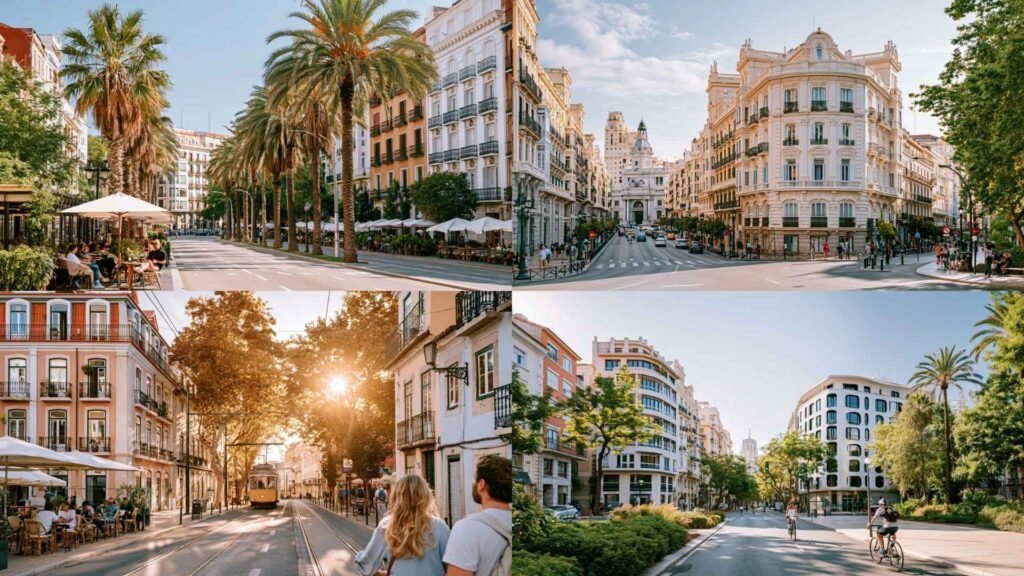
One reason the cost of living in Barcelona remains attractive is the balance between lifestyle, infrastructure, and international accessibility compared to other European cities.
| City | Avg 1BR Rent | Monthly Solo Budget | Lifestyle |
|---|---|---|---|
| Barcelona | €1,300 – €2,300 | €2,200 – €3,200 | Beach + Urban |
| Madrid | €1,200 – €2,100 | €2,100 – €3,100 | Business + Urban |
| Lisbon | €1,100 – €2,000 | €2,000 – €3,000 | Remote Work |
| Valencia | €900 – €1,600 | €1,700 – €2,600 | Relaxed Mediterranean |
Barcelona is generally more expensive than Valencia, but still offers stronger international connectivity and a larger expat ecosystem.
Compared to Madrid, Barcelona often attracts more remote workers and lifestyle-focused expats, especially those looking for a coastal city environment.
❌ Common Money Mistakes Expats Make in Barcelona
Many newcomers underestimate how quickly the cost of living in Barcelona can increase — especially during the first few months.
Common mistakes include:
- overspending on short-term rentals
- choosing tourist-heavy neighborhoods
- ignoring seasonal utility spikes
- relying too heavily on taxis
- and signing overpriced furnished contracts
For most expats, housing decisions have a much bigger financial impact than groceries or transportation.
🏠 One-Time Setup Costs in Barcelona

Many newcomers focus only on monthly expenses when calculating the cost of living in Barcelona.
However, the first few months often involve significant setup costs.
Common Relocation Expenses
| Expense | Estimated Cost |
|---|---|
| Rental deposit (fianza) | 1–2 months rent |
| Furniture & apartment setup | €2,000 – €4,000 |
| NIE / residency assistance | €200 – €500 |
| Agency fees (seasonal contracts) | Varies significantly |
| Initial utility setup | €100 – €300 |
These upfront costs can quickly increase the real relocation budget for expats and digital nomads moving to Barcelona.
Is Barcelona Getting More Expensive?
Yes — especially in housing.
Rental demand from digital nomads, international students, and remote workers continues to push prices higher in many central neighborhoods.
However, compared to cities like London, Paris, Amsterdam, or New York, Barcelona still offers a relatively strong lifestyle-to-cost balance.
The key is choosing the right neighborhood and managing housing costs carefully.
FAQ: Cost of Living in Barcelona (2026)
Is Barcelona expensive for digital nomads?
Barcelona is moderately expensive by Southern European standards, especially for rent. However, many digital nomads still consider the overall lifestyle-to-cost ratio attractive compared to cities like London or Amsterdam.
What salary do you need to live comfortably in Barcelona?
A comfortable solo lifestyle in Barcelona typically requires around €2,200–€3,000/month depending on housing and lifestyle expectations.
Is Barcelona cheaper than Madrid?
In some categories yes, but central Barcelona rent prices can now rival parts of Madrid. Neighborhood choice matters more than the city alone.
Can you live in Barcelona without a car?
Yes. Most residents rely entirely on public transport, walking, and occasional taxis or rideshare apps.
What is the biggest expense in Barcelona?
Housing is the largest contributor to the overall cost of living in Barcelona, especially in central and expat-friendly neighborhoods.
Final Thoughts on the Cost of Living in Barcelona
The cost of living in Barcelona in 2026 depends heavily on housing, lifestyle, and neighborhood choice.
While rent prices have increased, daily expenses like transport, healthcare, and local dining still remain relatively manageable compared to many major European cities.
For many expats and digital nomads, Barcelona continues to offer one of Europe’s strongest lifestyle-to-cost balances — especially when approached with realistic budgeting and smart location choices.
Legal & Financial Disclaimer
Rental prices, tax rules, and residency regulations in Spain can change regularly and vary by individual circumstances.
This guide is for informational purposes only and should not be considered legal, tax, or financial advice.
For decisions related to relocation, tax residency, or property agreements, consulting a qualified professional in Spain is strongly recommended.