

Miami real estate investment has moved beyond lifestyle appeal to become a globally relevant market for foreign buyers seeking stability, long-term value, and dollar-based income. Strong demand, legal clarity, and market liquidity continue to position Miami as a secure destination for international capital.
This Miami Real Estate Investment Guide for Foreign Buyers provides a clear, decision-oriented framework covering legal structure, strategy, and market entry essentials.
Miami real estate investment for foreigners has become a strategic choice for international buyers in the U.S. market.
Why Foreign Buyers Are Investing in Miami Real Estate

Miami attracts foreign investors not through short-term speculation, but through a rare combination of legal clarity, financial stability, and global accessibility that few international real estate markets can offer at the same time. For investors comparing cities across Europe, Asia, and the Americas, Miami consistently stands out as a market where ownership rights, liquidity, and long-term demand align.
Key reasons international buyers choose Miami real estate include:
- Full property ownership rights for non-U.S. citizens
- Strong legal protection of private property
- No restrictions on capital repatriation
- U.S. dollar–denominated asset stability
- High international rental demand
- Transparent and predictable transaction process
Unlike many countries where foreign ownership is limited, conditional, or heavily regulated, the United States — and Florida in particular — allows international investors to participate in the real estate market on equal legal footing with domestic buyers, significantly reducing long-term ownership risk.
Can Foreigners Buy Property in Miami?
Yes. Foreign nationals can freely purchase residential and commercial real estate in Miami without residency or citizenship requirements, under the same property laws that apply to U.S. citizens. This legal equality is one of the key reasons Miami remains highly attractive to international investors seeking clarity and long-term security.
Foreign buyers:
- Do not need a U.S. visa or Green Card
- Can purchase property personally or through a legal entity
- Can hold, rent, and sell property without ownership restrictions
Ownership can be structured as:
- Individual (personal ownership)
- U.S.-based LLC
- International holding structure
This clarity is a major advantage for those buying property in Miami as a foreigner, as it removes many of the ownership uncertainties found in other international markets.
Best Areas in Miami for Foreign Real Estate Investors

In Miami real estate investment, location does more than determine lifestyle — it directly shapes rental demand, resale liquidity, and long-term capital appreciation. For foreign buyers, choosing the right neighborhood is not about popularity alone, but about aligning entry price, tenant profile, and exit potential within the broader dynamics of Miami’s evolving market.
Rather than a single “best” area, Miami offers distinct submarkets serving different investment strategies.
Brickell
Miami’s financial heart and the top choice for international professionals, Brickell appeals to investors prioritizing liquidity, consistency, and corporate tenant demand.
- Luxury high-rise condominiums
- Strong long-term rental demand
- High liquidity and resale speed
Downtown Miami
Driven by infrastructure investment and urban regeneration, Downtown Miami attracts buyers focused on long-term growth and demographic expansion.
- Mixed-use developments
- Growth-oriented investment profile
- Appeal to younger tenants and professionals
Miami Beach
A premium, lifestyle-focused submarket best suited for investors targeting brand value, waterfront scarcity, and international recognition rather than pure yield optimization.
- Waterfront and vacation-oriented properties
- Strong brand value internationally
- Regulatory awareness required for short-term rentals
Edgewater
Favored by strategic buyers, Edgewater offers a balance between entry price and future upside, making it attractive for investors seeking appreciation potential alongside rental demand.
- New developments at relatively lower entry prices
- High appreciation potential
- Increasing rental demand
Property Types Foreign Buyers Prefer
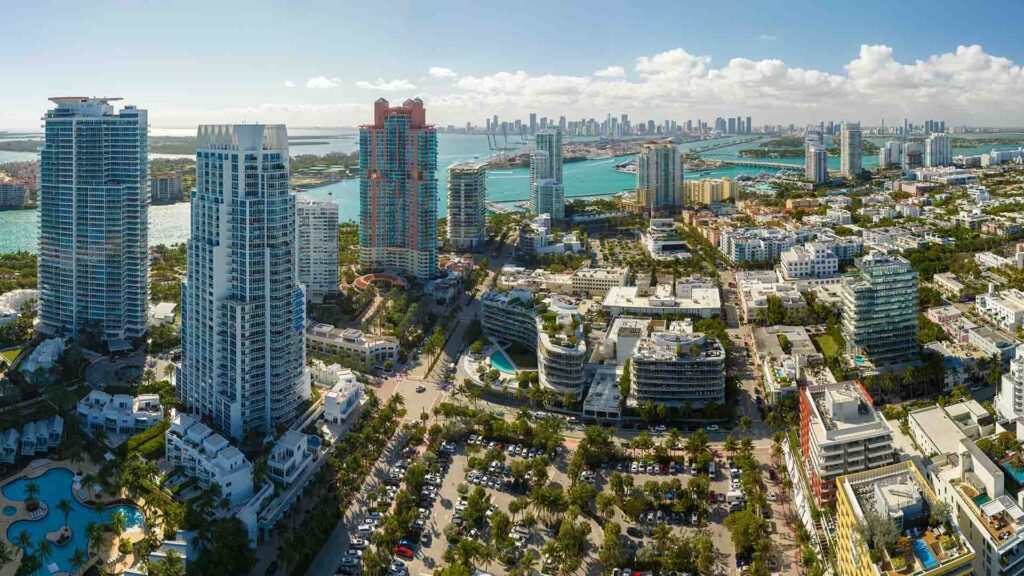
Foreign investors in Miami typically prioritize property types that minimize operational complexity while maximizing liquidity, rental stability, and long-term flexibility. As a result, demand concentrates on assets that support remote ownership, professional management, and consistent tenant appeal.
Most common choices:
- Luxury condominiums
- Waterfront residences
- Pre-construction projects with staged payment plans
- Multi-family income properties
Among these options, condominiums remain the most popular choice for foreign buyers due to HOA-managed maintenance, centralized building services, and simplified ownership logistics — all of which reduce hands-on involvement while preserving income potential.
Legal Process of Buying Property in Miami as a Foreigner

The purchasing process in Miami is standardized, transparent, and investor-friendly, offering foreign buyers a high level of legal clarity and procedural predictability from offer to closing. This structured framework significantly reduces transaction risk and allows international investors to navigate the buying process with confidence.
Typical steps include:
- Property selection and offer submission
- Execution of purchase agreement
- Earnest money deposit (commonly 10%)
- Title search and due diligence period
- Closing with escrow and title insurance
Working with a licensed real estate agent, a real estate attorney, and a title company is strongly recommended, as this professional team ensures compliance, protects buyer interests, and minimizes legal or procedural risks throughout the transaction.
Taxes Foreign Buyers Must Understand
Taxation is one of the most misunderstood aspects of Miami real estate investment for foreign buyers. While U.S. tax rules may initially appear complex, they are largely transparent and manageable when addressed early through proper structuring and professional guidance. Planning ahead allows investors to protect returns and avoid unnecessary complications, as outlined by the Internal Revenue Service (IRS).
Understanding Miami real estate taxes for foreigners allows investors to structure ownership efficiently from the start, rather than reacting to tax obligations after purchase.
Property Taxes
- Assessed annually based on property value
- Paid on a yearly basis
- Rates vary by county and municipality
Property taxes in Miami are predictable and publicly assessed, making them easy to factor into long-term investment planning.
Rental Income Tax
- Rental income generated in the U.S. is taxable
- Withholding rules apply to foreign owners
- Proper structuring can significantly reduce exposure
Early planning ensures rental income remains efficient rather than eroded by avoidable withholding.
FIRPTA Withholding
Under the Foreign Investment in Real Property Tax Act (FIRPTA), foreign sellers may be subject to withholding at the time of sale, overseen by the IRS. FIRPTA is primarily a compliance mechanism rather than a penalty, and its impact can often be reduced or recovered through correct filing and advance planning.
Should Foreign Buyers Use an LLC?
For many foreign investors, deciding whether to purchase property personally or through a U.S.-based LLC is one of the most important structural decisions in a Miami real estate investment. While an LLC is not mandatory, it can provide meaningful advantages depending on the investor’s risk tolerance, holding period, and long-term planning objectives.
Advantages of Using an LLC
- Limited liability protection separating personal and investment assets
- Greater flexibility for estate and succession planning
- Easier transfer of ownership interests
- Potential tax efficiency when structured correctly
For investors holding multiple properties or planning long-term ownership, an LLC often offers a clearer and more flexible framework.
Considerations Before Choosing an LLC
- Annual reporting and compliance requirements
- Accounting and administrative costs
- The need for professional tax and legal guidance
An LLC is not a one-size-fits-all solution. For some foreign buyers, especially those making a single, long-term purchase, individual ownership may remain a simpler and equally effective option.
The optimal structure depends on investment size, risk exposure, and inheritance strategy — making early planning far more valuable than retroactive adjustments.
Financing Options for Foreign Investors
Financing is available to foreign investors purchasing property in Miami, but the terms and expectations differ from those offered to U.S. residents. Understanding these differences early helps investors evaluate whether leverage aligns with their risk profile, timeline, and overall investment strategy.
Exploring financing Miami real estate for foreigners early helps investors determine whether leverage supports or complicates their broader investment strategy.
Common Financing Conditions for Foreign Buyers
- 30–40% down payment, depending on lender and property type
- Higher interest rates compared to domestic borrowers
- Proof of income, assets, and liquidity
- International credit documentation or banking references
Loan approval is primarily asset-based, meaning lenders focus more on property value and cash reserves than on U.S. credit history.
Cash Purchases vs Financing
While financing can improve capital efficiency, many foreign buyers still choose all-cash purchases. Cash transactions offer faster closings, stronger negotiating power, and reduced administrative complexity — advantages that can be particularly valuable in competitive segments of the Miami market.
Ultimately, the choice between cash and financing depends on investment objectives, opportunity cost, and tolerance for leverage.
Rental Yields & Income Potential
Rental yields in Miami are shaped less by short-term fluctuations and more by long-term demand drivers such as population growth, international migration, and business expansion. For foreign investors, income potential is closely tied to location quality, property type, and management efficiency rather than headline yield percentages.
Key Drivers of Rental Performance
- Proximity to business districts and employment hubs
- Waterfront access and lifestyle amenities
- Newer buildings with modern facilities
- Professional property management and tenant screening
Well-located properties tend to benefit from consistent occupancy and faster tenant turnover, supporting stable cash flow even during broader market adjustments.
While rental yields vary across neighborhoods and asset types, Miami remains one of the most liquid rental markets in the United States — allowing investors to balance income generation with flexibility and exit potential.
Property Management & Remote Ownership for Foreign Buyers

For international investors, the real question is not whether property ownership in Miami is profitable, but whether it can be managed efficiently without physical presence. Miami’s well-established property management ecosystem makes remote ownership not only possible, but highly practical for foreign buyers.
Foreign owners typically rely on:
- Professional property management firms handling leasing, maintenance, and tenant relations
- HOA-managed condominium services covering building operations and common areas
- Digital rent collection, reporting, and expense tracking
- Outsourced maintenance, inspections, and compliance coordination
With the right management structure in place, foreign investors can maintain full control and visibility over their assets while minimizing day-to-day involvement. This hands-off model is a major reason Miami continues to attract global buyers seeking stable income without operational burden.
Exit Strategy: Planning Before You Buy

Many real estate guides focus almost exclusively on acquisition, yet experienced investors know that long-term success is defined by how — and when — an investment can be exited. In Miami, planning an exit strategy before purchasing allows foreign buyers to protect capital, manage tax exposure, and remain flexible as market conditions evolve.
Key exit considerations include:
- Market liquidity and average resale timelines
- FIRPTA implications and withholding planning
- Capital gains management and reporting
- Reinvestment or portfolio reallocation options
Because Miami is one of the most liquid real estate markets in the United States, investors benefit from clearer exit visibility compared to many international destinations. Early exit planning does not limit opportunity — it enhances control and preserves optionality throughout the holding period.
Who Should Not Invest in Miami Real Estate?
While Miami offers strong fundamentals and long-term investment potential, it is not the right market for every investor profile. Understanding who Miami real estate may not suit is just as important as recognizing its advantages.
Miami real estate may not be ideal for investors who:
- Expect short-term speculative gains without a defined holding strategy
- Are unwilling to plan for taxation and regulatory compliance
- Seek guaranteed or fixed returns rather than market-based performance
- Prefer fully passive investments without engaging professional management
- Are uncomfortable with market cycles and price fluctuations
Miami rewards investors who approach the market with patience, structure, and realistic expectations. Those seeking quick profits or absolute predictability may find better alignment in alternative asset classes or markets.
Is Miami Real Estate a Smart Long-Term Investment for Foreign Buyers?
Miami has transitioned into a global capital destination supported by business growth, international migration, and legal stability. For foreign investors seeking dollar-based assets, income potential, and long-term value preservation, Miami real estate remains one of the strongest investment markets in the United States.
Miami Business & Investment Guide: 👉 Miami’s global business and investment outlook.