

Opening a local account can make rent, QR payments and everyday transfers easier, but the process is not identical for every applicant. If you want to open a bank account in Thailand as a foreigner, your visa, Thai address, supporting documents and the bank’s current compliance policy can all affect the result. A DTV supports long stays but does not create an automatic right to an account.
This guide explains what is verifiable in 2026, which documents may strengthen an application and what to do if a branch refuses to open an account.
Quick Answer: Can a Foreigner Open a Bank Account in Thailand?
Yes, foreigners can open Thai bank accounts, but approval is not automatic. Banks apply their own eligibility rules and customer-verification checks. A passport is essential, while a qualifying visa, proof of a Thai address and evidence explaining your purpose in Thailand are commonly requested.
A DTV alone may not be enough. Kasikornbank’s published rules specifically state that accounts cannot be opened for holders of tourist or travel-purpose visas, including the Destination Thailand Visa. Other banks may assess foreign applicants under different internal policies, but a DTV holder should obtain confirmation from the chosen branch before travelling there.
| Question | Practical answer in 2026 |
|---|---|
| Can foreigners have Thai bank accounts? | Yes, if they meet the chosen bank’s requirements |
| Is a work permit always required? | No universal rule applies to every bank and applicant, but a bank may request one or equivalent evidence |
| Is a Thai tax ID always required? | Not necessarily for a basic savings account, although tax-residency and TIN information may be requested |
| Can an application be refused after all documents are supplied? | Yes; banks retain onboarding and compliance discretion |
| Can the account usually include mobile banking and a debit card? | Often, subject to separate activation, identity checks and limits |
Can DTV Holders Open a Thai Bank Account?
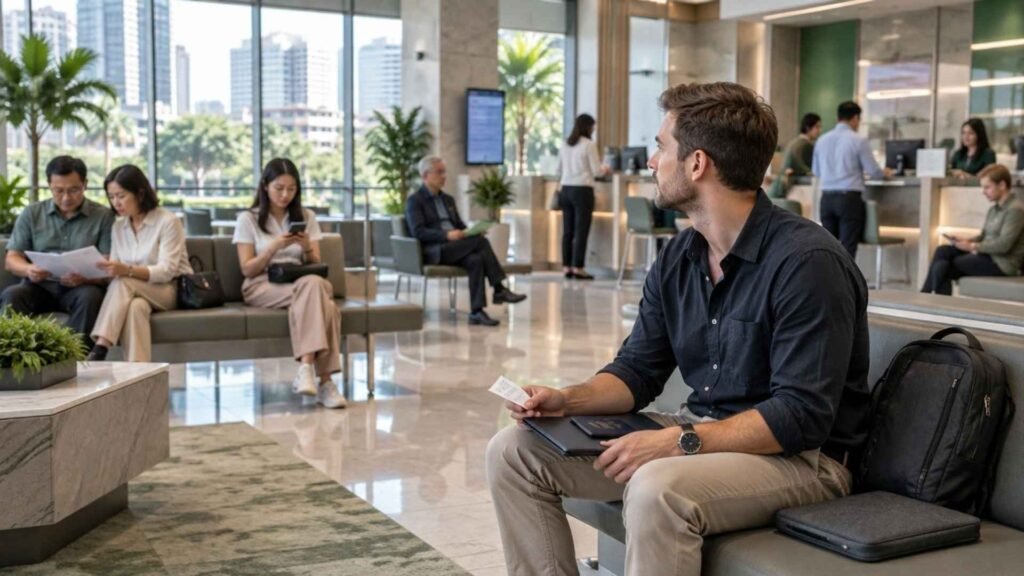
Some DTV holders may find a bank willing to assess them, but a long-stay visa and a bank’s customer-acceptance policy are separate matters.
The DTV is a five-year multiple-entry visa that normally permits up to 180 days per entry. It can support a genuine long-stay explanation, but it is not permanent residence or an automatic banking entitlement.
Kasikornbank provides the clearest published answer. According to Kasikornbank’s official account-opening requirements, foreign applicants may be asked for a passport, a non-immigrant visa, identification issued by their country of nationality and documents supporting their purpose of entry. The same page expressly states that accounts cannot be opened for holders of travel-purpose visas and names the Destination Thailand Visa as an example.
Bangkok Bank serves foreign customers, but its published information directs applicants to a branch and does not promise approval for DTV holders. Visa acceptance, supporting documents and customer-verification requirements should therefore be confirmed before visiting.
Does Your Visa Type Affect Approval?
Yes. A non-immigrant visa supported by employment, study, family or retirement documents can give a bank a clearer basis for verifying why an applicant lives in Thailand. It still does not guarantee approval.
KBank’s published rules accept non-immigrant visas in principle but exclude tourist visas, Visa on Arrival, visa-exemption status and the DTV from the account described on its savings page. Other banks may classify customers differently.
Thailand Privilege membership, a long permission of stay or any particular visa should therefore not be presented as an automatic banking entitlement. The selected bank, account product, supporting documents and customer-verification checks remain decisive.
Documents You May Need

Bring original documents and clean signed copies where appropriate. A bank can request more than the basic list when it needs to verify identity, address, occupation, source of funds or the purpose of the account.
Core Identity and Immigration Documents
- Valid passport.
- Current Thai visa or permission-of-stay evidence.
- Latest entry stamp and, if relevant, extension documentation.
- A second government-issued photo ID from your home country.
Proof of Address in Thailand
- Lease or tenancy agreement.
- Residence certificate issued by Thai immigration, where available.
- Yellow house-registration book or other accepted residence evidence, if applicable.
- Recent utility bill or official correspondence showing the same address, if the branch accepts it.
Evidence of Purpose and Financial Profile
- Employment letter, work permit or Thai employer documentation, where relevant.
- University or school letter for a student.
- DTV approval and documents supporting the visa category, such as remote employment, freelance work or another qualifying activity.
- Overseas employment contract, client contracts or company-registration documents for a remote worker or business owner.
- Evidence of income or source of funds, such as recent bank statements or payslips.
- Thai mobile number and email address.
- Foreign tax identification number and tax-residency self-certification, if requested.
- Opening deposit in the amount required by the chosen account.
A strong application connects identity, lawful stay, address, occupation and expected account activity.
Maya’s Tip: Ask the branch for its DTV checklist in writing before visiting. Use the full visa name—Destination Thailand Visa—and request confirmation that the branch can assess an applicant without a Thai work permit. This avoids a wasted journey based on a vague answer about “long-term visas.”
Do You Need a Work Permit or Thai Tax ID?
A work permit is not a universal prerequisite for every foreign applicant. It is nevertheless one of the clearest documents a bank can use to verify a lawful purpose in Thailand, and a bank may require it for a particular product or customer profile.
DTV holders should not describe the visa as a Thai work permit. If the branch permits DTV applications, provide truthful evidence of overseas employment, freelance clients or the activity supporting the visa instead.
A Thai tax identification number is separate from account eligibility. A bank can still request tax-residence and foreign-TIN information even when a Thai tax ID is not required for the account.
Best Banks in Thailand for Foreigners: What the Published Rules Show

There is no single best bank in Thailand for foreigners. Choose one that confirms your exact visa is eligible and provides the services you need.
| Bank | Published account information | Position for a DTV applicant |
|---|---|---|
| Kasikornbank (KBank) | No minimum opening deposit for the reviewed savings account | The published rules expressly exclude DTV holders |
| Bangkok Bank | ฿500 opening deposit for the reviewed savings account; foreigners are directed to a branch | The reviewed page gives no DTV guarantee |
| Krungsri | Retail deposit products are available, but product availability does not establish eligibility | Confirm the visa and document policy with the branch |
| Siam Commercial Bank (SCB) | Savings and digital-banking products have separate onboarding rules | Confirm foreigner onboarding and DTV eligibility |
| Krungthai Bank | Nationwide product availability does not prove DTV acceptance | Request a current foreign-applicant checklist |
Do not label a bank “DTV-friendly” from forum posts, agent claims or one successful branch visit. Bank policy, risk assessment and product eligibility are different questions.
Eligible Thai-baht deposits at protected institutions are generally covered up to the applicable deposit-protection limit. Bangkok Bank’s published savings-account information states a maximum of ฿1 million per depositor per financial institution. Confirm that the chosen institution and account type are covered under the current rules.
How to Open a Bank Account in Thailand as a Foreigner: Step by Step

A successful application begins before you enter the branch. Follow these steps to choose the right account, prepare a coherent application file and complete the process in person.
1. Define What You Actually Need
Decide whether you need a basic savings account, mobile banking, a debit card, PromptPay or international transfers. A personal account is not a business account, so consider how you genuinely expect to use it.
2. Shortlist Banks Near Your Thai Address
Choose two or three established banks near your home. Consider English-language support, ATM availability, mobile-app services and international transfer options.
3. Contact the Exact Branch
State your nationality, exact visa type, permission-of-stay expiry date, occupation and work-permit status. Ask whether the branch can assess DTV applicants and request its current document checklist.
4. Prepare a Coherent Application File
Bring the original documents and any requested copies. Keep your name, Thai address, phone number and occupation consistent across the application. Include credible evidence of your source of funds and reason for needing the account.
5. Apply in Person
Expect identity checks and questions about your occupation, income, tax residence, source of funds and expected transactions. Answer accurately and do not describe overseas remote work as employment by a Thai company.
Do not assume that you can complete the process before arriving in Thailand. Bangkok Bank’s foreign customer FAQ states that applicants must visit a Bangkok Bank branch in Thailand in person to open an account.
6. Review the Product Before Signing
Confirm the opening deposit, minimum balance, card and ATM fees, transfer charges, remittance features and deposit protection. Do not purchase unwanted insurance merely because someone suggests it is required for approval.
7. Activate and Test the Services
If approved, activate the mobile app and debit card, set a secure transaction limit and make a small test payment. Ask how to update your passport, visa, address and tax-residency information in the future.
Why One Branch May Accept You and Another May Refuse
Branches can produce different outcomes because staff must apply the selected product’s rules, verify supporting documents and complete customer-risk checks. A branch that regularly serves international residents may also be more familiar with foreign passports, overseas employment documents and different visa categories.
Thailand’s banks have strengthened identity verification, customer due diligence and screening against fraudulent or mule accounts. The Bank of Thailand’s guidance on financial-threat prevention explains that banks may apply customer profiling and more rigorous scrutiny when opening or managing accounts. These controls can make the process more cautious, even when an applicant presents the basic documents.
Common reasons for different outcomes include:
- The bank or selected product does not accept the applicant’s visa type.
- The branch requires stronger proof of a Thai address or purpose of stay.
- The applicant has no work permit and the bank does not accept the alternatives provided.
- Staff cannot verify an overseas document or understand the expected account activity.
- The application triggers additional anti-fraud, sanctions, source-of-funds or customer-due-diligence checks.
- The requested digital service has stricter eligibility requirements than the deposit account itself.
A second branch may clarify a misunderstanding when the bank’s official policy permits the application. However, another branch cannot legitimately override a bank-wide rule that excludes the applicant’s visa or customer category.
Mobile Banking, Debit Cards and Transfer Limits
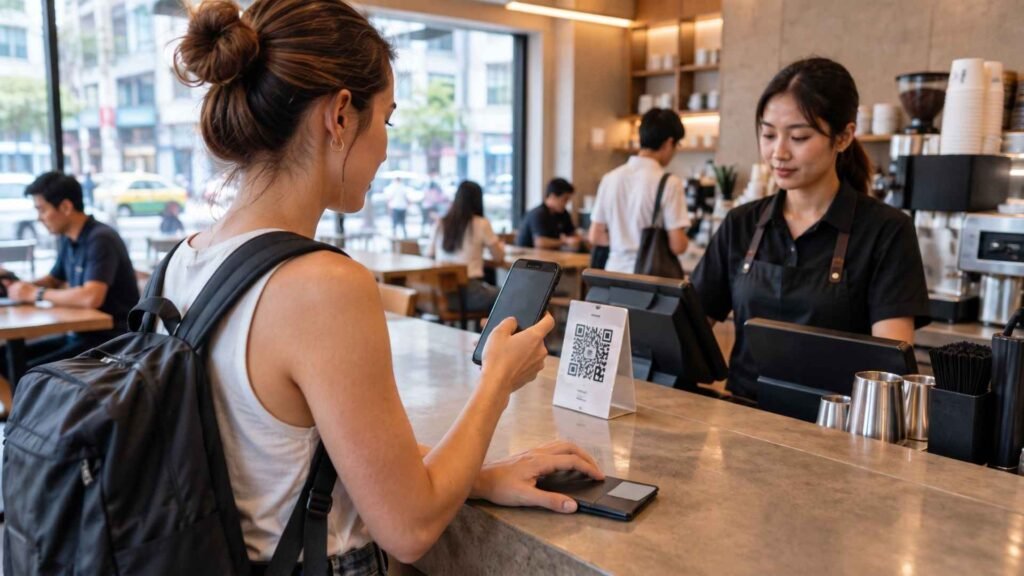
Account approval does not always mean that every related service will be activated automatically. Ask separately about:
- Mobile-app registration with a foreign passport and Thai phone number.
- Facial-verification or in-person identity requirements.
- Debit-card issue and annual fees.
- PromptPay registration and which identifier can be used.
- ATM withdrawal charges and out-of-network fees.
- Daily limits for payments, transfers and cash withdrawals.
- Procedures for increasing a limit when a larger legitimate payment is required.
Thailand has strengthened anti-scam and mule-account controls, so limits may reflect customer verification and risk assessment. Never allow another person to control or “rent” your account.
Receiving Foreign Income in a Thai Account
A Thai bank account can receive overseas transfers if the account and bank support the relevant service. Use the account holder’s name exactly as registered and confirm the bank name, account number, SWIFT code, transfer currency and payment purpose before sending money.
The bank may request contracts, invoices, payslips or other source-of-funds evidence for large, unusual or repeated payments. Do not use a personal account as though it were a Thai company account.
Sending income to Thailand can also have tax consequences, but the bank receiving the transfer does not by itself determine whether the income is Thai-sourced, foreign-sourced or taxable. Residence, work location, income type, timing and remittance can all matter. Read our Thailand Digital Nomad Taxes guide for the tax analysis rather than relying on the account-opening process.
International Transfer Fees and Exchange Rates
The visible transfer fee is only one part of the cost. Compare:
- The sending provider’s fee.
- The exchange-rate margin.
- Correspondent or intermediary-bank deductions.
- The Thai receiving bank’s charge.
- Whether the sender or recipient pays the fees.
- The amount and currency that will actually reach the account.
For a large transfer, request a live quote and test the route with a smaller amount. Retain receipts, contracts and invoices.
What to Do If Your Application Is Rejected
Ask whether the issue is the visa, a missing document, the selected product or incomplete verification. Staff may not disclose internal risk reasons.
Then take the appropriate step:
- If a document is missing, obtain it and ask whether a new application is permitted.
- If the product is unsuitable, ask whether another personal account has different eligibility rules.
- If the branch is uncertain, contact the bank’s official customer-service channel for clarification.
- If the bank excludes DTV holders, apply only to another bank that confirms it can assess your visa; do not keep visiting branches of the same bank hoping that one will ignore policy.
- If your status later changes, request a fresh checklist based on the new documents.
Avoid agents who promise guaranteed approval, offer a false address, arrange fabricated employment evidence or ask to control the account. An account opened with misleading documents can be restricted or closed and may create immigration, tax or criminal risk.
Alternatives to a Thai Bank Account
If you cannot open a Thai account, a combination of services may still cover everyday spending:
- A home-country bank account with a low-fee international debit card.
- A regulated multi-currency account available to residents of your home country.
- A licensed international money-transfer provider.
- Card payments and cash withdrawals using carefully chosen ATMs.
- Direct card payment for accommodation, coworking and other services that accept it.
These alternatives may not provide PromptPay or local direct debits. Check eligibility, safeguarding, fees, exchange rates and limits before relying on a provider.
Common Mistakes to Avoid
- Treating one traveller’s branch experience as national policy.
- Arriving with only a passport and no proof of address or purpose.
- Using inconsistent addresses, occupations or income explanations.
- Paying for unwanted insurance in the belief that every account requires it.
- Registering mobile banking with a phone number you will not keep active.
- Ignoring whether the chosen account supports the card, PromptPay or international-transfer services you need.
- Receiving unexplained third-party funds or allowing someone else to use the account.
- Sharing an OTP, PIN or mobile-banking access with another person.
Planning Your Financial Setup in Thailand
Use these related guides to build your Thailand plan in the right order:
- Thailand Digital Nomad Visa 2026: The Ultimate DTV Guide for a Successful Application
- Best Places in Thailand for Digital Nomads: 9 Top Destinations
- Cost of Living in Thailand for Digital Nomads: Affordable 2026 Monthly Budgets
- Thailand Digital Nomad Taxes 2026: DTV, Tax Residency & Foreign Income
Frequently Asked Questions About How to Open a Bank Account in Thailand as a Foreigner
Can I open a bank account in Thailand as a foreigner with a DTV?
A DTV does not automatically qualify you for a Thai bank account. Approval depends on the bank’s policy, the branch and the supporting documents you can provide.
Can I Open a Thai Bank Account Online or Before Arriving?
Do not assume that foreign-passport onboarding can be completed from overseas. Identity, immigration status and original documents may need to be verified at a Thai branch even when the bank offers digital account opening to eligible domestic customers.
Is a Thai Residence Certificate Required?
Not in every case. A bank may accept another form of address evidence, such as a lease or eligible official correspondence, or it may specifically request an immigration residence certificate.
Can I Keep My Thai Bank Account If My Visa Changes or Expires?
An account is not necessarily closed automatically, but the bank may request updated passport, visa, address or tax-residency information. Services can be restricted if required customer records are no longer current.
Can I Receive Overseas Salary or Freelance Payments Into the Account?
Potentially, if the account supports incoming international transfers. The bank may request contracts, invoices or other source-of-funds evidence, and a personal account should not be operated as a Thai business account.
Is Insurance Required When Opening a Thai Bank Account?
There is no general rule that every basic savings account requires an insurance purchase. Review the account terms and do not buy an optional policy unless you independently want the cover.
Final Verdict
Opening a Thai bank account as a foreigner depends on the bank, account product, visa category and strength of the supporting documents. DTV holders face additional restrictions, so prepare clear evidence of identity, address, purpose and source of funds, then verify that the selected account provides the mobile, card and transfer services you need.
This article provides general information, not legal, tax, immigration or financial advice. Banking policies and customer-verification requirements can change, and each application is assessed individually.