
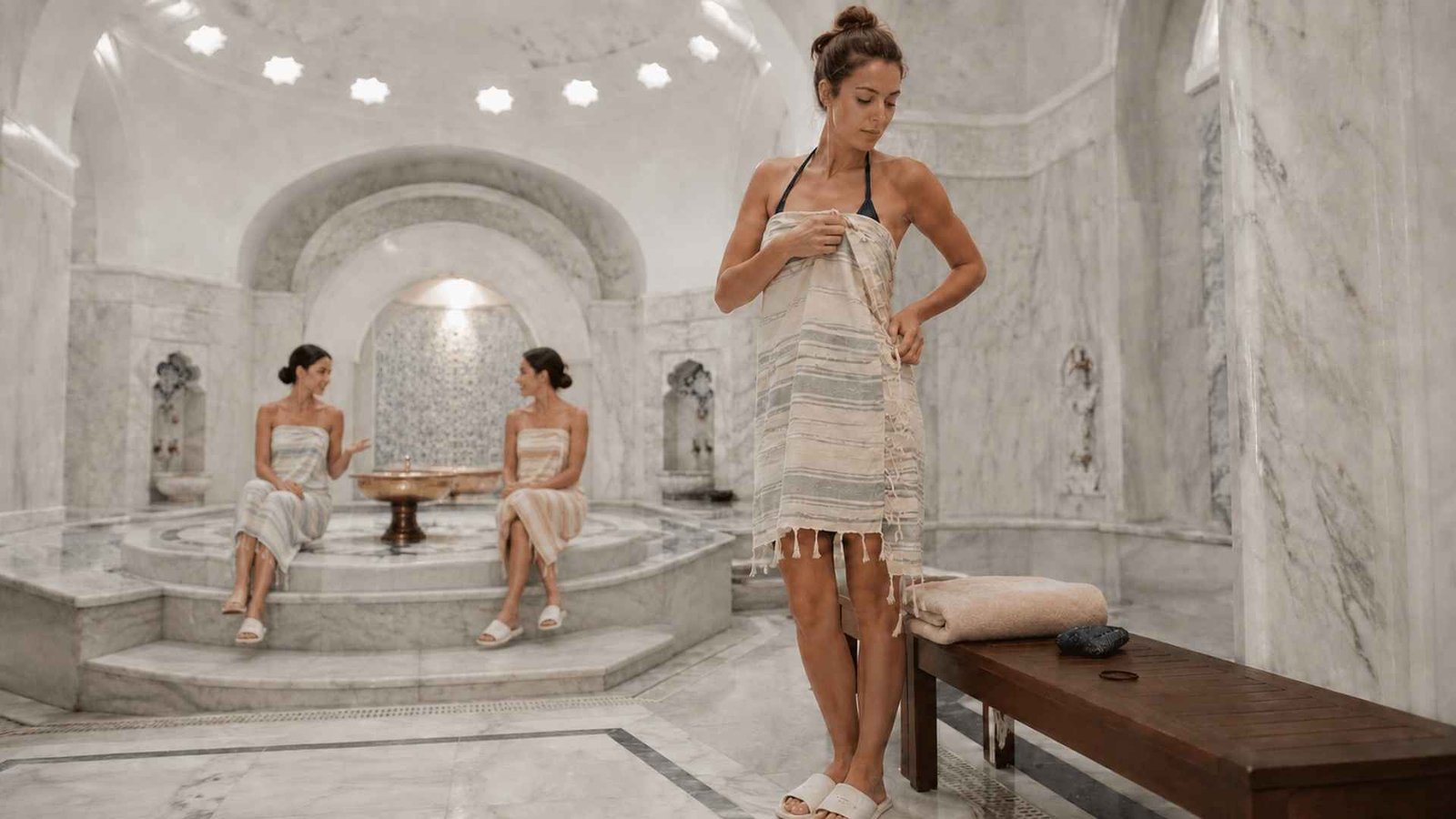
Visiting a Turkish hammam for the first time raises practical questions: Should you bring a swimsuit, and will the venue provide a towel?
What to wear to a Turkish bath depends on the hammam, but most visitors use a peştemal over a bikini bottom, swim shorts, disposable underwear, or spare underwear. Complete nudity is neither necessary nor permitted everywhere.
This guide explains the best options for women and men, what hammams usually provide, and what to pack.
Quick Answer: What to Wear to a Turkish Bath
The safest answer to what to wear to a Turkish bath is simple swimwear beneath the peştemal supplied by the venue.
For most first-time visitors, the most practical options are:
- Women: a bikini bottom, simple two-piece swimsuit, or dark underwear that can get wet
- Men: short swim trunks, swim briefs, or dark underwear that can get wet
- Everyone: a peştemal wrapped securely around the body and suitable bath slippers
A peştemal is a lightweight Turkish cotton wrap traditionally worn inside the hammam. Most established hammams provide one together with a dry towel and slippers.
Do not assume that you will be required to undress completely. Coverage rules and supplied items vary, so bringing clean swimwear and dry underwear is the most reliable approach.
| Visitor | Best All-Round Option | How It Is Usually Worn |
|---|---|---|
| Women | Bikini bottom or simple two-piece | Beneath a peştemal wrapped above the chest or around the waist |
| Men | Short swim trunks or swim briefs | Beneath a peştemal wrapped around the waist |
| Modest travelers | Lightweight swimwear providing the preferred coverage | With the peştemal kept securely wrapped |
| Couples in a shared hammam | Clean swimwear | Beneath a venue-provided peştemal |
| Children, where admitted | Age-appropriate swimwear | With a towel or wrap supplied by the venue |
The Essential Turkish Bath Clothing Rule
The most important rule is to keep at least the lower body covered unless the hammam clearly explains a different policy.
One venue may provide disposable underwear, another may ask guests to bring a swimsuit bottom, and a couples hammam may supply a bikini or shorts. Follow the instructions given at reception rather than copying what another guest is wearing.
During the traditional kese scrub and foam wash, the attendant needs access to areas such as your arms, legs, back, shoulders, and abdomen. Complicated swimwear and multiple layers can obstruct the treatment.
Simple, secure, quick-drying swimwear provides the best balance between privacy and treatment access.
For a full explanation of the bathing ritual, treatments, rooms, and typical visiting sequence, read our complete Turkish Bath Guide.
What Is a Peştemal?
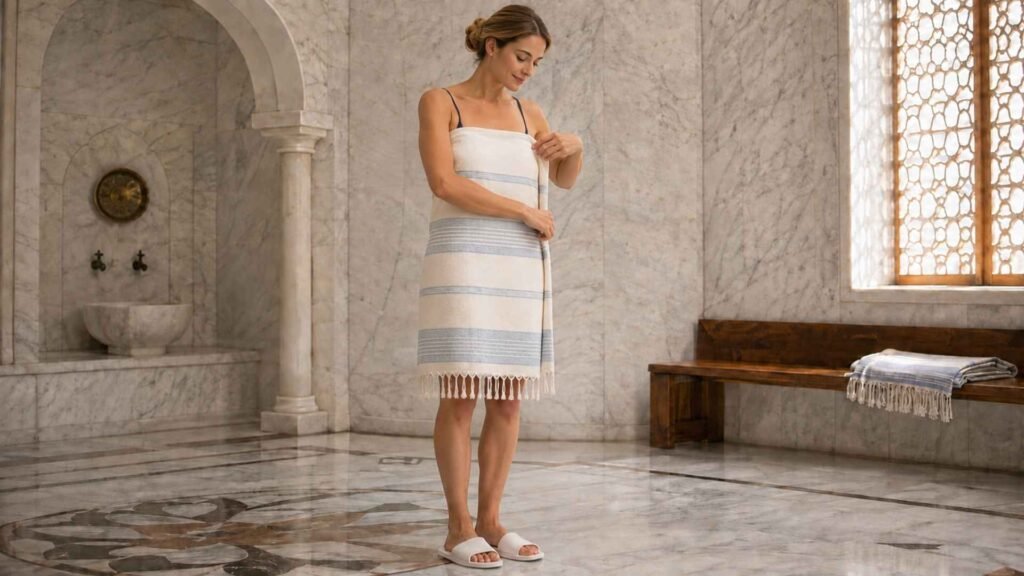
A peştemal—sometimes written as peshtemal—is a thin, woven cotton towel traditionally used as a body wrap inside a Turkish bath.
It is lighter than a standard bath towel and does not become as heavy when wet. This makes it practical for maintaining coverage while moving between warm marble rooms, water basins, and treatment areas.
Men generally wrap the peştemal around the waist. Women may wrap it above the chest or around the waist, depending on the venue, treatment stage, and personal preference.
An attendant may reposition or fold the wrap during the scrub and foam wash while keeping the appropriate areas covered. If you are worried about it loosening, ask a staff member to show you how to secure it. Folding the top edge inward usually produces a firmer hold than tying a bulky knot.
Most visitor-friendly hammams supply a freshly laundered peştemal. You normally do not need to bring your own unless the venue says otherwise or you prefer using a personal wrap.
What Do Women Wear to a Turkish Bath?
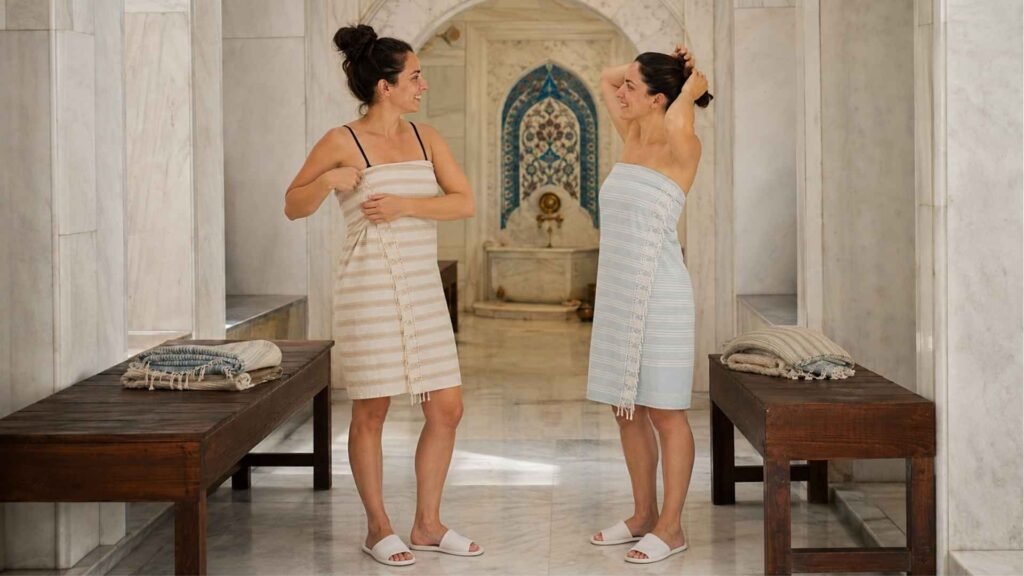
For women deciding what to wear to a Turkish bath, a bikini bottom or simple two-piece swimsuit is generally the most flexible choice.
A two-piece allows easier access to the back, shoulders, abdomen, and legs during the scrub. It also lets you control your preferred level of coverage without adding excessive fabric in the hot room.
Some hammams provide disposable underwear, while others allow guests to wear dark regular underwear that can get wet. Lightweight modest swimwear may also be acceptable, but the policy should be confirmed before booking.
Some women-only hammams allow guests to remove their bikini tops. Others ask visitors to keep swimwear on, particularly in shared or mixed settings. Being topless should never be assumed to be required.
If you prefer chest coverage, wear a secure swimsuit top and tell the attendant that you want to keep it on. The treatment can usually be adapted around it.
Bikini or One-Piece Swimsuit?
A bikini is generally more practical for a full scrub because it leaves more of the torso accessible.
A one-piece swimsuit provides greater coverage but restricts access to the back and abdomen. Wet fabric covering the torso may also feel heavy and warm against the heated marble.
You can still wear a one-piece if it makes you feel more comfortable. Choose a simple design without underwires, thick padding, belts, metal decorations, or complicated straps.
Comfort takes priority over receiving the most extensive possible scrub.
Can Women Wear Regular Underwear?
Regular underwear may be acceptable, depending on the hammam.
Ordinary fabric usually stays wet longer than swimsuit material, and light colors may become transparent. Choose a simple, dark pair and pack completely dry underwear for afterward.
Do not plan to wear the same wet underwear beneath your clothes when leaving.
What Do Men Wear to a Turkish Bath?
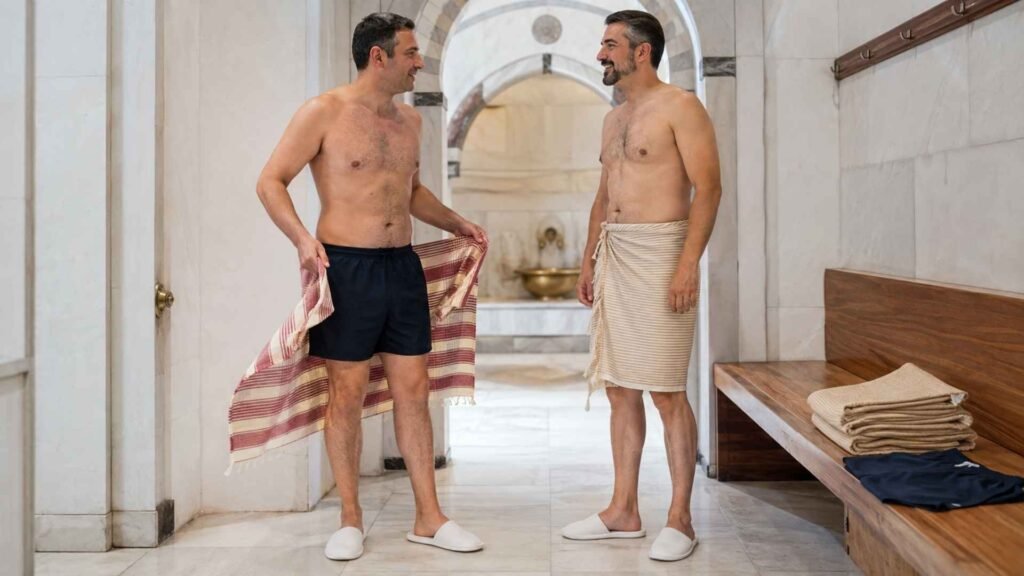
Men generally wear short swim trunks, swim briefs, disposable underwear, or spare underwear beneath a peştemal wrapped around the waist.
When men consider what to wear to a Turkish bath, short swim trunks are usually the easiest option. They remain secure while leaving more of the upper legs available for the scrub than long board shorts.
Avoid shorts with:
- Heavy pockets
- Large zippers
- Metal accessories
- Thick waistbands
- Bulky linings
- Long or loose drawstrings
The official Kılıç Ali Paşa Hamamı visitor guidance advises guests to bring spare underwear or a bathing-suit bottom and states that complete nudity is not permitted on the premises.
This is a useful example of why you should check your chosen hammam’s rules rather than relying on one universal dress code.
Swimsuit, Underwear, or Disposable Bottoms?
There is no single option that works best for everyone. Your choice should reflect the venue’s policy, the treatment you booked, and your preferred level of coverage.
| Option | Main Advantage | Possible Drawback |
|---|---|---|
| Bikini bottom | Secure, quick-drying, and treatment-friendly | Provides less coverage than shorts |
| Two-piece swimsuit | Flexible and easy to adjust | The top may limit part of the scrub |
| One-piece swimsuit | Provides greater torso coverage | Restricts treatment access and holds more heat |
| Short swim trunks | Secure and quick-drying | Longer styles can obstruct the upper-leg scrub |
| Regular underwear | Requires no additional purchase | Stays wet and may become transparent |
| Disposable underwear | No wet garment to carry afterward | Not available at every hammam |
| Modest swimwear | Provides greater personal coverage | Extra fabric may feel warm and heavy |
For most visitors, the best combination is simple dark swimwear, a venue-provided peştemal, and dry underwear for afterward.
Eleni’s Tip: Wear practical swimwear rather than your most expensive or delicate swimsuit. If your skin is sensitive, tell the attendant before the kese begins so the pressure can be adjusted.
Do You Have to Be Naked in a Turkish Bath?
No. Complete nudity is not necessary for a Turkish bath and may be prohibited by the venue.
Most international visitors keep swimwear, disposable bottoms, or regular underwear on beneath the peştemal. In some gender-separated hammams, women may have the option to remove their swimsuit tops, but this depends on venue policy and personal preference.
Your attendant is accustomed to working around peştemals and swimwear. If you want a particular area to remain covered, explain this before the treatment begins.
You can also ask the attendant to adjust the peştemal or stop any part of the service that makes you uncomfortable. Your personal boundaries do not disappear because you have entered a hammam.
Are Turkish Baths Separated by Gender?
Many traditional hammams separate women and men, but the way this is arranged varies.
Some historic bathhouses have two independent sections operating simultaneously. Others use one bathing hall and schedule different hours for women and men. Selected hammams and hotel spas offer shared sessions for couples or families.
The operating format can affect what to wear to a Turkish bath:
- Separate women’s or men’s sections: Bikini bottoms, underwear, or swim shorts with a peştemal are common.
- Alternating gender hours: Clothing is similar, but the venue may establish its own minimum-coverage rules.
- Mixed couples sessions: Proper swimwear is generally the safest and most comfortable option.
- Private treatment rooms: Greater privacy may be available, but the venue’s clothing policy still applies.
Süleymaniye Hamamı is one of Istanbul’s best-known couples hammams. Its official visitor information states that women are provided with a bikini, shorts, and peştemal, while men receive shorts. Guests may also bring their own clean swimwear.
You can learn more about its shared format, treatments, and atmosphere in our detailed Süleymaniye Hamamı Review.
What Should You Wear Before and After the Hammam?
Planning what to wear to a Turkish bath should include the clothes you will put back on afterward.
Arrive in normal clothing that is easy to remove. Loose, breathable pieces are especially practical because your skin may remain warm, sensitive, or slightly damp after the scrub.
Suitable options include:
- A loose cotton or linen shirt
- A soft T-shirt
- Relaxed trousers
- A comfortable dress
- Fresh underwear
- Slip-on shoes or simple sandals
Avoid tight denim, shapewear, rough fabrics, and outfits with multiple fastenings. They can feel uncomfortable against freshly exfoliated skin.
During colder months, bring suitable outer layers but allow enough time to cool down and dry fully before leaving the hammam.
What Should You Bring to a Turkish Bath?
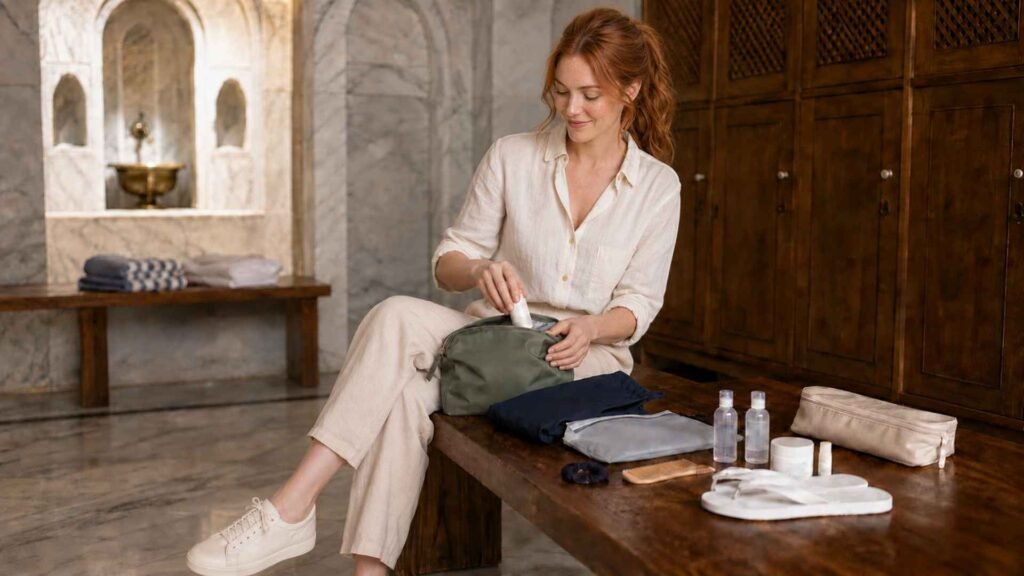
Most established hammams provide the main bathing equipment, so you should not need a large spa bag.
A practical packing list includes:
- Clean swimwear or underwear for the wet area
- A completely dry change of underwear
- A small waterproof bag for wet clothing
- A hair tie for long hair
- A brush or wide-tooth comb
- Personal shampoo or conditioner, if needed
- Unscented moisturizer and lip balm
- Any essential personal toiletries
Many hammams provide shampoo and basic toiletries, but travelers with sensitive skin, allergies, or specific hair-care requirements may prefer familiar products.
Do not exfoliate your skin immediately before the appointment or bring your own kese unless requested. A professional hammam treatment normally includes a clean or single-use exfoliating mitt.
Do You Need to Bring a Towel?
Usually not.
Most historic and visitor-oriented hammams provide a peştemal for the wet area and a thicker towel for drying afterward. Premium packages may also include a robe or additional dry wrap for the relaxation room.
A small neighborhood hammam may operate differently, so check what is included before your visit.
Do You Need to Bring Flip-Flops?
Many hammams provide washable or disposable slippers. You may still bring clean rubber flip-flops if you prefer using your own.
Choose footwear with a secure fit and good grip because marble floors can become wet and slippery. Avoid leather, fabric, platform sandals, or loose footwear that may slide off.
What Do Turkish Hammams Usually Provide?
The exact items depend on the bathhouse and package, but most visitor-friendly hammams provide several essentials.
| Item | Commonly Provided? | Important Note |
|---|---|---|
| Peştemal | Almost always | Used as the main body wrap |
| Dry towel | Usually | Used after the bathing ritual |
| Slippers | Often | May be disposable or washable |
| Kese mitt | Usually with a booked scrub | Should be clean or single-use |
| Soap and shampoo | Often | Product type and quality vary |
| Disposable underwear | Sometimes | Do not assume it is included |
| Bikini or shorts | At selected venues | More common at couples-oriented hammams |
| Robe | Sometimes | Usually associated with premium packages |
| Hairdryer | Often | Availability may be limited at busy times |
| Locker or changing cabin | Usually | Store jewelry and valuables securely |
Check the official website or contact the hammam directly if the supplied items are not clearly listed.
If you have not selected a venue, our guide to the best Turkish hammams in Istanbul compares the leading options for history, luxury, architecture, couples, and overall experience.
What Not to Wear or Bring Inside a Hammam
The combination of heat, water, soap, and slippery marble makes certain items impractical.
Jewelry and Watches
Remove necklaces, bracelets, earrings, rings, watches, and smartwatches before entering the wet area.
Jewelry can become uncomfortable in the heat, catch on the peştemal, react with treatment products, or be misplaced. Valuable pieces are best left at your accommodation.
Elaborate Swimwear
Avoid sequins, chains, beads, large buckles, metal ornaments, underwires, and complicated straps.
Decorative details may press against the skin or interfere with the scrub. Choose a practical swimsuit that can tolerate soap, heat, and repeated rinsing.
Heavy Makeup
Steam, water, and washing will remove most makeup. Arriving with a clean face is more comfortable and prevents products from running into your eyes.
Wait until your skin is cool and dry before reapplying makeup.
Contact Lenses
Steam, water, and soap may irritate your eyes while wearing contact lenses. If practical, remove them before entering the wet area and store them safely.
Phones and Cameras
Leave your phone in the locker unless staff specifically permit it in a designated relaxation space.
Photography is commonly restricted inside changing and bathing areas to protect guest privacy. Even when the architecture is impressive, never photograph other visitors without explicit permission.
Simple Clothing Checklist for First-Time Visitors
If you remain uncertain about what to wear to a Turkish bath, follow this four-step checklist:
- Choose simple swimwear that complies with the venue’s rules.
- Pack completely dry underwear for afterward.
- Use the peştemal and slippers provided by the hammam.
- Remove jewelry, watches, and delicate accessories before entering.
Travelers who require more coverage should contact the venue before booking and ask:
- Is the bathing area separated by gender?
- What clothing must remain on?
- Can I keep my swimsuit top or modest swimwear on?
- What is the gender of the bath attendant?
- Are private treatment areas available?
Couples should also confirm whether they will receive their treatments together or in separate sections. A premium historic hammam can still schedule women and men at different times, as explained in our Kılıç Ali Paşa Hamamı Review.
Frequently Asked Questions About What to Wear to a Turkish Bath
Do you wear a swimsuit in a Turkish bath?
Many visitors do. Women can choose a bikini bottom or simple two-piece, while short swim trunks or swim briefs work well for men. Requirements vary by venue.
Do you keep your underwear on in a Turkish bath?
You can often keep underwear, swimwear, or disposable bottoms on beneath the peştemal. If you wear regular underwear, choose dark fabric and pack a dry replacement.
What do women wear in a Turkish hammam?
Women commonly wear a bikini bottom, two-piece swimsuit, disposable underwear, or dark regular underwear beneath a peştemal. Top coverage depends on preference and venue policy.
What do men wear in a Turkish hammam?
Men typically wear short swim trunks, swim briefs, disposable underwear, or spare underwear with a peştemal wrapped around the waist.
Can I wear a bikini top during the scrub?
Usually, but confirm with the hammam and tell the attendant that you want to keep it on. The treatment can normally be adapted around it.
Can I wear a one-piece swimsuit?
Yes, where swimwear is permitted. A one-piece provides more coverage but limits access to the back and abdomen during the scrub.
Can I wear modest swimwear?
Many hammams accommodate modest swimwear, although extra fabric may feel heavy in the heat and restrict parts of the treatment. Confirm the policy before booking.
Are towels and slippers provided?
Most established hammams provide a peştemal, dry towel, and slippers. Disposable underwear, robes, swimwear, and toiletries vary by venue and package.
What should I wear after a Turkish bath?
Choose soft, loose clothing and completely dry underwear. Avoid tight denim, shapewear, and rough fabrics immediately after exfoliation.
Should I bring my own peştemal?
Usually not. Most visitor-friendly hammams provide a clean peştemal, but you can ask whether a personal wrap is permitted if you prefer to bring one.
Final Thoughts
Deciding what to wear to a Turkish bath is simple. Most visitors only need practical swimwear beneath a peştemal, bath slippers, and dry underwear for afterward.
Check your venue’s clothing and privacy policy, choose comfort over appearance, and communicate your preferred coverage before the treatment. Then you can relax and enjoy one of Türkiye’s most memorable wellness traditions.