
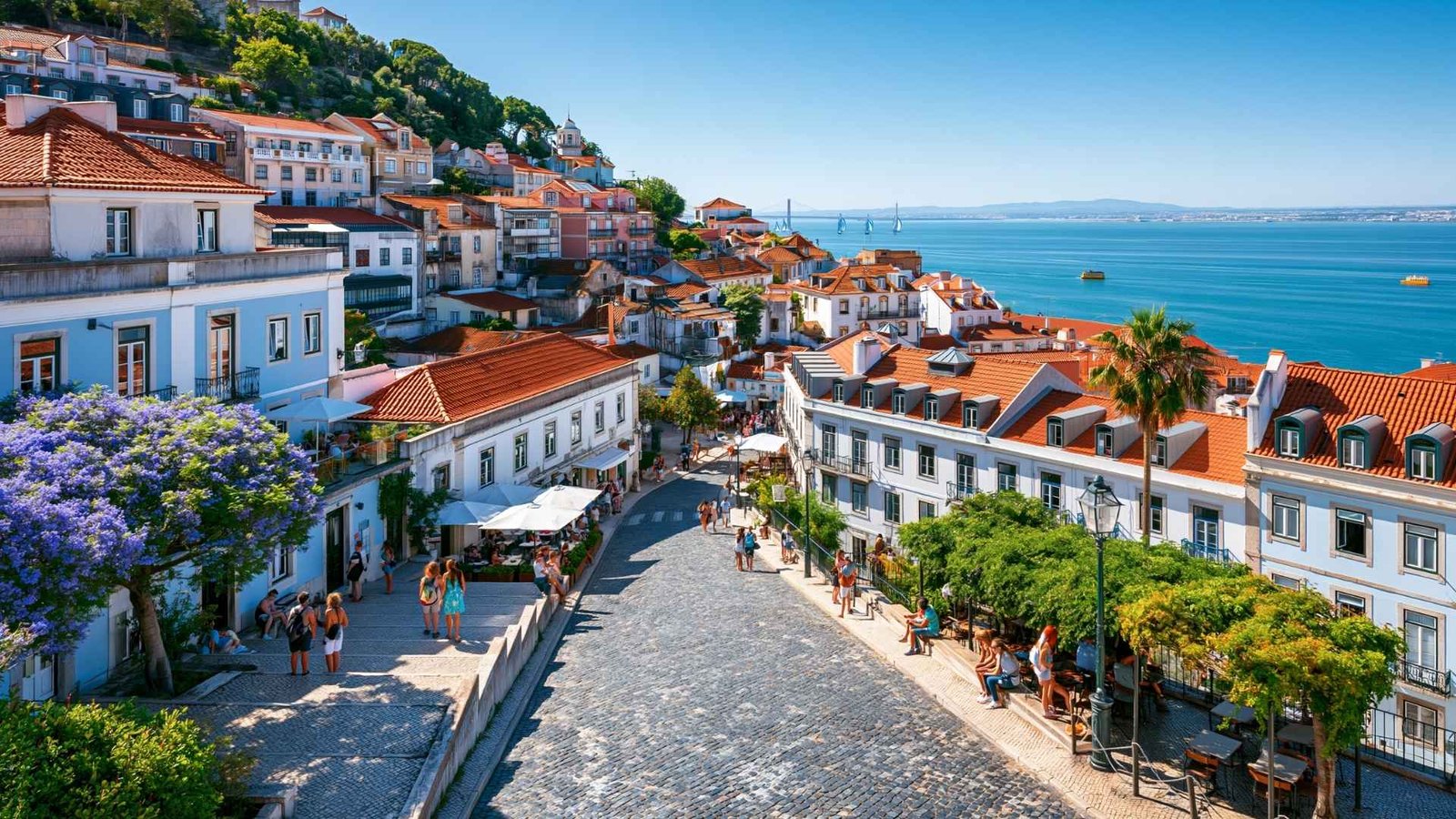
Planning a summer trip to Portugal’s capital?
With sunny weather, historic neighborhoods, excellent food, and easy access to nearby beaches, Lisbon is one of Europe’s most popular summer destinations.
Whether you’re interested in sightseeing, local food, coastal day trips, or simply enjoying the city’s relaxed atmosphere, there is plenty to experience during the summer months.
If you’re planning Lisbon summer travel for the first time, the overview below highlights the key information you’ll want to know before your trip.
Quick Answer
Planning Lisbon summer travel for the first time?
This guide covers the best time to visit, weather, costs, transportation, beaches, and other practical tips for planning your trip.
| 📅 Best months to visit | June and September |
| ☀️ Warmest months | July and August |
| 🌡️ Average summer temperature | 25–30°C (77–86°F) |
| 🗓️ Ideal trip length | 3–5 days |
| 🎯 Best for | Sightseeing, food, beaches, and day trips |
| 🏖️ Nearest beaches | Cascais, Carcavelos, and Costa da Caparica |
| 🚆 Best day trip | Cascais or Sintra |
| ✈️ Airport to city center | 20–30 minutes |
| 💶 Currency | Euro (€) |
| 🚗 Need a car? | No, public transportation is excellent |
Why Visit Lisbon in Summer?
Summer is one of the best times to experience Lisbon.
Warm weather, long daylight hours, outdoor dining, scenic viewpoints, and easy access to nearby beaches make the Portuguese capital particularly appealing during the season.
Unlike many European capitals, Lisbon allows visitors to combine historic sightseeing with Atlantic coast day trips, often within the same day.
Whether you want to explore neighborhoods such as Alfama, enjoy local food by the river, or spend time on the beach, Lisbon offers a well-balanced mix of culture, relaxation, and outdoor activities.
Clara’s Tip: If your schedule is flexible, consider visiting in June or September. Popular attractions are generally less crowded, and hotel prices can be more reasonable than during peak summer.
Best Time to Visit Lisbon in Summer
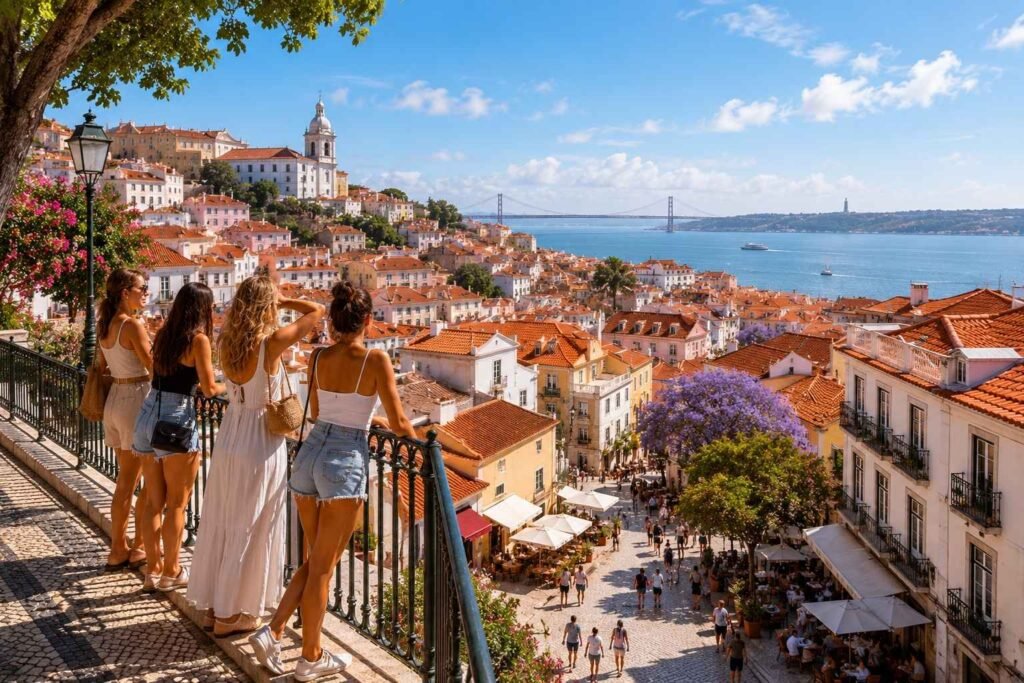
Although summer runs from June through September, each month offers a slightly different experience.
The best month depends on your priorities. Some travelers prefer quieter streets and lower hotel prices, while others enjoy the lively atmosphere that comes with peak season.
| June | Best overall balance of weather and crowds |
| July | Festivals, nightlife, and peak summer atmosphere |
| August | Beach trips and long sunny days |
| September | Warm weather with fewer crowds |
For many first-time visitors, June and September offer the best balance of weather, crowds, and accommodation prices.
Travelers focused on beaches, nightlife, and the full summer atmosphere may prefer July or August. Those interested in photography, sightseeing, and a more relaxed experience often find June and September more enjoyable.
Lisbon Summer Weather by Month
One of the biggest advantages of Lisbon summer travel is the reliable weather.
Rain is uncommon, sunshine is abundant, and temperatures remain comfortable for sightseeing, outdoor dining, and beach trips throughout the season.
Lisbon Weather in June
June is often considered one of the best months to visit Lisbon.
Average daytime temperatures typically range between 25°C and 28°C (77°F–82°F), creating ideal conditions for walking around the city and enjoying outdoor attractions.
Visitors can expect:
✔ Long daylight hours
✔ Pleasant sightseeing temperatures
✔ Comfortable beach weather
✔ Fewer crowds than July and August
June is also when many local celebrations and cultural events begin to take place across the city.
Lisbon Weather in July
July marks the beginning of peak summer.
Average daytime temperatures generally range between 28°C and 31°C (82°F–88°F), with very little rainfall.
The city becomes noticeably busier during this period, particularly around major attractions and popular neighborhoods.
Visitors should expect:
✔ Warmer temperatures
✔ Larger crowds
✔ Higher accommodation prices
✔ Busy restaurants and attractions
Lisbon Weather in August
August is typically the hottest and busiest month of the year.
Temperatures frequently exceed 30°C (86°F), and occasional heat waves can push temperatures even higher.
Many European travelers take their annual holidays during August, resulting in increased demand for hotels, transportation, and attractions.
If you’re planning Lisbon summer travel during August, booking accommodations well in advance is highly recommended.
Lisbon Weather in September
September combines many of summer’s advantages with a more relaxed atmosphere.
The weather remains warm enough for beach trips, while visitor numbers gradually begin to decline.
Average temperatures typically range between 25°C and 29°C (77°F–84°F).
For many travelers, September offers the best overall combination of weather, comfort, and value.
Average Summer Temperatures in Lisbon
| Month | Average High | Average Low |
|---|---|---|
| June | 27°C (81°F) | 17°C (63°F) |
| July | 29°C (84°F) | 19°C (66°F) |
| August | 30°C (86°F) | 19°C (66°F) |
| September | 28°C (82°F) | 18°C (64°F) |
Weather conditions can vary, so it’s always worth checking IPMA Weather Forecasts before traveling.
Is Lisbon Too Hot in Summer?
For most visitors, Lisbon remains comfortable throughout summer.
Although temperatures can become quite warm during July and August afternoons, the city’s coastal location helps moderate conditions compared with many inland European destinations such as Madrid or Seville.
However, Lisbon’s famous hills can make walking feel more demanding during the hottest part of the day.
Many experienced travelers prefer to start sightseeing early in the morning, take a longer lunch break during peak afternoon heat, and continue exploring later in the day.
This simple adjustment often makes Lisbon summer travel considerably more enjoyable.
Clara’s Tip: If you’re visiting in July or August, plan outdoor sightseeing before 11 AM and again after 5 PM. Lisbon’s hills can feel much steeper during the hottest hours of the afternoon.
What to Wear in Lisbon in Summer
Summer in Lisbon is typically warm, sunny, and relatively dry, making lightweight and breathable clothing the most comfortable choice.
For most visitors, the following items work well throughout the season:
✔ Linen shirts and lightweight tops
✔ Shorts, skirts, and breathable trousers
✔ Summer dresses and casual evening outfits
✔ Sunglasses and a sun hat
✔ Light layer for cooler evenings
Footwear is particularly important in Lisbon.
The city’s steep hills, stairways, and traditional cobblestone streets make supportive walking shoes a better choice than fashion-focused footwear for most travelers.
For a more detailed seasonal style guide, see: 👉 What to Wear in Lisbon (Coming Soon)
Best Things to Do in Lisbon in Summer
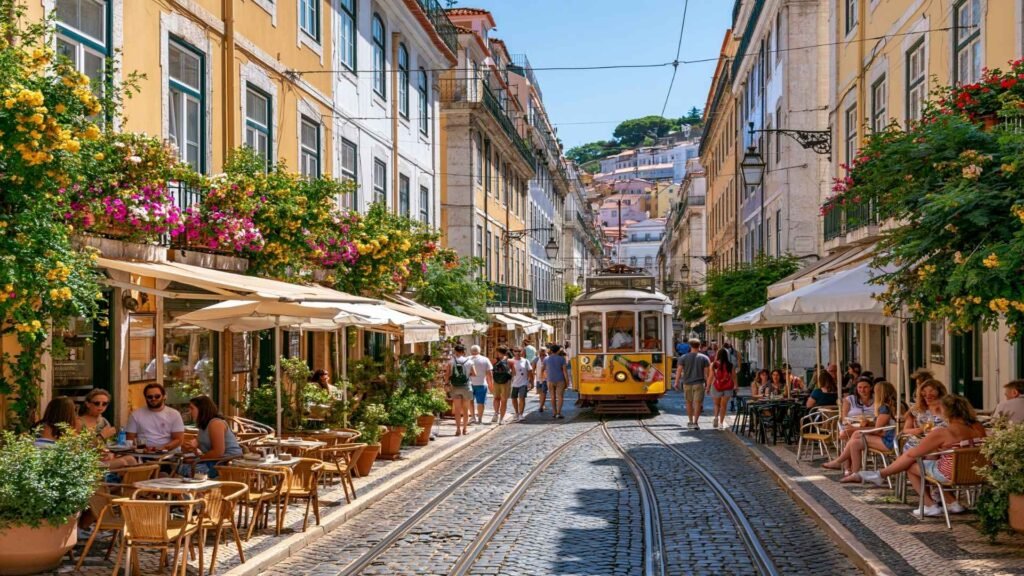
One of the biggest advantages of Lisbon summer travel is the variety of experiences available within a relatively compact city.
Visitors can spend the morning exploring historic neighborhoods, enjoy lunch by the river, relax at a nearby beach during the afternoon, and finish the day with sunset views from one of Lisbon’s famous miradouros.
Explore Alfama
Alfama is Lisbon’s oldest neighborhood and one of its most atmospheric areas.
Its narrow streets, colorful buildings, hidden courtyards, and traditional restaurants provide a glimpse into the city’s history and culture.
Walking through Alfama is often considered one of the highlights of a first visit to Lisbon.
The neighborhood is especially enjoyable in the morning, when temperatures are cooler and the streets are generally less crowded.
Several of Lisbon’s most famous viewpoints are also located nearby.
Ride Historic Tram 28
Few Lisbon experiences are more iconic than Tram 28.
The historic yellow tram passes through several of the city’s most famous districts, including Graça, Alfama, Baixa, and Estrela.
Although it can become crowded during summer, it remains one of the easiest ways to see multiple neighborhoods in a short period of time.
Visit Belém
Belém is home to some of Lisbon’s most important landmarks.
The district combines history, architecture, museums, and waterfront scenery in one easily accessible area.
Major attractions include:
- Belém Tower
- Jerónimos Monastery
- Monument to the Discoveries
- MAAT Museum
- Pastéis de Belém
Many visitors dedicate at least half a day to exploring Belém due to the number of attractions concentrated within the district.
For official information about Belém Tower and Jerónimos Monastery, visitors can consult Património Cultural Portugal.
Enjoy Lisbon’s Rooftop Bars
Summer evenings are ideal for experiencing Lisbon’s rooftop culture.
Many rooftop venues offer panoramic views of the city, the Tagus River, and the iconic 25 de Abril Bridge.
The period between late afternoon and sunset is often considered the best time to visit.
Walk Along the Tagus River
The waterfront areas around Praça do Comércio and Cais do Sodré become particularly lively during summer.
Outdoor cafés, riverside promenades, street performers, and sunset views create a relaxed atmosphere that many visitors remember long after their trip.
Best Lisbon Miradouros in Summer
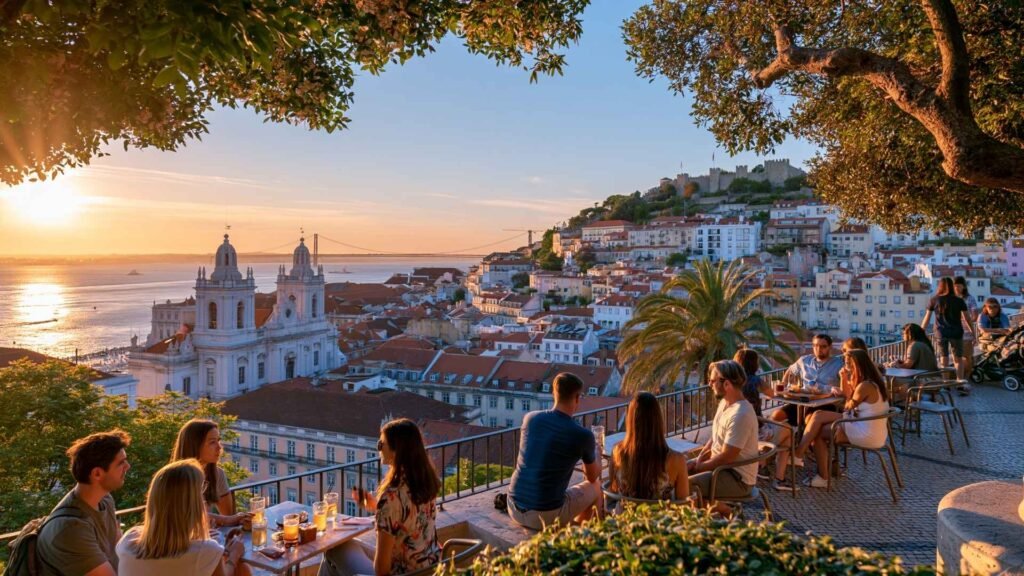
Lisbon is known as the City of Seven Hills, and its viewpoints are among the city’s most famous attractions.
Summer’s clear skies and long evenings make this one of the best seasons to enjoy panoramic views across the Portuguese capital.
Miradouro da Senhora do Monte
Often regarded as Lisbon’s best viewpoint, Senhora do Monte offers sweeping views over rooftops, churches, the Tagus River, and São Jorge Castle.
Because of its elevated position, it is particularly popular around sunset.
Many photographers consider it one of the most rewarding viewpoints in the city.
Miradouro das Portas do Sol
Located in Alfama, Portas do Sol provides one of Lisbon’s most recognizable postcard views.
White buildings cascade down the hillside toward the river, creating one of the city’s classic panoramic scenes.
Visitors exploring Alfama can easily include this viewpoint in their itinerary.
Miradouro de Santa Catarina
Santa Catarina attracts both locals and visitors looking to enjoy the sunset.
The atmosphere is relaxed, making it a popular place to unwind after a day of sightseeing.
Clara’s Tip: Arrive at least 30 to 45 minutes before sunset if you want the best viewing spot. Popular miradouros can become surprisingly busy during summer evenings.
For a more detailed guide, see:
Best Lisbon Miradouros for Sunset (Coming Soon)
Best Beaches Near Lisbon
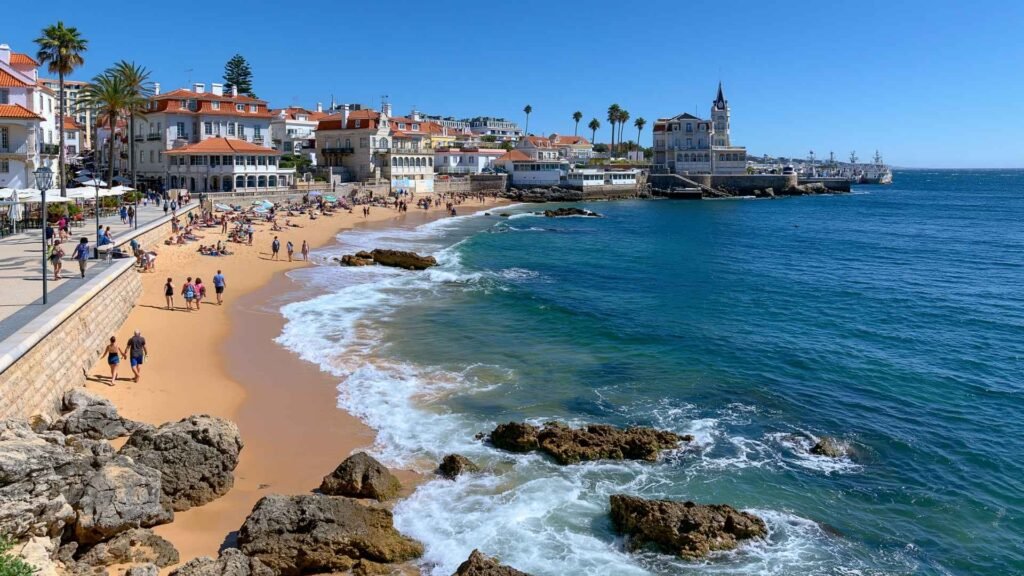
One reason Lisbon summer travel remains so popular is the city’s proximity to the Atlantic coast.
Unlike many European capitals, Lisbon allows visitors to combine urban sightseeing with easy beach access.
Cascais
Cascais is one of the most popular day trips from Lisbon.
Located approximately 40 minutes from the city center by train, the town offers attractive beaches, waterfront restaurants, scenic promenades, and a relaxed coastal atmosphere.
For many first-time visitors, Cascais provides the perfect introduction to Portugal’s coastline.
Carcavelos Beach
Carcavelos is one of the easiest beaches to reach from Lisbon.
Its wide sandy shoreline attracts swimmers, surfers, and sunbathers throughout the summer season.
The convenient train connection makes it particularly popular among both visitors and locals.
Both Cascais and Carcavelos are easily accessible by train from Lisbon, with schedules available through Comboios de Portugal (CP).
Costa da Caparica
Costa da Caparica features a long stretch of sandy coastline south of Lisbon.
The area offers more space than many beaches closer to the city center and remains a favorite destination for travelers seeking a traditional beach atmosphere.
Unlike Cascais and Carcavelos, Costa da Caparica is usually reached by bus, car, or ferry-and-bus combinations rather than by train.
Sintra
Although not a beach destination, Sintra is one of the most popular day trips from Lisbon.
Located approximately 40 minutes away by train, the town is known for its colorful palaces, historic estates, and UNESCO-listed cultural landscape.
For many first-time visitors, Sintra is one of the most rewarding additions to a Lisbon itinerary.
Summer Food and Drink Experiences
Summer is one of the best times to experience Lisbon’s food culture.
Outdoor dining becomes a major part of daily life, and restaurant terraces remain busy long after sunset.
Try Traditional Portuguese Seafood
Portugal is internationally known for its seafood, and Lisbon offers countless opportunities to enjoy fresh local dishes.
Popular choices include:
- Grilled sardines
- Octopus salad
- Bacalhau dishes
- Garlic shrimp
- Seafood rice
Fresh seafood is particularly common in neighborhoods near the river and along the coast.
Visit Time Out Market
Time Out Market remains one of Lisbon’s most visited food destinations.
It brings together traditional Portuguese dishes, modern cuisine, local specialties, and international food concepts under one roof.
For first-time visitors, it provides an easy introduction to Lisbon’s culinary scene.
Travelers looking for traditional Portuguese food and local dining experiences may also enjoy:
→ Best Restaurants in Lisbon (Coming Soon)
Experience Lisbon’s Café Culture
Coffee culture plays an important role in everyday life throughout the city.
Many locals begin the day with a coffee and pastry before work, while afternoons often include a relaxed café stop.
Popular choices include:
- Bica (Portuguese espresso)
- Galão
- Pastel de nata
- Croissants
Travelers interested in specialty coffee and local cafés may also enjoy:
→ Best Cafés in Lisbon (Coming Soon)
How Many Days Do You Need in Lisbon?

The ideal length of a Lisbon trip depends on your travel style and interests.
While it is possible to see many of the city’s highlights in a short visit, additional days allow time for beaches, day trips, and a more relaxed pace.
2 Days in Lisbon
A two-day trip is enough to experience many of Lisbon’s major attractions.
Visitors can explore neighborhoods such as Alfama, Baixa, and Chiado while also visiting Belém and enjoying several of the city’s famous viewpoints.
This option works best for travelers combining Lisbon with other destinations in Portugal.
3 Days in Lisbon
For most first-time visitors, three days is the ideal minimum.
A three-day itinerary provides enough time to explore Lisbon’s most important neighborhoods, enjoy local food, visit major attractions, and experience the city’s atmosphere without feeling rushed.
Many travelers consider three days the sweet spot for Lisbon summer travel.
5 Days or More
Five days allows visitors to experience Lisbon at a slower pace.
Additional time can be used for beach trips, day trips to Cascais or Sintra, museums, food experiences, and exploring neighborhoods beyond the main tourist areas.
Travelers planning a longer Portugal itinerary often find that Lisbon serves as an excellent base for exploring the surrounding region.
Lisbon Travel Essentials
Before visiting Lisbon, it’s worth understanding a few practical details that can make your trip smoother, from entry requirements and payments to everyday travel essentials.
ETIAS and Entry Requirements
Portugal is part of the Schengen Area.
Depending on your nationality and travel date, additional entry requirements such as ETIAS authorization may apply.
For the latest information, consult official European Union guidance before traveling.
Currency
Portugal uses the Euro (€).
Card Payments
Credit and debit cards are widely accepted throughout Lisbon, including in restaurants, hotels, shops, and public transportation.
Cash
Carrying a small amount of cash can still be useful for local markets, small cafés, and independent businesses.
Tipping
Tipping is appreciated but generally not expected.
Many visitors simply round up the bill or leave around 5–10% for particularly good service.
Helpful Summer Essentials
A few simple items can make sightseeing more comfortable during the warmer months.
✔ Sunglasses — Essential for Lisbon’s bright summer sunshine.
✔ Sunscreen — Particularly useful for long walks and beach trips.
✔ Reusable Water Bottle — Important for staying hydrated during summer.
✔ Portable Power Bank — Helpful for navigation, photography, and day trips.
Lisbon Summer Costs and Crowds
Summer is Lisbon’s busiest tourism season.
As visitor numbers increase, accommodation prices and demand for popular attractions generally rise as well.
Accommodation Costs
Hotel prices vary significantly depending on the month and booking window.
| Month | Relative Cost Level |
|---|---|
| June | Moderate |
| July | High |
| August | Highest |
| September | Moderate to High |
Booking several months in advance often results in substantially better prices, particularly for centrally located hotels.
Attraction Crowds
Popular areas such as Alfama, Belém, Baixa, Chiado, and Time Out Market can become noticeably busier during July and August.
Visiting major attractions early in the morning remains one of the easiest ways to avoid long lines and crowded sightseeing conditions.
Getting Around Lisbon

Lisbon has an extensive public transportation network that makes it easy to explore the city without a car.
Most visitors rely on a combination of metro, trams, buses, trains, and ferries, while the city’s compact layout also makes walking practical in many areas.
From Lisbon Airport to the City Center
Lisbon Airport is located relatively close to the city center.
The Metro is one of the cheapest and most convenient options, with journeys typically taking around 20–30 minutes depending on your destination.
Taxis, Uber, and Bolt are also widely available and usually take 15–25 minutes depending on traffic conditions.
Lisbon Metro
The Lisbon Metro is often the fastest way to travel between major districts and provides convenient access to many popular attractions throughout the city.
For routes, fares, and service updates, visitors can consult Metro Lisboa.
Trams and Buses
Historic trams and city buses help visitors reach neighborhoods and attractions that are less accessible by metro.
Although Tram 28 receives the most attention, several other routes are also useful for sightseeing.
For routes, fares, and transportation updates, visitors can consult Carris Public Transport Lisbon.
Trains to Nearby Destinations
Regional trains provide easy access to nearby destinations such as Cascais, Carcavelos, and Sintra.
These connections make it easy to combine Lisbon with nearby beaches, historic towns, and popular day-trip destinations.
Safety Tips for First-Time Visitors
Lisbon is generally considered one of the safest capitals in Europe, and most visitors experience no problems during their trip.
However, like many popular tourist destinations, petty theft can occasionally occur in crowded areas.
Pay extra attention to personal belongings when visiting:
- Tram 28
- Alfama
- Baixa
- Busy viewpoints
- Public transportation
Avoid carrying valuables in open pockets, keep bags securely closed, and remain aware of your surroundings in crowded spaces.
Simple precautions are usually enough to avoid problems and enjoy a stress-free visit.
Common Lisbon Summer Mistakes
Many first-time visitors make similar mistakes when planning a trip to Lisbon.
Avoiding these common issues can make your trip more enjoyable.
❌ Underestimating Lisbon’s Hills — Walking often takes longer than expected.
❌ Wearing the Wrong Footwear — Comfortable shoes are essential in Lisbon.
❌ Booking Accommodation Too Late — Summer accommodation fills quickly.
❌ Sightseeing During Peak Afternoon Heat — Mornings and evenings are usually best.
❌ Skipping Day Trips — Don’t miss nearby destinations such as Cascais and Sintra.
Frequently Asked Questions About Lisbon Summer Travel
Is Lisbon Summer Travel Worth It?
Yes. Lisbon summer travel offers a combination of historic attractions, excellent food, nearby beaches, and easy day trips that appeal to many first-time visitors.
What is the hottest month in Lisbon?
August is typically the hottest month, although July can also experience periods of intense heat.
Is Lisbon crowded in summer?
July and August are the busiest months. June and September generally offer a better balance between weather and crowd levels.
Can you visit beaches from Lisbon?
Yes. Cascais, Carcavelos, and Costa da Caparica can all be reached relatively easily from the city.
What should I wear in Lisbon during summer?
Lightweight clothing, breathable fabrics, comfortable walking shoes, sunglasses, and sunscreen are recommended.
Is Lisbon expensive in summer?
Accommodation prices usually increase during peak season, especially in July and August. Booking early often helps secure better rates.
How many days should I spend in Lisbon?
Most first-time visitors find that three days provides enough time to see the major highlights, while five days allows for beaches and day trips.
Do I need ETIAS to visit Lisbon?
Depending on your nationality and travel date, ETIAS authorization may be required for travel to Portugal and other Schengen countries. Always check the latest official requirements before your trip.
Final Thoughts
With its historic neighborhoods, scenic viewpoints, excellent food, and nearby beaches, Lisbon is one of Europe’s most enjoyable summer destinations.
June and September typically offer the best balance of weather and crowds, while July and August deliver the full energy of peak season.
Whether you’re planning a short city break or a longer Portugal itinerary, Lisbon summer travel offers a rewarding mix of culture, food, coastal scenery, and memorable day trips.
Continue Planning Your Lisbon Trip
→ Best Lisbon Miradouros for Sunset (Coming Soon)
→ Best Day Trips from Lisbon (Coming Soon)
→ Lisbon 3 Day Itinerary (Coming Soon)