
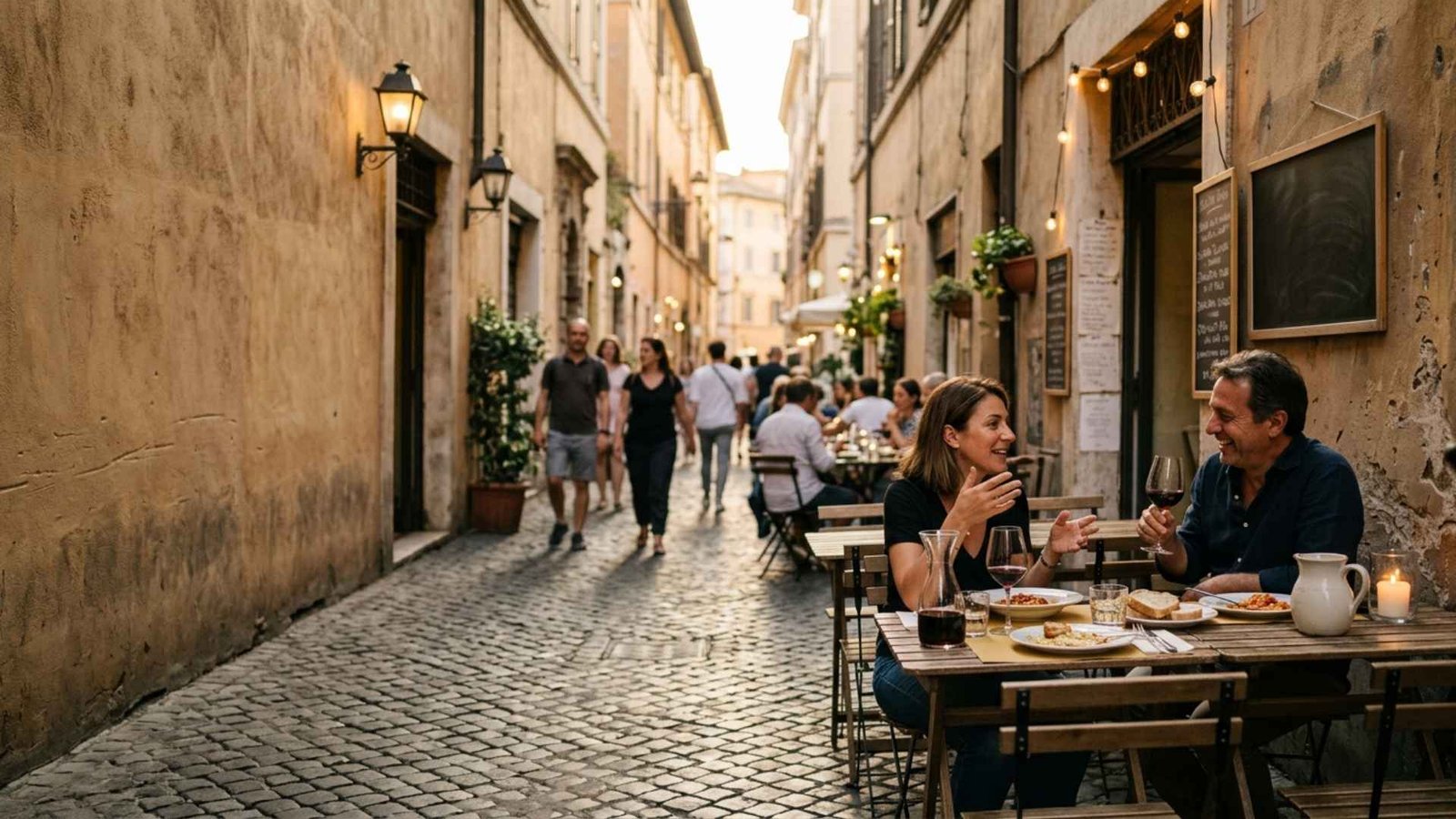
Rome doesn’t reveal itself all at once.
It lives in quiet streets, behind simple doors, in places where menus aren’t translated and no one is trying to pull you inside. This is where the real Rome exists — not in crowded squares, but in the rhythm of locals returning to the same table again and again.
If you’re trying to understand where locals eat in Rome, you won’t find the answer in a list. You’ll find it in patterns — neighborhoods, habits, and small signals that most visitors miss.
And once you see those patterns, everything changes.
🍝 Quick Answer: Where Locals Eat in Rome
If you want to quickly understand where locals eat in Rome, follow these core rules:
✔ Go beyond the historic center
✔ Focus on Testaccio, Trastevere, Monti, Prati, and San Lorenzo
✔ Avoid tourist menus and aggressive hosts
✔ Choose places with short, seasonal menus
👉 Locals don’t chase trends — they return to what they trust.
Where Locals Eat in Rome: Quick Neighborhood Guide
| Neighborhood | Best For | Price Range | Vibe |
|---|---|---|---|
| Trastevere | Atmosphere & first-time visitors | €25–€35 | Charming, lively |
| Testaccio | Authentic Roman food | €25–€40 | Traditional, local |
| Monti | Central but local dining | €25–€35 | Trendy, balanced |
| San Lorenzo | Budget & casual food | €15–€25 | Young, energetic |
| Prati | Calm & quality dining | €25–€35 | Elegant, relaxed |
🧭 Best Neighborhoods Where Locals Eat in Rome
If you’re deciding where locals eat in Rome, choosing the right neighborhood is the most important step.
Each area offers a different experience — from deeply traditional food districts to relaxed everyday dining spots.
📍 Trastevere (Classic Roman Atmosphere Beyond the Crowds)
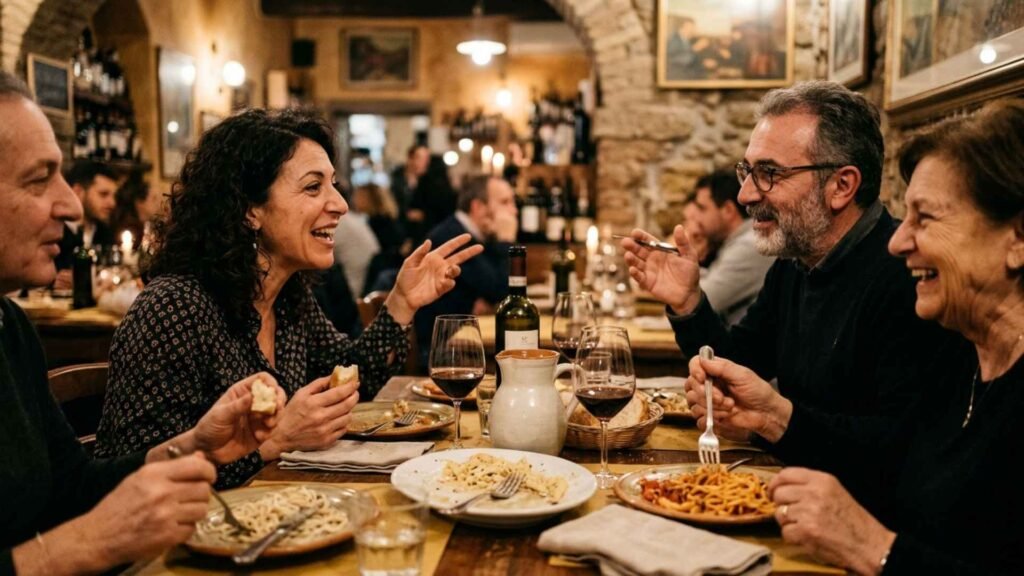
Trastevere is one of the most searched areas when people look for where locals eat in Rome — but most visitors only experience the surface.
👉 The real Trastevere begins where the crowds end.
✔ small family-run trattorias
✔ handwritten or short menus
✔ warm, authentic atmosphere
🎯 Best For
✔ First-time visitors looking for an authentic Roman atmosphere
✔ Couples and evening dining with a lively but intimate vibe
✔ Experiencing traditional trattorias in a historic setting
🍽️ Where to Try (Local Picks)
- Da Enzo al 29 → small, traditional trattoria known for its authenticity (expect a queue)
- Osteria der Belli → classic Roman dishes with a strong local following
👉 These places are popular for their food — not for their location.
🍝 What to Order Here
- Cacio e pepe
- Supplì
- House wine
👉 Stick to classic Roman dishes — that’s where these places shine.
💶 Price Insight
- Pasta → €12 – €15
- Full meal → €25 – €35
👉 Prices vary depending on how deep you go into the neighborhood — avoid main squares.
⚠️ Avoid This Mistake
❌ Sitting in restaurants near busy squares
✔ Walk a few streets deeper for more authentic options
👉 The quieter the street, the better the food.
💡 Local Insight
Trastevere looks touristy at first — but just a few streets away, it becomes one of the most authentic dining areas in Rome.
📍 Testaccio (The Birthplace of Roman Cuisine)
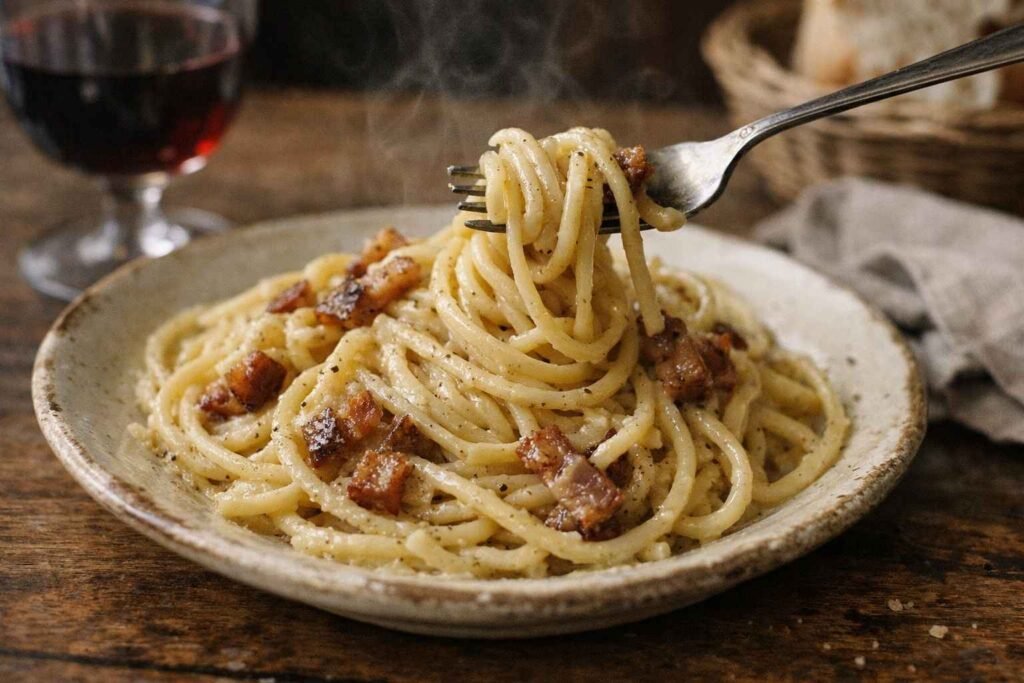
If you ask a Roman where the heart of Roman food lives, they will point to Testaccio.
This former slaughterhouse district is where many iconic Roman dishes were born.
✔ deeply traditional cuisine
✔ strong culinary identity
✔ minimal tourist influence
🎯 Best For
✔ Serious food lovers seeking traditional Roman flavors
✔ Trying classic dishes in their place of origin
✔ Authentic, no-frills dining experiences
🍽️ Where to Try (Local Picks)
- Felice a Testaccio → famous for its perfectly executed cacio e pepe (book in advance)
- Flavio al Velavevodetto → traditional dishes served in a historic setting
👉 These are institutions of Roman cuisine — not trend-driven restaurants.
🍝 What to Order Here
- Carbonara
- Amatriciana
- Cacio e pepe
👉 Recipes here are taken seriously — no shortcuts.
💶 Price Insight
- Pasta → €13 – €16
- Full meal → €25 – €40
👉 You’re paying for authenticity, not presentation.
⚠️ Avoid This Mistake
❌ Expecting modern or Instagram-style dining
✔ This area is about tradition, not aesthetics
💡 Local Insight
Testaccio is where many Romans go when they want “real food” — not an experience curated for visitors.
📍 Monti (Hidden Gem Near the Colosseum — Local but Central)
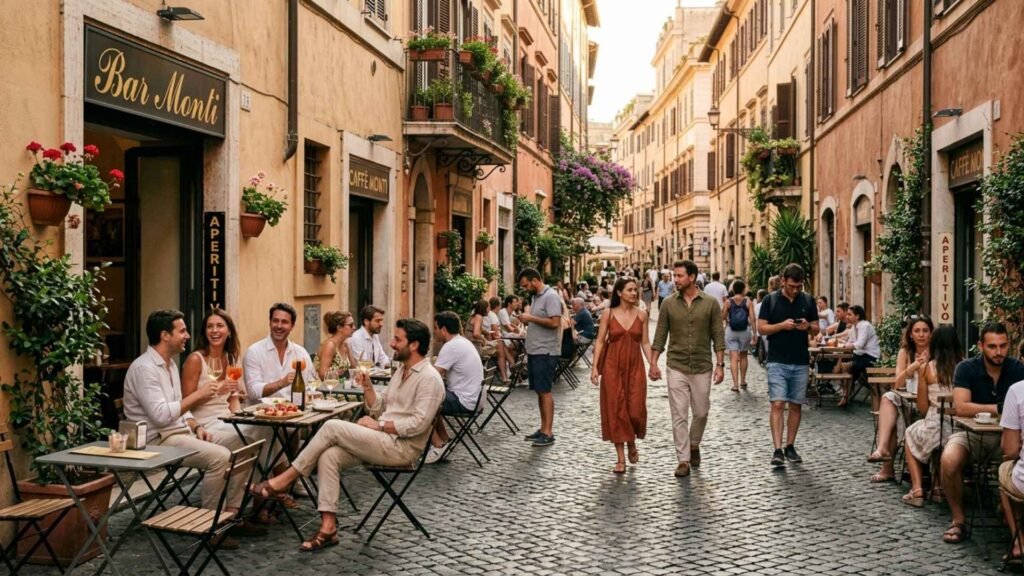
Monti is one of the most strategic areas when exploring where locals eat in Rome — especially if you want to stay close to major landmarks without falling into tourist traps.
Located just steps from the Colosseum, Monti offers a rare balance between central convenience and local authenticity.
✔ central but not tourist-heavy
✔ stylish yet authentic
✔ strong evening dining scene
🎯 Best For
✔ Eating near major landmarks without falling into tourist traps
✔ Travelers who want a balance of style and authenticity
✔ Casual evening dining with a local feel
🍽️ Where to Try (Local Picks)
- La Taverna dei Fori Imperiali → family-run spot with traditional Roman dishes
- Ai Tre Scalini → relaxed wine bar with simple, high-quality food (great for aperitivo)
🍝 What to Order Here
- Carbonara
- Cacio e pepe
- Wine + small plates
👉 Simplicity is key — avoid overcomplicated menus.
💶 Price Insight
- Pasta → €12 – €16
- Full meal → €25 – €35
👉 Prices are reasonable considering the central location.
💡 Note: Prices in Rome have been gradually rising in 2025–2026, so consider these as general benchmarks. Actual prices may vary depending on location and season.
⚠️ Avoid This Mistake
❌ Eating right next to the Colosseum
✔ Walk into Monti’s inner streets for better options
👉 A few minutes of walking makes a big difference.
💡 Local Insight
Monti is one of the few central neighborhoods where locals still go out to eat and drink — especially in the evenings.
📍 San Lorenzo (Local Life & Budget-Friendly Food Scene)
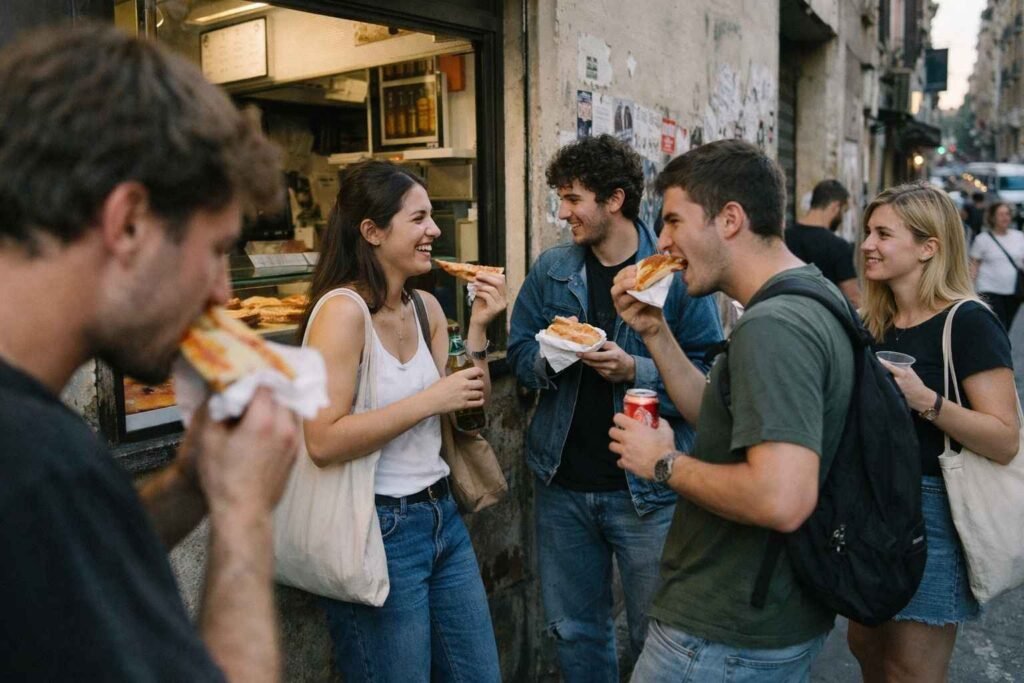
San Lorenzo is one of the few areas where locals eat in Rome without tourist influence.
Located next to Sapienza University, this area is shaped by student life — which explains why prices are lower and the atmosphere is more casual compared to other parts of Rome.
✔ affordable
✔ lively
✔ authentic
🎯 Best For
✔ Budget-friendly meals without sacrificing authenticity
✔ Casual, everyday Roman dining
✔ Younger crowd and lively atmosphere
🍽️ Where to Try (Local Picks)
- Trattoria Pommidoro → classic comfort food with a long-standing reputation
- Osteria Bonelli → hidden gem with a strong local following
👉 These places focus on tradition, not presentation.
🍝 What to Order Here
- Pizza al taglio
- Simple pasta
- House wine
👉 Portions are generous, and flavors are straightforward.
💶 Price Insight
- Pasta → €8 – €12
- Full meal → €15 – €25
👉 One of the best value areas for eating in Rome.
⚠️ Avoid This Mistake
❌ Coming too late, especially on weekends
✔ Arrive earlier to avoid crowds and limited seating
👉 Popular local spots fill up quickly.
💡 Local Insight
San Lorenzo is shaped by student life — which keeps it affordable, lively, and refreshingly authentic.
📍 Prati (Elegant Dining Near the Vatican — Without the Crowds)
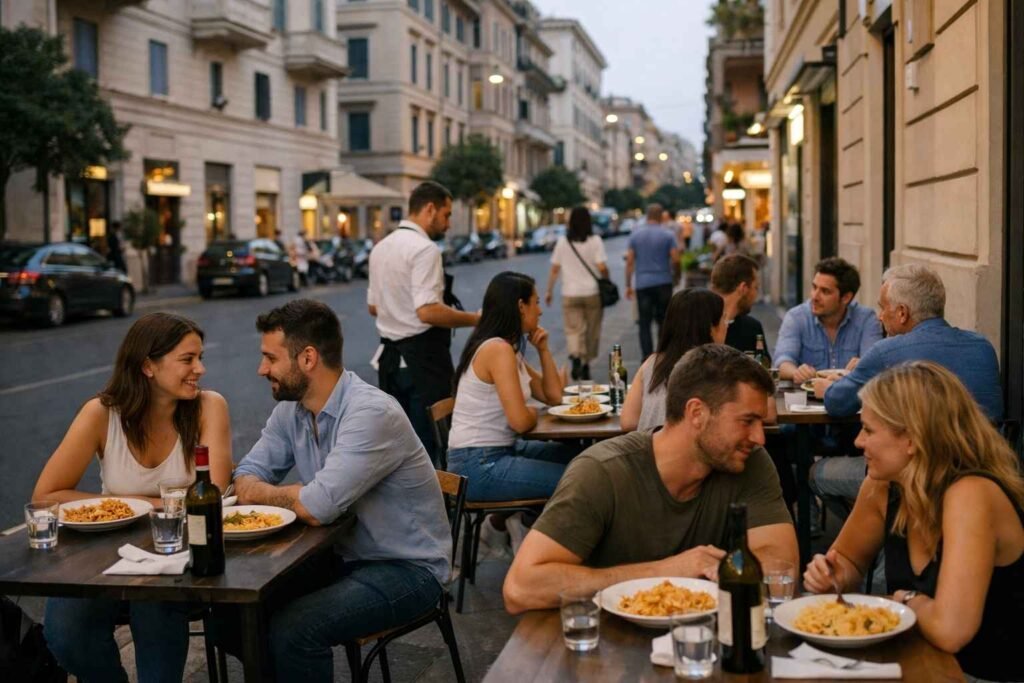
Prati offers a more refined and structured side of where locals eat in Rome.
Located near the Vatican but removed from its chaos, this neighborhood attracts locals who want consistency, calm, and quality.
It’s not about discovery — it’s about reliability.
✔ clean, structured streets
✔ consistent quality restaurants
✔ mostly local clientele
🎯 Best For
✔ Relaxed, unhurried dining away from tourist crowds
✔ Couples or solo travelers looking for a calm atmosphere
✔ Consistent, high-quality meals without surprises
🍽️ Where to Try (Local Picks)
- Osteria dell’Angelo → authentic, no-frills Roman dishes with fair prices
- Pizzarium Bonci → iconic Roman-style pizza by the slice, known for creative toppings
👉 Both spots are well-known among locals for quality — not for attracting tourists.
🍝 What to Order Here
- Roman-style pizza (by the slice)
- Seasonal pasta based on daily ingredients
- Simple starters like supplì or fresh vegetables
👉 Menus often change — that’s usually a good sign.
💶 Price Insight
- Pasta → €12 – €16
- Full meal → €25 – €35
👉 Prices here are stable and fair — not inflated like in tourist-heavy zones.
⚠️ Avoid This Mistake
❌ Eating too close to Vatican entrances or main tourist streets
✔ Walk a few streets deeper into Prati for better quality and better prices
👉 Distance from crowds usually equals better food.
💡 Local Insight
Many locals choose Prati for its balance between quality and comfort — it’s where you go when you want a reliable meal without the chaos.
🍷 How to Recognize Where Locals Eat in Rome
✔ Menu in Italian (or minimal translation)
✔ No food photos outside
✔ Mostly Italian-speaking guests
✔ Seasonal dishes (not a long, fixed menu)
✔ Simple atmosphere without forced decoration
💡 Look at the people, not the menu. If locals are eating there, you’re in the right place.
⚠️ If someone is trying to invite you in or speaking multiple languages to passersby, it’s likely not where locals eat in Rome.
👉 If it feels like a show — it’s probably for tourists.
🕰️ Best Time to Eat Like a Local in Rome
✔ Lunch → 13:00 – 14:30
✔ Dinner → 20:00 – 22:30
👉 Restaurants often feel empty before 19:30 — that’s completely normal.
❌ Empty restaurants at 18:00 → warning sign
💡 If you want the full experience, arrive when locals arrive — not when you’re hungry.
🍴 Rome Food Guide Tip: How to Choose the Right Restaurant
✔ Observe people, not menus
✔ Trust simplicity over presentation
✔ Walk at least 2–3 streets away from major attractions
👉 Look for places that feel routine, not staged.
💡 The best places don’t try to impress — they simply exist.
🍷 A Typical Local Dining Experience in Rome
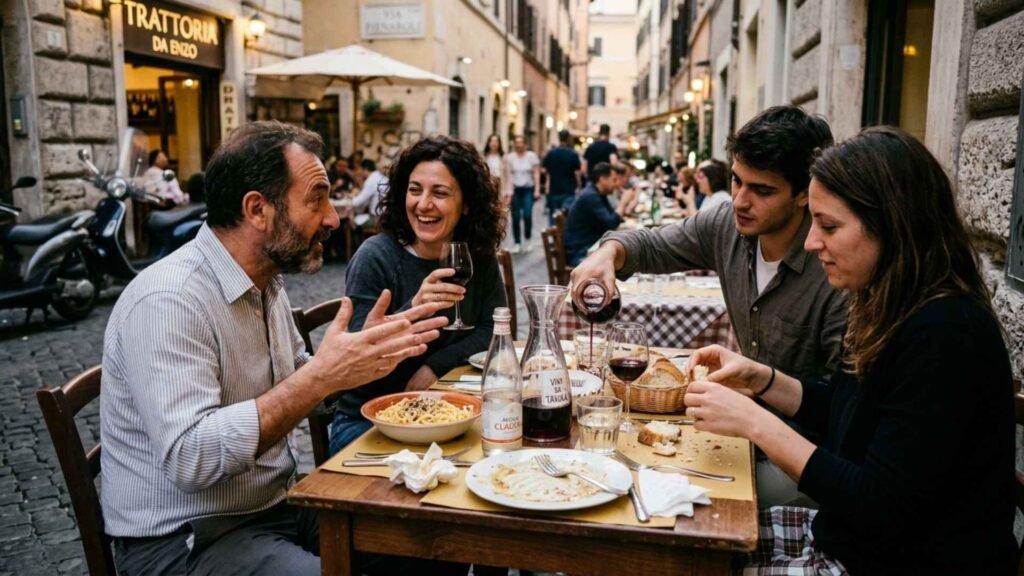
You sit down. No rush.
A carafe of house wine arrives. The menu is short, familiar.
Bread on the table. Conversations around you — loud, effortless, real.
You order carbonara.
No cream. No changes. No substitutions.
👉 Just tradition — exactly as it has been for generations.
💡 Meals in Rome aren’t about speed. They’re part of the rhythm — slow, social, and meant to be experienced, not rushed.
💶 Prices: What Locals Actually Pay
✔ Pasta → €10 – €15
✔ Wine → €4 – €6
✔ Full meal → €20 – €35
👉 These are typical prices in local, non-tourist restaurants — not inflated menus near major attractions.
💡 Prices are subject to change, but these ranges reflect what locals actually pay in everyday Roman trattorias.
💡 Note: Prices in Rome have been gradually rising in 2025–2026, so consider these as general benchmarks. Actual prices may vary depending on location and season.
💡 What Is “Coperto” in Rome?
✔ €1.5 – €3 per person
✔ Covers bread & table service
✔ Standard in most restaurants
💡 Not a scam — but it should always be listed.
⚠️ If you see both “Coperto” and “Servizio” on the bill, it may indicate a tourist-oriented restaurant.
In most local places, only “Coperto” is standard — seeing both together is often a red flag.
📞 Do You Need a Reservation?
✔ Recommended for dinner
✔ Essential on weekends
✔ Small, popular places fill up fast
👉 If you see a line outside, it usually means it’s worth the wait.
💡 Locals often call ahead — especially for traditional trattorias with limited seating.
⚠️ How to Avoid Tourist Restaurants
❌ Menus with photos
❌ Staff actively inviting you inside
❌ “Best pasta” or “tourist menu” signs
✔ Walk at least a few streets away from major attractions
✔ Watch where locals are actually eating
✔ Choose places that look simple, not staged
👉 If everything is designed to attract you, it’s probably not where locals eat in Rome.
💡 The best restaurants don’t need to advertise — they’re already full.
🔗 Continue the Rome Food Series
Want to explore more of Rome’s food scene? Start here:
👉 Roman Street Food Guide: What to Eat on the Go
👉 What to Eat in Rome: Traditional Dishes Explained
👉 (Coming Soon) Tourist Traps in Rome: What to Avoid
👉 (Coming Soon) Best Restaurants in Rome: Real Local Picks
💡 Each guide helps you eat smarter — and more like a local — with every step.
🧠 Final Thoughts
Understanding where locals eat in Rome isn’t about finding a hidden place.
It’s about learning how to see.
A quiet street. A short menu. A table that doesn’t try too hard.
👉 Once you understand where locals eat in Rome, you stop searching — and start recognizing.
👉 Follow the signs, not the crowds.
And once you recognize it — Rome doesn’t just feel like a destination.
It feels like it belongs to you.
Rome in 4 Days: 👉 Stress-Free and Perfect Guide for First-Time Visitors ➜