
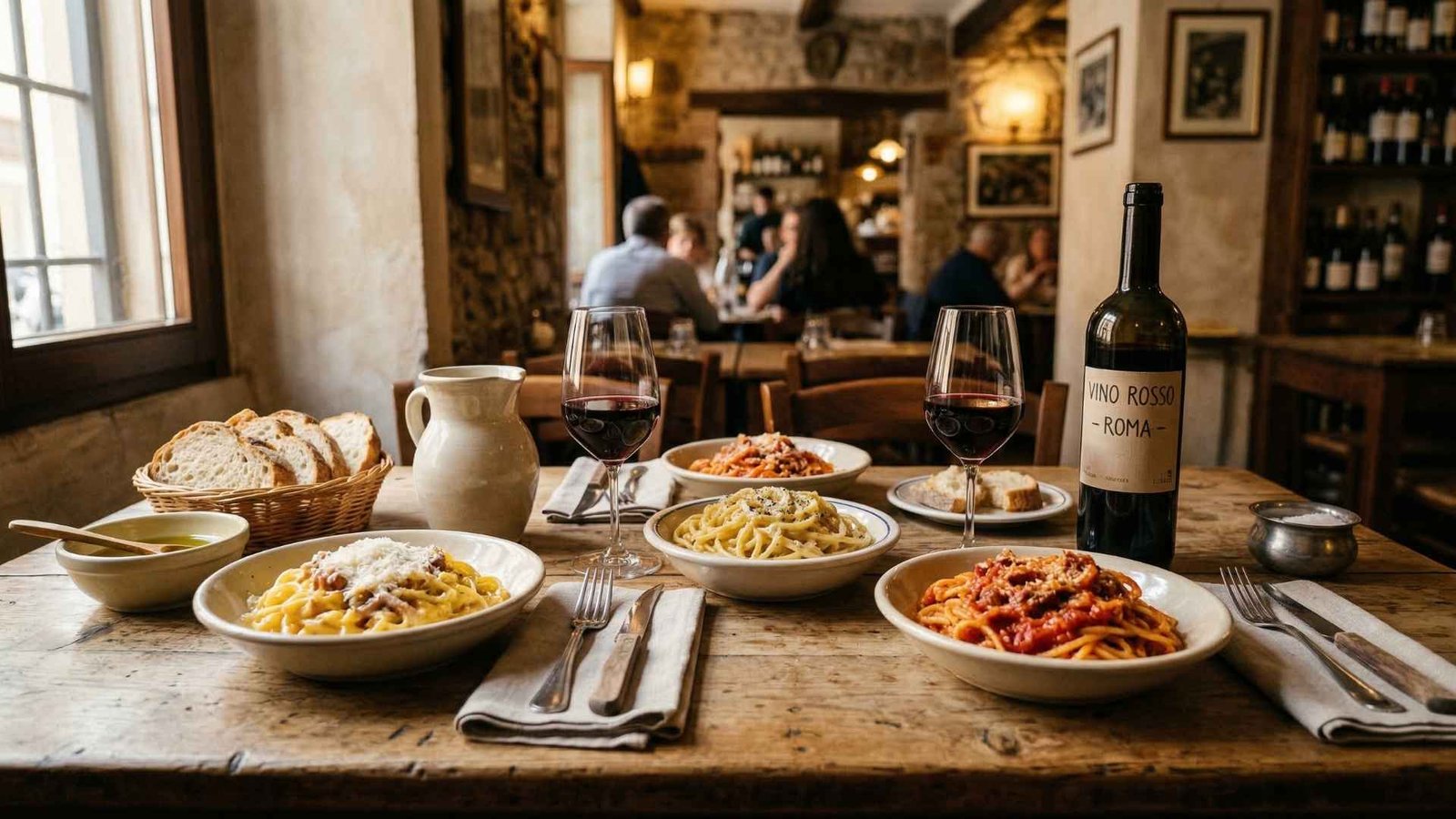
Rome does not rush food.It never has.
In a city shaped by centuries of history, meals are not meant to impress visitors. They are part of everyday life. Roman cuisine is confident in its simplicity, built on a few ingredients prepared with care and tradition.
Understanding what to eat in Rome changes the way travelers experience the city. Once you recognize the traditional dishes and the rhythm of Roman dining culture, menus become easier to understand and choosing where to eat feels more natural.
Many visitors research what to eat in Rome before arriving, but the real discovery happens in neighborhood trattorias, small bakeries, and lively street food counters where locals eat every day.
This guide introduces the dishes and traditions that define Roman cuisine and the authentic flavors of the Eternal City.
Traditional Roman Dishes That Define the City
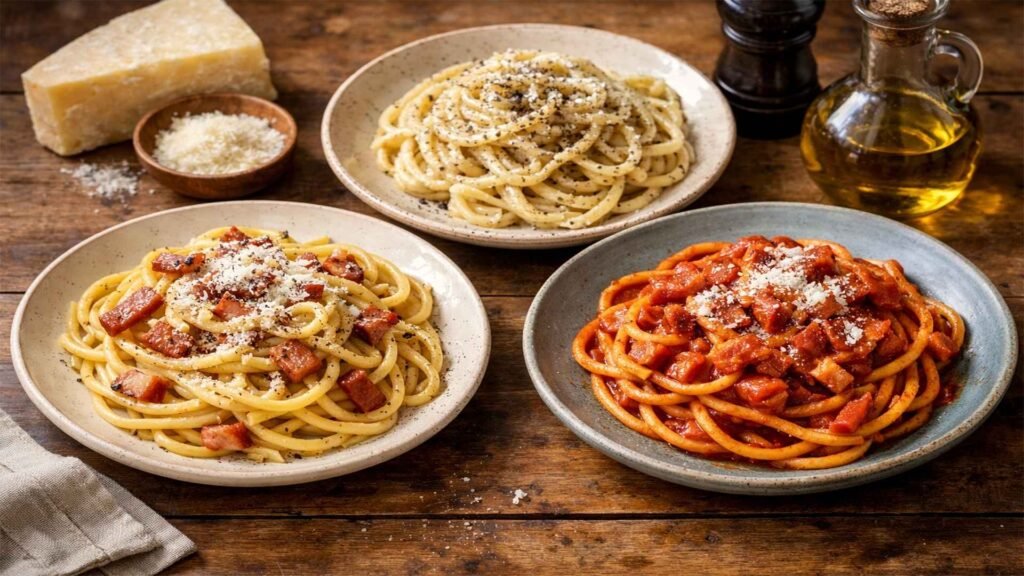
Roman cuisine revolves around a small number of iconic pasta dishes that have remained unchanged for generations. Recognizing these classics is the first step in discovering what to eat in Rome.
Carbonara
Carbonara is perhaps the most famous Roman pasta dish in the world. The authentic version contains only eggs, pecorino romano cheese, guanciale (cured pork cheek), black pepper, and pasta.
The creamy texture comes from the emulsification of eggs and cheese with hot pasta water, not from cream. In fact, adding cream is widely considered a mistake by Roman chefs.
Carbonara perfectly represents Roman cooking philosophy: minimal ingredients combined with precise technique to produce powerful flavor.
Cacio e Pepe
Few dishes illustrate the elegance of Roman cuisine like cacio e pepe.
The name simply means “cheese and pepper,” and the dish relies almost entirely on pecorino romano cheese and freshly cracked black pepper. When mixed correctly with pasta water, these ingredients create a smooth sauce that coats the pasta.
Although the ingredient list appears simple, achieving the correct texture requires skill and patience.
Amatriciana
Another essential dish when exploring what to eat in Rome is pasta all’amatriciana.
This traditional sauce combines tomatoes, guanciale, pecorino romano cheese, and chili. While the dish originated in the nearby town of Amatrice, it has become deeply connected with Roman cuisine.
Amatriciana delivers bold flavor with a balance of richness and acidity that has made it one of the most beloved pasta dishes in the region.
Gricia
Often considered the predecessor of carbonara, pasta alla gricia combines guanciale, pecorino romano cheese, and black pepper without eggs or tomato sauce.
The result is intensely savory and deeply traditional. Many locals consider gricia one of the purest examples of Roman cooking.
Roman Street Food: Everyday Flavors of the City
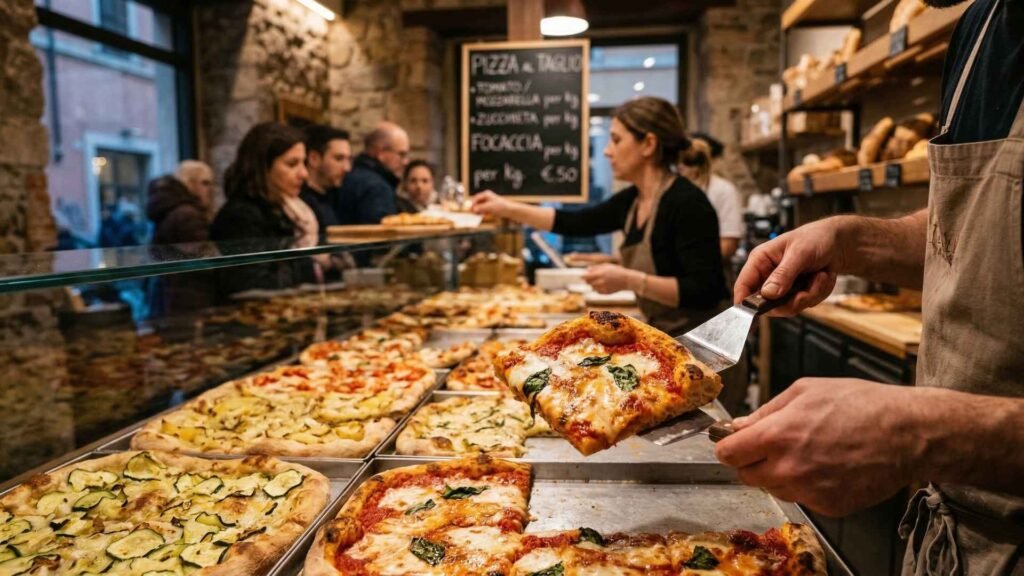
Street food plays an important role in understanding what to eat in Rome, particularly for travelers exploring the city between traditional meals.
Roman street food focuses on quick, satisfying dishes that locals eat during busy workdays or while moving through the city.
Pizza al Taglio
Pizza al taglio, meaning “pizza by the slice,” is a staple of Roman bakeries. Unlike Neapolitan pizza, it is baked in large rectangular trays and sold by weight.
The crust is crisp and airy, while toppings often include tomato sauce, vegetables, cheese, or cured meats. Locals frequently enjoy pizza al taglio for lunch or as a quick afternoon snack.
Supplì
Supplì are fried rice balls filled with tomato-flavored rice and melted mozzarella. When broken open, the cheese stretches dramatically, which inspired the nickname supplì al telefono.
These small bites are typically eaten as appetizers or casual street snacks.
Trapizzino
Trapizzino represents a modern addition to the Roman street food scene. It combines triangular pieces of pizza dough with fillings based on traditional Roman stews such as chicken cacciatore or meatballs in tomato sauce.
Despite its contemporary origins, trapizzino reflects the creativity and adaptability of Roman cuisine.
How Romans Eat Throughout the Day
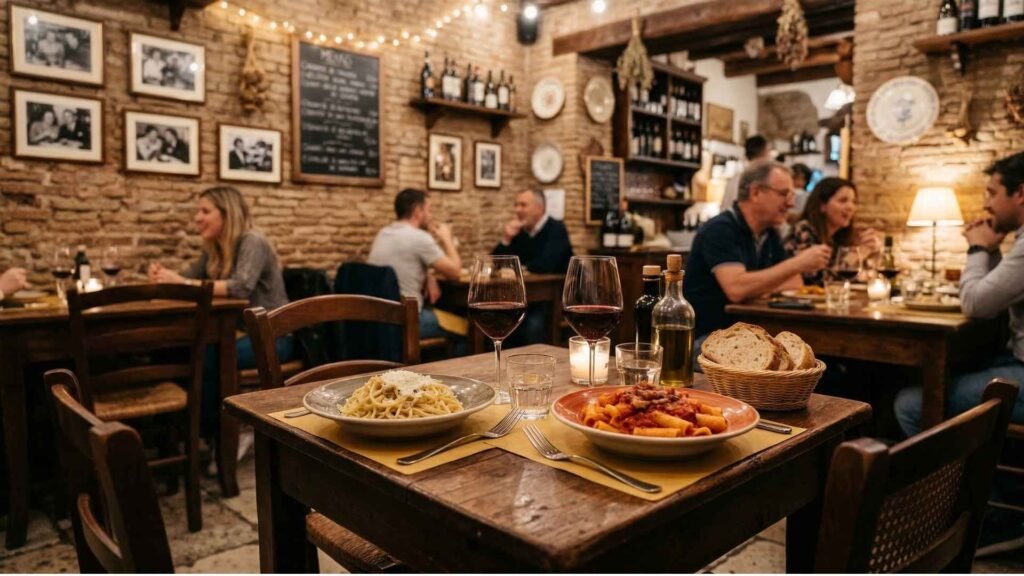
Understanding daily eating habits helps visitors better appreciate what to eat in Rome and when to enjoy each dish.
Food in Rome follows a rhythm shaped by routine and tradition.
Morning
Breakfast is usually simple. Most Romans stop at a café for an espresso and a cornetto, a lightly sweet pastry similar to a croissant.
Coffee is typically consumed quickly while standing at the bar rather than sitting down.
Lunch
Lunch is often the most substantial meal of the day. Many locals choose pasta, pizza, or a quick dish from a neighborhood trattoria.
Restaurants serving office workers frequently offer short daily menus with seasonal ingredients.
Aperitivo
In the late afternoon, Romans gather for aperitivo — a pre-dinner ritual involving drinks such as wine or spritz served with small snacks.
The focus is conversation rather than a full meal.
Dinner
Dinner usually begins after 8:00 PM and is enjoyed slowly. Meals are social occasions shared with family or friends over multiple courses.
Best Neighborhoods for Food in Rome
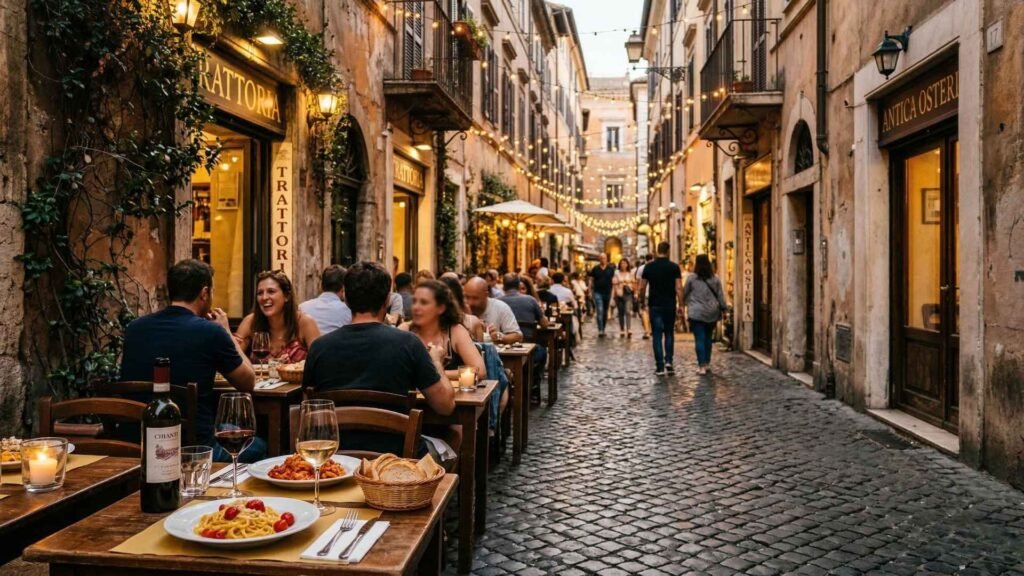
Visitors researching what to eat in Rome often look for famous restaurants near major landmarks. Locals, however, usually choose small neighborhood trattorias where the food is simple, consistent, and deeply traditional.
Certain districts in Rome are especially known for their culinary character, and exploring them often leads to the most authentic dining experiences in the city.
Trastevere is one of the most lively food neighborhoods in Rome. Its narrow streets are filled with traditional trattorias serving classic Roman dishes such as carbonara, cacio e pepe, and amatriciana.
Testaccio, often considered the historical heart of Roman cuisine, is closely connected to working-class food traditions. Many recipes that define what to eat in Rome today developed in this district, and the area still offers some of the most authentic Roman cooking in the city.
Monti, located near the Colosseum, presents a slightly different atmosphere. Small restaurants and wine bars here often reinterpret traditional Roman dishes with a more modern approach while still respecting the foundations of Roman cuisine.
Restaurants in these neighborhoods typically focus on short menus built around seasonal ingredients. Instead of offering dozens of dishes, they prepare a limited selection with care and consistency — a hallmark of authentic Roman dining.
How to Avoid Tourist Trap Restaurants
Even travelers researching what to eat in Rome sometimes end up in restaurants designed primarily for tourists. In busy areas of the city, especially near major landmarks, some restaurants focus more on attracting visitors than serving authentic Roman cuisine.
Common signs of tourist trap restaurants include:
- Menus with dozens of dishes
Traditional Roman restaurants usually focus on a small number of recipes prepared well. - Photos of food displayed outside
Authentic trattorias rarely rely on large photo menus to attract customers. - Staff inviting customers inside
Local restaurants generally do not need to call people in from the street. - Locations directly beside major attractions
Restaurants immediately next to famous landmarks often cater mostly to tourists.
Authentic Roman restaurants usually offer shorter menus built around seasonal ingredients and classic dishes. Moving just a few streets away from the busiest tourist areas often leads to a much better dining experience.
Best Times to Experience Roman Food
Roman cuisine is closely connected to seasonal ingredients, and many traditional dishes appear only during certain times of the year. Understanding these seasonal changes helps travelers better appreciate what to eat in Rome throughout the year.
Spring is famous for artichokes, one of Rome’s most beloved ingredients. Dishes such as carciofi alla romana and carciofi alla giudia appear on many menus as fresh vegetables arrive from nearby farms.
Summer brings lighter meals and simple pasta dishes prepared with fresh tomatoes, herbs, and olive oil. Roman kitchens often shift toward seasonal produce and refreshing flavors during the warmer months.
Autumn introduces mushrooms, chestnuts, and sometimes truffles, creating deeper and more aromatic dishes that reflect the cooler weather.
Winter highlights richer recipes and traditional Roman classics, when hearty pasta dishes and slow-cooked meals become especially popular.
Exploring what to eat in Rome across different seasons reveals how closely Roman cooking follows nature and local agricultural rhythms.
Roman Food Etiquette: Dining Customs Visitors Should Know
Roman dining culture follows several unwritten traditions that visitors may find surprising. Understanding these customs helps travelers feel more comfortable while exploring what to eat in Rome and experiencing local dining culture.
Some common Roman dining habits include:
- Cappuccino is rarely ordered after breakfast
Most Romans switch to espresso for the rest of the day, especially after lunch or dinner. - Pasta is served as a separate course
In traditional Roman meals, pasta is the primo course and not considered a side dish to meat or fish. - Meals are meant to be slow and social
Dining in Rome is rarely rushed. Meals often stretch over several courses and conversations. - Bread is not the focus of the meal
Bread is typically served to accompany food, not as a main element of the dish. - Restaurants often serve seasonal menus
Many traditional trattorias change dishes depending on available ingredients, which reflects the seasonal nature of Roman cuisine. - Tipping is modest
Restaurants often include a small service charge, and leaving a few extra coins is usually sufficient.
Understanding these small customs helps visitors enjoy Roman dining culture more naturally while discovering what to eat in Rome like a local.
Classic Roman Desserts Worth Trying
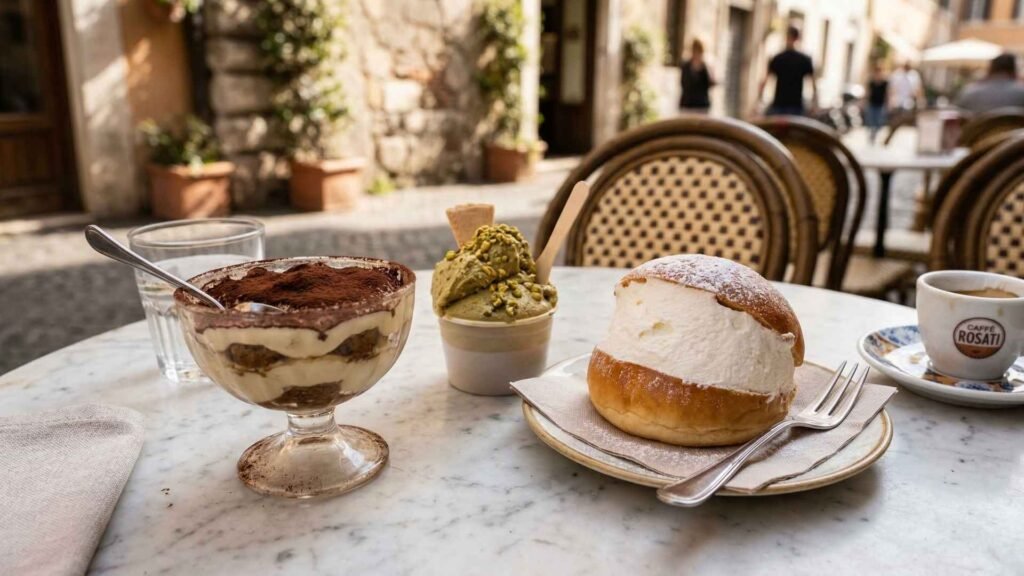
Desserts in Rome are comforting rather than elaborate. Like much of Roman cuisine, they rely on simple ingredients and familiar flavors rather than complex techniques.
Some classic Roman desserts include:
- Gelato
One of the city’s most beloved treats, authentic Italian gelato is known for its smooth texture and natural flavors such as pistachio, hazelnut, and seasonal fruit. - Tiramisu
A layered dessert made from espresso-soaked biscuits, mascarpone cream, and cocoa powder. Its rich yet balanced flavor has made it one of Italy’s most famous sweets. - Maritozzo
A traditional Roman brioche bun filled generously with whipped cream, often enjoyed for breakfast or as a sweet afternoon indulgence.
Exploring desserts is another enjoyable way to discover what to eat in Rome, especially after a long meal in a neighborhood trattoria.
Final Thoughts
Roman cuisine celebrates tradition, balance, and honest flavor.
Once travelers understand what to eat in Rome, exploring the city’s trattorias, bakeries, and street food stalls becomes far more rewarding.
Experiencing what to eat in Rome ultimately means enjoying the city the way locals do — slowly and around the table.
Rome 4 Day Itinerary: 👉 The Ultimate, Stress-Free and Perfect Guide for First-Time Visitors